Optimize Configuration Management in Optical Burst Switching Systems
MAR 2, 20268 MIN READ
Generate Your Research Report Instantly with AI Agent
Patsnap Eureka helps you evaluate technical feasibility & market potential.
OBS Configuration Management Background and Objectives
Optical Burst Switching (OBS) emerged in the early 2000s as a revolutionary paradigm designed to bridge the gap between optical circuit switching and optical packet switching technologies. This innovative approach was conceived to address the fundamental challenge of efficiently utilizing optical fiber bandwidth while minimizing the complexity associated with optical buffering and processing. The technology represents a significant evolution from traditional electronic switching methods, offering the potential for terabit-scale data transmission with reduced latency and improved network efficiency.
The historical development of OBS can be traced back to the limitations of existing optical networking solutions. Traditional optical circuit switching, while providing high bandwidth, suffered from poor bandwidth utilization due to its static nature. Conversely, optical packet switching faced significant technical hurdles related to optical header processing and buffering requirements. OBS was conceptualized as an intermediate solution that could dynamically allocate bandwidth resources while avoiding the complexities of optical packet processing.
The evolution of OBS technology has been marked by several critical milestones, including the development of Just Enough Time (JET) protocols, the introduction of wavelength conversion techniques, and the advancement of burst assembly algorithms. These technological progressions have collectively enhanced the feasibility and performance characteristics of OBS networks, making them increasingly attractive for high-speed backbone networks and data center interconnections.
The primary objective of optimizing configuration management in OBS systems centers on achieving dynamic resource allocation efficiency while maintaining network stability and performance. This involves developing sophisticated algorithms and protocols that can intelligently manage burst scheduling, wavelength assignment, and routing decisions in real-time. The configuration management optimization aims to minimize burst loss probability, reduce end-to-end latency, and maximize overall network throughput.
Furthermore, the optimization objectives encompass the development of adaptive mechanisms that can respond to varying traffic patterns and network conditions. This includes implementing intelligent burst assembly strategies, optimizing offset time calculations, and enhancing contention resolution mechanisms. The ultimate goal is to create a self-configuring and self-optimizing OBS network that can automatically adjust its parameters to maintain optimal performance under diverse operational scenarios.
The historical development of OBS can be traced back to the limitations of existing optical networking solutions. Traditional optical circuit switching, while providing high bandwidth, suffered from poor bandwidth utilization due to its static nature. Conversely, optical packet switching faced significant technical hurdles related to optical header processing and buffering requirements. OBS was conceptualized as an intermediate solution that could dynamically allocate bandwidth resources while avoiding the complexities of optical packet processing.
The evolution of OBS technology has been marked by several critical milestones, including the development of Just Enough Time (JET) protocols, the introduction of wavelength conversion techniques, and the advancement of burst assembly algorithms. These technological progressions have collectively enhanced the feasibility and performance characteristics of OBS networks, making them increasingly attractive for high-speed backbone networks and data center interconnections.
The primary objective of optimizing configuration management in OBS systems centers on achieving dynamic resource allocation efficiency while maintaining network stability and performance. This involves developing sophisticated algorithms and protocols that can intelligently manage burst scheduling, wavelength assignment, and routing decisions in real-time. The configuration management optimization aims to minimize burst loss probability, reduce end-to-end latency, and maximize overall network throughput.
Furthermore, the optimization objectives encompass the development of adaptive mechanisms that can respond to varying traffic patterns and network conditions. This includes implementing intelligent burst assembly strategies, optimizing offset time calculations, and enhancing contention resolution mechanisms. The ultimate goal is to create a self-configuring and self-optimizing OBS network that can automatically adjust its parameters to maintain optimal performance under diverse operational scenarios.
Market Demand for Enhanced OBS Network Solutions
The telecommunications industry is experiencing unprecedented demand for high-capacity, low-latency network solutions driven by the exponential growth of data-intensive applications. Cloud computing, artificial intelligence, Internet of Things deployments, and real-time multimedia services are placing enormous pressure on existing network infrastructures. Traditional packet-switched networks are struggling to meet the stringent performance requirements of these emerging applications, creating a significant market opportunity for advanced optical networking technologies.
Optical Burst Switching represents a promising paradigm that combines the benefits of optical circuit switching and optical packet switching. The technology offers the potential for dramatically reduced latency, increased bandwidth utilization, and improved network efficiency compared to conventional electronic switching methods. However, the complexity of managing OBS network configurations has emerged as a critical barrier to widespread adoption, limiting the technology's commercial viability.
Service providers and enterprise customers are increasingly seeking network solutions that can deliver guaranteed quality of service while maintaining operational simplicity. The demand for enhanced OBS network solutions is particularly strong in sectors requiring ultra-low latency communications, including financial trading platforms, autonomous vehicle networks, industrial automation systems, and next-generation data centers. These applications cannot tolerate the performance degradation associated with traditional network architectures.
The market opportunity extends beyond performance improvements to include operational cost reduction. Enhanced configuration management capabilities in OBS systems can significantly reduce network administration overhead, minimize human error, and enable more efficient resource allocation. Organizations are willing to invest in advanced networking technologies that demonstrate clear return on investment through reduced operational expenses and improved service delivery.
Current market research indicates strong interest from telecommunications equipment manufacturers, network service providers, and large enterprise customers in OBS solutions that address configuration management challenges. The convergence of 5G network deployments, edge computing initiatives, and digital transformation projects is creating additional demand drivers for sophisticated optical networking technologies that can adapt dynamically to changing traffic patterns and service requirements.
Optical Burst Switching represents a promising paradigm that combines the benefits of optical circuit switching and optical packet switching. The technology offers the potential for dramatically reduced latency, increased bandwidth utilization, and improved network efficiency compared to conventional electronic switching methods. However, the complexity of managing OBS network configurations has emerged as a critical barrier to widespread adoption, limiting the technology's commercial viability.
Service providers and enterprise customers are increasingly seeking network solutions that can deliver guaranteed quality of service while maintaining operational simplicity. The demand for enhanced OBS network solutions is particularly strong in sectors requiring ultra-low latency communications, including financial trading platforms, autonomous vehicle networks, industrial automation systems, and next-generation data centers. These applications cannot tolerate the performance degradation associated with traditional network architectures.
The market opportunity extends beyond performance improvements to include operational cost reduction. Enhanced configuration management capabilities in OBS systems can significantly reduce network administration overhead, minimize human error, and enable more efficient resource allocation. Organizations are willing to invest in advanced networking technologies that demonstrate clear return on investment through reduced operational expenses and improved service delivery.
Current market research indicates strong interest from telecommunications equipment manufacturers, network service providers, and large enterprise customers in OBS solutions that address configuration management challenges. The convergence of 5G network deployments, edge computing initiatives, and digital transformation projects is creating additional demand drivers for sophisticated optical networking technologies that can adapt dynamically to changing traffic patterns and service requirements.
Current OBS Configuration Challenges and Limitations
Optical Burst Switching systems face significant configuration management challenges that impede their widespread deployment and operational efficiency. The dynamic nature of burst traffic creates fundamental difficulties in maintaining optimal network configurations, as traditional static configuration approaches prove inadequate for handling the unpredictable burst arrival patterns and varying payload sizes characteristic of OBS networks.
Resource allocation represents one of the most critical configuration challenges in OBS systems. The wavelength assignment problem becomes exponentially complex when dealing with multiple burst classes, priority levels, and quality of service requirements. Current configuration mechanisms struggle to dynamically adjust wavelength allocation policies based on real-time traffic patterns, leading to suboptimal resource utilization and increased burst loss rates during peak traffic periods.
Burst assembly configuration presents another layer of complexity, as determining optimal assembly timeout values and burst size thresholds requires continuous adaptation to changing network conditions. Static configuration parameters often result in either excessive delays due to conservative timeout settings or increased burst loss rates when aggressive assembly policies are employed. The interdependency between assembly parameters and downstream switching decisions further complicates the configuration optimization process.
Routing and wavelength assignment coordination poses substantial challenges in multi-domain OBS networks. Configuration inconsistencies between different network segments can lead to burst blocking and degraded performance. The lack of standardized configuration protocols across vendor equipment creates interoperability issues that require manual intervention and specialized expertise to resolve.
Contention resolution mechanism configuration remains problematic due to the need for real-time parameter adjustment based on network load conditions. Deflection routing policies, wavelength conversion strategies, and burst segmentation parameters must be continuously optimized to maintain acceptable performance levels. Current systems often rely on predetermined configuration sets that cannot adapt to evolving traffic characteristics.
Quality of service configuration management in OBS networks faces limitations in handling differentiated service requirements across multiple burst classes. The configuration complexity increases significantly when implementing priority-based scheduling, preemption policies, and service level agreements. Existing configuration frameworks lack the granularity needed to support fine-tuned QoS parameter adjustment while maintaining system stability and predictable performance outcomes.
Resource allocation represents one of the most critical configuration challenges in OBS systems. The wavelength assignment problem becomes exponentially complex when dealing with multiple burst classes, priority levels, and quality of service requirements. Current configuration mechanisms struggle to dynamically adjust wavelength allocation policies based on real-time traffic patterns, leading to suboptimal resource utilization and increased burst loss rates during peak traffic periods.
Burst assembly configuration presents another layer of complexity, as determining optimal assembly timeout values and burst size thresholds requires continuous adaptation to changing network conditions. Static configuration parameters often result in either excessive delays due to conservative timeout settings or increased burst loss rates when aggressive assembly policies are employed. The interdependency between assembly parameters and downstream switching decisions further complicates the configuration optimization process.
Routing and wavelength assignment coordination poses substantial challenges in multi-domain OBS networks. Configuration inconsistencies between different network segments can lead to burst blocking and degraded performance. The lack of standardized configuration protocols across vendor equipment creates interoperability issues that require manual intervention and specialized expertise to resolve.
Contention resolution mechanism configuration remains problematic due to the need for real-time parameter adjustment based on network load conditions. Deflection routing policies, wavelength conversion strategies, and burst segmentation parameters must be continuously optimized to maintain acceptable performance levels. Current systems often rely on predetermined configuration sets that cannot adapt to evolving traffic characteristics.
Quality of service configuration management in OBS networks faces limitations in handling differentiated service requirements across multiple burst classes. The configuration complexity increases significantly when implementing priority-based scheduling, preemption policies, and service level agreements. Existing configuration frameworks lack the granularity needed to support fine-tuned QoS parameter adjustment while maintaining system stability and predictable performance outcomes.
Existing OBS Configuration Management Solutions
01 Dynamic bandwidth allocation and resource management in OBS networks
Optical Burst Switching systems require efficient bandwidth allocation mechanisms to manage network resources dynamically. This involves implementing algorithms that can allocate bandwidth on-demand based on traffic patterns and burst characteristics. The system monitors network conditions in real-time and adjusts resource allocation to optimize network utilization and minimize burst loss. Advanced scheduling techniques are employed to coordinate burst transmission timing and wavelength assignment across the network.- Dynamic bandwidth allocation and resource management in OBS networks: Optical Burst Switching systems require efficient bandwidth allocation mechanisms to handle burst traffic dynamically. Resource management techniques include adaptive scheduling algorithms, priority-based allocation, and real-time bandwidth adjustment to optimize network utilization. These methods enable the system to allocate resources based on traffic demands, quality of service requirements, and network conditions, ensuring efficient data transmission and minimizing burst loss.
- Burst assembly and scheduling mechanisms: Effective burst assembly strategies are critical for OBS system performance. These mechanisms involve aggregating packets into bursts based on size thresholds, time windows, or hybrid approaches. Scheduling algorithms coordinate burst transmission timing, handle contention resolution, and manage offset times between control packets and data bursts. Advanced scheduling techniques incorporate prediction models and adaptive parameters to improve throughput and reduce latency.
- Control plane architecture and signaling protocols: The control plane in OBS systems manages network configuration through specialized signaling protocols. These protocols handle burst reservation, path establishment, and resource coordination across network nodes. The architecture includes mechanisms for control packet processing, reservation setup, and teardown procedures. Enhanced signaling methods support features like advance reservation, immediate reservation, and delayed reservation to accommodate different traffic patterns and service requirements.
- Contention resolution and wavelength conversion: Contention occurs when multiple bursts compete for the same resources simultaneously. Resolution techniques include wavelength conversion, fiber delay lines, burst segmentation, and deflection routing. Wavelength conversion allows bursts to be switched to alternative wavelengths when conflicts arise. These mechanisms work together to minimize burst loss probability and improve network performance under high load conditions. Configuration management involves optimizing the deployment and coordination of these contention resolution resources.
- Network monitoring and performance optimization: Configuration management systems incorporate monitoring capabilities to track network performance metrics such as burst loss rate, latency, throughput, and resource utilization. These systems collect real-time data from network elements and apply analytics to identify bottlenecks and optimize configurations. Adaptive algorithms adjust system parameters dynamically based on observed performance, enabling self-optimization and fault management. Integration with management protocols allows centralized control and coordination of distributed OBS network elements.
02 Burst assembly and disassembly control mechanisms
Configuration management in OBS systems includes sophisticated burst assembly and disassembly processes at edge nodes. This involves aggregating incoming packets into bursts based on various parameters such as destination, quality of service requirements, and timeout thresholds. The system implements control protocols to manage the burst header packet transmission and payload forwarding. Efficient buffering strategies and assembly algorithms are utilized to balance burst size optimization with latency requirements.Expand Specific Solutions03 Contention resolution and burst loss prevention
Managing contentions when multiple bursts compete for the same resources is critical in OBS networks. The configuration includes implementing various contention resolution schemes such as wavelength conversion, fiber delay lines, and deflection routing. The system employs sophisticated algorithms to detect potential conflicts and resolve them through optimal path selection and resource reallocation. Priority-based scheduling mechanisms are integrated to ensure quality of service for different traffic classes while minimizing overall burst loss probability.Expand Specific Solutions04 Signaling protocols and control plane management
Effective configuration management requires robust signaling protocols to coordinate burst transmission across the network. This includes implementing control plane architectures that handle burst reservation requests, path establishment, and resource allocation signaling. The system manages the exchange of control information between nodes to ensure proper burst forwarding and switching. Protocol mechanisms are designed to minimize signaling overhead while maintaining reliable communication between network elements for configuration updates and status monitoring.Expand Specific Solutions05 Network monitoring and performance optimization
Configuration management systems incorporate comprehensive monitoring capabilities to track network performance metrics and system health. This includes collecting data on burst loss rates, latency, throughput, and resource utilization across all network nodes. The system implements feedback mechanisms to dynamically adjust configuration parameters based on observed performance. Advanced analytics and machine learning techniques may be employed to predict traffic patterns and proactively optimize network configurations for improved efficiency and reliability.Expand Specific Solutions
Key Players in OBS and Optical Network Industry
The optical burst switching (OBS) configuration management field represents an emerging technology sector in the early development stage, with significant growth potential driven by increasing demand for high-speed optical networks. The market remains relatively niche but shows promise as telecommunications infrastructure evolves toward more efficient data transmission methods. Technology maturity varies significantly across key players, with established telecommunications giants like Huawei Technologies, Ericsson, Nokia Solutions & Networks, and NEC Corp leading commercial implementations, while academic institutions including Beijing University of Posts & Telecommunications, University of Electronic Science & Technology of China, and Shanghai Jiao Tong University drive fundamental research innovations. Traditional networking companies such as Intel Corp and Alcatel-Lucent contribute hardware and system-level solutions, creating a competitive landscape where research institutions provide theoretical foundations while industry players focus on practical deployment and commercialization of OBS configuration optimization technologies.
Huawei Technologies Co., Ltd.
Technical Solution: Huawei has developed advanced optical burst switching solutions featuring intelligent configuration management systems that utilize machine learning algorithms for dynamic resource allocation. Their approach incorporates adaptive burst assembly mechanisms with real-time traffic prediction capabilities, enabling optimal wavelength assignment and reducing burst loss probability. The system employs distributed control plane architecture with centralized policy management, supporting multi-layer traffic engineering and quality of service provisioning. Huawei's solution integrates seamlessly with existing DWDM infrastructure while providing automated configuration updates based on network conditions and traffic patterns.
Strengths: Strong integration capabilities with existing optical networks, comprehensive traffic engineering features. Weaknesses: Complex implementation requiring specialized expertise, higher initial deployment costs.
Intel Corp.
Technical Solution: Intel provides hardware-accelerated optical burst switching solutions through their programmable network processors and FPGA-based platforms. Their configuration management approach leverages Intel's Data Plane Development Kit (DPDK) for high-performance packet processing and burst assembly optimization. The system features hardware-assisted traffic classification and burst scheduling algorithms that can process configuration changes at line rate speeds. Intel's solution includes software-defined networking capabilities with OpenFlow extensions specifically designed for optical burst switching environments, enabling centralized configuration management across distributed optical nodes.
Strengths: High-performance hardware acceleration, excellent scalability for large networks. Weaknesses: Requires Intel-specific hardware platforms, limited vendor ecosystem integration.
Core Innovations in OBS Configuration Optimization
Modular reconfigurable multi-server system and method for high-speed networking within photonic burst-switched network
PatentInactiveUS7266295B2
Innovation
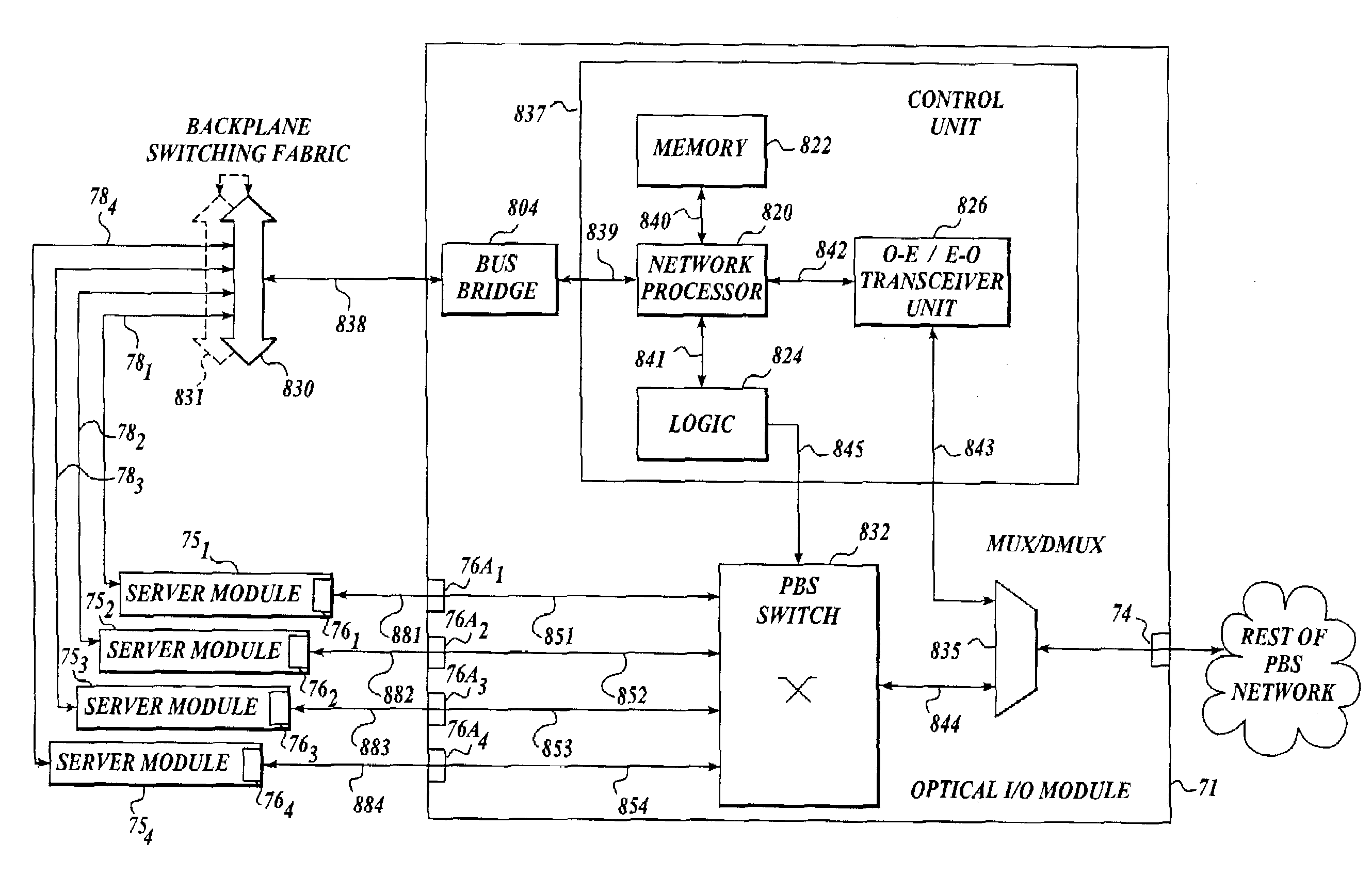
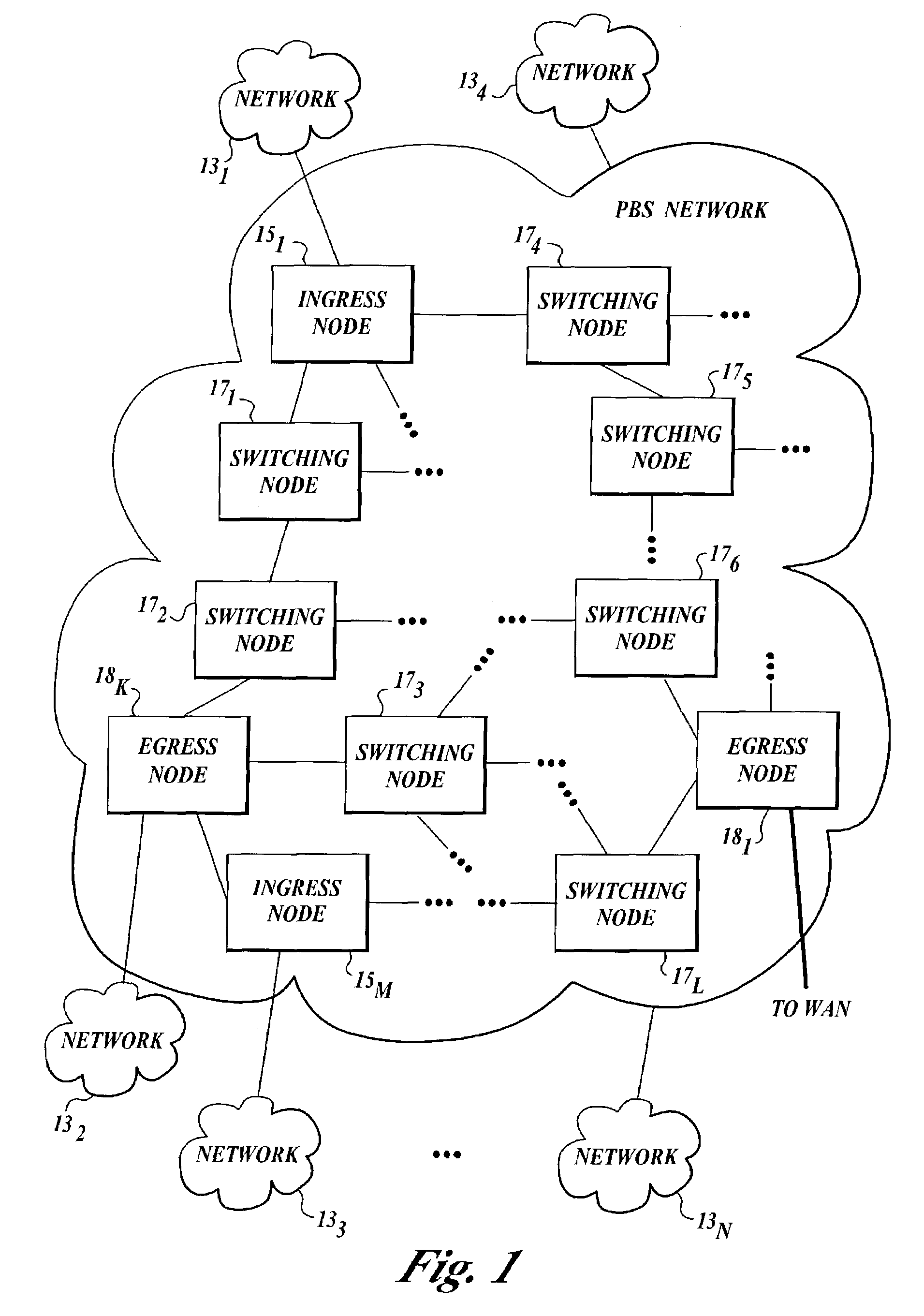
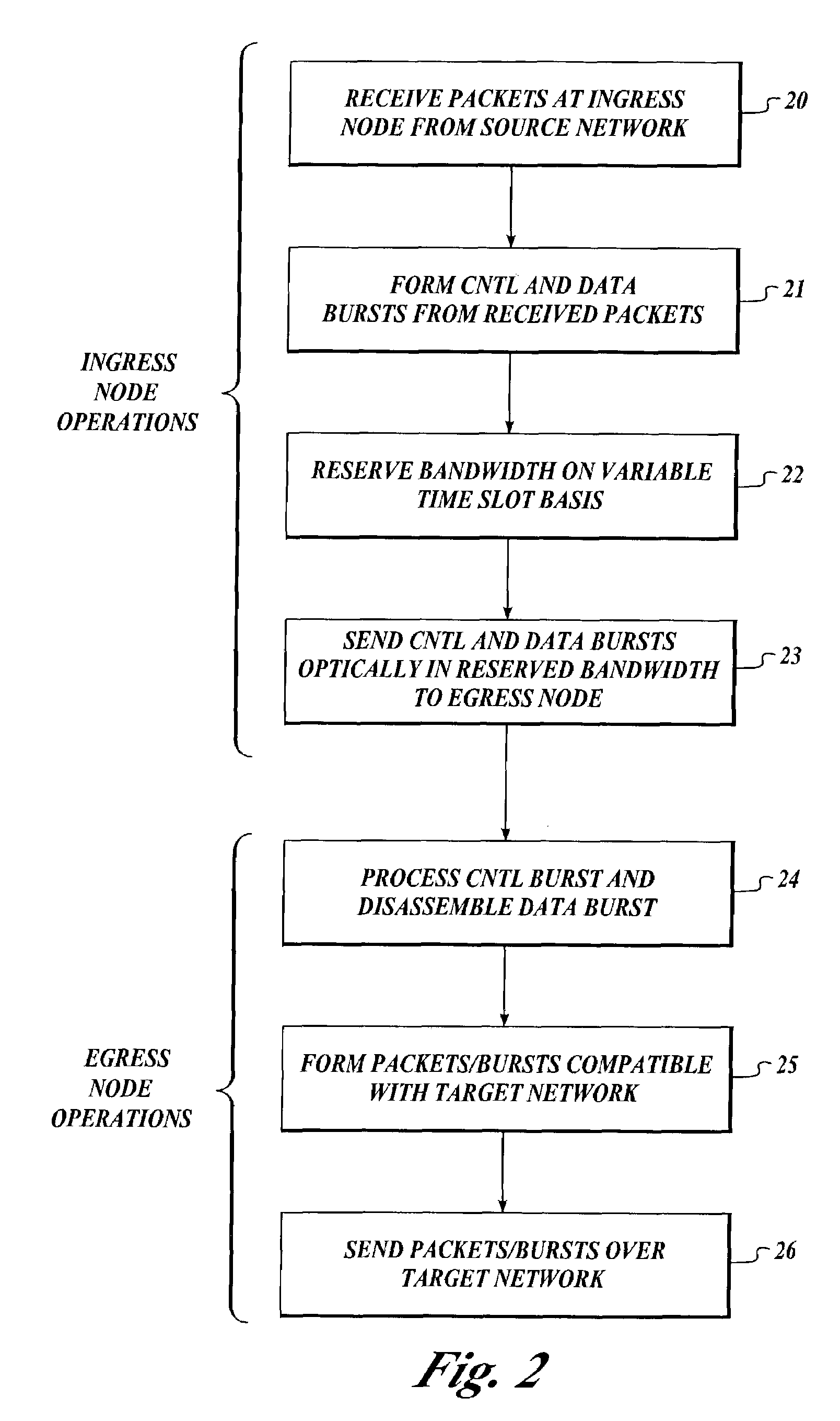
- A photonic burst-switched (PBS) network architecture that employs purely optical switching of data bursts, using optical control bursts and network management control bursts to configure switches without O-E-O conversion, and utilizes statistical multiplexing and time division multiplexing (TDM) to manage bandwidth efficiently across multiple wavelengths and fibers.

Method and apparatus for configuration management in communications networks
PatentInactiveUS6349306B1
Innovation
- A model-based configuration management system utilizing templates to configure multiple network devices, enabling configuration retrieval, storage, and verification, with automatic scheduling and reporting, and supporting a wide variety of devices through a database of models and attributes.


Network Standards and Protocol Compliance
Network standards and protocol compliance represent fundamental pillars for successful optical burst switching (OBS) systems implementation. The configuration management optimization in OBS networks must align with established international standards including ITU-T G.8080 for automatically switched optical networks and IEEE 802.3 Ethernet standards. These frameworks provide essential guidelines for interoperability, ensuring that diverse vendor equipment can seamlessly integrate within heterogeneous network environments.
Protocol compliance in OBS systems primarily revolves around the Optical Burst Switching Protocol (OBSP) and its variants, including Just Enough Time (JET) and Just In Time (JIT) reservation protocols. Configuration management systems must maintain strict adherence to these protocols while accommodating vendor-specific implementations. The challenge lies in balancing standardized protocol requirements with the need for optimized performance tuning and adaptive configuration adjustments.
Standards compliance extends beyond basic protocol implementation to encompass quality of service (QoS) frameworks, network management protocols such as SNMP and NETCONF, and security standards including IPSec and TLS encryption. Configuration management systems must ensure that all parameter adjustments and policy implementations maintain compliance with these standards while optimizing network performance. This includes proper handling of burst header packets, wavelength assignment protocols, and deflection routing mechanisms.
The integration of Software-Defined Networking (SDN) principles with OBS systems introduces additional compliance considerations, particularly regarding OpenFlow protocol adaptations and network function virtualization standards. Configuration management optimization must account for these emerging standards while maintaining backward compatibility with legacy optical networking protocols.
Regulatory compliance adds another layer of complexity, requiring adherence to regional telecommunications standards and safety regulations. Configuration management systems must incorporate compliance monitoring mechanisms that automatically validate configuration changes against applicable standards, preventing non-compliant deployments that could compromise network integrity or violate regulatory requirements. This automated compliance checking becomes increasingly critical as network configurations become more dynamic and complex.
Protocol compliance in OBS systems primarily revolves around the Optical Burst Switching Protocol (OBSP) and its variants, including Just Enough Time (JET) and Just In Time (JIT) reservation protocols. Configuration management systems must maintain strict adherence to these protocols while accommodating vendor-specific implementations. The challenge lies in balancing standardized protocol requirements with the need for optimized performance tuning and adaptive configuration adjustments.
Standards compliance extends beyond basic protocol implementation to encompass quality of service (QoS) frameworks, network management protocols such as SNMP and NETCONF, and security standards including IPSec and TLS encryption. Configuration management systems must ensure that all parameter adjustments and policy implementations maintain compliance with these standards while optimizing network performance. This includes proper handling of burst header packets, wavelength assignment protocols, and deflection routing mechanisms.
The integration of Software-Defined Networking (SDN) principles with OBS systems introduces additional compliance considerations, particularly regarding OpenFlow protocol adaptations and network function virtualization standards. Configuration management optimization must account for these emerging standards while maintaining backward compatibility with legacy optical networking protocols.
Regulatory compliance adds another layer of complexity, requiring adherence to regional telecommunications standards and safety regulations. Configuration management systems must incorporate compliance monitoring mechanisms that automatically validate configuration changes against applicable standards, preventing non-compliant deployments that could compromise network integrity or violate regulatory requirements. This automated compliance checking becomes increasingly critical as network configurations become more dynamic and complex.
Performance Metrics and Quality Assurance
Performance metrics serve as the foundation for evaluating configuration management effectiveness in optical burst switching systems. Key indicators include burst loss probability, which measures the percentage of data bursts dropped due to contention or resource unavailability. Network throughput represents the total data transmission capacity achieved under specific configuration parameters, while end-to-end latency encompasses the complete transmission delay from source to destination nodes.
Configuration convergence time emerges as a critical metric, measuring how quickly the system adapts to topology changes or policy updates. Resource utilization efficiency indicates how effectively wavelength channels and buffer resources are allocated across the network. Additionally, control plane overhead quantifies the bandwidth consumed by configuration management protocols relative to actual data transmission.
Quality assurance frameworks must address the dynamic nature of optical burst switching environments. Real-time monitoring systems continuously track performance deviations from established baselines, triggering automated corrective actions when thresholds are exceeded. Statistical analysis of historical performance data enables predictive maintenance and proactive configuration adjustments before service degradation occurs.
Validation methodologies encompass both simulation-based testing and live network verification. Comprehensive test scenarios simulate various traffic patterns, network topologies, and failure conditions to ensure configuration robustness. Stress testing evaluates system behavior under peak load conditions, while fault injection techniques assess recovery capabilities following component failures or configuration errors.
Service level agreement compliance monitoring ensures that configuration management decisions align with business requirements. This includes tracking availability percentages, maximum acceptable latency bounds, and guaranteed bandwidth allocations. Automated reporting mechanisms provide stakeholders with regular performance summaries and trend analysis, enabling data-driven optimization decisions and continuous improvement of configuration management strategies.
Configuration convergence time emerges as a critical metric, measuring how quickly the system adapts to topology changes or policy updates. Resource utilization efficiency indicates how effectively wavelength channels and buffer resources are allocated across the network. Additionally, control plane overhead quantifies the bandwidth consumed by configuration management protocols relative to actual data transmission.
Quality assurance frameworks must address the dynamic nature of optical burst switching environments. Real-time monitoring systems continuously track performance deviations from established baselines, triggering automated corrective actions when thresholds are exceeded. Statistical analysis of historical performance data enables predictive maintenance and proactive configuration adjustments before service degradation occurs.
Validation methodologies encompass both simulation-based testing and live network verification. Comprehensive test scenarios simulate various traffic patterns, network topologies, and failure conditions to ensure configuration robustness. Stress testing evaluates system behavior under peak load conditions, while fault injection techniques assess recovery capabilities following component failures or configuration errors.
Service level agreement compliance monitoring ensures that configuration management decisions align with business requirements. This includes tracking availability percentages, maximum acceptable latency bounds, and guaranteed bandwidth allocations. Automated reporting mechanisms provide stakeholders with regular performance summaries and trend analysis, enabling data-driven optimization decisions and continuous improvement of configuration management strategies.
Unlock deeper insights with Patsnap Eureka Quick Research — get a full tech report to explore trends and direct your research. Try now!
Generate Your Research Report Instantly with AI Agent
Supercharge your innovation with Patsnap Eureka AI Agent Platform!