

Optimize Injection Timing in Compression-Ignition Engines for Power Output
JUN 14, 20269 MIN READ
Generate Your Research Report Instantly with AI Agent
Patsnap Eureka helps you evaluate technical feasibility & market potential.
CI Engine Injection Timing Background and Power Goals
Compression-ignition engines have undergone significant evolution since Rudolf Diesel's first successful prototype in 1893. The fundamental principle of auto-ignition through compression heating has remained constant, yet the precision control of fuel injection timing has emerged as one of the most critical factors determining engine performance and efficiency. Early diesel engines relied on mechanical injection systems with fixed timing, limiting their ability to optimize combustion across varying operating conditions.
The development trajectory of CI engines has been marked by several pivotal technological advances. The introduction of electronic fuel injection systems in the 1980s revolutionized timing control capabilities, enabling dynamic adjustment based on real-time engine parameters. Subsequently, common rail fuel injection systems emerged in the 1990s, providing unprecedented pressure control and multiple injection events per cycle. These innovations laid the foundation for modern injection timing optimization strategies.
Current technological trends emphasize the integration of advanced sensors, machine learning algorithms, and predictive control systems to achieve optimal injection timing. The shift toward electrification and hybrid powertrains has intensified the demand for maximum efficiency from CI engines, making precise timing control even more crucial. Additionally, stringent emission regulations worldwide have driven the need for sophisticated timing strategies that balance power output with pollutant formation.
The primary technical objective in optimizing injection timing centers on maximizing indicated mean effective pressure while maintaining acceptable emission levels and mechanical stress limits. This involves determining the optimal start of injection timing that ensures complete fuel combustion occurs at the most thermodynamically advantageous crank angle position. The goal extends beyond simple power maximization to encompass fuel economy improvements, reduced combustion noise, and enhanced engine durability.
Modern CI engines target power density improvements of 15-25% through advanced injection timing strategies compared to conventional fixed-timing systems. These objectives must be achieved while meeting increasingly stringent NOx and particulate matter emission standards. The integration of multiple injection events, including pilot, main, and post-injections, requires precise temporal coordination to achieve these ambitious performance targets.
The ultimate vision for CI engine injection timing optimization involves real-time adaptive control systems capable of responding to changing fuel properties, ambient conditions, and load demands within milliseconds. This represents a paradigm shift from predetermined timing maps toward intelligent, self-learning systems that continuously optimize performance parameters throughout the engine's operational lifecycle.
The development trajectory of CI engines has been marked by several pivotal technological advances. The introduction of electronic fuel injection systems in the 1980s revolutionized timing control capabilities, enabling dynamic adjustment based on real-time engine parameters. Subsequently, common rail fuel injection systems emerged in the 1990s, providing unprecedented pressure control and multiple injection events per cycle. These innovations laid the foundation for modern injection timing optimization strategies.
Current technological trends emphasize the integration of advanced sensors, machine learning algorithms, and predictive control systems to achieve optimal injection timing. The shift toward electrification and hybrid powertrains has intensified the demand for maximum efficiency from CI engines, making precise timing control even more crucial. Additionally, stringent emission regulations worldwide have driven the need for sophisticated timing strategies that balance power output with pollutant formation.
The primary technical objective in optimizing injection timing centers on maximizing indicated mean effective pressure while maintaining acceptable emission levels and mechanical stress limits. This involves determining the optimal start of injection timing that ensures complete fuel combustion occurs at the most thermodynamically advantageous crank angle position. The goal extends beyond simple power maximization to encompass fuel economy improvements, reduced combustion noise, and enhanced engine durability.
Modern CI engines target power density improvements of 15-25% through advanced injection timing strategies compared to conventional fixed-timing systems. These objectives must be achieved while meeting increasingly stringent NOx and particulate matter emission standards. The integration of multiple injection events, including pilot, main, and post-injections, requires precise temporal coordination to achieve these ambitious performance targets.
The ultimate vision for CI engine injection timing optimization involves real-time adaptive control systems capable of responding to changing fuel properties, ambient conditions, and load demands within milliseconds. This represents a paradigm shift from predetermined timing maps toward intelligent, self-learning systems that continuously optimize performance parameters throughout the engine's operational lifecycle.
Market Demand for High-Performance CI Engines
The global compression-ignition engine market is experiencing robust growth driven by increasing demand for fuel-efficient and high-performance powertrains across multiple sectors. Commercial vehicle manufacturers are particularly focused on maximizing power output while meeting stringent emission regulations, creating substantial market opportunities for advanced injection timing optimization technologies.
Heavy-duty trucking represents the largest market segment, where fleet operators prioritize fuel economy and reliability. The growing e-commerce sector has intensified demand for efficient logistics solutions, pushing manufacturers to develop engines that deliver superior power-to-weight ratios through precise injection control systems. Long-haul transportation companies are increasingly willing to invest in premium engine technologies that offer measurable performance improvements.
The marine propulsion sector demonstrates strong appetite for high-performance CI engines, particularly in commercial shipping and offshore applications. Vessel operators require engines capable of sustained high-power operation while maintaining fuel efficiency across varying load conditions. Injection timing optimization directly addresses these requirements by enabling engines to adapt performance characteristics to operational demands.
Industrial power generation markets show increasing preference for CI engines with advanced control systems. Data centers, manufacturing facilities, and remote installations require reliable backup power solutions that can rapidly achieve full output. Optimized injection timing enables faster response times and improved load acceptance capabilities, making these engines more attractive for critical applications.
Agricultural machinery manufacturers are integrating sophisticated engine management systems to meet farmer demands for increased productivity. Modern farming operations require equipment capable of delivering consistent high power output during peak seasonal workloads. Injection timing optimization allows agricultural engines to maintain performance across diverse operating conditions while reducing fuel consumption.
The construction equipment sector values engines that provide maximum torque and power density for demanding applications. Equipment manufacturers are incorporating advanced injection control technologies to differentiate their products in competitive markets. Operators increasingly recognize the economic benefits of engines that optimize power delivery through precise fuel injection management.
Emerging markets in developing regions present significant growth opportunities as infrastructure development accelerates. These markets particularly value robust, high-performance engines that can operate reliably under challenging conditions while delivering superior power output characteristics.
Heavy-duty trucking represents the largest market segment, where fleet operators prioritize fuel economy and reliability. The growing e-commerce sector has intensified demand for efficient logistics solutions, pushing manufacturers to develop engines that deliver superior power-to-weight ratios through precise injection control systems. Long-haul transportation companies are increasingly willing to invest in premium engine technologies that offer measurable performance improvements.
The marine propulsion sector demonstrates strong appetite for high-performance CI engines, particularly in commercial shipping and offshore applications. Vessel operators require engines capable of sustained high-power operation while maintaining fuel efficiency across varying load conditions. Injection timing optimization directly addresses these requirements by enabling engines to adapt performance characteristics to operational demands.
Industrial power generation markets show increasing preference for CI engines with advanced control systems. Data centers, manufacturing facilities, and remote installations require reliable backup power solutions that can rapidly achieve full output. Optimized injection timing enables faster response times and improved load acceptance capabilities, making these engines more attractive for critical applications.
Agricultural machinery manufacturers are integrating sophisticated engine management systems to meet farmer demands for increased productivity. Modern farming operations require equipment capable of delivering consistent high power output during peak seasonal workloads. Injection timing optimization allows agricultural engines to maintain performance across diverse operating conditions while reducing fuel consumption.
The construction equipment sector values engines that provide maximum torque and power density for demanding applications. Equipment manufacturers are incorporating advanced injection control technologies to differentiate their products in competitive markets. Operators increasingly recognize the economic benefits of engines that optimize power delivery through precise fuel injection management.
Emerging markets in developing regions present significant growth opportunities as infrastructure development accelerates. These markets particularly value robust, high-performance engines that can operate reliably under challenging conditions while delivering superior power output characteristics.
Current Injection Timing Challenges and Constraints
Compression-ignition engines face significant challenges in optimizing injection timing due to the complex interplay between combustion physics and mechanical constraints. The primary challenge lies in achieving precise control over the ignition delay period, which varies dramatically based on fuel properties, ambient conditions, and engine operating parameters. Current diesel engines typically operate with injection timing windows of 10-40 degrees before top dead center, but this range often represents a compromise rather than an optimal solution for maximum power output.
Temperature and pressure variations within the combustion chamber create substantial constraints for injection timing optimization. As engine load increases, the elevated cylinder temperatures can lead to premature ignition if injection occurs too early, while delayed injection may result in incomplete combustion and reduced power density. These thermal constraints become particularly pronounced in high-performance applications where maximum power output is desired.
Fuel spray penetration and mixing characteristics impose additional limitations on injection timing strategies. The physical time required for fuel atomization, vaporization, and air-fuel mixing creates a minimum lead time that cannot be compressed beyond certain limits. Modern common rail systems, despite achieving injection pressures exceeding 2000 bar, still face constraints in achieving instantaneous fuel delivery and optimal spray patterns across varying engine speeds and loads.
Mechanical limitations of current injection systems present another significant constraint category. Injector response times, typically ranging from 0.5 to 1.5 milliseconds, limit the precision of timing control, especially at high engine speeds where the available time window for injection becomes increasingly narrow. Solenoid and piezoelectric actuators, while offering improved response characteristics, still cannot achieve the theoretical ideal of instantaneous fuel delivery.
Engine knock and combustion stability concerns further constrain injection timing optimization efforts. Advanced injection timing, while potentially beneficial for power output, increases the risk of excessive pressure rise rates and mechanical stress on engine components. The balance between maximizing power and maintaining engine durability creates inherent limitations in timing advancement strategies.
Current control algorithms face computational and sensor limitations that restrict real-time optimization capabilities. While modern engine management systems can process multiple input parameters, the complexity of combustion modeling and the need for real-time decision making often force the use of simplified timing maps rather than truly optimized injection strategies for each operating condition.
Temperature and pressure variations within the combustion chamber create substantial constraints for injection timing optimization. As engine load increases, the elevated cylinder temperatures can lead to premature ignition if injection occurs too early, while delayed injection may result in incomplete combustion and reduced power density. These thermal constraints become particularly pronounced in high-performance applications where maximum power output is desired.
Fuel spray penetration and mixing characteristics impose additional limitations on injection timing strategies. The physical time required for fuel atomization, vaporization, and air-fuel mixing creates a minimum lead time that cannot be compressed beyond certain limits. Modern common rail systems, despite achieving injection pressures exceeding 2000 bar, still face constraints in achieving instantaneous fuel delivery and optimal spray patterns across varying engine speeds and loads.
Mechanical limitations of current injection systems present another significant constraint category. Injector response times, typically ranging from 0.5 to 1.5 milliseconds, limit the precision of timing control, especially at high engine speeds where the available time window for injection becomes increasingly narrow. Solenoid and piezoelectric actuators, while offering improved response characteristics, still cannot achieve the theoretical ideal of instantaneous fuel delivery.
Engine knock and combustion stability concerns further constrain injection timing optimization efforts. Advanced injection timing, while potentially beneficial for power output, increases the risk of excessive pressure rise rates and mechanical stress on engine components. The balance between maximizing power and maintaining engine durability creates inherent limitations in timing advancement strategies.
Current control algorithms face computational and sensor limitations that restrict real-time optimization capabilities. While modern engine management systems can process multiple input parameters, the complexity of combustion modeling and the need for real-time decision making often force the use of simplified timing maps rather than truly optimized injection strategies for each operating condition.
Existing Injection Timing Optimization Solutions
01 Fuel injection system optimization for power enhancement
Advanced fuel injection systems can significantly improve the power output of compression-ignition engines by optimizing fuel delivery timing, pressure, and spray patterns. These systems enable better fuel atomization and combustion efficiency, leading to increased engine performance and power generation capabilities.- Fuel injection system optimization for power enhancement: Advanced fuel injection systems can significantly improve the power output of compression-ignition engines by optimizing fuel delivery timing, pressure, and spray patterns. These systems enable better fuel atomization and combustion efficiency, leading to increased engine performance and power generation capabilities.
- Turbocharging and supercharging technologies: Forced induction systems enhance engine power output by increasing the amount of air entering the combustion chamber. These technologies allow for more fuel to be burned efficiently, resulting in higher power density and improved overall engine performance without significantly increasing engine displacement.
- Combustion chamber design and optimization: Innovative combustion chamber geometries and designs play a crucial role in maximizing power output from compression-ignition engines. Optimized chamber shapes, piston crown designs, and valve configurations improve air-fuel mixing, combustion efficiency, and heat transfer characteristics.
- Electronic engine management and control systems: Modern electronic control units and engine management systems optimize various engine parameters in real-time to maximize power output. These systems monitor and adjust fuel injection timing, boost pressure, exhaust gas recirculation, and other critical parameters to achieve optimal performance under varying operating conditions.
- Advanced materials and manufacturing techniques: The use of high-strength materials and precision manufacturing processes enables the construction of engine components that can withstand higher pressures and temperatures, allowing for increased power output. These advancements include improved piston materials, cylinder head designs, and bearing technologies that support enhanced engine performance.
02 Turbocharging and supercharging technologies
Forced induction systems enhance engine power output by increasing the amount of air entering the combustion chamber. These technologies allow for more fuel to be burned efficiently, resulting in higher power density and improved overall engine performance without significantly increasing engine displacement.Expand Specific Solutions03 Combustion chamber design and optimization
Innovative combustion chamber geometries and designs play a crucial role in maximizing power output from compression-ignition engines. Optimized chamber shapes, piston crown designs, and valve configurations improve air-fuel mixing, combustion efficiency, and heat transfer characteristics.Expand Specific Solutions04 Electronic engine management and control systems
Modern electronic control units enable precise management of engine parameters to optimize power output. These systems monitor and adjust various engine functions in real-time, including fuel injection timing, boost pressure, and exhaust gas recirculation to maximize performance under different operating conditions.Expand Specific Solutions05 Advanced materials and manufacturing techniques
The implementation of high-strength materials and precision manufacturing processes enables engines to operate at higher pressures and temperatures, directly contributing to increased power output. These advancements allow for more aggressive engine tuning while maintaining reliability and durability standards.Expand Specific Solutions
Key Players in CI Engine and Injection System Industry
The compression-ignition engine injection timing optimization market represents a mature technological landscape within the broader automotive powertrain sector. The industry is in an advanced development stage, driven by stringent emissions regulations and fuel efficiency demands, with market size estimated in billions globally. Technology maturity varies significantly among key players: established automotive giants like Toyota Motor Corp., Mercedes-Benz Group AG, Ford Global Technologies LLC, and Honda Motor Co. demonstrate sophisticated injection control systems, while suppliers like Robert Bosch GmbH and DENSO Corp. lead in precision fuel injection hardware. Chinese manufacturers including Weichai Power and Dongfeng Motor Group are rapidly advancing their capabilities. Academic institutions like Jiangsu University and Harbin Engineering University contribute fundamental research, while specialized engine manufacturers such as Yanmar Co. and Caterpillar Inc. focus on industrial applications, creating a competitive ecosystem spanning multiple technology readiness levels.
Toyota Motor Corp.
Technical Solution: Toyota has developed the D-4D (Direct Injection 4-stroke Diesel) technology with advanced injection timing optimization systems that utilize high-pressure common rail injection combined with intelligent electronic control. Their approach focuses on variable injection timing control that adapts to driving conditions, engine temperature, and load requirements. The system employs piezoelectric injectors capable of multiple injection events per combustion cycle, with precise timing control algorithms that optimize the start of injection (SOI) and injection duration. Toyota's injection timing optimization incorporates feedback from combustion pressure sensors and exhaust gas recirculation systems to maximize power output while minimizing emissions. The technology has demonstrated power improvements of 8-10% through optimized injection timing strategies across various operating conditions.
Strengths: Proven reliability in mass production, excellent fuel economy integration, robust control algorithms. Weaknesses: Conservative approach may limit peak performance potential, slower adoption of cutting-edge injection pressures.
GM Global Technology Operations LLC
Technical Solution: General Motors has developed the Duramax diesel engine technology with advanced injection timing optimization systems featuring high-pressure common rail fuel injection and sophisticated electronic control strategies. Their approach utilizes piezoelectric injectors with precise timing control capabilities, enabling multiple injection events per combustion cycle including pilot, main, and post-injection phases. The system employs real-time combustion analysis through cylinder pressure sensors and advanced engine control algorithms that continuously optimize injection timing based on operating conditions, fuel quality, and engine performance parameters. GM's injection timing optimization technology incorporates adaptive learning algorithms that adjust to engine aging and varying fuel characteristics, achieving power output improvements of 8-12% while maintaining emission standards and fuel efficiency targets across diverse operating conditions.
Strengths: Strong integration with vehicle systems, adaptive learning capabilities, comprehensive emissions compliance. Weaknesses: Limited to GM vehicle platforms, moderate injection pressure capabilities compared to specialized suppliers.
Core Innovations in Advanced Injection Timing Control
Method for optimizing fuel injection timing in a compression ignition engine
PatentActiveUS7593807B2
Innovation
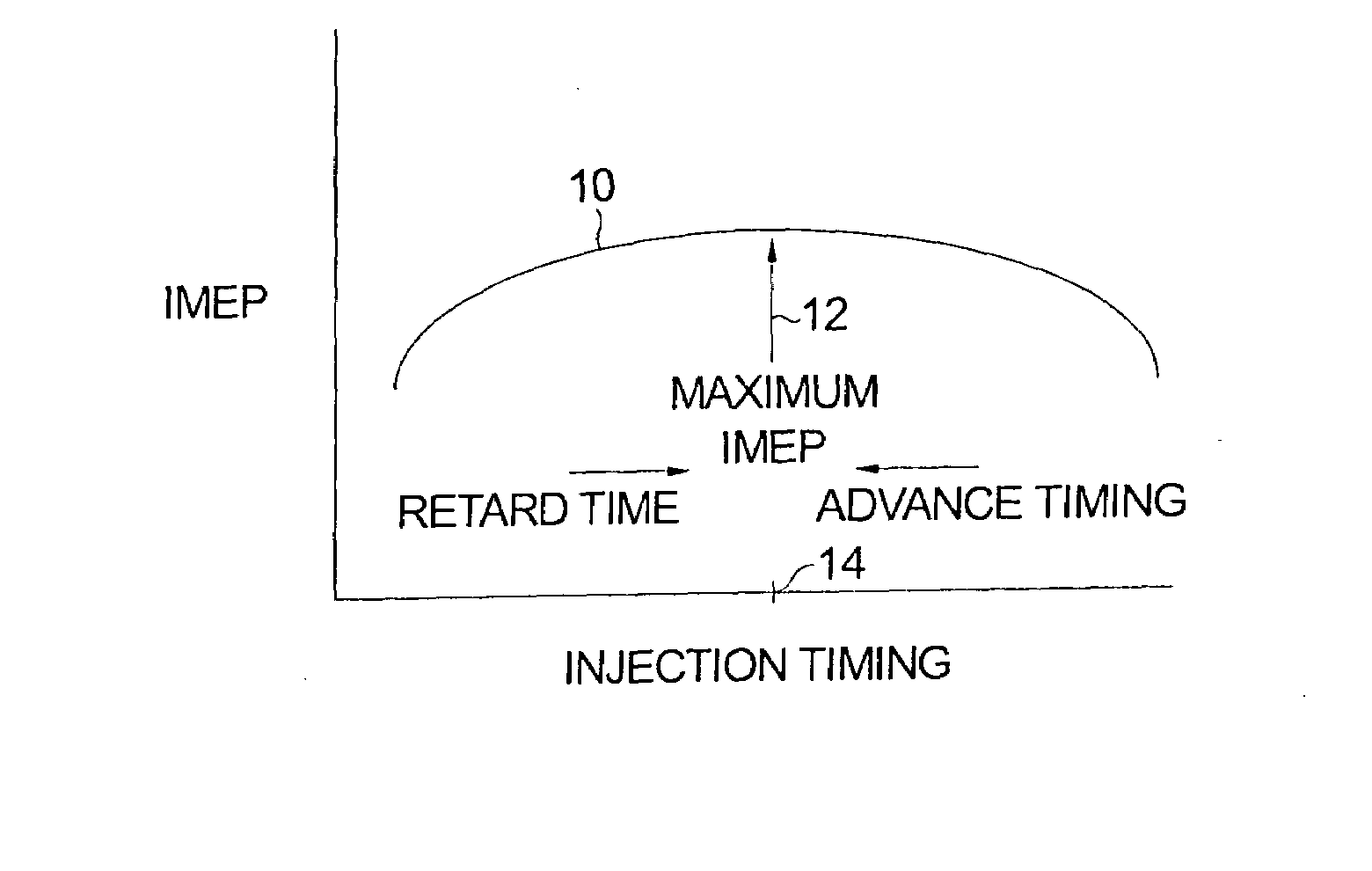
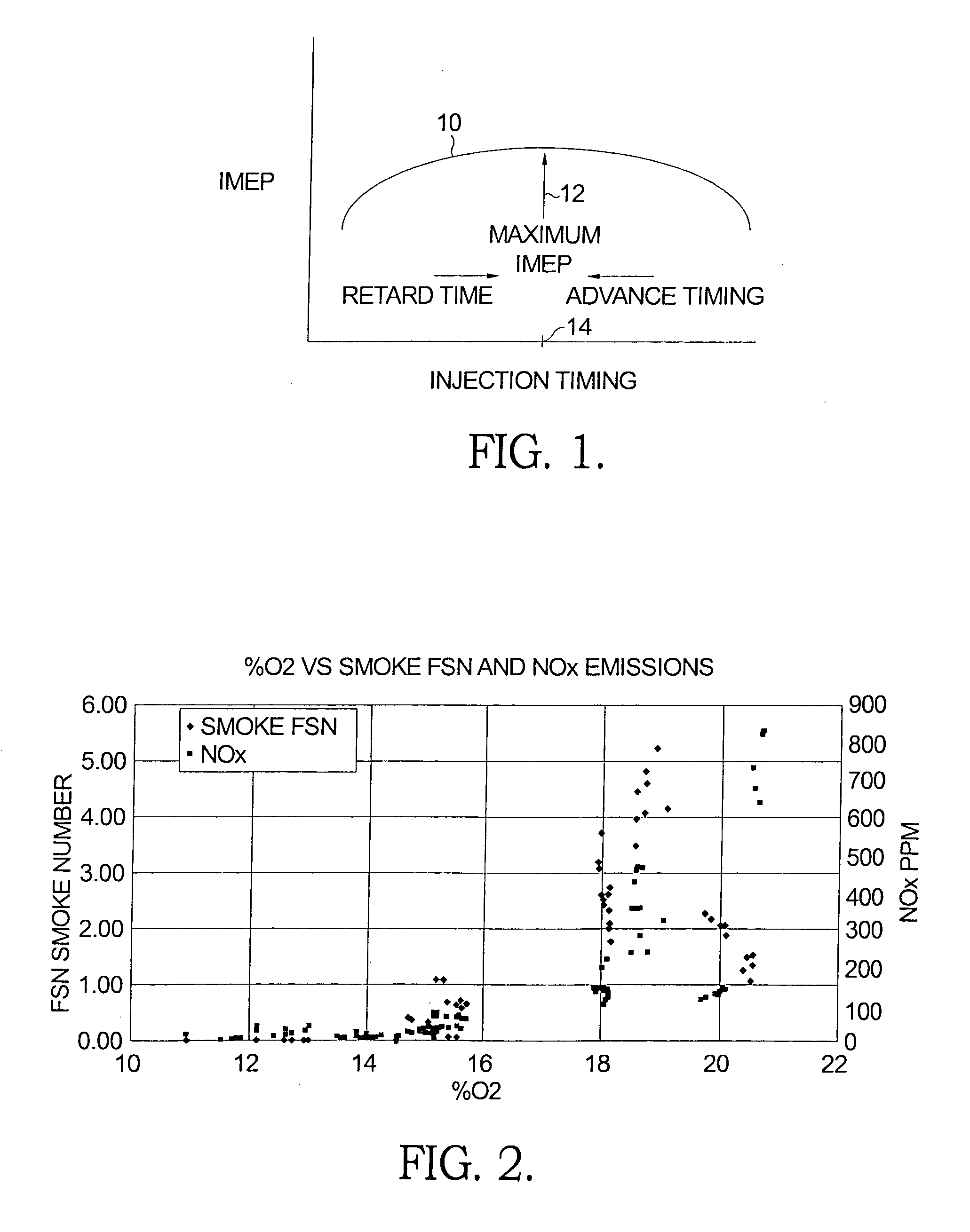
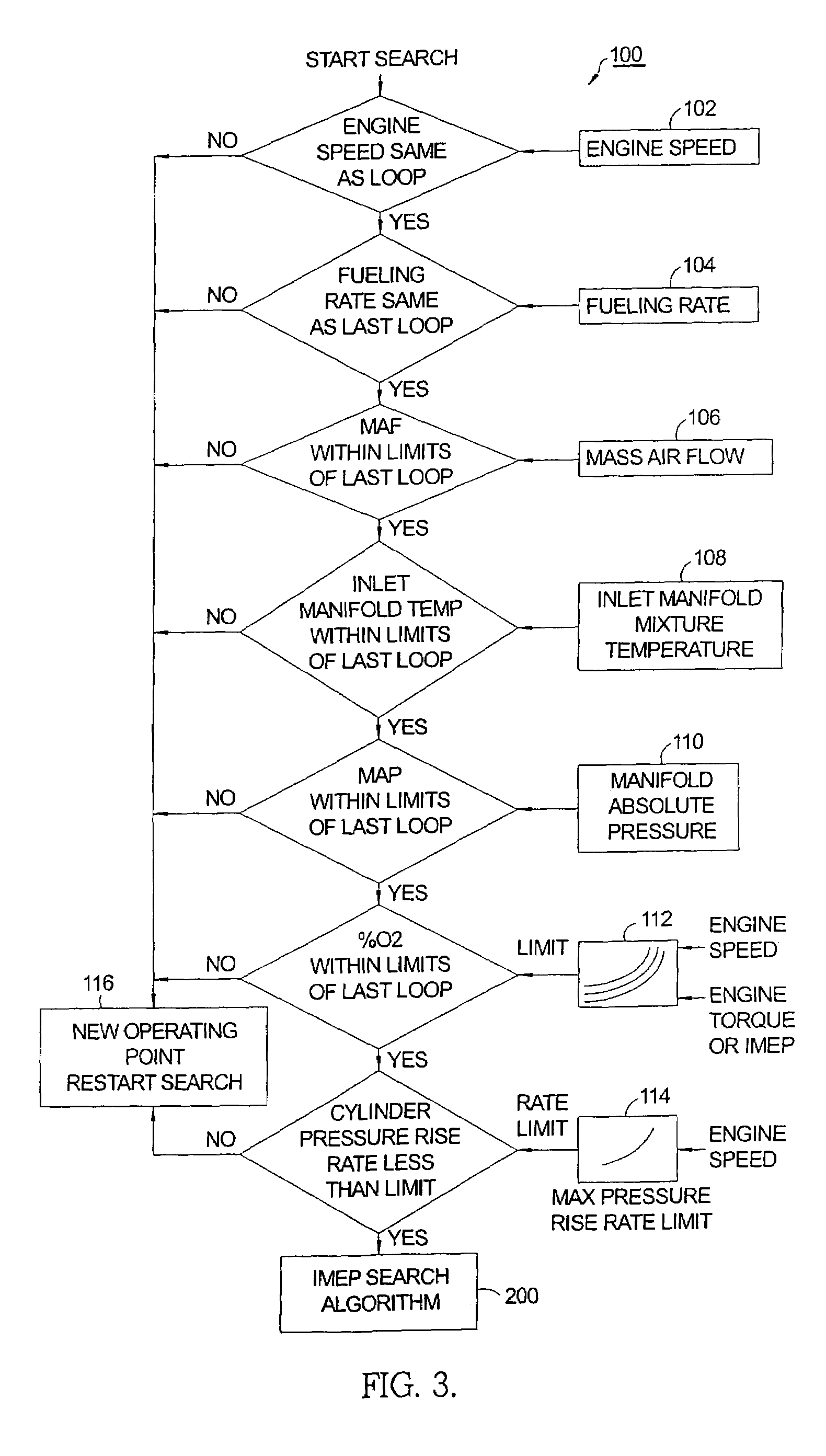
- A method utilizing a pressure sensor to measure Indicated Mean Effective Pressure (IMEP) and an algorithm in the Engine Control Module (ECM) to dynamically adjust fuel injection timing, optimizing it for maximum torque within stable engine conditions, and storing the optimal timing for future use.

Method and apparatus for controlling fuel injection timing for compression ignition engines
PatentInactiveUS4450817A
Innovation
- The method involves selecting two fuel injection timings close to a calculated optimal timing, operating the engine at these timings, comparing fuel consumption rates, and adjusting the timing based on rotational speed signals to determine whether the timing should be advanced or retarded, thereby optimizing fuel injection timing for maximum engine power and efficiency.


Emission Standards Impact on Injection Timing Design
The evolution of emission standards has fundamentally reshaped injection timing strategies in compression-ignition engines, creating a complex optimization landscape where power output objectives must be balanced against increasingly stringent regulatory requirements. Modern emission regulations, including Euro VI, EPA Tier 4, and emerging standards in developing markets, have established progressively lower limits for nitrogen oxides (NOx), particulate matter (PM), and other pollutants, directly influencing how engineers approach injection timing optimization.
Traditional injection timing strategies that prioritized maximum power output through early injection phases have been significantly constrained by NOx formation considerations. Advanced injection timing, while beneficial for combustion efficiency and power generation, tends to increase peak combustion temperatures, leading to elevated NOx emissions that conflict with current regulatory frameworks. This regulatory pressure has driven the development of multi-injection strategies, where pilot injections, main injections, and post-injections are precisely coordinated to achieve compliance while maintaining acceptable power levels.
The implementation of Real Driving Emissions (RDE) testing protocols has further complicated injection timing design, requiring optimization strategies that perform consistently across diverse operating conditions rather than solely under laboratory test cycles. This shift has necessitated adaptive injection timing systems that can dynamically adjust parameters based on real-time operating conditions, ambient temperatures, and load demands while maintaining emission compliance throughout the engine's operational envelope.
Regional variations in emission standards have created additional complexity for global engine manufacturers, who must develop injection timing strategies that can be adapted to different regulatory environments. The harmonization challenges between European, North American, and Asian standards require flexible injection timing architectures that can accommodate varying NOx limits, PM thresholds, and testing methodologies while preserving the fundamental power output characteristics demanded by different market segments.
Future emission standards are expected to introduce even more restrictive limits, potentially including greenhouse gas regulations and real-world durability requirements that will further constrain injection timing optimization. The anticipated integration of carbon intensity metrics and lifecycle emission assessments into regulatory frameworks suggests that injection timing strategies must evolve beyond traditional pollutant control to encompass broader environmental impact considerations while maintaining competitive power output performance.
Traditional injection timing strategies that prioritized maximum power output through early injection phases have been significantly constrained by NOx formation considerations. Advanced injection timing, while beneficial for combustion efficiency and power generation, tends to increase peak combustion temperatures, leading to elevated NOx emissions that conflict with current regulatory frameworks. This regulatory pressure has driven the development of multi-injection strategies, where pilot injections, main injections, and post-injections are precisely coordinated to achieve compliance while maintaining acceptable power levels.
The implementation of Real Driving Emissions (RDE) testing protocols has further complicated injection timing design, requiring optimization strategies that perform consistently across diverse operating conditions rather than solely under laboratory test cycles. This shift has necessitated adaptive injection timing systems that can dynamically adjust parameters based on real-time operating conditions, ambient temperatures, and load demands while maintaining emission compliance throughout the engine's operational envelope.
Regional variations in emission standards have created additional complexity for global engine manufacturers, who must develop injection timing strategies that can be adapted to different regulatory environments. The harmonization challenges between European, North American, and Asian standards require flexible injection timing architectures that can accommodate varying NOx limits, PM thresholds, and testing methodologies while preserving the fundamental power output characteristics demanded by different market segments.
Future emission standards are expected to introduce even more restrictive limits, potentially including greenhouse gas regulations and real-world durability requirements that will further constrain injection timing optimization. The anticipated integration of carbon intensity metrics and lifecycle emission assessments into regulatory frameworks suggests that injection timing strategies must evolve beyond traditional pollutant control to encompass broader environmental impact considerations while maintaining competitive power output performance.
Fuel Quality Considerations for Injection Optimization
Fuel quality represents a critical parameter that directly influences the effectiveness of injection timing optimization in compression-ignition engines. The chemical composition, physical properties, and combustion characteristics of diesel fuel significantly impact the engine's ability to achieve optimal power output through precise timing control. Understanding these relationships is essential for developing robust injection strategies that can adapt to varying fuel conditions.
Cetane number stands as the primary fuel quality metric affecting injection timing optimization. Higher cetane fuels exhibit shorter ignition delay periods, allowing for more precise control over combustion phasing. This characteristic enables engineers to implement more aggressive injection timing strategies without encountering excessive pressure rise rates or combustion knock. Conversely, lower cetane fuels require earlier injection timing to compensate for extended ignition delay, potentially limiting peak power output due to increased heat transfer losses during the longer combustion duration.
Fuel density and viscosity properties directly influence injection system performance and spray characteristics. Higher density fuels deliver more energy per unit volume but may require adjustments to injection pressure and timing to maintain optimal atomization. Viscosity variations affect fuel flow rates through injection nozzles, potentially altering the actual injection duration and fuel delivery patterns compared to calibrated values. These variations necessitate adaptive timing strategies that account for fuel property fluctuations.
Aromatic content and fuel volatility characteristics impact combustion quality and emission formation during optimized injection events. Fuels with higher aromatic content typically exhibit different combustion propagation rates, requiring timing adjustments to maintain peak cylinder pressure positioning for maximum power extraction. Volatility differences affect fuel vaporization rates, influencing the effectiveness of pilot injection strategies commonly employed in modern compression-ignition engines.
Temperature-dependent fuel properties introduce additional complexity to injection timing optimization. Seasonal fuel variations and operating temperature changes affect fuel density, viscosity, and combustion characteristics, requiring dynamic timing compensation strategies. Advanced engine management systems must incorporate fuel temperature sensing and property estimation algorithms to maintain optimal injection timing across varying fuel conditions.
Fuel contamination and aging effects can significantly degrade injection timing optimization effectiveness. Water contamination, oxidation products, and particulate matter can alter fuel flow characteristics and combustion behavior, potentially requiring recalibration of timing maps to maintain power output targets while preserving engine durability and emission compliance.
Cetane number stands as the primary fuel quality metric affecting injection timing optimization. Higher cetane fuels exhibit shorter ignition delay periods, allowing for more precise control over combustion phasing. This characteristic enables engineers to implement more aggressive injection timing strategies without encountering excessive pressure rise rates or combustion knock. Conversely, lower cetane fuels require earlier injection timing to compensate for extended ignition delay, potentially limiting peak power output due to increased heat transfer losses during the longer combustion duration.
Fuel density and viscosity properties directly influence injection system performance and spray characteristics. Higher density fuels deliver more energy per unit volume but may require adjustments to injection pressure and timing to maintain optimal atomization. Viscosity variations affect fuel flow rates through injection nozzles, potentially altering the actual injection duration and fuel delivery patterns compared to calibrated values. These variations necessitate adaptive timing strategies that account for fuel property fluctuations.
Aromatic content and fuel volatility characteristics impact combustion quality and emission formation during optimized injection events. Fuels with higher aromatic content typically exhibit different combustion propagation rates, requiring timing adjustments to maintain peak cylinder pressure positioning for maximum power extraction. Volatility differences affect fuel vaporization rates, influencing the effectiveness of pilot injection strategies commonly employed in modern compression-ignition engines.
Temperature-dependent fuel properties introduce additional complexity to injection timing optimization. Seasonal fuel variations and operating temperature changes affect fuel density, viscosity, and combustion characteristics, requiring dynamic timing compensation strategies. Advanced engine management systems must incorporate fuel temperature sensing and property estimation algorithms to maintain optimal injection timing across varying fuel conditions.
Fuel contamination and aging effects can significantly degrade injection timing optimization effectiveness. Water contamination, oxidation products, and particulate matter can alter fuel flow characteristics and combustion behavior, potentially requiring recalibration of timing maps to maintain power output targets while preserving engine durability and emission compliance.
Unlock deeper insights with Patsnap Eureka Quick Research — get a full tech report to explore trends and direct your research. Try now!
Generate Your Research Report Instantly with AI Agent
Supercharge your innovation with Patsnap Eureka AI Agent Platform!