Optimize Magnetic Valve Design for Faster Actuation
APR 1, 20269 MIN READ
Generate Your Research Report Instantly with AI Agent
Patsnap Eureka helps you evaluate technical feasibility & market potential.
Magnetic Valve Technology Background and Actuation Speed Goals
Magnetic valve technology has evolved significantly since its inception in the early 20th century, transitioning from simple electromagnetic switches to sophisticated precision control devices. The fundamental principle relies on electromagnetic force generation through current-carrying coils to manipulate ferromagnetic components, enabling fluid or gas flow control without mechanical contact. This contactless operation provides inherent advantages including reduced wear, enhanced reliability, and improved operational lifespan compared to traditional mechanical valve systems.
The historical development trajectory demonstrates continuous improvements in materials science, electromagnetic design, and control electronics. Early magnetic valves suffered from slow response times, limited force output, and significant power consumption. However, advances in rare earth permanent magnets, high-permeability soft magnetic materials, and precision manufacturing techniques have dramatically enhanced performance capabilities while reducing energy requirements.
Contemporary magnetic valve applications span diverse industries including automotive fuel injection systems, industrial process control, medical device fluid management, and aerospace propulsion systems. Each application domain presents unique performance requirements, with actuation speed emerging as a critical differentiating factor. Modern automotive applications demand response times under 1 millisecond, while industrial applications typically require sub-10 millisecond performance for competitive advantage.
Current actuation speed limitations primarily stem from electromagnetic induction delays, mechanical inertia of moving components, and magnetic flux buildup characteristics. Traditional designs often compromise between force output and response speed, creating optimization challenges for high-performance applications. The magnetic circuit design, coil configuration, and armature geometry collectively determine the electromagnetic response characteristics and ultimate actuation speed capabilities.
The strategic goal for optimized magnetic valve design centers on achieving sub-millisecond actuation times while maintaining adequate force output and operational reliability. This objective requires breakthrough approaches in electromagnetic circuit optimization, advanced materials integration, and innovative mechanical design concepts. Success in this domain would enable new application possibilities in high-frequency control systems, precision dosing applications, and next-generation automotive technologies where rapid response capabilities provide competitive differentiation and enhanced system performance.
The historical development trajectory demonstrates continuous improvements in materials science, electromagnetic design, and control electronics. Early magnetic valves suffered from slow response times, limited force output, and significant power consumption. However, advances in rare earth permanent magnets, high-permeability soft magnetic materials, and precision manufacturing techniques have dramatically enhanced performance capabilities while reducing energy requirements.
Contemporary magnetic valve applications span diverse industries including automotive fuel injection systems, industrial process control, medical device fluid management, and aerospace propulsion systems. Each application domain presents unique performance requirements, with actuation speed emerging as a critical differentiating factor. Modern automotive applications demand response times under 1 millisecond, while industrial applications typically require sub-10 millisecond performance for competitive advantage.
Current actuation speed limitations primarily stem from electromagnetic induction delays, mechanical inertia of moving components, and magnetic flux buildup characteristics. Traditional designs often compromise between force output and response speed, creating optimization challenges for high-performance applications. The magnetic circuit design, coil configuration, and armature geometry collectively determine the electromagnetic response characteristics and ultimate actuation speed capabilities.
The strategic goal for optimized magnetic valve design centers on achieving sub-millisecond actuation times while maintaining adequate force output and operational reliability. This objective requires breakthrough approaches in electromagnetic circuit optimization, advanced materials integration, and innovative mechanical design concepts. Success in this domain would enable new application possibilities in high-frequency control systems, precision dosing applications, and next-generation automotive technologies where rapid response capabilities provide competitive differentiation and enhanced system performance.
Market Demand for High-Speed Magnetic Valve Applications
The demand for high-speed magnetic valves has experienced substantial growth across multiple industrial sectors, driven by the increasing need for precise fluid control and rapid response times in automated systems. Manufacturing industries, particularly those involved in precision assembly, semiconductor fabrication, and pharmaceutical production, require magnetic valves capable of switching states within milliseconds to maintain production efficiency and product quality standards.
Automotive manufacturing represents a significant market segment where high-speed magnetic valves are essential for fuel injection systems, transmission control, and pneumatic assembly line operations. The shift toward electric vehicles has further intensified demand, as these systems require more sophisticated fluid management for battery cooling, brake systems, and air conditioning units that operate with enhanced precision and speed.
The medical device industry has emerged as a rapidly expanding market for high-speed magnetic valve applications. Modern medical equipment, including ventilators, dialysis machines, and automated drug delivery systems, relies heavily on valves that can respond instantaneously to control commands. The recent global health challenges have accelerated the adoption of advanced medical technologies, creating sustained demand for faster-actuating magnetic valves.
Process automation in chemical and petrochemical industries continues to drive market expansion, where high-speed magnetic valves enable precise control of corrosive and hazardous fluids. These applications demand valves that combine rapid actuation with long-term reliability under extreme operating conditions, pushing manufacturers to develop more robust and responsive designs.
The aerospace and defense sectors contribute significantly to market demand, requiring magnetic valves for hydraulic systems, fuel management, and environmental control systems in aircraft and spacecraft. These applications necessitate valves with exceptional reliability and rapid response characteristics to ensure operational safety and mission success.
Emerging applications in renewable energy systems, particularly in wind turbine pitch control and solar tracking mechanisms, are creating new market opportunities. These systems require magnetic valves that can operate efficiently across wide temperature ranges while maintaining consistent high-speed performance for optimal energy generation.
The industrial Internet of Things and smart manufacturing initiatives are further amplifying demand, as connected systems require valves capable of real-time response to digital control signals, enabling more sophisticated automation and predictive maintenance strategies.
Automotive manufacturing represents a significant market segment where high-speed magnetic valves are essential for fuel injection systems, transmission control, and pneumatic assembly line operations. The shift toward electric vehicles has further intensified demand, as these systems require more sophisticated fluid management for battery cooling, brake systems, and air conditioning units that operate with enhanced precision and speed.
The medical device industry has emerged as a rapidly expanding market for high-speed magnetic valve applications. Modern medical equipment, including ventilators, dialysis machines, and automated drug delivery systems, relies heavily on valves that can respond instantaneously to control commands. The recent global health challenges have accelerated the adoption of advanced medical technologies, creating sustained demand for faster-actuating magnetic valves.
Process automation in chemical and petrochemical industries continues to drive market expansion, where high-speed magnetic valves enable precise control of corrosive and hazardous fluids. These applications demand valves that combine rapid actuation with long-term reliability under extreme operating conditions, pushing manufacturers to develop more robust and responsive designs.
The aerospace and defense sectors contribute significantly to market demand, requiring magnetic valves for hydraulic systems, fuel management, and environmental control systems in aircraft and spacecraft. These applications necessitate valves with exceptional reliability and rapid response characteristics to ensure operational safety and mission success.
Emerging applications in renewable energy systems, particularly in wind turbine pitch control and solar tracking mechanisms, are creating new market opportunities. These systems require magnetic valves that can operate efficiently across wide temperature ranges while maintaining consistent high-speed performance for optimal energy generation.
The industrial Internet of Things and smart manufacturing initiatives are further amplifying demand, as connected systems require valves capable of real-time response to digital control signals, enabling more sophisticated automation and predictive maintenance strategies.
Current State and Speed Limitations of Magnetic Valve Design
Magnetic valve technology has evolved significantly over the past decades, with current designs primarily utilizing electromagnetic actuators to control fluid flow in various industrial applications. The fundamental operating principle relies on electromagnetic force generation through current-carrying coils that interact with ferromagnetic components to achieve valve positioning. Contemporary magnetic valves typically achieve actuation speeds ranging from 10 to 100 milliseconds, depending on valve size, magnetic circuit design, and operating conditions.
The current state of magnetic valve design faces several inherent speed limitations that constrain performance optimization. Electromagnetic induction effects create significant delays during both valve opening and closing cycles, as magnetic fields require finite time to build up and decay. The magnetic circuit design, including core materials and air gap configurations, directly impacts the speed of magnetic flux changes and consequently affects actuation response times.
Mechanical inertia represents another critical limitation in existing designs. The moving components, including armatures, springs, and valve stems, possess mass that resists rapid acceleration and deceleration. This mechanical constraint becomes particularly pronounced in larger valve assemblies where component masses increase substantially. Additionally, the magnetic force characteristics typically exhibit non-linear behavior, with maximum force generation occurring when the air gap is minimized, creating challenges for consistent actuation speeds throughout the valve stroke.
Eddy current losses in ferromagnetic materials further impede rapid actuation by dissipating electromagnetic energy as heat rather than useful mechanical work. These losses increase proportionally with actuation frequency, creating thermal management challenges and reducing overall system efficiency. The magnetic hysteresis effects in core materials also contribute to response delays, as the magnetic domains require time to reorient during field reversals.
Current valve designs often employ compromise solutions that balance actuation speed against other performance parameters such as holding force, power consumption, and operational reliability. Many existing systems utilize constant voltage or current control strategies that do not optimize the electromagnetic field dynamics for maximum speed performance. The integration of position feedback systems remains limited in cost-sensitive applications, preventing the implementation of advanced control algorithms that could enhance actuation speed.
Manufacturing tolerances and material variations in production magnetic valves create additional performance inconsistencies that affect actuation speed predictability. Air gap variations, coil resistance differences, and magnetic material property deviations all contribute to speed performance scatter across production units, making it challenging to achieve consistent high-speed operation in commercial applications.
The current state of magnetic valve design faces several inherent speed limitations that constrain performance optimization. Electromagnetic induction effects create significant delays during both valve opening and closing cycles, as magnetic fields require finite time to build up and decay. The magnetic circuit design, including core materials and air gap configurations, directly impacts the speed of magnetic flux changes and consequently affects actuation response times.
Mechanical inertia represents another critical limitation in existing designs. The moving components, including armatures, springs, and valve stems, possess mass that resists rapid acceleration and deceleration. This mechanical constraint becomes particularly pronounced in larger valve assemblies where component masses increase substantially. Additionally, the magnetic force characteristics typically exhibit non-linear behavior, with maximum force generation occurring when the air gap is minimized, creating challenges for consistent actuation speeds throughout the valve stroke.
Eddy current losses in ferromagnetic materials further impede rapid actuation by dissipating electromagnetic energy as heat rather than useful mechanical work. These losses increase proportionally with actuation frequency, creating thermal management challenges and reducing overall system efficiency. The magnetic hysteresis effects in core materials also contribute to response delays, as the magnetic domains require time to reorient during field reversals.
Current valve designs often employ compromise solutions that balance actuation speed against other performance parameters such as holding force, power consumption, and operational reliability. Many existing systems utilize constant voltage or current control strategies that do not optimize the electromagnetic field dynamics for maximum speed performance. The integration of position feedback systems remains limited in cost-sensitive applications, preventing the implementation of advanced control algorithms that could enhance actuation speed.
Manufacturing tolerances and material variations in production magnetic valves create additional performance inconsistencies that affect actuation speed predictability. Air gap variations, coil resistance differences, and magnetic material property deviations all contribute to speed performance scatter across production units, making it challenging to achieve consistent high-speed operation in commercial applications.
Existing Solutions for Magnetic Valve Speed Optimization
01 Electromagnetic actuator design optimization
Optimizing the electromagnetic actuator design can significantly improve valve actuation speed. This includes modifications to the coil configuration, magnetic circuit design, and armature geometry to reduce response time and increase switching frequency. Enhanced magnetic flux distribution and reduced air gaps contribute to faster valve opening and closing cycles. Advanced materials with improved magnetic properties can also be utilized to achieve quicker actuation.- Electromagnetic actuator design optimization: Optimizing the electromagnetic actuator design can significantly improve valve actuation speed. This includes modifications to the coil configuration, magnetic circuit design, and armature geometry to reduce response time and increase switching frequency. Enhanced magnetic flux paths and reduced air gaps contribute to faster valve operation. Advanced materials with improved magnetic properties can also be utilized to achieve quicker actuation.
- Control algorithms for rapid valve switching: Implementation of advanced control algorithms and electronic control units can enhance valve actuation speed. These systems utilize pulse-width modulation, predictive control strategies, and optimized current profiles to achieve faster valve response times. Real-time monitoring and adaptive control methods allow for precise timing adjustments and improved dynamic performance during valve operation.
- Mechanical spring and biasing mechanisms: Incorporating optimized spring systems and biasing mechanisms can accelerate valve actuation by providing additional force during opening and closing cycles. The use of specific spring constants, pre-load configurations, and dual-spring arrangements enables faster valve movement and reduced settling time. These mechanical enhancements work in conjunction with electromagnetic forces to achieve improved actuation speed.
- Reduced mass and inertia components: Reducing the mass and inertia of moving valve components directly improves actuation speed by decreasing the force required for acceleration and deceleration. This can be achieved through lightweight materials, optimized geometries, and miniaturized designs. Lower inertia components respond more quickly to electromagnetic forces, resulting in faster valve switching times and improved overall system responsiveness.
- Hydraulic and pneumatic assist systems: Integration of hydraulic or pneumatic assist mechanisms can enhance magnetic valve actuation speed by providing supplementary force during valve movement. These systems utilize pressure differentials, pilot valves, or auxiliary actuators to reduce the electromagnetic force requirements and accelerate valve response. Combined actuation approaches leverage both magnetic and fluid power to achieve faster switching speeds than purely electromagnetic systems.
02 Control strategies for rapid valve switching
Implementing advanced control strategies can enhance valve actuation speed through optimized current profiles and voltage control. Pulse-width modulation techniques, adaptive control algorithms, and predictive control methods enable faster response times. These strategies manage the electrical energy supplied to the solenoid to achieve rapid magnetic field buildup and collapse, resulting in quicker valve transitions between open and closed states.Expand Specific Solutions03 Mechanical spring and damping systems
The integration of optimized spring mechanisms and damping systems plays a crucial role in valve actuation speed. Proper spring selection ensures rapid return motion while damping elements control oscillations and prevent bouncing. The balance between spring force and magnetic force determines the overall switching speed. Mechanical design improvements including reduced moving mass and friction reduction contribute to faster actuation cycles.Expand Specific Solutions04 High-speed solenoid valve architecture
Specialized high-speed solenoid valve architectures incorporate design features specifically aimed at reducing actuation time. These include lightweight armature designs, optimized magnetic pole geometries, and reduced stroke lengths. The use of high-performance magnetic materials and minimized eddy current losses enable faster magnetic field changes. Structural modifications to reduce inertia and improve dynamic response characteristics are key elements in achieving high-speed operation.Expand Specific Solutions05 Sensor feedback and position monitoring
Incorporating sensor feedback systems and position monitoring capabilities allows for precise control of valve actuation speed. Real-time position sensing enables closed-loop control strategies that optimize the actuation profile. Monitoring systems can detect valve position and velocity, allowing for dynamic adjustment of control parameters to achieve desired switching speeds. These feedback mechanisms improve repeatability and enable compensation for wear and environmental variations.Expand Specific Solutions
Key Players in Magnetic Valve and Actuator Industry
The magnetic valve optimization market is experiencing significant growth driven by increasing automation demands across automotive, industrial, and aerospace sectors. The industry is in a mature development stage with established players like Robert Bosch GmbH, Continental Teves AG, and Toyota Motor Corp. leading automotive applications, while specialized companies such as Bürkert Werke GmbH, Festo SE & Co. KG, and Danfoss A/S dominate industrial valve solutions. Technology maturity varies significantly across segments, with companies like TDK Corp. and ETO Magnetic GmbH advancing electromagnetic actuation technologies, while research institutions including Deutsches Zentrum für Luft- und Raumfahrt and Tongji University contribute to fundamental research. The competitive landscape shows strong regional clusters in Germany and emerging capabilities in China through companies like Midea Welling Motor Technology and Fulin Precision Co. Market consolidation is evident with major players acquiring specialized firms to enhance their magnetic valve portfolios and accelerate innovation in faster actuation technologies.
Robert Bosch GmbH
Technical Solution: Bosch has developed advanced electromagnetic valve technologies focusing on optimized coil designs and magnetic circuit configurations to achieve faster actuation times. Their approach includes using high-permeability magnetic materials and optimized pole piece geometries to reduce magnetic flux path resistance. The company implements advanced simulation tools for magnetic field analysis and employs lightweight armature designs with reduced moving mass to minimize inertia. Bosch's valves feature optimized spring systems and incorporate smart control algorithms that adjust current profiles for rapid valve opening and closing cycles, achieving actuation times as low as 2-3 milliseconds in automotive applications.
Strengths: Extensive automotive industry experience, advanced manufacturing capabilities, strong R&D resources. Weaknesses: High development costs, complex integration requirements for existing systems.
Bürkert Werke GmbH & Co. KG
Technical Solution: Bürkert specializes in fast-acting solenoid valves with optimized magnetic circuit designs that minimize eddy current losses and maximize magnetic force efficiency. Their technology incorporates precision-machined pole pieces with optimized air gap geometries and uses high-energy permanent magnets in hybrid designs to reduce power consumption while maintaining fast response times. The company develops specialized coil winding techniques and employs advanced materials like laminated cores to reduce electromagnetic losses. Their valve designs feature optimized flow paths and lightweight moving components, achieving response times under 5 milliseconds for process control applications with enhanced durability and reliability.
Strengths: Specialized valve expertise, precision manufacturing, strong process control market presence. Weaknesses: Limited to smaller valve sizes, higher cost compared to standard valves.
Core Innovations in Fast-Acting Magnetic Valve Design
Magnetic valve
PatentWO1991006110A1
Innovation
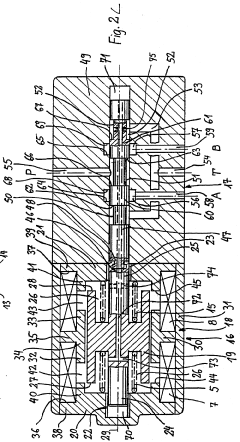
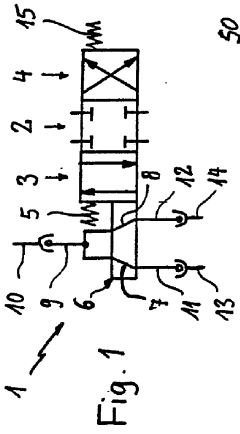
- A solenoid valve design where a quiescent current constantly flows through control windings, inducing a permanent magnetization in the stator, armature, and pole shoes, allowing the armature to be quickly moved between positions without reorienting the magnetic field, thus reducing response time by a factor of 10 to 1-2 ms.
Electromagnetic actuator for valve drive in an internal combustion engine
PatentInactiveEP1450009A2
Innovation
- The parameters of the electromagnet and magnetic plate are optimized such that at least part of the magnetic circuit is in a state of magnetic saturation when the plate is close to the electromagnet, resulting in a quasi-linear variation of the attraction force, reducing the impact speed and eliminating the need for complex regulation circuits, with the magnetic plate being in non-saturation when away from the electromagnet to minimize switching time and maximize startup speed.


Energy Efficiency Standards for Magnetic Valve Systems
Energy efficiency standards for magnetic valve systems have become increasingly stringent as industries seek to reduce operational costs and meet environmental regulations. Current international standards such as ISO 50001 and IEC 60034 establish baseline requirements for electromagnetic actuator efficiency, typically mandating minimum efficiency ratings of 85-90% for industrial magnetic valve applications. These standards directly impact the design optimization of faster-actuating magnetic valves, as increased switching speeds often correlate with higher power consumption.
The European Union's EcoDesign Directive 2009/125/EC has established specific energy consumption limits for electromagnetic actuators used in fluid control systems. Under these regulations, magnetic valve systems must demonstrate energy consumption below 15 watts during standby operation and maintain power factor ratings above 0.9 during active switching cycles. These requirements create significant design constraints for engineers developing faster-actuating magnetic valves, as rapid switching mechanisms typically require higher instantaneous power draws.
North American standards, particularly NEMA MG-1 and ASHRAE 90.1, focus on operational efficiency metrics that directly influence magnetic valve design parameters. These standards require magnetic actuators to achieve response times under 50 milliseconds while maintaining energy consumption within prescribed limits based on valve size and application category. The standards also mandate power management features such as automatic standby modes and variable power control systems.
Emerging efficiency standards are incorporating dynamic performance metrics that evaluate energy consumption across complete actuation cycles rather than steady-state operations alone. The International Electrotechnical Commission's draft IEC 62830 standard proposes energy efficiency classifications specifically for fast-acting electromagnetic valves, establishing performance benchmarks that balance actuation speed with power consumption. These evolving standards require manufacturers to optimize magnetic circuit designs, coil configurations, and control algorithms to achieve faster response times without exceeding energy consumption thresholds.
Compliance with these energy efficiency standards necessitates advanced design approaches including pulse-width modulation control systems, optimized magnetic flux paths, and intelligent power management algorithms that can deliver rapid actuation while maintaining regulatory compliance across diverse operating conditions and industrial applications.
The European Union's EcoDesign Directive 2009/125/EC has established specific energy consumption limits for electromagnetic actuators used in fluid control systems. Under these regulations, magnetic valve systems must demonstrate energy consumption below 15 watts during standby operation and maintain power factor ratings above 0.9 during active switching cycles. These requirements create significant design constraints for engineers developing faster-actuating magnetic valves, as rapid switching mechanisms typically require higher instantaneous power draws.
North American standards, particularly NEMA MG-1 and ASHRAE 90.1, focus on operational efficiency metrics that directly influence magnetic valve design parameters. These standards require magnetic actuators to achieve response times under 50 milliseconds while maintaining energy consumption within prescribed limits based on valve size and application category. The standards also mandate power management features such as automatic standby modes and variable power control systems.
Emerging efficiency standards are incorporating dynamic performance metrics that evaluate energy consumption across complete actuation cycles rather than steady-state operations alone. The International Electrotechnical Commission's draft IEC 62830 standard proposes energy efficiency classifications specifically for fast-acting electromagnetic valves, establishing performance benchmarks that balance actuation speed with power consumption. These evolving standards require manufacturers to optimize magnetic circuit designs, coil configurations, and control algorithms to achieve faster response times without exceeding energy consumption thresholds.
Compliance with these energy efficiency standards necessitates advanced design approaches including pulse-width modulation control systems, optimized magnetic flux paths, and intelligent power management algorithms that can deliver rapid actuation while maintaining regulatory compliance across diverse operating conditions and industrial applications.
Material Science Advances in Magnetic Valve Components
Recent breakthroughs in magnetic materials have revolutionized the design possibilities for high-speed magnetic valve systems. Advanced soft magnetic alloys, particularly iron-silicon and iron-cobalt compositions with optimized grain structures, now offer magnetic permeabilities exceeding 100,000 μ while maintaining minimal coercivity. These materials enable rapid magnetic field establishment and collapse, directly translating to faster valve response times. Nanocrystalline magnetic cores demonstrate superior performance in high-frequency switching applications, with switching speeds improved by up to 40% compared to conventional ferrite materials.
The development of rare earth permanent magnets with enhanced temperature stability has addressed critical performance limitations in demanding industrial environments. Neodymium-iron-boron magnets with dysprosium additions maintain magnetic strength at temperatures up to 200°C, ensuring consistent actuation force across operational temperature ranges. Samarium-cobalt alternatives provide even greater thermal stability for extreme applications, though at higher material costs.
Smart material integration represents a paradigm shift in magnetic valve design. Shape memory alloys combined with magnetic actuators create hybrid systems capable of both rapid initial response and precise positioning control. Magnetostrictive materials like Terfenol-D offer direct conversion of magnetic energy to mechanical displacement with response times in microseconds, enabling ultra-fast valve operations previously unattainable with conventional electromagnetic designs.
Advanced composite materials incorporating magnetic nanoparticles within polymer matrices provide lightweight alternatives to traditional metallic components. These composites reduce overall valve mass while maintaining magnetic responsiveness, contributing to faster acceleration and deceleration cycles. Carbon fiber reinforced magnetic composites demonstrate particular promise for aerospace applications where weight reduction is critical.
Surface engineering advances through specialized coatings and treatments have significantly improved component durability and performance consistency. Anti-corrosion treatments preserve magnetic properties over extended operational periods, while low-friction coatings on moving components reduce mechanical resistance and enable faster actuation speeds. These material science innovations collectively enable magnetic valve designs that achieve response times below 10 milliseconds while maintaining reliability and precision in demanding industrial applications.
The development of rare earth permanent magnets with enhanced temperature stability has addressed critical performance limitations in demanding industrial environments. Neodymium-iron-boron magnets with dysprosium additions maintain magnetic strength at temperatures up to 200°C, ensuring consistent actuation force across operational temperature ranges. Samarium-cobalt alternatives provide even greater thermal stability for extreme applications, though at higher material costs.
Smart material integration represents a paradigm shift in magnetic valve design. Shape memory alloys combined with magnetic actuators create hybrid systems capable of both rapid initial response and precise positioning control. Magnetostrictive materials like Terfenol-D offer direct conversion of magnetic energy to mechanical displacement with response times in microseconds, enabling ultra-fast valve operations previously unattainable with conventional electromagnetic designs.
Advanced composite materials incorporating magnetic nanoparticles within polymer matrices provide lightweight alternatives to traditional metallic components. These composites reduce overall valve mass while maintaining magnetic responsiveness, contributing to faster acceleration and deceleration cycles. Carbon fiber reinforced magnetic composites demonstrate particular promise for aerospace applications where weight reduction is critical.
Surface engineering advances through specialized coatings and treatments have significantly improved component durability and performance consistency. Anti-corrosion treatments preserve magnetic properties over extended operational periods, while low-friction coatings on moving components reduce mechanical resistance and enable faster actuation speeds. These material science innovations collectively enable magnetic valve designs that achieve response times below 10 milliseconds while maintaining reliability and precision in demanding industrial applications.
Unlock deeper insights with Patsnap Eureka Quick Research — get a full tech report to explore trends and direct your research. Try now!
Generate Your Research Report Instantly with AI Agent
Supercharge your innovation with Patsnap Eureka AI Agent Platform!