
Optimize Microfiber Surface Structure for Maximal Contact
FEB 27, 20269 MIN READ
Generate Your Research Report Instantly with AI Agent
Patsnap Eureka helps you evaluate technical feasibility & market potential.
Microfiber Surface Optimization Background and Objectives
Microfiber technology has emerged as a revolutionary advancement in material science, fundamentally transforming applications across cleaning, filtration, textiles, and biomedical sectors. The evolution of microfiber manufacturing began in the 1960s with basic synthetic fiber production, progressing through decades of refinement to achieve today's sophisticated surface engineering capabilities. Modern microfibers, typically measuring less than one denier or 10 micrometers in diameter, represent the convergence of polymer science, nanotechnology, and precision manufacturing.
The historical trajectory of microfiber development reveals distinct phases of innovation. Early developments focused on basic fiber miniaturization, while subsequent advances emphasized surface modification techniques including plasma treatment, chemical etching, and nanoparticle incorporation. Recent breakthroughs have introduced biomimetic surface designs inspired by natural structures such as gecko feet and lotus leaves, enabling unprecedented levels of surface interaction control.
Contemporary market demands drive the imperative for optimized microfiber surface structures. Industries require materials that maximize contact efficiency while maintaining durability, cost-effectiveness, and environmental sustainability. The cleaning industry seeks enhanced dirt capture and retention capabilities, while filtration applications demand improved particle separation efficiency. Medical applications require biocompatible surfaces with controlled interaction properties for wound care and drug delivery systems.
The primary technical objective centers on developing systematic approaches to engineer microfiber surface topography for optimal contact performance. This encompasses creating hierarchical surface structures that combine macro-scale fiber architecture with micro and nano-scale surface features. Key performance metrics include contact area maximization, surface energy optimization, and mechanical stability under operational conditions.
Secondary objectives involve establishing predictive models that correlate surface structure parameters with contact performance outcomes. This includes developing characterization methodologies for quantifying surface roughness, porosity, and chemical functionality at multiple length scales. The integration of computational modeling with experimental validation forms a critical component of the optimization framework.
Long-term strategic goals encompass the development of scalable manufacturing processes that enable precise control over surface structure formation. This includes advancing techniques such as electrospinning parameter optimization, post-processing surface modification methods, and quality control systems for consistent production. The ultimate vision involves creating adaptive microfiber surfaces that can dynamically adjust their contact properties in response to environmental conditions or specific application requirements.
Environmental sustainability considerations increasingly influence optimization objectives, necessitating the development of biodegradable microfiber alternatives and closed-loop manufacturing processes. The integration of renewable raw materials and energy-efficient production methods represents a fundamental shift toward sustainable microfiber technology development.
The historical trajectory of microfiber development reveals distinct phases of innovation. Early developments focused on basic fiber miniaturization, while subsequent advances emphasized surface modification techniques including plasma treatment, chemical etching, and nanoparticle incorporation. Recent breakthroughs have introduced biomimetic surface designs inspired by natural structures such as gecko feet and lotus leaves, enabling unprecedented levels of surface interaction control.
Contemporary market demands drive the imperative for optimized microfiber surface structures. Industries require materials that maximize contact efficiency while maintaining durability, cost-effectiveness, and environmental sustainability. The cleaning industry seeks enhanced dirt capture and retention capabilities, while filtration applications demand improved particle separation efficiency. Medical applications require biocompatible surfaces with controlled interaction properties for wound care and drug delivery systems.
The primary technical objective centers on developing systematic approaches to engineer microfiber surface topography for optimal contact performance. This encompasses creating hierarchical surface structures that combine macro-scale fiber architecture with micro and nano-scale surface features. Key performance metrics include contact area maximization, surface energy optimization, and mechanical stability under operational conditions.
Secondary objectives involve establishing predictive models that correlate surface structure parameters with contact performance outcomes. This includes developing characterization methodologies for quantifying surface roughness, porosity, and chemical functionality at multiple length scales. The integration of computational modeling with experimental validation forms a critical component of the optimization framework.
Long-term strategic goals encompass the development of scalable manufacturing processes that enable precise control over surface structure formation. This includes advancing techniques such as electrospinning parameter optimization, post-processing surface modification methods, and quality control systems for consistent production. The ultimate vision involves creating adaptive microfiber surfaces that can dynamically adjust their contact properties in response to environmental conditions or specific application requirements.
Environmental sustainability considerations increasingly influence optimization objectives, necessitating the development of biodegradable microfiber alternatives and closed-loop manufacturing processes. The integration of renewable raw materials and energy-efficient production methods represents a fundamental shift toward sustainable microfiber technology development.
Market Demand for Enhanced Microfiber Contact Performance
The global microfiber market has experienced substantial growth driven by increasing demand for high-performance cleaning solutions across residential, commercial, and industrial sectors. Enhanced microfiber contact performance has become a critical differentiator as consumers and businesses seek more effective cleaning products that can capture microscopic particles, bacteria, and contaminants with superior efficiency.
Healthcare facilities represent a particularly demanding market segment where optimized microfiber surface structures are essential for infection control and maintaining sterile environments. Hospitals, clinics, and pharmaceutical manufacturing facilities require cleaning materials that can achieve maximum surface contact to eliminate pathogens effectively. The stringent hygiene standards in these environments drive continuous demand for advanced microfiber technologies.
The automotive industry has emerged as another significant market driver, with car detailing services and manufacturing facilities requiring microfiber products that can achieve optimal contact with complex surface geometries. Enhanced surface structures enable better paint protection, streak-free cleaning, and efficient removal of contaminants without causing surface damage.
Consumer electronics manufacturing and maintenance sectors demand microfiber solutions with maximized contact performance for cleaning sensitive components and displays. The proliferation of touchscreen devices, optical equipment, and precision instruments has created specialized market niches requiring tailored microfiber surface optimization.
Industrial cleaning applications, particularly in aerospace, semiconductor, and precision manufacturing industries, require microfiber products capable of achieving maximum contact efficiency on critical surfaces. These sectors prioritize contamination control and surface preparation, driving demand for advanced microfiber technologies with optimized surface structures.
The growing emphasis on sustainable cleaning practices has intensified market demand for high-performance microfiber products that reduce chemical usage while maintaining cleaning effectiveness. Environmental regulations and corporate sustainability initiatives are pushing organizations toward cleaning solutions that rely on mechanical action rather than harsh chemicals, making optimized microfiber contact performance increasingly valuable.
Emerging applications in biotechnology, nanotechnology research, and cleanroom environments continue to expand market opportunities for enhanced microfiber contact performance, creating specialized demand for products with precisely engineered surface structures tailored to specific contamination control requirements.
Healthcare facilities represent a particularly demanding market segment where optimized microfiber surface structures are essential for infection control and maintaining sterile environments. Hospitals, clinics, and pharmaceutical manufacturing facilities require cleaning materials that can achieve maximum surface contact to eliminate pathogens effectively. The stringent hygiene standards in these environments drive continuous demand for advanced microfiber technologies.
The automotive industry has emerged as another significant market driver, with car detailing services and manufacturing facilities requiring microfiber products that can achieve optimal contact with complex surface geometries. Enhanced surface structures enable better paint protection, streak-free cleaning, and efficient removal of contaminants without causing surface damage.
Consumer electronics manufacturing and maintenance sectors demand microfiber solutions with maximized contact performance for cleaning sensitive components and displays. The proliferation of touchscreen devices, optical equipment, and precision instruments has created specialized market niches requiring tailored microfiber surface optimization.
Industrial cleaning applications, particularly in aerospace, semiconductor, and precision manufacturing industries, require microfiber products capable of achieving maximum contact efficiency on critical surfaces. These sectors prioritize contamination control and surface preparation, driving demand for advanced microfiber technologies with optimized surface structures.
The growing emphasis on sustainable cleaning practices has intensified market demand for high-performance microfiber products that reduce chemical usage while maintaining cleaning effectiveness. Environmental regulations and corporate sustainability initiatives are pushing organizations toward cleaning solutions that rely on mechanical action rather than harsh chemicals, making optimized microfiber contact performance increasingly valuable.
Emerging applications in biotechnology, nanotechnology research, and cleanroom environments continue to expand market opportunities for enhanced microfiber contact performance, creating specialized demand for products with precisely engineered surface structures tailored to specific contamination control requirements.
Current Microfiber Surface Structure Limitations and Challenges
Current microfiber surface structures face significant limitations in achieving optimal contact performance across diverse applications. Traditional manufacturing processes often result in inconsistent fiber diameter distribution, with variations ranging from 0.1 to 10 micrometers within single batches. This heterogeneity creates uneven contact pressure distribution and reduces overall surface interaction efficiency.
The predominant challenge lies in controlling surface roughness at the nanoscale level. Conventional electrospinning and melt-blowing techniques struggle to maintain uniform surface topology, leading to contact area variations of up to 40% across fiber surfaces. These irregularities create dead zones where minimal contact occurs, significantly limiting the effective utilization of available surface area.
Fiber alignment presents another critical constraint in current microfiber structures. Random orientation patterns, while providing omnidirectional contact capabilities, often result in fiber bundling and agglomeration. This phenomenon reduces individual fiber accessibility and creates preferential contact pathways that bypass substantial portions of the microfiber network.
Surface energy heterogeneity across microfiber structures poses additional challenges for maximizing contact efficiency. Variations in surface chemistry and wettability properties create inconsistent adhesion characteristics, leading to unpredictable contact behavior under different environmental conditions. These variations are particularly pronounced in synthetic polymer-based microfibers where processing conditions directly influence surface properties.
Mechanical stability limitations further constrain current microfiber surface structures. High aspect ratio fibers, while offering increased surface area, demonstrate reduced structural integrity under contact stress. This trade-off between surface area maximization and mechanical durability creates design constraints that limit optimal contact performance.
Scale-up manufacturing challenges significantly impact the consistency of microfiber surface structures. Laboratory-scale production methods that achieve desired surface characteristics often fail to maintain quality standards during industrial-scale manufacturing. Process parameter sensitivity and equipment limitations result in batch-to-batch variations that compromise contact performance reliability.
Environmental degradation represents a long-term limitation affecting microfiber surface structure integrity. Exposure to moisture, temperature fluctuations, and chemical environments gradually alters surface topology and chemistry, leading to progressive deterioration of contact properties over operational lifespans.
The predominant challenge lies in controlling surface roughness at the nanoscale level. Conventional electrospinning and melt-blowing techniques struggle to maintain uniform surface topology, leading to contact area variations of up to 40% across fiber surfaces. These irregularities create dead zones where minimal contact occurs, significantly limiting the effective utilization of available surface area.
Fiber alignment presents another critical constraint in current microfiber structures. Random orientation patterns, while providing omnidirectional contact capabilities, often result in fiber bundling and agglomeration. This phenomenon reduces individual fiber accessibility and creates preferential contact pathways that bypass substantial portions of the microfiber network.
Surface energy heterogeneity across microfiber structures poses additional challenges for maximizing contact efficiency. Variations in surface chemistry and wettability properties create inconsistent adhesion characteristics, leading to unpredictable contact behavior under different environmental conditions. These variations are particularly pronounced in synthetic polymer-based microfibers where processing conditions directly influence surface properties.
Mechanical stability limitations further constrain current microfiber surface structures. High aspect ratio fibers, while offering increased surface area, demonstrate reduced structural integrity under contact stress. This trade-off between surface area maximization and mechanical durability creates design constraints that limit optimal contact performance.
Scale-up manufacturing challenges significantly impact the consistency of microfiber surface structures. Laboratory-scale production methods that achieve desired surface characteristics often fail to maintain quality standards during industrial-scale manufacturing. Process parameter sensitivity and equipment limitations result in batch-to-batch variations that compromise contact performance reliability.
Environmental degradation represents a long-term limitation affecting microfiber surface structure integrity. Exposure to moisture, temperature fluctuations, and chemical environments gradually alters surface topology and chemistry, leading to progressive deterioration of contact properties over operational lifespans.
Existing Surface Structure Optimization Solutions
01 Microfiber contact lenses with enhanced oxygen permeability
Contact lenses incorporating microfiber structures or materials to improve oxygen transmission to the cornea. These designs utilize fine fiber networks or porous microstructures that allow better gas exchange while maintaining optical clarity and mechanical stability. The microfiber architecture can be integrated into the lens matrix or applied as a surface treatment to enhance comfort and eye health during extended wear.- Microfiber contact lenses with enhanced oxygen permeability: Contact lenses incorporating microfiber structures or materials to improve oxygen transmission to the cornea. These designs utilize fine fiber networks or porous microstructures that allow better gas exchange while maintaining optical clarity and mechanical stability. The microfiber architecture can be integrated into the lens matrix or applied as a surface treatment to enhance comfort and eye health during extended wear.
- Microfiber cleaning and maintenance systems for contact lenses: Specialized microfiber materials and devices designed for cleaning, storing, and maintaining contact lenses. These systems utilize ultra-fine fibers with high surface area to effectively remove debris, proteins, and lipids from lens surfaces without causing scratches or damage. The microfiber technology can be incorporated into cleaning cloths, storage cases, or applicator tools to improve lens hygiene and longevity.
- Microfiber-reinforced contact lens materials: Contact lens compositions incorporating microfibers as reinforcing agents to enhance mechanical properties such as tensile strength, tear resistance, and dimensional stability. The microfibers can be made from biocompatible polymers or other suitable materials that are dispersed within the lens matrix to improve durability while maintaining flexibility and optical performance. This reinforcement technology helps prevent lens damage during handling and wear.
- Microfiber-based drug delivery systems in contact lenses: Contact lenses featuring microfiber structures that serve as carriers for therapeutic agents, enabling controlled and sustained drug release to the ocular surface. The microfibers can be loaded with medications such as antibiotics, anti-inflammatory agents, or lubricants, and incorporated into the lens material to provide extended treatment duration. This approach improves drug bioavailability and patient compliance compared to traditional eye drops.
- Microfiber surface modifications for improved contact lens comfort: Surface treatment technologies utilizing microfiber coatings or textures to enhance the wettability, lubricity, and biocompatibility of contact lenses. These modifications create micro-scale surface features that promote tear film stability, reduce friction during blinking, and minimize protein deposition. The microfiber-based surface engineering can significantly improve wearing comfort and reduce symptoms of dryness and irritation.
02 Microfiber cleaning and maintenance systems for contact lenses
Specialized microfiber materials and devices designed for cleaning, storing, and maintaining contact lenses. These systems utilize ultra-fine fibers with high surface area to effectively remove debris, proteins, and lipids from lens surfaces without causing scratches or damage. The microfiber technology can be incorporated into cleaning cloths, storage cases, or applicator tools to improve lens hygiene and longevity.Expand Specific Solutions03 Microfiber-reinforced contact lens materials
Contact lens compositions incorporating microfibers as reinforcing agents to enhance mechanical properties such as tensile strength, tear resistance, and dimensional stability. The microfibers can be made from biocompatible polymers or inorganic materials and are dispersed within the lens matrix to improve durability while maintaining flexibility and optical performance. This technology addresses issues of lens breakage and deformation during handling and wear.Expand Specific Solutions04 Microfiber-based drug delivery systems in contact lenses
Contact lenses featuring microfiber structures designed to control the release of therapeutic agents to the eye. The microfibers can be loaded with medications and incorporated into the lens material to provide sustained drug delivery for treating various ocular conditions. The fiber architecture allows for controlled diffusion rates and extended release profiles, improving treatment efficacy and patient compliance compared to conventional eye drops.Expand Specific Solutions05 Microfiber surface modifications for improved contact lens biocompatibility
Surface treatment technologies utilizing microfiber coatings or textures to enhance the biocompatibility and wettability of contact lenses. These modifications create micro-scale surface features that promote tear film stability, reduce protein deposition, and minimize inflammatory responses. The microfiber surface architecture can be achieved through various manufacturing techniques including electrospinning, etching, or layer-by-layer assembly to improve wearing comfort and reduce complications.Expand Specific Solutions
Key Players in Microfiber Manufacturing and Surface Technology
The microfiber surface structure optimization field represents an emerging technology sector in early-to-mid development stages, characterized by diverse applications spanning from industrial manufacturing to biomedical devices. The market demonstrates moderate growth potential with increasing demand for enhanced surface contact properties across multiple industries. Technology maturity varies significantly among key players, with established companies like Kuraray Co., Ltd., Koninklijke Philips NV, and Lam Research Corp. leading commercial applications, while academic institutions including MIT, Technical University of Denmark, and Beijing University of Chemical Technology drive fundamental research breakthroughs. Specialized firms such as Hoowaki LLC and Zeus Industrial Products focus on niche applications, indicating a fragmented competitive landscape where innovation opportunities remain substantial for both surface engineering improvements and novel manufacturing processes.
Kuraray Co., Ltd.
Technical Solution: Kuraray has developed advanced microfiber surface optimization technologies focusing on controlled fiber diameter reduction and surface texturing methods. Their approach utilizes proprietary spinning techniques to create microfibers with diameters ranging from 0.1 to 10 micrometers, incorporating surface modification through plasma treatment and chemical etching to enhance surface roughness and contact area. The company's technology includes multi-layer fiber structures with varying surface topographies, enabling maximum contact efficiency through increased surface-to-volume ratios and improved wetting characteristics for various applications including filtration, cleaning materials, and composite reinforcement.
Strengths: Established manufacturing expertise in synthetic fibers, proven commercial scalability, strong R&D capabilities in polymer science. Weaknesses: Limited customization for specialized applications, higher production costs compared to conventional fibers.
Lam Research Corp.
Technical Solution: Lam Research has developed plasma-based surface modification technologies for optimizing microfiber contact properties in semiconductor and advanced materials applications. Their approach utilizes reactive ion etching and plasma-enhanced chemical vapor deposition to create controlled surface textures on microfiber materials. The technology enables precise control of surface roughness parameters, creating micro and nano-scale features that enhance contact area and adhesion properties. Their systems can process various fiber materials including polymers, ceramics, and composites, with capabilities to achieve surface modifications at the sub-100 nanometer scale while maintaining fiber structural integrity and mechanical properties.
Strengths: Advanced plasma processing expertise, proven industrial-scale equipment, precise process control capabilities. Weaknesses: High equipment costs, limited to materials compatible with plasma processing, requires specialized operational expertise.
Core Innovations in Microfiber Contact Maximization
Nanostructured friction enhancement using fabricated microstructure
PatentActiveUS7799423B2
Innovation
- Fabricated microstructures with nano-fibers of high aspect ratio, oriented at specific angles and packed densely, allowing for shear adhesion without clumping by pre-bending the fibers to act as spatulas and utilizing preload forces to break apart clumps for contact with surfaces, achieving a high shear-to-normal force ratio.


Surface structure and method of making, and electrostatic wafer clamp incorporating surface structure
PatentInactiveUS6839217B1
Innovation
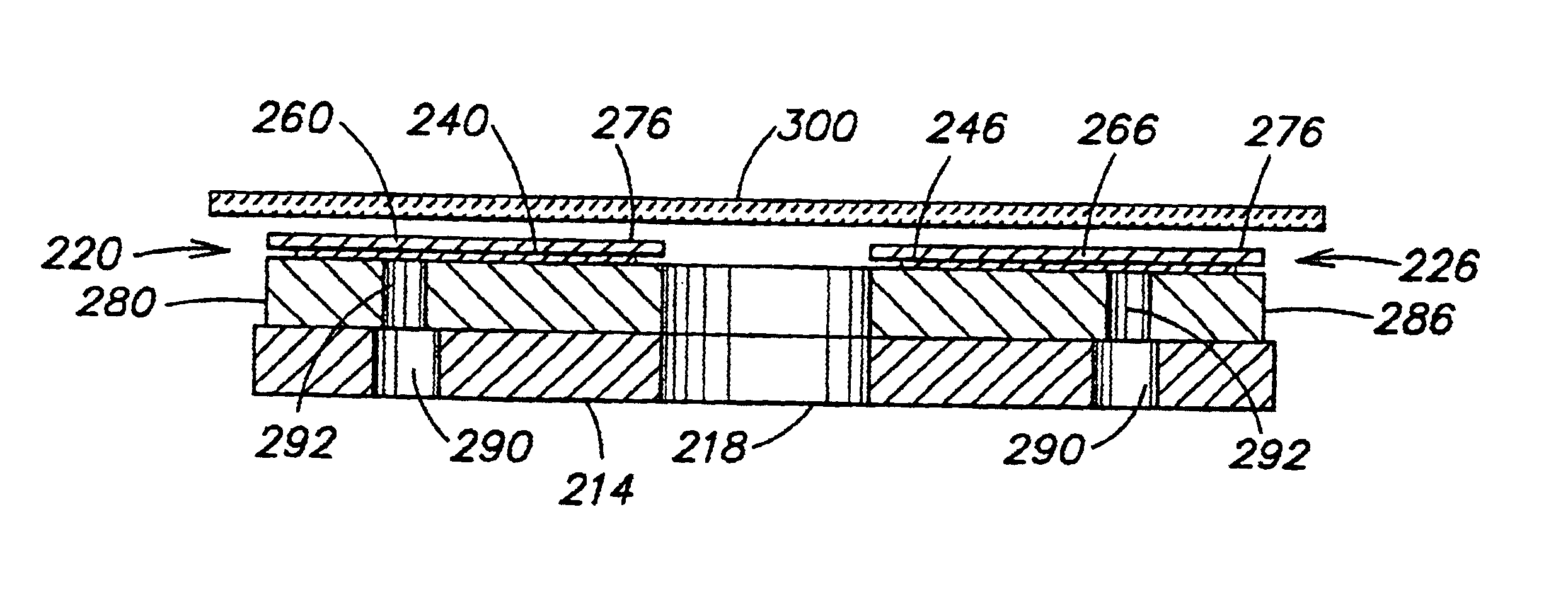
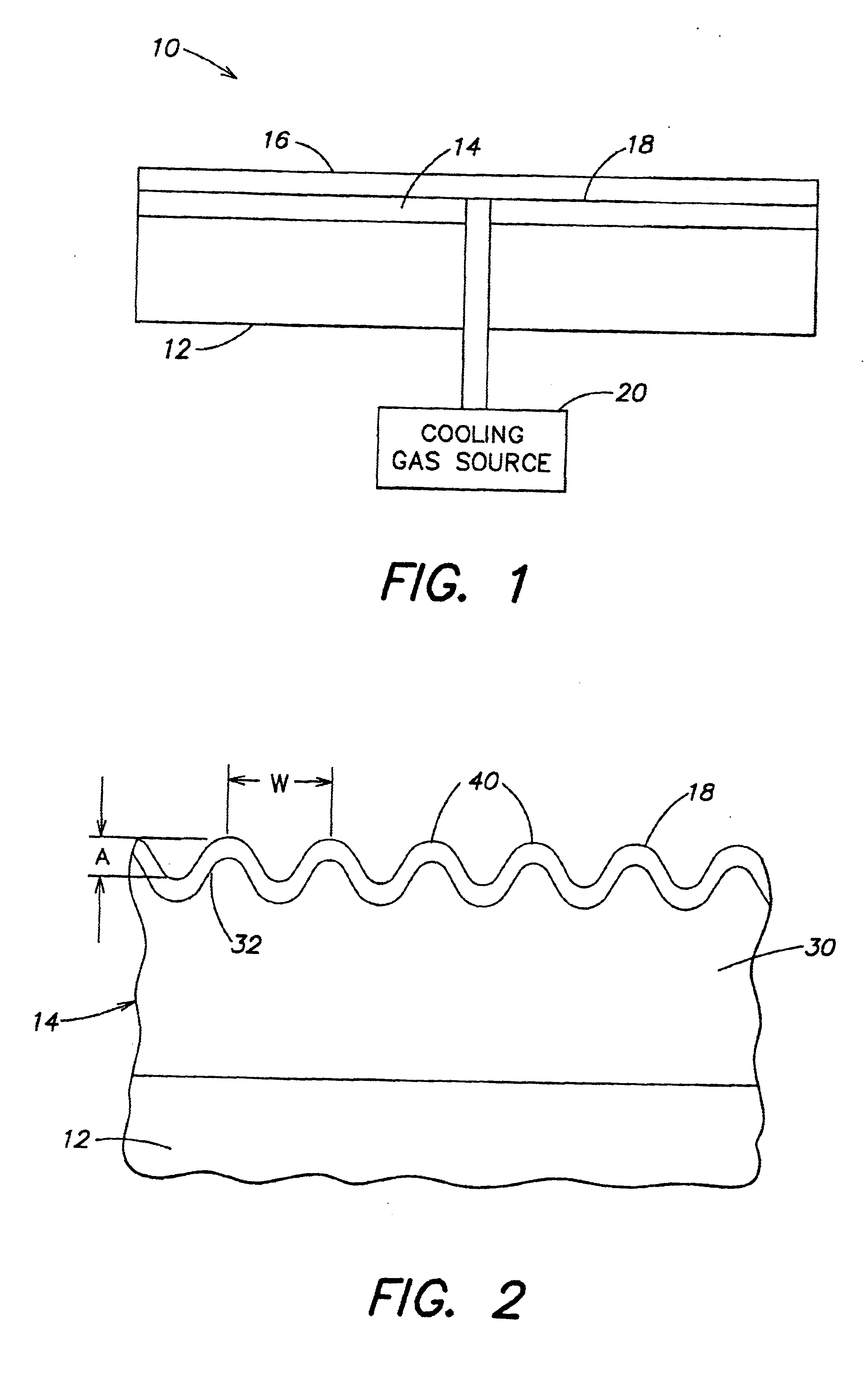
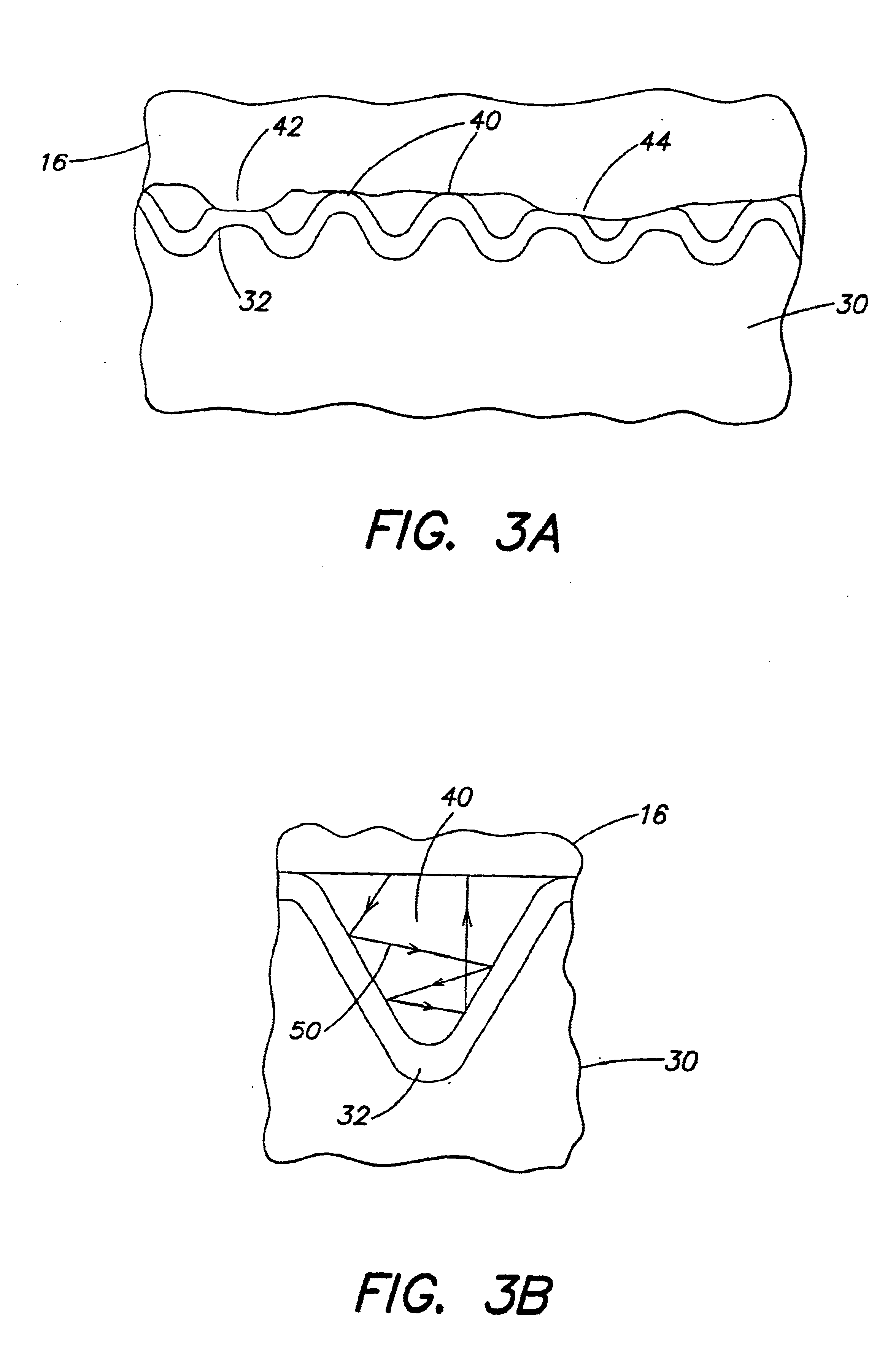
- A surface structure comprising a flexible layer with a ripple-coated surface, where the flexible layer is typically made of silicone rubber and the coating can be silicon nitride or other inert materials, enhancing thermal transfer and reducing particulate contamination by increasing contact area and conforming to the wafer surface.

Manufacturing Process Considerations for Optimized Structures
Manufacturing optimized microfiber surface structures for maximal contact requires careful consideration of multiple process parameters and technological approaches. The selection of appropriate manufacturing methods directly impacts the final surface morphology, fiber density, and contact efficiency of the resulting products.
Electrospinning emerges as the most versatile technique for creating controlled microfiber architectures. Process parameters including voltage application (typically 15-25 kV), solution flow rate (0.1-2.0 mL/h), and collector distance (10-20 cm) must be precisely calibrated to achieve desired fiber diameters ranging from 100 nanometers to several micrometers. The polymer solution concentration and viscosity significantly influence fiber formation, with optimal concentrations varying between 8-15% depending on the polymer molecular weight.
Melt-blowing processes offer high-throughput production capabilities for microfiber manufacturing. Critical parameters include melt temperature control (typically 200-300°C for polypropylene), die-to-collector distance, and air flow velocity. The process requires precise temperature management to prevent polymer degradation while maintaining consistent fiber formation. Air pressure optimization between 0.1-0.5 MPa ensures proper fiber attenuation and uniform deposition patterns.
Surface modification techniques play crucial roles in enhancing contact properties post-manufacturing. Plasma treatment creates reactive surface groups and increases surface roughness, improving wettability and adhesion characteristics. Corona discharge treatment offers cost-effective surface activation for large-scale production, while chemical etching using alkaline solutions can create controlled surface topographies.
Quality control considerations encompass fiber diameter distribution monitoring, surface area measurement, and contact angle analysis. Real-time process monitoring systems utilizing laser diffraction and optical microscopy enable immediate parameter adjustments. Statistical process control methods ensure consistent product quality across production batches.
Scalability challenges include maintaining uniform fiber distribution across large substrate areas and controlling environmental factors such as humidity and temperature fluctuations. Advanced manufacturing systems incorporate closed-loop feedback mechanisms to compensate for process variations and maintain optimal production conditions throughout extended manufacturing cycles.
Electrospinning emerges as the most versatile technique for creating controlled microfiber architectures. Process parameters including voltage application (typically 15-25 kV), solution flow rate (0.1-2.0 mL/h), and collector distance (10-20 cm) must be precisely calibrated to achieve desired fiber diameters ranging from 100 nanometers to several micrometers. The polymer solution concentration and viscosity significantly influence fiber formation, with optimal concentrations varying between 8-15% depending on the polymer molecular weight.
Melt-blowing processes offer high-throughput production capabilities for microfiber manufacturing. Critical parameters include melt temperature control (typically 200-300°C for polypropylene), die-to-collector distance, and air flow velocity. The process requires precise temperature management to prevent polymer degradation while maintaining consistent fiber formation. Air pressure optimization between 0.1-0.5 MPa ensures proper fiber attenuation and uniform deposition patterns.
Surface modification techniques play crucial roles in enhancing contact properties post-manufacturing. Plasma treatment creates reactive surface groups and increases surface roughness, improving wettability and adhesion characteristics. Corona discharge treatment offers cost-effective surface activation for large-scale production, while chemical etching using alkaline solutions can create controlled surface topographies.
Quality control considerations encompass fiber diameter distribution monitoring, surface area measurement, and contact angle analysis. Real-time process monitoring systems utilizing laser diffraction and optical microscopy enable immediate parameter adjustments. Statistical process control methods ensure consistent product quality across production batches.
Scalability challenges include maintaining uniform fiber distribution across large substrate areas and controlling environmental factors such as humidity and temperature fluctuations. Advanced manufacturing systems incorporate closed-loop feedback mechanisms to compensate for process variations and maintain optimal production conditions throughout extended manufacturing cycles.
Performance Testing Standards for Microfiber Contact Efficiency
Establishing comprehensive performance testing standards for microfiber contact efficiency requires a multi-dimensional approach that addresses both quantitative and qualitative assessment criteria. Current industry practices lack standardized methodologies, creating inconsistencies in evaluating microfiber surface optimization outcomes across different applications and manufacturers.
Contact area measurement represents the fundamental metric in performance evaluation. Advanced surface analysis techniques, including atomic force microscopy and scanning electron microscopy, provide precise quantification of actual contact points between microfiber surfaces and target materials. These methods enable measurement of contact density, distribution uniformity, and surface conformity at microscopic scales. Standardized protocols must define measurement conditions, sample preparation procedures, and data interpretation guidelines to ensure reproducibility across testing facilities.
Adhesion force testing constitutes another critical performance parameter. Pull-off force measurements using calibrated force sensors determine the strength of microfiber-surface interactions under controlled conditions. Testing standards should specify loading rates, environmental conditions, and surface preparation requirements. Multiple measurement points across the contact area provide statistical validation of adhesion performance, while cyclic testing evaluates durability and consistency over repeated contact cycles.
Surface roughness compatibility assessment evaluates microfiber performance across varying substrate textures. Standardized test surfaces with defined roughness parameters enable comparative analysis of contact efficiency optimization. Testing protocols must include surface characterization procedures, contact pressure specifications, and measurement timing requirements to ensure consistent evaluation conditions.
Dynamic performance testing addresses real-world application scenarios through controlled motion studies. Sliding friction measurements, wear resistance evaluation, and contact maintenance under mechanical stress provide insights into practical performance limitations. These tests require standardized equipment configurations, motion profiles, and environmental controls to generate comparable results across different testing environments.
Environmental stability testing ensures performance consistency under varying operational conditions. Temperature cycling, humidity exposure, and chemical resistance evaluations determine the robustness of optimized microfiber structures. Standardized exposure protocols and performance degradation metrics enable reliable assessment of long-term contact efficiency maintenance.
Data reporting standards must establish consistent formats for performance documentation, including statistical analysis requirements, uncertainty quantification, and comparative benchmarking procedures. These standards facilitate meaningful comparison between different optimization approaches and enable systematic improvement tracking across development cycles.
Contact area measurement represents the fundamental metric in performance evaluation. Advanced surface analysis techniques, including atomic force microscopy and scanning electron microscopy, provide precise quantification of actual contact points between microfiber surfaces and target materials. These methods enable measurement of contact density, distribution uniformity, and surface conformity at microscopic scales. Standardized protocols must define measurement conditions, sample preparation procedures, and data interpretation guidelines to ensure reproducibility across testing facilities.
Adhesion force testing constitutes another critical performance parameter. Pull-off force measurements using calibrated force sensors determine the strength of microfiber-surface interactions under controlled conditions. Testing standards should specify loading rates, environmental conditions, and surface preparation requirements. Multiple measurement points across the contact area provide statistical validation of adhesion performance, while cyclic testing evaluates durability and consistency over repeated contact cycles.
Surface roughness compatibility assessment evaluates microfiber performance across varying substrate textures. Standardized test surfaces with defined roughness parameters enable comparative analysis of contact efficiency optimization. Testing protocols must include surface characterization procedures, contact pressure specifications, and measurement timing requirements to ensure consistent evaluation conditions.
Dynamic performance testing addresses real-world application scenarios through controlled motion studies. Sliding friction measurements, wear resistance evaluation, and contact maintenance under mechanical stress provide insights into practical performance limitations. These tests require standardized equipment configurations, motion profiles, and environmental controls to generate comparable results across different testing environments.
Environmental stability testing ensures performance consistency under varying operational conditions. Temperature cycling, humidity exposure, and chemical resistance evaluations determine the robustness of optimized microfiber structures. Standardized exposure protocols and performance degradation metrics enable reliable assessment of long-term contact efficiency maintenance.
Data reporting standards must establish consistent formats for performance documentation, including statistical analysis requirements, uncertainty quantification, and comparative benchmarking procedures. These standards facilitate meaningful comparison between different optimization approaches and enable systematic improvement tracking across development cycles.
Unlock deeper insights with Patsnap Eureka Quick Research — get a full tech report to explore trends and direct your research. Try now!
Generate Your Research Report Instantly with AI Agent
Supercharge your innovation with Patsnap Eureka AI Agent Platform!