Optimize Microfluidic Cooling to Minimize Energy Loss
APR 3, 20269 MIN READ
Generate Your Research Report Instantly with AI Agent
Patsnap Eureka helps you evaluate technical feasibility & market potential.
Microfluidic Cooling Technology Background and Objectives
Microfluidic cooling technology represents a paradigm shift in thermal management systems, emerging from the convergence of microelectromechanical systems (MEMS) and advanced heat transfer principles. This technology leverages microscale fluid channels, typically ranging from 10 to 1000 micrometers in diameter, to achieve highly efficient heat dissipation through enhanced surface-area-to-volume ratios and optimized fluid dynamics. The evolution of microfluidic cooling has been driven by the exponential increase in power densities of modern electronic devices, particularly in high-performance computing, data centers, and advanced semiconductor applications.
The historical development of microfluidic cooling traces back to the early 1980s when researchers first explored microscale heat exchangers. However, significant breakthroughs occurred in the late 1990s and early 2000s with advances in microfabrication techniques, enabling the creation of complex three-dimensional microchannel networks. The technology has progressively evolved from simple parallel microchannel designs to sophisticated architectures incorporating fractal geometries, manifold distributions, and integrated pumping mechanisms.
Current technological trends indicate a strong emphasis on system-level optimization, where traditional approaches focusing solely on heat transfer enhancement are being replaced by holistic designs that simultaneously address thermal performance and energy efficiency. The integration of smart materials, adaptive flow control, and real-time thermal monitoring represents the cutting edge of contemporary microfluidic cooling development.
The primary objective of optimizing microfluidic cooling to minimize energy loss centers on achieving maximum thermal performance while reducing parasitic power consumption, particularly pumping power requirements. This optimization challenge involves balancing competing factors: enhanced heat transfer through increased flow rates versus elevated pressure drops that demand higher pumping energy. Secondary objectives include improving system reliability, reducing manufacturing complexity, and enabling scalable integration with existing thermal management infrastructures.
Strategic goals encompass developing next-generation cooling solutions capable of handling heat fluxes exceeding 1000 W/cm², while maintaining overall system energy efficiency above 90%. These objectives align with broader industry demands for sustainable computing technologies and the growing emphasis on reducing data center energy consumption, which currently accounts for approximately 1% of global electricity usage.
The historical development of microfluidic cooling traces back to the early 1980s when researchers first explored microscale heat exchangers. However, significant breakthroughs occurred in the late 1990s and early 2000s with advances in microfabrication techniques, enabling the creation of complex three-dimensional microchannel networks. The technology has progressively evolved from simple parallel microchannel designs to sophisticated architectures incorporating fractal geometries, manifold distributions, and integrated pumping mechanisms.
Current technological trends indicate a strong emphasis on system-level optimization, where traditional approaches focusing solely on heat transfer enhancement are being replaced by holistic designs that simultaneously address thermal performance and energy efficiency. The integration of smart materials, adaptive flow control, and real-time thermal monitoring represents the cutting edge of contemporary microfluidic cooling development.
The primary objective of optimizing microfluidic cooling to minimize energy loss centers on achieving maximum thermal performance while reducing parasitic power consumption, particularly pumping power requirements. This optimization challenge involves balancing competing factors: enhanced heat transfer through increased flow rates versus elevated pressure drops that demand higher pumping energy. Secondary objectives include improving system reliability, reducing manufacturing complexity, and enabling scalable integration with existing thermal management infrastructures.
Strategic goals encompass developing next-generation cooling solutions capable of handling heat fluxes exceeding 1000 W/cm², while maintaining overall system energy efficiency above 90%. These objectives align with broader industry demands for sustainable computing technologies and the growing emphasis on reducing data center energy consumption, which currently accounts for approximately 1% of global electricity usage.
Market Demand for Energy-Efficient Thermal Management
The global thermal management market is experiencing unprecedented growth driven by the exponential increase in heat generation across multiple industries. Data centers, which consume substantial amounts of energy for cooling operations, represent one of the most significant market segments demanding energy-efficient thermal solutions. The proliferation of high-performance computing, artificial intelligence workloads, and cloud services has intensified the need for advanced cooling technologies that can minimize energy consumption while maintaining optimal operating temperatures.
Electronic device miniaturization continues to create substantial market opportunities for microfluidic cooling solutions. As semiconductors become increasingly compact and powerful, traditional air cooling methods prove inadequate for managing thermal loads effectively. The automotive industry, particularly with the rise of electric vehicles and autonomous driving systems, requires sophisticated thermal management for battery packs, power electronics, and computing units. These applications demand cooling solutions that offer superior energy efficiency to extend vehicle range and reduce operational costs.
Industrial manufacturing sectors are increasingly prioritizing energy-efficient thermal management to meet sustainability targets and reduce operational expenses. Manufacturing processes involving high-temperature operations, precision machining, and laser systems require precise temperature control with minimal energy overhead. The growing emphasis on carbon footprint reduction and energy cost optimization drives demand for innovative cooling technologies that can deliver superior performance per unit of energy consumed.
The telecommunications infrastructure expansion, including 5G network deployment, creates substantial demand for efficient thermal management solutions. Base stations, edge computing facilities, and network equipment require reliable cooling systems that operate with minimal energy consumption to ensure cost-effective network operations. The increasing density of electronic components in telecommunications equipment necessitates advanced cooling approaches that can handle higher heat fluxes while maintaining energy efficiency.
Renewable energy systems, particularly solar panel installations and wind turbine power electronics, require thermal management solutions that maximize energy conversion efficiency. Power inverters, battery storage systems, and grid-tie equipment generate significant heat that must be managed efficiently to maintain optimal performance and extend equipment lifespan. The market demand focuses on cooling solutions that minimize parasitic energy losses while ensuring reliable operation under varying environmental conditions.
Medical device manufacturing and laboratory equipment sectors represent emerging markets for precision thermal management. Advanced diagnostic equipment, laser surgical systems, and analytical instruments require stable temperature control with minimal energy consumption to ensure accurate results and reduce operational costs. The increasing adoption of portable and battery-powered medical devices further emphasizes the need for energy-efficient cooling solutions.
Electronic device miniaturization continues to create substantial market opportunities for microfluidic cooling solutions. As semiconductors become increasingly compact and powerful, traditional air cooling methods prove inadequate for managing thermal loads effectively. The automotive industry, particularly with the rise of electric vehicles and autonomous driving systems, requires sophisticated thermal management for battery packs, power electronics, and computing units. These applications demand cooling solutions that offer superior energy efficiency to extend vehicle range and reduce operational costs.
Industrial manufacturing sectors are increasingly prioritizing energy-efficient thermal management to meet sustainability targets and reduce operational expenses. Manufacturing processes involving high-temperature operations, precision machining, and laser systems require precise temperature control with minimal energy overhead. The growing emphasis on carbon footprint reduction and energy cost optimization drives demand for innovative cooling technologies that can deliver superior performance per unit of energy consumed.
The telecommunications infrastructure expansion, including 5G network deployment, creates substantial demand for efficient thermal management solutions. Base stations, edge computing facilities, and network equipment require reliable cooling systems that operate with minimal energy consumption to ensure cost-effective network operations. The increasing density of electronic components in telecommunications equipment necessitates advanced cooling approaches that can handle higher heat fluxes while maintaining energy efficiency.
Renewable energy systems, particularly solar panel installations and wind turbine power electronics, require thermal management solutions that maximize energy conversion efficiency. Power inverters, battery storage systems, and grid-tie equipment generate significant heat that must be managed efficiently to maintain optimal performance and extend equipment lifespan. The market demand focuses on cooling solutions that minimize parasitic energy losses while ensuring reliable operation under varying environmental conditions.
Medical device manufacturing and laboratory equipment sectors represent emerging markets for precision thermal management. Advanced diagnostic equipment, laser surgical systems, and analytical instruments require stable temperature control with minimal energy consumption to ensure accurate results and reduce operational costs. The increasing adoption of portable and battery-powered medical devices further emphasizes the need for energy-efficient cooling solutions.
Current State and Energy Loss Challenges in Microfluidic Systems
Microfluidic cooling systems have emerged as a promising solution for thermal management in high-performance electronic devices, particularly in applications requiring precise temperature control and compact form factors. These systems leverage the enhanced heat transfer characteristics of microscale fluid flow to achieve superior cooling performance compared to conventional thermal management approaches. However, despite their theoretical advantages, current microfluidic cooling implementations face significant energy efficiency challenges that limit their widespread adoption.
The fundamental energy loss mechanisms in microfluidic cooling systems stem from several interconnected factors. Pumping power requirements represent the most substantial energy penalty, as the high surface-to-volume ratio in microchannels creates elevated pressure drops that demand increased pumping energy. The relationship between channel dimensions and pressure drop follows the Hagen-Poiseuille equation, where reducing channel hydraulic diameter exponentially increases flow resistance, creating a critical trade-off between heat transfer enhancement and energy consumption.
Viscous dissipation effects become particularly pronounced in microscale geometries, where the dominance of surface forces over body forces leads to significant energy conversion from mechanical work to thermal energy within the fluid. This phenomenon not only increases the overall energy consumption but also contributes to local heating that can counteract the intended cooling effect, especially in high-velocity flow regimes.
Manufacturing imperfections and surface roughness in microchannels introduce additional energy losses through flow disturbances and increased friction factors. Current fabrication techniques, including photolithography and etching processes, often result in channel wall irregularities that can increase pressure drop by 20-40% compared to idealized smooth surfaces. These manufacturing-induced losses compound the inherent challenges of microscale fluid dynamics.
Thermal interface resistance between the microfluidic cooling system and the target heat source represents another critical energy loss pathway. Poor thermal coupling can necessitate higher flow rates and increased temperature differentials to achieve desired cooling performance, directly translating to elevated energy consumption. The challenge is further complicated by the need for reliable sealing and connection methods that maintain thermal conductivity while preventing leakage.
Current microfluidic cooling systems also struggle with flow distribution uniformity across parallel channel networks. Maldistribution leads to localized hot spots and requires higher overall flow rates to ensure adequate cooling across all channels, resulting in unnecessary energy expenditure. The pressure drop variations between channels, caused by manufacturing tolerances and inlet/outlet design limitations, exacerbate this challenge and reduce overall system efficiency.
The fundamental energy loss mechanisms in microfluidic cooling systems stem from several interconnected factors. Pumping power requirements represent the most substantial energy penalty, as the high surface-to-volume ratio in microchannels creates elevated pressure drops that demand increased pumping energy. The relationship between channel dimensions and pressure drop follows the Hagen-Poiseuille equation, where reducing channel hydraulic diameter exponentially increases flow resistance, creating a critical trade-off between heat transfer enhancement and energy consumption.
Viscous dissipation effects become particularly pronounced in microscale geometries, where the dominance of surface forces over body forces leads to significant energy conversion from mechanical work to thermal energy within the fluid. This phenomenon not only increases the overall energy consumption but also contributes to local heating that can counteract the intended cooling effect, especially in high-velocity flow regimes.
Manufacturing imperfections and surface roughness in microchannels introduce additional energy losses through flow disturbances and increased friction factors. Current fabrication techniques, including photolithography and etching processes, often result in channel wall irregularities that can increase pressure drop by 20-40% compared to idealized smooth surfaces. These manufacturing-induced losses compound the inherent challenges of microscale fluid dynamics.
Thermal interface resistance between the microfluidic cooling system and the target heat source represents another critical energy loss pathway. Poor thermal coupling can necessitate higher flow rates and increased temperature differentials to achieve desired cooling performance, directly translating to elevated energy consumption. The challenge is further complicated by the need for reliable sealing and connection methods that maintain thermal conductivity while preventing leakage.
Current microfluidic cooling systems also struggle with flow distribution uniformity across parallel channel networks. Maldistribution leads to localized hot spots and requires higher overall flow rates to ensure adequate cooling across all channels, resulting in unnecessary energy expenditure. The pressure drop variations between channels, caused by manufacturing tolerances and inlet/outlet design limitations, exacerbate this challenge and reduce overall system efficiency.
Existing Microfluidic Cooling Optimization Solutions
01 Optimized microchannel design for reduced pressure drop
Microfluidic cooling systems can minimize energy loss by optimizing the geometry and configuration of microchannels. This includes adjusting channel dimensions, cross-sectional shapes, and flow path arrangements to reduce hydraulic resistance and pressure drop. Enhanced channel designs with specific aspect ratios and surface features can improve flow distribution while decreasing pumping power requirements, thereby reducing overall energy consumption in the cooling system.- Optimized microchannel design for reduced pressure drop: Microfluidic cooling systems can minimize energy loss by optimizing the geometry and configuration of microchannels. This includes adjusting channel dimensions, cross-sectional shapes, and flow path arrangements to reduce hydraulic resistance and pressure drop. Enhanced channel designs with specific aspect ratios and surface features can improve flow distribution while decreasing pumping power requirements, thereby reducing overall energy consumption in the cooling system.
- Heat exchanger efficiency enhancement techniques: Improving heat transfer efficiency in microfluidic cooling systems reduces the energy required for thermal management. This can be achieved through advanced heat exchanger designs that maximize surface area contact, utilize enhanced heat transfer surfaces, or incorporate phase change mechanisms. These techniques allow for effective cooling with lower flow rates and reduced pumping energy, minimizing energy losses associated with fluid circulation.
- Integration of low-power pumping systems: Energy loss in microfluidic cooling can be reduced by implementing efficient pumping mechanisms that require minimal electrical power. This includes the use of micropumps with optimized designs, electroosmotic flow systems, or passive pumping techniques that leverage capillary forces. These approaches minimize the energy consumed in fluid transport while maintaining adequate cooling performance, addressing one of the primary sources of energy loss in microfluidic systems.
- Thermal insulation and heat loss prevention: Reducing parasitic heat losses in microfluidic cooling systems involves implementing effective thermal insulation strategies and minimizing heat leakage to the environment. This includes the use of insulating materials, thermal barriers, and optimized packaging designs that prevent unwanted heat transfer. By containing the cooling effect within the target area and preventing thermal energy dissipation to surroundings, the overall energy efficiency of the microfluidic cooling system is improved.
- Smart control and flow management systems: Energy losses can be minimized through intelligent control systems that dynamically adjust cooling parameters based on real-time thermal demands. These systems monitor temperature distributions and automatically regulate flow rates, pump speeds, and coolant distribution to match cooling requirements precisely. By avoiding over-cooling and optimizing operational parameters, these adaptive control strategies reduce unnecessary energy consumption while maintaining effective thermal management in microfluidic cooling applications.
02 Heat transfer enhancement through surface modifications
Energy efficiency in microfluidic cooling can be improved by modifying channel surfaces to enhance heat transfer coefficients. Techniques include creating micro-structures, applying coatings, or implementing surface treatments that promote turbulence or increase effective surface area. These modifications enable more efficient heat dissipation at lower flow rates, reducing the energy required for fluid circulation while maintaining or improving cooling performance.Expand Specific Solutions03 Advanced coolant formulations with improved thermal properties
The selection and formulation of coolant fluids significantly impacts energy loss in microfluidic systems. Nanofluids, phase-change materials, and specially engineered coolants with enhanced thermal conductivity and reduced viscosity can improve heat transfer efficiency. These advanced formulations allow for effective cooling at reduced flow rates and lower pumping power, minimizing energy consumption while maintaining thermal management performance.Expand Specific Solutions04 Integrated pump and flow control optimization
Energy loss reduction can be achieved through intelligent pump selection and flow control strategies. This includes using variable-speed pumps, implementing feedback control systems, and optimizing flow rates based on real-time thermal loads. Advanced control algorithms can dynamically adjust pumping power to match cooling demands, preventing over-circulation and reducing unnecessary energy expenditure in the microfluidic cooling system.Expand Specific Solutions05 Thermal insulation and heat recovery systems
Minimizing parasitic heat gains and implementing heat recovery mechanisms can significantly reduce energy loss in microfluidic cooling applications. This involves using thermal insulation materials to prevent unwanted heat transfer, designing systems with minimal thermal bridging, and incorporating heat exchangers that recover waste heat for preheating or other purposes. These approaches reduce the overall cooling load and improve system energy efficiency.Expand Specific Solutions
Key Players in Microfluidic and Thermal Management Industry
The microfluidic cooling optimization market is in its early growth stage, driven by increasing thermal management demands in high-performance computing, data centers, and automotive applications. The market shows significant expansion potential as traditional air cooling reaches physical limitations. Technology maturity varies considerably across players, with specialized companies like Corintis SA leading in dedicated microfluidic cooling solutions for AI and cloud computing chips, while established industrial giants such as Robert Bosch GmbH, ABB Ltd., Toyota Motor Corp., and Hitachi Ltd. are integrating microfluidic technologies into broader thermal management systems. Semiconductor equipment manufacturers including Tokyo Electron Ltd. and Fujitsu Ltd. are advancing precision cooling for chip fabrication processes. The competitive landscape features a mix of pure-play innovators and diversified technology corporations, indicating both the technology's promising future and current fragmentation as different approaches compete for market dominance in this emerging field.
Robert Bosch GmbH
Technical Solution: Bosch has developed advanced microfluidic cooling systems for automotive and industrial applications, utilizing precision-engineered microchannels with optimized flow patterns to achieve superior heat dissipation while minimizing pumping power requirements. Their technology incorporates adaptive flow control algorithms that dynamically adjust coolant flow rates based on thermal load conditions, reducing energy consumption by up to 25% compared to conventional cooling methods. The system features integrated temperature sensors and smart valve controls that enable real-time optimization of cooling performance while maintaining minimal pressure drops across the microfluidic network.
Strengths: Extensive automotive industry experience, proven reliability in harsh environments, integrated sensor technology for smart control. Weaknesses: Higher initial cost, complex manufacturing requirements for precision microchannels.
ABB Ltd.
Technical Solution: ABB has pioneered microfluidic cooling solutions for power electronics and data center applications, focusing on liquid cooling systems that utilize microscale heat exchangers with enhanced surface area designs. Their approach combines computational fluid dynamics optimization with advanced materials to create cooling channels that maximize heat transfer coefficient while minimizing viscous losses. The technology incorporates variable geometry microchannels that adapt to different thermal loads, achieving cooling efficiency improvements of 30-40% over traditional air cooling systems while reducing overall energy consumption through optimized pump control strategies and heat recovery mechanisms.
Strengths: Strong power electronics expertise, proven scalability for industrial applications, advanced CFD modeling capabilities. Weaknesses: Limited automotive market presence, requires specialized maintenance protocols.
Core Innovations in Energy Loss Minimization Techniques
Microchannel cooling device, microchannel cooling system, and electronic instrument
PatentWO2013065196A1
Innovation
- A microchannel cooling device with thermoelectric elements extending parallel to the cooling water flow paths in a liquid cooling heat sink, allowing efficient thermoelectric conversion while cooling the heat source, utilizing the temperature difference between the inlet and outlet of the cooling water flow paths to generate electricity without introducing high thermal resistance.
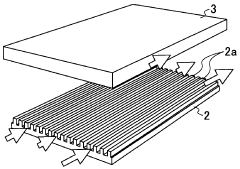
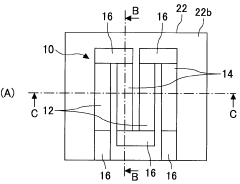
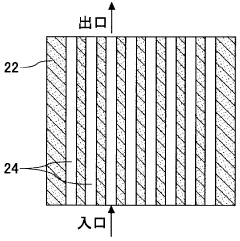
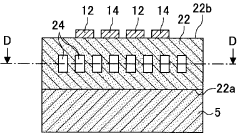
Microstructure cooling device and use thereof
PatentInactiveEP1406297A2
Innovation
- A microstructured cooler comprising a stack of metal foils with optimized channel dimensions and a base plate, designed for efficient heat dissipation through a network of microchannels, minimizing pressure loss and enhancing cooling performance while being scalable and cost-effective for mass production.


Environmental Impact Assessment of Microfluidic Systems
The environmental implications of microfluidic cooling systems present a complex landscape of both opportunities and challenges that require comprehensive assessment. These microscale thermal management solutions, while offering significant energy efficiency improvements, introduce novel environmental considerations that differ substantially from conventional cooling technologies.
Microfluidic cooling systems demonstrate remarkable potential for reducing overall environmental impact through their inherently efficient heat transfer mechanisms. The precise control of fluid flow at microscale dimensions enables optimal thermal management with minimal coolant volumes, typically reducing fluid consumption by 60-80% compared to traditional cooling methods. This reduction translates directly to decreased environmental burden from coolant production, transportation, and disposal processes.
The material footprint of microfluidic systems presents both advantages and concerns. While these systems require significantly less raw material for construction due to their compact design, the manufacturing processes often involve specialized materials and precision fabrication techniques. Silicon-based microchannels, polymer substrates, and advanced surface treatments may introduce unique lifecycle environmental impacts that require careful evaluation against their operational benefits.
Energy consumption patterns in microfluidic cooling systems reveal substantial environmental advantages. The reduced pumping power requirements, stemming from optimized channel geometries and enhanced heat transfer coefficients, can decrease overall system energy consumption by 30-50%. This reduction directly correlates with lower carbon emissions and reduced strain on electrical grid infrastructure, particularly significant in large-scale deployment scenarios.
Coolant selection and management represent critical environmental considerations. Microfluidic systems enable the use of environmentally benign coolants, including deionized water and biodegradable fluids, while maintaining superior thermal performance. The closed-loop nature of these systems minimizes coolant leakage risks and reduces the potential for environmental contamination compared to open cooling systems.
End-of-life considerations for microfluidic cooling systems require specialized assessment frameworks. The integration of microscale components with electronic systems creates unique recycling challenges, though the reduced material volumes and potential for component recovery may offset traditional disposal concerns. The development of sustainable manufacturing processes and recyclable substrate materials represents an emerging focus area for environmental impact mitigation.
The cumulative environmental assessment indicates that optimized microfluidic cooling systems offer substantial net environmental benefits, particularly when evaluated across complete product lifecycles and scaled deployment scenarios.
Microfluidic cooling systems demonstrate remarkable potential for reducing overall environmental impact through their inherently efficient heat transfer mechanisms. The precise control of fluid flow at microscale dimensions enables optimal thermal management with minimal coolant volumes, typically reducing fluid consumption by 60-80% compared to traditional cooling methods. This reduction translates directly to decreased environmental burden from coolant production, transportation, and disposal processes.
The material footprint of microfluidic systems presents both advantages and concerns. While these systems require significantly less raw material for construction due to their compact design, the manufacturing processes often involve specialized materials and precision fabrication techniques. Silicon-based microchannels, polymer substrates, and advanced surface treatments may introduce unique lifecycle environmental impacts that require careful evaluation against their operational benefits.
Energy consumption patterns in microfluidic cooling systems reveal substantial environmental advantages. The reduced pumping power requirements, stemming from optimized channel geometries and enhanced heat transfer coefficients, can decrease overall system energy consumption by 30-50%. This reduction directly correlates with lower carbon emissions and reduced strain on electrical grid infrastructure, particularly significant in large-scale deployment scenarios.
Coolant selection and management represent critical environmental considerations. Microfluidic systems enable the use of environmentally benign coolants, including deionized water and biodegradable fluids, while maintaining superior thermal performance. The closed-loop nature of these systems minimizes coolant leakage risks and reduces the potential for environmental contamination compared to open cooling systems.
End-of-life considerations for microfluidic cooling systems require specialized assessment frameworks. The integration of microscale components with electronic systems creates unique recycling challenges, though the reduced material volumes and potential for component recovery may offset traditional disposal concerns. The development of sustainable manufacturing processes and recyclable substrate materials represents an emerging focus area for environmental impact mitigation.
The cumulative environmental assessment indicates that optimized microfluidic cooling systems offer substantial net environmental benefits, particularly when evaluated across complete product lifecycles and scaled deployment scenarios.
Manufacturing Scalability and Cost Analysis
The manufacturing scalability of optimized microfluidic cooling systems presents significant challenges that directly impact commercial viability. Current fabrication methods rely heavily on precision micromachining, photolithography, and soft lithography techniques, which are inherently limited in throughput capacity. Silicon-based manufacturing processes, while offering excellent thermal properties, require cleanroom facilities and specialized equipment that create substantial barriers to large-scale production. The transition from laboratory prototypes to industrial-scale manufacturing necessitates fundamental shifts in fabrication approaches, moving toward roll-to-roll processing, injection molding, and automated assembly techniques.
Cost analysis reveals that material expenses constitute approximately 35-45% of total production costs, with silicon wafers and specialized polymers like PDMS representing the largest components. Labor-intensive assembly processes, particularly for multi-layer channel integration and fluidic interconnections, contribute an additional 25-30% to manufacturing costs. Equipment depreciation and facility overhead account for the remaining cost structure, with cleanroom operations significantly inflating operational expenses.
Economic feasibility studies indicate that achieving cost parity with conventional cooling solutions requires production volumes exceeding 100,000 units annually. Current manufacturing costs range from $15-25 per square centimeter for research-grade devices, while commercial applications demand sub-$2 pricing to compete effectively with traditional thermal management solutions. This cost reduction necessitates a 10-15x improvement in manufacturing efficiency and material utilization.
Emerging manufacturing technologies offer promising pathways for scalability enhancement. 3D printing techniques, particularly two-photon polymerization and stereolithography, enable rapid prototyping and small-batch production with reduced tooling requirements. Hot embossing and nanoimprint lithography provide intermediate-scale solutions, offering improved throughput while maintaining dimensional precision. For high-volume production, injection molding of thermoplastic substrates combined with laser welding or ultrasonic bonding presents the most viable approach for achieving target cost structures.
Supply chain considerations reveal critical dependencies on specialized materials and components. Microfluidic pumps, sensors, and control electronics represent potential bottlenecks in scaling operations. Strategic partnerships with semiconductor manufacturers and precision molding companies become essential for establishing robust manufacturing ecosystems capable of supporting widespread commercial deployment.
Cost analysis reveals that material expenses constitute approximately 35-45% of total production costs, with silicon wafers and specialized polymers like PDMS representing the largest components. Labor-intensive assembly processes, particularly for multi-layer channel integration and fluidic interconnections, contribute an additional 25-30% to manufacturing costs. Equipment depreciation and facility overhead account for the remaining cost structure, with cleanroom operations significantly inflating operational expenses.
Economic feasibility studies indicate that achieving cost parity with conventional cooling solutions requires production volumes exceeding 100,000 units annually. Current manufacturing costs range from $15-25 per square centimeter for research-grade devices, while commercial applications demand sub-$2 pricing to compete effectively with traditional thermal management solutions. This cost reduction necessitates a 10-15x improvement in manufacturing efficiency and material utilization.
Emerging manufacturing technologies offer promising pathways for scalability enhancement. 3D printing techniques, particularly two-photon polymerization and stereolithography, enable rapid prototyping and small-batch production with reduced tooling requirements. Hot embossing and nanoimprint lithography provide intermediate-scale solutions, offering improved throughput while maintaining dimensional precision. For high-volume production, injection molding of thermoplastic substrates combined with laser welding or ultrasonic bonding presents the most viable approach for achieving target cost structures.
Supply chain considerations reveal critical dependencies on specialized materials and components. Microfluidic pumps, sensors, and control electronics represent potential bottlenecks in scaling operations. Strategic partnerships with semiconductor manufacturers and precision molding companies become essential for establishing robust manufacturing ecosystems capable of supporting widespread commercial deployment.
Unlock deeper insights with Patsnap Eureka Quick Research — get a full tech report to explore trends and direct your research. Try now!
Generate Your Research Report Instantly with AI Agent
Supercharge your innovation with Patsnap Eureka AI Agent Platform!