

Optimize Milling Techniques for Boron Carbide Powder
JUN 9, 20269 MIN READ
Generate Your Research Report Instantly with AI Agent
Patsnap Eureka helps you evaluate technical feasibility & market potential.
Boron Carbide Milling Background and Objectives
Boron carbide (B4C) stands as one of the hardest materials known to science, ranking third after diamond and cubic boron nitride with a Vickers hardness exceeding 3000 HV. This exceptional ceramic material has evolved from laboratory curiosity to critical industrial component over the past century. Initially discovered in the early 1900s, boron carbide's unique combination of extreme hardness, low density, high melting point, and excellent neutron absorption properties has positioned it as an indispensable material across multiple high-performance applications.
The historical development of boron carbide processing techniques has been marked by continuous challenges in achieving optimal particle size distribution and morphology. Traditional milling approaches have struggled with the material's inherent brittleness and tendency toward agglomeration, leading to inconsistent powder characteristics that directly impact final product performance. The evolution from conventional ball milling to advanced grinding techniques reflects the industry's persistent pursuit of enhanced processing efficiency and product quality.
Contemporary applications of boron carbide powder span critical sectors including aerospace, defense, nuclear technology, and advanced manufacturing. In armor systems, finely milled boron carbide provides superior ballistic protection while maintaining lightweight characteristics essential for personnel and vehicle protection. Nuclear applications leverage its neutron absorption capabilities, requiring precisely controlled particle distributions to ensure optimal performance in control rods and shielding components.
The semiconductor and abrasives industries demand increasingly stringent specifications for boron carbide powder characteristics, driving the need for optimized milling techniques. Current market trends indicate growing demand for submicron and nanostructured boron carbide powders, particularly in cutting tools, wear-resistant coatings, and advanced ceramic composites. These applications require unprecedented control over particle size, surface area, and morphological uniformity.
The primary objective of optimizing boron carbide milling techniques centers on achieving consistent, controllable particle size reduction while minimizing contamination and maintaining powder purity. Key technical goals include developing methodologies that prevent excessive agglomeration, reduce processing time, and enhance energy efficiency. Additionally, the optimization aims to establish scalable processes that can transition from laboratory-scale development to industrial production while maintaining quality consistency.
Advanced milling optimization seeks to address fundamental challenges including work hardening effects, equipment wear, and the balance between grinding efficiency and particle quality. The ultimate goal involves creating robust, reproducible milling protocols that enable precise tailoring of boron carbide powder properties to meet specific application requirements across diverse industrial sectors.
The historical development of boron carbide processing techniques has been marked by continuous challenges in achieving optimal particle size distribution and morphology. Traditional milling approaches have struggled with the material's inherent brittleness and tendency toward agglomeration, leading to inconsistent powder characteristics that directly impact final product performance. The evolution from conventional ball milling to advanced grinding techniques reflects the industry's persistent pursuit of enhanced processing efficiency and product quality.
Contemporary applications of boron carbide powder span critical sectors including aerospace, defense, nuclear technology, and advanced manufacturing. In armor systems, finely milled boron carbide provides superior ballistic protection while maintaining lightweight characteristics essential for personnel and vehicle protection. Nuclear applications leverage its neutron absorption capabilities, requiring precisely controlled particle distributions to ensure optimal performance in control rods and shielding components.
The semiconductor and abrasives industries demand increasingly stringent specifications for boron carbide powder characteristics, driving the need for optimized milling techniques. Current market trends indicate growing demand for submicron and nanostructured boron carbide powders, particularly in cutting tools, wear-resistant coatings, and advanced ceramic composites. These applications require unprecedented control over particle size, surface area, and morphological uniformity.
The primary objective of optimizing boron carbide milling techniques centers on achieving consistent, controllable particle size reduction while minimizing contamination and maintaining powder purity. Key technical goals include developing methodologies that prevent excessive agglomeration, reduce processing time, and enhance energy efficiency. Additionally, the optimization aims to establish scalable processes that can transition from laboratory-scale development to industrial production while maintaining quality consistency.
Advanced milling optimization seeks to address fundamental challenges including work hardening effects, equipment wear, and the balance between grinding efficiency and particle quality. The ultimate goal involves creating robust, reproducible milling protocols that enable precise tailoring of boron carbide powder properties to meet specific application requirements across diverse industrial sectors.
Market Demand for High-Performance Boron Carbide Powder
The global market for high-performance boron carbide powder is experiencing robust growth driven by increasing demand across multiple strategic industries. The aerospace and defense sectors represent the largest consumption segments, where boron carbide's exceptional hardness and neutron absorption properties make it indispensable for armor applications, neutron shielding, and advanced ceramic components. Military vehicle armor systems and personal protective equipment continue to drive substantial demand for ultra-fine, high-purity boron carbide powders.
Nuclear industry applications constitute another significant market driver, with boron carbide serving as a critical neutron absorber in control rods and shielding materials. The expanding nuclear power generation capacity globally, particularly in emerging economies, is creating sustained demand for specialized boron carbide formulations with precise particle size distributions and enhanced performance characteristics.
Industrial abrasives and cutting tools markets are increasingly adopting high-performance boron carbide powders for manufacturing superhard materials and wear-resistant components. The automotive industry's shift toward lightweight, high-strength materials is generating new opportunities for boron carbide applications in brake systems, engine components, and protective coatings.
The semiconductor and electronics industries represent emerging high-value market segments, where ultra-pure boron carbide powders are utilized in specialized applications requiring exceptional chemical stability and thermal conductivity. Advanced manufacturing processes in these sectors demand increasingly stringent powder specifications regarding particle morphology, surface area, and contamination levels.
Market dynamics indicate a clear preference for customized powder solutions tailored to specific application requirements. End-users are prioritizing suppliers capable of delivering consistent particle size control, enhanced flowability, and improved sintering characteristics. This trend is driving demand for optimized milling techniques that can produce powders with superior performance attributes while maintaining cost-effectiveness.
Regional market analysis reveals strong growth potential in Asia-Pacific markets, driven by expanding defense budgets, nuclear infrastructure development, and industrial manufacturing capabilities. The increasing emphasis on domestic supply chain security is also influencing procurement patterns and creating opportunities for advanced powder processing technologies.
Nuclear industry applications constitute another significant market driver, with boron carbide serving as a critical neutron absorber in control rods and shielding materials. The expanding nuclear power generation capacity globally, particularly in emerging economies, is creating sustained demand for specialized boron carbide formulations with precise particle size distributions and enhanced performance characteristics.
Industrial abrasives and cutting tools markets are increasingly adopting high-performance boron carbide powders for manufacturing superhard materials and wear-resistant components. The automotive industry's shift toward lightweight, high-strength materials is generating new opportunities for boron carbide applications in brake systems, engine components, and protective coatings.
The semiconductor and electronics industries represent emerging high-value market segments, where ultra-pure boron carbide powders are utilized in specialized applications requiring exceptional chemical stability and thermal conductivity. Advanced manufacturing processes in these sectors demand increasingly stringent powder specifications regarding particle morphology, surface area, and contamination levels.
Market dynamics indicate a clear preference for customized powder solutions tailored to specific application requirements. End-users are prioritizing suppliers capable of delivering consistent particle size control, enhanced flowability, and improved sintering characteristics. This trend is driving demand for optimized milling techniques that can produce powders with superior performance attributes while maintaining cost-effectiveness.
Regional market analysis reveals strong growth potential in Asia-Pacific markets, driven by expanding defense budgets, nuclear infrastructure development, and industrial manufacturing capabilities. The increasing emphasis on domestic supply chain security is also influencing procurement patterns and creating opportunities for advanced powder processing technologies.
Current Milling Challenges and Technical Barriers
Boron carbide powder milling faces significant challenges due to the material's exceptional hardness, ranking as the third hardest material after diamond and cubic boron nitride. This extreme hardness, measuring approximately 9.3 on the Mohs scale, creates substantial wear on conventional milling equipment, leading to frequent tool replacement and increased operational costs. The abrasive nature of boron carbide particles causes rapid degradation of grinding media, contaminating the final product with unwanted metallic impurities that compromise powder purity and performance characteristics.
Particle size control represents another critical technical barrier in boron carbide milling operations. Achieving uniform particle size distribution while maintaining desired morphology proves challenging due to the material's tendency to fracture unpredictably along crystallographic planes. Traditional ball milling techniques often result in broad particle size distributions and irregular shapes, which negatively impact powder flowability and packing density in downstream applications.
Contamination issues extend beyond grinding media wear, encompassing atmospheric contamination during processing. Boron carbide's reactivity with oxygen and moisture at elevated temperatures generated during milling creates unwanted oxide layers on particle surfaces. These surface modifications alter the powder's chemical reactivity and sintering behavior, particularly problematic for applications requiring high-purity materials such as nuclear applications and advanced ceramics.
Energy efficiency presents a substantial economic barrier, as conventional milling techniques require excessive energy input to achieve meaningful size reduction. The high fracture toughness of boron carbide demands significant mechanical energy, often resulting in energy consumption rates 3-5 times higher than conventional ceramic materials. This energy intensity translates to elevated processing costs and environmental concerns regarding carbon footprint.
Process scalability challenges emerge when transitioning from laboratory-scale to industrial production. Small-scale milling parameters often fail to translate effectively to larger equipment due to heat dissipation limitations, grinding media dynamics variations, and powder flow characteristics changes. These scaling issues frequently result in inconsistent product quality and reduced process efficiency at commercial production levels.
Temperature management during milling operations poses additional technical constraints. Excessive heat generation can cause particle agglomeration, phase transformations, and accelerated oxidation reactions. Controlling temperature while maintaining adequate milling intensity requires sophisticated cooling systems and process monitoring, adding complexity and cost to manufacturing operations.
Particle size control represents another critical technical barrier in boron carbide milling operations. Achieving uniform particle size distribution while maintaining desired morphology proves challenging due to the material's tendency to fracture unpredictably along crystallographic planes. Traditional ball milling techniques often result in broad particle size distributions and irregular shapes, which negatively impact powder flowability and packing density in downstream applications.
Contamination issues extend beyond grinding media wear, encompassing atmospheric contamination during processing. Boron carbide's reactivity with oxygen and moisture at elevated temperatures generated during milling creates unwanted oxide layers on particle surfaces. These surface modifications alter the powder's chemical reactivity and sintering behavior, particularly problematic for applications requiring high-purity materials such as nuclear applications and advanced ceramics.
Energy efficiency presents a substantial economic barrier, as conventional milling techniques require excessive energy input to achieve meaningful size reduction. The high fracture toughness of boron carbide demands significant mechanical energy, often resulting in energy consumption rates 3-5 times higher than conventional ceramic materials. This energy intensity translates to elevated processing costs and environmental concerns regarding carbon footprint.
Process scalability challenges emerge when transitioning from laboratory-scale to industrial production. Small-scale milling parameters often fail to translate effectively to larger equipment due to heat dissipation limitations, grinding media dynamics variations, and powder flow characteristics changes. These scaling issues frequently result in inconsistent product quality and reduced process efficiency at commercial production levels.
Temperature management during milling operations poses additional technical constraints. Excessive heat generation can cause particle agglomeration, phase transformations, and accelerated oxidation reactions. Controlling temperature while maintaining adequate milling intensity requires sophisticated cooling systems and process monitoring, adding complexity and cost to manufacturing operations.
Existing Milling Solutions and Process Parameters
01 Ball milling and mechanical grinding techniques
Conventional mechanical milling methods using ball mills and grinding equipment are employed to reduce boron carbide particle size. These techniques involve the use of grinding media such as steel balls or ceramic balls in rotating mills to achieve desired particle size distribution through impact and attrition forces. The process parameters including milling time, speed, and ball-to-powder ratio are critical factors affecting the final powder characteristics.- Ball milling and mechanical grinding techniques: Traditional mechanical milling methods using ball mills and grinding equipment are commonly employed for boron carbide powder processing. These techniques involve the use of grinding media to reduce particle size through impact and attrition forces. The process parameters such as milling time, speed, and ball-to-powder ratio significantly affect the final particle size distribution and powder characteristics.
- Wet milling and liquid-assisted processing: Wet milling techniques utilize liquid media to facilitate the grinding process and prevent agglomeration of boron carbide particles. This approach helps in achieving finer particle sizes and better dispersion while reducing contamination risks. The liquid medium also aids in heat dissipation during the milling process and can improve the overall efficiency of particle size reduction.
- High-energy milling and attritor processing: High-energy milling techniques employ specialized equipment such as attritors and planetary mills to achieve rapid particle size reduction and improved powder properties. These methods generate intense mechanical forces that can effectively break down boron carbide particles while potentially inducing structural changes. The high-energy approach is particularly effective for producing ultrafine powders with controlled morphology.
- Jet milling and air classification methods: Jet milling utilizes high-velocity air streams to create particle-on-particle collisions for size reduction of boron carbide powder. This technique is particularly suitable for producing fine powders without contamination from grinding media. Air classification systems are often integrated to separate particles based on size and achieve narrow particle size distributions with high precision.
- Surface modification and powder treatment during milling: Advanced milling techniques incorporate surface modification and treatment processes to enhance the properties of boron carbide powder. These methods may include the addition of surfactants, dispersants, or other chemical agents during milling to improve powder flowability, reduce agglomeration, and optimize surface characteristics. The treatment can also involve controlled atmosphere milling to prevent oxidation and maintain powder purity.
02 Wet milling and liquid medium processing
Wet milling techniques utilize liquid media to facilitate the grinding process and prevent agglomeration of boron carbide particles. This approach helps in achieving finer particle sizes and better dispersion while reducing contamination and heat generation during milling. Various liquid media and surfactants can be employed to optimize the milling efficiency and prevent particle aggregation.Expand Specific Solutions03 High-energy milling and attritor processing
High-energy milling techniques such as attritor milling and planetary ball milling are used to achieve ultrafine boron carbide powders. These methods provide intense mechanical energy through high-speed rotation and collision, enabling rapid size reduction and improved powder homogeneity. The high-energy input allows for shorter processing times and better control over particle morphology.Expand Specific Solutions04 Jet milling and air classification methods
Jet milling utilizes high-velocity air streams to create particle-to-particle collisions for size reduction of boron carbide powder. This technique is particularly effective for producing fine powders with narrow particle size distributions while maintaining material purity. Air classification systems are often integrated to separate particles based on size and achieve precise particle size control.Expand Specific Solutions05 Surface modification and coating during milling
Advanced milling techniques incorporate surface modification and coating processes to enhance the properties of boron carbide powder. These methods involve the addition of surface-active agents or coating materials during the milling process to improve dispersibility, prevent oxidation, and enhance compatibility with matrix materials. The surface treatment can be achieved simultaneously with size reduction to optimize processing efficiency.Expand Specific Solutions
Key Players in Boron Carbide Manufacturing Industry
The boron carbide powder milling optimization field represents a mature industrial sector experiencing steady growth driven by aerospace, defense, and advanced ceramics applications. The market demonstrates moderate expansion with increasing demand for ultra-hard materials in cutting tools and armor applications. Technology maturity varies significantly across players, with established industrial giants like Hitachi Ltd., Saint-Gobain Ceramics & Plastics, and Robert Bosch GmbH leading advanced manufacturing capabilities, while specialized firms such as China Boron Technology and Zhengzhou Yincheng Abrasives focus on niche applications. Academic institutions including Northeastern University, Central South University, and Indian Institute of Technology Madras contribute fundamental research innovations. The competitive landscape shows consolidation around proven milling technologies, with incremental improvements in particle size control and surface quality optimization driving current development efforts across both commercial manufacturers and research organizations.
Hitachi Ltd.
Technical Solution: Hitachi has developed innovative milling optimization techniques for boron carbide powder using their proprietary nanoparticle processing technology. Their approach combines high-energy planetary ball milling with ultrasonic treatment to achieve superior particle size reduction and distribution control. The company has implemented advanced process monitoring systems using AI-based control algorithms to optimize milling parameters in real-time. Their technique includes the use of cryogenic milling for temperature-sensitive applications and specialized surface treatment processes to enhance powder characteristics. Hitachi's integrated approach also incorporates downstream processing optimization including drying, deagglomeration, and packaging systems to maintain powder quality throughout the production chain.
Strengths: Advanced technology integration with AI-based process control and strong R&D capabilities. Weaknesses: Complex system requirements and higher maintenance costs due to sophisticated equipment.
Saint-Gobain Ceramics & Plastics, Inc.
Technical Solution: Saint-Gobain has developed advanced milling techniques for boron carbide powder production using high-energy ball milling combined with controlled atmosphere processing. Their approach utilizes specialized ceramic grinding media to prevent contamination and employs multi-stage milling processes with particle size classification systems. The company has optimized milling parameters including rotation speed, milling time, and ball-to-powder ratio to achieve uniform particle size distribution while maintaining the crystalline structure of boron carbide. Their proprietary techniques include the use of process control additives and temperature management during milling to prevent agglomeration and ensure consistent powder characteristics for various applications including armor ceramics and nuclear applications.
Strengths: Extensive industrial experience and established production capabilities with proven quality control systems. Weaknesses: Higher production costs due to specialized equipment requirements and longer processing times.
Core Innovations in Advanced Milling Equipment
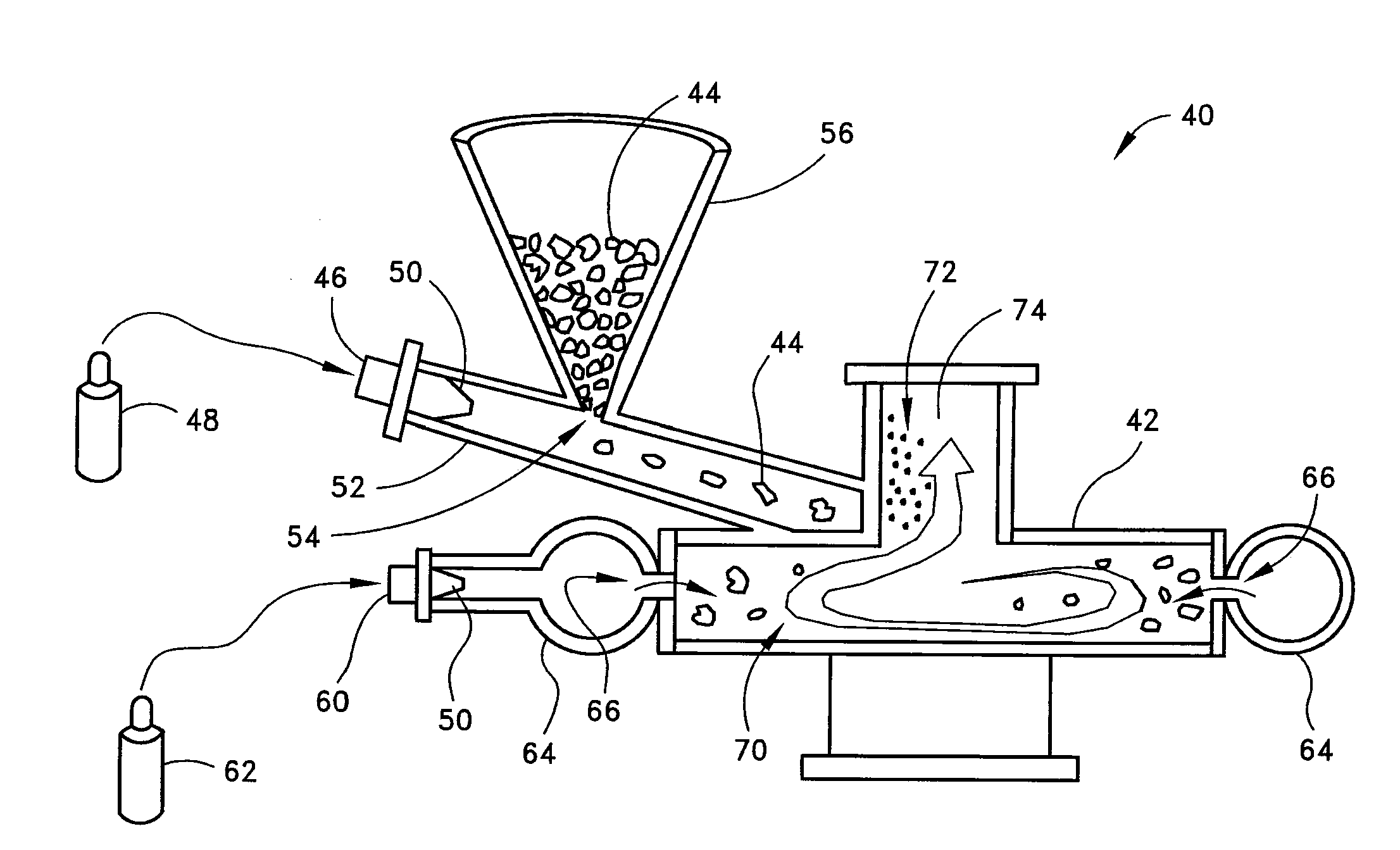
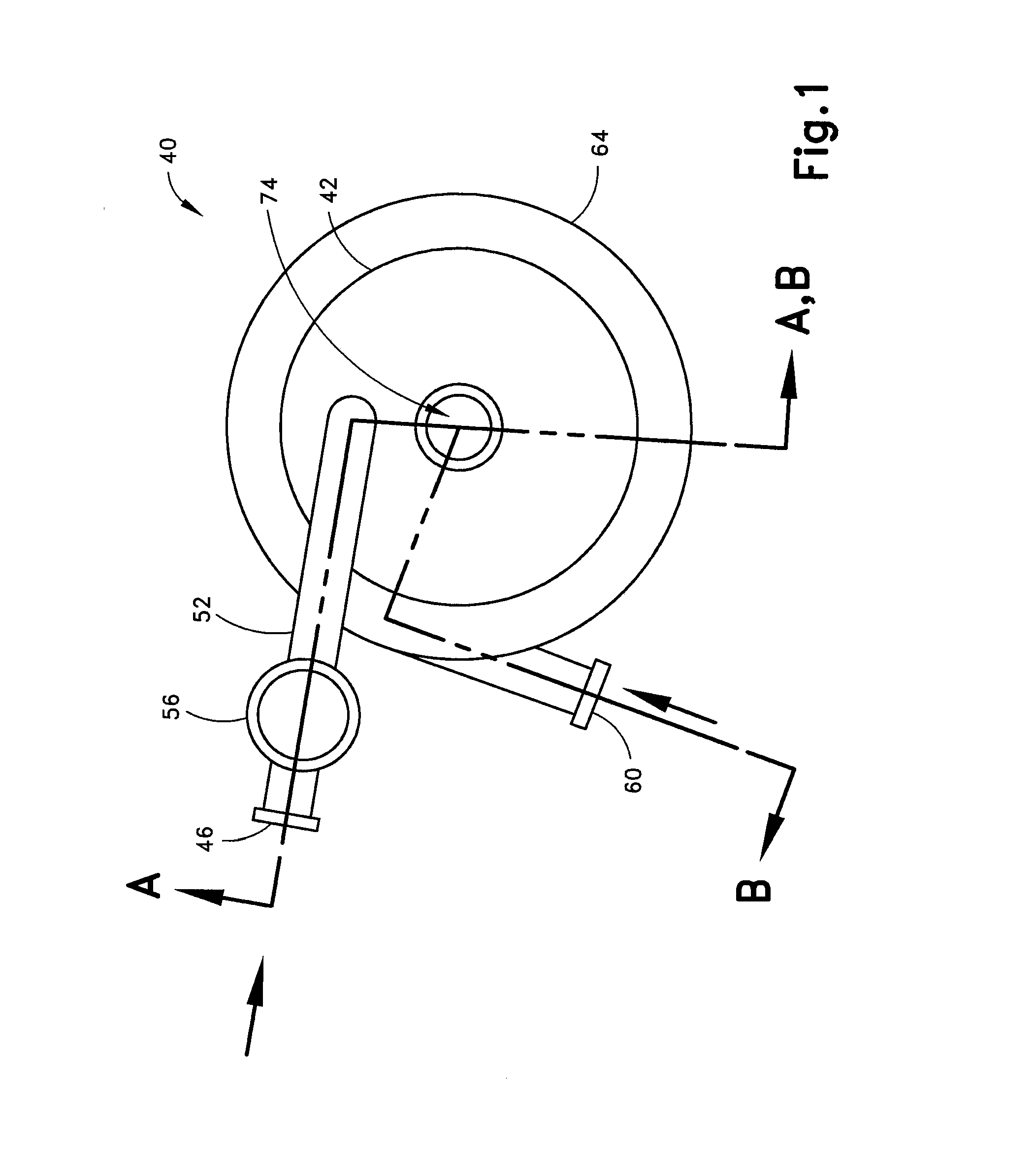
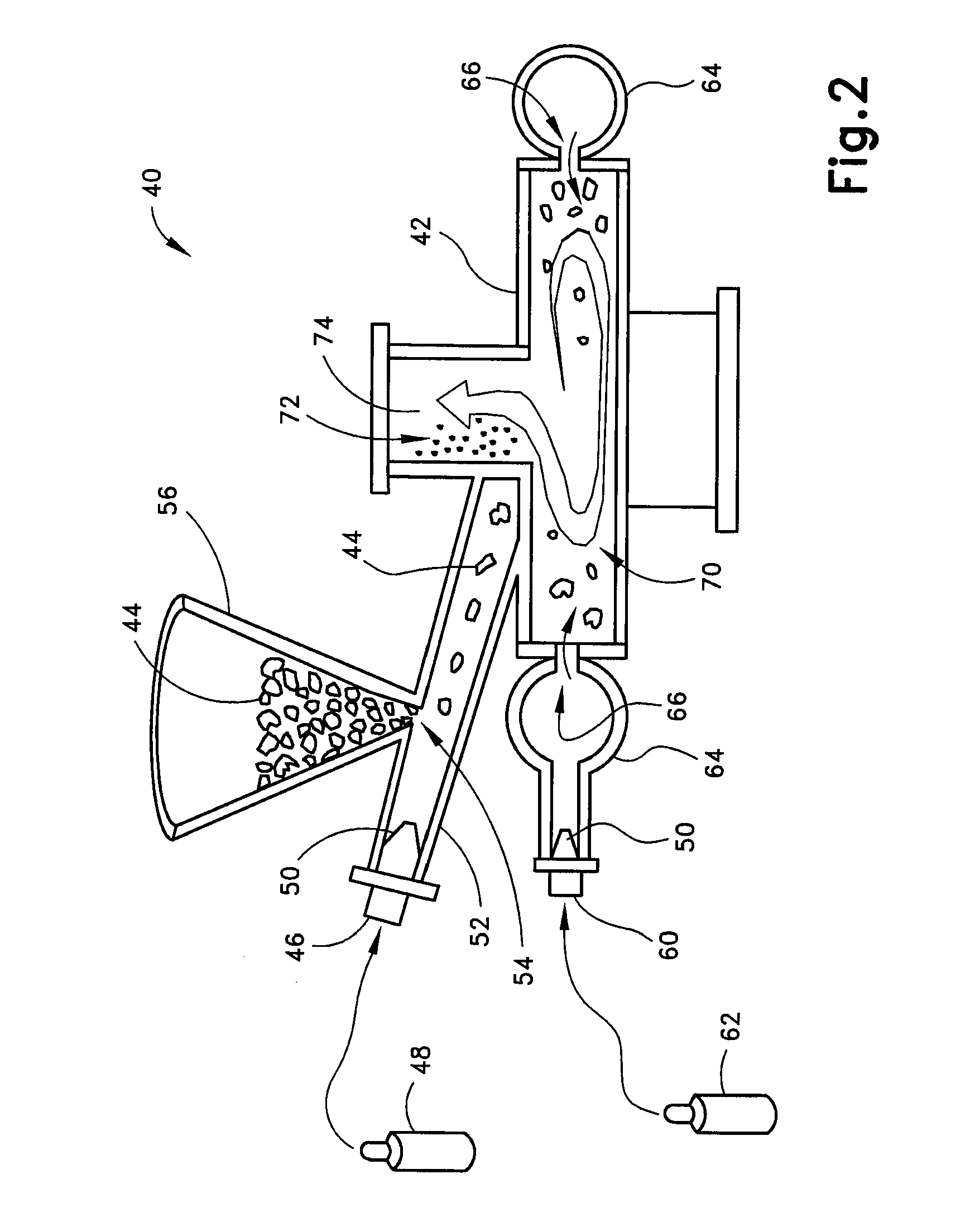
Jet milling of boron powder using inert gases to meet purity requirements
PatentInactiveUS20140138462A1
Innovation
- A processing system and method utilizing inert gases, such as nitrogen or noble gases, to avoid impurity transfer during the milling process, where the gases are used as feed and milling gases to reduce particle size while minimizing contamination, with a vortex-type jet mill design that ensures minimal exposure to ambient air.

Production of Boron Carbide Powder
PatentInactiveUS20150299421A1
Innovation
- A method involving the formation of a liquid precursor from a carbon and boron source, followed by pyrolysis and carbothermal reduction, where the boron source is introduced during one of these steps, allowing for reduced temperature processes and eliminating the need for extensive grinding, resulting in boron carbide powder with low residual carbon and controlled particle size.


Environmental Impact and Safety Considerations
The optimization of milling techniques for boron carbide powder presents significant environmental and safety challenges that require comprehensive consideration throughout the manufacturing process. Boron carbide, while offering exceptional hardness and chemical stability, poses unique risks during powder processing operations that must be carefully managed to ensure worker safety and environmental protection.
Airborne particle exposure represents the primary safety concern in boron carbide powder milling operations. The ultrafine particles generated during mechanical milling can become suspended in air, creating respiratory hazards for workers. These particles, typically ranging from submicron to several micrometers, can penetrate deep into lung tissue and cause long-term health complications including pneumoconiosis. Advanced ventilation systems, HEPA filtration, and personal protective equipment including N95 or higher-grade respirators are essential safety measures.
The mechanical energy input required for effective boron carbide milling generates substantial heat, creating fire and explosion risks, particularly in dry milling environments. Static electricity accumulation during powder handling can trigger ignition of organic solvents or create spark hazards. Implementing proper grounding systems, explosion-proof equipment, and inert atmosphere processing significantly reduces these risks while maintaining milling efficiency.
Environmental impact considerations focus primarily on waste management and energy consumption. Milling media wear generates metallic contamination that requires specialized disposal methods to prevent soil and water contamination. The high energy requirements of extended milling processes contribute to carbon footprint concerns, driving research toward more efficient milling techniques and renewable energy integration.
Regulatory compliance varies significantly across jurisdictions but generally requires adherence to occupational exposure limits, waste disposal protocols, and environmental impact assessments. The European Union's REACH regulation and similar frameworks in other regions mandate comprehensive safety data documentation and risk assessment procedures for boron carbide powder processing facilities.
Emerging green milling technologies, including cryogenic milling and plasma-assisted processing, offer potential solutions to reduce environmental impact while maintaining product quality. These approaches can minimize organic solvent usage, reduce energy consumption, and eliminate certain safety hazards associated with conventional mechanical milling techniques.
Airborne particle exposure represents the primary safety concern in boron carbide powder milling operations. The ultrafine particles generated during mechanical milling can become suspended in air, creating respiratory hazards for workers. These particles, typically ranging from submicron to several micrometers, can penetrate deep into lung tissue and cause long-term health complications including pneumoconiosis. Advanced ventilation systems, HEPA filtration, and personal protective equipment including N95 or higher-grade respirators are essential safety measures.
The mechanical energy input required for effective boron carbide milling generates substantial heat, creating fire and explosion risks, particularly in dry milling environments. Static electricity accumulation during powder handling can trigger ignition of organic solvents or create spark hazards. Implementing proper grounding systems, explosion-proof equipment, and inert atmosphere processing significantly reduces these risks while maintaining milling efficiency.
Environmental impact considerations focus primarily on waste management and energy consumption. Milling media wear generates metallic contamination that requires specialized disposal methods to prevent soil and water contamination. The high energy requirements of extended milling processes contribute to carbon footprint concerns, driving research toward more efficient milling techniques and renewable energy integration.
Regulatory compliance varies significantly across jurisdictions but generally requires adherence to occupational exposure limits, waste disposal protocols, and environmental impact assessments. The European Union's REACH regulation and similar frameworks in other regions mandate comprehensive safety data documentation and risk assessment procedures for boron carbide powder processing facilities.
Emerging green milling technologies, including cryogenic milling and plasma-assisted processing, offer potential solutions to reduce environmental impact while maintaining product quality. These approaches can minimize organic solvent usage, reduce energy consumption, and eliminate certain safety hazards associated with conventional mechanical milling techniques.
Quality Control Standards for Boron Carbide Products
Quality control standards for boron carbide products represent a critical framework that directly influences the optimization of milling techniques. These standards establish the baseline requirements for particle size distribution, surface area, purity levels, and morphological characteristics that must be achieved through refined milling processes. The implementation of rigorous quality control measures ensures that milling optimization efforts align with industry specifications and end-user requirements.
Particle size distribution standards constitute the primary quality metric for boron carbide powder production. International standards such as ASTM B330 and ISO 3953 define acceptable particle size ranges, typically requiring D50 values between 0.5 to 50 micrometers depending on application requirements. These specifications directly impact milling parameter selection, including grinding media size, mill speed, and processing duration. Advanced laser diffraction and dynamic light scattering techniques serve as standard measurement methods for particle size verification.
Surface area and morphology control standards significantly influence milling technique optimization strategies. BET surface area measurements must typically fall within 10-50 m²/g ranges for most applications, while particle shape factors require careful monitoring to prevent excessive agglomeration or irregular morphologies. Scanning electron microscopy protocols establish standardized imaging procedures for morphological assessment, ensuring consistent evaluation across different production batches.
Chemical purity standards impose strict limitations on contamination levels introduced during milling processes. Specifications typically require boron carbide purity levels exceeding 95%, with controlled limits for metallic impurities, oxygen content, and carbon residues. These requirements necessitate careful selection of milling media materials, atmospheric control during processing, and contamination prevention protocols throughout the milling operation.
Physical property standards encompass bulk density, tap density, and flowability characteristics that directly correlate with milling effectiveness. Bulk density specifications typically range from 1.2 to 2.0 g/cm³, while flowability indices must meet specific criteria for downstream processing compatibility. These parameters require optimization of milling conditions to achieve desired powder characteristics while maintaining production efficiency.
Testing and certification protocols establish systematic quality verification procedures that validate milling optimization results. Statistical process control methods, including control charts and capability studies, ensure consistent quality achievement across production runs. Batch-to-batch variability control requires implementation of standardized sampling procedures and analytical methods that provide reliable quality assessment throughout the manufacturing process.
Particle size distribution standards constitute the primary quality metric for boron carbide powder production. International standards such as ASTM B330 and ISO 3953 define acceptable particle size ranges, typically requiring D50 values between 0.5 to 50 micrometers depending on application requirements. These specifications directly impact milling parameter selection, including grinding media size, mill speed, and processing duration. Advanced laser diffraction and dynamic light scattering techniques serve as standard measurement methods for particle size verification.
Surface area and morphology control standards significantly influence milling technique optimization strategies. BET surface area measurements must typically fall within 10-50 m²/g ranges for most applications, while particle shape factors require careful monitoring to prevent excessive agglomeration or irregular morphologies. Scanning electron microscopy protocols establish standardized imaging procedures for morphological assessment, ensuring consistent evaluation across different production batches.
Chemical purity standards impose strict limitations on contamination levels introduced during milling processes. Specifications typically require boron carbide purity levels exceeding 95%, with controlled limits for metallic impurities, oxygen content, and carbon residues. These requirements necessitate careful selection of milling media materials, atmospheric control during processing, and contamination prevention protocols throughout the milling operation.
Physical property standards encompass bulk density, tap density, and flowability characteristics that directly correlate with milling effectiveness. Bulk density specifications typically range from 1.2 to 2.0 g/cm³, while flowability indices must meet specific criteria for downstream processing compatibility. These parameters require optimization of milling conditions to achieve desired powder characteristics while maintaining production efficiency.
Testing and certification protocols establish systematic quality verification procedures that validate milling optimization results. Statistical process control methods, including control charts and capability studies, ensure consistent quality achievement across production runs. Batch-to-batch variability control requires implementation of standardized sampling procedures and analytical methods that provide reliable quality assessment throughout the manufacturing process.
Unlock deeper insights with Patsnap Eureka Quick Research — get a full tech report to explore trends and direct your research. Try now!
Generate Your Research Report Instantly with AI Agent
Supercharge your innovation with Patsnap Eureka AI Agent Platform!