Optimize Modular Construction for Diverse Climate Zones
MAR 16, 20269 MIN READ
Generate Your Research Report Instantly with AI Agent
PatSnap Eureka helps you evaluate technical feasibility & market potential.
Modular Construction Climate Adaptation Background and Objectives
Modular construction has emerged as a transformative approach to building design and manufacturing, representing a paradigm shift from traditional on-site construction methods. This methodology involves the fabrication of building components or entire modules in controlled factory environments, followed by transportation and assembly at the final construction site. The concept traces its origins to post-World War II housing shortages, when rapid deployment of standardized housing units became critical for reconstruction efforts.
The evolution of modular construction has been driven by increasing demands for construction efficiency, quality control, and cost reduction. Early implementations focused primarily on residential applications, but the scope has expanded significantly to encompass commercial, institutional, and industrial projects. Modern modular construction leverages advanced manufacturing techniques, precision engineering, and sophisticated logistics systems to deliver building solutions that rival or exceed traditional construction quality standards.
Climate adaptation has become an increasingly critical consideration in contemporary construction practices, as global climate patterns continue to shift and extreme weather events become more frequent and severe. The construction industry faces mounting pressure to develop building solutions that can withstand diverse environmental conditions while maintaining energy efficiency and occupant comfort. Traditional construction approaches often struggle to address the wide spectrum of climate challenges, from arctic conditions requiring superior insulation to tropical environments demanding enhanced ventilation and moisture management.
The intersection of modular construction and climate adaptation presents unprecedented opportunities for innovation. Modular systems offer inherent advantages for climate-specific optimization, including the ability to customize building envelope specifications, integrate climate-responsive technologies, and implement standardized solutions for recurring environmental challenges. Factory-controlled manufacturing environments enable precise implementation of climate-specific features that might be difficult or inconsistent to achieve through traditional on-site construction methods.
The primary objective of optimizing modular construction for diverse climate zones centers on developing adaptive building systems that can be efficiently customized for specific environmental conditions while maintaining the economic and logistical advantages of modular manufacturing. This involves creating flexible design frameworks that accommodate varying thermal performance requirements, moisture management strategies, structural load considerations, and energy system integrations across different climate classifications.
Secondary objectives include establishing standardized climate adaptation protocols that can be systematically applied across modular construction projects, developing innovative materials and assembly techniques that enhance climate resilience, and creating scalable manufacturing processes that support climate-specific customization without compromising production efficiency. The ultimate goal is to position modular construction as the preferred solution for climate-adaptive building delivery, capable of addressing the growing global demand for resilient, sustainable, and rapidly deployable building infrastructure across all climate zones.
The evolution of modular construction has been driven by increasing demands for construction efficiency, quality control, and cost reduction. Early implementations focused primarily on residential applications, but the scope has expanded significantly to encompass commercial, institutional, and industrial projects. Modern modular construction leverages advanced manufacturing techniques, precision engineering, and sophisticated logistics systems to deliver building solutions that rival or exceed traditional construction quality standards.
Climate adaptation has become an increasingly critical consideration in contemporary construction practices, as global climate patterns continue to shift and extreme weather events become more frequent and severe. The construction industry faces mounting pressure to develop building solutions that can withstand diverse environmental conditions while maintaining energy efficiency and occupant comfort. Traditional construction approaches often struggle to address the wide spectrum of climate challenges, from arctic conditions requiring superior insulation to tropical environments demanding enhanced ventilation and moisture management.
The intersection of modular construction and climate adaptation presents unprecedented opportunities for innovation. Modular systems offer inherent advantages for climate-specific optimization, including the ability to customize building envelope specifications, integrate climate-responsive technologies, and implement standardized solutions for recurring environmental challenges. Factory-controlled manufacturing environments enable precise implementation of climate-specific features that might be difficult or inconsistent to achieve through traditional on-site construction methods.
The primary objective of optimizing modular construction for diverse climate zones centers on developing adaptive building systems that can be efficiently customized for specific environmental conditions while maintaining the economic and logistical advantages of modular manufacturing. This involves creating flexible design frameworks that accommodate varying thermal performance requirements, moisture management strategies, structural load considerations, and energy system integrations across different climate classifications.
Secondary objectives include establishing standardized climate adaptation protocols that can be systematically applied across modular construction projects, developing innovative materials and assembly techniques that enhance climate resilience, and creating scalable manufacturing processes that support climate-specific customization without compromising production efficiency. The ultimate goal is to position modular construction as the preferred solution for climate-adaptive building delivery, capable of addressing the growing global demand for resilient, sustainable, and rapidly deployable building infrastructure across all climate zones.
Market Demand Analysis for Climate-Optimized Modular Buildings
The global modular construction market is experiencing unprecedented growth driven by increasing demand for sustainable, efficient, and climate-resilient building solutions. Traditional construction methods face mounting pressure from environmental regulations, labor shortages, and the urgent need for rapid deployment in diverse geographical locations. Climate-optimized modular buildings represent a convergence of these market forces, addressing critical gaps in housing, commercial, and industrial sectors across varying environmental conditions.
Residential markets demonstrate the strongest demand signals for climate-adapted modular solutions. Housing shortages in regions experiencing extreme weather events, from hurricane-prone coastal areas to arctic communities, create immediate opportunities for specialized modular systems. The growing emphasis on disaster-resilient housing drives demand for structures that can withstand specific climate challenges while maintaining energy efficiency and occupant comfort.
Commercial and industrial sectors increasingly recognize the value proposition of climate-optimized modular construction. Data centers require precise environmental control across different climate zones, while temporary facilities for mining, oil and gas operations must perform reliably in harsh conditions. Educational institutions and healthcare facilities in remote or challenging climates represent substantial market segments seeking rapid deployment capabilities without compromising performance standards.
Geographic market analysis reveals distinct demand patterns. Northern regions prioritize thermal performance and snow load management, while tropical markets emphasize ventilation, humidity control, and storm resistance. Arid climates drive demand for solutions addressing extreme temperature variations and dust infiltration. Coastal areas require corrosion resistance and flood mitigation features integrated into modular designs.
The market landscape shows strong correlation between climate change impacts and modular construction adoption rates. Regions experiencing increased frequency of extreme weather events demonstrate accelerated interest in adaptable, relocatable building solutions. Insurance industry requirements for climate-resilient construction further amplify market demand, as traditional building methods struggle to meet evolving risk assessment criteria.
Economic factors significantly influence market dynamics. Cost pressures from traditional construction, combined with labor availability challenges, create favorable conditions for modular alternatives. The ability to optimize manufacturing for specific climate requirements while maintaining economies of scale presents compelling value propositions across multiple market segments, establishing climate-optimized modular construction as a strategic growth opportunity rather than a niche solution.
Residential markets demonstrate the strongest demand signals for climate-adapted modular solutions. Housing shortages in regions experiencing extreme weather events, from hurricane-prone coastal areas to arctic communities, create immediate opportunities for specialized modular systems. The growing emphasis on disaster-resilient housing drives demand for structures that can withstand specific climate challenges while maintaining energy efficiency and occupant comfort.
Commercial and industrial sectors increasingly recognize the value proposition of climate-optimized modular construction. Data centers require precise environmental control across different climate zones, while temporary facilities for mining, oil and gas operations must perform reliably in harsh conditions. Educational institutions and healthcare facilities in remote or challenging climates represent substantial market segments seeking rapid deployment capabilities without compromising performance standards.
Geographic market analysis reveals distinct demand patterns. Northern regions prioritize thermal performance and snow load management, while tropical markets emphasize ventilation, humidity control, and storm resistance. Arid climates drive demand for solutions addressing extreme temperature variations and dust infiltration. Coastal areas require corrosion resistance and flood mitigation features integrated into modular designs.
The market landscape shows strong correlation between climate change impacts and modular construction adoption rates. Regions experiencing increased frequency of extreme weather events demonstrate accelerated interest in adaptable, relocatable building solutions. Insurance industry requirements for climate-resilient construction further amplify market demand, as traditional building methods struggle to meet evolving risk assessment criteria.
Economic factors significantly influence market dynamics. Cost pressures from traditional construction, combined with labor availability challenges, create favorable conditions for modular alternatives. The ability to optimize manufacturing for specific climate requirements while maintaining economies of scale presents compelling value propositions across multiple market segments, establishing climate-optimized modular construction as a strategic growth opportunity rather than a niche solution.
Current Challenges in Multi-Climate Modular Construction
Modular construction faces significant structural and material challenges when adapting to diverse climate zones. Traditional modular designs often rely on standardized components that may not adequately address the thermal expansion and contraction cycles experienced in extreme temperature variations. In hot climates, materials can expand beyond design tolerances, causing joint failures and structural misalignment. Conversely, cold climates present brittleness issues and thermal bridging problems that compromise both structural integrity and energy efficiency.
Moisture management represents another critical challenge across different climate zones. Humid tropical environments require enhanced vapor barrier systems and advanced ventilation strategies to prevent mold growth and material degradation. Desert climates demand different approaches to handle sudden temperature fluctuations and dust infiltration. Meanwhile, coastal regions introduce salt corrosion concerns that standard modular components are not designed to withstand long-term.
Transportation and logistics constraints significantly impact multi-climate modular construction projects. Modules designed for specific climate conditions often require specialized transportation equipment and handling procedures. The dimensional limitations imposed by transportation infrastructure conflict with the need for climate-specific insulation thicknesses and protective systems. This creates a fundamental tension between standardization benefits and climate optimization requirements.
Assembly and connection systems present unique challenges in extreme weather conditions. Cold weather installations face issues with adhesive curing times, metal brittleness, and worker safety concerns. Hot climate installations struggle with thermal expansion during assembly, material handling difficulties, and accelerated curing of sealants and adhesives. Wind-prone areas require enhanced temporary bracing systems that standard modular designs do not typically accommodate.
Quality control and performance validation become exponentially more complex when serving multiple climate zones. Testing protocols must account for various environmental stressors, requiring extensive validation across different conditions. The lack of standardized performance metrics for multi-climate applications creates uncertainty in design specifications and performance guarantees.
Supply chain coordination presents additional complications as climate-specific materials and components may not be readily available in all target markets. This necessitates complex inventory management and potentially compromises the cost advantages typically associated with modular construction standardization.
Moisture management represents another critical challenge across different climate zones. Humid tropical environments require enhanced vapor barrier systems and advanced ventilation strategies to prevent mold growth and material degradation. Desert climates demand different approaches to handle sudden temperature fluctuations and dust infiltration. Meanwhile, coastal regions introduce salt corrosion concerns that standard modular components are not designed to withstand long-term.
Transportation and logistics constraints significantly impact multi-climate modular construction projects. Modules designed for specific climate conditions often require specialized transportation equipment and handling procedures. The dimensional limitations imposed by transportation infrastructure conflict with the need for climate-specific insulation thicknesses and protective systems. This creates a fundamental tension between standardization benefits and climate optimization requirements.
Assembly and connection systems present unique challenges in extreme weather conditions. Cold weather installations face issues with adhesive curing times, metal brittleness, and worker safety concerns. Hot climate installations struggle with thermal expansion during assembly, material handling difficulties, and accelerated curing of sealants and adhesives. Wind-prone areas require enhanced temporary bracing systems that standard modular designs do not typically accommodate.
Quality control and performance validation become exponentially more complex when serving multiple climate zones. Testing protocols must account for various environmental stressors, requiring extensive validation across different conditions. The lack of standardized performance metrics for multi-climate applications creates uncertainty in design specifications and performance guarantees.
Supply chain coordination presents additional complications as climate-specific materials and components may not be readily available in all target markets. This necessitates complex inventory management and potentially compromises the cost advantages typically associated with modular construction standardization.
Existing Climate Adaptation Solutions in Modular Systems
01 Climate-adaptive modular building systems
Modular construction systems designed with adaptable features to accommodate different climate conditions. These systems incorporate adjustable insulation layers, ventilation mechanisms, and thermal regulation components that can be configured based on specific climate zone requirements. The modular units are engineered to maintain structural integrity and energy efficiency across varying temperature ranges, humidity levels, and weather patterns.- Climate-adaptive modular building systems: Modular construction systems designed with adaptable features to accommodate various climate conditions. These systems incorporate adjustable insulation layers, ventilation mechanisms, and thermal regulation components that can be configured based on specific climate zone requirements. The modular units are engineered to maintain structural integrity and energy efficiency across different temperature ranges and weather conditions.
- Prefabricated modules with enhanced weatherproofing: Prefabricated building modules featuring advanced weatherproofing technologies suitable for diverse environmental conditions. These modules include specialized sealing systems, moisture barriers, and protective coatings that provide resistance against extreme temperatures, humidity, precipitation, and wind loads. The construction methods ensure consistent quality control and rapid assembly in various climate zones.
- Thermal insulation systems for modular structures: Innovative insulation solutions specifically designed for modular construction to address thermal performance requirements in different climate zones. These systems utilize multi-layer insulation materials, thermal breaks, and air gap technologies to optimize energy efficiency. The insulation components are integrated into the modular design to provide effective temperature control in both hot and cold climates.
- Modular foundation and anchoring systems: Specialized foundation and anchoring solutions for modular buildings that accommodate varying soil conditions, seismic requirements, and climate-related ground movement across different zones. These systems provide stable support while allowing for thermal expansion and contraction, and can be adapted to permafrost, sandy, rocky, or clay-based terrains common in diverse climate regions.
- Integrated HVAC and ventilation for modular units: Climate-responsive heating, ventilation, and air conditioning systems designed for modular construction applications. These integrated systems feature zone-specific configurations, energy recovery mechanisms, and smart controls that automatically adjust to local climate conditions. The modular HVAC units are pre-installed and tested before assembly, ensuring optimal indoor climate control across various geographic locations.
02 Thermal insulation solutions for modular structures
Advanced insulation technologies specifically developed for modular construction to address diverse climate challenges. These solutions include multi-layer insulation systems, phase-change materials, and reflective barriers that can be customized for hot, cold, or temperate climates. The insulation components are designed for easy installation within modular frameworks while providing optimal thermal performance and energy conservation.Expand Specific Solutions03 Weatherproofing and moisture control systems
Integrated weatherproofing technologies for modular buildings that address moisture management, water resistance, and climate-specific sealing requirements. These systems include vapor barriers, drainage solutions, and protective coatings designed to prevent water infiltration and condensation issues in various climate conditions. The modular design allows for zone-specific customization of weatherproofing components.Expand Specific Solutions04 Modular HVAC and ventilation systems
Climate-responsive heating, ventilation, and air conditioning systems designed for modular construction applications. These systems feature scalable components that can be adjusted or replaced based on climate zone requirements, including variable airflow controls, zone-specific temperature regulation, and energy-efficient climate control mechanisms. The modular approach enables easy maintenance and upgrades to accommodate changing environmental conditions.Expand Specific Solutions05 Structural adaptation for extreme climate conditions
Modular building frameworks engineered to withstand extreme climate conditions including high winds, heavy snow loads, seismic activity, and temperature extremes. These structures incorporate reinforced connection systems, flexible joint mechanisms, and climate-resistant materials that maintain stability across diverse environmental challenges. The modular design allows for region-specific structural modifications while maintaining standardized manufacturing processes.Expand Specific Solutions
Major Players in Climate-Optimized Modular Construction Industry
The modular construction industry for diverse climate zones is experiencing rapid growth, driven by increasing demand for adaptable, sustainable building solutions across varying environmental conditions. The market demonstrates significant expansion potential as construction companies seek efficient alternatives to traditional building methods. Technology maturity varies considerably among key players, with established construction giants like China Construction Second Engineering Bureau, Shanghai Construction Group, and Powerchina Huadong Engineering demonstrating advanced capabilities in large-scale modular projects. Specialized firms such as Project Frog and Changsha Yuanda Housing Industry Group have developed sophisticated climate-adaptive modular systems, while research institutions including Tianjin University, Oregon State University, and Centre National de la Recherche Scientifique contribute innovative materials and design methodologies. The competitive landscape shows a mix of traditional construction companies transitioning to modular approaches and purpose-built modular specialists, indicating an industry in transformation with varying levels of technological sophistication and climate-specific expertise.
Powerchina Huadong Engineering Corp. Ltd.
Technical Solution: Powerchina Huadong Engineering has developed modular construction solutions for power infrastructure and industrial facilities across diverse climate zones, particularly focusing on extreme environment applications. Their approach incorporates climate-resilient design principles with prefabricated modular systems that can withstand harsh environmental conditions including high temperatures, humidity, seismic activity, and severe weather events. The company's modular solutions feature advanced materials selection protocols, environmental load analysis systems, and standardized assembly procedures that ensure consistent performance across different climate zones. Their technology platform includes climate-adaptive structural designs, specialized foundation systems for varying soil conditions, and integrated environmental control systems that maintain operational efficiency regardless of external climate conditions.
Strengths: Extensive experience in challenging climate environments with strong engineering capabilities and proven track record in large-scale infrastructure projects. Weaknesses: Primary focus on industrial applications may limit adaptability to residential and commercial modular construction markets.
Alliance for Sustainable Energy LLC
Technical Solution: The Alliance for Sustainable Energy, operating the National Renewable Energy Laboratory (NREL), has developed advanced research frameworks for optimizing modular construction across diverse climate zones. Their approach integrates building performance simulation tools with climate data analytics to optimize modular designs for energy efficiency and durability. The organization's research focuses on developing climate-responsive building envelope technologies, including dynamic insulation systems, adaptive ventilation strategies, and integrated renewable energy solutions tailored to specific climate zone characteristics. Their work includes developing standardized testing protocols for modular components under various environmental conditions and creating design guidelines that enable manufacturers to optimize their products for different climate applications while maintaining cost-effectiveness and performance standards.
Strengths: Leading research capabilities with comprehensive climate modeling expertise and strong government backing for technology development. Weaknesses: Primarily research-focused organization with limited direct commercial manufacturing or construction implementation experience.
Core Technologies for Multi-Climate Modular Optimization
Methods and Systems for Modular Buildings
PatentInactiveUS20100235206A1
Innovation
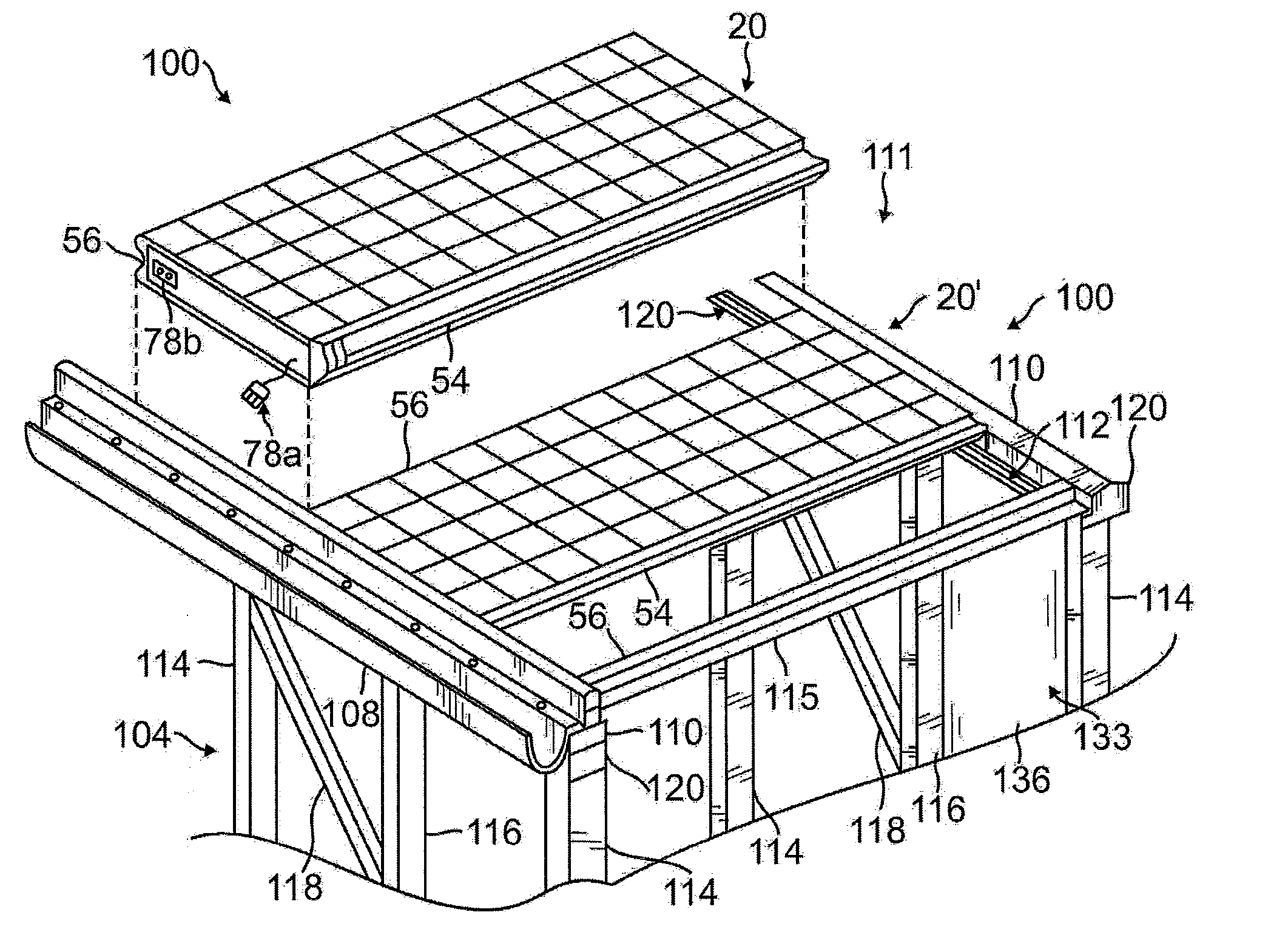
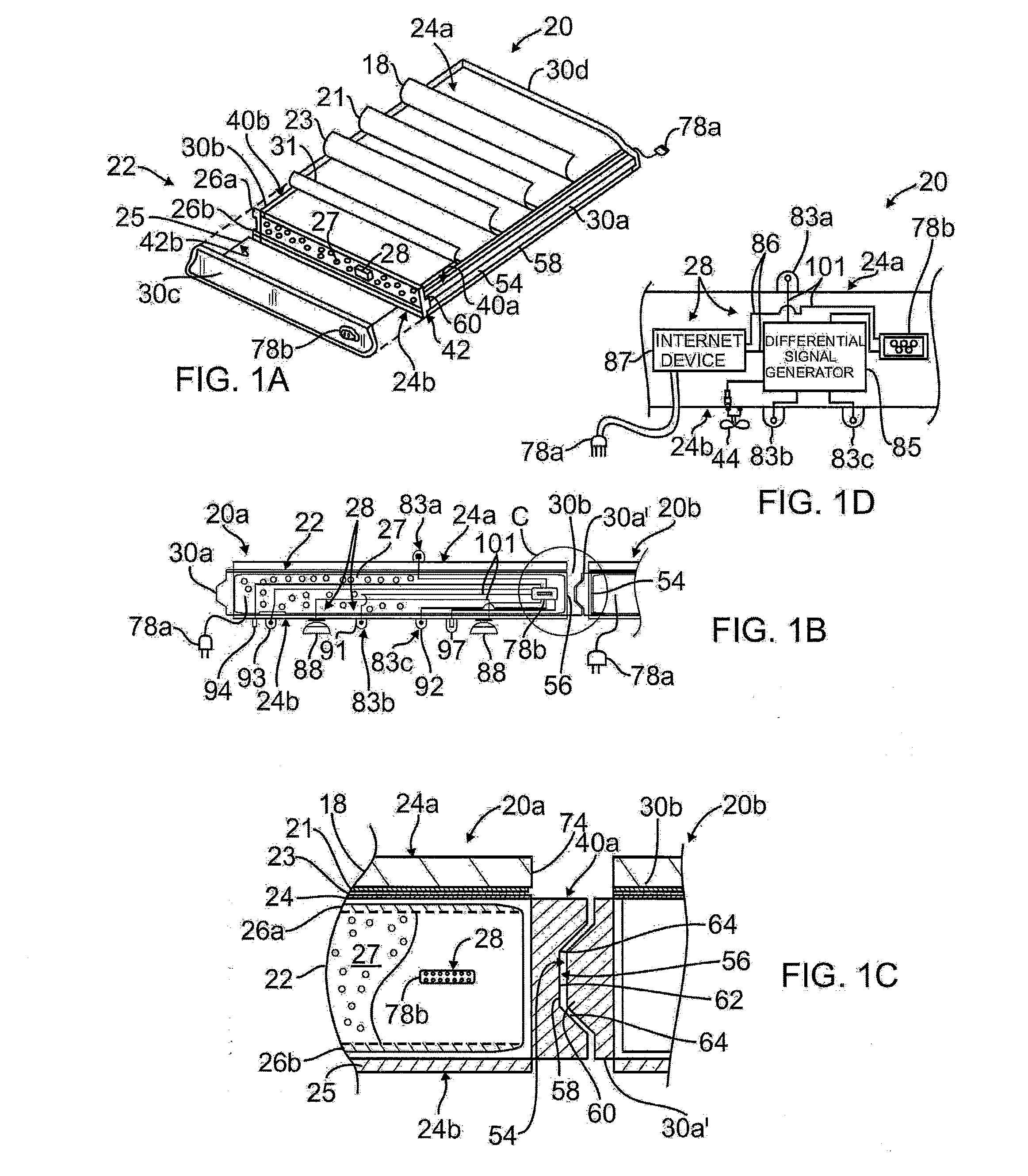
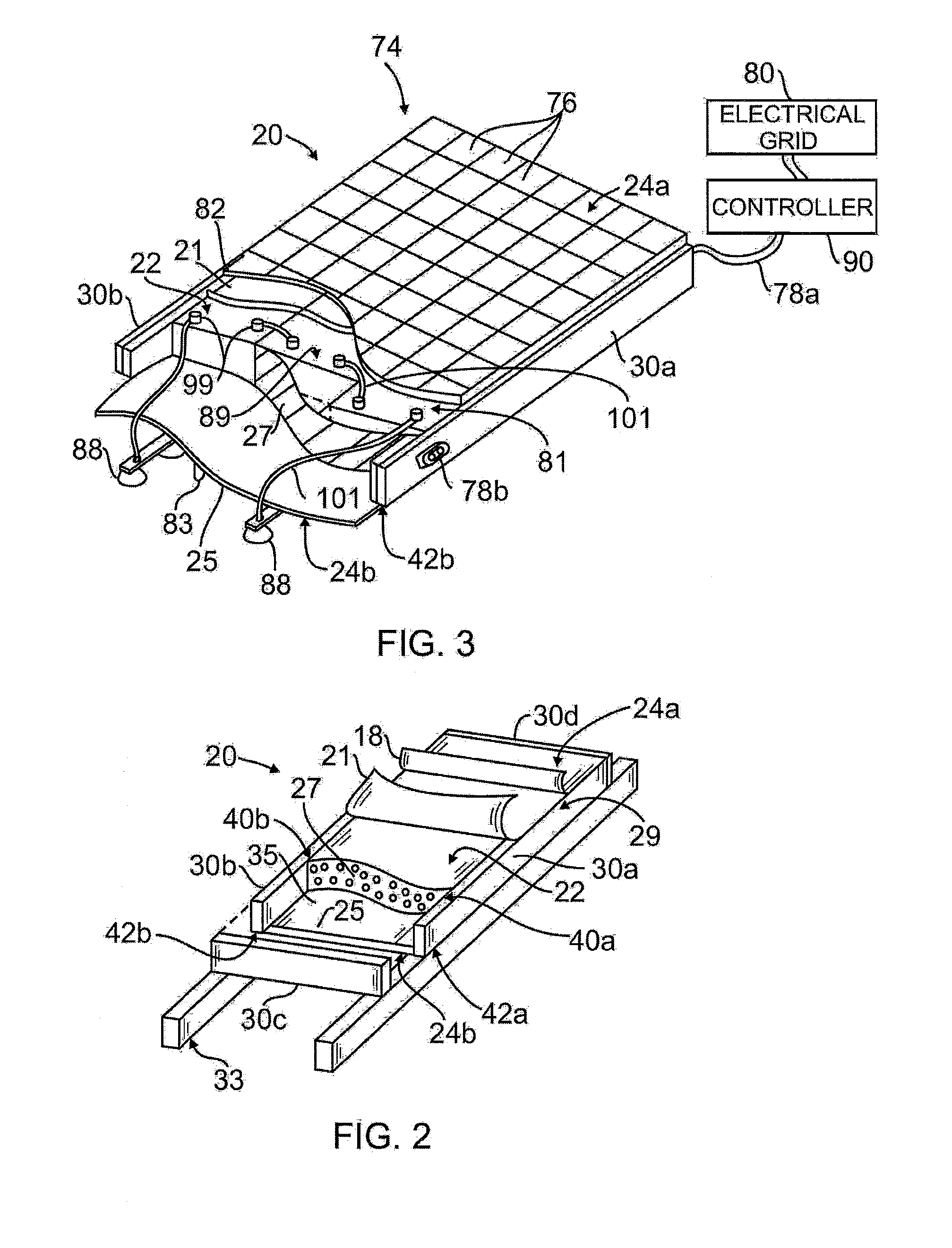
- The development of smart or multifunctional panels for modular buildings, which include insulative bodies with sensors to measure interior and exterior conditions, signal couplers for data transmission, and photovoltaic arrays for energy generation, along with a modular building platform that optimizes design and construction using priority ranking distribution of parameters such as quality, environmental performance, and cost.

Lightweight building assembly
PatentPendingUS20250283322A1
Innovation
- Modular, lightweight building assemblies featuring an insulation blanket, frame, and tensioned elements that form a continuous tension circuit, allowing for easy installation and adaptation to diverse climates, with insulation materials and membranes providing thermal and moisture barriers.


Building Codes and Climate Standards for Modular Construction
Building codes and climate standards represent the regulatory foundation that governs modular construction across diverse climate zones. These frameworks establish minimum performance requirements for structural integrity, energy efficiency, and occupant safety while addressing region-specific environmental challenges. The complexity of multi-jurisdictional compliance creates significant barriers for manufacturers seeking to scale modular solutions across different geographic markets.
International building codes such as the International Building Code (IBC) and International Residential Code (IRC) provide baseline standards, yet local jurisdictions frequently impose additional requirements tailored to specific climate conditions. Cold climate zones mandate enhanced insulation values, vapor barrier specifications, and freeze-thaw resistance criteria. Hot climate regions emphasize cooling load calculations, solar heat gain coefficients, and moisture management protocols. Seismic zones introduce lateral force requirements that directly impact modular connection systems and foundation interfaces.
Energy codes present another layer of complexity, with standards like ASHRAE 90.1 and the International Energy Conservation Code (IECC) establishing climate zone-specific performance targets. These regulations drive envelope design requirements including R-values, air leakage rates, and fenestration specifications that vary significantly across the eight defined climate zones. Compliance verification through energy modeling and testing protocols adds substantial documentation requirements for modular manufacturers.
Climate-specific standards address environmental durability concerns through material specifications and testing requirements. Hurricane-prone regions require impact resistance testing and enhanced structural connections. Wildfire interface zones mandate ignition-resistant materials and defensible space considerations. Flood-prone areas necessitate elevated construction techniques and moisture-resistant assemblies that challenge traditional modular manufacturing approaches.
The pre-approval process for modular construction varies dramatically between jurisdictions, with some requiring full plan review for each installation while others accept manufacturer certifications. This inconsistency creates market fragmentation and limits the economic advantages of standardized production. Emerging trends toward performance-based codes and prescriptive climate adaptations offer potential pathways for improved regulatory harmonization across diverse environmental conditions.
International building codes such as the International Building Code (IBC) and International Residential Code (IRC) provide baseline standards, yet local jurisdictions frequently impose additional requirements tailored to specific climate conditions. Cold climate zones mandate enhanced insulation values, vapor barrier specifications, and freeze-thaw resistance criteria. Hot climate regions emphasize cooling load calculations, solar heat gain coefficients, and moisture management protocols. Seismic zones introduce lateral force requirements that directly impact modular connection systems and foundation interfaces.
Energy codes present another layer of complexity, with standards like ASHRAE 90.1 and the International Energy Conservation Code (IECC) establishing climate zone-specific performance targets. These regulations drive envelope design requirements including R-values, air leakage rates, and fenestration specifications that vary significantly across the eight defined climate zones. Compliance verification through energy modeling and testing protocols adds substantial documentation requirements for modular manufacturers.
Climate-specific standards address environmental durability concerns through material specifications and testing requirements. Hurricane-prone regions require impact resistance testing and enhanced structural connections. Wildfire interface zones mandate ignition-resistant materials and defensible space considerations. Flood-prone areas necessitate elevated construction techniques and moisture-resistant assemblies that challenge traditional modular manufacturing approaches.
The pre-approval process for modular construction varies dramatically between jurisdictions, with some requiring full plan review for each installation while others accept manufacturer certifications. This inconsistency creates market fragmentation and limits the economic advantages of standardized production. Emerging trends toward performance-based codes and prescriptive climate adaptations offer potential pathways for improved regulatory harmonization across diverse environmental conditions.
Sustainability and Environmental Impact Assessment
Modular construction presents significant opportunities for advancing sustainable building practices across diverse climate zones, though its environmental impact varies considerably based on design implementation, material selection, and regional adaptation strategies. The prefabricated nature of modular systems inherently reduces construction waste by up to 90% compared to traditional building methods, as precise factory manufacturing minimizes material excess and enables comprehensive recycling of production byproducts.
The carbon footprint assessment of climate-optimized modular construction reveals complex trade-offs between transportation emissions and operational efficiency gains. While shipping prefabricated modules to remote locations increases initial carbon costs, the superior thermal performance achieved through controlled factory assembly and climate-specific insulation strategies typically results in 20-40% lower lifetime energy consumption compared to site-built alternatives.
Material sustainability varies significantly across climate adaptations, with tropical zone modules emphasizing rapidly renewable bamboo composites and recycled aluminum framing, while arctic applications rely more heavily on high-performance synthetic insulation and engineered timber products. The standardization inherent in modular systems enables more efficient material sourcing and end-of-life recovery, though climate-specific customizations can complicate recycling processes.
Water management sustainability differs markedly between climate zones, with arid region modules incorporating advanced greywater recycling systems and rainwater harvesting capabilities, while humid climate designs prioritize moisture control and natural ventilation systems. These climate-responsive features typically increase initial environmental costs but deliver substantial long-term resource conservation benefits.
The circular economy potential of climate-adapted modular construction remains largely untapped, with current disassembly and relocation practices limited by climate-specific modifications and connection systems. However, emerging standardization efforts for inter-climate compatibility could unlock significant sustainability gains through module reuse across different geographic markets.
Life cycle assessments indicate that climate-optimized modular construction achieves environmental payback periods of 3-7 years depending on regional energy sources and climate severity, with the most significant gains observed in extreme climate applications where traditional construction faces the greatest efficiency challenges.
The carbon footprint assessment of climate-optimized modular construction reveals complex trade-offs between transportation emissions and operational efficiency gains. While shipping prefabricated modules to remote locations increases initial carbon costs, the superior thermal performance achieved through controlled factory assembly and climate-specific insulation strategies typically results in 20-40% lower lifetime energy consumption compared to site-built alternatives.
Material sustainability varies significantly across climate adaptations, with tropical zone modules emphasizing rapidly renewable bamboo composites and recycled aluminum framing, while arctic applications rely more heavily on high-performance synthetic insulation and engineered timber products. The standardization inherent in modular systems enables more efficient material sourcing and end-of-life recovery, though climate-specific customizations can complicate recycling processes.
Water management sustainability differs markedly between climate zones, with arid region modules incorporating advanced greywater recycling systems and rainwater harvesting capabilities, while humid climate designs prioritize moisture control and natural ventilation systems. These climate-responsive features typically increase initial environmental costs but deliver substantial long-term resource conservation benefits.
The circular economy potential of climate-adapted modular construction remains largely untapped, with current disassembly and relocation practices limited by climate-specific modifications and connection systems. However, emerging standardization efforts for inter-climate compatibility could unlock significant sustainability gains through module reuse across different geographic markets.
Life cycle assessments indicate that climate-optimized modular construction achieves environmental payback periods of 3-7 years depending on regional energy sources and climate severity, with the most significant gains observed in extreme climate applications where traditional construction faces the greatest efficiency challenges.
Unlock deeper insights with PatSnap Eureka Quick Research — get a full tech report to explore trends and direct your research. Try now!
Generate Your Research Report Instantly with AI Agent
Supercharge your innovation with PatSnap Eureka AI Agent Platform!