Optimize silicon interposer reflow profile to reduce delamination
MAY 7, 20269 MIN READ
Generate Your Research Report Instantly with AI Agent
PatSnap Eureka helps you evaluate technical feasibility & market potential.
Silicon Interposer Reflow Technology Background and Objectives
Silicon interposer technology has emerged as a critical enabler for advanced semiconductor packaging, particularly in high-performance computing, artificial intelligence, and data center applications. This technology facilitates the integration of multiple heterogeneous chips through a silicon substrate that provides high-density interconnections with superior electrical performance compared to traditional organic substrates. The interposer acts as a bridge between different semiconductor components, enabling system-level integration while maintaining optimal signal integrity and thermal management.
The evolution of silicon interposer technology began in the early 2000s as the semiconductor industry sought solutions for continued performance scaling beyond Moore's Law limitations. Initial developments focused on through-silicon via (TSV) technology and wafer-level processing techniques. The technology gained significant momentum around 2010 with the introduction of 2.5D packaging architectures, where logic and memory chips are mounted side-by-side on the interposer substrate.
Reflow soldering represents a fundamental manufacturing process in silicon interposer assembly, where solder joints are formed between the interposer and mounted components through controlled heating profiles. However, the thermal expansion coefficient mismatch between silicon interposers and organic substrates creates substantial mechanical stress during temperature cycling. This stress concentration often manifests as delamination at critical interfaces, particularly between the interposer and package substrate.
Delamination poses severe reliability risks in silicon interposer packages, potentially leading to electrical failures, reduced thermal conductivity, and compromised mechanical integrity. The phenomenon typically occurs at interfaces with weak adhesion strength when thermal stresses exceed the interfacial bonding capacity. Current industry data indicates that delamination-related failures account for approximately 15-25% of silicon interposer package reliability issues, making it a primary concern for manufacturers.
The primary objective of optimizing silicon interposer reflow profiles centers on minimizing thermal-mechanical stress while ensuring complete solder joint formation. This involves developing temperature-time profiles that balance the competing requirements of adequate solder reflow and reduced thermal expansion stress. Key targets include achieving peak temperatures below critical delamination thresholds while maintaining sufficient thermal energy for reliable metallurgical bonding.
Secondary objectives encompass improving overall package reliability metrics, reducing manufacturing defect rates, and establishing robust process windows for high-volume production. The optimization effort aims to extend package lifetime under thermal cycling conditions while maintaining electrical performance specifications and enabling cost-effective manufacturing scalability across different product platforms.
The evolution of silicon interposer technology began in the early 2000s as the semiconductor industry sought solutions for continued performance scaling beyond Moore's Law limitations. Initial developments focused on through-silicon via (TSV) technology and wafer-level processing techniques. The technology gained significant momentum around 2010 with the introduction of 2.5D packaging architectures, where logic and memory chips are mounted side-by-side on the interposer substrate.
Reflow soldering represents a fundamental manufacturing process in silicon interposer assembly, where solder joints are formed between the interposer and mounted components through controlled heating profiles. However, the thermal expansion coefficient mismatch between silicon interposers and organic substrates creates substantial mechanical stress during temperature cycling. This stress concentration often manifests as delamination at critical interfaces, particularly between the interposer and package substrate.
Delamination poses severe reliability risks in silicon interposer packages, potentially leading to electrical failures, reduced thermal conductivity, and compromised mechanical integrity. The phenomenon typically occurs at interfaces with weak adhesion strength when thermal stresses exceed the interfacial bonding capacity. Current industry data indicates that delamination-related failures account for approximately 15-25% of silicon interposer package reliability issues, making it a primary concern for manufacturers.
The primary objective of optimizing silicon interposer reflow profiles centers on minimizing thermal-mechanical stress while ensuring complete solder joint formation. This involves developing temperature-time profiles that balance the competing requirements of adequate solder reflow and reduced thermal expansion stress. Key targets include achieving peak temperatures below critical delamination thresholds while maintaining sufficient thermal energy for reliable metallurgical bonding.
Secondary objectives encompass improving overall package reliability metrics, reducing manufacturing defect rates, and establishing robust process windows for high-volume production. The optimization effort aims to extend package lifetime under thermal cycling conditions while maintaining electrical performance specifications and enabling cost-effective manufacturing scalability across different product platforms.
Market Demand for Advanced Silicon Interposer Solutions
The global semiconductor packaging market is experiencing unprecedented growth driven by the proliferation of high-performance computing applications, artificial intelligence processors, and advanced mobile devices. Silicon interposers have emerged as a critical enabling technology for 2.5D and 3D packaging architectures, facilitating the integration of heterogeneous chiplets and high-bandwidth memory configurations. The demand for these advanced packaging solutions is particularly pronounced in data center applications, where the need for increased computational density and reduced power consumption drives adoption of complex multi-chip modules.
Market drivers for advanced silicon interposer solutions are multifaceted, encompassing the semiconductor industry's transition toward chiplet-based architectures and the growing requirements for high-speed interconnects. Major technology companies are increasingly adopting interposer-based designs to overcome the limitations of traditional monolithic chip scaling, particularly as Moore's Law faces physical constraints. The automotive sector represents another significant growth vector, with advanced driver assistance systems and autonomous vehicle platforms requiring sophisticated sensor fusion and processing capabilities that benefit from interposer technology.
The reliability requirements for silicon interposer applications have intensified as these components find deployment in mission-critical systems. Delamination issues during reflow processes pose substantial risks to product yield and long-term reliability, directly impacting the total cost of ownership for end customers. Manufacturers are increasingly demanding packaging solutions that can withstand multiple thermal cycles while maintaining structural integrity, particularly for applications in harsh operating environments such as automotive and aerospace systems.
Quality standards and certification requirements continue to evolve, with customers expecting zero-defect manufacturing processes and comprehensive reliability validation. The market demand extends beyond basic functionality to encompass advanced thermal management capabilities, electromagnetic interference mitigation, and compatibility with next-generation assembly processes. Supply chain considerations have also become paramount, with customers seeking suppliers who can demonstrate robust process control and consistent quality metrics across high-volume production scenarios.
The competitive landscape reflects a market where technical differentiation through superior manufacturing processes and reliability performance directly translates to market share gains. Companies that can demonstrate optimized reflow profiles and reduced delamination rates are positioned to capture premium market segments and establish long-term customer partnerships in this rapidly expanding technology domain.
Market drivers for advanced silicon interposer solutions are multifaceted, encompassing the semiconductor industry's transition toward chiplet-based architectures and the growing requirements for high-speed interconnects. Major technology companies are increasingly adopting interposer-based designs to overcome the limitations of traditional monolithic chip scaling, particularly as Moore's Law faces physical constraints. The automotive sector represents another significant growth vector, with advanced driver assistance systems and autonomous vehicle platforms requiring sophisticated sensor fusion and processing capabilities that benefit from interposer technology.
The reliability requirements for silicon interposer applications have intensified as these components find deployment in mission-critical systems. Delamination issues during reflow processes pose substantial risks to product yield and long-term reliability, directly impacting the total cost of ownership for end customers. Manufacturers are increasingly demanding packaging solutions that can withstand multiple thermal cycles while maintaining structural integrity, particularly for applications in harsh operating environments such as automotive and aerospace systems.
Quality standards and certification requirements continue to evolve, with customers expecting zero-defect manufacturing processes and comprehensive reliability validation. The market demand extends beyond basic functionality to encompass advanced thermal management capabilities, electromagnetic interference mitigation, and compatibility with next-generation assembly processes. Supply chain considerations have also become paramount, with customers seeking suppliers who can demonstrate robust process control and consistent quality metrics across high-volume production scenarios.
The competitive landscape reflects a market where technical differentiation through superior manufacturing processes and reliability performance directly translates to market share gains. Companies that can demonstrate optimized reflow profiles and reduced delamination rates are positioned to capture premium market segments and establish long-term customer partnerships in this rapidly expanding technology domain.
Current Delamination Challenges in Silicon Interposer Manufacturing
Silicon interposer manufacturing faces significant delamination challenges that directly impact product reliability and yield rates. Delamination occurs when adhesive bonds between different material layers fail, creating voids or separations that compromise electrical performance and mechanical integrity. This phenomenon has become increasingly problematic as interposer designs evolve toward higher density interconnects and thinner substrates to meet advanced packaging requirements.
The primary delamination mechanisms stem from coefficient of thermal expansion (CTE) mismatches between silicon interposers and organic substrates. During reflow processes, temperature cycling induces differential thermal stresses that exceed the adhesive strength of bonding materials. Silicon's CTE of approximately 2.6 ppm/°C contrasts sharply with organic substrates ranging from 14-17 ppm/°C, creating substantial mechanical stress concentrations at interface boundaries.
Moisture absorption presents another critical challenge, particularly affecting underfill materials and die attach adhesives. Absorbed moisture expands rapidly during high-temperature reflow, generating internal pressure that weakens interfacial bonds. This hygroscopic effect is exacerbated by inadequate baking procedures or exposure to humid environments during assembly processes.
Current manufacturing processes struggle with reflow profile optimization due to competing thermal requirements. Achieving adequate solder joint formation requires sufficient peak temperatures and dwell times, yet these same conditions promote delamination through increased thermal stress and moisture-driven expansion. The narrow process window between successful soldering and delamination onset creates significant manufacturing challenges.
Interface contamination and surface preparation deficiencies contribute substantially to delamination susceptibility. Inadequate cleaning procedures leave residual flux, oxidation, or organic contaminants that prevent proper adhesive wetting and bonding. Surface roughness variations and plasma treatment inconsistencies further compromise interfacial adhesion strength.
Material selection limitations compound these challenges, as existing underfill and die attach materials often lack sufficient adhesion strength, thermal stability, or moisture resistance for demanding interposer applications. The industry requires advanced material formulations that maintain bonding integrity under severe thermal cycling while providing adequate flow characteristics during dispensing and curing processes.
The primary delamination mechanisms stem from coefficient of thermal expansion (CTE) mismatches between silicon interposers and organic substrates. During reflow processes, temperature cycling induces differential thermal stresses that exceed the adhesive strength of bonding materials. Silicon's CTE of approximately 2.6 ppm/°C contrasts sharply with organic substrates ranging from 14-17 ppm/°C, creating substantial mechanical stress concentrations at interface boundaries.
Moisture absorption presents another critical challenge, particularly affecting underfill materials and die attach adhesives. Absorbed moisture expands rapidly during high-temperature reflow, generating internal pressure that weakens interfacial bonds. This hygroscopic effect is exacerbated by inadequate baking procedures or exposure to humid environments during assembly processes.
Current manufacturing processes struggle with reflow profile optimization due to competing thermal requirements. Achieving adequate solder joint formation requires sufficient peak temperatures and dwell times, yet these same conditions promote delamination through increased thermal stress and moisture-driven expansion. The narrow process window between successful soldering and delamination onset creates significant manufacturing challenges.
Interface contamination and surface preparation deficiencies contribute substantially to delamination susceptibility. Inadequate cleaning procedures leave residual flux, oxidation, or organic contaminants that prevent proper adhesive wetting and bonding. Surface roughness variations and plasma treatment inconsistencies further compromise interfacial adhesion strength.
Material selection limitations compound these challenges, as existing underfill and die attach materials often lack sufficient adhesion strength, thermal stability, or moisture resistance for demanding interposer applications. The industry requires advanced material formulations that maintain bonding integrity under severe thermal cycling while providing adequate flow characteristics during dispensing and curing processes.
Existing Reflow Profile Solutions for Delamination Prevention
01 Adhesive layer optimization and bonding enhancement
Techniques for improving the adhesive properties between silicon interposers and substrates through specialized bonding materials and surface treatments. These methods focus on enhancing the interfacial adhesion strength to prevent delamination by optimizing the chemical and physical properties of the bonding layers.- Adhesive layer optimization and bonding enhancement: Techniques for improving the adhesive properties between silicon interposers and substrates through specialized bonding materials and surface treatments. These methods focus on enhancing the interfacial adhesion strength to prevent delamination by optimizing the chemical and physical properties of the bonding layers.
- Thermal stress management and coefficient of thermal expansion matching: Methods for reducing thermal-induced delamination by managing thermal stress through material selection and structural design. These approaches involve matching thermal expansion coefficients between different layers and implementing stress-relief structures to minimize mechanical stress during temperature cycling.
- Surface treatment and preparation techniques: Processes for preparing silicon interposer surfaces to improve adhesion and prevent delamination. These techniques include surface roughening, chemical etching, plasma treatment, and application of primer layers to enhance the bonding interface between the interposer and adjacent materials.
- Structural design modifications and reinforcement methods: Design approaches that incorporate structural modifications to reduce delamination risk through mechanical reinforcement and stress distribution. These methods include the use of support structures, redistribution layers, and geometric modifications that help distribute mechanical stress more evenly across the interface.
- Process control and manufacturing optimization: Manufacturing process improvements that focus on controlling parameters during interposer fabrication and assembly to minimize delamination. These approaches include optimized curing conditions, pressure application during bonding, temperature profiles, and quality control measures to ensure consistent adhesion performance.
02 Thermal stress management and coefficient of thermal expansion matching
Methods for reducing thermal-induced delamination by managing thermal stress through material selection and structural design. These approaches involve matching thermal expansion coefficients between different layers and implementing stress-relief structures to minimize mechanical stress during temperature cycling.Expand Specific Solutions03 Surface preparation and treatment techniques
Processes for preparing silicon interposer surfaces to improve adhesion and prevent delamination. These techniques include surface cleaning, roughening, chemical treatment, and plasma processing to create optimal bonding conditions and enhance the mechanical interlocking between layers.Expand Specific Solutions04 Structural design modifications and reinforcement methods
Design approaches that incorporate structural modifications to prevent delamination through mechanical reinforcement and stress distribution. These methods include the use of anchor structures, through-silicon vias for mechanical support, and optimized layer thickness to improve overall structural integrity.Expand Specific Solutions05 Process control and manufacturing optimization
Manufacturing process improvements and quality control measures to prevent delamination during fabrication and assembly. These approaches focus on optimizing processing parameters such as temperature, pressure, and timing during bonding operations to ensure reliable adhesion and minimize defects.Expand Specific Solutions
Key Players in Silicon Interposer and Reflow Equipment Industry
The silicon interposer reflow profile optimization market represents a mature segment within the advanced semiconductor packaging industry, currently valued at several billion dollars and experiencing steady growth driven by increasing demand for high-performance computing and 5G applications. The industry has reached a mature development stage with established manufacturing processes, though continuous refinement remains critical for yield improvement. Technology maturity varies significantly among key players, with TSMC and Samsung Electronics leading in advanced interposer technologies and sophisticated thermal management solutions. Intel, ASE Group, and IBIDEN demonstrate strong capabilities in packaging optimization and delamination mitigation techniques. Traditional players like IBM, Texas Instruments, and Qualcomm contribute specialized knowledge in materials science and process control, while emerging companies such as UltraMemory and regional manufacturers are developing innovative approaches to address specific reflow challenges in next-generation packaging applications.
Taiwan Semiconductor Manufacturing Co., Ltd.
Technical Solution: TSMC has developed advanced reflow profiling techniques for silicon interposer packaging that focus on precise temperature control and thermal gradient management. Their approach involves multi-zone heating systems with real-time temperature monitoring to minimize thermal stress during the reflow process. The company implements specialized flux formulations and optimized heating ramp rates to reduce coefficient of thermal expansion (CTE) mismatch between silicon interposers and organic substrates. TSMC's reflow profiles typically feature controlled heating rates of 1-3°C/second during pre-heat phases and carefully managed peak temperatures around 245-260°C to prevent delamination while ensuring proper solder joint formation.
Strengths: Industry-leading manufacturing scale and advanced process control capabilities, extensive experience with high-density packaging. Weaknesses: High cost structure and limited flexibility for customized low-volume applications.
Intel Corp.
Technical Solution: Intel has developed comprehensive thermal management solutions for silicon interposer reflow processes, focusing on underfill material optimization and multi-step reflow profiles. Their approach includes pre-conditioning steps at lower temperatures (150-180°C) to reduce moisture content and stress buildup before the main reflow cycle. Intel employs advanced simulation tools to predict thermal behavior and optimize heating profiles, incorporating nitrogen atmosphere control to prevent oxidation. The company has implemented specialized conveyor systems with multiple heating zones allowing for precise temperature gradients and dwell times. Their reflow profiles are designed to accommodate the thermal expansion differences between silicon and organic materials while maintaining solder joint integrity.
Strengths: Strong R&D capabilities and advanced packaging technologies, comprehensive thermal simulation expertise. Weaknesses: Focus primarily on internal products may limit broader industry applicability.
Core Innovations in Thermal Management for Silicon Interposers
3D assembly for interposer bow
PatentWO2014120592A1
Innovation
- A method involving initial bonding of interposers and laminates using temperature and pressure gradients that do not exceed the melting point of solder material, followed by reflow to create permanent bonds, ensuring physical contact and preventing bridging.


Interposer Based Monolithic Microwave Integrate Circuit (iMMIC)
PatentInactiveUS20110089531A1
Innovation
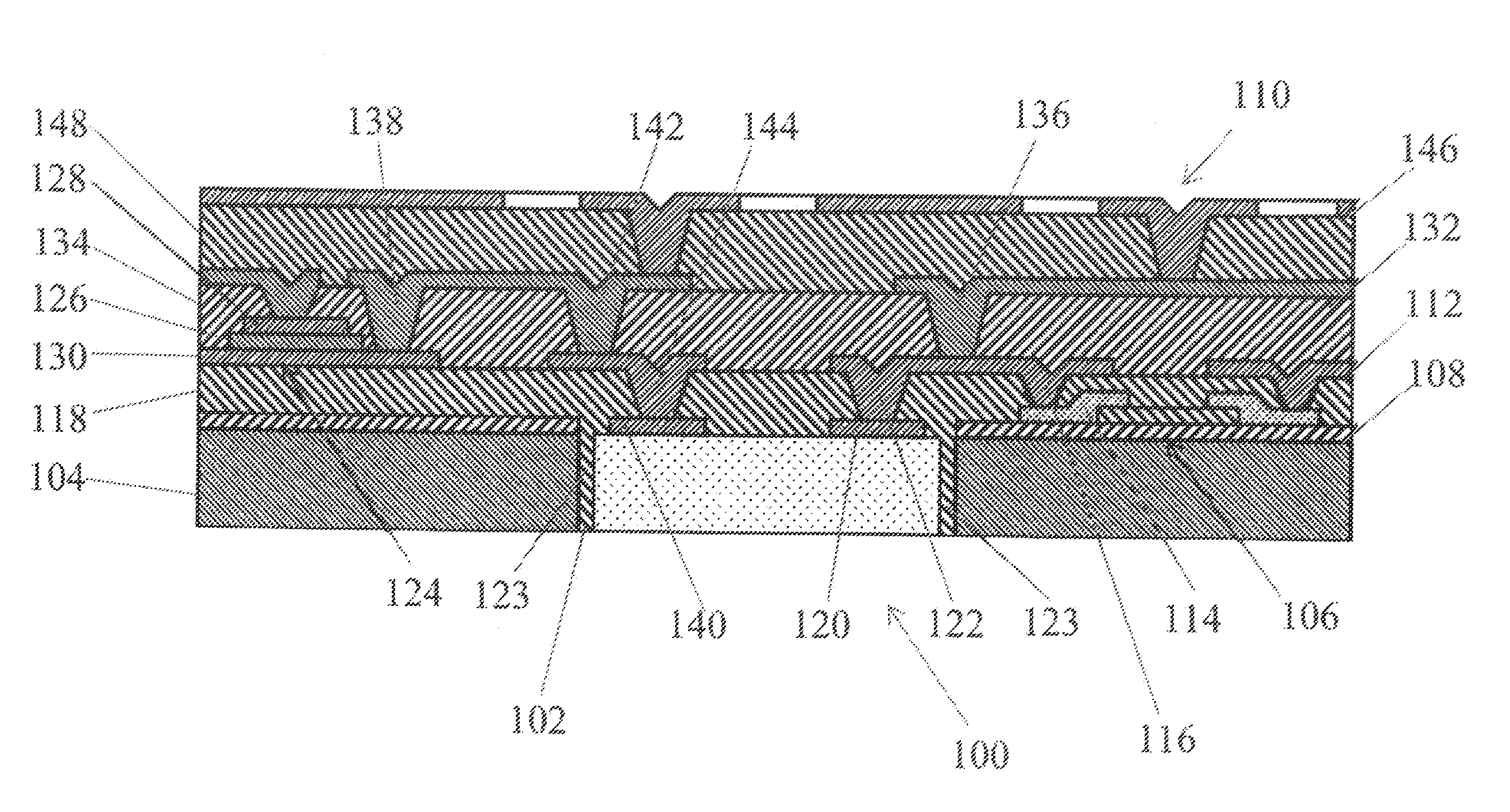
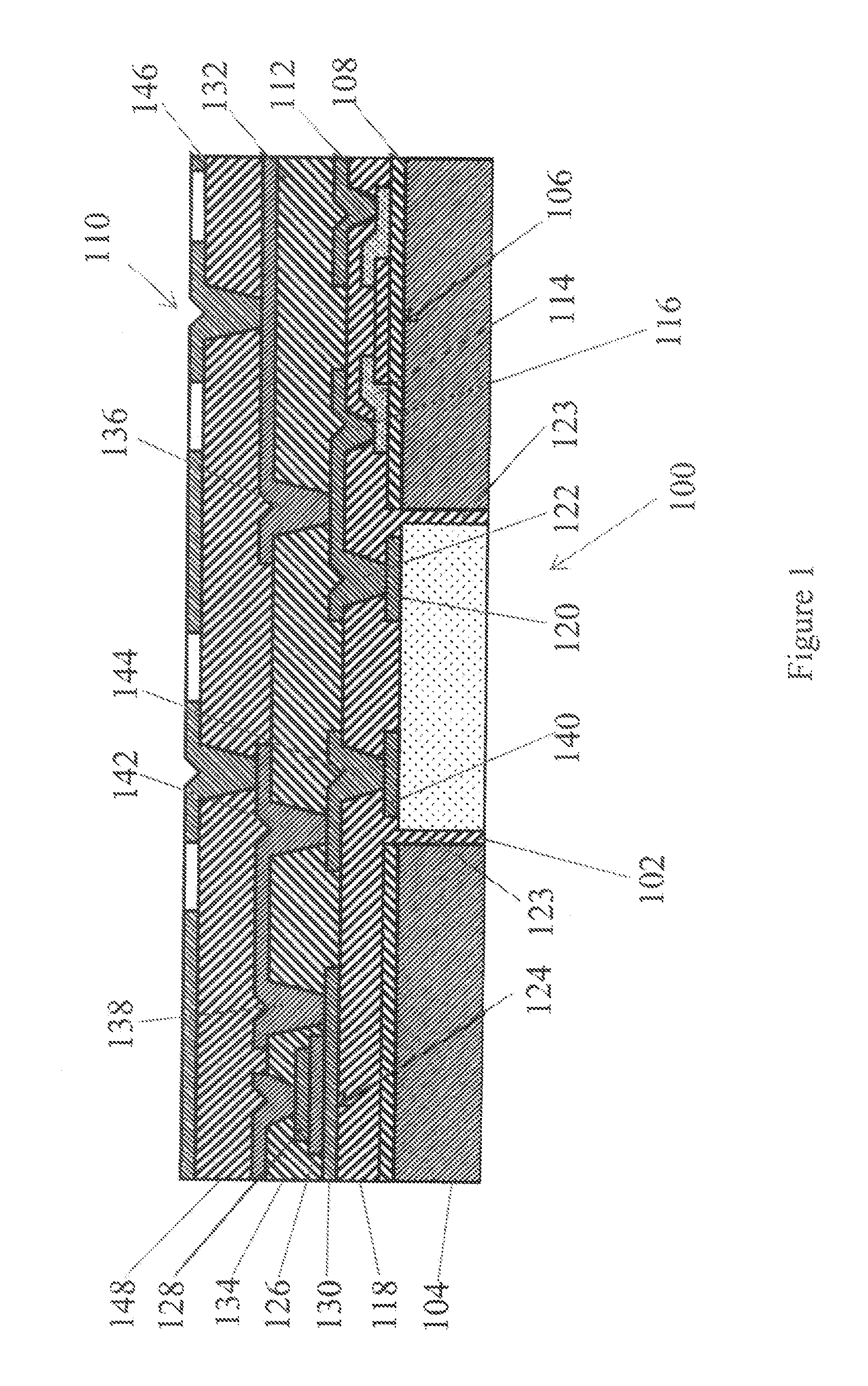
- The method involves seating an integrated circuit in a recess of a silicon interposer substrate, filling the recess with a benzocyclobutene (BCB) layer, and using patterned metal layers to communicate with the IC through the BCB layer, allowing for thicker BCB films and reduced substrate area usage while maintaining electrical and thermal performance.

Material Compatibility Standards for Silicon Interposer Assembly
Material compatibility standards for silicon interposer assembly represent a critical framework governing the selection and integration of materials throughout the reflow process. These standards establish fundamental guidelines for thermal expansion coefficients, adhesion properties, and chemical compatibility between different material layers within the interposer stack-up. The primary focus centers on ensuring that all materials can withstand the thermal cycling inherent in reflow profiling while maintaining structural integrity and preventing delamination failures.
The coefficient of thermal expansion matching requirements form the cornerstone of material compatibility protocols. Silicon interposers typically exhibit a CTE of approximately 2.6 ppm/°C, necessitating careful selection of underfill materials, die attach adhesives, and substrate materials with compatible expansion characteristics. Industry standards specify maximum CTE mismatch tolerances, typically ranging from ±1.0 to ±2.0 ppm/°C depending on the specific application and thermal exposure conditions during assembly.
Adhesion strength specifications define minimum bond strength requirements between critical interfaces, particularly at the die-to-interposer and interposer-to-substrate junctions. These standards mandate specific test methodologies including die shear testing, wire pull testing, and thermal cycling qualification protocols. Acceptable adhesion values typically range from 5-15 kg-force for die shear strength, with requirements varying based on die size and application criticality.
Chemical compatibility matrices establish approved material combinations while identifying potentially problematic interactions that could lead to delamination. These standards address outgassing characteristics, moisture absorption properties, and ionic contamination limits for all assembly materials. Particular attention focuses on flux residue compatibility with underfill materials and the potential for galvanic corrosion between dissimilar metals within the assembly stack.
Glass transition temperature requirements ensure that polymer-based materials maintain appropriate mechanical properties throughout the reflow temperature range. Standards typically specify minimum Tg values of 150-180°C for underfill materials and die attach adhesives to prevent softening during peak reflow temperatures. Additionally, these specifications address cure kinetics and degree of cure requirements to optimize cross-linking density and mechanical performance.
Moisture sensitivity classifications provide guidelines for material handling and storage protocols prior to assembly. These standards establish maximum allowable moisture uptake levels and define appropriate baking procedures to eliminate absorbed moisture that could cause delamination during reflow heating. The classifications typically follow industry standards with specific requirements for floor life limitations and storage conditions in controlled humidity environments.
The coefficient of thermal expansion matching requirements form the cornerstone of material compatibility protocols. Silicon interposers typically exhibit a CTE of approximately 2.6 ppm/°C, necessitating careful selection of underfill materials, die attach adhesives, and substrate materials with compatible expansion characteristics. Industry standards specify maximum CTE mismatch tolerances, typically ranging from ±1.0 to ±2.0 ppm/°C depending on the specific application and thermal exposure conditions during assembly.
Adhesion strength specifications define minimum bond strength requirements between critical interfaces, particularly at the die-to-interposer and interposer-to-substrate junctions. These standards mandate specific test methodologies including die shear testing, wire pull testing, and thermal cycling qualification protocols. Acceptable adhesion values typically range from 5-15 kg-force for die shear strength, with requirements varying based on die size and application criticality.
Chemical compatibility matrices establish approved material combinations while identifying potentially problematic interactions that could lead to delamination. These standards address outgassing characteristics, moisture absorption properties, and ionic contamination limits for all assembly materials. Particular attention focuses on flux residue compatibility with underfill materials and the potential for galvanic corrosion between dissimilar metals within the assembly stack.
Glass transition temperature requirements ensure that polymer-based materials maintain appropriate mechanical properties throughout the reflow temperature range. Standards typically specify minimum Tg values of 150-180°C for underfill materials and die attach adhesives to prevent softening during peak reflow temperatures. Additionally, these specifications address cure kinetics and degree of cure requirements to optimize cross-linking density and mechanical performance.
Moisture sensitivity classifications provide guidelines for material handling and storage protocols prior to assembly. These standards establish maximum allowable moisture uptake levels and define appropriate baking procedures to eliminate absorbed moisture that could cause delamination during reflow heating. The classifications typically follow industry standards with specific requirements for floor life limitations and storage conditions in controlled humidity environments.
Quality Control Methods for Delamination Detection and Prevention
Effective quality control methods for delamination detection and prevention in silicon interposer applications require a multi-layered approach combining advanced inspection technologies with proactive process monitoring. The implementation of these methods is critical for maintaining product reliability and reducing manufacturing defects during the reflow soldering process.
Non-destructive testing techniques form the cornerstone of delamination detection strategies. Scanning Acoustic Microscopy (SAM) represents the most widely adopted method, utilizing ultrasonic waves to identify interfacial delamination between different material layers. This technique can detect delamination areas as small as 10 micrometers and provides real-time imaging capabilities during production line integration.
Thermal imaging inspection systems offer complementary detection capabilities by monitoring temperature distribution patterns across the interposer surface during reflow processes. Abnormal thermal signatures often indicate potential delamination sites before visible defects appear. These systems can be integrated with automated optical inspection (AOI) equipment to provide comprehensive coverage of critical areas.
Process parameter monitoring serves as a preventive quality control measure by continuously tracking key variables that influence delamination formation. Real-time monitoring of peak reflow temperatures, heating rates, and cooling profiles enables immediate detection of process deviations that could lead to thermal stress-induced delamination. Statistical process control algorithms can trigger automatic adjustments when parameters drift outside acceptable ranges.
Material characterization testing protocols establish baseline properties for incoming substrates and adhesive materials. Glass transition temperature measurements, coefficient of thermal expansion testing, and adhesion strength evaluations help identify material batches with higher delamination risk before they enter production.
In-line electrical testing methods complement physical inspection techniques by detecting delamination-related electrical failures. Continuity testing and impedance measurements can identify open circuits or signal integrity issues caused by interfacial separation. These electrical signatures often correlate with specific delamination patterns and locations.
Advanced machine learning algorithms are increasingly being integrated into quality control systems to predict delamination occurrence based on historical process data and material properties. These predictive models enable proactive adjustments to reflow profiles before defects occur, significantly reducing scrap rates and improving overall yield performance in high-volume manufacturing environments.
Non-destructive testing techniques form the cornerstone of delamination detection strategies. Scanning Acoustic Microscopy (SAM) represents the most widely adopted method, utilizing ultrasonic waves to identify interfacial delamination between different material layers. This technique can detect delamination areas as small as 10 micrometers and provides real-time imaging capabilities during production line integration.
Thermal imaging inspection systems offer complementary detection capabilities by monitoring temperature distribution patterns across the interposer surface during reflow processes. Abnormal thermal signatures often indicate potential delamination sites before visible defects appear. These systems can be integrated with automated optical inspection (AOI) equipment to provide comprehensive coverage of critical areas.
Process parameter monitoring serves as a preventive quality control measure by continuously tracking key variables that influence delamination formation. Real-time monitoring of peak reflow temperatures, heating rates, and cooling profiles enables immediate detection of process deviations that could lead to thermal stress-induced delamination. Statistical process control algorithms can trigger automatic adjustments when parameters drift outside acceptable ranges.
Material characterization testing protocols establish baseline properties for incoming substrates and adhesive materials. Glass transition temperature measurements, coefficient of thermal expansion testing, and adhesion strength evaluations help identify material batches with higher delamination risk before they enter production.
In-line electrical testing methods complement physical inspection techniques by detecting delamination-related electrical failures. Continuity testing and impedance measurements can identify open circuits or signal integrity issues caused by interfacial separation. These electrical signatures often correlate with specific delamination patterns and locations.
Advanced machine learning algorithms are increasingly being integrated into quality control systems to predict delamination occurrence based on historical process data and material properties. These predictive models enable proactive adjustments to reflow profiles before defects occur, significantly reducing scrap rates and improving overall yield performance in high-volume manufacturing environments.
Unlock deeper insights with PatSnap Eureka Quick Research — get a full tech report to explore trends and direct your research. Try now!
Generate Your Research Report Instantly with AI Agent
Supercharge your innovation with PatSnap Eureka AI Agent Platform!