

Quantify silicon interposer ΔT using IR thermography and limits
MAY 7, 20269 MIN READ
Generate Your Research Report Instantly with AI Agent
PatSnap Eureka helps you evaluate technical feasibility & market potential.
Silicon Interposer Thermal Management Background and Objectives
Silicon interposers have emerged as a critical enabling technology for advanced semiconductor packaging, particularly in high-performance computing applications where multiple dies require dense interconnection. These thin silicon substrates, typically ranging from 50 to 200 micrometers in thickness, serve as intermediate layers between integrated circuits and package substrates, facilitating fine-pitch connections through through-silicon vias (TSVs) and redistribution layers. As semiconductor devices continue to scale toward smaller nodes and higher power densities, thermal management has become increasingly challenging, with silicon interposers playing a pivotal role in heat dissipation pathways.
The thermal behavior of silicon interposers directly impacts system reliability, performance, and longevity. Temperature variations across the interposer surface, denoted as ΔT, can lead to thermal stress, warpage, and potential failure of solder joints or TSV structures. Understanding and quantifying these temperature gradients is essential for optimizing thermal design and ensuring robust operation under various loading conditions. Traditional thermal analysis methods often rely on simulation models or contact-based measurements, which may not capture the complete thermal landscape or introduce measurement artifacts.
Infrared thermography presents a compelling solution for non-contact, real-time thermal characterization of silicon interposers. This technique enables spatial temperature mapping with high resolution, allowing engineers to identify hot spots, thermal gradients, and transient thermal behavior during operation. However, the application of IR thermography to silicon interposers faces unique challenges, including the semi-transparent nature of silicon at certain wavelengths, surface emissivity variations, and the need for accurate calibration procedures.
The primary objective of this research focuses on developing methodologies to accurately quantify temperature differentials across silicon interposer surfaces using infrared thermography while establishing measurement limits and uncertainty bounds. This involves addressing calibration challenges specific to silicon substrates, optimizing measurement parameters for different interposer configurations, and validating results against established thermal characterization methods. Understanding these thermal limits will enable more effective thermal management strategies and improved reliability predictions for next-generation packaging solutions.
The thermal behavior of silicon interposers directly impacts system reliability, performance, and longevity. Temperature variations across the interposer surface, denoted as ΔT, can lead to thermal stress, warpage, and potential failure of solder joints or TSV structures. Understanding and quantifying these temperature gradients is essential for optimizing thermal design and ensuring robust operation under various loading conditions. Traditional thermal analysis methods often rely on simulation models or contact-based measurements, which may not capture the complete thermal landscape or introduce measurement artifacts.
Infrared thermography presents a compelling solution for non-contact, real-time thermal characterization of silicon interposers. This technique enables spatial temperature mapping with high resolution, allowing engineers to identify hot spots, thermal gradients, and transient thermal behavior during operation. However, the application of IR thermography to silicon interposers faces unique challenges, including the semi-transparent nature of silicon at certain wavelengths, surface emissivity variations, and the need for accurate calibration procedures.
The primary objective of this research focuses on developing methodologies to accurately quantify temperature differentials across silicon interposer surfaces using infrared thermography while establishing measurement limits and uncertainty bounds. This involves addressing calibration challenges specific to silicon substrates, optimizing measurement parameters for different interposer configurations, and validating results against established thermal characterization methods. Understanding these thermal limits will enable more effective thermal management strategies and improved reliability predictions for next-generation packaging solutions.
Market Demand for Advanced Thermal Analysis in Semiconductor Packaging
The semiconductor packaging industry is experiencing unprecedented demand for advanced thermal analysis solutions, driven by the continuous miniaturization of electronic devices and the increasing power density of modern chips. Silicon interposers, as critical components in 2.5D and 3D packaging architectures, require precise thermal characterization to ensure reliable performance and prevent thermal-induced failures. The market demand for quantifying temperature variations using infrared thermography has intensified as traditional thermal management approaches prove insufficient for next-generation packaging solutions.
High-performance computing applications, including artificial intelligence processors, graphics processing units, and data center accelerators, represent the primary market drivers for advanced thermal analysis capabilities. These applications generate substantial heat loads within compact form factors, making accurate temperature mapping essential for optimal design and operation. The ability to quantify silicon interposer temperature differentials using non-contact IR thermography addresses critical industry needs for real-time thermal monitoring and validation.
The automotive electronics sector has emerged as another significant market segment demanding sophisticated thermal analysis solutions. Advanced driver assistance systems, electric vehicle power electronics, and autonomous driving processors require robust thermal characterization to meet stringent reliability standards. Silicon interposer-based packaging solutions in automotive applications must demonstrate thermal stability across wide temperature ranges, creating substantial demand for precise thermal measurement techniques.
Mobile device manufacturers increasingly require advanced thermal analysis capabilities to optimize performance while maintaining compact designs. The integration of multiple high-performance processors, memory modules, and communication chips within slim form factors necessitates detailed thermal mapping to prevent hotspot formation and ensure user safety. IR thermography provides the spatial resolution and measurement accuracy needed to validate thermal designs in these space-constrained applications.
The telecommunications infrastructure market, particularly 5G base stations and network equipment, drives significant demand for thermal analysis solutions. These systems operate continuously under varying environmental conditions while maintaining high data throughput requirements. Silicon interposer thermal characterization enables equipment manufacturers to optimize cooling strategies and ensure reliable operation in demanding deployment scenarios.
Research institutions and semiconductor manufacturers require advanced thermal analysis tools for process development and quality assurance. The ability to establish thermal limits and validate packaging designs through precise temperature measurements supports innovation in next-generation semiconductor technologies. This academic and industrial research demand creates a stable market foundation for specialized thermal analysis equipment and methodologies.
High-performance computing applications, including artificial intelligence processors, graphics processing units, and data center accelerators, represent the primary market drivers for advanced thermal analysis capabilities. These applications generate substantial heat loads within compact form factors, making accurate temperature mapping essential for optimal design and operation. The ability to quantify silicon interposer temperature differentials using non-contact IR thermography addresses critical industry needs for real-time thermal monitoring and validation.
The automotive electronics sector has emerged as another significant market segment demanding sophisticated thermal analysis solutions. Advanced driver assistance systems, electric vehicle power electronics, and autonomous driving processors require robust thermal characterization to meet stringent reliability standards. Silicon interposer-based packaging solutions in automotive applications must demonstrate thermal stability across wide temperature ranges, creating substantial demand for precise thermal measurement techniques.
Mobile device manufacturers increasingly require advanced thermal analysis capabilities to optimize performance while maintaining compact designs. The integration of multiple high-performance processors, memory modules, and communication chips within slim form factors necessitates detailed thermal mapping to prevent hotspot formation and ensure user safety. IR thermography provides the spatial resolution and measurement accuracy needed to validate thermal designs in these space-constrained applications.
The telecommunications infrastructure market, particularly 5G base stations and network equipment, drives significant demand for thermal analysis solutions. These systems operate continuously under varying environmental conditions while maintaining high data throughput requirements. Silicon interposer thermal characterization enables equipment manufacturers to optimize cooling strategies and ensure reliable operation in demanding deployment scenarios.
Research institutions and semiconductor manufacturers require advanced thermal analysis tools for process development and quality assurance. The ability to establish thermal limits and validate packaging designs through precise temperature measurements supports innovation in next-generation semiconductor technologies. This academic and industrial research demand creates a stable market foundation for specialized thermal analysis equipment and methodologies.
Current State and Challenges of IR Thermography for Silicon Interposers
Silicon interposer technology has emerged as a critical enabler for advanced semiconductor packaging, facilitating high-density interconnections between multiple dies in 2.5D and 3D integrated circuits. However, thermal management remains one of the most significant challenges in silicon interposer implementations. The ability to accurately quantify temperature variations (ΔT) across silicon interposers using infrared thermography has become increasingly important as power densities continue to escalate in modern electronic systems.
Current infrared thermography techniques for silicon interposer thermal characterization face several fundamental limitations. Silicon's semi-transparent nature in the infrared spectrum creates measurement complexities, as traditional IR cameras operating in the 3-5 μm and 8-12 μm wavelengths experience varying degrees of transmission through the silicon substrate. This transparency issue leads to depth-averaged temperature readings rather than surface-specific measurements, compromising the accuracy of hotspot identification and thermal gradient quantification.
The spatial resolution constraints of existing IR thermography systems present another significant challenge. Modern silicon interposers feature increasingly dense through-silicon via (TSV) arrays and micro-bump interconnects with pitches often below 40 μm. Conventional IR cameras typically achieve spatial resolutions of 10-20 μm at best, which proves insufficient for resolving thermal variations at the individual TSV or micro-bump level. This limitation hinders precise thermal characterization of critical interface regions where thermal bottlenecks commonly occur.
Calibration and emissivity variations across silicon interposer surfaces introduce additional measurement uncertainties. Different surface treatments, metallization layers, and passivation coatings exhibit varying emissivity values, leading to systematic errors in temperature quantification. The presence of multiple material interfaces within the field of view further complicates accurate temperature measurement, as each material responds differently to infrared radiation.
Real-time thermal monitoring during operational conditions presents substantial technical hurdles. Silicon interposers are typically integrated within complex packaging structures, making direct optical access challenging. The need for specialized IR-transparent windows or modified packaging designs adds complexity and cost to thermal characterization efforts. Additionally, the dynamic nature of thermal transients in high-speed digital applications requires IR systems with sufficient temporal resolution to capture rapid temperature fluctuations.
Current measurement limits are further constrained by environmental factors and system integration requirements. Ambient temperature variations, electromagnetic interference from high-frequency signals, and mechanical vibrations in test setups can significantly impact measurement accuracy. The integration of IR thermography systems with existing test infrastructure often requires substantial modifications to accommodate optical access requirements while maintaining electrical connectivity and mechanical stability.
Current infrared thermography techniques for silicon interposer thermal characterization face several fundamental limitations. Silicon's semi-transparent nature in the infrared spectrum creates measurement complexities, as traditional IR cameras operating in the 3-5 μm and 8-12 μm wavelengths experience varying degrees of transmission through the silicon substrate. This transparency issue leads to depth-averaged temperature readings rather than surface-specific measurements, compromising the accuracy of hotspot identification and thermal gradient quantification.
The spatial resolution constraints of existing IR thermography systems present another significant challenge. Modern silicon interposers feature increasingly dense through-silicon via (TSV) arrays and micro-bump interconnects with pitches often below 40 μm. Conventional IR cameras typically achieve spatial resolutions of 10-20 μm at best, which proves insufficient for resolving thermal variations at the individual TSV or micro-bump level. This limitation hinders precise thermal characterization of critical interface regions where thermal bottlenecks commonly occur.
Calibration and emissivity variations across silicon interposer surfaces introduce additional measurement uncertainties. Different surface treatments, metallization layers, and passivation coatings exhibit varying emissivity values, leading to systematic errors in temperature quantification. The presence of multiple material interfaces within the field of view further complicates accurate temperature measurement, as each material responds differently to infrared radiation.
Real-time thermal monitoring during operational conditions presents substantial technical hurdles. Silicon interposers are typically integrated within complex packaging structures, making direct optical access challenging. The need for specialized IR-transparent windows or modified packaging designs adds complexity and cost to thermal characterization efforts. Additionally, the dynamic nature of thermal transients in high-speed digital applications requires IR systems with sufficient temporal resolution to capture rapid temperature fluctuations.
Current measurement limits are further constrained by environmental factors and system integration requirements. Ambient temperature variations, electromagnetic interference from high-frequency signals, and mechanical vibrations in test setups can significantly impact measurement accuracy. The integration of IR thermography systems with existing test infrastructure often requires substantial modifications to accommodate optical access requirements while maintaining electrical connectivity and mechanical stability.
Existing IR Thermography Solutions for Silicon Interposer Analysis
01 Thermal management structures and heat dissipation methods
Silicon interposers incorporate various thermal management structures such as thermal vias, heat spreaders, and thermal interface materials to effectively dissipate heat and reduce temperature differences. These structures help conduct heat away from hot spots and distribute thermal loads more evenly across the interposer substrate, minimizing thermal gradients that could affect device performance and reliability.- Thermal management structures and heat dissipation methods: Various thermal management structures can be integrated into silicon interposers to address temperature differences. These include heat spreaders, thermal interface materials, and specialized cooling structures that help distribute heat more evenly across the interposer. Advanced thermal design techniques focus on optimizing heat flow paths and reducing thermal resistance to minimize temperature gradients.
- Through-silicon via (TSV) thermal effects and optimization: Through-silicon vias in interposers can significantly impact thermal behavior and contribute to temperature differences. The thermal conductivity of TSV materials, their density, and arrangement affect heat transfer characteristics. Optimization techniques include selecting appropriate TSV materials, controlling via spacing, and implementing thermal-aware TSV placement to reduce thermal gradients.
- Multi-chip integration and thermal coupling effects: When multiple chips are integrated on silicon interposers, thermal coupling between different components creates complex temperature distribution patterns. The power dissipation from various chips, their relative positions, and thermal interactions contribute to temperature differences across the interposer. Design strategies focus on thermal isolation techniques and power management to minimize adverse thermal effects.
- Material properties and substrate design for thermal performance: The choice of substrate materials and their thermal properties directly influence temperature distribution in silicon interposers. Different materials exhibit varying thermal conductivity, thermal expansion coefficients, and heat capacity characteristics. Advanced substrate designs incorporate thermally conductive materials, optimized layer structures, and specialized material compositions to enhance thermal performance and reduce temperature variations.
- Thermal simulation and measurement techniques: Accurate prediction and measurement of temperature differences in silicon interposers require sophisticated thermal modeling and characterization methods. These include finite element analysis, thermal imaging techniques, and embedded temperature sensors. Advanced simulation tools help optimize interposer designs by predicting thermal behavior under various operating conditions and enabling thermal-aware design optimization.
02 Through-silicon via (TSV) thermal conductivity optimization
The design and material selection of through-silicon vias play a crucial role in managing temperature differences across silicon interposers. Optimized TSV structures with enhanced thermal conductivity materials and specific geometries help create efficient thermal pathways, reducing localized heating and improving overall thermal performance of the interposer assembly.Expand Specific Solutions03 Multi-layer thermal interface and substrate design
Advanced multi-layer substrate designs incorporate specialized thermal interface layers and materials to minimize temperature gradients. These designs feature optimized layer stackups with materials having different thermal expansion coefficients and thermal conductivities, creating balanced thermal management solutions that reduce stress and temperature variations across the interposer.Expand Specific Solutions04 Active thermal control and monitoring systems
Integration of active thermal control mechanisms including temperature sensors, thermal monitoring circuits, and adaptive cooling systems helps maintain optimal temperature distribution across silicon interposers. These systems can dynamically adjust thermal management strategies based on real-time temperature measurements and operational conditions.Expand Specific Solutions05 Package-level thermal optimization and assembly techniques
Package-level approaches focus on optimizing the overall assembly structure, including die attachment methods, underfill materials, and package substrate interactions to minimize temperature differences. These techniques involve careful selection of materials with matched thermal properties and optimized assembly processes that reduce thermal stress and improve heat transfer efficiency.Expand Specific Solutions
Key Players in Silicon Interposer and IR Thermography Industry
The silicon interposer thermal management field represents a mature yet rapidly evolving segment within advanced semiconductor packaging, driven by increasing demand for high-performance computing and 3D integration solutions. The market demonstrates significant growth potential as data centers, AI applications, and mobile devices require enhanced thermal dissipation capabilities. Technology maturity varies considerably across the competitive landscape, with established semiconductor giants like Texas Instruments, IBM, and Tokyo Electron leading in manufacturing capabilities and thermal characterization expertise. Silicon wafer specialists including SUMCO, GlobalWafers, and Siltronic provide critical substrate technologies, while companies like Kuprion offer innovative thermal interface materials. Research institutions such as Fudan University and Georgia Tech Research Corp. contribute fundamental thermal modeling and IR thermography advances. The competitive dynamics show a convergence between traditional semiconductor equipment manufacturers, materials suppliers, and emerging thermal management specialists, indicating the field's transition from experimental to production-ready solutions with standardized thermal limits and measurement protocols.
Texas Instruments Incorporated
Technical Solution: Texas Instruments employs sophisticated infrared thermography techniques combined with finite element analysis to quantify thermal behavior in silicon interposer applications. Their methodology focuses on real-time temperature monitoring during device operation, utilizing high-speed IR imaging systems capable of capturing thermal transients with microsecond resolution. TI's approach integrates thermal simulation models with experimental validation to establish precise ΔT measurements and thermal limits. The company has developed proprietary calibration procedures for IR thermography systems to account for emissivity variations and environmental factors, ensuring accurate temperature quantification across different interposer materials and surface treatments.
Strengths: Extensive semiconductor manufacturing experience, robust thermal testing infrastructure, proven track record in power management solutions. Weaknesses: Limited focus on cutting-edge 3D integration compared to specialized foundries, potential scalability challenges for next-generation interposer designs.
International Business Machines Corp.
Technical Solution: IBM has developed advanced thermal characterization methodologies for silicon interposers using high-resolution infrared thermography systems. Their approach combines real-time thermal mapping with predictive modeling to quantify temperature differentials (ΔT) across interposer structures. The company utilizes specialized IR cameras with sub-micron spatial resolution and milli-Kelvin temperature sensitivity to detect hotspots and thermal gradients in 3D integrated circuits. IBM's thermal analysis framework incorporates machine learning algorithms to establish correlation between thermal signatures and electrical performance, enabling precise determination of thermal limits for reliable operation under various power densities and environmental conditions.
Strengths: Industry-leading expertise in advanced packaging and thermal management, comprehensive R&D capabilities, established thermal modeling frameworks. Weaknesses: High implementation costs, complex integration requirements for existing manufacturing processes.
Core Innovations in Quantitative Thermal Measurement Techniques
System And Method To Monitor Semiconductor Workpiece Temperature Using Thermal Imaging
PatentActiveUS20170356807A1
Innovation
- A high emissivity coating is applied to a portion of the silicon workpiece with a pattern that minimizes its effect on the intrinsic temperature, allowing for accurate temperature measurement using infrared cameras by capturing thermal images as the workpieces rotate under an aperture and assembling them into a single complete image.


Infrared sensor structure and method
PatentActiveUS20100213373A1
Innovation
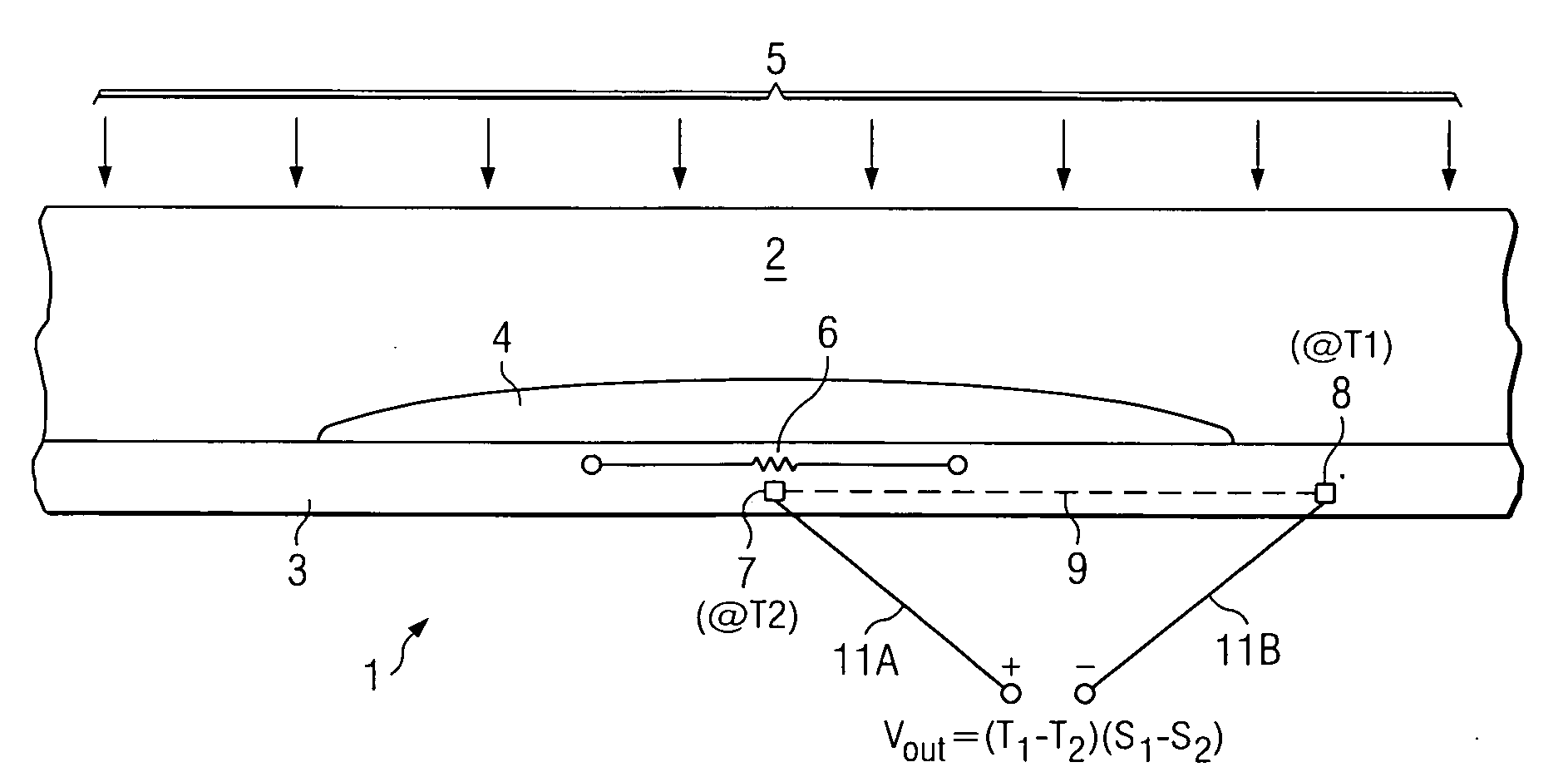
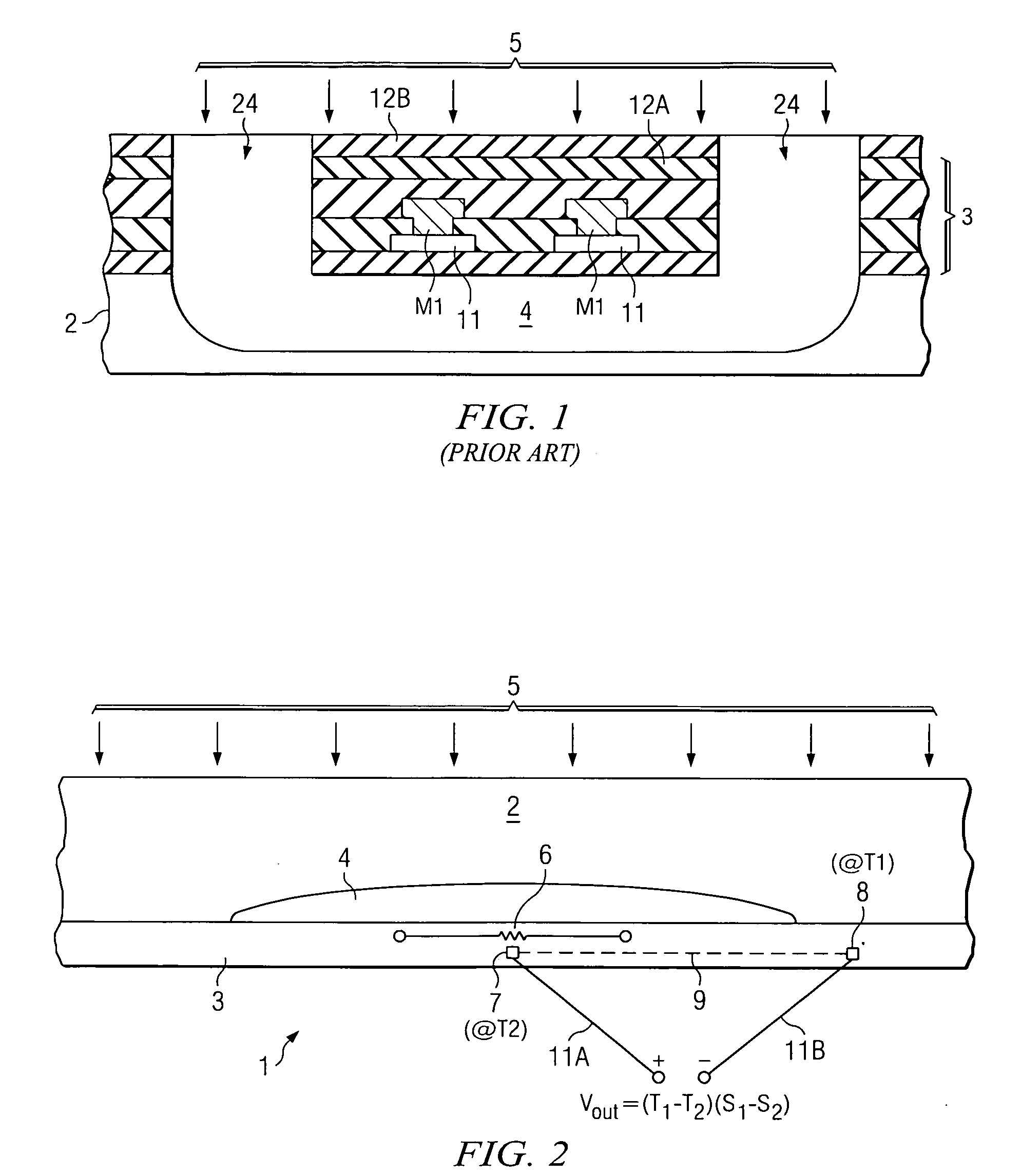
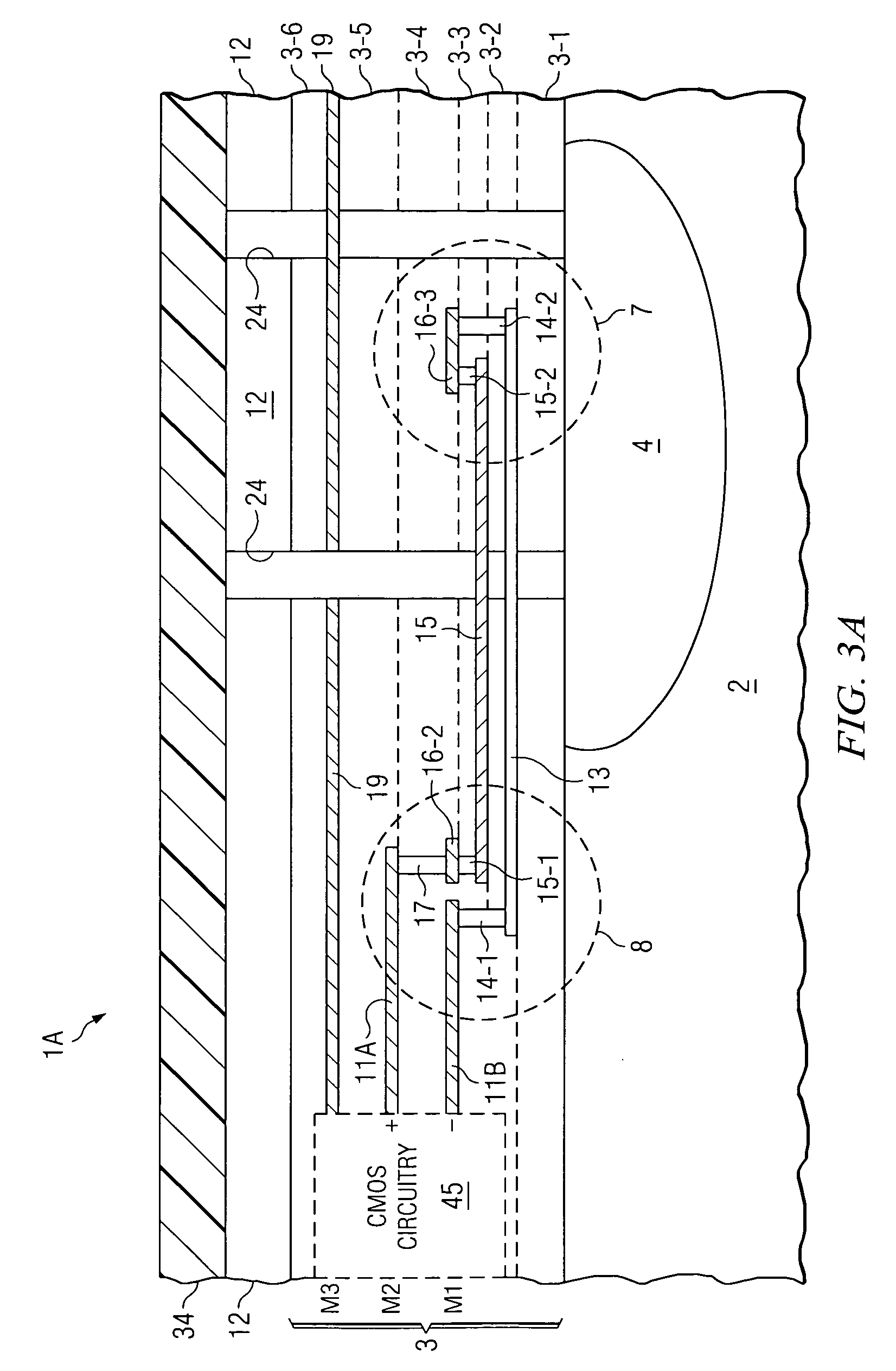
- A CMOS-processing-compatible IR sensor chip with thermopile junctions thermally isolated by a cavity, integrated into a Wafer Chip Scale Package (WCSP) without encapsulation, using titanium nitride traces and a robust dielectric stack with epoxy reinforcement, allowing direct IR radiation sensing while blocking visible light with a silicon substrate.

Thermal Design Guidelines and Industry Standards for Interposers
The thermal management of silicon interposers requires adherence to comprehensive design guidelines and industry standards that address the unique challenges posed by their multi-layered architecture and high-density interconnect structures. Current industry standards, including JEDEC specifications and IEEE thermal management protocols, provide fundamental frameworks for interposer thermal design, establishing maximum junction temperature limits typically ranging from 85°C to 125°C depending on the application requirements and reliability targets.
Design guidelines emphasize the critical importance of thermal pathway optimization through strategic placement of thermal interface materials and heat spreaders. Industry best practices recommend maintaining thermal resistance values below 0.5 K/W for high-performance applications, while ensuring uniform heat distribution across the interposer substrate to prevent localized hotspots that could compromise device reliability and performance.
Material selection standards specify the use of high thermal conductivity substrates, with silicon interposers typically achieving thermal conductivity values between 130-150 W/mK. Industry guidelines mandate comprehensive thermal simulation during the design phase, incorporating factors such as power density distribution, ambient operating conditions, and thermal cycling requirements to ensure robust thermal performance under various operational scenarios.
Packaging standards address the integration of thermal management solutions within system-level constraints, requiring coordination between interposer design and overall package thermal architecture. These guidelines specify minimum clearance requirements for thermal management components and establish protocols for thermal interface material application to ensure consistent thermal performance across manufacturing batches.
Quality assurance standards mandate rigorous thermal validation procedures, including infrared thermography testing protocols that align with the quantification of temperature differentials across interposer structures. These standards establish measurement accuracy requirements, calibration procedures, and environmental testing conditions necessary for reliable thermal characterization and validation of design compliance with established thermal limits.
Design guidelines emphasize the critical importance of thermal pathway optimization through strategic placement of thermal interface materials and heat spreaders. Industry best practices recommend maintaining thermal resistance values below 0.5 K/W for high-performance applications, while ensuring uniform heat distribution across the interposer substrate to prevent localized hotspots that could compromise device reliability and performance.
Material selection standards specify the use of high thermal conductivity substrates, with silicon interposers typically achieving thermal conductivity values between 130-150 W/mK. Industry guidelines mandate comprehensive thermal simulation during the design phase, incorporating factors such as power density distribution, ambient operating conditions, and thermal cycling requirements to ensure robust thermal performance under various operational scenarios.
Packaging standards address the integration of thermal management solutions within system-level constraints, requiring coordination between interposer design and overall package thermal architecture. These guidelines specify minimum clearance requirements for thermal management components and establish protocols for thermal interface material application to ensure consistent thermal performance across manufacturing batches.
Quality assurance standards mandate rigorous thermal validation procedures, including infrared thermography testing protocols that align with the quantification of temperature differentials across interposer structures. These standards establish measurement accuracy requirements, calibration procedures, and environmental testing conditions necessary for reliable thermal characterization and validation of design compliance with established thermal limits.
Reliability and Performance Limits of Silicon Interposer Systems
Silicon interposer systems face critical reliability constraints that directly impact their operational lifespan and performance capabilities. The thermal management challenges inherent in these high-density packaging solutions create fundamental limits that must be carefully characterized and understood. Temperature variations across the interposer substrate can lead to differential thermal expansion, mechanical stress accumulation, and eventual failure of critical interconnections.
The reliability envelope of silicon interposer systems is primarily governed by thermal cycling effects, where repeated heating and cooling cycles induce fatigue in solder joints, through-silicon vias, and redistribution layers. These thermal stresses become particularly pronounced when temperature gradients exceed 15-20°C across the substrate, leading to warpage and potential delamination of bonded interfaces. The cumulative effect of these thermal excursions significantly reduces the mean time to failure of the overall system.
Performance degradation in silicon interposer architectures manifests through multiple pathways as operating temperatures increase beyond optimal ranges. Signal integrity deteriorates due to increased resistance in copper interconnects, while parasitic capacitance and inductance effects become more pronounced at elevated temperatures. High-speed digital signals experience increased jitter and reduced eye opening margins, directly impacting data transmission reliability and system throughput.
Power delivery network efficiency represents another critical performance limitation in thermally stressed interposer systems. As temperatures rise, the resistance of power distribution networks increases, leading to higher voltage drops and reduced power delivery efficiency. This creates a cascading effect where increased power dissipation further elevates operating temperatures, potentially triggering thermal runaway conditions in extreme cases.
The mechanical integrity of silicon interposer systems becomes compromised when thermal limits are exceeded, with coefficient of thermal expansion mismatches between different materials causing progressive damage to critical interfaces. Underfill materials, die attach adhesives, and substrate-to-package connections all exhibit temperature-dependent reliability characteristics that define the operational boundaries of the system. Understanding these interdependent failure mechanisms is essential for establishing robust design guidelines and operational parameters that ensure long-term system reliability while maximizing performance capabilities.
The reliability envelope of silicon interposer systems is primarily governed by thermal cycling effects, where repeated heating and cooling cycles induce fatigue in solder joints, through-silicon vias, and redistribution layers. These thermal stresses become particularly pronounced when temperature gradients exceed 15-20°C across the substrate, leading to warpage and potential delamination of bonded interfaces. The cumulative effect of these thermal excursions significantly reduces the mean time to failure of the overall system.
Performance degradation in silicon interposer architectures manifests through multiple pathways as operating temperatures increase beyond optimal ranges. Signal integrity deteriorates due to increased resistance in copper interconnects, while parasitic capacitance and inductance effects become more pronounced at elevated temperatures. High-speed digital signals experience increased jitter and reduced eye opening margins, directly impacting data transmission reliability and system throughput.
Power delivery network efficiency represents another critical performance limitation in thermally stressed interposer systems. As temperatures rise, the resistance of power distribution networks increases, leading to higher voltage drops and reduced power delivery efficiency. This creates a cascading effect where increased power dissipation further elevates operating temperatures, potentially triggering thermal runaway conditions in extreme cases.
The mechanical integrity of silicon interposer systems becomes compromised when thermal limits are exceeded, with coefficient of thermal expansion mismatches between different materials causing progressive damage to critical interfaces. Underfill materials, die attach adhesives, and substrate-to-package connections all exhibit temperature-dependent reliability characteristics that define the operational boundaries of the system. Understanding these interdependent failure mechanisms is essential for establishing robust design guidelines and operational parameters that ensure long-term system reliability while maximizing performance capabilities.
Unlock deeper insights with PatSnap Eureka Quick Research — get a full tech report to explore trends and direct your research. Try now!
Generate Your Research Report Instantly with AI Agent
Supercharge your innovation with PatSnap Eureka AI Agent Platform!