

Optimize Wireless BMS for Battery Life Extension
APR 11, 20269 MIN READ
Generate Your Research Report Instantly with AI Agent
Patsnap Eureka helps you evaluate technical feasibility & market potential.
Wireless BMS Technology Background and Battery Life Goals
Wireless Battery Management Systems represent a paradigm shift from traditional wired architectures, emerging from the convergence of advanced wireless communication protocols, miniaturized sensor technologies, and sophisticated power management algorithms. The evolution began in the early 2000s with basic wireless monitoring capabilities and has progressed through multiple generations of increasingly sophisticated implementations. Modern wireless BMS architectures leverage protocols such as Zigbee, Bluetooth Low Energy, and proprietary mesh networks to enable real-time monitoring and control of individual battery cells or modules without physical wire connections.
The fundamental technological foundation rests on three core pillars: ultra-low power wireless transceivers capable of operating within strict energy budgets, advanced signal processing algorithms for accurate state estimation, and robust communication protocols ensuring reliable data transmission in electromagnetically challenging environments. Recent developments have integrated machine learning capabilities for predictive analytics and adaptive optimization strategies that continuously refine system performance based on operational patterns and environmental conditions.
Battery life extension through wireless BMS optimization targets multiple critical objectives that directly impact system economics and operational efficiency. The primary goal involves maximizing the operational lifespan of individual cells through precise monitoring and proactive intervention strategies. This encompasses maintaining optimal charge-discharge cycles, preventing overcharging and deep discharge conditions, and implementing dynamic load balancing across cell arrays to minimize stress concentrations.
Secondary objectives focus on enhancing energy efficiency through intelligent power management protocols that reduce parasitic losses inherent in wireless communication systems. Advanced implementations target achieving less than 0.1% energy overhead while maintaining continuous monitoring capabilities. Temperature management represents another crucial goal, with wireless BMS systems designed to detect thermal anomalies and implement corrective measures before permanent capacity degradation occurs.
Long-term strategic objectives encompass the development of self-healing battery networks capable of autonomous optimization and fault tolerance. These systems aim to achieve 20-30% improvement in overall battery pack lifespan compared to conventional wired systems through superior monitoring granularity and response speed. The ultimate vision involves creating intelligent battery ecosystems that adapt to usage patterns, predict maintenance requirements, and optimize performance parameters in real-time to maximize both immediate efficiency and long-term durability.
The fundamental technological foundation rests on three core pillars: ultra-low power wireless transceivers capable of operating within strict energy budgets, advanced signal processing algorithms for accurate state estimation, and robust communication protocols ensuring reliable data transmission in electromagnetically challenging environments. Recent developments have integrated machine learning capabilities for predictive analytics and adaptive optimization strategies that continuously refine system performance based on operational patterns and environmental conditions.
Battery life extension through wireless BMS optimization targets multiple critical objectives that directly impact system economics and operational efficiency. The primary goal involves maximizing the operational lifespan of individual cells through precise monitoring and proactive intervention strategies. This encompasses maintaining optimal charge-discharge cycles, preventing overcharging and deep discharge conditions, and implementing dynamic load balancing across cell arrays to minimize stress concentrations.
Secondary objectives focus on enhancing energy efficiency through intelligent power management protocols that reduce parasitic losses inherent in wireless communication systems. Advanced implementations target achieving less than 0.1% energy overhead while maintaining continuous monitoring capabilities. Temperature management represents another crucial goal, with wireless BMS systems designed to detect thermal anomalies and implement corrective measures before permanent capacity degradation occurs.
Long-term strategic objectives encompass the development of self-healing battery networks capable of autonomous optimization and fault tolerance. These systems aim to achieve 20-30% improvement in overall battery pack lifespan compared to conventional wired systems through superior monitoring granularity and response speed. The ultimate vision involves creating intelligent battery ecosystems that adapt to usage patterns, predict maintenance requirements, and optimize performance parameters in real-time to maximize both immediate efficiency and long-term durability.
Market Demand for Extended Battery Life in Wireless BMS
The global battery management system market is experiencing unprecedented growth driven by the rapid expansion of electric vehicles, renewable energy storage systems, and portable electronic devices. Traditional wired BMS solutions, while reliable, face significant limitations in terms of installation complexity, maintenance costs, and scalability. These constraints have created substantial market demand for wireless BMS technologies that can extend battery life while reducing operational overhead.
Electric vehicle manufacturers represent the largest demand segment for extended battery life solutions in wireless BMS applications. The automotive industry requires battery systems that can maintain optimal performance over extended periods while minimizing weight and complexity. Wireless BMS solutions eliminate the need for extensive wiring harnesses, reducing vehicle weight and improving energy efficiency. The demand is particularly strong among manufacturers developing next-generation electric vehicles where every percentage point of efficiency improvement translates to increased driving range and competitive advantage.
Energy storage system operators constitute another critical demand segment, particularly in grid-scale applications and residential solar installations. These operators require battery management solutions that can monitor and optimize large arrays of battery cells without the maintenance burden associated with traditional wired systems. Extended battery life directly impacts the return on investment for energy storage projects, making wireless BMS optimization a high-priority requirement. The ability to remotely monitor and manage battery health across distributed installations has become essential for operational efficiency.
Consumer electronics manufacturers are increasingly seeking wireless BMS solutions for portable devices, wearables, and IoT applications. The miniaturization trend in electronics demands battery management systems that occupy minimal space while maximizing battery longevity. Wireless BMS technologies enable more flexible device designs and reduce manufacturing complexity, particularly in applications where physical access to batteries is limited or where frequent maintenance is impractical.
Industrial equipment manufacturers operating in harsh environments represent an emerging demand segment. These applications require robust wireless BMS solutions that can extend battery life in challenging conditions while providing reliable performance monitoring. The demand is driven by the need to reduce maintenance interventions in remote or hazardous locations where traditional wired systems would be impractical or costly to maintain.
The convergence of these market demands has created a substantial opportunity for wireless BMS optimization technologies focused on battery life extension, with particular emphasis on energy-efficient communication protocols, intelligent power management, and predictive maintenance capabilities.
Electric vehicle manufacturers represent the largest demand segment for extended battery life solutions in wireless BMS applications. The automotive industry requires battery systems that can maintain optimal performance over extended periods while minimizing weight and complexity. Wireless BMS solutions eliminate the need for extensive wiring harnesses, reducing vehicle weight and improving energy efficiency. The demand is particularly strong among manufacturers developing next-generation electric vehicles where every percentage point of efficiency improvement translates to increased driving range and competitive advantage.
Energy storage system operators constitute another critical demand segment, particularly in grid-scale applications and residential solar installations. These operators require battery management solutions that can monitor and optimize large arrays of battery cells without the maintenance burden associated with traditional wired systems. Extended battery life directly impacts the return on investment for energy storage projects, making wireless BMS optimization a high-priority requirement. The ability to remotely monitor and manage battery health across distributed installations has become essential for operational efficiency.
Consumer electronics manufacturers are increasingly seeking wireless BMS solutions for portable devices, wearables, and IoT applications. The miniaturization trend in electronics demands battery management systems that occupy minimal space while maximizing battery longevity. Wireless BMS technologies enable more flexible device designs and reduce manufacturing complexity, particularly in applications where physical access to batteries is limited or where frequent maintenance is impractical.
Industrial equipment manufacturers operating in harsh environments represent an emerging demand segment. These applications require robust wireless BMS solutions that can extend battery life in challenging conditions while providing reliable performance monitoring. The demand is driven by the need to reduce maintenance interventions in remote or hazardous locations where traditional wired systems would be impractical or costly to maintain.
The convergence of these market demands has created a substantial opportunity for wireless BMS optimization technologies focused on battery life extension, with particular emphasis on energy-efficient communication protocols, intelligent power management, and predictive maintenance capabilities.
Current Wireless BMS Power Consumption Challenges
Wireless Battery Management Systems face significant power consumption challenges that directly impact their effectiveness in extending battery life. The primary challenge stems from the inherent energy requirements of wireless communication protocols, which must maintain continuous or periodic connectivity to monitor and manage battery cells. Traditional wireless modules consume substantial power during transmission, reception, and idle states, creating a paradoxical situation where the system designed to optimize battery performance becomes a significant drain on the very resource it aims to protect.
Communication frequency represents a critical bottleneck in current wireless BMS implementations. Most systems require frequent data transmission to ensure real-time monitoring of cell voltages, temperatures, and current flows. This high-frequency communication pattern, while necessary for safety and performance optimization, results in elevated power consumption that can reduce overall battery pack efficiency by 3-8% depending on the implementation and communication protocol used.
The wake-up and sleep cycle management presents another substantial challenge. Current wireless BMS architectures struggle to balance responsiveness with power efficiency. Systems that maintain constant connectivity consume excessive power, while those with extended sleep periods may miss critical battery events or fail to respond promptly to dangerous conditions such as thermal runaway or voltage imbalances.
Protocol overhead and data processing requirements further compound power consumption issues. Existing wireless standards often include substantial protocol overhead for error correction, encryption, and network management. The computational power required for data processing, signal conditioning, and decision-making algorithms adds additional energy burden to the system, particularly in multi-cell battery packs where complex balancing algorithms must be executed continuously.
Environmental factors and signal interference create additional power consumption challenges. Wireless BMS systems must often increase transmission power to overcome interference from other electronic systems, metal enclosures, and electromagnetic noise common in automotive and industrial applications. This adaptive power management, while necessary for reliable communication, results in unpredictable and often elevated energy consumption patterns that complicate system optimization efforts.
Communication frequency represents a critical bottleneck in current wireless BMS implementations. Most systems require frequent data transmission to ensure real-time monitoring of cell voltages, temperatures, and current flows. This high-frequency communication pattern, while necessary for safety and performance optimization, results in elevated power consumption that can reduce overall battery pack efficiency by 3-8% depending on the implementation and communication protocol used.
The wake-up and sleep cycle management presents another substantial challenge. Current wireless BMS architectures struggle to balance responsiveness with power efficiency. Systems that maintain constant connectivity consume excessive power, while those with extended sleep periods may miss critical battery events or fail to respond promptly to dangerous conditions such as thermal runaway or voltage imbalances.
Protocol overhead and data processing requirements further compound power consumption issues. Existing wireless standards often include substantial protocol overhead for error correction, encryption, and network management. The computational power required for data processing, signal conditioning, and decision-making algorithms adds additional energy burden to the system, particularly in multi-cell battery packs where complex balancing algorithms must be executed continuously.
Environmental factors and signal interference create additional power consumption challenges. Wireless BMS systems must often increase transmission power to overcome interference from other electronic systems, metal enclosures, and electromagnetic noise common in automotive and industrial applications. This adaptive power management, while necessary for reliable communication, results in unpredictable and often elevated energy consumption patterns that complicate system optimization efforts.
Current Power Optimization Solutions for Wireless BMS
01 Low-power communication protocols for wireless BMS
Implementing energy-efficient wireless communication protocols specifically designed for battery management systems can significantly extend battery life. These protocols optimize data transmission intervals, reduce power consumption during idle states, and employ adaptive communication strategies based on battery status. Advanced modulation techniques and sleep mode management help minimize energy usage while maintaining reliable communication between battery cells and the central management unit.- Low-power communication protocols for wireless BMS: Implementing energy-efficient wireless communication protocols specifically designed for battery management systems can significantly extend battery life. These protocols optimize data transmission intervals, reduce power consumption during idle states, and employ adaptive communication strategies based on battery status. Advanced modulation techniques and sleep mode management help minimize energy usage while maintaining reliable communication between battery cells and the central management unit.
- Power management and sleep mode optimization: Advanced power management strategies incorporate intelligent sleep modes and wake-up scheduling to conserve battery energy in wireless BMS applications. These techniques include dynamic power scaling, selective component activation, and optimized duty cycling. The system can automatically transition between different power states based on monitoring requirements and battery conditions, ensuring minimal power consumption during periods of low activity while maintaining system responsiveness.
- Energy harvesting integration for wireless BMS: Incorporating energy harvesting technologies into wireless battery management systems enables self-sustaining operation and extended battery life. These solutions capture ambient energy from sources such as thermal gradients, vibrations, or electromagnetic fields generated during battery operation. The harvested energy supplements or replaces traditional battery power, reducing dependency on primary power sources and extending overall system longevity.
- Efficient data processing and transmission scheduling: Optimizing data collection, processing, and transmission schedules in wireless BMS reduces unnecessary power consumption. Techniques include data compression algorithms, intelligent sampling rates based on battery state, and batch transmission strategies. The system prioritizes critical data while deferring non-urgent information, implements predictive algorithms to reduce monitoring frequency during stable conditions, and uses edge computing to minimize data transmission requirements.
- Hardware optimization and component selection: Selecting low-power hardware components and optimizing circuit design are fundamental to extending wireless BMS battery life. This includes using ultra-low-power microcontrollers, efficient voltage regulators, and optimized antenna designs. Advanced semiconductor technologies, reduced leakage current designs, and integrated power management circuits contribute to overall system efficiency. Proper component placement and PCB design minimize parasitic losses and electromagnetic interference.
02 Power management and sleep mode optimization
Advanced power management strategies incorporate intelligent sleep modes and wake-up scheduling to conserve battery energy in wireless BMS applications. These techniques include dynamic power scaling, selective component activation, and optimized duty cycling. The system can automatically transition between different power states based on monitoring requirements and battery conditions, ensuring minimal power consumption during periods of low activity while maintaining system responsiveness.Expand Specific Solutions03 Energy harvesting integration for wireless BMS
Integration of energy harvesting technologies enables wireless BMS to supplement or replace traditional battery power sources. These systems can capture energy from various sources such as thermal gradients, vibrations, or electromagnetic fields within the battery pack environment. The harvested energy can power wireless communication modules and sensing circuits, significantly extending the operational lifetime of the wireless BMS without requiring battery replacement.Expand Specific Solutions04 Efficient data processing and transmission scheduling
Optimized data processing algorithms and intelligent transmission scheduling reduce the computational load and communication frequency in wireless BMS. These approaches include data compression techniques, predictive analytics for battery state estimation, and event-driven communication rather than continuous polling. By processing data locally and transmitting only critical information at optimized intervals, the system minimizes power consumption while maintaining accurate battery monitoring and management capabilities.Expand Specific Solutions05 Hardware optimization and component selection
Specialized hardware design and component selection for wireless BMS focus on ultra-low-power microcontrollers, efficient voltage regulators, and optimized antenna designs. These implementations utilize advanced semiconductor technologies, minimize parasitic power losses, and employ power-efficient sensor interfaces. The hardware architecture is designed to support extended battery life through reduced quiescent current consumption and efficient power conversion across all operational modes.Expand Specific Solutions
Key Players in Wireless BMS and Battery Management Industry
The wireless BMS optimization market for battery life extension is in a rapid growth phase, driven by the expanding electric vehicle and energy storage sectors. The market demonstrates significant scale with established players like Contemporary Amperex Technology, LG Energy Solution, Samsung SDI, and Sunwoda leading battery system integration, while semiconductor giants Texas Instruments, Analog Devices, and Intel provide critical wireless communication and processing components. Technology maturity varies across segments - traditional BMS systems are well-established, but wireless optimization technologies remain in development stages. Companies like LG Chem, Caterpillar, and automotive manufacturers including Nissan and GM are actively integrating advanced wireless BMS solutions. The competitive landscape shows strong vertical integration among Asian battery manufacturers, while Western companies focus on specialized semiconductor solutions and system integration, indicating a maturing but still evolving technological ecosystem.
Texas Instruments Incorporated
Technical Solution: TI develops advanced wireless BMS solutions featuring ultra-low power consumption wireless communication protocols and sophisticated battery monitoring ICs. Their BQ series battery management chips integrate precise voltage, current, and temperature monitoring with wireless connectivity capabilities. The system employs adaptive sampling algorithms that reduce monitoring frequency during stable conditions, extending overall battery life by 15-20%. TI's wireless BMS architecture includes mesh networking capabilities for scalable battery pack configurations and implements predictive analytics for early fault detection and prevention.
Strengths: Industry-leading low-power IC design, comprehensive battery monitoring ecosystem, proven reliability in automotive applications. Weaknesses: Higher cost compared to discrete solutions, dependency on proprietary communication protocols.
LG Energy Solution Ltd.
Technical Solution: LG Energy Solution develops wireless BMS technology that emphasizes battery life extension through advanced cell balancing and thermal management. Their system employs wireless communication modules that enable real-time monitoring of individual cell conditions while minimizing parasitic power draw. The technology features adaptive algorithms that optimize charging curves based on battery age, temperature, and usage patterns, resulting in 20-25% improvement in cycle life. The wireless BMS includes predictive analytics capabilities that identify potential cell degradation before failure occurs, enabling proactive maintenance and replacement strategies for maximum battery pack longevity.
Strengths: Extensive battery manufacturing experience, proven track record in electric vehicle applications, comprehensive lifecycle management approach. Weaknesses: Limited compatibility with non-LG battery cells, higher initial implementation costs.
Core Technologies for Ultra-Low Power Wireless BMS Design
Fault tolerant wireless battery area network for a smart battery management system
PatentInactiveUS20150028816A1
Innovation
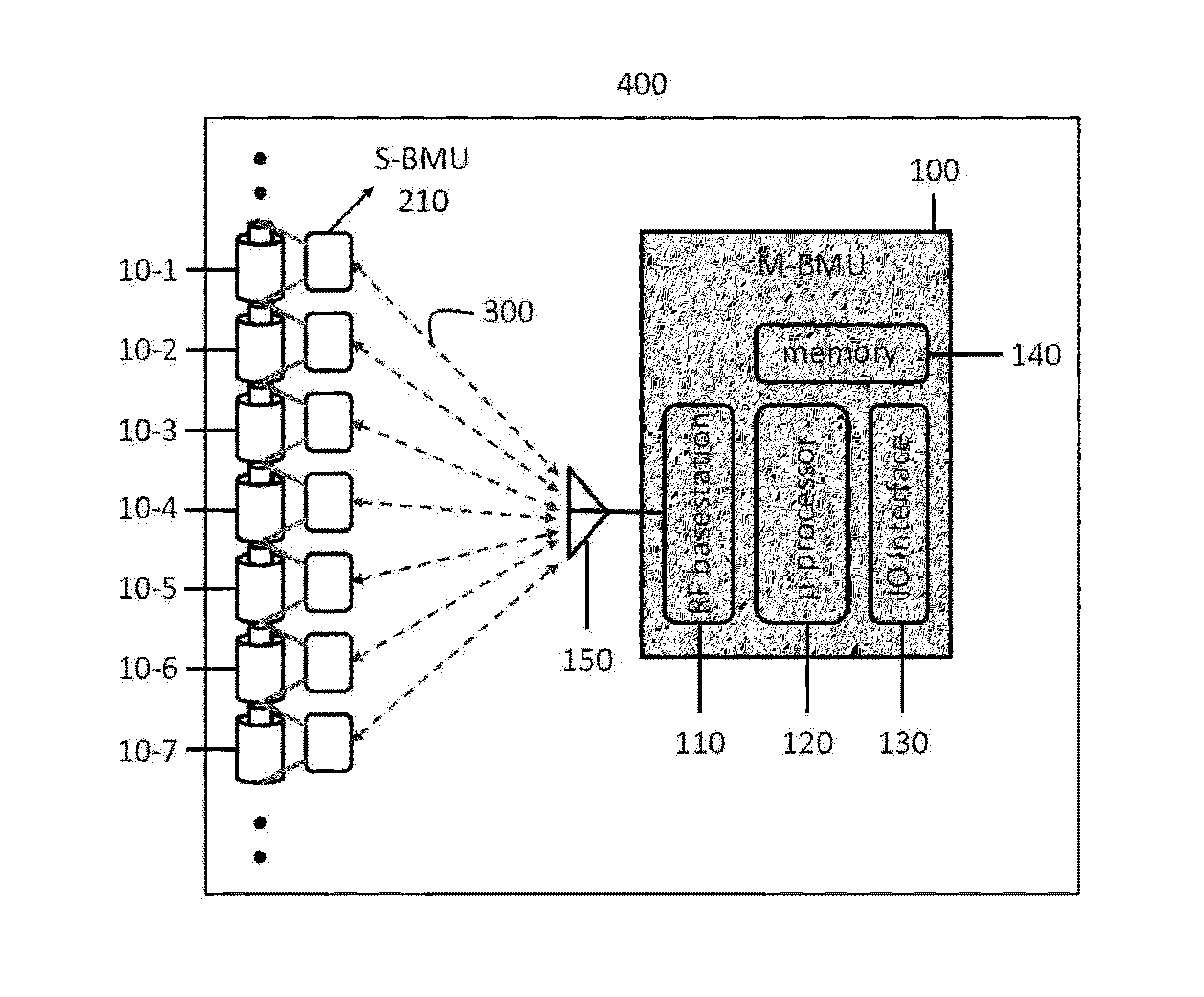
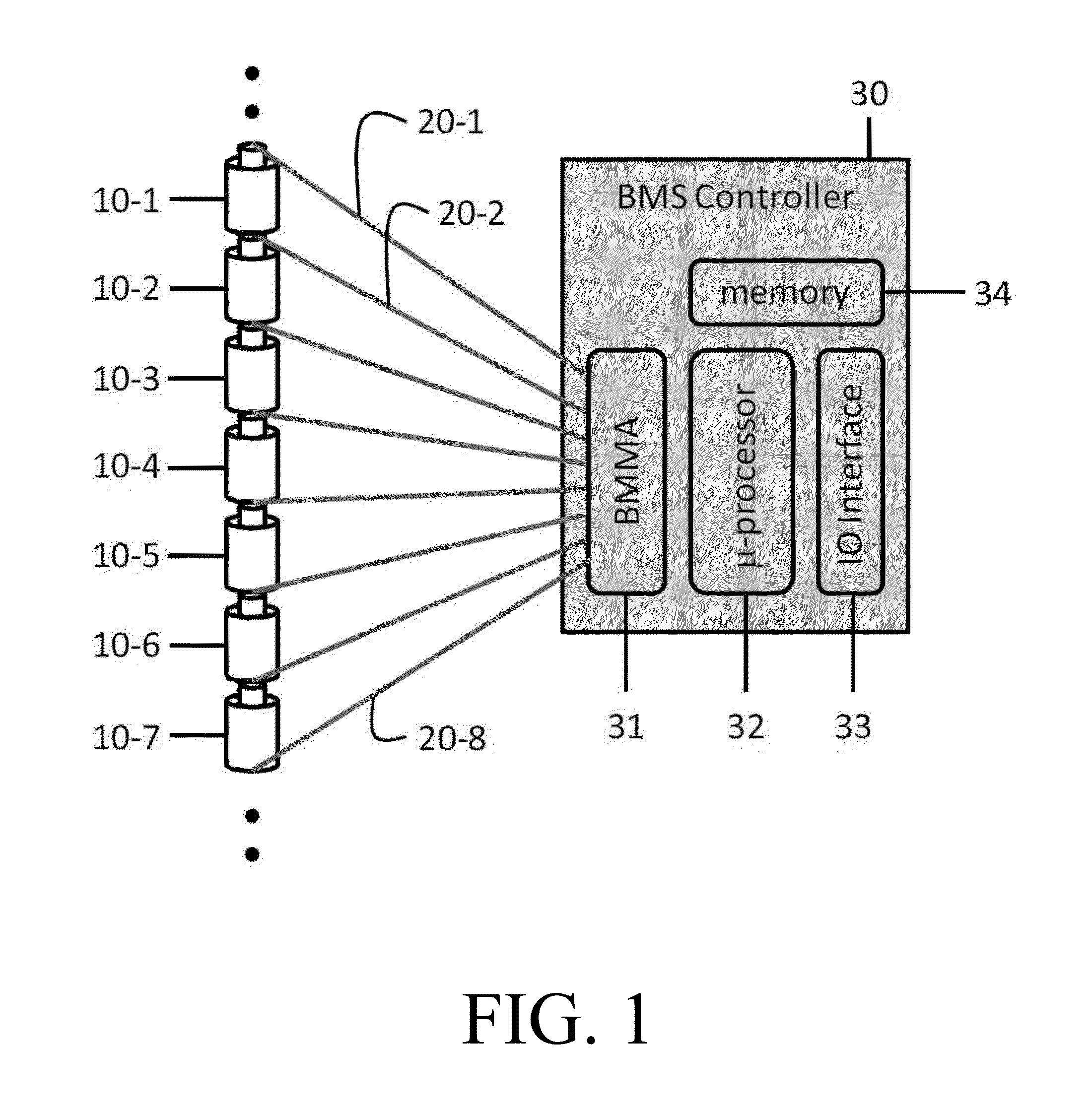
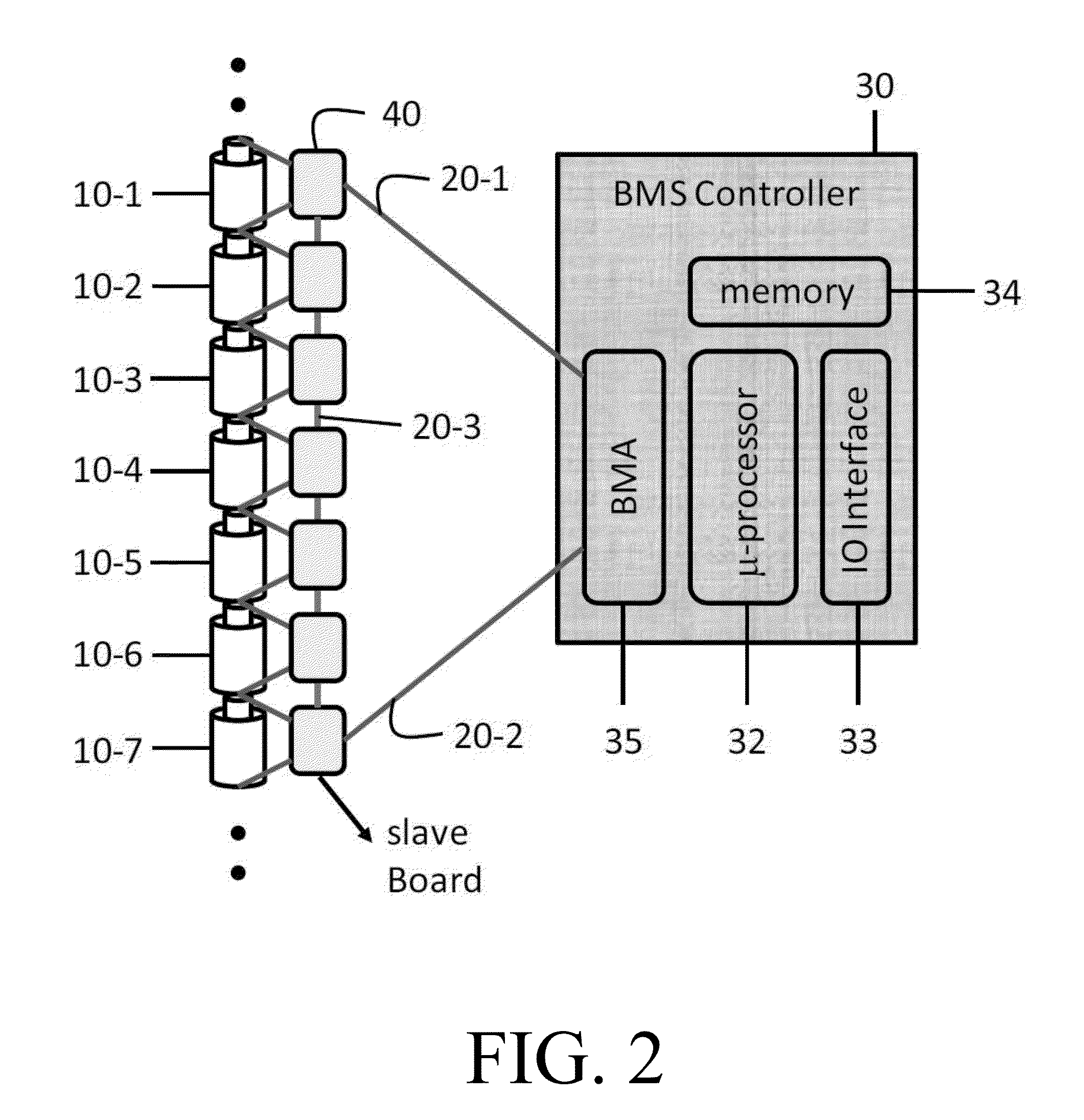
- A self-organizing wireless battery area network (WiBaAN) that uses beamforming technology to establish optimal communication parameters and configure wireless communication conditions, enabling scalable and cost-effective monitoring and control of individual battery cells within a battery pack, regardless of material or shape, and incorporating wireless power up/down features for efficient energy management.

Wireless communication control-based battery management system and battery management method
PatentActiveCN110600816A
Innovation
- A battery management system based on wireless communication is used to collect the operating parameters of single batteries in real time through multiple battery management modules, and use the wireless transmission module to transmit the parameters to the second battery management module for processing and analysis, and generate a balanced control signal to control the single battery. charge and discharge the battery, simplifying the internal architecture and wiring structure.


Safety Standards and Regulations for Wireless Battery Systems
The regulatory landscape for wireless battery management systems presents a complex framework of international, national, and industry-specific standards that directly impact the optimization strategies for battery life extension. Current safety regulations primarily focus on electromagnetic compatibility, functional safety, and cybersecurity requirements, with key standards including IEC 61508 for functional safety, ISO 26262 for automotive applications, and IEEE 802.11 series for wireless communication protocols.
Electromagnetic interference regulations under FCC Part 15 and ETSI EN 300 328 establish strict limits on wireless transmission power and frequency usage, which directly constrains the communication range and data transmission capabilities of wireless BMS systems. These limitations significantly influence battery optimization algorithms, as reduced communication frequency may delay critical battery parameter updates, potentially affecting the precision of life extension strategies.
Functional safety standards mandate redundant communication pathways and fail-safe mechanisms, requiring wireless BMS designs to incorporate backup systems that can maintain battery protection even during communication failures. This regulatory requirement adds complexity to optimization algorithms, as they must account for potential communication interruptions while maintaining effective battery life management protocols.
Cybersecurity regulations, particularly those outlined in ISO/SAE 21434 for automotive systems, impose stringent authentication and encryption requirements for wireless communications. These security measures introduce computational overhead and communication latency, which can impact real-time battery monitoring and optimization response times. The encryption processes consume additional power, creating a trade-off between security compliance and energy efficiency in battery life extension strategies.
Regional variations in safety standards create additional challenges for global deployment of wireless BMS systems. European GDPR requirements for data protection, Chinese GB standards for battery safety, and North American UL certifications each impose unique constraints on system design and operation. These varying requirements necessitate adaptive optimization algorithms capable of operating within different regulatory frameworks while maintaining consistent battery life extension performance across diverse markets.
Electromagnetic interference regulations under FCC Part 15 and ETSI EN 300 328 establish strict limits on wireless transmission power and frequency usage, which directly constrains the communication range and data transmission capabilities of wireless BMS systems. These limitations significantly influence battery optimization algorithms, as reduced communication frequency may delay critical battery parameter updates, potentially affecting the precision of life extension strategies.
Functional safety standards mandate redundant communication pathways and fail-safe mechanisms, requiring wireless BMS designs to incorporate backup systems that can maintain battery protection even during communication failures. This regulatory requirement adds complexity to optimization algorithms, as they must account for potential communication interruptions while maintaining effective battery life management protocols.
Cybersecurity regulations, particularly those outlined in ISO/SAE 21434 for automotive systems, impose stringent authentication and encryption requirements for wireless communications. These security measures introduce computational overhead and communication latency, which can impact real-time battery monitoring and optimization response times. The encryption processes consume additional power, creating a trade-off between security compliance and energy efficiency in battery life extension strategies.
Regional variations in safety standards create additional challenges for global deployment of wireless BMS systems. European GDPR requirements for data protection, Chinese GB standards for battery safety, and North American UL certifications each impose unique constraints on system design and operation. These varying requirements necessitate adaptive optimization algorithms capable of operating within different regulatory frameworks while maintaining consistent battery life extension performance across diverse markets.
Environmental Impact of Extended Battery Life Solutions
The optimization of wireless Battery Management Systems (BMS) for battery life extension presents significant environmental benefits that extend far beyond immediate energy efficiency gains. Extended battery lifecycles directly translate to reduced manufacturing demands, substantially decreasing the environmental footprint associated with raw material extraction, processing, and production. This reduction is particularly crucial given the intensive mining operations required for lithium, cobalt, nickel, and rare earth elements essential for battery manufacturing.
Wireless BMS optimization contributes to circular economy principles by maximizing resource utilization efficiency. When batteries maintain optimal performance for extended periods, the frequency of replacement cycles decreases dramatically, reducing electronic waste generation. This extended operational lifespan means fewer batteries entering waste streams, alleviating pressure on recycling infrastructure and minimizing potential environmental contamination from improper disposal.
The carbon footprint reduction achieved through extended battery life solutions is multifaceted. Manufacturing processes for battery systems typically account for 40-60% of their total lifecycle carbon emissions. By extending operational lifespans through optimized wireless BMS, the amortized carbon cost per unit of energy storage decreases significantly. Additionally, improved battery efficiency reduces energy losses during charging and discharging cycles, contributing to overall system sustainability.
Resource conservation represents another critical environmental advantage. Extended battery life directly correlates with reduced demand for virgin materials, helping preserve finite mineral resources while reducing ecosystem disruption from mining activities. This conservation effect becomes increasingly important as global battery demand continues expanding across automotive, grid storage, and consumer electronics sectors.
The implementation of wireless BMS optimization also supports renewable energy integration by ensuring more reliable and longer-lasting energy storage systems. This reliability enhancement facilitates greater adoption of intermittent renewable sources, indirectly contributing to broader decarbonization efforts. Furthermore, reduced maintenance requirements for wireless systems minimize transportation-related emissions associated with service visits and component replacements.
However, environmental considerations must also account for the wireless communication infrastructure requirements, including electromagnetic emissions and potential interference with wildlife. Balancing these factors requires careful system design to maximize environmental benefits while minimizing ecological disruption.
Wireless BMS optimization contributes to circular economy principles by maximizing resource utilization efficiency. When batteries maintain optimal performance for extended periods, the frequency of replacement cycles decreases dramatically, reducing electronic waste generation. This extended operational lifespan means fewer batteries entering waste streams, alleviating pressure on recycling infrastructure and minimizing potential environmental contamination from improper disposal.
The carbon footprint reduction achieved through extended battery life solutions is multifaceted. Manufacturing processes for battery systems typically account for 40-60% of their total lifecycle carbon emissions. By extending operational lifespans through optimized wireless BMS, the amortized carbon cost per unit of energy storage decreases significantly. Additionally, improved battery efficiency reduces energy losses during charging and discharging cycles, contributing to overall system sustainability.
Resource conservation represents another critical environmental advantage. Extended battery life directly correlates with reduced demand for virgin materials, helping preserve finite mineral resources while reducing ecosystem disruption from mining activities. This conservation effect becomes increasingly important as global battery demand continues expanding across automotive, grid storage, and consumer electronics sectors.
The implementation of wireless BMS optimization also supports renewable energy integration by ensuring more reliable and longer-lasting energy storage systems. This reliability enhancement facilitates greater adoption of intermittent renewable sources, indirectly contributing to broader decarbonization efforts. Furthermore, reduced maintenance requirements for wireless systems minimize transportation-related emissions associated with service visits and component replacements.
However, environmental considerations must also account for the wireless communication infrastructure requirements, including electromagnetic emissions and potential interference with wildlife. Balancing these factors requires careful system design to maximize environmental benefits while minimizing ecological disruption.
Unlock deeper insights with Patsnap Eureka Quick Research — get a full tech report to explore trends and direct your research. Try now!
Generate Your Research Report Instantly with AI Agent
Supercharge your innovation with Patsnap Eureka AI Agent Platform!