

Optimizing Brake Integration for Lightweight Joint Assemblies
MAY 29, 20269 MIN READ
Generate Your Research Report Instantly with AI Agent
PatSnap Eureka helps you evaluate technical feasibility & market potential.
Brake Integration Background and Lightweight Goals
The integration of braking systems into lightweight joint assemblies represents a critical convergence of mechanical engineering disciplines, emerging from the increasing demand for compact, efficient actuation systems across multiple industries. This technological challenge has evolved from traditional separate brake and joint configurations toward unified designs that maximize performance while minimizing weight penalties. The historical development traces back to aerospace applications in the 1980s, where weight reduction directly translated to fuel efficiency and payload capacity improvements.
Modern brake integration initiatives stem from the fundamental limitations of conventional approaches, where discrete braking components add substantial mass and complexity to robotic and mechanical systems. Traditional configurations often require additional mounting hardware, separate control systems, and redundant structural elements that compromise overall system efficiency. The shift toward integrated solutions reflects broader industry trends emphasizing system-level optimization over component-level performance.
The lightweight imperative has intensified with the proliferation of mobile robotics, autonomous vehicles, and portable industrial equipment. These applications demand precise motion control capabilities while operating under strict weight constraints. Contemporary joint assemblies must deliver reliable braking performance without sacrificing the agility and energy efficiency that lightweight designs enable. This requirement has driven innovation in materials science, actuator design, and control system integration.
Current technological objectives focus on achieving seamless integration between braking mechanisms and joint structures while maintaining or improving performance metrics. Primary goals include reducing overall assembly weight by 20-40% compared to traditional configurations, minimizing installation complexity, and enhancing system reliability through reduced component count. Advanced integration approaches target electromagnetic, friction-based, and hybrid braking solutions that can be embedded directly within joint housings.
The evolution toward smart integration incorporates sensor feedback, adaptive control algorithms, and predictive maintenance capabilities. These developments align with Industry 4.0 principles, enabling brake-integrated joint assemblies to self-monitor performance, optimize energy consumption, and communicate operational status to higher-level control systems. This technological trajectory positions integrated brake solutions as essential components in next-generation automated systems requiring precise, lightweight, and intelligent motion control capabilities.
Modern brake integration initiatives stem from the fundamental limitations of conventional approaches, where discrete braking components add substantial mass and complexity to robotic and mechanical systems. Traditional configurations often require additional mounting hardware, separate control systems, and redundant structural elements that compromise overall system efficiency. The shift toward integrated solutions reflects broader industry trends emphasizing system-level optimization over component-level performance.
The lightweight imperative has intensified with the proliferation of mobile robotics, autonomous vehicles, and portable industrial equipment. These applications demand precise motion control capabilities while operating under strict weight constraints. Contemporary joint assemblies must deliver reliable braking performance without sacrificing the agility and energy efficiency that lightweight designs enable. This requirement has driven innovation in materials science, actuator design, and control system integration.
Current technological objectives focus on achieving seamless integration between braking mechanisms and joint structures while maintaining or improving performance metrics. Primary goals include reducing overall assembly weight by 20-40% compared to traditional configurations, minimizing installation complexity, and enhancing system reliability through reduced component count. Advanced integration approaches target electromagnetic, friction-based, and hybrid braking solutions that can be embedded directly within joint housings.
The evolution toward smart integration incorporates sensor feedback, adaptive control algorithms, and predictive maintenance capabilities. These developments align with Industry 4.0 principles, enabling brake-integrated joint assemblies to self-monitor performance, optimize energy consumption, and communicate operational status to higher-level control systems. This technological trajectory positions integrated brake solutions as essential components in next-generation automated systems requiring precise, lightweight, and intelligent motion control capabilities.
Market Demand for Lightweight Brake Systems
The automotive industry is experiencing unprecedented demand for lightweight brake systems, driven by stringent environmental regulations and evolving consumer preferences for fuel-efficient vehicles. Global emissions standards, including the European Union's CO2 reduction targets and China's New Energy Vehicle mandates, are compelling manufacturers to reduce vehicle weight while maintaining safety performance. This regulatory pressure has created a substantial market opportunity for advanced brake integration solutions that minimize mass without compromising braking effectiveness.
Electric and hybrid vehicle segments represent the fastest-growing market for lightweight brake systems. These vehicles require optimized weight distribution to maximize battery range and efficiency, making lightweight joint assemblies particularly valuable. The integration of regenerative braking systems in electric vehicles further amplifies the need for sophisticated brake optimization, as traditional heavy brake components must work seamlessly with electric motor-based braking mechanisms.
Aerospace and high-performance automotive applications demonstrate strong demand for lightweight brake integration technologies. Racing vehicles, luxury sports cars, and commercial aircraft require brake systems that deliver exceptional performance while minimizing unsprung weight. These applications often serve as proving grounds for technologies that eventually migrate to mass-market vehicles, creating a technology transfer pathway that drives continued innovation.
The commercial vehicle sector presents significant growth potential for lightweight brake systems, particularly in urban delivery vehicles and long-haul transportation. Fleet operators increasingly prioritize fuel efficiency and payload optimization, making lightweight brake assemblies attractive for reducing operational costs. The rise of autonomous delivery vehicles and electric commercial fleets further accelerates demand for integrated lightweight braking solutions.
Manufacturing cost pressures and supply chain optimization requirements are reshaping market demand patterns. Automotive manufacturers seek brake integration solutions that reduce assembly complexity, minimize component count, and enable modular production approaches. This trend favors integrated joint assemblies that combine multiple functions while reducing overall system weight and manufacturing steps.
Emerging markets in Asia-Pacific and Latin America show growing appetite for lightweight brake technologies as local automotive industries mature and adopt advanced manufacturing capabilities. These regions present opportunities for scalable lightweight brake solutions that balance performance requirements with cost considerations, driving demand for innovative integration approaches that optimize both weight and manufacturing efficiency.
Electric and hybrid vehicle segments represent the fastest-growing market for lightweight brake systems. These vehicles require optimized weight distribution to maximize battery range and efficiency, making lightweight joint assemblies particularly valuable. The integration of regenerative braking systems in electric vehicles further amplifies the need for sophisticated brake optimization, as traditional heavy brake components must work seamlessly with electric motor-based braking mechanisms.
Aerospace and high-performance automotive applications demonstrate strong demand for lightweight brake integration technologies. Racing vehicles, luxury sports cars, and commercial aircraft require brake systems that deliver exceptional performance while minimizing unsprung weight. These applications often serve as proving grounds for technologies that eventually migrate to mass-market vehicles, creating a technology transfer pathway that drives continued innovation.
The commercial vehicle sector presents significant growth potential for lightweight brake systems, particularly in urban delivery vehicles and long-haul transportation. Fleet operators increasingly prioritize fuel efficiency and payload optimization, making lightweight brake assemblies attractive for reducing operational costs. The rise of autonomous delivery vehicles and electric commercial fleets further accelerates demand for integrated lightweight braking solutions.
Manufacturing cost pressures and supply chain optimization requirements are reshaping market demand patterns. Automotive manufacturers seek brake integration solutions that reduce assembly complexity, minimize component count, and enable modular production approaches. This trend favors integrated joint assemblies that combine multiple functions while reducing overall system weight and manufacturing steps.
Emerging markets in Asia-Pacific and Latin America show growing appetite for lightweight brake technologies as local automotive industries mature and adopt advanced manufacturing capabilities. These regions present opportunities for scalable lightweight brake solutions that balance performance requirements with cost considerations, driving demand for innovative integration approaches that optimize both weight and manufacturing efficiency.
Current State of Joint Assembly Brake Integration
The current landscape of brake integration in lightweight joint assemblies represents a complex intersection of mechanical engineering, materials science, and manufacturing optimization. Traditional approaches have predominantly relied on separate brake components that are mechanically attached to joint assemblies, resulting in increased overall system weight and complexity. This conventional methodology often leads to suboptimal performance characteristics, particularly in applications where weight reduction is critical.
Contemporary brake integration strategies encompass several distinct approaches, each with inherent advantages and limitations. Integrated disc brake systems represent the most prevalent solution, where brake rotors are directly incorporated into the joint assembly structure. These systems typically achieve weight reductions of 15-25% compared to standalone brake units while maintaining acceptable stopping performance. However, thermal management remains a significant challenge, as heat dissipation capabilities are often compromised by the compact integration design.
Electromagnetic brake integration has emerged as an alternative approach, particularly in precision applications requiring fine control. These systems utilize electromagnetic fields to generate braking forces directly within the joint assembly, eliminating the need for traditional friction components. While offering superior control precision and reduced mechanical wear, electromagnetic solutions currently face limitations in maximum torque capacity and power consumption efficiency.
Regenerative brake integration represents an advanced approach primarily adopted in servo-driven joint assemblies. This technology captures kinetic energy during deceleration phases and converts it back to electrical energy, improving overall system efficiency. Current implementations achieve energy recovery rates of 60-80%, though the additional electronic components introduce complexity and potential failure points.
Material innovations have significantly influenced brake integration capabilities. Advanced composite materials, including carbon fiber reinforced polymers and ceramic matrix composites, enable lighter brake components without sacrificing performance. These materials demonstrate superior heat resistance and wear characteristics compared to traditional steel components, though manufacturing costs remain substantially higher.
Manufacturing constraints continue to shape integration possibilities. Current production techniques limit the geometric complexity achievable in integrated brake-joint assemblies, often requiring design compromises that affect optimal performance. Additive manufacturing technologies show promise for overcoming these limitations, enabling complex internal cooling channels and optimized material distribution, though scalability for mass production remains challenging.
Thermal management represents a critical technical challenge across all integration approaches. Concentrated heat generation within compact joint assemblies can lead to performance degradation and premature component failure. Current solutions include integrated cooling channels, heat sink designs, and advanced thermal interface materials, though none fully address the fundamental heat dissipation limitations inherent in highly integrated systems.
Contemporary brake integration strategies encompass several distinct approaches, each with inherent advantages and limitations. Integrated disc brake systems represent the most prevalent solution, where brake rotors are directly incorporated into the joint assembly structure. These systems typically achieve weight reductions of 15-25% compared to standalone brake units while maintaining acceptable stopping performance. However, thermal management remains a significant challenge, as heat dissipation capabilities are often compromised by the compact integration design.
Electromagnetic brake integration has emerged as an alternative approach, particularly in precision applications requiring fine control. These systems utilize electromagnetic fields to generate braking forces directly within the joint assembly, eliminating the need for traditional friction components. While offering superior control precision and reduced mechanical wear, electromagnetic solutions currently face limitations in maximum torque capacity and power consumption efficiency.
Regenerative brake integration represents an advanced approach primarily adopted in servo-driven joint assemblies. This technology captures kinetic energy during deceleration phases and converts it back to electrical energy, improving overall system efficiency. Current implementations achieve energy recovery rates of 60-80%, though the additional electronic components introduce complexity and potential failure points.
Material innovations have significantly influenced brake integration capabilities. Advanced composite materials, including carbon fiber reinforced polymers and ceramic matrix composites, enable lighter brake components without sacrificing performance. These materials demonstrate superior heat resistance and wear characteristics compared to traditional steel components, though manufacturing costs remain substantially higher.
Manufacturing constraints continue to shape integration possibilities. Current production techniques limit the geometric complexity achievable in integrated brake-joint assemblies, often requiring design compromises that affect optimal performance. Additive manufacturing technologies show promise for overcoming these limitations, enabling complex internal cooling channels and optimized material distribution, though scalability for mass production remains challenging.
Thermal management represents a critical technical challenge across all integration approaches. Concentrated heat generation within compact joint assemblies can lead to performance degradation and premature component failure. Current solutions include integrated cooling channels, heat sink designs, and advanced thermal interface materials, though none fully address the fundamental heat dissipation limitations inherent in highly integrated systems.
Existing Lightweight Brake Integration Solutions
01 Electronic brake system integration and control optimization
Advanced electronic brake systems that integrate multiple braking components with sophisticated control algorithms to optimize braking performance. These systems utilize electronic control units to coordinate brake force distribution, anti-lock functionality, and stability control for enhanced vehicle safety and performance.- Electronic brake control system integration: Integration of electronic control units with traditional braking systems to optimize brake performance through advanced algorithms and sensor feedback. This approach enables real-time monitoring and adjustment of braking force distribution, improving overall vehicle safety and performance through intelligent brake management systems.
- Regenerative braking system optimization: Enhancement of energy recovery systems that convert kinetic energy into electrical energy during braking operations. These systems integrate with electric and hybrid vehicle powertrains to maximize energy efficiency while maintaining optimal braking performance through coordinated control strategies.
- Brake force distribution and modulation: Advanced systems for optimizing brake force allocation across multiple wheels or axles to improve vehicle stability and stopping performance. These technologies utilize sophisticated control algorithms to dynamically adjust braking pressure based on vehicle conditions and driver inputs.
- Integrated brake cooling and thermal management: Thermal optimization systems designed to manage heat dissipation in high-performance braking applications. These solutions integrate cooling mechanisms with brake components to prevent thermal degradation and maintain consistent braking performance under various operating conditions.
- Autonomous vehicle brake integration systems: Specialized braking systems designed for autonomous and semi-autonomous vehicles that integrate with vehicle perception and decision-making systems. These technologies enable automated emergency braking, adaptive cruise control integration, and seamless coordination with autonomous driving algorithms.
02 Brake force distribution and modulation systems
Technologies focused on optimizing the distribution and modulation of brake forces across different wheels or brake components. These systems ensure balanced braking performance through intelligent force allocation algorithms and real-time adjustment mechanisms to maximize stopping efficiency and vehicle stability.Expand Specific Solutions03 Integrated brake actuator and hydraulic system optimization
Comprehensive brake actuator systems that integrate hydraulic components with optimized fluid dynamics and pressure control mechanisms. These solutions focus on improving response time, reducing brake fade, and enhancing overall system reliability through advanced hydraulic circuit design and component integration.Expand Specific Solutions04 Regenerative braking integration with conventional brake systems
Hybrid braking systems that seamlessly integrate regenerative braking capabilities with traditional friction-based braking mechanisms. These systems optimize energy recovery while maintaining consistent braking performance through coordinated control of electric motor regeneration and mechanical brake application.Expand Specific Solutions05 Brake system monitoring and adaptive optimization
Intelligent brake monitoring systems that continuously assess brake performance parameters and automatically adjust system settings for optimal operation. These technologies incorporate sensors, diagnostic algorithms, and adaptive control mechanisms to maintain peak braking efficiency under varying operating conditions.Expand Specific Solutions
Key Players in Brake and Joint Assembly Industry
The brake integration optimization for lightweight joint assemblies represents a mature yet evolving market segment within the automotive and industrial sectors. The industry is experiencing steady growth driven by lightweighting demands and electrification trends, with market size expanding particularly in commercial vehicles and robotics applications. Technology maturity varies significantly across players, with established automotive suppliers like Knorr-Bremse, Robert Bosch, ZF Active Safety, and Continental Teves leading in advanced brake system integration and lightweight materials expertise. Traditional manufacturers such as Endurance Technologies and TVS Motor focus on conventional solutions, while emerging robotics companies like Flexiv and UBTECH are driving innovation in precision brake integration for robotic joints. The competitive landscape shows consolidation among tier-one suppliers who possess both material science capabilities and system integration expertise, creating barriers for new entrants while fostering collaborative development between automotive and robotics sectors.
Knorr-Bremse Systeme für Nutzfahrzeuge GmbH
Technical Solution: Knorr-Bremse specializes in lightweight brake systems for commercial vehicles, focusing on optimized joint assemblies using high-strength steel and aluminum alloys. Their modular brake system design incorporates weight-optimized disc brakes with integrated wheel end solutions, achieving up to 20% weight reduction compared to conventional systems. The company employs finite element analysis and topology optimization to design joint assemblies that minimize material usage while ensuring safety standards compliance for heavy-duty applications.
Strengths: Leading expertise in commercial vehicle brake systems with strong focus on weight optimization. Weaknesses: Limited passenger car market presence and higher costs for lightweight materials.
ZF Active Safety GmbH
Technical Solution: ZF Active Safety develops integrated brake-by-wire systems with lightweight actuator assemblies using advanced polymer composites and aluminum structures. Their technology focuses on reducing unsprung mass through optimized joint designs that integrate multiple functions into single components. The system utilizes electronic control units that enable precise brake force distribution while reducing mechanical complexity and overall system weight by approximately 12% compared to traditional hydraulic systems.
Strengths: Strong integration capabilities and advanced electronic control systems expertise. Weaknesses: Dependency on electronic systems increases complexity and potential failure points.
Core Innovations in Brake-Joint Integration
Shoulder joint and brake for a robotic arm
PatentActiveUS11691300B1
Innovation
- A lightweight rotational joint with passive, high torque braking in two degrees of freedom, utilizing a spring element to preload a braking assembly, which is multiplied by an eccentric and lever mechanism to apply a large braking force, and allowing manual release of braking torque, along with a stopper structure to limit rotation and friction-enhancing materials on brake plates.


Pivoting joint for pivotally joining a brake head to a brake beam
PatentInactiveUS6932535B2
Innovation
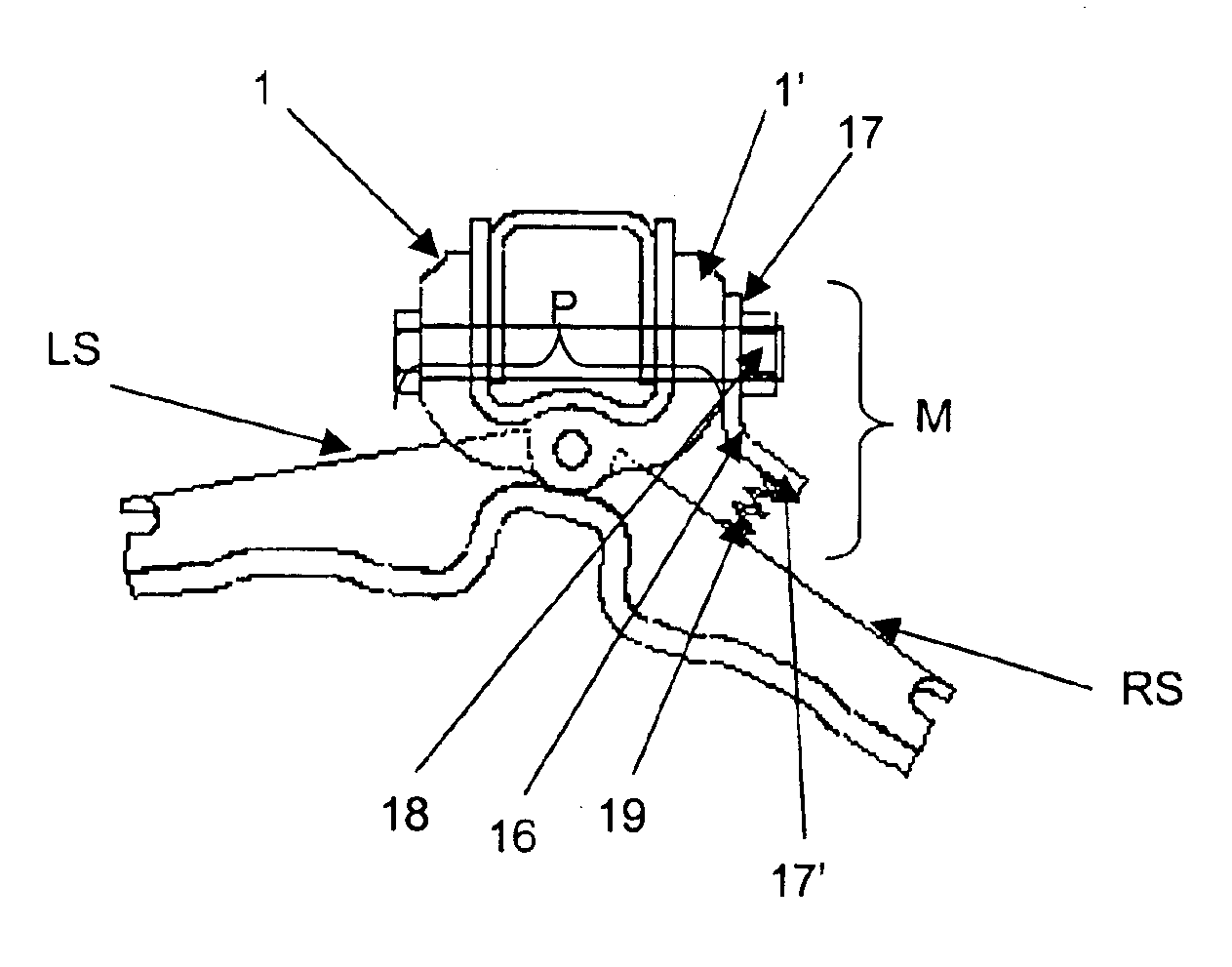
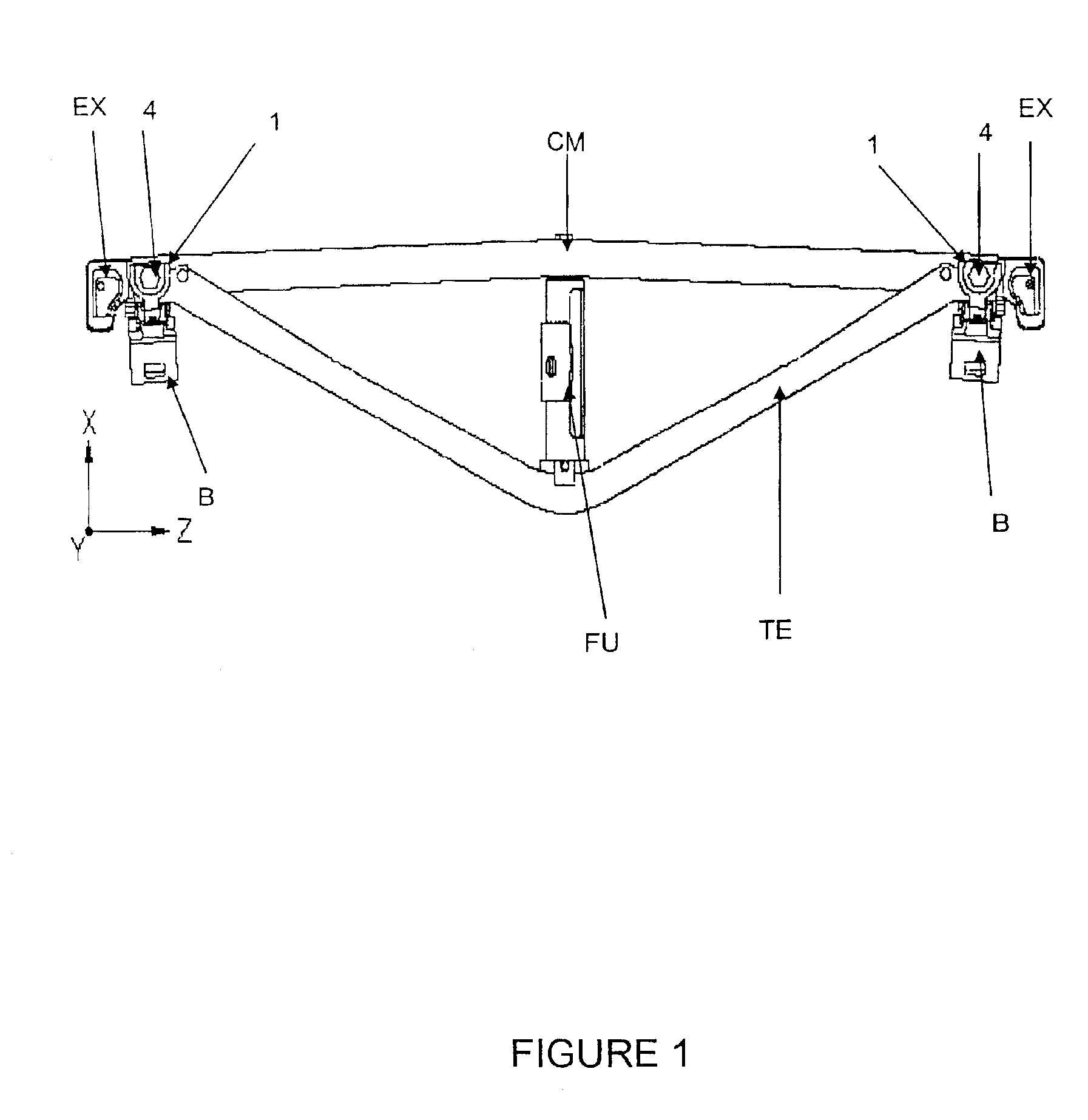
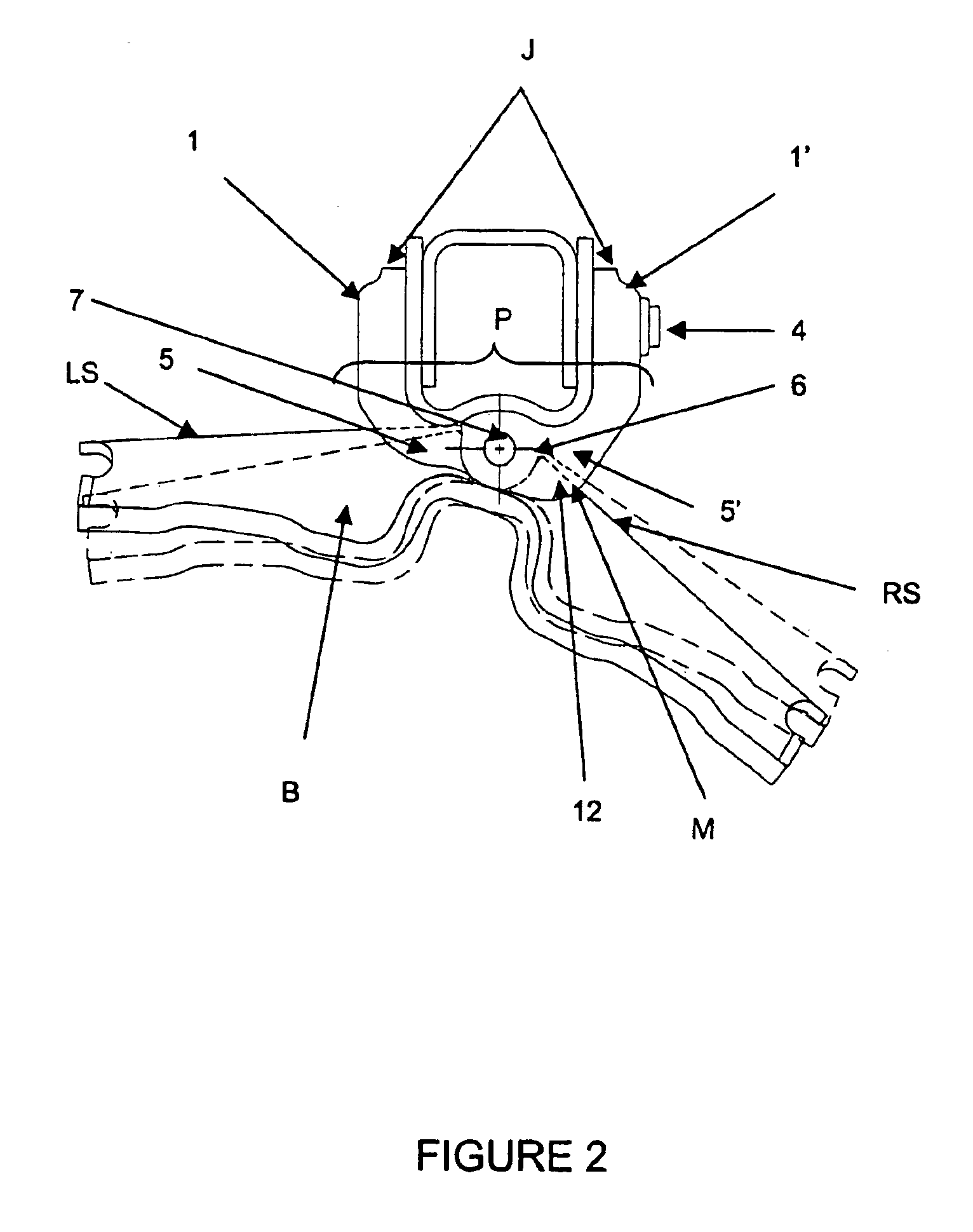
- A pivoting joint that allows controlled radial and lateral rotation of the brake head with respect to the brake beam, incorporating means for pivotally joining the brake head to the beam, friction mechanisms for movement restriction, and mechanical rotation restriction to ensure uniform force distribution and complete wear of brake shoe material.

Safety Standards for Brake System Integration
The integration of brake systems into lightweight joint assemblies must comply with stringent safety standards established by international regulatory bodies. ISO 13849 provides the fundamental framework for safety-related parts of control systems, requiring brake integration designs to achieve Performance Level (PL) d or e for critical applications. This standard mandates comprehensive risk assessment methodologies and fault tolerance mechanisms that directly impact how brakes are integrated into lightweight structures.
Functional safety requirements under IEC 61508 establish Safety Integrity Level (SIL) classifications that govern brake system reliability parameters. For lightweight joint assemblies, achieving SIL 2 or SIL 3 ratings necessitates redundant braking mechanisms and fail-safe design principles. The standard requires systematic verification of brake response times, typically mandating emergency stop capabilities within 200-500 milliseconds depending on application velocity and load characteristics.
Automotive industry standards, particularly ISO 26262 for road vehicles, define specific requirements for brake system integration in weight-optimized assemblies. The standard emphasizes Automotive Safety Integrity Level (ASIL) classifications, with brake systems typically requiring ASIL C or ASIL D ratings. This necessitates rigorous validation of brake force distribution, thermal management, and structural integrity under various loading conditions while maintaining minimal weight penalties.
Material certification standards such as ASTM F3122 and EN 15085 govern the selection and qualification of lightweight materials used in brake-integrated joint assemblies. These standards specify minimum strength-to-weight ratios, fatigue resistance parameters, and environmental durability requirements. Compliance requires extensive testing protocols including cyclic loading tests, corrosion resistance evaluations, and temperature cycling assessments to ensure long-term reliability.
Testing and validation protocols mandated by these safety standards require comprehensive verification procedures including Hardware-in-the-Loop (HIL) testing, finite element analysis validation, and real-world performance verification. Documentation requirements include detailed failure mode and effects analysis (FMEA), safety case development, and traceability matrices linking design decisions to safety requirements throughout the integration process.
Functional safety requirements under IEC 61508 establish Safety Integrity Level (SIL) classifications that govern brake system reliability parameters. For lightweight joint assemblies, achieving SIL 2 or SIL 3 ratings necessitates redundant braking mechanisms and fail-safe design principles. The standard requires systematic verification of brake response times, typically mandating emergency stop capabilities within 200-500 milliseconds depending on application velocity and load characteristics.
Automotive industry standards, particularly ISO 26262 for road vehicles, define specific requirements for brake system integration in weight-optimized assemblies. The standard emphasizes Automotive Safety Integrity Level (ASIL) classifications, with brake systems typically requiring ASIL C or ASIL D ratings. This necessitates rigorous validation of brake force distribution, thermal management, and structural integrity under various loading conditions while maintaining minimal weight penalties.
Material certification standards such as ASTM F3122 and EN 15085 govern the selection and qualification of lightweight materials used in brake-integrated joint assemblies. These standards specify minimum strength-to-weight ratios, fatigue resistance parameters, and environmental durability requirements. Compliance requires extensive testing protocols including cyclic loading tests, corrosion resistance evaluations, and temperature cycling assessments to ensure long-term reliability.
Testing and validation protocols mandated by these safety standards require comprehensive verification procedures including Hardware-in-the-Loop (HIL) testing, finite element analysis validation, and real-world performance verification. Documentation requirements include detailed failure mode and effects analysis (FMEA), safety case development, and traceability matrices linking design decisions to safety requirements throughout the integration process.
Material Science Advances in Lightweight Braking
The evolution of lightweight braking systems has been fundamentally driven by revolutionary advances in material science, particularly in the development of advanced composites and hybrid materials. Carbon fiber reinforced polymers (CFRP) have emerged as a cornerstone technology, offering exceptional strength-to-weight ratios that enable brake components to achieve up to 60% weight reduction compared to traditional steel alternatives while maintaining superior thermal management properties.
Recent breakthroughs in ceramic matrix composites (CMCs) have introduced unprecedented capabilities for high-temperature applications in braking systems. Silicon carbide fiber-reinforced ceramic composites demonstrate remarkable thermal stability and wear resistance, enabling brake assemblies to operate effectively at temperatures exceeding 1200°C without significant performance degradation. These materials exhibit exceptional dimensional stability under thermal cycling, crucial for maintaining precise joint assembly tolerances.
Advanced metallurgy has contributed significantly through the development of ultra-high-strength aluminum alloys and titanium-based materials specifically engineered for braking applications. Novel precipitation-hardened aluminum alloys incorporating scandium and zirconium additions achieve tensile strengths approaching 700 MPa while maintaining density advantages over conventional materials. These alloys demonstrate enhanced fatigue resistance and corrosion protection essential for long-term brake system reliability.
Nanomaterial integration represents a transformative frontier in lightweight braking technology. Carbon nanotube-reinforced polymer matrices provide exceptional mechanical properties while enabling precise control of thermal conductivity and electrical characteristics. Graphene-enhanced brake pad materials exhibit superior friction coefficients and reduced wear rates, contributing to extended service life and improved performance consistency.
Smart material technologies, including shape memory alloys and thermally responsive polymers, are enabling adaptive braking systems that automatically optimize performance based on operating conditions. These materials facilitate self-adjusting brake mechanisms that maintain optimal contact pressure and thermal management without additional mechanical complexity, supporting the integration requirements of lightweight joint assemblies while enhancing overall system efficiency and reliability.
Recent breakthroughs in ceramic matrix composites (CMCs) have introduced unprecedented capabilities for high-temperature applications in braking systems. Silicon carbide fiber-reinforced ceramic composites demonstrate remarkable thermal stability and wear resistance, enabling brake assemblies to operate effectively at temperatures exceeding 1200°C without significant performance degradation. These materials exhibit exceptional dimensional stability under thermal cycling, crucial for maintaining precise joint assembly tolerances.
Advanced metallurgy has contributed significantly through the development of ultra-high-strength aluminum alloys and titanium-based materials specifically engineered for braking applications. Novel precipitation-hardened aluminum alloys incorporating scandium and zirconium additions achieve tensile strengths approaching 700 MPa while maintaining density advantages over conventional materials. These alloys demonstrate enhanced fatigue resistance and corrosion protection essential for long-term brake system reliability.
Nanomaterial integration represents a transformative frontier in lightweight braking technology. Carbon nanotube-reinforced polymer matrices provide exceptional mechanical properties while enabling precise control of thermal conductivity and electrical characteristics. Graphene-enhanced brake pad materials exhibit superior friction coefficients and reduced wear rates, contributing to extended service life and improved performance consistency.
Smart material technologies, including shape memory alloys and thermally responsive polymers, are enabling adaptive braking systems that automatically optimize performance based on operating conditions. These materials facilitate self-adjusting brake mechanisms that maintain optimal contact pressure and thermal management without additional mechanical complexity, supporting the integration requirements of lightweight joint assemblies while enhancing overall system efficiency and reliability.
Unlock deeper insights with PatSnap Eureka Quick Research — get a full tech report to explore trends and direct your research. Try now!
Generate Your Research Report Instantly with AI Agent
Supercharge your innovation with PatSnap Eureka AI Agent Platform!