

Optimizing Control Systems Utilizing Power-over-Fiber
APR 20, 20269 MIN READ
Generate Your Research Report Instantly with AI Agent
PatSnap Eureka helps you evaluate technical feasibility & market potential.
Power-over-Fiber Control Systems Background and Objectives
Power-over-Fiber (PoF) technology represents a revolutionary approach to control system design that emerged from the convergence of optical communication and power transmission technologies. This innovative solution addresses the fundamental challenge of simultaneously delivering both electrical power and data signals through a single optical fiber, eliminating the need for separate electrical power lines in remote or hazardous environments.
The historical development of PoF technology traces back to the early 1980s when researchers first explored the possibility of transmitting power optically. Initial applications focused primarily on telecommunications infrastructure, where the need for electrically isolated power delivery became apparent. The technology gained significant momentum in the 1990s as fiber optic communication systems matured and the demand for remote sensing applications in harsh environments increased.
Traditional control systems face numerous limitations when deployed in electromagnetically sensitive environments, explosive atmospheres, or locations requiring galvanic isolation. Conventional copper-based power and communication lines are susceptible to electromagnetic interference, lightning strikes, and corrosion, leading to system failures and safety concerns. These challenges become particularly pronounced in industries such as oil and gas, aerospace, medical devices, and high-voltage power systems.
The primary objective of optimizing control systems utilizing Power-over-Fiber technology is to achieve seamless integration of power delivery and data communication while maintaining system reliability and performance. This involves developing efficient photovoltaic conversion mechanisms that can extract sufficient electrical power from optical signals to operate remote sensors, actuators, and control devices. The target is to create self-contained, electrically isolated control nodes that can function reliably over extended periods without maintenance.
Key technical objectives include maximizing power transmission efficiency, minimizing optical losses, ensuring stable power output under varying load conditions, and maintaining high-speed bidirectional data communication. The technology aims to support power levels ranging from milliwatts for sensor applications to several watts for more demanding control devices, while simultaneously enabling data rates comparable to conventional fiber optic communication systems.
The evolution of PoF control systems has progressed through distinct phases, beginning with proof-of-concept demonstrations in laboratory settings to current commercial implementations in specialized applications. Modern objectives focus on standardization, cost reduction, and expanding the range of compatible devices and sensors that can be powered and controlled through optical fiber infrastructure.
The historical development of PoF technology traces back to the early 1980s when researchers first explored the possibility of transmitting power optically. Initial applications focused primarily on telecommunications infrastructure, where the need for electrically isolated power delivery became apparent. The technology gained significant momentum in the 1990s as fiber optic communication systems matured and the demand for remote sensing applications in harsh environments increased.
Traditional control systems face numerous limitations when deployed in electromagnetically sensitive environments, explosive atmospheres, or locations requiring galvanic isolation. Conventional copper-based power and communication lines are susceptible to electromagnetic interference, lightning strikes, and corrosion, leading to system failures and safety concerns. These challenges become particularly pronounced in industries such as oil and gas, aerospace, medical devices, and high-voltage power systems.
The primary objective of optimizing control systems utilizing Power-over-Fiber technology is to achieve seamless integration of power delivery and data communication while maintaining system reliability and performance. This involves developing efficient photovoltaic conversion mechanisms that can extract sufficient electrical power from optical signals to operate remote sensors, actuators, and control devices. The target is to create self-contained, electrically isolated control nodes that can function reliably over extended periods without maintenance.
Key technical objectives include maximizing power transmission efficiency, minimizing optical losses, ensuring stable power output under varying load conditions, and maintaining high-speed bidirectional data communication. The technology aims to support power levels ranging from milliwatts for sensor applications to several watts for more demanding control devices, while simultaneously enabling data rates comparable to conventional fiber optic communication systems.
The evolution of PoF control systems has progressed through distinct phases, beginning with proof-of-concept demonstrations in laboratory settings to current commercial implementations in specialized applications. Modern objectives focus on standardization, cost reduction, and expanding the range of compatible devices and sensors that can be powered and controlled through optical fiber infrastructure.
Market Demand for PoF-Based Control Applications
The market demand for Power-over-Fiber (PoF) based control applications is experiencing significant growth driven by the increasing need for electromagnetic interference-immune control systems across multiple industrial sectors. Traditional copper-based control systems face substantial limitations in harsh electromagnetic environments, creating a compelling market opportunity for PoF solutions that combine power delivery and data transmission through optical fibers.
Industrial automation represents the largest market segment for PoF-based control applications, particularly in manufacturing facilities where electromagnetic compatibility is critical. Steel mills, chemical processing plants, and semiconductor fabrication facilities require control systems that can operate reliably in high-EMI environments without signal degradation or power fluctuations. The demand is further amplified by the Industry 4.0 initiative, which emphasizes smart manufacturing and requires robust communication networks for real-time monitoring and control.
The aerospace and defense sectors constitute another significant market driver, where PoF technology addresses stringent requirements for lightweight, EMI-resistant control systems. Aircraft manufacturers increasingly adopt PoF solutions for flight control systems, avionics, and sensor networks to reduce weight while maintaining signal integrity. Military applications demand secure, interference-proof communication channels that PoF technology can provide, especially in electronic warfare environments.
Medical device manufacturing shows growing interest in PoF-based control systems, particularly for MRI-compatible equipment and surgical robotics. The non-metallic nature of optical fibers eliminates magnetic field interference, making PoF ideal for medical environments where electromagnetic compatibility is paramount for patient safety and equipment reliability.
Energy sector applications, including wind turbines, solar installations, and power grid infrastructure, represent emerging market opportunities. These environments often experience high electromagnetic fields and require control systems that can operate reliably over extended distances without power loss or signal degradation.
The market demand is also driven by regulatory requirements for improved safety standards and electromagnetic compatibility in industrial environments. Companies face increasing pressure to implement control systems that meet stringent EMC regulations while maintaining operational efficiency and reducing maintenance costs associated with traditional copper-based solutions.
Industrial automation represents the largest market segment for PoF-based control applications, particularly in manufacturing facilities where electromagnetic compatibility is critical. Steel mills, chemical processing plants, and semiconductor fabrication facilities require control systems that can operate reliably in high-EMI environments without signal degradation or power fluctuations. The demand is further amplified by the Industry 4.0 initiative, which emphasizes smart manufacturing and requires robust communication networks for real-time monitoring and control.
The aerospace and defense sectors constitute another significant market driver, where PoF technology addresses stringent requirements for lightweight, EMI-resistant control systems. Aircraft manufacturers increasingly adopt PoF solutions for flight control systems, avionics, and sensor networks to reduce weight while maintaining signal integrity. Military applications demand secure, interference-proof communication channels that PoF technology can provide, especially in electronic warfare environments.
Medical device manufacturing shows growing interest in PoF-based control systems, particularly for MRI-compatible equipment and surgical robotics. The non-metallic nature of optical fibers eliminates magnetic field interference, making PoF ideal for medical environments where electromagnetic compatibility is paramount for patient safety and equipment reliability.
Energy sector applications, including wind turbines, solar installations, and power grid infrastructure, represent emerging market opportunities. These environments often experience high electromagnetic fields and require control systems that can operate reliably over extended distances without power loss or signal degradation.
The market demand is also driven by regulatory requirements for improved safety standards and electromagnetic compatibility in industrial environments. Companies face increasing pressure to implement control systems that meet stringent EMC regulations while maintaining operational efficiency and reducing maintenance costs associated with traditional copper-based solutions.
Current State and Challenges of Power-over-Fiber Technology
Power-over-Fiber (PoF) technology has emerged as a promising solution for delivering both optical data transmission and electrical power through a single optical fiber. Currently, the technology operates by converting electrical power to optical power at the transmitting end using laser diodes, transmitting the optical signal through fiber optic cables, and converting it back to electrical power at the receiving end using photovoltaic cells. This approach enables power delivery to remote sensors, actuators, and control devices in environments where traditional copper-based power transmission faces significant limitations.
The global PoF market has witnessed steady growth, with applications spanning telecommunications, industrial automation, medical devices, and aerospace systems. Leading technology providers including Optacore, Lumentum, and several research institutions have developed commercial PoF systems capable of delivering power levels ranging from milliwatts to several watts over distances exceeding several kilometers. Current implementations primarily focus on low-power applications such as remote sensing networks and fiber-optic communication systems requiring galvanic isolation.
Despite technological advances, PoF systems face substantial technical challenges that limit widespread adoption. Power conversion efficiency remains a critical bottleneck, with typical laser-to-electrical conversion efficiencies ranging between 10-25%, significantly lower than traditional electrical power transmission methods. This inefficiency results from losses in both the electrical-to-optical conversion process and the optical-to-electrical conversion at the receiving end, where photovoltaic cell performance is constrained by spectral matching and thermal management issues.
Fiber attenuation presents another significant challenge, particularly for long-distance power transmission applications. Standard single-mode fibers exhibit attenuation rates of approximately 0.2 dB/km at optimal wavelengths, which compounds power losses over extended distances. Additionally, fiber bending, connector losses, and environmental factors such as temperature variations can further degrade power transmission efficiency and system reliability.
Thermal management constitutes a major technical hurdle in PoF system design. High-power laser diodes generate substantial heat during operation, requiring sophisticated cooling systems that increase system complexity and cost. Similarly, photovoltaic receivers experience efficiency degradation at elevated temperatures, necessitating careful thermal design considerations that often conflict with miniaturization requirements in control system applications.
Safety and reliability concerns also present ongoing challenges. High-power optical transmission raises eye safety considerations, requiring appropriate safety protocols and protective measures. Long-term reliability of laser diodes and photovoltaic cells under continuous operation remains a concern, particularly in harsh industrial environments where control systems must operate reliably for extended periods without maintenance access.
Current research efforts focus on developing higher-efficiency laser diodes, advanced photovoltaic cell designs optimized for specific laser wavelengths, and improved fiber designs with reduced attenuation characteristics. However, fundamental physical limitations continue to constrain overall system efficiency and power delivery capabilities, limiting PoF technology adoption in high-power control system applications.
The global PoF market has witnessed steady growth, with applications spanning telecommunications, industrial automation, medical devices, and aerospace systems. Leading technology providers including Optacore, Lumentum, and several research institutions have developed commercial PoF systems capable of delivering power levels ranging from milliwatts to several watts over distances exceeding several kilometers. Current implementations primarily focus on low-power applications such as remote sensing networks and fiber-optic communication systems requiring galvanic isolation.
Despite technological advances, PoF systems face substantial technical challenges that limit widespread adoption. Power conversion efficiency remains a critical bottleneck, with typical laser-to-electrical conversion efficiencies ranging between 10-25%, significantly lower than traditional electrical power transmission methods. This inefficiency results from losses in both the electrical-to-optical conversion process and the optical-to-electrical conversion at the receiving end, where photovoltaic cell performance is constrained by spectral matching and thermal management issues.
Fiber attenuation presents another significant challenge, particularly for long-distance power transmission applications. Standard single-mode fibers exhibit attenuation rates of approximately 0.2 dB/km at optimal wavelengths, which compounds power losses over extended distances. Additionally, fiber bending, connector losses, and environmental factors such as temperature variations can further degrade power transmission efficiency and system reliability.
Thermal management constitutes a major technical hurdle in PoF system design. High-power laser diodes generate substantial heat during operation, requiring sophisticated cooling systems that increase system complexity and cost. Similarly, photovoltaic receivers experience efficiency degradation at elevated temperatures, necessitating careful thermal design considerations that often conflict with miniaturization requirements in control system applications.
Safety and reliability concerns also present ongoing challenges. High-power optical transmission raises eye safety considerations, requiring appropriate safety protocols and protective measures. Long-term reliability of laser diodes and photovoltaic cells under continuous operation remains a concern, particularly in harsh industrial environments where control systems must operate reliably for extended periods without maintenance access.
Current research efforts focus on developing higher-efficiency laser diodes, advanced photovoltaic cell designs optimized for specific laser wavelengths, and improved fiber designs with reduced attenuation characteristics. However, fundamental physical limitations continue to constrain overall system efficiency and power delivery capabilities, limiting PoF technology adoption in high-power control system applications.
Existing PoF Control System Optimization Solutions
01 Optical fiber power transmission systems
Power-over-fiber systems utilize optical fibers to transmit electrical power by converting electrical energy to optical energy at the source and back to electrical energy at the receiving end. These systems employ photodetectors or photovoltaic cells to convert the transmitted light into usable electrical power. The technology enables power delivery in electrically isolated environments and can support remote sensing and control applications where traditional copper wiring is impractical or hazardous.- Optical fiber power transmission systems: Power-over-fiber systems utilize optical fibers to transmit electrical power by converting electrical energy to optical energy at the source and back to electrical energy at the receiving end. These systems employ photodetectors or photovoltaic cells to convert the transmitted light into usable electrical power. The technology enables power delivery in electrically isolated environments and can support remote sensors, actuators, and control devices without metallic conductors.
- Integrated control and communication systems: Power-over-fiber control systems can simultaneously transmit power and control signals through the same optical fiber infrastructure. This integration allows for bidirectional communication while delivering power to remote devices. The systems can modulate control data onto the optical carrier, enabling real-time monitoring and control of distributed devices. This approach reduces system complexity and improves reliability in industrial automation and sensing applications.
- High-power laser-based transmission: Advanced power-over-fiber systems employ high-power laser sources to increase the amount of power that can be transmitted through optical fibers. These systems utilize specialized laser diodes or fiber lasers operating at optimized wavelengths to maximize power conversion efficiency. The technology includes thermal management solutions and beam shaping techniques to handle higher power levels while maintaining system safety and reliability.
- Photovoltaic conversion and power management: Power-over-fiber systems incorporate efficient photovoltaic converters and power management circuits at the receiving end to optimize energy harvesting from optical signals. These systems include maximum power point tracking, voltage regulation, and energy storage capabilities to provide stable power output. The conversion efficiency is enhanced through specialized semiconductor materials and multi-junction photovoltaic cells designed for specific laser wavelengths.
- Safety and monitoring mechanisms: Power-over-fiber control systems implement safety features including optical power monitoring, fault detection, and automatic shutdown mechanisms to prevent hazards. These systems incorporate feedback loops to monitor the operational status of both the transmission and receiving components. Safety protocols include eye-safe power levels, fiber break detection, and thermal protection to ensure reliable operation in various environmental conditions.
02 Integrated power and data transmission
Systems that combine both power delivery and data communication over the same optical fiber infrastructure. This approach allows simultaneous transmission of control signals and power supply through a single fiber link, reducing system complexity and installation costs. The technology typically employs wavelength division multiplexing or time-division techniques to separate power and data channels, enabling bidirectional communication while maintaining continuous power delivery.Expand Specific Solutions03 Power conversion and regulation circuits
Specialized electronic circuits designed to efficiently convert optical power to regulated electrical output in power-over-fiber systems. These circuits include photovoltaic converters, voltage regulators, and power management units that ensure stable power delivery despite variations in optical input. The designs focus on maximizing conversion efficiency, minimizing power loss, and providing appropriate voltage and current levels for end devices.Expand Specific Solutions04 Remote device powering and control
Applications where power-over-fiber technology enables operation of remote sensors, actuators, and control devices in challenging environments. These systems are particularly useful in explosive atmospheres, high electromagnetic interference zones, or locations requiring electrical isolation. The technology supports various remote devices including monitoring equipment, communication systems, and industrial control components without the need for local power sources or electrical connections.Expand Specific Solutions05 Safety and isolation features
Power-over-fiber systems provide inherent electrical isolation and safety advantages in hazardous environments. The non-conductive nature of optical fibers eliminates risks of electrical sparks, ground loops, and electromagnetic interference. These systems are designed with fail-safe mechanisms, overcurrent protection, and monitoring capabilities to ensure reliable operation in critical applications such as medical equipment, aerospace systems, and industrial automation where electrical safety is paramount.Expand Specific Solutions
Key Players in Power-over-Fiber and Control Systems Industry
The power-over-fiber control systems optimization market represents an emerging technology sector in its early development stage, characterized by significant growth potential but limited commercial deployment. The market remains relatively small with fragmented adoption across telecommunications, industrial automation, and defense applications. Technology maturity varies considerably among key players, with established telecommunications giants like Huawei Technologies, Ericsson, and Samsung Electronics leveraging their optical communication expertise to advance power-over-fiber integration. Traditional infrastructure companies including ABB, Siemens Energy, and Mitsubishi Electric are exploring applications in industrial control systems, while specialized firms like LaserMotive focus on wireless power transmission innovations. Chinese companies such as State Grid Corp and Fiberhome Telecommunication are driving adoption in power grid modernization. Academic institutions like Beihang University and research organizations like CEA contribute fundamental research. The competitive landscape shows a mix of large corporations with substantial R&D resources and specialized technology developers, indicating the technology's transition from research phase toward commercial viability.
Huawei Technologies Co., Ltd.
Technical Solution: Huawei has developed comprehensive Power-over-Fiber solutions that integrate optical power transmission with high-speed data communication for control systems. Their technology utilizes wavelength division multiplexing (WDM) to separate power and data channels, enabling simultaneous power delivery up to 10W and data transmission at speeds exceeding 10Gbps[1][3]. The system incorporates advanced photovoltaic conversion cells with efficiency rates above 40% and intelligent power management algorithms that dynamically adjust power distribution based on real-time system demands[2][5]. Their control optimization framework includes predictive maintenance capabilities and remote monitoring systems specifically designed for industrial automation and telecommunications infrastructure.
Strengths: High power conversion efficiency, integrated data-power transmission, scalable architecture. Weaknesses: Higher initial deployment costs, complex system integration requirements.
Samsung Electronics Co., Ltd.
Technical Solution: Samsung's Power-over-Fiber control system optimization focuses on semiconductor-based photovoltaic receivers and smart power management for IoT and mobile infrastructure applications. Their solution employs gallium arsenide (GaAs) photovoltaic cells achieving conversion efficiencies of 45-50% under laser illumination[4][7]. The system integrates with Samsung's existing semiconductor portfolio to provide optimized control algorithms for power distribution, thermal management, and signal integrity. Their approach emphasizes miniaturization and integration with existing electronic systems, particularly for 5G base stations and edge computing devices where electromagnetic interference immunity is critical[6][8].
Strengths: High-efficiency semiconductor integration, compact form factor, EMI immunity. Weaknesses: Limited to lower power applications, dependency on proprietary semiconductor technology.
Core Innovations in Power-over-Fiber Control Technologies
Power-over-fiber system and method for operating a power-over-fiber system
PatentActiveUS20210409116A1
Innovation
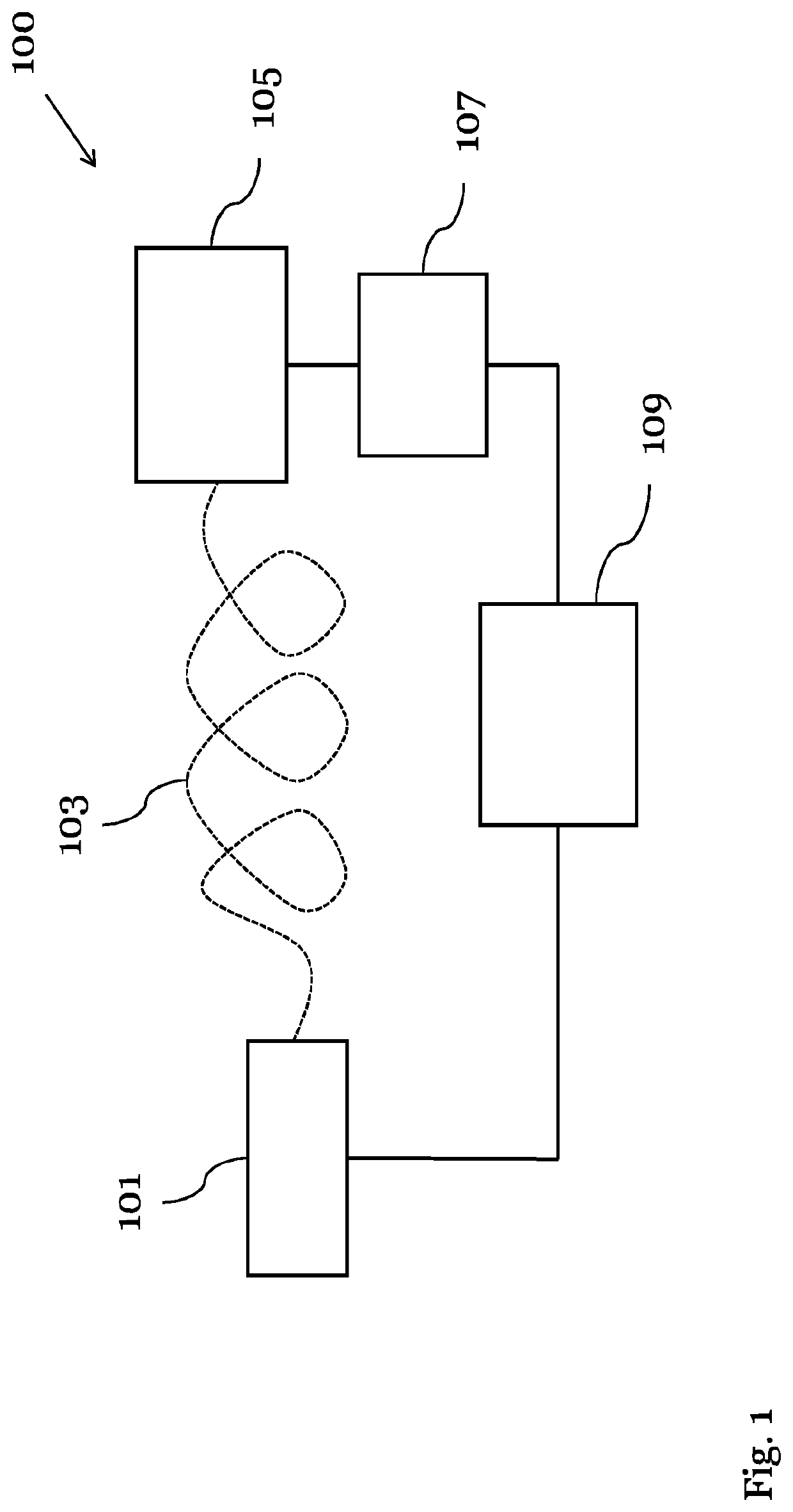
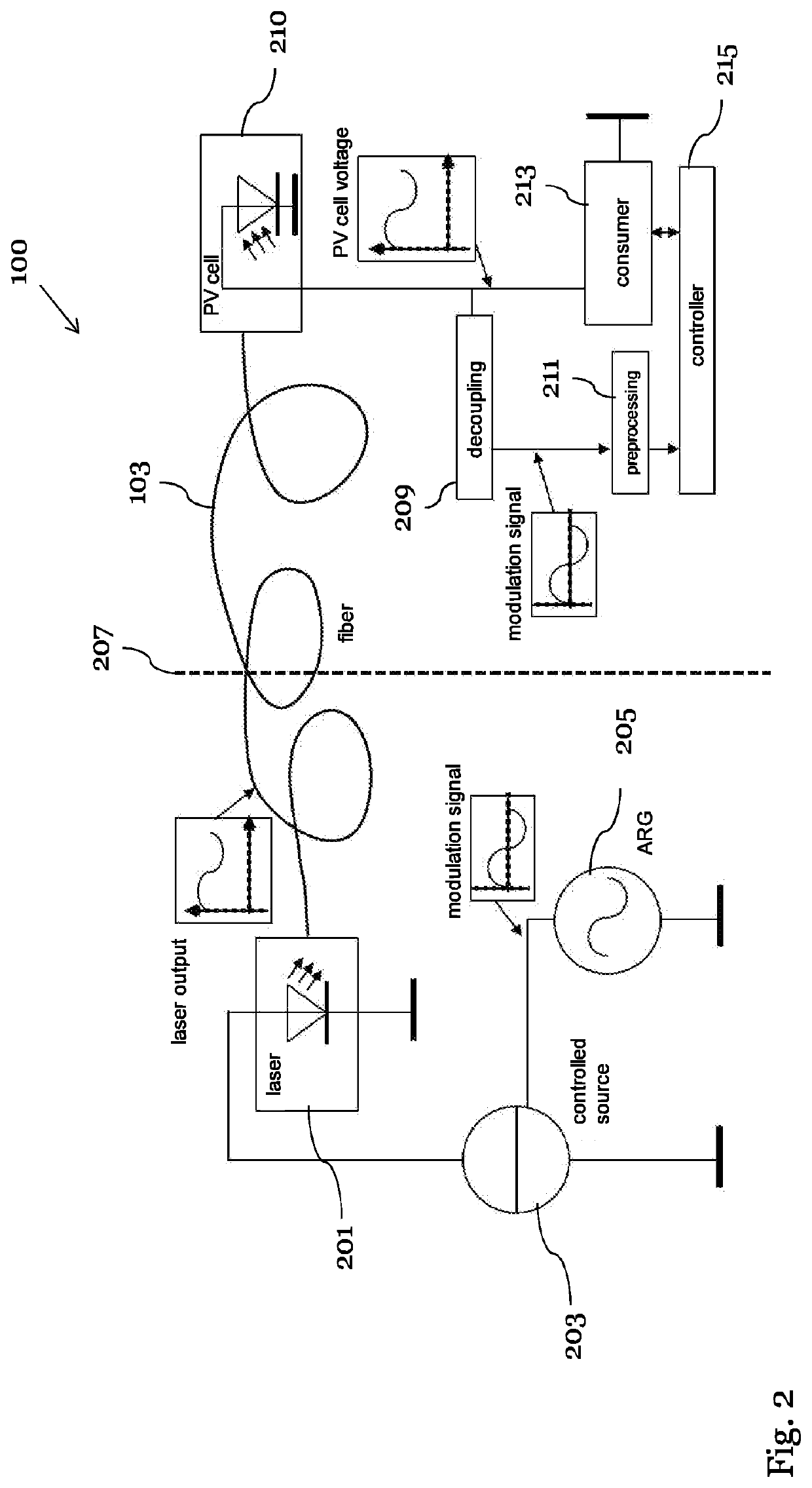
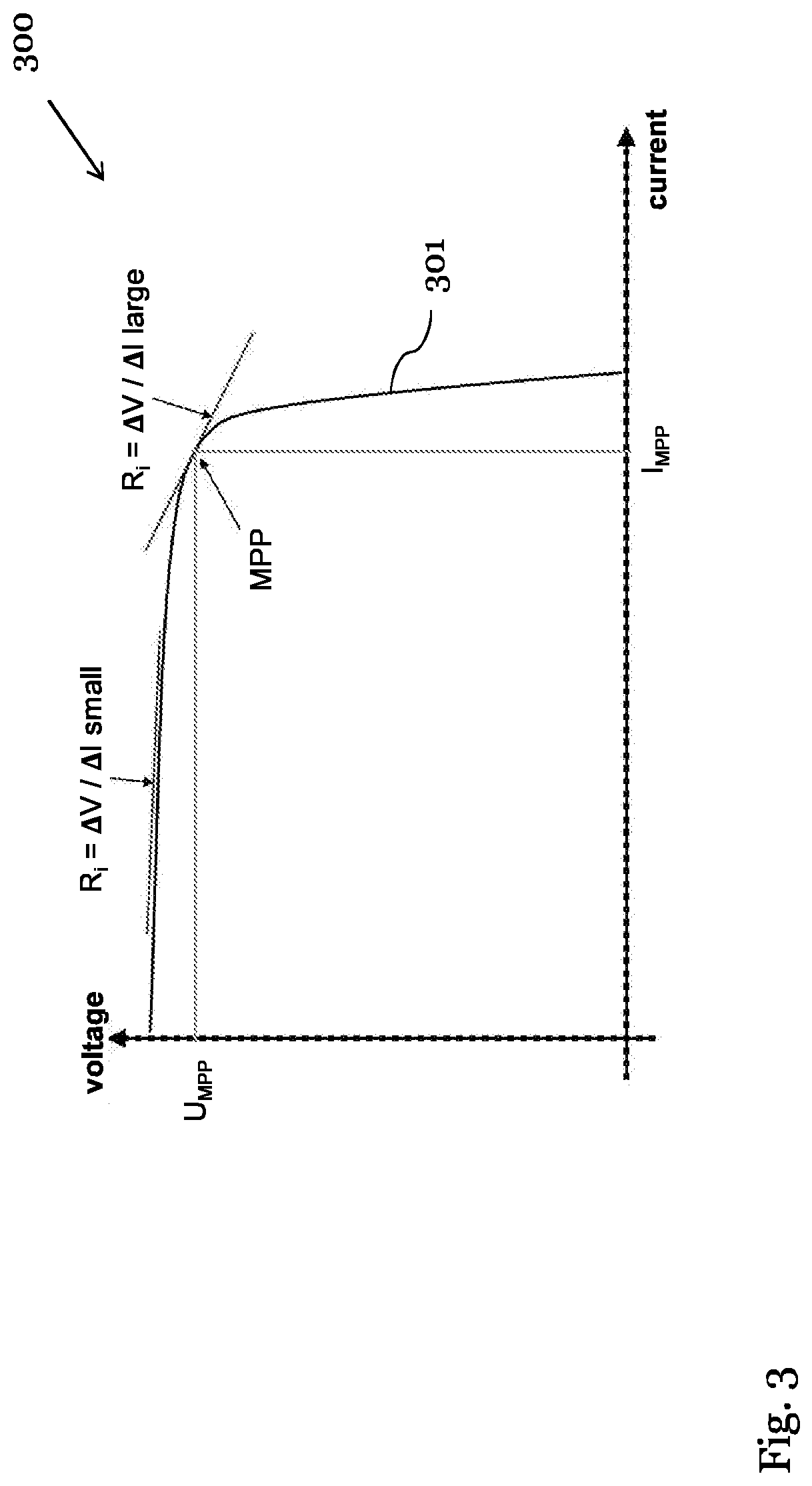
- A PoF system comprising an optical source with intensity modulation, an optical fiber, an optical sink for electrical signal conversion, a detection unit to analyze the electrical signal's characteristics, and a control unit to adjust the optical source's output based on detected inefficiencies, ensuring stable energy supply by compensating for reduced conversion efficiency.

Power over fiber system
PatentActiveUS11888536B2
Innovation
- A power over fiber system that includes a semiconductor laser for generating feed light, a photoelectric conversion element for converting light to electric power, an optical fiber for transmission, and controllers to adjust the output level of the feed light based on stored electric power levels, ensuring neither excess nor deficiency in power supply.


Safety Standards for Optical Power Transmission Systems
The safety standards for optical power transmission systems in Power-over-Fiber (PoF) applications represent a critical framework ensuring the secure deployment of high-power optical energy delivery. These standards primarily focus on laser safety classifications, with most PoF systems operating under Class 1M or Class 3R laser safety categories according to IEC 60825-1 international standards. The classification depends on the optical power levels transmitted through the fiber, typically ranging from milliwatts to several watts for industrial control applications.
Optical power density limitations constitute a fundamental safety consideration, particularly at fiber termination points and optical connectors. Standards mandate maximum permissible exposure levels to prevent retinal damage, with specific attention to beam divergence characteristics when optical energy exits the fiber core. The IEC 62471 photobiological safety standard provides additional guidance for assessing potential hazards from optical radiation in PoF systems.
Fiber integrity monitoring represents another crucial safety aspect, as fiber breaks or damage can result in dangerous optical radiation exposure. Standards require implementation of automatic power shutdown mechanisms when fiber continuity is compromised, typically achieved through back-reflection monitoring or dedicated monitoring fibers. The response time for such safety systems must not exceed specified thresholds to minimize exposure risks.
Electrical safety standards also apply to PoF systems, particularly at the photovoltaic conversion endpoints where optical energy transforms back to electrical power. IEC 61010-1 safety requirements for electrical equipment govern the design of power conditioning circuits and ensure proper isolation between optical and electrical domains.
Environmental safety considerations include temperature monitoring of optical components, as excessive heat generation can compromise system integrity and create additional hazards. Standards specify maximum operating temperatures for laser diodes, optical fibers, and photovoltaic cells to maintain safe operation parameters.
Installation and maintenance safety protocols require specialized training for personnel handling high-power optical systems, emphasizing proper connector handling procedures and mandatory use of appropriate laser safety equipment during system servicing operations.
Optical power density limitations constitute a fundamental safety consideration, particularly at fiber termination points and optical connectors. Standards mandate maximum permissible exposure levels to prevent retinal damage, with specific attention to beam divergence characteristics when optical energy exits the fiber core. The IEC 62471 photobiological safety standard provides additional guidance for assessing potential hazards from optical radiation in PoF systems.
Fiber integrity monitoring represents another crucial safety aspect, as fiber breaks or damage can result in dangerous optical radiation exposure. Standards require implementation of automatic power shutdown mechanisms when fiber continuity is compromised, typically achieved through back-reflection monitoring or dedicated monitoring fibers. The response time for such safety systems must not exceed specified thresholds to minimize exposure risks.
Electrical safety standards also apply to PoF systems, particularly at the photovoltaic conversion endpoints where optical energy transforms back to electrical power. IEC 61010-1 safety requirements for electrical equipment govern the design of power conditioning circuits and ensure proper isolation between optical and electrical domains.
Environmental safety considerations include temperature monitoring of optical components, as excessive heat generation can compromise system integrity and create additional hazards. Standards specify maximum operating temperatures for laser diodes, optical fibers, and photovoltaic cells to maintain safe operation parameters.
Installation and maintenance safety protocols require specialized training for personnel handling high-power optical systems, emphasizing proper connector handling procedures and mandatory use of appropriate laser safety equipment during system servicing operations.
Environmental Impact of Fiber-Based Power Solutions
Power-over-Fiber (PoF) technology presents significant environmental advantages compared to traditional copper-based power transmission systems. The elimination of metallic conductors reduces the demand for copper mining, which is associated with substantial environmental degradation including habitat destruction, soil contamination, and water pollution. Fiber optic cables require significantly less raw material per unit length and utilize silica, one of the most abundant materials on Earth, resulting in a lower environmental footprint during manufacturing.
The energy efficiency characteristics of PoF systems contribute substantially to reduced carbon emissions. Unlike copper cables that experience resistive losses proportional to distance, optical fibers maintain consistent power transmission efficiency over extended ranges. This efficiency translates to reduced energy consumption at power generation facilities, directly correlating with decreased greenhouse gas emissions from fossil fuel-based power plants.
PoF systems demonstrate exceptional longevity, typically operating effectively for 25-30 years compared to 15-20 years for conventional copper infrastructure. This extended operational lifespan reduces the frequency of system replacements, minimizing manufacturing-related environmental impacts and reducing electronic waste generation. The durability of fiber optic components also decreases maintenance requirements, reducing the carbon footprint associated with service operations and transportation.
The electromagnetic immunity inherent in PoF technology eliminates electromagnetic interference emissions that can affect sensitive ecosystems and wildlife navigation systems. This characteristic is particularly beneficial in marine environments where electromagnetic fields from traditional power cables can disrupt marine life migration patterns and feeding behaviors.
Recycling potential for fiber optic components exceeds that of copper-based systems. Glass fibers can be recycled into various applications including construction materials and new optical components, while the reduced complexity of PoF systems simplifies end-of-life processing. The absence of heavy metals and toxic materials in fiber optic cables eliminates hazardous waste concerns during disposal.
However, the manufacturing process of high-precision optical components requires specialized facilities with controlled environments, potentially increasing initial energy consumption. The integration of power conversion electronics introduces semiconductor components that require careful end-of-life management to prevent environmental contamination from rare earth elements.
The energy efficiency characteristics of PoF systems contribute substantially to reduced carbon emissions. Unlike copper cables that experience resistive losses proportional to distance, optical fibers maintain consistent power transmission efficiency over extended ranges. This efficiency translates to reduced energy consumption at power generation facilities, directly correlating with decreased greenhouse gas emissions from fossil fuel-based power plants.
PoF systems demonstrate exceptional longevity, typically operating effectively for 25-30 years compared to 15-20 years for conventional copper infrastructure. This extended operational lifespan reduces the frequency of system replacements, minimizing manufacturing-related environmental impacts and reducing electronic waste generation. The durability of fiber optic components also decreases maintenance requirements, reducing the carbon footprint associated with service operations and transportation.
The electromagnetic immunity inherent in PoF technology eliminates electromagnetic interference emissions that can affect sensitive ecosystems and wildlife navigation systems. This characteristic is particularly beneficial in marine environments where electromagnetic fields from traditional power cables can disrupt marine life migration patterns and feeding behaviors.
Recycling potential for fiber optic components exceeds that of copper-based systems. Glass fibers can be recycled into various applications including construction materials and new optical components, while the reduced complexity of PoF systems simplifies end-of-life processing. The absence of heavy metals and toxic materials in fiber optic cables eliminates hazardous waste concerns during disposal.
However, the manufacturing process of high-precision optical components requires specialized facilities with controlled environments, potentially increasing initial energy consumption. The integration of power conversion electronics introduces semiconductor components that require careful end-of-life management to prevent environmental contamination from rare earth elements.
Unlock deeper insights with PatSnap Eureka Quick Research — get a full tech report to explore trends and direct your research. Try now!
Generate Your Research Report Instantly with AI Agent
Supercharge your innovation with PatSnap Eureka AI Agent Platform!