Optimizing Discrete Variables for Cost-Effective Deployment
FEB 25, 202610 MIN READ
Generate Your Research Report Instantly with AI Agent
Patsnap Eureka helps you evaluate technical feasibility & market potential.
Discrete Optimization Background and Cost Deployment Goals
Discrete optimization represents a fundamental branch of mathematical optimization that focuses on finding optimal solutions from finite or countably infinite sets of feasible solutions. Unlike continuous optimization where variables can take any real value within a given range, discrete optimization deals with variables that must assume specific discrete values, such as integers, binary choices, or elements from predefined sets. This field encompasses various problem types including integer programming, combinatorial optimization, and constraint satisfaction problems.
The mathematical foundation of discrete optimization traces back to classical problems such as the traveling salesman problem and the knapsack problem, which emerged in the early 20th century. These problems highlighted the computational complexity inherent in finding optimal discrete solutions, leading to the development of specialized algorithms and theoretical frameworks. The field gained significant momentum with the advent of computer science, as researchers recognized that many real-world decision-making scenarios naturally involve discrete choices rather than continuous variables.
Modern discrete optimization techniques have evolved to address increasingly complex scenarios where multiple discrete variables must be simultaneously optimized under various constraints. Branch-and-bound algorithms, dynamic programming, and metaheuristic approaches like genetic algorithms and simulated annealing have become cornerstone methodologies. The integration of machine learning techniques has further enhanced the capability to handle large-scale discrete optimization problems efficiently.
In the context of cost-effective deployment, discrete optimization serves as a critical enabler for strategic resource allocation and operational efficiency. Organizations face numerous deployment decisions that inherently involve discrete choices: selecting optimal facility locations from candidate sites, determining the number and types of resources to deploy, choosing technology configurations, and deciding on service coverage areas. These decisions directly impact operational costs, service quality, and competitive positioning.
The primary goal of applying discrete optimization to cost-effective deployment is to minimize total deployment costs while satisfying operational requirements and service level constraints. This involves optimizing capital expenditures for infrastructure, operational expenses for maintenance and staffing, and opportunity costs associated with suboptimal resource utilization. The optimization framework must balance competing objectives such as minimizing initial investment costs, reducing ongoing operational expenses, and maximizing service coverage or performance metrics.
Contemporary deployment optimization challenges extend beyond traditional cost minimization to encompass sustainability considerations, scalability requirements, and adaptability to changing market conditions. Organizations seek solutions that not only achieve immediate cost efficiency but also provide flexibility for future expansion and technological upgrades. This multi-objective optimization approach requires sophisticated modeling techniques that can capture the complex interdependencies between discrete deployment decisions and their long-term cost implications.
The mathematical foundation of discrete optimization traces back to classical problems such as the traveling salesman problem and the knapsack problem, which emerged in the early 20th century. These problems highlighted the computational complexity inherent in finding optimal discrete solutions, leading to the development of specialized algorithms and theoretical frameworks. The field gained significant momentum with the advent of computer science, as researchers recognized that many real-world decision-making scenarios naturally involve discrete choices rather than continuous variables.
Modern discrete optimization techniques have evolved to address increasingly complex scenarios where multiple discrete variables must be simultaneously optimized under various constraints. Branch-and-bound algorithms, dynamic programming, and metaheuristic approaches like genetic algorithms and simulated annealing have become cornerstone methodologies. The integration of machine learning techniques has further enhanced the capability to handle large-scale discrete optimization problems efficiently.
In the context of cost-effective deployment, discrete optimization serves as a critical enabler for strategic resource allocation and operational efficiency. Organizations face numerous deployment decisions that inherently involve discrete choices: selecting optimal facility locations from candidate sites, determining the number and types of resources to deploy, choosing technology configurations, and deciding on service coverage areas. These decisions directly impact operational costs, service quality, and competitive positioning.
The primary goal of applying discrete optimization to cost-effective deployment is to minimize total deployment costs while satisfying operational requirements and service level constraints. This involves optimizing capital expenditures for infrastructure, operational expenses for maintenance and staffing, and opportunity costs associated with suboptimal resource utilization. The optimization framework must balance competing objectives such as minimizing initial investment costs, reducing ongoing operational expenses, and maximizing service coverage or performance metrics.
Contemporary deployment optimization challenges extend beyond traditional cost minimization to encompass sustainability considerations, scalability requirements, and adaptability to changing market conditions. Organizations seek solutions that not only achieve immediate cost efficiency but also provide flexibility for future expansion and technological upgrades. This multi-objective optimization approach requires sophisticated modeling techniques that can capture the complex interdependencies between discrete deployment decisions and their long-term cost implications.
Market Demand for Cost-Effective Discrete Optimization
The global market for discrete optimization solutions has experienced substantial growth driven by increasing complexity in resource allocation, supply chain management, and operational efficiency challenges across industries. Organizations worldwide are recognizing the critical need for sophisticated mathematical optimization techniques to address combinatorial problems that traditional continuous optimization methods cannot effectively solve.
Manufacturing sectors represent the largest demand segment for discrete optimization technologies, particularly in production scheduling, facility location planning, and inventory management. Automotive, aerospace, and electronics industries are increasingly adopting these solutions to optimize assembly line configurations, minimize production costs, and enhance resource utilization. The growing emphasis on lean manufacturing and just-in-time production has further amplified the need for precise discrete variable optimization.
Logistics and transportation industries constitute another significant market driver, with companies seeking to optimize route planning, vehicle scheduling, and warehouse operations. E-commerce expansion has intensified demand for sophisticated last-mile delivery optimization, where discrete variables such as delivery time slots, vehicle assignments, and depot locations must be optimized simultaneously to achieve cost-effectiveness.
The telecommunications sector demonstrates growing adoption of discrete optimization for network design, spectrum allocation, and infrastructure deployment. As 5G networks expand globally, operators require advanced optimization solutions to determine optimal base station locations, frequency assignments, and network topology configurations while minimizing capital and operational expenditures.
Financial services increasingly leverage discrete optimization for portfolio construction, risk management, and algorithmic trading strategies. The need to optimize discrete asset selections, trading lot sizes, and regulatory compliance constraints has created substantial market opportunities for specialized optimization platforms.
Cloud computing and software-as-a-service delivery models have democratized access to sophisticated optimization capabilities, enabling smaller enterprises to leverage advanced discrete optimization without significant upfront investments. This trend has expanded the addressable market beyond traditional large-scale industrial applications to include mid-market segments across various industries.
Emerging applications in renewable energy optimization, smart grid management, and sustainable supply chain design are creating new market segments. Organizations pursuing environmental sustainability goals require discrete optimization solutions to balance cost-effectiveness with carbon footprint reduction and regulatory compliance requirements.
Manufacturing sectors represent the largest demand segment for discrete optimization technologies, particularly in production scheduling, facility location planning, and inventory management. Automotive, aerospace, and electronics industries are increasingly adopting these solutions to optimize assembly line configurations, minimize production costs, and enhance resource utilization. The growing emphasis on lean manufacturing and just-in-time production has further amplified the need for precise discrete variable optimization.
Logistics and transportation industries constitute another significant market driver, with companies seeking to optimize route planning, vehicle scheduling, and warehouse operations. E-commerce expansion has intensified demand for sophisticated last-mile delivery optimization, where discrete variables such as delivery time slots, vehicle assignments, and depot locations must be optimized simultaneously to achieve cost-effectiveness.
The telecommunications sector demonstrates growing adoption of discrete optimization for network design, spectrum allocation, and infrastructure deployment. As 5G networks expand globally, operators require advanced optimization solutions to determine optimal base station locations, frequency assignments, and network topology configurations while minimizing capital and operational expenditures.
Financial services increasingly leverage discrete optimization for portfolio construction, risk management, and algorithmic trading strategies. The need to optimize discrete asset selections, trading lot sizes, and regulatory compliance constraints has created substantial market opportunities for specialized optimization platforms.
Cloud computing and software-as-a-service delivery models have democratized access to sophisticated optimization capabilities, enabling smaller enterprises to leverage advanced discrete optimization without significant upfront investments. This trend has expanded the addressable market beyond traditional large-scale industrial applications to include mid-market segments across various industries.
Emerging applications in renewable energy optimization, smart grid management, and sustainable supply chain design are creating new market segments. Organizations pursuing environmental sustainability goals require discrete optimization solutions to balance cost-effectiveness with carbon footprint reduction and regulatory compliance requirements.
Current State and Challenges in Discrete Variable Optimization
Discrete variable optimization has emerged as a critical computational challenge across multiple industries, particularly in deployment scenarios where cost efficiency is paramount. Current methodologies predominantly rely on traditional approaches such as branch-and-bound algorithms, genetic algorithms, and simulated annealing. While these techniques have demonstrated effectiveness in smaller-scale problems, they face significant scalability limitations when applied to real-world deployment scenarios involving thousands or millions of discrete variables.
The computational complexity represents one of the most pressing challenges in this domain. Most discrete optimization problems are classified as NP-hard, meaning that finding optimal solutions requires exponential time as problem size increases. This fundamental limitation becomes particularly problematic in deployment contexts where decisions must be made rapidly and resources are constrained. Current algorithms often struggle to balance solution quality with computational efficiency, frequently requiring practitioners to accept suboptimal solutions within reasonable time frames.
Memory consumption and storage requirements pose additional constraints for large-scale discrete optimization implementations. Modern deployment environments generate massive datasets with complex interdependencies between variables, overwhelming traditional optimization frameworks. Existing solutions often require extensive preprocessing and data reduction techniques, which can inadvertently eliminate critical optimization opportunities and reduce overall solution effectiveness.
Integration challenges with existing enterprise systems represent another significant barrier to widespread adoption. Most current discrete optimization tools operate as standalone applications, requiring substantial custom development to interface with deployment management systems, cost accounting platforms, and resource allocation frameworks. This fragmentation leads to inefficient workflows and limits the practical applicability of optimization solutions in production environments.
The lack of standardized benchmarking methodologies further complicates progress in this field. Different research groups and commercial vendors employ varying problem formulations, evaluation metrics, and performance criteria, making it difficult to objectively compare solution approaches. This inconsistency hinders the identification of best practices and slows the development of more effective optimization strategies.
Real-time adaptation capabilities remain underdeveloped in current discrete optimization frameworks. Deployment environments are inherently dynamic, with changing resource availability, fluctuating costs, and evolving operational requirements. Existing solutions typically assume static problem parameters and struggle to incorporate real-time feedback or adapt to changing conditions without complete re-optimization, which is often computationally prohibitive in time-sensitive deployment scenarios.
The computational complexity represents one of the most pressing challenges in this domain. Most discrete optimization problems are classified as NP-hard, meaning that finding optimal solutions requires exponential time as problem size increases. This fundamental limitation becomes particularly problematic in deployment contexts where decisions must be made rapidly and resources are constrained. Current algorithms often struggle to balance solution quality with computational efficiency, frequently requiring practitioners to accept suboptimal solutions within reasonable time frames.
Memory consumption and storage requirements pose additional constraints for large-scale discrete optimization implementations. Modern deployment environments generate massive datasets with complex interdependencies between variables, overwhelming traditional optimization frameworks. Existing solutions often require extensive preprocessing and data reduction techniques, which can inadvertently eliminate critical optimization opportunities and reduce overall solution effectiveness.
Integration challenges with existing enterprise systems represent another significant barrier to widespread adoption. Most current discrete optimization tools operate as standalone applications, requiring substantial custom development to interface with deployment management systems, cost accounting platforms, and resource allocation frameworks. This fragmentation leads to inefficient workflows and limits the practical applicability of optimization solutions in production environments.
The lack of standardized benchmarking methodologies further complicates progress in this field. Different research groups and commercial vendors employ varying problem formulations, evaluation metrics, and performance criteria, making it difficult to objectively compare solution approaches. This inconsistency hinders the identification of best practices and slows the development of more effective optimization strategies.
Real-time adaptation capabilities remain underdeveloped in current discrete optimization frameworks. Deployment environments are inherently dynamic, with changing resource availability, fluctuating costs, and evolving operational requirements. Existing solutions typically assume static problem parameters and struggle to incorporate real-time feedback or adapt to changing conditions without complete re-optimization, which is often computationally prohibitive in time-sensitive deployment scenarios.
Existing Solutions for Discrete Variable Cost Optimization
01 Optimization methods for discrete variable cost allocation
Methods and systems for optimizing cost allocation when dealing with discrete variables in manufacturing or production processes. These approaches utilize algorithms to determine optimal combinations of discrete choices that minimize overall costs while meeting production requirements. The optimization considers constraints such as resource availability, production capacity, and quality requirements to achieve cost-effective solutions.- Optimization methods for discrete variable cost problems: Various optimization algorithms and methods are employed to solve discrete variable cost problems, including genetic algorithms, simulated annealing, and branch-and-bound techniques. These methods help identify optimal solutions by evaluating different combinations of discrete variables while minimizing overall costs. The approaches can handle complex constraints and multiple objectives in manufacturing, logistics, and resource allocation scenarios.
- Machine learning and AI-based cost prediction for discrete variables: Machine learning models and artificial intelligence techniques are applied to predict and optimize costs associated with discrete variables. These systems use historical data, pattern recognition, and predictive analytics to forecast cost outcomes and recommend optimal discrete variable selections. Neural networks and deep learning approaches enable more accurate cost estimations in complex systems with multiple discrete parameters.
- Manufacturing process optimization with discrete cost variables: Systems and methods for optimizing manufacturing processes by managing discrete cost variables such as batch sizes, machine selections, and production sequences. These approaches integrate cost modeling with production planning to minimize expenses while maintaining quality and throughput requirements. The solutions often incorporate real-time monitoring and adaptive control mechanisms.
- Supply chain and logistics discrete cost optimization: Techniques for optimizing supply chain and logistics operations involving discrete cost variables such as warehouse locations, transportation modes, and inventory levels. These methods balance trade-offs between different cost components including transportation, storage, and handling expenses. The solutions provide decision support for route planning, facility placement, and resource allocation with discrete choices.
- Software systems for discrete variable cost analysis and management: Specialized software platforms and computational systems designed for analyzing, modeling, and managing costs associated with discrete variables. These systems provide user interfaces, databases, and analytical tools for cost tracking, scenario analysis, and decision-making support. They enable users to evaluate multiple discrete options and their cost implications across various business contexts.
02 Cost modeling systems for discrete manufacturing variables
Systems and methods for modeling and calculating costs associated with discrete variables in manufacturing environments. These systems track and analyze costs related to discrete choices in production processes, such as material selection, equipment usage, and process parameters. The modeling approaches enable accurate cost estimation and support decision-making by providing detailed cost breakdowns for different discrete variable combinations.Expand Specific Solutions03 Machine learning approaches for discrete cost prediction
Application of machine learning and artificial intelligence techniques to predict and optimize costs associated with discrete variables. These methods train models on historical data to identify patterns and relationships between discrete choices and their associated costs. The predictive models can forecast cost implications of different discrete variable selections and recommend optimal configurations.Expand Specific Solutions04 Supply chain cost management with discrete parameters
Methods for managing and optimizing costs in supply chain operations where discrete variables play a significant role. These approaches address cost considerations related to discrete decisions such as supplier selection, transportation modes, inventory levels, and distribution strategies. The systems integrate multiple discrete variables to achieve overall supply chain cost optimization while maintaining service levels.Expand Specific Solutions05 Computational algorithms for discrete variable cost analysis
Computational methods and algorithms specifically designed to analyze and process cost data involving discrete variables. These techniques employ mathematical programming, heuristic methods, or hybrid approaches to solve complex cost optimization problems with discrete constraints. The algorithms handle large-scale problems efficiently and provide near-optimal or optimal solutions for discrete variable cost minimization.Expand Specific Solutions
Key Players in Optimization Software and Algorithm Development
The competitive landscape for optimizing discrete variables for cost-effective deployment spans across mature industrial automation and emerging quantum computing sectors. The market demonstrates significant scale with established players like Siemens AG and Microsoft Technology Licensing LLC leveraging advanced optimization algorithms in industrial and cloud environments. Technology maturity varies considerably - traditional optimization approaches by companies such as Oracle International Corp., NEC Corp., and Robert Bosch GmbH represent well-established solutions, while quantum optimization ventures like Alpine Quantum Technologies represent cutting-edge but nascent capabilities. Telecommunications giants including Ericsson and Orange SA drive deployment optimization for network infrastructure, while energy sector participants like State Grid Corp. of China focus on grid optimization. The convergence of classical and quantum approaches, supported by research institutions and industrial leaders, indicates a transitioning market where traditional discrete optimization methods are being enhanced by next-generation computational paradigms.
Siemens AG
Technical Solution: Siemens has developed comprehensive discrete optimization solutions through their Digital Industries Software portfolio, focusing on mixed-integer programming (MIP) and constraint programming for manufacturing and energy systems. Their approach leverages advanced algorithms including branch-and-bound methods, cutting planes, and heuristic optimization techniques to solve complex discrete variable problems in industrial automation, supply chain optimization, and resource allocation. The company's Tecnomatix and SIMATIC platforms integrate discrete optimization engines that can handle thousands of binary and integer variables simultaneously, enabling cost-effective deployment across manufacturing processes, energy distribution networks, and logistics operations.
Strengths: Extensive industrial experience and proven scalability in real-world applications, strong integration with existing enterprise systems. Weaknesses: High implementation costs and complexity, requiring specialized expertise for deployment and maintenance.
NEC Corp.
Technical Solution: NEC has developed advanced discrete optimization technologies through their AI and analytics platform, incorporating quantum annealing simulation and hybrid optimization approaches for solving complex discrete variable problems. Their solution combines traditional mathematical programming with AI-enhanced metaheuristics, including simulated annealing, tabu search, and evolutionary algorithms, specifically designed for telecommunications network optimization, smart city planning, and logistics management. The platform features automated algorithm selection, parallel processing capabilities, and cloud-edge hybrid deployment options, enabling organizations to achieve cost-effective optimization of discrete variables while maintaining high performance and scalability across diverse application domains.
Strengths: Strong telecommunications and smart city expertise, innovative quantum-inspired algorithms with proven performance in large-scale applications. Weaknesses: Limited market presence outside Asia-Pacific region, complex integration requirements for non-telecommunications applications.
Core Innovations in Discrete Optimization Methodologies
A Day-Ahead Reactive Power Optimization Method Based on Branch and Bound Method and Primal Dual Interior Point Method
PatentActiveCN104701867B
Innovation
- Using methods based on the branch and bound method and the primal dual interior point method, the original problem is decomposed into a series of single-period reactive power optimization sub-problems containing only continuous variables, and the discrete values are gradually approximated through the branch and bound method and the primal dual interior point method. , satisfying the coupling constraints between time periods, and combining the branch and pruning strategy to reduce the amount of calculation.
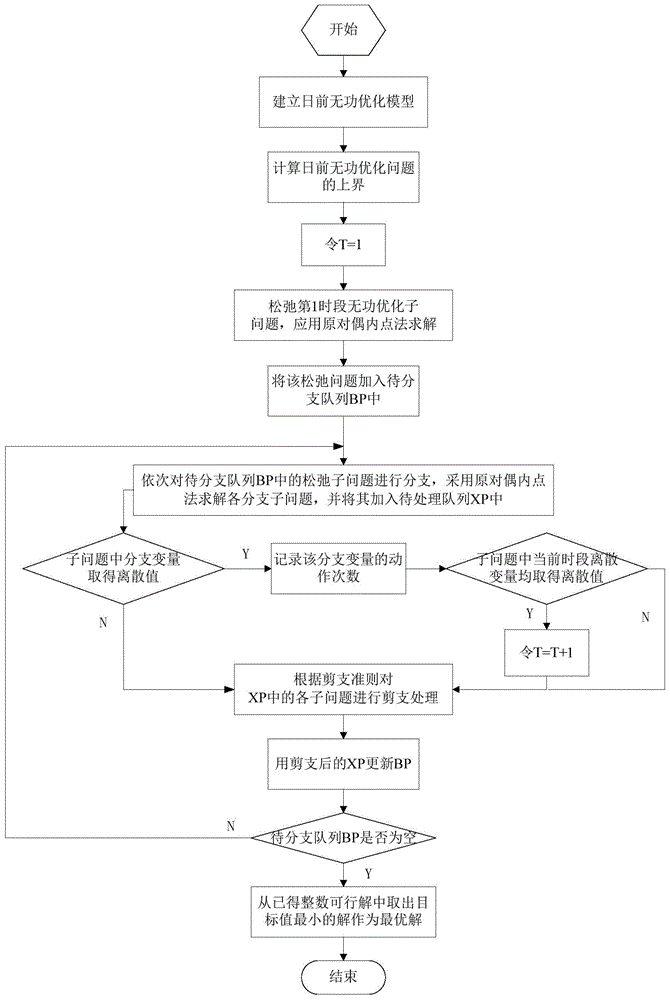
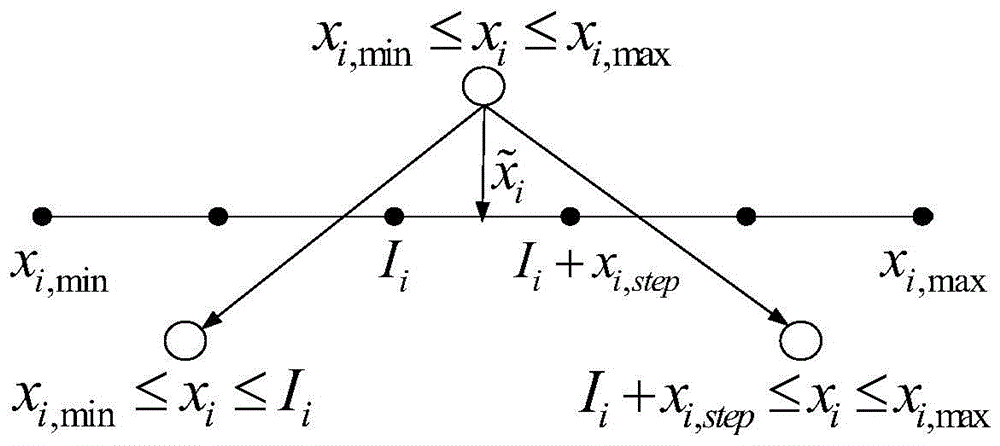
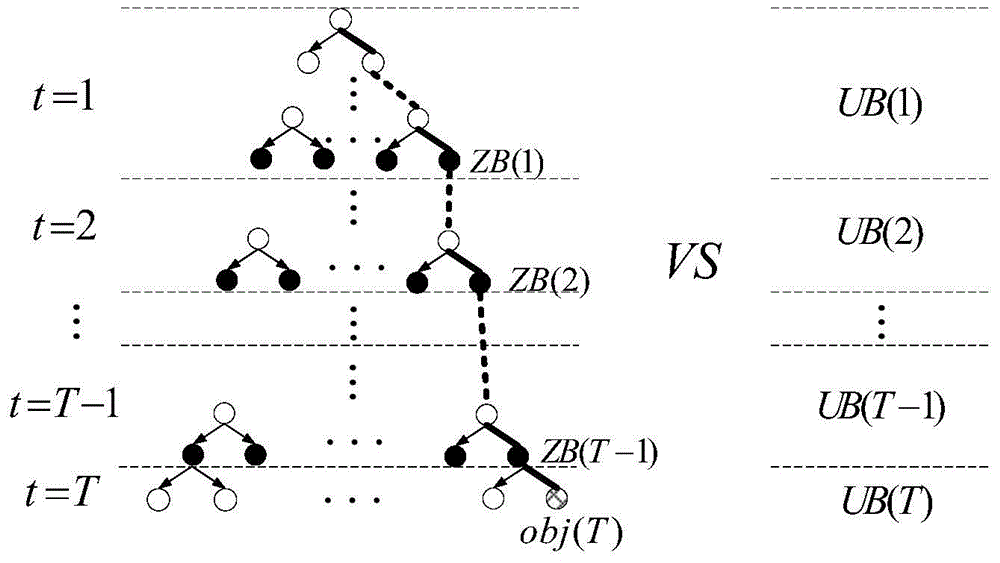

Method and apparatus for resolution of problems using constrained discrete variables
PatentInactiveUS7036720B2
Innovation
- A calculator-based method using iterative message passing on a graph representing variables and constraints, specifically through survey propagation and survey induced decimation, to determine favorable assignments and simplify the problem, avoiding local minima by exchanging probability distributions and iteratively assigning variables.


Computational Resource Requirements and Scalability
The computational resource requirements for optimizing discrete variables in cost-effective deployment scenarios vary significantly based on problem complexity, solution methodology, and deployment scale. Traditional exact optimization methods such as branch-and-bound or dynamic programming typically exhibit exponential time complexity, requiring substantial memory allocation and processing power as the number of discrete variables increases. For problems involving hundreds of discrete variables, computational demands can quickly exceed practical limits of standard computing infrastructure.
Memory consumption patterns differ markedly between solution approaches. Integer linear programming solvers maintain extensive branching trees and constraint matrices, often requiring gigabytes of RAM for moderately complex deployment optimization problems. Metaheuristic algorithms like genetic algorithms or simulated annealing demonstrate more predictable memory usage but demand intensive CPU cycles for iterative solution refinement across large discrete search spaces.
Scalability challenges emerge prominently when transitioning from small-scale prototypes to enterprise-level deployment optimization. Problems involving discrete resource allocation across distributed systems or multi-objective deployment scenarios can generate solution spaces exceeding 10^12 possible configurations. Such scale necessitates parallel computing architectures and distributed processing frameworks to achieve reasonable solution times.
Modern cloud-based optimization platforms address scalability concerns through elastic resource provisioning and specialized hardware acceleration. GPU-accelerated computing shows particular promise for discrete optimization problems amenable to parallel evaluation, reducing solution times from hours to minutes for complex deployment scenarios. However, the discrete nature of variables limits the effectiveness of certain parallel algorithms compared to continuous optimization problems.
Practical deployment considerations include real-time optimization requirements where computational resources must balance solution quality against response time constraints. Edge computing scenarios further complicate resource allocation, as optimization algorithms must operate within limited local computational budgets while maintaining acceptable performance levels for dynamic deployment adjustments.
Memory consumption patterns differ markedly between solution approaches. Integer linear programming solvers maintain extensive branching trees and constraint matrices, often requiring gigabytes of RAM for moderately complex deployment optimization problems. Metaheuristic algorithms like genetic algorithms or simulated annealing demonstrate more predictable memory usage but demand intensive CPU cycles for iterative solution refinement across large discrete search spaces.
Scalability challenges emerge prominently when transitioning from small-scale prototypes to enterprise-level deployment optimization. Problems involving discrete resource allocation across distributed systems or multi-objective deployment scenarios can generate solution spaces exceeding 10^12 possible configurations. Such scale necessitates parallel computing architectures and distributed processing frameworks to achieve reasonable solution times.
Modern cloud-based optimization platforms address scalability concerns through elastic resource provisioning and specialized hardware acceleration. GPU-accelerated computing shows particular promise for discrete optimization problems amenable to parallel evaluation, reducing solution times from hours to minutes for complex deployment scenarios. However, the discrete nature of variables limits the effectiveness of certain parallel algorithms compared to continuous optimization problems.
Practical deployment considerations include real-time optimization requirements where computational resources must balance solution quality against response time constraints. Edge computing scenarios further complicate resource allocation, as optimization algorithms must operate within limited local computational budgets while maintaining acceptable performance levels for dynamic deployment adjustments.
Risk Assessment for Discrete Optimization Implementation
The implementation of discrete optimization solutions for cost-effective deployment carries inherent risks that must be systematically evaluated and mitigated. These risks span multiple dimensions, from technical feasibility to operational disruption, requiring comprehensive assessment frameworks to ensure successful deployment outcomes.
Technical implementation risks represent the most immediate concern when deploying discrete optimization systems. Algorithm convergence failures can occur when dealing with large-scale discrete variable spaces, particularly in NP-hard optimization problems where computational complexity grows exponentially. Solution quality degradation may manifest when real-world constraints differ from theoretical models, leading to suboptimal resource allocation decisions. Integration challenges with existing enterprise systems pose additional risks, as discrete optimization engines must interface seamlessly with legacy infrastructure while maintaining data integrity and processing speed requirements.
Operational risks emerge from the dynamic nature of deployment environments and organizational resistance to algorithmic decision-making. Model drift represents a significant concern as underlying business conditions evolve, potentially rendering optimization parameters obsolete and leading to deteriorating performance over time. Human factor risks include inadequate training of operational staff, resistance to automated decision systems, and over-reliance on algorithmic outputs without proper validation mechanisms.
Financial risks associated with discrete optimization implementation encompass both direct costs and opportunity costs. Initial deployment investments may exceed projected budgets due to unforeseen integration complexities or extended development timelines. Performance shortfalls can result in suboptimal resource utilization, negating anticipated cost savings and potentially increasing operational expenses beyond baseline levels.
Data quality and availability risks pose fundamental challenges to discrete optimization effectiveness. Incomplete or inaccurate input data can propagate through optimization algorithms, producing misleading results that compromise deployment decisions. Real-time data feed interruptions may force systems to operate with stale information, reducing optimization accuracy and potentially causing resource misallocation.
Scalability risks become apparent as deployment scope expands beyond initial pilot implementations. Computational resource limitations may prevent optimization algorithms from handling increased variable counts or constraint complexity. System performance degradation under peak loads can disrupt critical deployment operations, necessitating robust capacity planning and failover mechanisms.
Regulatory and compliance risks require careful consideration, particularly in heavily regulated industries where optimization decisions must adhere to specific guidelines. Algorithm transparency requirements may conflict with proprietary optimization techniques, while audit trail maintenance becomes complex when dealing with discrete variable optimization processes that involve multiple decision points and constraint evaluations.
Technical implementation risks represent the most immediate concern when deploying discrete optimization systems. Algorithm convergence failures can occur when dealing with large-scale discrete variable spaces, particularly in NP-hard optimization problems where computational complexity grows exponentially. Solution quality degradation may manifest when real-world constraints differ from theoretical models, leading to suboptimal resource allocation decisions. Integration challenges with existing enterprise systems pose additional risks, as discrete optimization engines must interface seamlessly with legacy infrastructure while maintaining data integrity and processing speed requirements.
Operational risks emerge from the dynamic nature of deployment environments and organizational resistance to algorithmic decision-making. Model drift represents a significant concern as underlying business conditions evolve, potentially rendering optimization parameters obsolete and leading to deteriorating performance over time. Human factor risks include inadequate training of operational staff, resistance to automated decision systems, and over-reliance on algorithmic outputs without proper validation mechanisms.
Financial risks associated with discrete optimization implementation encompass both direct costs and opportunity costs. Initial deployment investments may exceed projected budgets due to unforeseen integration complexities or extended development timelines. Performance shortfalls can result in suboptimal resource utilization, negating anticipated cost savings and potentially increasing operational expenses beyond baseline levels.
Data quality and availability risks pose fundamental challenges to discrete optimization effectiveness. Incomplete or inaccurate input data can propagate through optimization algorithms, producing misleading results that compromise deployment decisions. Real-time data feed interruptions may force systems to operate with stale information, reducing optimization accuracy and potentially causing resource misallocation.
Scalability risks become apparent as deployment scope expands beyond initial pilot implementations. Computational resource limitations may prevent optimization algorithms from handling increased variable counts or constraint complexity. System performance degradation under peak loads can disrupt critical deployment operations, necessitating robust capacity planning and failover mechanisms.
Regulatory and compliance risks require careful consideration, particularly in heavily regulated industries where optimization decisions must adhere to specific guidelines. Algorithm transparency requirements may conflict with proprietary optimization techniques, while audit trail maintenance becomes complex when dealing with discrete variable optimization processes that involve multiple decision points and constraint evaluations.
Unlock deeper insights with Patsnap Eureka Quick Research — get a full tech report to explore trends and direct your research. Try now!
Generate Your Research Report Instantly with AI Agent
Supercharge your innovation with Patsnap Eureka AI Agent Platform!