

Optimizing Discrete Variables for Eco-Friendly Solutions
FEB 24, 202610 MIN READ
Generate Your Research Report Instantly with AI Agent
PatSnap Eureka helps you evaluate technical feasibility & market potential.
Discrete Optimization Background and Eco-Friendly Goals
Discrete optimization represents a fundamental branch of mathematical optimization that deals with decision variables constrained to discrete sets, such as integers, binary choices, or finite collections of alternatives. Unlike continuous optimization where variables can assume any real value within specified bounds, discrete optimization problems require solutions from countable sets, making them inherently more complex due to the non-convex nature of the feasible solution space. This field encompasses various problem classes including integer programming, combinatorial optimization, and constraint satisfaction problems.
The mathematical foundation of discrete optimization traces back to the early 20th century with pioneering work in graph theory and operations research. Key developments emerged during World War II when military logistics and resource allocation problems demanded systematic approaches to discrete decision-making. The field gained significant momentum with the advent of computational methods in the 1950s and 1960s, particularly through the development of branch-and-bound algorithms, cutting plane methods, and dynamic programming techniques.
Contemporary discrete optimization has evolved to address increasingly complex real-world challenges, with computational advances enabling the solution of problems previously considered intractable. Modern applications span supply chain management, network design, scheduling, facility location, and resource allocation across diverse industries. The integration of artificial intelligence and machine learning techniques has further expanded the toolkit available for tackling large-scale discrete optimization problems.
The convergence of discrete optimization with environmental sustainability represents a critical evolution in the field's application scope. As global environmental concerns intensify, organizations face mounting pressure to minimize their ecological footprint while maintaining operational efficiency and economic viability. This paradigm shift has elevated discrete optimization from a purely efficiency-focused discipline to a strategic tool for achieving comprehensive sustainability objectives.
Eco-friendly goals in discrete optimization encompass multiple dimensions of environmental impact reduction. Carbon footprint minimization has emerged as a primary objective, driving the development of optimization models that explicitly account for greenhouse gas emissions across supply chains, transportation networks, and manufacturing processes. Energy efficiency optimization focuses on reducing power consumption through intelligent scheduling, equipment selection, and operational planning decisions.
Waste reduction represents another crucial eco-friendly goal, where discrete optimization techniques help minimize material waste, optimize recycling processes, and design circular economy systems. Resource conservation objectives drive the development of models that optimize water usage, raw material consumption, and land utilization while maintaining service quality and operational requirements.
The integration of life cycle assessment principles into discrete optimization frameworks enables comprehensive evaluation of environmental impacts from cradle to grave. This holistic approach ensures that optimization decisions consider long-term environmental consequences rather than focusing solely on immediate operational benefits, establishing a foundation for truly sustainable optimization solutions.
The mathematical foundation of discrete optimization traces back to the early 20th century with pioneering work in graph theory and operations research. Key developments emerged during World War II when military logistics and resource allocation problems demanded systematic approaches to discrete decision-making. The field gained significant momentum with the advent of computational methods in the 1950s and 1960s, particularly through the development of branch-and-bound algorithms, cutting plane methods, and dynamic programming techniques.
Contemporary discrete optimization has evolved to address increasingly complex real-world challenges, with computational advances enabling the solution of problems previously considered intractable. Modern applications span supply chain management, network design, scheduling, facility location, and resource allocation across diverse industries. The integration of artificial intelligence and machine learning techniques has further expanded the toolkit available for tackling large-scale discrete optimization problems.
The convergence of discrete optimization with environmental sustainability represents a critical evolution in the field's application scope. As global environmental concerns intensify, organizations face mounting pressure to minimize their ecological footprint while maintaining operational efficiency and economic viability. This paradigm shift has elevated discrete optimization from a purely efficiency-focused discipline to a strategic tool for achieving comprehensive sustainability objectives.
Eco-friendly goals in discrete optimization encompass multiple dimensions of environmental impact reduction. Carbon footprint minimization has emerged as a primary objective, driving the development of optimization models that explicitly account for greenhouse gas emissions across supply chains, transportation networks, and manufacturing processes. Energy efficiency optimization focuses on reducing power consumption through intelligent scheduling, equipment selection, and operational planning decisions.
Waste reduction represents another crucial eco-friendly goal, where discrete optimization techniques help minimize material waste, optimize recycling processes, and design circular economy systems. Resource conservation objectives drive the development of models that optimize water usage, raw material consumption, and land utilization while maintaining service quality and operational requirements.
The integration of life cycle assessment principles into discrete optimization frameworks enables comprehensive evaluation of environmental impacts from cradle to grave. This holistic approach ensures that optimization decisions consider long-term environmental consequences rather than focusing solely on immediate operational benefits, establishing a foundation for truly sustainable optimization solutions.
Market Demand for Green Discrete Optimization Solutions
The global market for green discrete optimization solutions is experiencing unprecedented growth driven by escalating environmental regulations and corporate sustainability mandates. Organizations across industries are increasingly recognizing that traditional optimization approaches often overlook environmental externalities, creating substantial demand for solutions that can simultaneously optimize operational efficiency and ecological impact. This shift represents a fundamental transformation in how businesses approach decision-making processes involving discrete variables.
Manufacturing sectors demonstrate particularly strong demand for eco-friendly discrete optimization, especially in production scheduling, supply chain configuration, and resource allocation. Companies are seeking solutions that can optimize binary decisions such as facility locations, equipment selection, and production line configurations while minimizing carbon footprints and waste generation. The automotive industry exemplifies this trend, with manufacturers requiring optimization tools that balance production efficiency with environmental compliance across their global operations.
Energy sector applications constitute another major demand driver, particularly in renewable energy integration and smart grid management. Utilities need sophisticated discrete optimization solutions to manage the binary nature of power generation decisions, transmission line switching, and energy storage deployment while maximizing renewable energy utilization. The intermittent nature of renewable sources creates complex discrete optimization challenges that traditional methods struggle to address effectively.
Supply chain and logistics markets show robust demand for green discrete optimization solutions, particularly for route optimization, warehouse location decisions, and inventory management. E-commerce growth has intensified pressure on logistics companies to optimize delivery networks while reducing emissions. These applications require handling numerous binary variables related to facility operations, vehicle deployment, and delivery scheduling while incorporating environmental constraints.
Government and public sector demand is accelerating due to smart city initiatives and infrastructure planning requirements. Municipal authorities need optimization tools for waste management routing, public transportation scheduling, and urban planning decisions that involve discrete choices while meeting sustainability targets. Climate change mitigation policies are further driving demand for optimization solutions that can support evidence-based environmental policy implementation.
The financial services sector represents an emerging demand area, particularly for sustainable investment portfolio optimization and ESG compliance. Investment firms require discrete optimization tools that can handle binary asset selection decisions while incorporating environmental, social, and governance criteria alongside traditional financial metrics.
Manufacturing sectors demonstrate particularly strong demand for eco-friendly discrete optimization, especially in production scheduling, supply chain configuration, and resource allocation. Companies are seeking solutions that can optimize binary decisions such as facility locations, equipment selection, and production line configurations while minimizing carbon footprints and waste generation. The automotive industry exemplifies this trend, with manufacturers requiring optimization tools that balance production efficiency with environmental compliance across their global operations.
Energy sector applications constitute another major demand driver, particularly in renewable energy integration and smart grid management. Utilities need sophisticated discrete optimization solutions to manage the binary nature of power generation decisions, transmission line switching, and energy storage deployment while maximizing renewable energy utilization. The intermittent nature of renewable sources creates complex discrete optimization challenges that traditional methods struggle to address effectively.
Supply chain and logistics markets show robust demand for green discrete optimization solutions, particularly for route optimization, warehouse location decisions, and inventory management. E-commerce growth has intensified pressure on logistics companies to optimize delivery networks while reducing emissions. These applications require handling numerous binary variables related to facility operations, vehicle deployment, and delivery scheduling while incorporating environmental constraints.
Government and public sector demand is accelerating due to smart city initiatives and infrastructure planning requirements. Municipal authorities need optimization tools for waste management routing, public transportation scheduling, and urban planning decisions that involve discrete choices while meeting sustainability targets. Climate change mitigation policies are further driving demand for optimization solutions that can support evidence-based environmental policy implementation.
The financial services sector represents an emerging demand area, particularly for sustainable investment portfolio optimization and ESG compliance. Investment firms require discrete optimization tools that can handle binary asset selection decisions while incorporating environmental, social, and governance criteria alongside traditional financial metrics.
Current State of Discrete Variable Optimization Challenges
The optimization of discrete variables for eco-friendly solutions faces significant computational complexity challenges that fundamentally limit scalability and real-world applicability. Unlike continuous optimization problems, discrete variable optimization operates within finite solution spaces that often exhibit non-convex characteristics, making traditional gradient-based methods ineffective. This computational burden becomes particularly pronounced when addressing large-scale environmental systems involving thousands of binary or integer decision variables.
Current algorithmic approaches struggle with the curse of dimensionality inherent in discrete optimization problems. Mixed-integer programming solvers, while mathematically rigorous, frequently encounter exponential time complexity when dealing with environmental optimization scenarios involving facility location, resource allocation, or supply chain configuration decisions. The branch-and-bound methodology, though widely adopted, often fails to converge within acceptable timeframes for real-world sustainability applications.
The integration of multiple environmental objectives presents another critical challenge in discrete variable optimization. Traditional single-objective approaches inadequately capture the complex trade-offs between carbon footprint reduction, cost minimization, and resource efficiency maximization. Multi-objective discrete optimization algorithms face difficulties in generating well-distributed Pareto frontiers, particularly when objective functions exhibit conflicting behaviors across discrete decision spaces.
Data quality and uncertainty propagation represent persistent obstacles in eco-friendly discrete optimization implementations. Environmental parameters such as emission factors, renewable energy availability, and waste generation rates contain inherent uncertainties that compound through discrete decision structures. Robust optimization frameworks struggle to maintain computational tractability while accounting for these uncertainties across large discrete variable sets.
Scalability limitations severely constrain the practical deployment of discrete optimization methods in comprehensive sustainability applications. Real-world environmental systems often require simultaneous optimization of facility locations, technology selections, routing decisions, and scheduling variables, creating problem instances with millions of discrete variables. Current state-of-the-art solvers demonstrate significant performance degradation beyond problem sizes of several thousand variables.
The lack of standardized benchmarking frameworks specifically designed for eco-friendly discrete optimization problems impedes systematic progress evaluation. Existing benchmark suites primarily focus on classical operations research problems rather than sustainability-specific scenarios, limiting the development of specialized algorithms tailored for environmental applications.
Current algorithmic approaches struggle with the curse of dimensionality inherent in discrete optimization problems. Mixed-integer programming solvers, while mathematically rigorous, frequently encounter exponential time complexity when dealing with environmental optimization scenarios involving facility location, resource allocation, or supply chain configuration decisions. The branch-and-bound methodology, though widely adopted, often fails to converge within acceptable timeframes for real-world sustainability applications.
The integration of multiple environmental objectives presents another critical challenge in discrete variable optimization. Traditional single-objective approaches inadequately capture the complex trade-offs between carbon footprint reduction, cost minimization, and resource efficiency maximization. Multi-objective discrete optimization algorithms face difficulties in generating well-distributed Pareto frontiers, particularly when objective functions exhibit conflicting behaviors across discrete decision spaces.
Data quality and uncertainty propagation represent persistent obstacles in eco-friendly discrete optimization implementations. Environmental parameters such as emission factors, renewable energy availability, and waste generation rates contain inherent uncertainties that compound through discrete decision structures. Robust optimization frameworks struggle to maintain computational tractability while accounting for these uncertainties across large discrete variable sets.
Scalability limitations severely constrain the practical deployment of discrete optimization methods in comprehensive sustainability applications. Real-world environmental systems often require simultaneous optimization of facility locations, technology selections, routing decisions, and scheduling variables, creating problem instances with millions of discrete variables. Current state-of-the-art solvers demonstrate significant performance degradation beyond problem sizes of several thousand variables.
The lack of standardized benchmarking frameworks specifically designed for eco-friendly discrete optimization problems impedes systematic progress evaluation. Existing benchmark suites primarily focus on classical operations research problems rather than sustainability-specific scenarios, limiting the development of specialized algorithms tailored for environmental applications.
Existing Discrete Optimization Solutions for Sustainability
01 Mixed-integer programming and branch-and-bound methods
Optimization techniques that handle discrete variables through mixed-integer programming formulations, utilizing branch-and-bound algorithms to systematically explore the solution space. These methods partition the problem into subproblems, evaluating bounds to eliminate infeasible regions and converge on optimal solutions for problems involving both continuous and discrete decision variables.- Genetic algorithms and evolutionary computation methods for discrete optimization: Genetic algorithms and evolutionary computation techniques are applied to solve discrete variable optimization problems by mimicking natural selection processes. These methods use operations such as selection, crossover, and mutation to evolve populations of candidate solutions toward optimal or near-optimal solutions. The approach is particularly effective for complex discrete optimization problems where traditional methods may struggle, including combinatorial optimization and parameter selection in various engineering applications.
- Mixed-integer programming and branch-and-bound techniques: Mixed-integer programming approaches handle optimization problems involving both discrete and continuous variables through mathematical programming formulations. Branch-and-bound algorithms systematically explore the solution space by partitioning it into smaller subproblems and using bounds to eliminate non-optimal regions. These techniques are widely used in operations research, scheduling problems, and resource allocation where decisions involve discrete choices combined with continuous parameters.
- Machine learning-based optimization for discrete variables: Machine learning techniques, including neural networks and reinforcement learning, are employed to optimize discrete variable problems by learning patterns from data and making intelligent decisions. These methods can handle high-dimensional discrete spaces and adapt to complex objective functions through training processes. Applications include automated design optimization, configuration selection, and adaptive control systems where discrete choices must be made based on learned relationships.
- Heuristic and metaheuristic approaches for discrete optimization: Heuristic methods such as simulated annealing, tabu search, and particle swarm optimization provide practical solutions for discrete variable optimization problems. These approaches use problem-specific knowledge and iterative improvement strategies to find good solutions within reasonable computational time. Metaheuristic frameworks combine multiple strategies to balance exploration and exploitation of the solution space, making them suitable for large-scale discrete optimization problems in manufacturing, logistics, and network design.
- Constraint satisfaction and logic-based discrete optimization: Constraint satisfaction programming and logic-based methods formulate discrete optimization as finding assignments to variables that satisfy specified constraints while optimizing an objective function. These techniques use constraint propagation, backtracking, and logical inference to efficiently search through discrete solution spaces. The approach is particularly effective for scheduling, planning, and configuration problems where complex logical relationships between discrete variables must be maintained.
02 Genetic algorithms and evolutionary computation
Bio-inspired optimization approaches that use population-based search mechanisms to handle discrete variable optimization. These methods employ selection, crossover, and mutation operators to evolve candidate solutions over generations, effectively navigating large discrete search spaces without requiring gradient information or continuity assumptions.Expand Specific Solutions03 Machine learning-based optimization frameworks
Advanced optimization systems that integrate machine learning models to guide discrete variable selection and optimization. These frameworks leverage neural networks, reinforcement learning, or surrogate models to learn patterns in the optimization landscape, enabling efficient exploration of discrete solution spaces and adaptive decision-making in complex optimization scenarios.Expand Specific Solutions04 Constraint satisfaction and combinatorial optimization
Methods focused on solving discrete optimization problems with complex constraints, utilizing techniques such as constraint propagation, backtracking search, and integer linear programming. These approaches are particularly effective for scheduling, resource allocation, and configuration problems where discrete choices must satisfy multiple interdependent constraints.Expand Specific Solutions05 Heuristic and metaheuristic search strategies
Practical optimization techniques employing simulated annealing, tabu search, particle swarm optimization, or ant colony algorithms to find near-optimal solutions for discrete variable problems. These methods balance exploration and exploitation through adaptive search mechanisms, providing computationally efficient solutions for large-scale discrete optimization problems where exact methods are impractical.Expand Specific Solutions
Key Players in Green Optimization Technology Industry
The discrete variable optimization for eco-friendly solutions market is experiencing rapid growth, driven by increasing environmental regulations and sustainability demands across industries. The competitive landscape reveals a mature technology development stage with significant market expansion potential, particularly in automotive, energy, and industrial automation sectors. Technology maturity varies considerably among key players: established industrial giants like Siemens AG and Robert Bosch GmbH demonstrate advanced implementation capabilities, while State Grid Corp. of China and GM Global Technology Operations LLC focus on large-scale infrastructure applications. Academic institutions including Tsinghua University, Zhejiang University, and Tianjin University contribute foundational research, bridging theoretical advances with practical applications. Companies like Continental Automotive GmbH, AVL List GmbH, and Repsol SA represent sector-specific optimization expertise, while emerging players such as OneTrust LLC bring specialized algorithmic solutions. The convergence of traditional engineering approaches with modern computational methods positions this field for substantial technological breakthroughs and commercial expansion.
Siemens AG
Technical Solution: Siemens has developed comprehensive digital twin technologies and AI-driven optimization platforms for discrete variable optimization in industrial applications. Their MindSphere IoT platform integrates machine learning algorithms to optimize manufacturing processes by adjusting discrete parameters such as production schedules, equipment configurations, and resource allocation. The company's SIMATIC automation systems utilize advanced discrete optimization algorithms to minimize energy consumption while maintaining production efficiency. Their solutions incorporate multi-objective optimization techniques that simultaneously consider environmental impact, cost reduction, and operational performance, achieving up to 30% energy savings in industrial facilities through intelligent discrete parameter tuning.
Strengths: Market-leading industrial automation expertise, comprehensive digital infrastructure, proven track record in energy optimization. Weaknesses: High implementation costs, complex integration requirements for legacy systems.
GM Global Technology Operations LLC
Technical Solution: General Motors has developed discrete optimization frameworks for sustainable automotive manufacturing and supply chain management. Their approach focuses on optimizing discrete decision variables such as production scheduling, facility location selection, and material sourcing strategies to minimize environmental footprint. The company's Global Manufacturing System incorporates advanced algorithms that optimize discrete parameters including assembly line configurations, logistics routing, and inventory management decisions. Their optimization models have achieved significant reductions in waste generation and energy consumption across manufacturing facilities, with reported improvements of 20-35% in resource efficiency through strategic discrete variable optimization.
Strengths: Extensive automotive manufacturing experience, large-scale implementation capabilities, strong sustainability focus. Weaknesses: Industry-specific solutions, limited applicability outside automotive sector.
Core Algorithms for Eco-Friendly Discrete Optimization
Method and apparatus for resolution of problems using constrained discrete variables
PatentInactiveUS7036720B2
Innovation
- A calculator-based method using iterative message passing on a graph representing variables and constraints, specifically through survey propagation and survey induced decimation, to determine favorable assignments and simplify the problem, avoiding local minima by exchanging probability distributions and iteratively assigning variables.


Simultaneous Power and Timing Optimization in Integrated Circuits by Performing Discrete Actions on Circuit Components
PatentActiveUS20090055780A1
Innovation
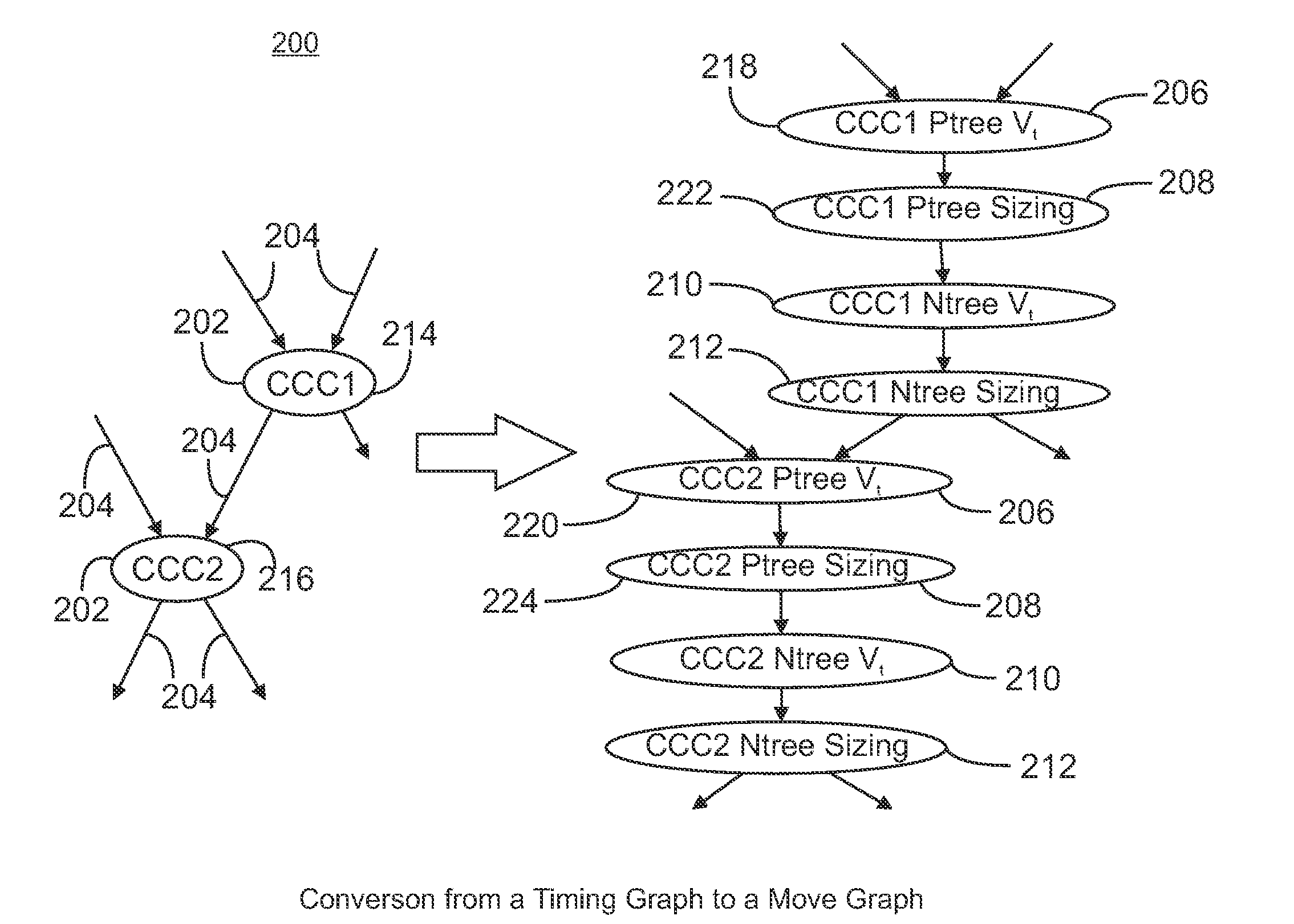
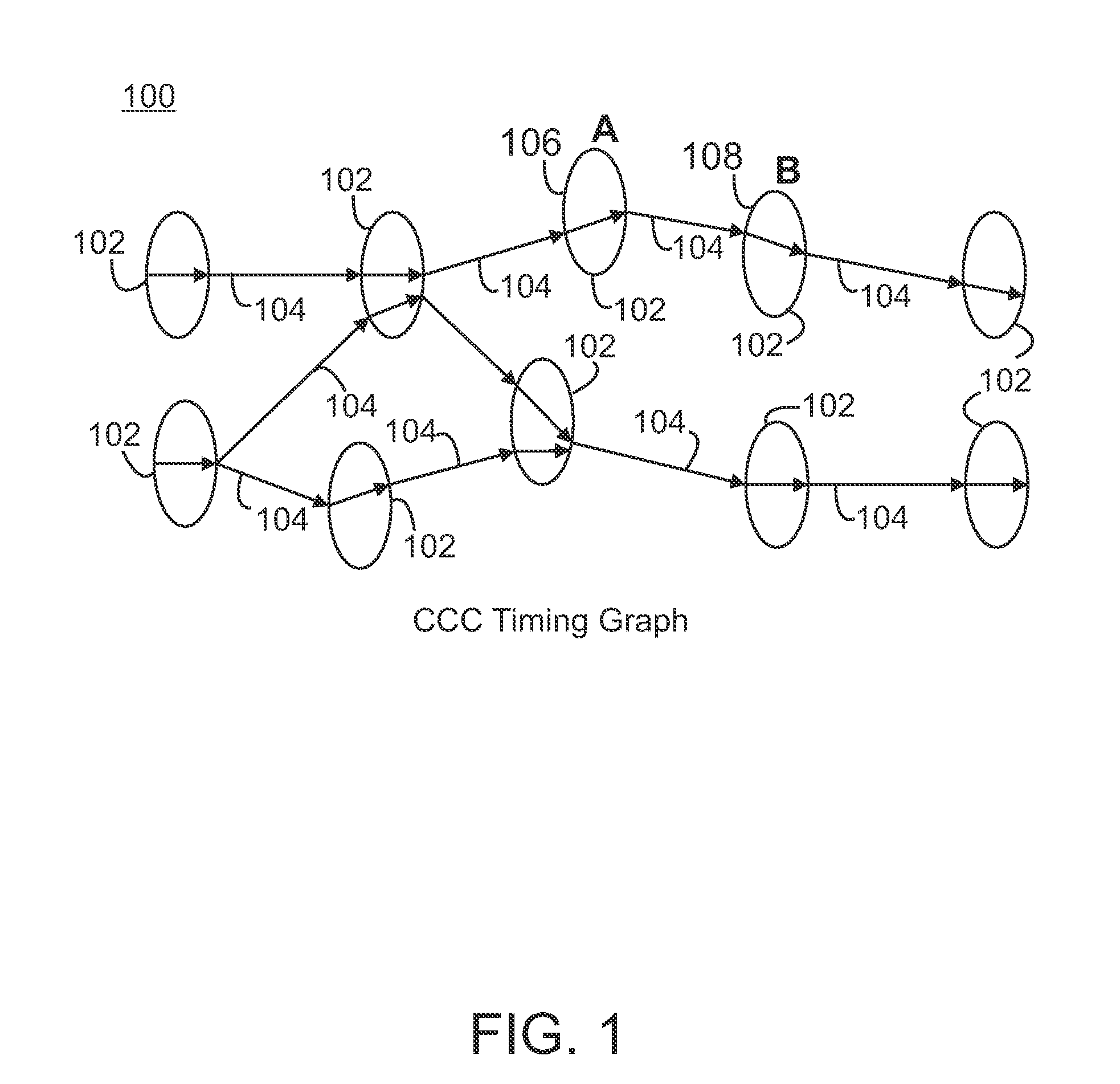
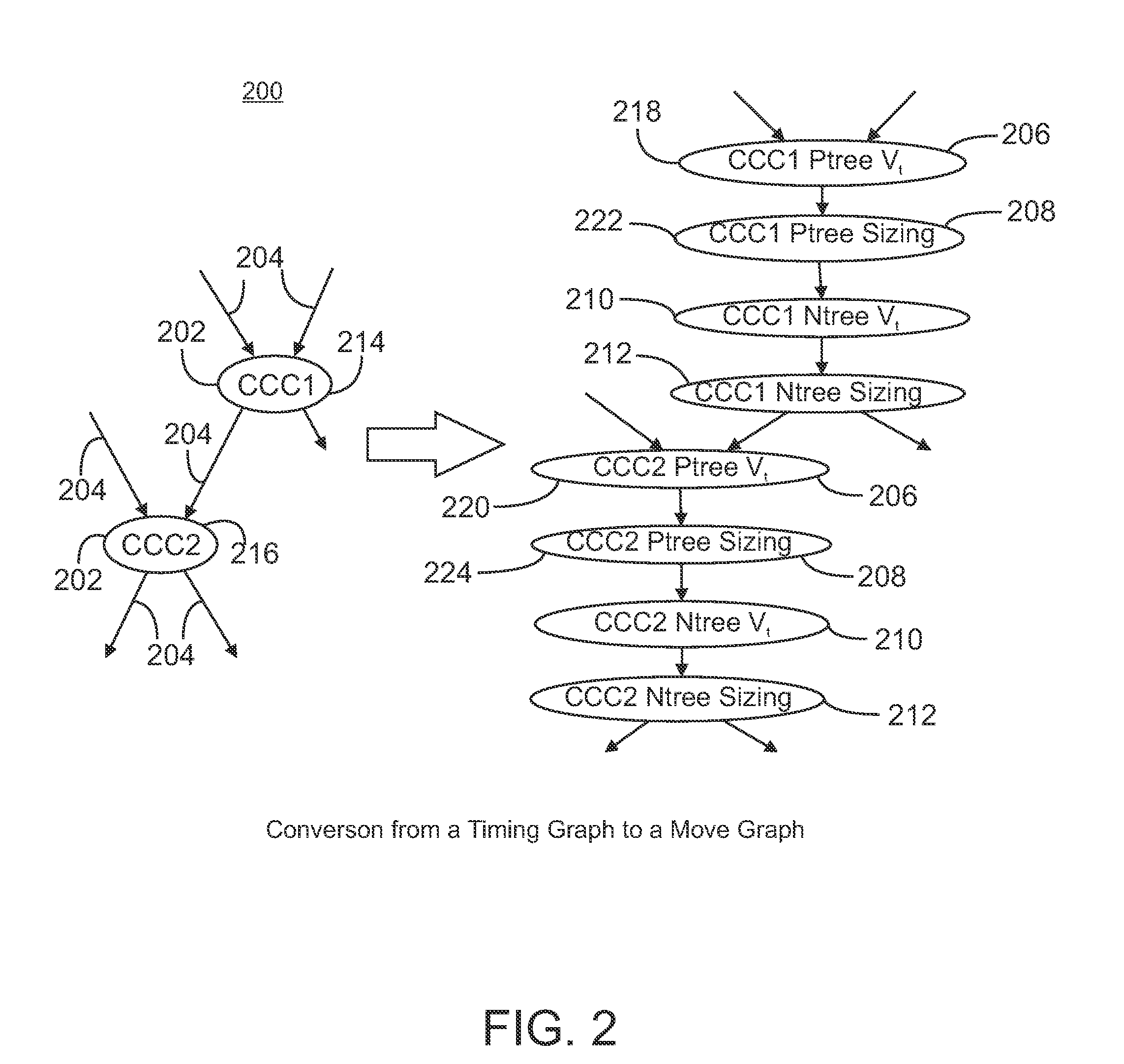
- The method involves a graph-based engine that performs concurrent optimization of integrated circuits by converting a timing graph into a move graph, allowing for discrete operations such as threshold voltage assignment, device length assignment, and power supply adjustments, to reduce power consumption while preserving speed requirements, without relaxing design variables.

Environmental Regulations Impact on Optimization
Environmental regulations serve as fundamental drivers shaping the landscape of discrete variable optimization in eco-friendly solutions. The regulatory framework creates both constraints and incentives that directly influence how optimization algorithms must be designed and implemented. These regulations establish mandatory environmental standards, emission limits, and sustainability targets that transform traditional optimization problems into multi-objective challenges where environmental compliance becomes a non-negotiable constraint.
The complexity of regulatory compliance significantly impacts the mathematical formulation of discrete optimization problems. Traditional cost-minimization objectives must now incorporate regulatory penalties, compliance costs, and environmental impact metrics as integral components of the objective function. This regulatory integration often leads to increased problem dimensionality and computational complexity, as discrete variables must simultaneously satisfy operational efficiency requirements and environmental compliance standards.
Regional variations in environmental regulations create additional layers of complexity for optimization systems operating across multiple jurisdictions. Different emission standards, waste disposal requirements, and energy efficiency mandates necessitate adaptive optimization frameworks capable of dynamically adjusting discrete variable selections based on location-specific regulatory constraints. This geographical regulatory diversity requires sophisticated optimization algorithms that can handle varying constraint sets while maintaining solution feasibility across different regulatory environments.
The dynamic nature of environmental regulations poses ongoing challenges for optimization system design. Regulatory updates, policy changes, and evolving environmental standards require optimization frameworks to incorporate flexibility mechanisms that can accommodate changing constraint parameters without requiring complete system redesign. This regulatory volatility demands robust optimization architectures capable of rapid reconfiguration when new environmental compliance requirements emerge.
Regulatory reporting requirements and environmental monitoring obligations further influence optimization strategies by introducing additional discrete variables related to compliance documentation, monitoring frequency, and reporting intervals. These regulatory-driven variables must be integrated into the optimization framework, often creating interdependencies between operational decisions and compliance activities that complicate the overall optimization process while ensuring adherence to environmental governance standards.
The complexity of regulatory compliance significantly impacts the mathematical formulation of discrete optimization problems. Traditional cost-minimization objectives must now incorporate regulatory penalties, compliance costs, and environmental impact metrics as integral components of the objective function. This regulatory integration often leads to increased problem dimensionality and computational complexity, as discrete variables must simultaneously satisfy operational efficiency requirements and environmental compliance standards.
Regional variations in environmental regulations create additional layers of complexity for optimization systems operating across multiple jurisdictions. Different emission standards, waste disposal requirements, and energy efficiency mandates necessitate adaptive optimization frameworks capable of dynamically adjusting discrete variable selections based on location-specific regulatory constraints. This geographical regulatory diversity requires sophisticated optimization algorithms that can handle varying constraint sets while maintaining solution feasibility across different regulatory environments.
The dynamic nature of environmental regulations poses ongoing challenges for optimization system design. Regulatory updates, policy changes, and evolving environmental standards require optimization frameworks to incorporate flexibility mechanisms that can accommodate changing constraint parameters without requiring complete system redesign. This regulatory volatility demands robust optimization architectures capable of rapid reconfiguration when new environmental compliance requirements emerge.
Regulatory reporting requirements and environmental monitoring obligations further influence optimization strategies by introducing additional discrete variables related to compliance documentation, monitoring frequency, and reporting intervals. These regulatory-driven variables must be integrated into the optimization framework, often creating interdependencies between operational decisions and compliance activities that complicate the overall optimization process while ensuring adherence to environmental governance standards.
Carbon Footprint Assessment in Discrete Optimization
Carbon footprint assessment has emerged as a critical component in discrete optimization frameworks, particularly when addressing eco-friendly solution development. This assessment methodology quantifies greenhouse gas emissions associated with discrete decision variables, enabling organizations to evaluate the environmental impact of their optimization choices. The integration of carbon footprint metrics into discrete optimization models represents a paradigm shift from traditional cost-minimization approaches toward comprehensive sustainability-oriented decision making.
The fundamental challenge lies in accurately measuring and incorporating carbon emissions data into discrete optimization algorithms. Unlike continuous variables, discrete optimization involves binary or integer decisions such as facility location selection, equipment procurement choices, or production scheduling configurations. Each discrete choice carries distinct carbon implications that must be precisely quantified and integrated into the optimization objective function or constraint framework.
Current assessment methodologies employ life cycle assessment principles adapted for discrete optimization contexts. These approaches evaluate carbon emissions across multiple stages including raw material extraction, manufacturing processes, transportation logistics, operational phases, and end-of-life disposal. The discrete nature of decision variables requires specialized carbon accounting techniques that can handle step-function emission profiles rather than linear relationships typically found in continuous optimization scenarios.
Advanced carbon footprint assessment frameworks utilize hybrid approaches combining process-based and input-output methodologies. Process-based assessments provide detailed emission calculations for specific discrete choices, while input-output models capture broader economic interdependencies. This dual approach ensures comprehensive coverage of direct and indirect emissions associated with discrete optimization decisions.
Machine learning techniques increasingly support carbon footprint assessment in discrete optimization by predicting emission outcomes for complex decision combinations. These predictive models enable real-time carbon impact evaluation during optimization iterations, facilitating dynamic adjustment of solution strategies based on environmental performance criteria.
The assessment framework must also address temporal dynamics and uncertainty factors inherent in carbon footprint calculations. Discrete optimization decisions often have long-term implications, requiring assessment methodologies that account for future emission scenarios, technological improvements, and evolving environmental regulations. Stochastic modeling approaches help capture these uncertainties while maintaining computational tractability in discrete optimization environments.
The fundamental challenge lies in accurately measuring and incorporating carbon emissions data into discrete optimization algorithms. Unlike continuous variables, discrete optimization involves binary or integer decisions such as facility location selection, equipment procurement choices, or production scheduling configurations. Each discrete choice carries distinct carbon implications that must be precisely quantified and integrated into the optimization objective function or constraint framework.
Current assessment methodologies employ life cycle assessment principles adapted for discrete optimization contexts. These approaches evaluate carbon emissions across multiple stages including raw material extraction, manufacturing processes, transportation logistics, operational phases, and end-of-life disposal. The discrete nature of decision variables requires specialized carbon accounting techniques that can handle step-function emission profiles rather than linear relationships typically found in continuous optimization scenarios.
Advanced carbon footprint assessment frameworks utilize hybrid approaches combining process-based and input-output methodologies. Process-based assessments provide detailed emission calculations for specific discrete choices, while input-output models capture broader economic interdependencies. This dual approach ensures comprehensive coverage of direct and indirect emissions associated with discrete optimization decisions.
Machine learning techniques increasingly support carbon footprint assessment in discrete optimization by predicting emission outcomes for complex decision combinations. These predictive models enable real-time carbon impact evaluation during optimization iterations, facilitating dynamic adjustment of solution strategies based on environmental performance criteria.
The assessment framework must also address temporal dynamics and uncertainty factors inherent in carbon footprint calculations. Discrete optimization decisions often have long-term implications, requiring assessment methodologies that account for future emission scenarios, technological improvements, and evolving environmental regulations. Stochastic modeling approaches help capture these uncertainties while maintaining computational tractability in discrete optimization environments.
Unlock deeper insights with PatSnap Eureka Quick Research — get a full tech report to explore trends and direct your research. Try now!
Generate Your Research Report Instantly with AI Agent
Supercharge your innovation with PatSnap Eureka AI Agent Platform!