

Optimizing Electrolyte-Cathode Interaction Points In Sodium Sulfur Batteries
JUN 3, 20269 MIN READ
Generate Your Research Report Instantly with AI Agent
Patsnap Eureka helps you evaluate technical feasibility & market potential.
Sodium Sulfur Battery Technology Background and Objectives
Sodium sulfur (Na-S) batteries represent a promising energy storage technology that has evolved significantly since their initial development in the 1960s. Originally conceived as high-temperature electrochemical systems, these batteries utilize molten sodium as the anode and molten sulfur as the cathode, separated by a solid beta-alumina electrolyte. The technology gained substantial attention during the energy crisis of the 1970s when researchers sought alternatives to conventional battery systems for large-scale energy storage applications.
The fundamental operating principle of Na-S batteries involves the electrochemical reaction between sodium and sulfur at elevated temperatures, typically ranging from 300°C to 350°C. During discharge, sodium atoms are oxidized at the anode, releasing electrons and forming sodium ions that migrate through the solid electrolyte to react with sulfur at the cathode. This process creates various sodium polysulfide compounds, with the reaction reversing during the charging cycle.
The evolution of Na-S battery technology has been marked by several critical milestones, including improvements in electrolyte materials, thermal management systems, and safety protocols. Early implementations faced significant challenges related to corrosion, thermal cycling, and electrolyte degradation, which limited their commercial viability. However, continuous research efforts have led to enhanced material compositions and manufacturing processes that have substantially improved battery performance and reliability.
Current technological objectives focus on addressing the critical interface between the electrolyte and cathode components, which represents one of the most significant bottlenecks in Na-S battery performance. The electrolyte-cathode interaction points are crucial for maintaining efficient ion transport, preventing unwanted side reactions, and ensuring long-term operational stability. Optimizing these interaction zones aims to enhance ionic conductivity, reduce interfacial resistance, and minimize degradation mechanisms that can compromise battery lifespan.
The primary technical goals include developing advanced surface modification techniques, improving electrolyte composition and microstructure, and establishing better interfacial contact between components. These objectives align with broader industry demands for more efficient, durable, and cost-effective energy storage solutions capable of supporting grid-scale applications and renewable energy integration.
Modern research initiatives are particularly focused on understanding the complex electrochemical and thermodynamic processes occurring at electrolyte-cathode interfaces, with the ultimate aim of achieving superior energy density, extended cycle life, and enhanced safety characteristics that can position Na-S batteries as competitive alternatives in the rapidly expanding energy storage market.
The fundamental operating principle of Na-S batteries involves the electrochemical reaction between sodium and sulfur at elevated temperatures, typically ranging from 300°C to 350°C. During discharge, sodium atoms are oxidized at the anode, releasing electrons and forming sodium ions that migrate through the solid electrolyte to react with sulfur at the cathode. This process creates various sodium polysulfide compounds, with the reaction reversing during the charging cycle.
The evolution of Na-S battery technology has been marked by several critical milestones, including improvements in electrolyte materials, thermal management systems, and safety protocols. Early implementations faced significant challenges related to corrosion, thermal cycling, and electrolyte degradation, which limited their commercial viability. However, continuous research efforts have led to enhanced material compositions and manufacturing processes that have substantially improved battery performance and reliability.
Current technological objectives focus on addressing the critical interface between the electrolyte and cathode components, which represents one of the most significant bottlenecks in Na-S battery performance. The electrolyte-cathode interaction points are crucial for maintaining efficient ion transport, preventing unwanted side reactions, and ensuring long-term operational stability. Optimizing these interaction zones aims to enhance ionic conductivity, reduce interfacial resistance, and minimize degradation mechanisms that can compromise battery lifespan.
The primary technical goals include developing advanced surface modification techniques, improving electrolyte composition and microstructure, and establishing better interfacial contact between components. These objectives align with broader industry demands for more efficient, durable, and cost-effective energy storage solutions capable of supporting grid-scale applications and renewable energy integration.
Modern research initiatives are particularly focused on understanding the complex electrochemical and thermodynamic processes occurring at electrolyte-cathode interfaces, with the ultimate aim of achieving superior energy density, extended cycle life, and enhanced safety characteristics that can position Na-S batteries as competitive alternatives in the rapidly expanding energy storage market.
Market Demand for Advanced Energy Storage Solutions
The global energy storage market is experiencing unprecedented growth driven by the urgent need for grid stabilization, renewable energy integration, and sustainable power solutions. Traditional lithium-ion battery technologies face significant challenges including resource scarcity, cost volatility, and safety concerns, creating substantial market opportunities for alternative energy storage technologies. Sodium sulfur batteries represent a promising solution that addresses many of these limitations while offering superior performance characteristics for large-scale applications.
Grid-scale energy storage applications constitute the primary market driver for advanced sodium sulfur battery technologies. Utility companies worldwide are seeking cost-effective solutions to manage intermittent renewable energy sources, particularly solar and wind power installations. The ability of sodium sulfur batteries to operate efficiently at elevated temperatures and provide long-duration energy storage makes them particularly attractive for utility-scale deployments where optimized electrolyte-cathode interactions can significantly enhance performance and longevity.
Industrial energy storage applications present another substantial market segment demanding improved sodium sulfur battery performance. Manufacturing facilities, data centers, and critical infrastructure operators require reliable backup power systems with high energy density and extended operational lifespans. Enhanced electrolyte-cathode interaction optimization directly addresses these requirements by improving charge-discharge efficiency, reducing degradation rates, and extending battery cycle life.
The renewable energy sector's rapid expansion creates additional market demand for advanced energy storage solutions. Solar and wind installations require sophisticated energy management systems capable of storing excess energy during peak production periods and releasing it during high-demand intervals. Optimized sodium sulfur batteries with improved electrolyte-cathode interfaces can provide the necessary performance characteristics to support these applications effectively.
Emerging markets in developing countries present significant growth opportunities for sodium sulfur battery technologies. These regions often lack established electrical grid infrastructure and require distributed energy storage solutions that can operate reliably in challenging environmental conditions. The abundance of sodium resources compared to lithium makes sodium sulfur batteries particularly attractive for these markets, especially when enhanced through optimized electrolyte-cathode interactions.
Electric vehicle charging infrastructure represents an evolving market segment where advanced energy storage solutions play a crucial role. Fast-charging stations require high-power energy storage systems to manage grid load and provide consistent charging capabilities. Improved sodium sulfur battery technologies with optimized electrolyte-cathode interactions can support these applications by delivering enhanced power density and thermal stability.
Grid-scale energy storage applications constitute the primary market driver for advanced sodium sulfur battery technologies. Utility companies worldwide are seeking cost-effective solutions to manage intermittent renewable energy sources, particularly solar and wind power installations. The ability of sodium sulfur batteries to operate efficiently at elevated temperatures and provide long-duration energy storage makes them particularly attractive for utility-scale deployments where optimized electrolyte-cathode interactions can significantly enhance performance and longevity.
Industrial energy storage applications present another substantial market segment demanding improved sodium sulfur battery performance. Manufacturing facilities, data centers, and critical infrastructure operators require reliable backup power systems with high energy density and extended operational lifespans. Enhanced electrolyte-cathode interaction optimization directly addresses these requirements by improving charge-discharge efficiency, reducing degradation rates, and extending battery cycle life.
The renewable energy sector's rapid expansion creates additional market demand for advanced energy storage solutions. Solar and wind installations require sophisticated energy management systems capable of storing excess energy during peak production periods and releasing it during high-demand intervals. Optimized sodium sulfur batteries with improved electrolyte-cathode interfaces can provide the necessary performance characteristics to support these applications effectively.
Emerging markets in developing countries present significant growth opportunities for sodium sulfur battery technologies. These regions often lack established electrical grid infrastructure and require distributed energy storage solutions that can operate reliably in challenging environmental conditions. The abundance of sodium resources compared to lithium makes sodium sulfur batteries particularly attractive for these markets, especially when enhanced through optimized electrolyte-cathode interactions.
Electric vehicle charging infrastructure represents an evolving market segment where advanced energy storage solutions play a crucial role. Fast-charging stations require high-power energy storage systems to manage grid load and provide consistent charging capabilities. Improved sodium sulfur battery technologies with optimized electrolyte-cathode interactions can support these applications by delivering enhanced power density and thermal stability.
Current Electrolyte-Cathode Interface Challenges
The electrolyte-cathode interface in sodium-sulfur batteries presents several critical challenges that significantly impact battery performance, cycle life, and commercial viability. These challenges stem from the complex electrochemical reactions occurring at the interface and the harsh operating conditions required for optimal battery function.
One of the primary challenges is the formation of resistive interfacial layers during battery operation. As sodium polysulfides are generated during discharge, they can precipitate at the cathode surface, creating insulating barriers that impede ion transport. These deposits increase internal resistance and reduce the effective surface area available for electrochemical reactions, leading to capacity fade and reduced power output over successive cycles.
Temperature-related interface degradation poses another significant obstacle. Sodium-sulfur batteries typically operate at elevated temperatures between 300-350°C to maintain molten sodium and sulfur phases. At these temperatures, unwanted side reactions occur at the electrolyte-cathode boundary, including corrosion of current collectors and degradation of cathode materials. The thermal expansion mismatch between different components can also cause mechanical stress and interfacial delamination.
Electrolyte wetting and contact issues further complicate interface optimization. Poor wetting of the cathode surface by the solid electrolyte results in limited contact points and reduced active reaction sites. This phenomenon is particularly pronounced with ceramic electrolytes like beta-alumina, where achieving intimate contact with porous cathode structures remains challenging. Inadequate wetting leads to non-uniform current distribution and localized hotspots that accelerate degradation.
The migration and redistribution of active sulfur species during cycling creates additional interface complications. Soluble polysulfide intermediates can diffuse away from the cathode region, reducing local sulfur concentration and creating concentration gradients that affect reaction kinetics. This sulfur redistribution phenomenon, known as the shuttle effect, compromises coulombic efficiency and long-term stability.
Mechanical degradation at the interface represents another critical challenge. Volume changes during sodium and sulfur phase transitions generate mechanical stress that can cause cracking, delamination, or loss of electrical contact at the electrolyte-cathode boundary. These mechanical failures create high-resistance pathways and reduce the effective interfacial area available for electrochemical processes.
Current mitigation strategies, while showing promise, face limitations in addressing these multifaceted interface challenges comprehensively, highlighting the need for innovative approaches to optimize electrolyte-cathode interaction points.
One of the primary challenges is the formation of resistive interfacial layers during battery operation. As sodium polysulfides are generated during discharge, they can precipitate at the cathode surface, creating insulating barriers that impede ion transport. These deposits increase internal resistance and reduce the effective surface area available for electrochemical reactions, leading to capacity fade and reduced power output over successive cycles.
Temperature-related interface degradation poses another significant obstacle. Sodium-sulfur batteries typically operate at elevated temperatures between 300-350°C to maintain molten sodium and sulfur phases. At these temperatures, unwanted side reactions occur at the electrolyte-cathode boundary, including corrosion of current collectors and degradation of cathode materials. The thermal expansion mismatch between different components can also cause mechanical stress and interfacial delamination.
Electrolyte wetting and contact issues further complicate interface optimization. Poor wetting of the cathode surface by the solid electrolyte results in limited contact points and reduced active reaction sites. This phenomenon is particularly pronounced with ceramic electrolytes like beta-alumina, where achieving intimate contact with porous cathode structures remains challenging. Inadequate wetting leads to non-uniform current distribution and localized hotspots that accelerate degradation.
The migration and redistribution of active sulfur species during cycling creates additional interface complications. Soluble polysulfide intermediates can diffuse away from the cathode region, reducing local sulfur concentration and creating concentration gradients that affect reaction kinetics. This sulfur redistribution phenomenon, known as the shuttle effect, compromises coulombic efficiency and long-term stability.
Mechanical degradation at the interface represents another critical challenge. Volume changes during sodium and sulfur phase transitions generate mechanical stress that can cause cracking, delamination, or loss of electrical contact at the electrolyte-cathode boundary. These mechanical failures create high-resistance pathways and reduce the effective interfacial area available for electrochemical processes.
Current mitigation strategies, while showing promise, face limitations in addressing these multifaceted interface challenges comprehensively, highlighting the need for innovative approaches to optimize electrolyte-cathode interaction points.
Existing Electrolyte-Cathode Optimization Solutions
01 Electrolyte composition and ionic conductivity enhancement
Various electrolyte compositions are developed to improve ionic conductivity and reduce resistance at the electrolyte-cathode interface. These compositions focus on optimizing the sodium ion transport properties and maintaining stable electrochemical performance at operating temperatures. Advanced electrolyte formulations help minimize interfacial resistance and enhance overall battery efficiency.- Electrolyte composition and ionic conductivity enhancement: Various electrolyte compositions are developed to improve ionic conductivity and reduce resistance at the electrolyte-cathode interface. These compositions focus on optimizing the sodium ion transport properties and maintaining stable electrochemical performance at operating temperatures. Advanced electrolyte formulations help minimize interfacial resistance and enhance overall battery efficiency.
- Cathode material optimization and surface modification: Cathode materials are engineered with specific surface properties and compositions to improve interaction with the electrolyte. Surface modifications and material selection strategies are employed to enhance sulfur utilization, reduce polysulfide dissolution, and maintain structural integrity during charge-discharge cycles. These approaches focus on creating favorable interfacial conditions for efficient electrochemical reactions.
- Interface stabilization and protective layers: Protective interface layers and stabilization techniques are implemented to prevent degradation at the electrolyte-cathode boundary. These methods include the formation of stable interphases, barrier coatings, and interface engineering approaches that maintain long-term battery performance. The focus is on preventing unwanted side reactions and maintaining electrochemical stability over extended cycling.
- Temperature management and thermal stability: Thermal management strategies address the high-temperature operating conditions and their effects on electrolyte-cathode interactions. These approaches involve materials and designs that maintain stable performance across temperature variations, prevent thermal degradation, and ensure consistent electrochemical behavior. Thermal stability enhancement is crucial for maintaining interface integrity during operation.
- Advanced battery architectures and cell design: Novel cell architectures and design configurations optimize the electrolyte-cathode interface through improved geometry, enhanced contact areas, and better mass transport. These designs incorporate advanced manufacturing techniques, optimized electrode structures, and innovative cell configurations that maximize the effectiveness of electrolyte-cathode interactions while maintaining mechanical stability and performance.
02 Cathode material optimization and surface modification
Cathode materials are engineered with specific surface properties and compositions to improve compatibility with sodium-sulfur electrolytes. Surface modifications and material selection strategies focus on reducing corrosion, enhancing sulfur utilization, and maintaining structural integrity during charge-discharge cycles. These approaches aim to create more stable and efficient cathode-electrolyte interfaces.Expand Specific Solutions03 Interface stability and corrosion prevention
Technologies are developed to address corrosion issues and maintain long-term stability at the electrolyte-cathode interface. These solutions include protective coatings, barrier layers, and chemical additives that prevent degradation reactions. The focus is on extending battery life and maintaining performance consistency over multiple cycles.Expand Specific Solutions04 Temperature management and thermal interface control
Thermal management strategies are implemented to control temperature effects at the electrolyte-cathode interface. These approaches address thermal expansion, heat distribution, and temperature-dependent electrochemical reactions. Proper thermal control helps maintain optimal interface conditions and prevents thermal degradation of battery components.Expand Specific Solutions05 Advanced interface design and structural engineering
Novel interface designs incorporate advanced structural features to optimize electrolyte-cathode interactions. These designs include engineered geometries, porous structures, and multi-layered configurations that enhance contact area and improve electrochemical kinetics. The structural innovations aim to maximize performance while maintaining mechanical stability.Expand Specific Solutions
Key Players in Sodium Sulfur Battery Industry
The sodium-sulfur battery electrolyte-cathode interaction optimization field represents an emerging technology sector in the early commercialization stage, with significant growth potential driven by grid-scale energy storage demands. The market demonstrates substantial expansion opportunities as utilities and renewable energy providers seek cost-effective, long-duration storage solutions. Technology maturity varies considerably across key players, with established battery manufacturers like Samsung SDI, LG Energy Solution, and Contemporary Amperex Technology leading in manufacturing capabilities and commercial deployment. Research institutions including MIT, Shanghai Institute of Ceramics, and Beijing Institute of Technology drive fundamental innovation in electrolyte chemistry and interface engineering. Specialized companies such as Sion Power and Gelion Technologies focus specifically on sulfur-based battery technologies, while industrial giants like BASF and Toyota Motor contribute materials science expertise and automotive applications respectively. The competitive landscape shows a convergence of academic research, established battery manufacturers, and emerging technology companies working to overcome technical challenges in electrolyte stability and cathode interface optimization.
Sion Power Corp.
Technical Solution: Sion Power has developed advanced lithium-sulfur battery technology with proprietary Licerion protection system that creates stable electrolyte-cathode interfaces. Their approach utilizes specialized protective layers and electrolyte formulations to minimize polysulfide dissolution and shuttle effects in sulfur-based cathodes. The company's technology focuses on creating robust interfacial chemistry through engineered separator materials and electrolyte additives that maintain cathode structural integrity during cycling. Their system demonstrates improved capacity retention and reduced self-discharge rates compared to conventional approaches, with particular emphasis on controlling the solid-electrolyte interphase formation at cathode contact points.
Strengths: Proven commercial experience in sulfur battery technology with proprietary protection systems. Weaknesses: Primary focus on lithium-sulfur rather than sodium-sulfur systems, requiring adaptation of existing technologies.
Samsung SDI Co., Ltd.
Technical Solution: Samsung SDI has developed comprehensive electrolyte engineering solutions for next-generation battery systems, including sodium-based technologies. Their approach involves advanced polymer-ceramic composite electrolytes that create optimized interfacial contact with sulfur cathodes through controlled ionic conductivity pathways. The company utilizes multi-layered electrolyte architectures with gradient composition profiles to manage sodium ion transport and minimize interfacial resistance. Their technology incorporates specialized additives and surface modification techniques to enhance wetting properties and reduce interfacial impedance at electrolyte-cathode boundaries. Samsung SDI's research focuses on temperature-stable electrolyte formulations that maintain consistent performance across operating ranges while preventing dendrite formation and cathode degradation.
Strengths: Extensive battery manufacturing expertise with strong R&D capabilities and scalable production infrastructure. Weaknesses: Limited public disclosure of specific sodium-sulfur optimization techniques compared to lithium-ion focus.
Core Innovations in Interface Engineering Patents
Electrolyte for use in sodium-sulfur batteries
PatentActiveUS11876188B2
Innovation
- An electrolyte comprising a sodium salt and an additive metallic/metalloid cation with a standard reduction potential at least 2.5V more positive than sodium, dispersed in an alkyl carbonate solvent, which forms a sodium alloy at the anode, stabilizing the solid-electrolyte interphase and improving battery performance.
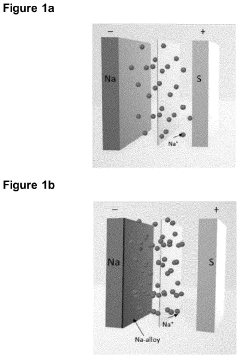
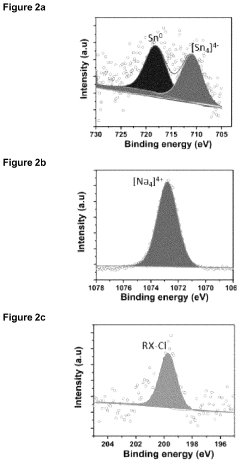
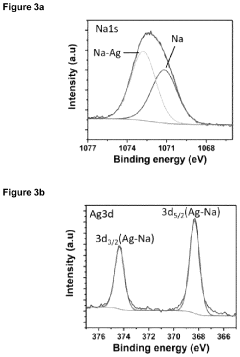
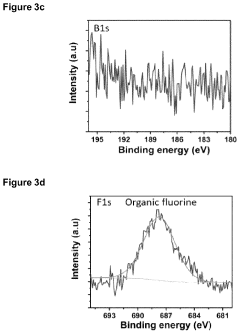
Electrolyte for an alkali-sulfur battery, alkali-sulfur battery containing the electrolyte and uses of the components of same
PatentInactiveUS20210020979A1
Innovation
- An electrolyte comprising a sulphone and a fluorine-containing ether in a specific volume ratio, along with a cathode additive for homogenized polysulphide distribution, effectively suppresses polysulphide shuttle without LiNO3, enhancing coulomb efficiency, long-term stability, and cyclability.


Safety Standards for High-Temperature Battery Systems
The development of comprehensive safety standards for high-temperature battery systems, particularly sodium sulfur batteries operating at 300-350°C, represents a critical regulatory and technical challenge. Current international standards such as IEC 62619 and UL 1973 primarily address lithium-ion systems and require substantial modifications to accommodate the unique thermal and chemical characteristics of molten electrolyte systems.
Thermal management protocols constitute the foundation of safety frameworks for high-temperature batteries. These standards must address continuous operation at elevated temperatures while preventing thermal runaway scenarios that could occur during electrolyte-cathode interaction optimization processes. Critical parameters include maximum allowable temperature gradients, emergency cooling procedures, and fail-safe mechanisms for temperature excursions beyond operational limits.
Fire suppression and containment standards present unique challenges due to the reactive nature of molten sodium and sulfur compounds. Traditional water-based suppression systems are contraindicated, necessitating specialized dry chemical or inert gas systems. Standards must specify detection thresholds for sodium vapor release and establish protocols for managing potential sodium-air reactions during maintenance or failure scenarios.
Electrical safety requirements for high-temperature systems extend beyond conventional battery standards to address thermal expansion effects on electrical connections and insulation degradation at operating temperatures. Standards must define minimum clearances, acceptable conductor materials, and insulation performance criteria under sustained thermal stress conditions.
Personnel protection protocols require specialized training certifications and protective equipment specifications for technicians working with high-temperature battery systems. These standards encompass exposure limits for sodium vapor, thermal protection requirements, and emergency response procedures specific to molten electrolyte systems.
Structural integrity standards must address thermal cycling effects on battery enclosures and mounting systems, particularly during optimization of electrolyte-cathode interfaces where thermal profiles may vary. Requirements include material specifications for high-temperature service, expansion joint designs, and seismic considerations for elevated temperature operations.
Environmental containment standards focus on preventing sodium and sulfur compound release during normal operations and failure modes. These encompass vapor collection systems, secondary containment requirements, and environmental monitoring protocols to ensure compliance with occupational exposure limits and environmental protection regulations.
Thermal management protocols constitute the foundation of safety frameworks for high-temperature batteries. These standards must address continuous operation at elevated temperatures while preventing thermal runaway scenarios that could occur during electrolyte-cathode interaction optimization processes. Critical parameters include maximum allowable temperature gradients, emergency cooling procedures, and fail-safe mechanisms for temperature excursions beyond operational limits.
Fire suppression and containment standards present unique challenges due to the reactive nature of molten sodium and sulfur compounds. Traditional water-based suppression systems are contraindicated, necessitating specialized dry chemical or inert gas systems. Standards must specify detection thresholds for sodium vapor release and establish protocols for managing potential sodium-air reactions during maintenance or failure scenarios.
Electrical safety requirements for high-temperature systems extend beyond conventional battery standards to address thermal expansion effects on electrical connections and insulation degradation at operating temperatures. Standards must define minimum clearances, acceptable conductor materials, and insulation performance criteria under sustained thermal stress conditions.
Personnel protection protocols require specialized training certifications and protective equipment specifications for technicians working with high-temperature battery systems. These standards encompass exposure limits for sodium vapor, thermal protection requirements, and emergency response procedures specific to molten electrolyte systems.
Structural integrity standards must address thermal cycling effects on battery enclosures and mounting systems, particularly during optimization of electrolyte-cathode interfaces where thermal profiles may vary. Requirements include material specifications for high-temperature service, expansion joint designs, and seismic considerations for elevated temperature operations.
Environmental containment standards focus on preventing sodium and sulfur compound release during normal operations and failure modes. These encompass vapor collection systems, secondary containment requirements, and environmental monitoring protocols to ensure compliance with occupational exposure limits and environmental protection regulations.
Thermal Management Strategies for Na-S Batteries
Thermal management represents one of the most critical engineering challenges in sodium-sulfur battery systems, particularly when optimizing electrolyte-cathode interaction points. The operational temperature window of 300-350°C creates unique thermal dynamics that directly influence the electrochemical performance at the interface between the molten sulfur cathode and solid electrolyte separator.
The primary thermal challenge stems from the exothermic nature of sodium-sulfur reactions during discharge cycles. Heat generation occurs predominantly at the electrolyte-cathode interface, where sodium ions traverse the beta-alumina solid electrolyte and react with sulfur species. This localized heating can create temperature gradients exceeding 50°C across the cathode compartment, leading to non-uniform reaction kinetics and potential degradation of interaction points.
Advanced thermal management strategies focus on maintaining isothermal conditions across the electrolyte-cathode boundary. Integrated heat distribution systems utilize thermally conductive cathode current collectors, typically fabricated from graphite foam or carbon fiber composites, to dissipate heat uniformly throughout the sulfur matrix. These materials provide dual functionality by serving as electron pathways while facilitating thermal equilibration.
Phase change material integration has emerged as a sophisticated approach for temperature regulation. Encapsulated PCMs with melting points around 320°C are strategically positioned within cathode assemblies to absorb excess heat during high-rate discharge operations. This strategy prevents thermal runaway conditions that could compromise electrolyte integrity and reduce interaction point effectiveness.
Active cooling methodologies employ forced convection systems with inert gas circulation to maintain optimal operating temperatures. Computational fluid dynamics modeling guides the design of cooling channels that ensure uniform heat removal without disrupting the electrochemical environment. These systems incorporate real-time temperature monitoring at multiple cathode locations to enable dynamic thermal control.
Thermal barrier coatings applied to electrolyte surfaces represent an innovative approach to managing heat transfer at interaction points. These ceramic-based coatings, typically 10-50 micrometers thick, provide controlled thermal resistance while maintaining ionic conductivity. The coatings prevent excessive heat flux into the electrolyte structure, thereby preserving mechanical stability and extending operational lifetime.
Future thermal management developments focus on smart materials integration and predictive thermal control algorithms. Shape memory alloys embedded within cathode structures can provide autonomous thermal regulation, while machine learning algorithms predict thermal behavior patterns to optimize cooling system operation proactively.
The primary thermal challenge stems from the exothermic nature of sodium-sulfur reactions during discharge cycles. Heat generation occurs predominantly at the electrolyte-cathode interface, where sodium ions traverse the beta-alumina solid electrolyte and react with sulfur species. This localized heating can create temperature gradients exceeding 50°C across the cathode compartment, leading to non-uniform reaction kinetics and potential degradation of interaction points.
Advanced thermal management strategies focus on maintaining isothermal conditions across the electrolyte-cathode boundary. Integrated heat distribution systems utilize thermally conductive cathode current collectors, typically fabricated from graphite foam or carbon fiber composites, to dissipate heat uniformly throughout the sulfur matrix. These materials provide dual functionality by serving as electron pathways while facilitating thermal equilibration.
Phase change material integration has emerged as a sophisticated approach for temperature regulation. Encapsulated PCMs with melting points around 320°C are strategically positioned within cathode assemblies to absorb excess heat during high-rate discharge operations. This strategy prevents thermal runaway conditions that could compromise electrolyte integrity and reduce interaction point effectiveness.
Active cooling methodologies employ forced convection systems with inert gas circulation to maintain optimal operating temperatures. Computational fluid dynamics modeling guides the design of cooling channels that ensure uniform heat removal without disrupting the electrochemical environment. These systems incorporate real-time temperature monitoring at multiple cathode locations to enable dynamic thermal control.
Thermal barrier coatings applied to electrolyte surfaces represent an innovative approach to managing heat transfer at interaction points. These ceramic-based coatings, typically 10-50 micrometers thick, provide controlled thermal resistance while maintaining ionic conductivity. The coatings prevent excessive heat flux into the electrolyte structure, thereby preserving mechanical stability and extending operational lifetime.
Future thermal management developments focus on smart materials integration and predictive thermal control algorithms. Shape memory alloys embedded within cathode structures can provide autonomous thermal regulation, while machine learning algorithms predict thermal behavior patterns to optimize cooling system operation proactively.
Unlock deeper insights with Patsnap Eureka Quick Research — get a full tech report to explore trends and direct your research. Try now!
Generate Your Research Report Instantly with AI Agent
Supercharge your innovation with Patsnap Eureka AI Agent Platform!