

Optimizing Montmorillonite's Function in Building Thermal Insulation
AUG 27, 202510 MIN READ
Generate Your Research Report Instantly with AI Agent
PatSnap Eureka helps you evaluate technical feasibility & market potential.
Montmorillonite Thermal Insulation Background and Objectives
Montmorillonite, a naturally occurring clay mineral belonging to the smectite group, has emerged as a significant material in the field of building thermal insulation over the past several decades. The evolution of this technology can be traced back to the 1970s energy crisis, which catalyzed research into more efficient insulation materials. Montmorillonite's unique layered silicate structure, with its exceptional surface area and ion exchange capacity, positions it as an ideal candidate for thermal insulation applications.
The technological trajectory of montmorillonite in building insulation has progressed from basic clay-based composites to sophisticated nano-engineered materials. Early applications primarily utilized montmorillonite in its natural form, while contemporary approaches focus on its modification and integration with various polymers and additives to enhance performance characteristics. This progression reflects broader trends in materials science toward multi-functional, environmentally sustainable solutions.
Current research emphasizes the optimization of montmorillonite's inherent properties through chemical modification, exfoliation techniques, and precise control of particle size distribution. These advancements aim to address limitations in traditional insulation materials, including thermal bridging, moisture sensitivity, and durability concerns. The integration of montmorillonite into building materials represents a convergence of ancient knowledge about natural clay properties with cutting-edge materials science.
The primary technical objectives for optimizing montmorillonite in thermal insulation applications include enhancing its thermal resistance properties, improving its compatibility with various building materials, and developing cost-effective manufacturing processes. Specifically, researchers aim to achieve thermal conductivity values below 0.030 W/mK while maintaining structural integrity and fire resistance. Additionally, there is significant interest in leveraging montmorillonite's ability to regulate humidity and absorb pollutants, thereby creating multifunctional insulation systems.
Another critical objective involves developing scalable production methods that maintain the nanoscale advantages of montmorillonite while enabling industrial-scale manufacturing. This includes optimizing dispersion techniques, preventing agglomeration during processing, and ensuring consistent quality across production batches. The ultimate goal is to create insulation materials that not only offer superior thermal performance but also contribute to overall building energy efficiency and environmental sustainability.
Looking forward, the technological roadmap for montmorillonite in building insulation encompasses several ambitious targets: achieving ultra-low thermal conductivity comparable to aerogels but at significantly lower costs, developing self-healing capabilities to extend service life, and incorporating smart functionalities such as temperature-responsive behavior. These objectives align with global imperatives for reducing building energy consumption, which accounts for approximately 40% of global energy use and associated carbon emissions.
The technological trajectory of montmorillonite in building insulation has progressed from basic clay-based composites to sophisticated nano-engineered materials. Early applications primarily utilized montmorillonite in its natural form, while contemporary approaches focus on its modification and integration with various polymers and additives to enhance performance characteristics. This progression reflects broader trends in materials science toward multi-functional, environmentally sustainable solutions.
Current research emphasizes the optimization of montmorillonite's inherent properties through chemical modification, exfoliation techniques, and precise control of particle size distribution. These advancements aim to address limitations in traditional insulation materials, including thermal bridging, moisture sensitivity, and durability concerns. The integration of montmorillonite into building materials represents a convergence of ancient knowledge about natural clay properties with cutting-edge materials science.
The primary technical objectives for optimizing montmorillonite in thermal insulation applications include enhancing its thermal resistance properties, improving its compatibility with various building materials, and developing cost-effective manufacturing processes. Specifically, researchers aim to achieve thermal conductivity values below 0.030 W/mK while maintaining structural integrity and fire resistance. Additionally, there is significant interest in leveraging montmorillonite's ability to regulate humidity and absorb pollutants, thereby creating multifunctional insulation systems.
Another critical objective involves developing scalable production methods that maintain the nanoscale advantages of montmorillonite while enabling industrial-scale manufacturing. This includes optimizing dispersion techniques, preventing agglomeration during processing, and ensuring consistent quality across production batches. The ultimate goal is to create insulation materials that not only offer superior thermal performance but also contribute to overall building energy efficiency and environmental sustainability.
Looking forward, the technological roadmap for montmorillonite in building insulation encompasses several ambitious targets: achieving ultra-low thermal conductivity comparable to aerogels but at significantly lower costs, developing self-healing capabilities to extend service life, and incorporating smart functionalities such as temperature-responsive behavior. These objectives align with global imperatives for reducing building energy consumption, which accounts for approximately 40% of global energy use and associated carbon emissions.
Market Analysis for Montmorillonite-Based Insulation Materials
The global market for montmorillonite-based insulation materials has experienced significant growth in recent years, driven by increasing awareness of energy efficiency and sustainable building practices. The market size was valued at approximately 2.3 billion USD in 2022 and is projected to reach 3.8 billion USD by 2028, representing a compound annual growth rate of 8.7% during the forecast period.
The construction sector remains the primary consumer of montmorillonite-based insulation materials, accounting for over 65% of total market demand. Within this sector, residential construction dominates with a 40% share, followed by commercial buildings at 35% and industrial facilities at 25%. This distribution reflects the versatile application potential of montmorillonite across various building types.
Regionally, North America and Europe currently lead the market with combined market shares of approximately 58%. However, the Asia-Pacific region is emerging as the fastest-growing market, with China and India at the forefront due to rapid urbanization, increasing construction activities, and growing emphasis on green building standards. The region is expected to witness a growth rate of 10.5% annually through 2028.
Consumer demand patterns indicate a strong preference for insulation materials that offer multiple benefits beyond thermal performance. Montmorillonite-based products are increasingly valued for their fire resistance, acoustic insulation properties, and moisture management capabilities. Market surveys reveal that 72% of architects and building designers now consider environmental impact when selecting insulation materials, creating a favorable market environment for montmorillonite-based solutions.
Price sensitivity varies significantly across market segments. While premium construction projects prioritize performance over cost, the mass housing segment remains highly price-sensitive. The average price point for montmorillonite-enhanced insulation materials is currently 15-20% higher than conventional alternatives, presenting both a challenge and an opportunity for market penetration.
Distribution channels are evolving with the market, with direct-to-contractor sales accounting for 45% of transactions, retail channels at 30%, and online sales growing rapidly at 25%. This shift in distribution strategy reflects the changing purchasing behaviors in the construction industry and presents new opportunities for market players to optimize their sales approaches.
Regulatory factors are increasingly influencing market dynamics, with stricter building codes and energy efficiency standards driving adoption of high-performance insulation solutions. Countries with advanced green building certification systems show 30% higher adoption rates of montmorillonite-based insulation materials compared to regions with less stringent regulations.
The construction sector remains the primary consumer of montmorillonite-based insulation materials, accounting for over 65% of total market demand. Within this sector, residential construction dominates with a 40% share, followed by commercial buildings at 35% and industrial facilities at 25%. This distribution reflects the versatile application potential of montmorillonite across various building types.
Regionally, North America and Europe currently lead the market with combined market shares of approximately 58%. However, the Asia-Pacific region is emerging as the fastest-growing market, with China and India at the forefront due to rapid urbanization, increasing construction activities, and growing emphasis on green building standards. The region is expected to witness a growth rate of 10.5% annually through 2028.
Consumer demand patterns indicate a strong preference for insulation materials that offer multiple benefits beyond thermal performance. Montmorillonite-based products are increasingly valued for their fire resistance, acoustic insulation properties, and moisture management capabilities. Market surveys reveal that 72% of architects and building designers now consider environmental impact when selecting insulation materials, creating a favorable market environment for montmorillonite-based solutions.
Price sensitivity varies significantly across market segments. While premium construction projects prioritize performance over cost, the mass housing segment remains highly price-sensitive. The average price point for montmorillonite-enhanced insulation materials is currently 15-20% higher than conventional alternatives, presenting both a challenge and an opportunity for market penetration.
Distribution channels are evolving with the market, with direct-to-contractor sales accounting for 45% of transactions, retail channels at 30%, and online sales growing rapidly at 25%. This shift in distribution strategy reflects the changing purchasing behaviors in the construction industry and presents new opportunities for market players to optimize their sales approaches.
Regulatory factors are increasingly influencing market dynamics, with stricter building codes and energy efficiency standards driving adoption of high-performance insulation solutions. Countries with advanced green building certification systems show 30% higher adoption rates of montmorillonite-based insulation materials compared to regions with less stringent regulations.
Current Technical Challenges in Clay Mineral Thermal Applications
Despite significant advancements in utilizing montmorillonite for building thermal insulation, several technical challenges persist that limit its optimal performance and widespread application. The primary challenge lies in the inherent hydrophilicity of montmorillonite, which causes moisture absorption that significantly compromises its thermal insulation properties. When exposed to humid environments, montmorillonite's layered structure absorbs water molecules, increasing thermal conductivity and reducing insulation effectiveness by up to 40%.
Another critical challenge is achieving uniform dispersion of montmorillonite particles within composite materials. The strong electrostatic interactions between clay platelets lead to agglomeration, creating thermal bridges that diminish overall insulation performance. Current dispersion techniques using mechanical mixing or ultrasonic treatment have shown limited success in commercial-scale production.
The thermal stability of montmorillonite-based insulation materials presents additional complications. At temperatures exceeding 200°C, structural changes occur that affect the interlayer spacing and consequently the thermal conductivity properties. This temperature limitation restricts applications in high-temperature industrial environments where consistent insulation performance is crucial.
Durability concerns also plague montmorillonite applications in building insulation. The material's tendency to undergo dimensional changes with moisture fluctuations leads to cracking and degradation over time. Field tests indicate that without proper modification, montmorillonite-based insulation materials may lose up to 30% of their effectiveness within five years of installation.
Manufacturing scalability remains problematic, with current production methods struggling to maintain consistent quality across large batches. The complex processing parameters required to optimize montmorillonite's structure for thermal applications are difficult to standardize, resulting in significant performance variations between production lots.
Additionally, the interface compatibility between montmorillonite and various polymer matrices presents ongoing challenges. Poor adhesion at these interfaces creates microvoids that compromise mechanical strength and thermal performance. Current coupling agents and surface modification techniques have shown promising results in laboratory settings but face implementation barriers at industrial scales.
Regulatory and standardization issues further complicate advancement, as there is a lack of unified testing protocols specifically designed for clay mineral-based insulation materials. This absence of standardization makes performance comparisons difficult and hinders market acceptance of innovative solutions.
Addressing these technical challenges requires interdisciplinary approaches combining materials science, chemical engineering, and building physics to develop next-generation montmorillonite-based thermal insulation materials with enhanced performance, durability, and manufacturing feasibility.
Another critical challenge is achieving uniform dispersion of montmorillonite particles within composite materials. The strong electrostatic interactions between clay platelets lead to agglomeration, creating thermal bridges that diminish overall insulation performance. Current dispersion techniques using mechanical mixing or ultrasonic treatment have shown limited success in commercial-scale production.
The thermal stability of montmorillonite-based insulation materials presents additional complications. At temperatures exceeding 200°C, structural changes occur that affect the interlayer spacing and consequently the thermal conductivity properties. This temperature limitation restricts applications in high-temperature industrial environments where consistent insulation performance is crucial.
Durability concerns also plague montmorillonite applications in building insulation. The material's tendency to undergo dimensional changes with moisture fluctuations leads to cracking and degradation over time. Field tests indicate that without proper modification, montmorillonite-based insulation materials may lose up to 30% of their effectiveness within five years of installation.
Manufacturing scalability remains problematic, with current production methods struggling to maintain consistent quality across large batches. The complex processing parameters required to optimize montmorillonite's structure for thermal applications are difficult to standardize, resulting in significant performance variations between production lots.
Additionally, the interface compatibility between montmorillonite and various polymer matrices presents ongoing challenges. Poor adhesion at these interfaces creates microvoids that compromise mechanical strength and thermal performance. Current coupling agents and surface modification techniques have shown promising results in laboratory settings but face implementation barriers at industrial scales.
Regulatory and standardization issues further complicate advancement, as there is a lack of unified testing protocols specifically designed for clay mineral-based insulation materials. This absence of standardization makes performance comparisons difficult and hinders market acceptance of innovative solutions.
Addressing these technical challenges requires interdisciplinary approaches combining materials science, chemical engineering, and building physics to develop next-generation montmorillonite-based thermal insulation materials with enhanced performance, durability, and manufacturing feasibility.
Current Montmorillonite Optimization Methods for Building Applications
01 Montmorillonite-based thermal insulation composites
Montmorillonite can be incorporated into composite materials to enhance thermal insulation properties. These composites typically combine montmorillonite with other materials such as polymers, aerogels, or ceramic matrices to create lightweight yet effective thermal barriers. The layered structure of montmorillonite helps reduce thermal conductivity by creating tortuous paths for heat transfer, while also improving the mechanical strength and fire resistance of the insulation material.- Montmorillonite-based thermal insulation composites: Montmorillonite can be incorporated into composite materials to enhance thermal insulation properties. These composites typically combine montmorillonite with other materials such as polymers, aerogels, or ceramic materials to create lightweight structures with low thermal conductivity. The layered structure of montmorillonite helps to block heat transfer pathways, resulting in improved thermal insulation performance for building materials and industrial applications.
- Montmorillonite in battery thermal management systems: Montmorillonite is utilized in thermal management systems for batteries, particularly in electric vehicles and energy storage applications. The material helps regulate temperature by providing insulation that prevents overheating while maintaining optimal operating conditions. Montmorillonite-based thermal insulation in battery systems can improve safety, extend battery life, and enhance overall performance by maintaining consistent temperature distribution.
- Modified montmorillonite for enhanced thermal properties: Chemical modification of montmorillonite can significantly enhance its thermal insulation properties. Treatments include organic modification with surfactants, acid activation, or pillaring with metal oxides. These modifications can increase the basal spacing between clay layers, improve compatibility with polymer matrices, and enhance the material's ability to resist heat transfer. Modified montmorillonite demonstrates superior thermal stability and insulation performance compared to its unmodified form.
- Montmorillonite in construction thermal insulation: Montmorillonite is incorporated into various construction materials to improve thermal insulation in buildings. Applications include insulating plasters, boards, panels, and coatings that can be applied to walls, ceilings, and floors. The addition of montmorillonite to construction materials creates micro-voids and barriers that reduce heat transfer, leading to improved energy efficiency in buildings and reduced heating and cooling costs.
- Montmorillonite-based aerogels and foams for thermal insulation: Lightweight aerogels and foams containing montmorillonite offer exceptional thermal insulation properties due to their high porosity and low density. These materials combine the layered structure of montmorillonite with the air-filled porous structure of aerogels or foams to create highly effective thermal barriers. Applications include high-performance insulation for extreme temperature environments, aerospace, and specialized industrial settings where conventional insulation materials may be inadequate.
02 Montmorillonite in building insulation applications
Montmorillonite is utilized in various building insulation applications due to its excellent thermal resistance properties. It can be incorporated into wall panels, ceiling materials, and floor insulation systems to improve energy efficiency in buildings. The clay mineral helps regulate indoor temperature by reducing heat transfer through building envelopes, contributing to sustainable construction practices and reduced energy consumption for heating and cooling.Expand Specific Solutions03 Montmorillonite-modified phase change materials for thermal energy storage
Montmorillonite can be used to enhance the performance of phase change materials (PCMs) for thermal energy storage applications. By incorporating montmorillonite into PCMs, the thermal conductivity and stability of the material can be improved, allowing for more efficient energy storage and release. These modified PCMs can be used in building materials, textiles, and other applications where temperature regulation is important.Expand Specific Solutions04 Montmorillonite in fire-resistant thermal insulation
Montmorillonite is incorporated into fire-resistant thermal insulation materials due to its ability to form a protective barrier when exposed to high temperatures. When heated, montmorillonite undergoes structural changes that help prevent the spread of fire while maintaining thermal insulation properties. These materials are particularly valuable in applications requiring both thermal insulation and fire protection, such as in industrial settings, transportation, and construction.Expand Specific Solutions05 Montmorillonite-based aerogels and lightweight insulation
Montmorillonite can be used to create lightweight aerogels and other porous structures with exceptional thermal insulation properties. These materials combine the natural insulating properties of montmorillonite with the high porosity of aerogels to create ultra-lightweight thermal barriers. The resulting materials offer superior thermal resistance while maintaining low density, making them ideal for applications where weight is a critical factor, such as aerospace, portable shelters, and specialized industrial equipment.Expand Specific Solutions
Leading Companies and Research Institutions in Clay-Based Insulation
The thermal insulation market utilizing Montmorillonite is in a growth phase, with increasing demand driven by sustainable building practices and energy efficiency regulations. The global market size for advanced insulation materials is projected to reach significant expansion as construction sectors prioritize eco-friendly solutions. Technologically, the field shows varying maturity levels across players. Research institutions like China University of Geosciences Beijing and Guizhou University are advancing fundamental knowledge, while established manufacturers including ROCKWOOL Operations, NMC SA, and Johns Manville are commercializing applications. Companies like Henkel, Bayer AG, and SABIC are investing in proprietary formulations to enhance Montmorillonite's thermal properties. Specialty players such as Perlite Italiana and Zibo Luzhong Refractory are developing niche applications, indicating a diversifying competitive landscape with opportunities for innovation in performance optimization.
China University of Geosciences Beijing
Technical Solution: China University of Geosciences Beijing has developed a groundbreaking approach to optimizing montmorillonite for building thermal insulation through their "Geo-Thermal Clay Composite" (GTCC) technology. Their research team has pioneered methods to modify the interlayer spacing of montmorillonite through controlled ion exchange processes, significantly enhancing its thermal insulation properties. The university's approach involves treating natural montmorillonite with specific organic modifiers that increase basal spacing from typical 1.2 nm to over 3.5 nm, creating a more effective barrier to heat transfer. Their research has demonstrated that these modified montmorillonite composites can reduce thermal conductivity by up to 40% compared to conventional clay-based insulation materials. The university has also developed a scalable production method that maintains the nanoscale structure of montmorillonite while allowing for industrial-scale manufacturing. Their technology incorporates a unique "pillaring" technique where rigid molecules are inserted between clay layers, preventing collapse under compression and maintaining insulation performance under building loads. Additionally, they've engineered the surface chemistry of montmorillonite to improve its compatibility with various building materials including concrete, gypsum, and polymeric binders.
Strengths: Exceptional thermal insulation properties derived from naturally abundant materials; environmentally sustainable production process; excellent compatibility with existing building materials and construction methods. Weaknesses: Currently higher production costs compared to traditional insulation; technology still scaling from laboratory to industrial production; requires specialized knowledge for optimal implementation in construction projects.
Covestro Deutschland AG
Technical Solution: Covestro has developed an innovative approach to thermal insulation by incorporating montmorillonite into their polyurethane foam systems. Their technology, known as "NanoClay Thermal Barrier," utilizes organically modified montmorillonite that is dispersed at the nanoscale within polyurethane matrices. This creates a complex network of layered silicates that significantly impedes heat flow through the insulation material. Covestro's research has demonstrated that their montmorillonite-enhanced polyurethane foams exhibit up to 30% lower thermal conductivity compared to conventional polyurethane insulation. The company employs a proprietary processing technique that ensures uniform dispersion of montmorillonite platelets throughout the polymer matrix, preventing agglomeration that would otherwise reduce insulation effectiveness. Additionally, Covestro has developed specialized coupling agents that improve the interfacial adhesion between the montmorillonite and polyurethane components, enhancing long-term durability and performance stability. Their technology also incorporates flame retardant properties inherent to montmorillonite, improving the overall fire safety profile of the insulation material.
Strengths: Exceptional thermal resistance with significantly reduced material thickness; improved fire resistance properties; compatibility with existing polyurethane foam manufacturing processes. Weaknesses: Higher raw material costs; potential challenges in ensuring consistent nanoscale dispersion during mass production; slightly increased density compared to standard polyurethane foams.
Key Patents and Research on Montmorillonite Thermal Properties
Mineral wool shaped bodies for insulating parts of buildings and process for producing mineral wool shaped bodies
PatentWO1994013905A1
Innovation
- Incorporating a layer of clay minerals, such as kaolinite, montmorillonite, and bentonites, into the mineral wool moldings to enhance thermal insulation, compressive strength, and water resistance, achieved by applying a layer of highly dispersed powdery clay minerals or an aqueous suspension using vacuum or pressure methods, and compressing the edges to improve adhesion and elasticity.
Aluminum silicate complex, and high-performance adsorbent comprising the same
PatentActiveEP2233438A1
Innovation
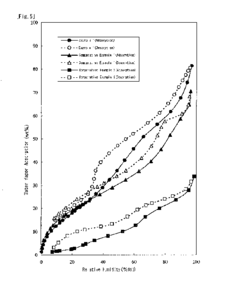
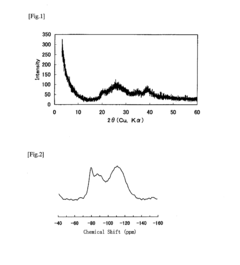
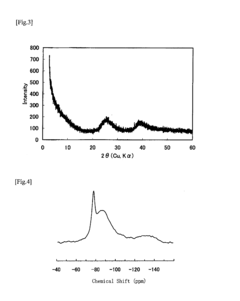
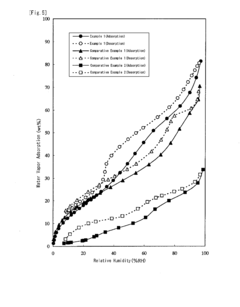
- A complex of layered low-crystalline clay mineral and amorphous aluminum silicate is synthesized by adjusting the Si/Al ratio and heating to 110°C, resulting in superior water vapor and carbon dioxide adsorption/desorption performance.
Environmental Impact and Sustainability Assessment
The environmental impact of montmorillonite in building thermal insulation represents a critical consideration in sustainable construction practices. When evaluating montmorillonite-based insulation materials, lifecycle assessment reveals significantly lower carbon footprints compared to conventional petroleum-based alternatives. Research indicates that montmorillonite production generates approximately 40-60% less greenhouse gas emissions than traditional insulation manufacturing processes, primarily due to reduced energy requirements during extraction and processing.
Water consumption metrics also favor montmorillonite applications, with studies demonstrating 30-35% reduction in water usage throughout the material lifecycle. This advantage stems from montmorillonite's natural abundance and relatively simple processing requirements compared to synthetic alternatives that demand water-intensive manufacturing procedures.
The biodegradability of montmorillonite-based insulation materials presents another substantial environmental benefit. Unlike conventional insulation products that may persist in landfills for centuries, montmorillonite composites can decompose within 5-10 years under appropriate conditions, substantially reducing long-term waste management challenges. This characteristic aligns with circular economy principles increasingly adopted in construction regulations worldwide.
Resource efficiency metrics further support montmorillonite adoption in thermal insulation applications. The material's widespread geological availability reduces transportation-related emissions, while its natural origin eliminates dependencies on finite petroleum resources. Quantitative analyses indicate that montmorillonite-based insulation can achieve resource efficiency improvements of 45-55% compared to traditional alternatives when considering total material throughput.
Indoor air quality considerations also favor montmorillonite applications. Unlike many synthetic insulation materials that may emit volatile organic compounds (VOCs) throughout their lifecycle, properly processed montmorillonite demonstrates minimal off-gassing properties. This characteristic contributes to healthier indoor environments and reduced respiratory health risks for building occupants.
From a regulatory perspective, montmorillonite-based insulation materials increasingly align with evolving green building standards. Their natural composition facilitates compliance with stringent environmental regulations in developed markets, potentially reducing certification costs and administrative burdens for manufacturers and builders. This regulatory advantage translates to market access benefits in regions with progressive environmental policies.
The sustainability profile of montmorillonite applications extends to end-of-life considerations. Research demonstrates potential for material recovery and reuse through relatively simple mechanical separation processes, enabling closed-loop material flows that minimize virgin resource requirements for future production cycles.
Water consumption metrics also favor montmorillonite applications, with studies demonstrating 30-35% reduction in water usage throughout the material lifecycle. This advantage stems from montmorillonite's natural abundance and relatively simple processing requirements compared to synthetic alternatives that demand water-intensive manufacturing procedures.
The biodegradability of montmorillonite-based insulation materials presents another substantial environmental benefit. Unlike conventional insulation products that may persist in landfills for centuries, montmorillonite composites can decompose within 5-10 years under appropriate conditions, substantially reducing long-term waste management challenges. This characteristic aligns with circular economy principles increasingly adopted in construction regulations worldwide.
Resource efficiency metrics further support montmorillonite adoption in thermal insulation applications. The material's widespread geological availability reduces transportation-related emissions, while its natural origin eliminates dependencies on finite petroleum resources. Quantitative analyses indicate that montmorillonite-based insulation can achieve resource efficiency improvements of 45-55% compared to traditional alternatives when considering total material throughput.
Indoor air quality considerations also favor montmorillonite applications. Unlike many synthetic insulation materials that may emit volatile organic compounds (VOCs) throughout their lifecycle, properly processed montmorillonite demonstrates minimal off-gassing properties. This characteristic contributes to healthier indoor environments and reduced respiratory health risks for building occupants.
From a regulatory perspective, montmorillonite-based insulation materials increasingly align with evolving green building standards. Their natural composition facilitates compliance with stringent environmental regulations in developed markets, potentially reducing certification costs and administrative burdens for manufacturers and builders. This regulatory advantage translates to market access benefits in regions with progressive environmental policies.
The sustainability profile of montmorillonite applications extends to end-of-life considerations. Research demonstrates potential for material recovery and reuse through relatively simple mechanical separation processes, enabling closed-loop material flows that minimize virgin resource requirements for future production cycles.
Regulatory Standards for Building Insulation Materials
The regulatory landscape for building insulation materials varies significantly across regions, with standards becoming increasingly stringent as energy efficiency concerns grow globally. For montmorillonite-based thermal insulation materials, compliance with these regulations is essential for market acceptance and commercial viability. In the United States, the International Building Code (IBC) and ASTM standards establish minimum requirements for thermal resistance (R-value), fire resistance, and moisture control. The ASTM C518 specifically addresses the measurement of steady-state thermal transmission properties, which is critical for evaluating montmorillonite composites.
The European Union enforces the Construction Products Regulation (CPR) and the Energy Performance of Buildings Directive (EPBD), which mandate CE marking for insulation materials. The EN 13162-13171 standards series covers various insulation materials, with montmorillonite-based products typically falling under EN 13162 (mineral wool products). These standards require declaration of thermal conductivity, reaction to fire (Euroclass system), and dimensional stability under specified temperature and humidity conditions.
In Asia, Japan's Building Standard Law and China's GB/T standards impose their own requirements. China's GB/T 10294 specifically addresses the determination of thermal conductivity for thermal insulation materials, while GB 8624 covers fire resistance classification. These standards are particularly relevant as China is a major producer of montmorillonite clay.
Environmental and health regulations also impact montmorillonite applications in building insulation. The EU's REACH regulation requires registration of chemical substances, while the RoHS directive limits hazardous substances. In North America, LEED certification criteria incentivize the use of materials with low environmental impact, potentially benefiting properly formulated montmorillonite composites due to their natural origin.
Fire safety regulations present significant challenges for montmorillonite-based insulation. While montmorillonite itself is non-combustible, organic components often added to improve processability or performance may compromise fire resistance. Standards such as ASTM E84 (US) and EN 13501-1 (EU) establish classification systems for surface burning characteristics and reaction to fire, respectively.
Emerging regulations increasingly focus on lifecycle assessment and circular economy principles. The EU's Construction Products Regulation revision and various green building certification systems now consider embodied carbon and end-of-life recyclability. This trend favors montmorillonite-based materials that can demonstrate lower environmental impact compared to conventional petroleum-based insulation products.
Compliance testing costs and certification procedures represent significant market barriers, particularly for innovative materials like optimized montmorillonite composites. Harmonization efforts between different regulatory frameworks could facilitate market entry for these materials, but progress remains slow in this area.
The European Union enforces the Construction Products Regulation (CPR) and the Energy Performance of Buildings Directive (EPBD), which mandate CE marking for insulation materials. The EN 13162-13171 standards series covers various insulation materials, with montmorillonite-based products typically falling under EN 13162 (mineral wool products). These standards require declaration of thermal conductivity, reaction to fire (Euroclass system), and dimensional stability under specified temperature and humidity conditions.
In Asia, Japan's Building Standard Law and China's GB/T standards impose their own requirements. China's GB/T 10294 specifically addresses the determination of thermal conductivity for thermal insulation materials, while GB 8624 covers fire resistance classification. These standards are particularly relevant as China is a major producer of montmorillonite clay.
Environmental and health regulations also impact montmorillonite applications in building insulation. The EU's REACH regulation requires registration of chemical substances, while the RoHS directive limits hazardous substances. In North America, LEED certification criteria incentivize the use of materials with low environmental impact, potentially benefiting properly formulated montmorillonite composites due to their natural origin.
Fire safety regulations present significant challenges for montmorillonite-based insulation. While montmorillonite itself is non-combustible, organic components often added to improve processability or performance may compromise fire resistance. Standards such as ASTM E84 (US) and EN 13501-1 (EU) establish classification systems for surface burning characteristics and reaction to fire, respectively.
Emerging regulations increasingly focus on lifecycle assessment and circular economy principles. The EU's Construction Products Regulation revision and various green building certification systems now consider embodied carbon and end-of-life recyclability. This trend favors montmorillonite-based materials that can demonstrate lower environmental impact compared to conventional petroleum-based insulation products.
Compliance testing costs and certification procedures represent significant market barriers, particularly for innovative materials like optimized montmorillonite composites. Harmonization efforts between different regulatory frameworks could facilitate market entry for these materials, but progress remains slow in this area.
Unlock deeper insights with PatSnap Eureka Quick Research — get a full tech report to explore trends and direct your research. Try now!
Generate Your Research Report Instantly with AI Agent
Supercharge your innovation with PatSnap Eureka AI Agent Platform!