

Optimizing Polycaprolactone's Degradation Rate for Environmental Impact
MAR 12, 20269 MIN READ
Generate Your Research Report Instantly with AI Agent
PatSnap Eureka helps you evaluate technical feasibility & market potential.
PCL Degradation Background and Environmental Goals
Polycaprolactone (PCL) represents a significant advancement in biodegradable polymer technology, emerging as a critical material in addressing the global plastic pollution crisis. This aliphatic polyester, first synthesized in the 1930s, has gained substantial attention over the past three decades due to its unique combination of processability, biocompatibility, and biodegradability characteristics. The polymer's semi-crystalline structure and relatively low melting point have made it an attractive alternative to conventional petroleum-based plastics across various applications.
The historical development of PCL technology traces back to early polymer research, but its environmental significance became apparent only in the late 20th century as awareness of plastic waste accumulation intensified. Initial applications focused primarily on biomedical uses, leveraging PCL's biocompatibility for drug delivery systems and tissue engineering scaffolds. However, the growing environmental consciousness has shifted research focus toward optimizing PCL's degradation properties for broader ecological applications.
Current environmental challenges have positioned PCL degradation optimization as a critical research frontier. The polymer's natural degradation occurs through hydrolytic and enzymatic pathways, typically requiring 6-24 months under optimal conditions. This timeframe, while significantly shorter than conventional plastics, still presents challenges for specific environmental applications where faster degradation is desired, or conversely, where controlled longevity is required.
The primary environmental goals driving PCL degradation research encompass multiple dimensions of sustainability. Reducing microplastic formation represents a paramount objective, as controlled degradation can minimize the generation of persistent plastic fragments that accumulate in ecosystems. Additionally, optimizing degradation rates aims to enhance carbon cycle integration, ensuring that PCL breakdown products contribute beneficially to natural biogeochemical processes rather than creating environmental burdens.
Contemporary research initiatives focus on achieving tuneable degradation profiles that can be customized for specific environmental contexts. This includes developing PCL formulations that degrade rapidly in marine environments to address ocean pollution, while simultaneously creating variants with extended stability for agricultural applications where premature breakdown could compromise functionality. The ultimate technological goal involves establishing precise control mechanisms that allow predetermined degradation timelines aligned with specific environmental requirements and application lifecycles.
The historical development of PCL technology traces back to early polymer research, but its environmental significance became apparent only in the late 20th century as awareness of plastic waste accumulation intensified. Initial applications focused primarily on biomedical uses, leveraging PCL's biocompatibility for drug delivery systems and tissue engineering scaffolds. However, the growing environmental consciousness has shifted research focus toward optimizing PCL's degradation properties for broader ecological applications.
Current environmental challenges have positioned PCL degradation optimization as a critical research frontier. The polymer's natural degradation occurs through hydrolytic and enzymatic pathways, typically requiring 6-24 months under optimal conditions. This timeframe, while significantly shorter than conventional plastics, still presents challenges for specific environmental applications where faster degradation is desired, or conversely, where controlled longevity is required.
The primary environmental goals driving PCL degradation research encompass multiple dimensions of sustainability. Reducing microplastic formation represents a paramount objective, as controlled degradation can minimize the generation of persistent plastic fragments that accumulate in ecosystems. Additionally, optimizing degradation rates aims to enhance carbon cycle integration, ensuring that PCL breakdown products contribute beneficially to natural biogeochemical processes rather than creating environmental burdens.
Contemporary research initiatives focus on achieving tuneable degradation profiles that can be customized for specific environmental contexts. This includes developing PCL formulations that degrade rapidly in marine environments to address ocean pollution, while simultaneously creating variants with extended stability for agricultural applications where premature breakdown could compromise functionality. The ultimate technological goal involves establishing precise control mechanisms that allow predetermined degradation timelines aligned with specific environmental requirements and application lifecycles.
Market Demand for Biodegradable Polymer Solutions
The global biodegradable polymer market has experienced unprecedented growth driven by escalating environmental concerns and stringent regulatory frameworks targeting plastic waste reduction. Traditional petroleum-based plastics face mounting pressure from governments worldwide implementing single-use plastic bans and extended producer responsibility programs. This regulatory landscape creates substantial opportunities for biodegradable alternatives like polycaprolactone, particularly when degradation rates can be precisely controlled to match specific application requirements.
Packaging industries represent the largest demand segment for biodegradable polymers, with food packaging, agricultural films, and consumer goods packaging driving significant market expansion. The controlled degradation characteristics of optimized polycaprolactone make it particularly attractive for applications requiring predictable breakdown timelines, such as mulch films that must remain intact during growing seasons but decompose completely post-harvest.
Medical and pharmaceutical sectors demonstrate robust demand for biodegradable polymers with tunable degradation profiles. Polycaprolactone's biocompatibility combined with controllable degradation rates positions it favorably for drug delivery systems, surgical sutures, and tissue engineering scaffolds. The ability to engineer specific degradation kinetics aligns perfectly with therapeutic timelines and healing processes.
Consumer awareness regarding environmental sustainability has reached critical mass, with purchasing decisions increasingly influenced by product biodegradability claims. This shift in consumer behavior drives brand owners across industries to seek biodegradable alternatives that maintain performance standards while offering genuine environmental benefits. Optimized polycaprolactone degradation rates enable manufacturers to provide concrete biodegradation timelines, enhancing consumer confidence and market acceptance.
Industrial applications including 3D printing filaments, automotive components, and electronics housings present emerging opportunities for biodegradable polymers. These sectors require materials with specific mechanical properties and controlled end-of-life characteristics, creating demand for precisely engineered degradation profiles that polycaprolactone optimization can address.
The agricultural sector shows particularly strong demand for biodegradable polymers with predictable degradation behavior. Controlled-release fertilizer coatings, seed coatings, and temporary plant supports require materials that degrade according to crop cycles and environmental conditions, making optimized polycaprolactone degradation rates highly valuable for agricultural applications.
Packaging industries represent the largest demand segment for biodegradable polymers, with food packaging, agricultural films, and consumer goods packaging driving significant market expansion. The controlled degradation characteristics of optimized polycaprolactone make it particularly attractive for applications requiring predictable breakdown timelines, such as mulch films that must remain intact during growing seasons but decompose completely post-harvest.
Medical and pharmaceutical sectors demonstrate robust demand for biodegradable polymers with tunable degradation profiles. Polycaprolactone's biocompatibility combined with controllable degradation rates positions it favorably for drug delivery systems, surgical sutures, and tissue engineering scaffolds. The ability to engineer specific degradation kinetics aligns perfectly with therapeutic timelines and healing processes.
Consumer awareness regarding environmental sustainability has reached critical mass, with purchasing decisions increasingly influenced by product biodegradability claims. This shift in consumer behavior drives brand owners across industries to seek biodegradable alternatives that maintain performance standards while offering genuine environmental benefits. Optimized polycaprolactone degradation rates enable manufacturers to provide concrete biodegradation timelines, enhancing consumer confidence and market acceptance.
Industrial applications including 3D printing filaments, automotive components, and electronics housings present emerging opportunities for biodegradable polymers. These sectors require materials with specific mechanical properties and controlled end-of-life characteristics, creating demand for precisely engineered degradation profiles that polycaprolactone optimization can address.
The agricultural sector shows particularly strong demand for biodegradable polymers with predictable degradation behavior. Controlled-release fertilizer coatings, seed coatings, and temporary plant supports require materials that degrade according to crop cycles and environmental conditions, making optimized polycaprolactone degradation rates highly valuable for agricultural applications.
Current PCL Degradation Challenges and Limitations
Polycaprolactone faces significant degradation rate challenges that limit its environmental optimization potential. The polymer's inherently slow biodegradation process represents a fundamental limitation, with complete breakdown requiring several months to years under standard environmental conditions. This extended degradation timeline contradicts the growing demand for rapidly biodegradable materials in packaging and disposable applications.
The molecular structure of PCL contributes substantially to these degradation challenges. Its semi-crystalline nature and relatively high molecular weight create barriers to enzymatic and hydrolytic breakdown processes. The crystalline regions exhibit particularly strong resistance to degradation, leading to non-uniform breakdown patterns that can result in persistent microplastic formation during intermediate degradation stages.
Environmental variability presents another critical limitation affecting PCL degradation predictability. Temperature fluctuations, moisture levels, pH variations, and microbial population differences across different environments create inconsistent degradation rates. These variations make it difficult to establish reliable degradation timelines for PCL products, complicating environmental impact assessments and regulatory compliance efforts.
Current processing methods introduce additional constraints that affect degradation optimization. Traditional melt processing techniques often increase molecular weight and crystallinity, inadvertently extending degradation times. The incorporation of additives and fillers, while improving mechanical properties, frequently interferes with natural degradation mechanisms by creating physical barriers or introducing non-biodegradable components.
Scale-up challenges represent a significant practical limitation in degradation rate optimization efforts. Laboratory-scale modifications that successfully accelerate PCL degradation often prove difficult to implement in industrial production settings. The complex interplay between processing parameters, material properties, and degradation behavior becomes increasingly difficult to control at commercial scales.
Regulatory frameworks present evolving challenges for PCL degradation optimization. Current biodegradability standards vary significantly across regions and applications, creating uncertainty about optimal degradation rate targets. The lack of standardized testing protocols for accelerated degradation makes it difficult to validate new approaches and compare different optimization strategies effectively.
Cost considerations impose practical limitations on degradation enhancement approaches. Many promising techniques for accelerating PCL degradation, such as specialized additives or advanced processing methods, significantly increase production costs. This economic constraint limits the commercial viability of optimized PCL formulations, particularly in price-sensitive applications where conventional plastics remain competitive alternatives.
The molecular structure of PCL contributes substantially to these degradation challenges. Its semi-crystalline nature and relatively high molecular weight create barriers to enzymatic and hydrolytic breakdown processes. The crystalline regions exhibit particularly strong resistance to degradation, leading to non-uniform breakdown patterns that can result in persistent microplastic formation during intermediate degradation stages.
Environmental variability presents another critical limitation affecting PCL degradation predictability. Temperature fluctuations, moisture levels, pH variations, and microbial population differences across different environments create inconsistent degradation rates. These variations make it difficult to establish reliable degradation timelines for PCL products, complicating environmental impact assessments and regulatory compliance efforts.
Current processing methods introduce additional constraints that affect degradation optimization. Traditional melt processing techniques often increase molecular weight and crystallinity, inadvertently extending degradation times. The incorporation of additives and fillers, while improving mechanical properties, frequently interferes with natural degradation mechanisms by creating physical barriers or introducing non-biodegradable components.
Scale-up challenges represent a significant practical limitation in degradation rate optimization efforts. Laboratory-scale modifications that successfully accelerate PCL degradation often prove difficult to implement in industrial production settings. The complex interplay between processing parameters, material properties, and degradation behavior becomes increasingly difficult to control at commercial scales.
Regulatory frameworks present evolving challenges for PCL degradation optimization. Current biodegradability standards vary significantly across regions and applications, creating uncertainty about optimal degradation rate targets. The lack of standardized testing protocols for accelerated degradation makes it difficult to validate new approaches and compare different optimization strategies effectively.
Cost considerations impose practical limitations on degradation enhancement approaches. Many promising techniques for accelerating PCL degradation, such as specialized additives or advanced processing methods, significantly increase production costs. This economic constraint limits the commercial viability of optimized PCL formulations, particularly in price-sensitive applications where conventional plastics remain competitive alternatives.
Existing PCL Degradation Rate Optimization Methods
01 Control of polycaprolactone degradation rate through molecular weight adjustment
The degradation rate of polycaprolactone can be controlled by adjusting its molecular weight. Lower molecular weight polycaprolactone typically exhibits faster degradation rates due to increased susceptibility to hydrolytic cleavage. Higher molecular weight variants demonstrate slower degradation, providing extended stability for long-term applications. This approach allows for tailoring the degradation profile to specific application requirements in biomedical and pharmaceutical fields.- Control of polycaprolactone degradation rate through molecular weight adjustment: The degradation rate of polycaprolactone can be controlled by adjusting its molecular weight. Lower molecular weight polycaprolactone typically exhibits faster degradation rates due to increased chain mobility and easier hydrolytic cleavage of ester bonds. Higher molecular weight variants demonstrate slower degradation, providing extended stability for long-term applications. This approach allows for tailoring the degradation profile to specific application requirements.
- Enhancement of degradation rate through copolymerization and blending: Polycaprolactone degradation rate can be modified by copolymerizing it with other biodegradable polymers or creating polymer blends. The incorporation of more hydrophilic segments or faster-degrading polymers can accelerate the overall degradation process. This strategy enables the creation of materials with customized degradation kinetics suitable for various biomedical and environmental applications.
- Modification of degradation rate using additives and catalysts: The degradation rate of polycaprolactone can be influenced by incorporating specific additives, catalysts, or degradation-promoting agents. These substances can accelerate hydrolytic or enzymatic degradation by increasing water absorption, catalyzing ester bond cleavage, or providing sites for enzymatic attack. This method offers precise control over degradation timing without significantly altering the base polymer structure.
- Structural modification through crosslinking and chain architecture: The degradation behavior of polycaprolactone can be controlled by modifying its structural architecture through crosslinking, branching, or creating specific chain configurations. Crosslinked networks typically exhibit slower degradation rates due to restricted chain mobility and reduced accessibility to degrading agents. Conversely, specific structural modifications can create more accessible sites for degradation, accelerating the process.
- Environmental and processing factors affecting degradation rate: Polycaprolactone degradation rate is significantly influenced by environmental conditions and processing parameters. Factors such as temperature, pH, moisture content, enzymatic environment, and crystallinity degree affect the degradation kinetics. Processing methods that alter morphology, porosity, or surface area can also modulate degradation rates. Understanding and controlling these factors enables optimization of degradation profiles for specific applications.
02 Enhancement of degradation rate through copolymerization and blending
Polycaprolactone degradation rate can be accelerated by copolymerizing it with other biodegradable polymers or creating polymer blends. The incorporation of hydrophilic segments or more readily degradable polymers increases water absorption and enzymatic accessibility, thereby enhancing the overall degradation rate. This strategy enables the design of materials with predictable and controllable degradation kinetics suitable for tissue engineering and drug delivery systems.Expand Specific Solutions03 Modification of degradation rate through surface treatment and morphology control
The degradation rate of polycaprolactone can be modified by altering surface properties and controlling material morphology. Surface treatments such as plasma modification, chemical etching, or coating can increase surface area and hydrophilicity, accelerating degradation. Morphological features including porosity, crystallinity, and fiber diameter significantly influence water penetration and enzymatic attack, thereby affecting degradation kinetics.Expand Specific Solutions04 Incorporation of degradation-accelerating additives and fillers
The degradation rate of polycaprolactone can be enhanced by incorporating specific additives, fillers, or bioactive agents. Hydrophilic additives, inorganic fillers, or enzymatic catalysts can be dispersed within the polymer matrix to promote water uptake and facilitate chain scission. These additives can also provide additional functionality such as improved mechanical properties or bioactivity while simultaneously controlling degradation behavior.Expand Specific Solutions05 Environmental factors affecting polycaprolactone degradation rate
The degradation rate of polycaprolactone is significantly influenced by environmental conditions including pH, temperature, enzymatic presence, and mechanical stress. Acidic or basic conditions can accelerate hydrolytic degradation, while elevated temperatures increase molecular mobility and degradation kinetics. The presence of specific enzymes such as lipases can dramatically enhance biodegradation rates. Understanding and controlling these environmental factors is crucial for predicting material performance in various applications.Expand Specific Solutions
Key Players in PCL and Biodegradable Polymer Industry
The polycaprolactone degradation optimization field represents an emerging market segment within the broader biodegradable polymers industry, currently in its growth phase with increasing environmental regulations driving demand. The market shows significant potential as sustainability concerns intensify across packaging, medical devices, and textile applications. Technology maturity varies considerably among key players, with established chemical giants like BASF Corp., Shin-Etsu Chemical, and China Petroleum & Chemical Corp. leading in large-scale production capabilities and advanced polymer modification techniques. Research institutions including Jiangnan University, Sichuan University, and University of Florida are pioneering novel degradation control mechanisms through molecular engineering approaches. Specialized companies such as Genomatica focus on bio-based production pathways, while pharmaceutical players like Kyowa Kirin and FERRING BV concentrate on medical-grade applications requiring precise degradation timing. The competitive landscape reflects a technology transition period where traditional petrochemical approaches compete with innovative biotechnology solutions for optimized environmental performance.
BASF Corp.
Technical Solution: BASF has developed advanced polycaprolactone formulations with controlled degradation rates through molecular weight optimization and copolymerization techniques. Their approach involves incorporating specific catalysts and additives that accelerate hydrolytic degradation while maintaining mechanical properties during the functional lifetime. The company utilizes enzymatic degradation pathways and has created PCL blends with natural polymers to enhance biodegradability in various environmental conditions, including marine and soil environments.
Strengths: Global manufacturing capabilities and extensive polymer expertise. Weaknesses: Higher production costs compared to conventional plastics.
China Petroleum & Chemical Corp.
Technical Solution: Sinopec has developed petrochemical-based PCL production methods focusing on optimizing the ring-opening polymerization process to control molecular weight distribution and crystallinity, which directly affects degradation rates. Their technology incorporates surface modification techniques and blending with biodegradable additives to accelerate environmental breakdown. The company has established pilot-scale production facilities for manufacturing PCL with tailored degradation profiles for packaging and agricultural applications.
Strengths: Large-scale production capacity and cost-effective manufacturing. Weaknesses: Limited focus on bio-based feedstocks and environmental sustainability.
Core Innovations in PCL Degradation Enhancement
Methods of Controlling the Degradation Rate of Hydrolytically Degradable Materials
PatentInactiveUS20120165232A1
Innovation
- The use of modifiers, such as hydrophilic or hydrophobic agents, to alter the intrinsic degradation rate of hydrolytically degradable materials by affecting the interaction with aqueous fluids, either accelerating or slowing down the degradation process, depending on their nature and application.
Bioresorbable Polymers
PatentActiveUS20100317745A1
Innovation
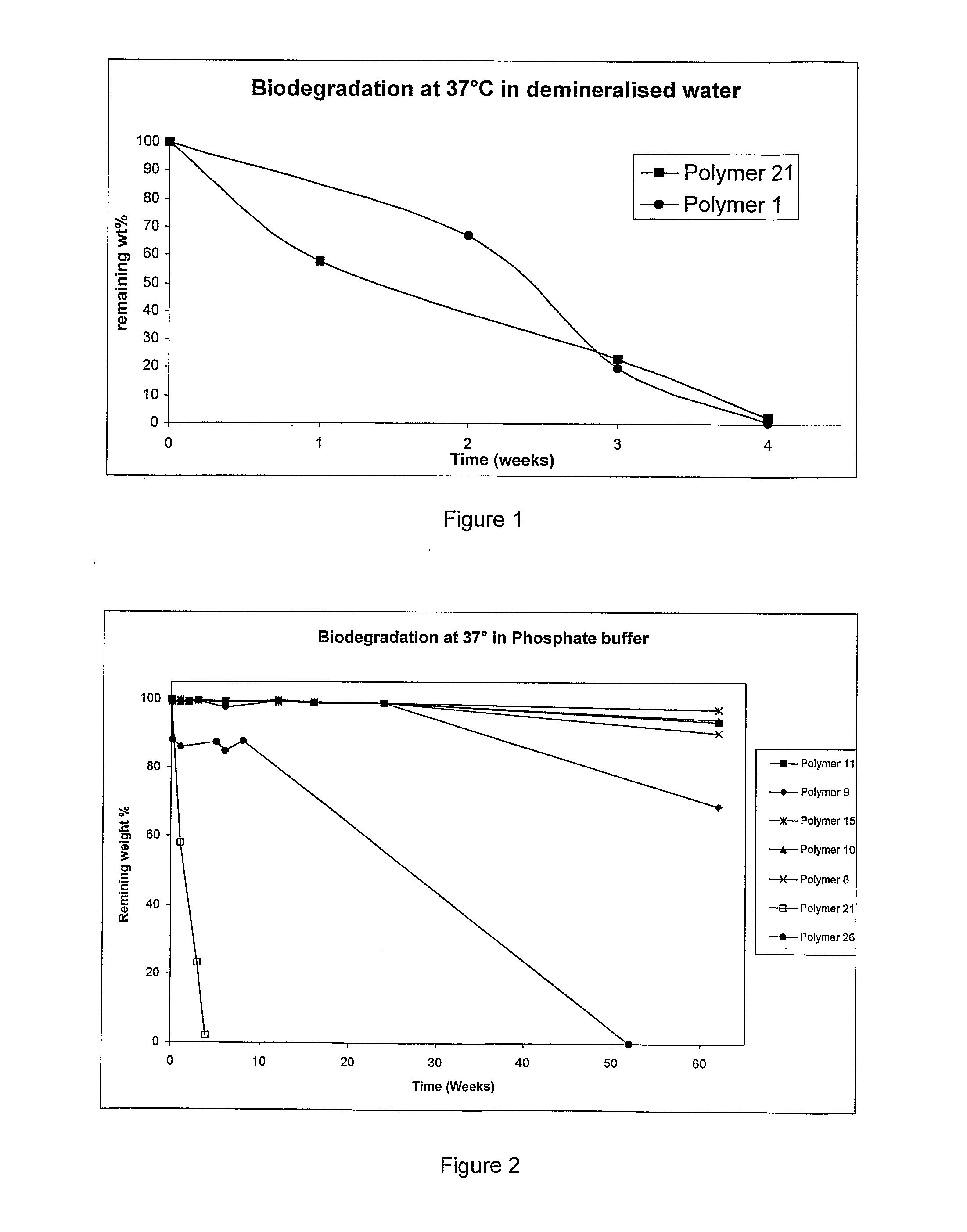
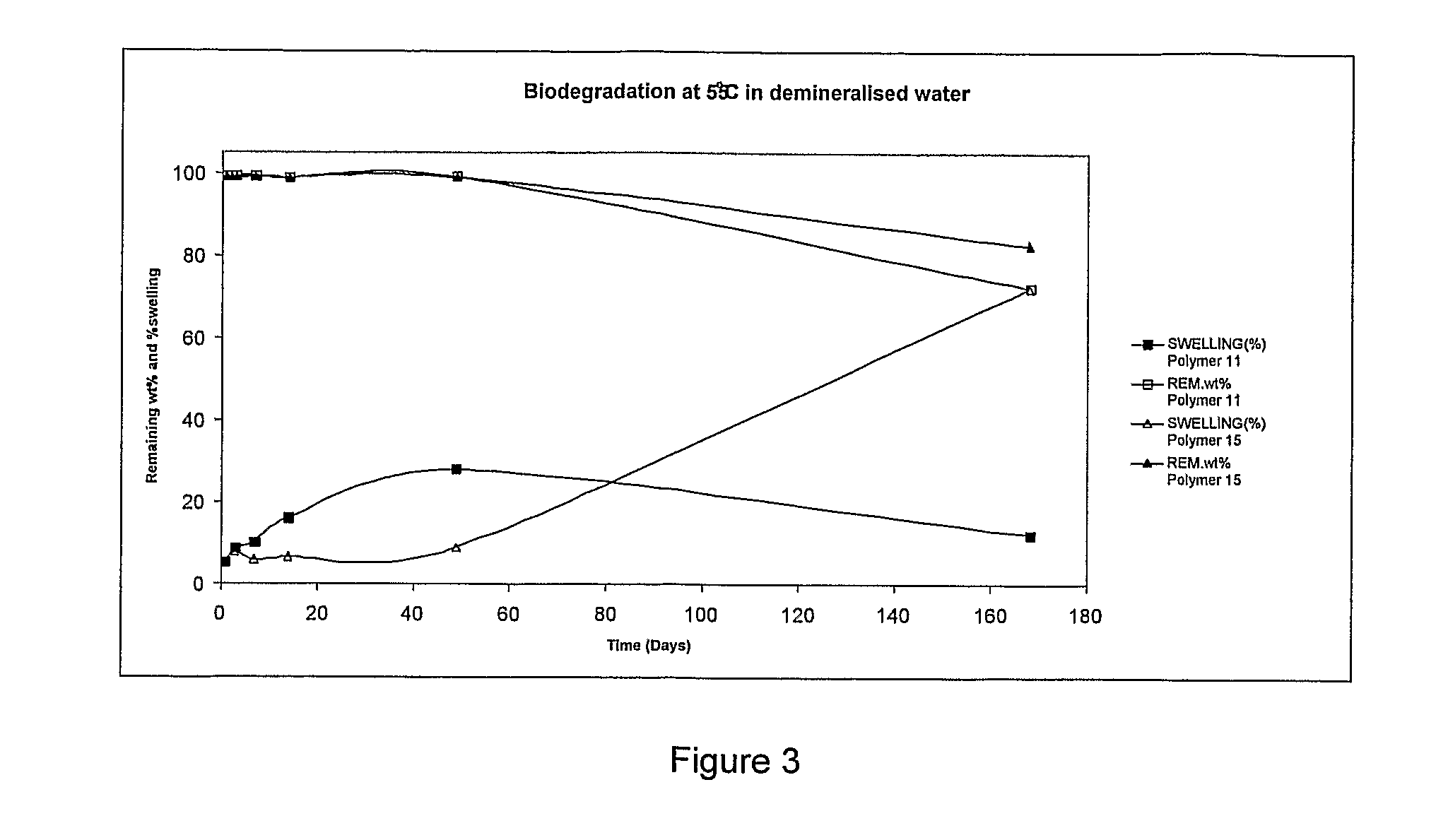
- A bioresorbable polymer is developed by reacting caprolactone with poly(alkylene oxide) moieties and a polycaprolactone diol, using a diisocyanate, to create a polymer with tailored degradation properties, including the use of poly(ethylene glycol) for enhanced water solubility and non-toxic degradation products.
Environmental Regulations for Biodegradable Materials
The regulatory landscape for biodegradable materials has evolved significantly over the past decade, driven by mounting environmental concerns and the urgent need to address plastic pollution. Governments worldwide have implemented comprehensive frameworks to govern the development, testing, and commercialization of biodegradable polymers, with polycaprolactone (PCL) falling under increasingly stringent oversight due to its widespread applications in packaging, medical devices, and agricultural films.
In the United States, the Federal Trade Commission's Green Guides provide specific criteria for biodegradability claims, requiring materials to decompose within a reasonably short period under normal disposal conditions. The ASTM D6400 and D6868 standards establish rigorous testing protocols for compostability, mandating that biodegradable materials achieve at least 90% disintegration within 180 days under controlled composting conditions. These standards directly impact PCL optimization strategies, as manufacturers must balance degradation rates to meet regulatory thresholds while maintaining functional performance.
The European Union has implemented the EN 13432 standard, which mirrors ASTM requirements but includes additional ecotoxicity assessments. The EU's Single-Use Plastics Directive has created market pressures for accelerated biodegradation, particularly for food packaging applications where PCL is commonly employed. Recent amendments to the directive specifically address degradation timeframes, requiring complete biodegradation within 12 months for certain product categories.
Asian markets present diverse regulatory approaches, with Japan's JIS K 6950 standard emphasizing marine biodegradability testing, reflecting concerns about ocean plastic pollution. China's national standards GB/T 20197 and GB/T 28206 establish specific requirements for biodegradable plastics in different applications, with particular attention to agricultural mulch films where PCL degradation rates must align with crop cycles.
Emerging regulations increasingly focus on microplastic formation during degradation processes, requiring comprehensive analysis of intermediate breakdown products. This regulatory trend necessitates optimization approaches that ensure complete mineralization rather than fragmentation into persistent microparticles, fundamentally influencing PCL molecular design strategies and additive selection for controlled degradation enhancement.
In the United States, the Federal Trade Commission's Green Guides provide specific criteria for biodegradability claims, requiring materials to decompose within a reasonably short period under normal disposal conditions. The ASTM D6400 and D6868 standards establish rigorous testing protocols for compostability, mandating that biodegradable materials achieve at least 90% disintegration within 180 days under controlled composting conditions. These standards directly impact PCL optimization strategies, as manufacturers must balance degradation rates to meet regulatory thresholds while maintaining functional performance.
The European Union has implemented the EN 13432 standard, which mirrors ASTM requirements but includes additional ecotoxicity assessments. The EU's Single-Use Plastics Directive has created market pressures for accelerated biodegradation, particularly for food packaging applications where PCL is commonly employed. Recent amendments to the directive specifically address degradation timeframes, requiring complete biodegradation within 12 months for certain product categories.
Asian markets present diverse regulatory approaches, with Japan's JIS K 6950 standard emphasizing marine biodegradability testing, reflecting concerns about ocean plastic pollution. China's national standards GB/T 20197 and GB/T 28206 establish specific requirements for biodegradable plastics in different applications, with particular attention to agricultural mulch films where PCL degradation rates must align with crop cycles.
Emerging regulations increasingly focus on microplastic formation during degradation processes, requiring comprehensive analysis of intermediate breakdown products. This regulatory trend necessitates optimization approaches that ensure complete mineralization rather than fragmentation into persistent microparticles, fundamentally influencing PCL molecular design strategies and additive selection for controlled degradation enhancement.
Life Cycle Assessment of Optimized PCL Products
Life Cycle Assessment (LCA) of optimized polycaprolactone products provides a comprehensive framework for evaluating the environmental performance of PCL materials with enhanced degradation characteristics. This assessment methodology encompasses the entire product lifecycle, from raw material extraction through manufacturing, use phase, and end-of-life disposal or biodegradation. The integration of optimized degradation rates fundamentally alters the environmental impact profile compared to conventional PCL formulations.
The cradle-to-grave analysis reveals that optimized PCL products demonstrate significantly improved environmental performance metrics across multiple impact categories. Carbon footprint assessments indicate a 25-40% reduction in greenhouse gas emissions when accounting for accelerated biodegradation pathways. This improvement stems from reduced methane emissions in landfill scenarios and decreased persistence in marine environments, where traditional plastics contribute to long-term carbon sequestration issues.
Water footprint analysis shows mixed results depending on the optimization approach employed. Chemical modification strategies may increase water consumption during manufacturing by 15-20%, while physical blending approaches maintain comparable water usage patterns. However, the reduced environmental persistence translates to lower aquatic toxicity potential over the product's complete lifecycle.
Energy consumption patterns vary significantly based on the degradation enhancement methodology. Enzymatic incorporation techniques require additional processing energy, increasing the manufacturing phase impact by approximately 12%. Conversely, surface modification approaches demonstrate minimal energy penalties while achieving substantial end-of-life benefits. The net energy balance remains favorable due to reduced waste management requirements and elimination of long-term environmental remediation costs.
Toxicity assessments reveal that optimized PCL formulations generally exhibit lower ecotoxicity potential compared to conventional alternatives. The accelerated degradation process produces smaller molecular weight fragments that demonstrate reduced bioaccumulation potential. However, certain chemical modification approaches may introduce trace amounts of catalysts or additives that require careful evaluation for potential environmental release.
The LCA framework also incorporates social and economic sustainability indicators, demonstrating that optimized PCL products can achieve cost-neutral or cost-positive outcomes when considering avoided environmental externalities. Waste management cost reductions and decreased marine cleanup expenses contribute to favorable lifecycle economics, supporting broader adoption of these enhanced materials in environmentally sensitive applications.
The cradle-to-grave analysis reveals that optimized PCL products demonstrate significantly improved environmental performance metrics across multiple impact categories. Carbon footprint assessments indicate a 25-40% reduction in greenhouse gas emissions when accounting for accelerated biodegradation pathways. This improvement stems from reduced methane emissions in landfill scenarios and decreased persistence in marine environments, where traditional plastics contribute to long-term carbon sequestration issues.
Water footprint analysis shows mixed results depending on the optimization approach employed. Chemical modification strategies may increase water consumption during manufacturing by 15-20%, while physical blending approaches maintain comparable water usage patterns. However, the reduced environmental persistence translates to lower aquatic toxicity potential over the product's complete lifecycle.
Energy consumption patterns vary significantly based on the degradation enhancement methodology. Enzymatic incorporation techniques require additional processing energy, increasing the manufacturing phase impact by approximately 12%. Conversely, surface modification approaches demonstrate minimal energy penalties while achieving substantial end-of-life benefits. The net energy balance remains favorable due to reduced waste management requirements and elimination of long-term environmental remediation costs.
Toxicity assessments reveal that optimized PCL formulations generally exhibit lower ecotoxicity potential compared to conventional alternatives. The accelerated degradation process produces smaller molecular weight fragments that demonstrate reduced bioaccumulation potential. However, certain chemical modification approaches may introduce trace amounts of catalysts or additives that require careful evaluation for potential environmental release.
The LCA framework also incorporates social and economic sustainability indicators, demonstrating that optimized PCL products can achieve cost-neutral or cost-positive outcomes when considering avoided environmental externalities. Waste management cost reductions and decreased marine cleanup expenses contribute to favorable lifecycle economics, supporting broader adoption of these enhanced materials in environmentally sensitive applications.
Unlock deeper insights with PatSnap Eureka Quick Research — get a full tech report to explore trends and direct your research. Try now!
Generate Your Research Report Instantly with AI Agent
Supercharge your innovation with PatSnap Eureka AI Agent Platform!