
Optimizing Reactor Core Layout for Maximum Efficiency
MAR 10, 20269 MIN READ
Generate Your Research Report Instantly with AI Agent
Patsnap Eureka helps you evaluate technical feasibility & market potential.
Nuclear Reactor Core Optimization Background and Objectives
Nuclear reactor core optimization represents a critical frontier in nuclear engineering, where the strategic arrangement of fuel assemblies, control rods, and other core components directly influences reactor performance, safety margins, and economic viability. The pursuit of maximum efficiency in reactor core layout has evolved from early empirical approaches to sophisticated computational methodologies that leverage advanced physics modeling and artificial intelligence algorithms.
The historical development of reactor core optimization began with the first commercial nuclear power plants in the 1950s, where engineers relied primarily on conservative design principles and limited computational tools. Early reactor designs prioritized safety and operational stability over efficiency optimization, resulting in substantial margins but suboptimal fuel utilization. The Three Mile Island incident in 1979 and subsequent regulatory changes further emphasized safety considerations, temporarily slowing efficiency-focused innovations.
The advent of high-performance computing in the 1990s marked a transformative period, enabling detailed neutronics calculations and multi-physics simulations that could accurately predict core behavior under various operating conditions. This computational revolution allowed engineers to explore complex optimization scenarios previously impossible to analyze, leading to significant improvements in fuel cycle economics and reactor performance.
Contemporary reactor core optimization encompasses multiple interconnected objectives that extend beyond simple power maximization. Primary technical goals include achieving uniform power distribution to minimize hot spots and reduce peak fuel temperatures, optimizing neutron flux patterns to maximize fuel burnup while maintaining adequate shutdown margins, and minimizing neutron leakage to improve overall neutron economy. These objectives must be balanced against stringent safety requirements, including maintaining sufficient reactivity control margins and ensuring compliance with thermal-hydraulic limits.
Economic optimization targets focus on extending fuel cycle lengths to reduce refueling costs, improving capacity factors through enhanced operational flexibility, and maximizing the utilization of expensive enriched uranium fuel. Environmental considerations increasingly influence optimization strategies, with emphasis on minimizing radioactive waste generation and reducing the long-term radiotoxicity of spent fuel through advanced burning strategies.
Modern optimization approaches integrate machine learning algorithms with traditional physics-based methods, enabling real-time adaptive core management strategies that respond to changing operational conditions and fuel depletion patterns. These advanced methodologies promise to unlock previously unattainable efficiency levels while maintaining the rigorous safety standards essential for nuclear power plant operation.
The historical development of reactor core optimization began with the first commercial nuclear power plants in the 1950s, where engineers relied primarily on conservative design principles and limited computational tools. Early reactor designs prioritized safety and operational stability over efficiency optimization, resulting in substantial margins but suboptimal fuel utilization. The Three Mile Island incident in 1979 and subsequent regulatory changes further emphasized safety considerations, temporarily slowing efficiency-focused innovations.
The advent of high-performance computing in the 1990s marked a transformative period, enabling detailed neutronics calculations and multi-physics simulations that could accurately predict core behavior under various operating conditions. This computational revolution allowed engineers to explore complex optimization scenarios previously impossible to analyze, leading to significant improvements in fuel cycle economics and reactor performance.
Contemporary reactor core optimization encompasses multiple interconnected objectives that extend beyond simple power maximization. Primary technical goals include achieving uniform power distribution to minimize hot spots and reduce peak fuel temperatures, optimizing neutron flux patterns to maximize fuel burnup while maintaining adequate shutdown margins, and minimizing neutron leakage to improve overall neutron economy. These objectives must be balanced against stringent safety requirements, including maintaining sufficient reactivity control margins and ensuring compliance with thermal-hydraulic limits.
Economic optimization targets focus on extending fuel cycle lengths to reduce refueling costs, improving capacity factors through enhanced operational flexibility, and maximizing the utilization of expensive enriched uranium fuel. Environmental considerations increasingly influence optimization strategies, with emphasis on minimizing radioactive waste generation and reducing the long-term radiotoxicity of spent fuel through advanced burning strategies.
Modern optimization approaches integrate machine learning algorithms with traditional physics-based methods, enabling real-time adaptive core management strategies that respond to changing operational conditions and fuel depletion patterns. These advanced methodologies promise to unlock previously unattainable efficiency levels while maintaining the rigorous safety standards essential for nuclear power plant operation.
Market Demand for Enhanced Nuclear Reactor Efficiency
The global nuclear energy sector is experiencing unprecedented momentum driven by urgent climate commitments and growing energy security concerns. Nations worldwide are recognizing nuclear power as a critical component in achieving carbon neutrality goals while maintaining reliable baseload electricity generation. This renewed focus has intensified demand for advanced reactor technologies that can deliver superior performance metrics.
Enhanced reactor efficiency has become a paramount market driver as utilities and governments seek to maximize return on nuclear investments. The substantial capital requirements for nuclear projects necessitate optimal performance throughout extended operational lifespans. Reactor core layout optimization directly impacts fuel utilization rates, operational costs, and overall plant economics, making it a high-priority area for technological advancement.
Emerging markets in Asia, particularly China and India, are driving significant demand for efficient nuclear technologies as they expand their nuclear fleets to meet rapidly growing electricity consumption. These markets prioritize reactor designs that can deliver maximum energy output while minimizing fuel costs and waste generation. The emphasis on indigenous technology development in these regions creates substantial opportunities for innovative core layout solutions.
Existing nuclear operators in mature markets are increasingly focused on life extension programs and performance upgrades. Enhanced core layouts offer pathways to increase power output within existing reactor vessels, providing economic benefits without requiring new construction permits. This retrofit market represents substantial near-term opportunities for advanced core design technologies.
The small modular reactor segment is creating new market dynamics where efficiency optimization becomes even more critical due to economies of scale challenges. SMR developers require innovative core layouts that can achieve competitive performance metrics in smaller reactor configurations, driving demand for sophisticated optimization methodologies.
Regulatory frameworks worldwide are evolving to accommodate advanced reactor designs, with efficiency metrics becoming integral to licensing considerations. Enhanced safety margins achieved through optimized core layouts align with regulatory preferences for passive safety systems and improved operational characteristics.
The growing emphasis on fuel cycle sustainability is creating market demand for reactor cores that can achieve higher burnup rates and improved neutron economy. Advanced core layouts that maximize fuel utilization while minimizing long-lived waste products address both economic and environmental market drivers in the nuclear sector.
Enhanced reactor efficiency has become a paramount market driver as utilities and governments seek to maximize return on nuclear investments. The substantial capital requirements for nuclear projects necessitate optimal performance throughout extended operational lifespans. Reactor core layout optimization directly impacts fuel utilization rates, operational costs, and overall plant economics, making it a high-priority area for technological advancement.
Emerging markets in Asia, particularly China and India, are driving significant demand for efficient nuclear technologies as they expand their nuclear fleets to meet rapidly growing electricity consumption. These markets prioritize reactor designs that can deliver maximum energy output while minimizing fuel costs and waste generation. The emphasis on indigenous technology development in these regions creates substantial opportunities for innovative core layout solutions.
Existing nuclear operators in mature markets are increasingly focused on life extension programs and performance upgrades. Enhanced core layouts offer pathways to increase power output within existing reactor vessels, providing economic benefits without requiring new construction permits. This retrofit market represents substantial near-term opportunities for advanced core design technologies.
The small modular reactor segment is creating new market dynamics where efficiency optimization becomes even more critical due to economies of scale challenges. SMR developers require innovative core layouts that can achieve competitive performance metrics in smaller reactor configurations, driving demand for sophisticated optimization methodologies.
Regulatory frameworks worldwide are evolving to accommodate advanced reactor designs, with efficiency metrics becoming integral to licensing considerations. Enhanced safety margins achieved through optimized core layouts align with regulatory preferences for passive safety systems and improved operational characteristics.
The growing emphasis on fuel cycle sustainability is creating market demand for reactor cores that can achieve higher burnup rates and improved neutron economy. Advanced core layouts that maximize fuel utilization while minimizing long-lived waste products address both economic and environmental market drivers in the nuclear sector.
Current Reactor Core Design Challenges and Constraints
Modern reactor core design faces a complex array of challenges that significantly impact operational efficiency and safety performance. The fundamental constraint lies in balancing neutron flux distribution while maintaining adequate heat removal capabilities throughout the core geometry. Traditional design approaches often result in non-uniform power distributions, leading to localized hot spots that limit overall reactor performance and necessitate conservative operating margins.
Thermal-hydraulic limitations represent one of the most critical design constraints in contemporary reactor systems. The need to ensure adequate coolant flow distribution across all fuel assemblies while preventing flow-induced vibrations creates inherent trade-offs in core layout optimization. Coolant channel design must accommodate varying thermal loads while maintaining structural integrity under high-temperature and high-pressure conditions, often resulting in over-conservative designs that sacrifice efficiency for safety margins.
Neutron physics constraints impose additional complexity on core layout optimization efforts. The requirement to maintain criticality control throughout the fuel cycle while minimizing neutron leakage creates competing design objectives. Fuel assembly positioning must consider both local and global neutron flux patterns, with control rod placement further complicating the optimization landscape. These physics-based limitations often force designers to accept suboptimal configurations to ensure reactor controllability and safety.
Material degradation and fuel management constraints significantly influence core design decisions. Radiation-induced material property changes, fuel burnup patterns, and structural component lifetime limitations create dynamic constraints that evolve throughout the reactor operational cycle. The need to accommodate fuel shuffling strategies while maintaining optimal neutron economy adds another layer of complexity to core layout optimization.
Economic and manufacturing constraints further limit design flexibility in reactor core optimization. Standardized fuel assembly designs, manufacturing tolerances, and cost considerations often prevent implementation of theoretically optimal configurations. The requirement for proven materials and established fabrication techniques constrains innovative design approaches that could potentially enhance reactor efficiency.
Regulatory compliance requirements impose additional design constraints that may conflict with efficiency optimization objectives. Safety analysis requirements, licensing precedents, and regulatory approval timelines often favor conservative design approaches over innovative optimization strategies, creating barriers to implementing advanced core layout concepts that could improve reactor performance.
Thermal-hydraulic limitations represent one of the most critical design constraints in contemporary reactor systems. The need to ensure adequate coolant flow distribution across all fuel assemblies while preventing flow-induced vibrations creates inherent trade-offs in core layout optimization. Coolant channel design must accommodate varying thermal loads while maintaining structural integrity under high-temperature and high-pressure conditions, often resulting in over-conservative designs that sacrifice efficiency for safety margins.
Neutron physics constraints impose additional complexity on core layout optimization efforts. The requirement to maintain criticality control throughout the fuel cycle while minimizing neutron leakage creates competing design objectives. Fuel assembly positioning must consider both local and global neutron flux patterns, with control rod placement further complicating the optimization landscape. These physics-based limitations often force designers to accept suboptimal configurations to ensure reactor controllability and safety.
Material degradation and fuel management constraints significantly influence core design decisions. Radiation-induced material property changes, fuel burnup patterns, and structural component lifetime limitations create dynamic constraints that evolve throughout the reactor operational cycle. The need to accommodate fuel shuffling strategies while maintaining optimal neutron economy adds another layer of complexity to core layout optimization.
Economic and manufacturing constraints further limit design flexibility in reactor core optimization. Standardized fuel assembly designs, manufacturing tolerances, and cost considerations often prevent implementation of theoretically optimal configurations. The requirement for proven materials and established fabrication techniques constrains innovative design approaches that could potentially enhance reactor efficiency.
Regulatory compliance requirements impose additional design constraints that may conflict with efficiency optimization objectives. Safety analysis requirements, licensing precedents, and regulatory approval timelines often favor conservative design approaches over innovative optimization strategies, creating barriers to implementing advanced core layout concepts that could improve reactor performance.
Existing Core Layout Optimization Solutions
01 Fuel assembly arrangement and positioning optimization
Optimizing the spatial arrangement and positioning of fuel assemblies within the reactor core to improve neutron flux distribution and power output. This includes strategic placement of fresh and spent fuel assemblies, consideration of assembly enrichment levels, and geometric configurations that maximize thermal efficiency while maintaining safety margins. Advanced positioning techniques can reduce power peaking factors and improve overall core performance.- Fuel assembly arrangement and positioning optimization: Optimizing the spatial arrangement and positioning of fuel assemblies within the reactor core to improve neutron flux distribution and power output. This includes strategic placement of fresh and spent fuel assemblies, consideration of assembly enrichment levels, and geometric configurations that maximize core efficiency while maintaining safety margins. Advanced positioning strategies can reduce power peaking factors and improve overall core performance.
- Core loading pattern and refueling strategies: Development of optimized loading patterns for fuel assemblies during initial core loading and subsequent refueling cycles. This involves determining the optimal sequence and location for inserting new fuel assemblies and repositioning existing ones to achieve uniform burnup, extended cycle length, and improved fuel utilization. Computational methods and simulation tools are employed to evaluate different loading scenarios and select configurations that maximize economic and operational benefits.
- Control rod configuration and reactivity management: Design and arrangement of control rod systems to effectively manage reactivity and power distribution throughout the core. This includes determining the number, position, and grouping of control rods to provide adequate shutdown margin, control power distribution, and compensate for fuel burnup. Optimized control rod patterns enable better load-following capability and reduce operational constraints while maintaining safety requirements.
- Neutron reflector and moderator optimization: Enhancement of core efficiency through optimized design of neutron reflectors and moderator configurations surrounding and within the core. Reflector materials and geometries are selected to reduce neutron leakage and improve neutron economy. Moderator-to-fuel ratios and spatial distributions are optimized to achieve desired neutron energy spectra and improve fission rates, leading to better fuel utilization and extended core lifetime.
- Advanced core design with heterogeneous configurations: Implementation of heterogeneous core designs incorporating different fuel types, enrichments, or burnable absorbers in specific core regions to optimize power distribution and fuel cycle economics. This includes mixed oxide fuel arrangements, axial and radial blanket configurations, and zone-based enrichment strategies. Such designs can achieve flatter power distributions, reduced peak power densities, and improved breeding ratios in certain reactor types.
02 Core loading pattern and refueling strategies
Development of optimized loading patterns for fuel assemblies during initial core loading and subsequent refueling cycles. This involves determining the optimal sequence and location for inserting new fuel assemblies and repositioning existing ones to achieve uniform burnup, extended cycle length, and improved fuel utilization. Strategies include low-leakage loading patterns and advanced shuffling schemes that enhance economic performance.Expand Specific Solutions03 Control rod configuration and reactivity management
Design and arrangement of control rod systems to optimize reactivity control and power distribution throughout the core. This includes determining the number, position, and grouping of control rods to achieve effective shutdown margins, minimize power distribution distortions, and enable flexible power maneuvering. Advanced configurations can improve operational flexibility while maintaining safety parameters.Expand Specific Solutions04 Neutron flux and power distribution optimization
Methods for achieving uniform neutron flux and power distribution across the reactor core to maximize thermal efficiency and fuel utilization. This involves computational modeling and simulation techniques to predict and optimize flux patterns, reduce hot spots, and minimize power peaking. Optimization approaches include adjusting fuel enrichment zones, burnable poison distribution, and assembly placement to achieve flatter power profiles.Expand Specific Solutions05 Advanced core design and computational methods
Application of sophisticated computational tools and algorithms for reactor core design optimization, including artificial intelligence, machine learning, and advanced simulation techniques. These methods enable comprehensive analysis of multiple design parameters simultaneously, automated optimization of core configurations, and prediction of long-term performance characteristics. Modern approaches can significantly reduce design time while improving core efficiency and safety margins.Expand Specific Solutions
Major Players in Nuclear Reactor Design Industry
The reactor core layout optimization field represents a mature nuclear technology sector experiencing steady growth driven by efficiency demands and safety regulations. The market, valued in billions globally, encompasses established nuclear powers and emerging markets seeking clean energy solutions. Technology maturity varies significantly across key players, with Westinghouse Electric Co. LLC and Framatome SA leading in advanced reactor designs and optimization algorithms. Chinese entities like China Nuclear Power Technology Research Institute Co. Ltd. and CGN Power Co., Ltd. demonstrate rapid technological advancement through substantial government investment. Japanese companies including Hitachi-GE Nuclear Energy Ltd., Global Nuclear Fuel-Japan Co., Ltd., and Mitsubishi Heavy Industries contribute sophisticated fuel management and thermal optimization technologies. Innovative players like TerraPower LLC pioneer next-generation reactor concepts with advanced core configurations. Research institutions such as California Institute of Technology and Karlsruher Institut für Technologie provide fundamental research supporting computational modeling and materials science breakthroughs essential for optimization algorithms.
Westinghouse Electric Co. LLC
Technical Solution: Westinghouse employs advanced computational fluid dynamics (CFD) and neutronics modeling to optimize reactor core layouts, focusing on their AP1000 and eVinci reactor designs. Their approach integrates machine learning algorithms with traditional physics-based simulations to achieve optimal fuel assembly positioning and control rod placement. The company utilizes multi-objective optimization techniques that simultaneously consider thermal-hydraulic performance, neutron flux distribution, and fuel burnup characteristics. Their proprietary BEACON core monitoring system provides real-time optimization capabilities, enabling dynamic adjustment of core parameters during operation. Recent developments include implementation of digital twin technology for predictive core performance analysis and automated optimization routines that can reduce design iteration time by up to 40% while improving fuel utilization efficiency by 8-12%.
Strengths: Proven track record with deployed reactor designs, advanced digital monitoring systems, strong regulatory approval experience. Weaknesses: Limited to traditional PWR technology, high development costs, slower adaptation to small modular reactor trends.
Hitachi-GE Nuclear Energy Ltd.
Technical Solution: Hitachi-GE combines advanced boiling water reactor (BWR) expertise with cutting-edge optimization algorithms to enhance core layout efficiency in their ABWR and ESBWR designs. Their optimization approach utilizes high-fidelity multiphysics simulations that couple neutronics, thermal-hydraulics, and structural mechanics to achieve optimal fuel bundle arrangements and control blade positioning. The company employs evolutionary optimization algorithms that can simultaneously optimize multiple objectives including power peaking factors, thermal margins, and fuel cycle economics. Their PRIME core monitoring system provides real-time feedback for dynamic optimization during plant operation. Recent innovations include development of digital twin technology that enables virtual testing of core configurations before implementation, reducing design validation time by 30% while improving fuel efficiency by 6-10%. The company's optimization framework also incorporates advanced uncertainty quantification methods to ensure robust performance under various operating conditions.
Strengths: Strong BWR technology base, advanced digital monitoring systems, proven ABWR commercial success, comprehensive multiphysics modeling. Weaknesses: Limited to BWR technology, declining global BWR market share, competition from PWR designs, regulatory challenges in some markets.
Key Innovations in Reactor Core Configuration Patents
Method for establishing core-loading pattern of reactor and algorithm optimizing the core loading pattern of reactor
PatentInactiveJP2006145536A
Innovation
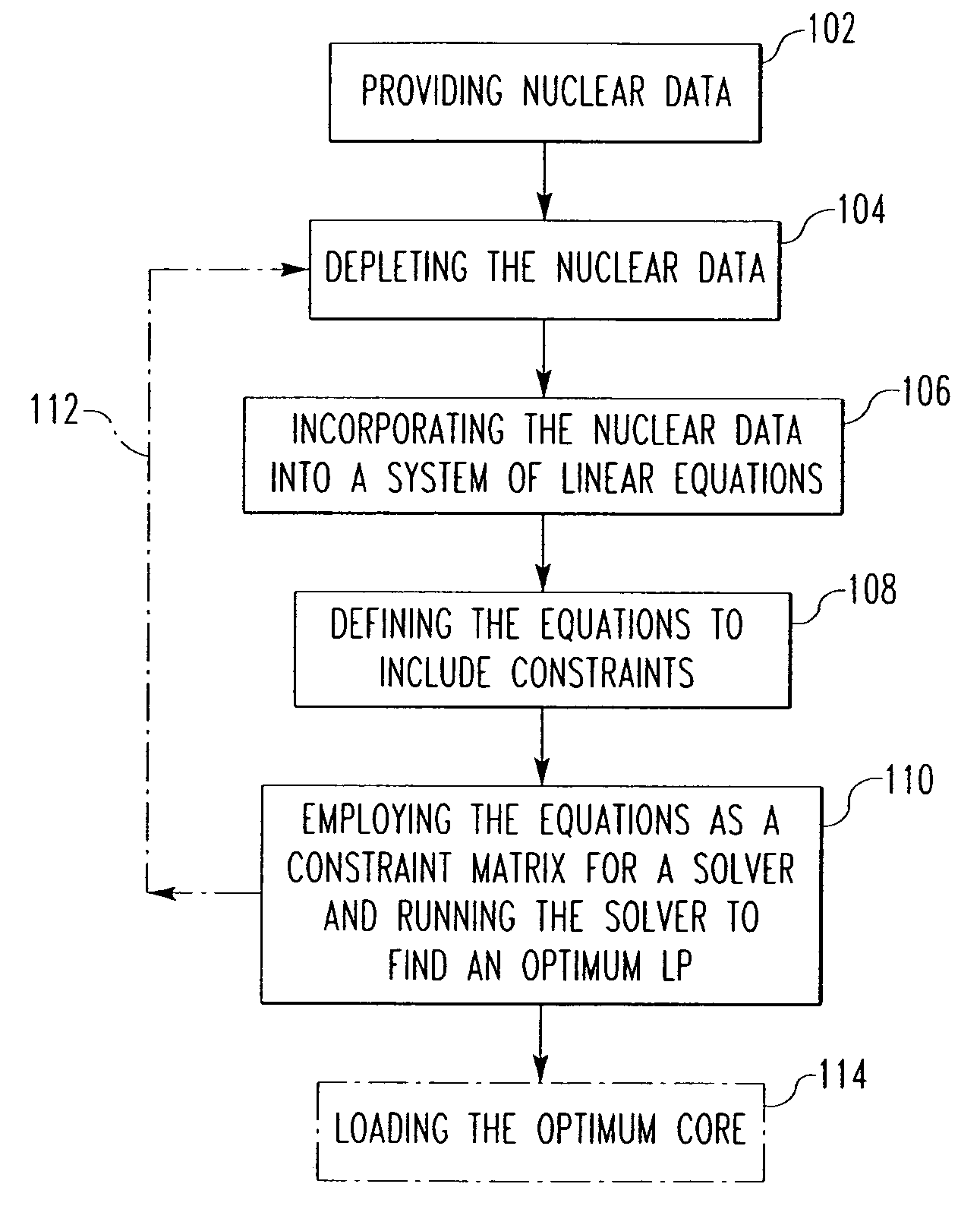
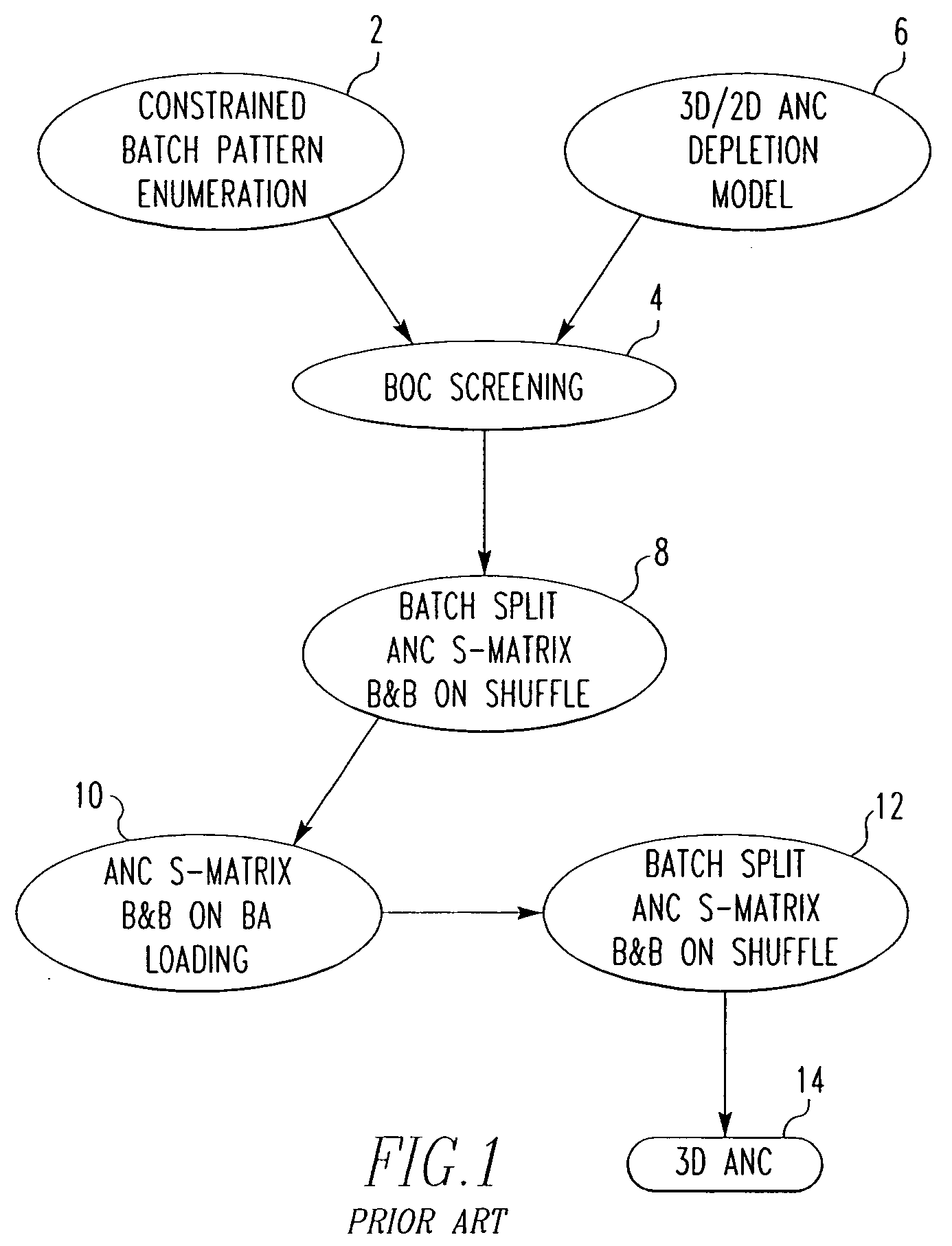
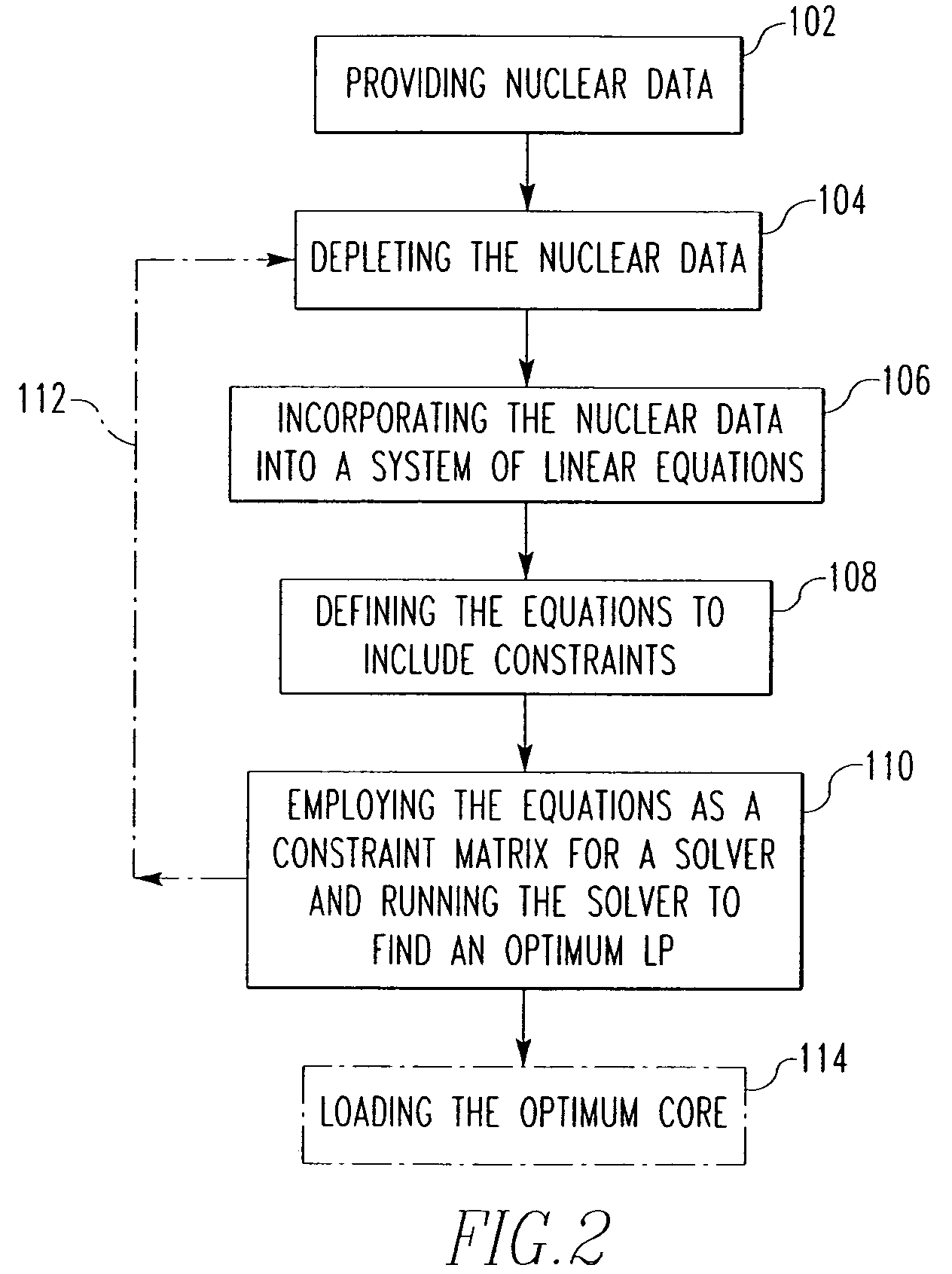
- A method using the Analytic Coarse Mesh Finite Difference (ACMFD) method to derive a system of equations directly incorporated into a mixed integer programming (MIP) solver's constraint matrix, accurately representing shuffling non-linearities as linear equations, thereby reducing computational time and improving optimization efficiency.


Method and algorithm for searching and optimizing nuclear reactor core loading patterns
PatentInactiveUS20060109944A1
Innovation
- The method incorporates the equations of a nuclear design quality flux solution, such as the Analytic Coarse Mesh Finite Difference Method, directly into a Mixed Integer Program solver, allowing for non-linear solutions that accurately represent neutron physics and shuffling effects, thereby reducing errors and computation time.

Nuclear Safety Regulations and Compliance Framework
Nuclear reactor core layout optimization operates within a comprehensive regulatory framework designed to ensure safety, security, and environmental protection. The regulatory landscape is primarily governed by national nuclear regulatory authorities, with the Nuclear Regulatory Commission (NRC) in the United States, the Nuclear Regulation Authority (NRA) in Japan, and similar bodies worldwide establishing fundamental safety standards. These organizations mandate strict compliance with reactor design criteria, operational limits, and safety analysis requirements that directly influence core layout decisions.
The International Atomic Energy Agency (IAEA) provides global safety standards and guidelines that serve as the foundation for national regulations. Key documents include Safety Standards Series publications covering reactor design, safety analysis, and operational safety requirements. These standards establish fundamental safety functions that must be maintained regardless of core configuration, including reactivity control, heat removal, and containment of radioactive materials.
Regulatory compliance for core layout optimization requires adherence to multiple technical specifications and safety criteria. Design basis accidents must be analyzed for any proposed core configuration, including loss-of-coolant accidents, reactivity insertion events, and station blackout scenarios. The regulatory framework mandates that core layouts maintain adequate safety margins under all postulated conditions, with specific requirements for shutdown margins, power peaking factors, and thermal limits.
Licensing processes for core layout modifications involve extensive documentation and review procedures. Utilities must demonstrate through detailed safety analyses that proposed layouts meet all applicable regulations and maintain equivalent or improved safety performance. This includes probabilistic risk assessments, deterministic safety analyses, and environmental impact evaluations that validate the safety and efficiency benefits of optimized configurations.
Emerging regulatory trends focus on risk-informed and performance-based approaches that provide greater flexibility for innovative core designs while maintaining safety objectives. Modern regulatory frameworks increasingly recognize the potential for advanced computational methods and optimization techniques to enhance both safety and efficiency, provided that rigorous validation and verification processes demonstrate compliance with fundamental safety principles.
The International Atomic Energy Agency (IAEA) provides global safety standards and guidelines that serve as the foundation for national regulations. Key documents include Safety Standards Series publications covering reactor design, safety analysis, and operational safety requirements. These standards establish fundamental safety functions that must be maintained regardless of core configuration, including reactivity control, heat removal, and containment of radioactive materials.
Regulatory compliance for core layout optimization requires adherence to multiple technical specifications and safety criteria. Design basis accidents must be analyzed for any proposed core configuration, including loss-of-coolant accidents, reactivity insertion events, and station blackout scenarios. The regulatory framework mandates that core layouts maintain adequate safety margins under all postulated conditions, with specific requirements for shutdown margins, power peaking factors, and thermal limits.
Licensing processes for core layout modifications involve extensive documentation and review procedures. Utilities must demonstrate through detailed safety analyses that proposed layouts meet all applicable regulations and maintain equivalent or improved safety performance. This includes probabilistic risk assessments, deterministic safety analyses, and environmental impact evaluations that validate the safety and efficiency benefits of optimized configurations.
Emerging regulatory trends focus on risk-informed and performance-based approaches that provide greater flexibility for innovative core designs while maintaining safety objectives. Modern regulatory frameworks increasingly recognize the potential for advanced computational methods and optimization techniques to enhance both safety and efficiency, provided that rigorous validation and verification processes demonstrate compliance with fundamental safety principles.
Environmental Impact Assessment for Reactor Efficiency
The environmental implications of reactor core layout optimization extend far beyond operational efficiency metrics, encompassing a comprehensive spectrum of ecological, atmospheric, and societal considerations. Modern reactor efficiency improvements through optimized core configurations directly correlate with reduced environmental footprints, establishing a critical nexus between engineering excellence and environmental stewardship.
Optimized reactor core layouts significantly reduce radioactive waste generation through enhanced fuel utilization rates. Advanced geometric arrangements and fuel assembly positioning can achieve burnup rates exceeding 60 GWd/tU, compared to conventional designs operating at 45 GWd/tU. This improvement translates to approximately 25% reduction in high-level radioactive waste volume per unit of energy produced, substantially decreasing long-term storage requirements and associated environmental risks.
Thermal efficiency gains from optimized core layouts directly impact cooling water requirements and thermal discharge patterns. Enhanced neutron flux distribution and improved heat transfer characteristics can increase overall plant thermal efficiency by 2-3 percentage points. This improvement reduces cooling water intake by approximately 8-12% and correspondingly decreases thermal pollution in adjacent water bodies, preserving aquatic ecosystem integrity.
Carbon footprint analysis reveals that reactor efficiency optimization contributes significantly to greenhouse gas reduction objectives. Each percentage point improvement in reactor efficiency translates to approximately 15-20 tons of CO2 equivalent reduction per GWh of electricity generated, considering the entire nuclear fuel cycle. Over a typical reactor's 60-year operational lifespan, optimized core layouts can prevent emission of 2-3 million tons of CO2 equivalent compared to baseline configurations.
Resource conservation benefits emerge through reduced uranium mining requirements and extended fuel cycle intervals. Optimized core designs enable 15-20% reduction in natural uranium consumption while extending refueling cycles from 18 to 24 months. This efficiency improvement reduces mining-related environmental disturbances, including habitat disruption, groundwater contamination risks, and mill tailings generation.
Operational safety enhancements inherent in optimized core layouts contribute to environmental protection through reduced accident probabilities and improved emergency response capabilities. Advanced core configurations with flattened power distributions and enhanced shutdown margins reduce the likelihood of environmental releases during both normal operations and potential accident scenarios.
Optimized reactor core layouts significantly reduce radioactive waste generation through enhanced fuel utilization rates. Advanced geometric arrangements and fuel assembly positioning can achieve burnup rates exceeding 60 GWd/tU, compared to conventional designs operating at 45 GWd/tU. This improvement translates to approximately 25% reduction in high-level radioactive waste volume per unit of energy produced, substantially decreasing long-term storage requirements and associated environmental risks.
Thermal efficiency gains from optimized core layouts directly impact cooling water requirements and thermal discharge patterns. Enhanced neutron flux distribution and improved heat transfer characteristics can increase overall plant thermal efficiency by 2-3 percentage points. This improvement reduces cooling water intake by approximately 8-12% and correspondingly decreases thermal pollution in adjacent water bodies, preserving aquatic ecosystem integrity.
Carbon footprint analysis reveals that reactor efficiency optimization contributes significantly to greenhouse gas reduction objectives. Each percentage point improvement in reactor efficiency translates to approximately 15-20 tons of CO2 equivalent reduction per GWh of electricity generated, considering the entire nuclear fuel cycle. Over a typical reactor's 60-year operational lifespan, optimized core layouts can prevent emission of 2-3 million tons of CO2 equivalent compared to baseline configurations.
Resource conservation benefits emerge through reduced uranium mining requirements and extended fuel cycle intervals. Optimized core designs enable 15-20% reduction in natural uranium consumption while extending refueling cycles from 18 to 24 months. This efficiency improvement reduces mining-related environmental disturbances, including habitat disruption, groundwater contamination risks, and mill tailings generation.
Operational safety enhancements inherent in optimized core layouts contribute to environmental protection through reduced accident probabilities and improved emergency response capabilities. Advanced core configurations with flattened power distributions and enhanced shutdown margins reduce the likelihood of environmental releases during both normal operations and potential accident scenarios.
Unlock deeper insights with Patsnap Eureka Quick Research — get a full tech report to explore trends and direct your research. Try now!
Generate Your Research Report Instantly with AI Agent
Supercharge your innovation with Patsnap Eureka AI Agent Platform!