Reducing Sonic Fatigue in High-Pressure Reactor Systems
MAR 10, 20268 MIN READ
Generate Your Research Report Instantly with AI Agent
PatSnap Eureka helps you evaluate technical feasibility & market potential.
Sonic Fatigue in High-Pressure Reactors Background and Objectives
Sonic fatigue represents a critical engineering challenge in high-pressure reactor systems, where prolonged exposure to intense acoustic vibrations can lead to material degradation, structural failures, and catastrophic system breakdowns. This phenomenon occurs when reactor components experience cyclic stress fluctuations induced by pressure pulsations, flow-induced vibrations, and acoustic resonance within the high-pressure environment. The cumulative effect of these repetitive stress cycles can exceed material fatigue limits, resulting in crack initiation, propagation, and ultimate component failure.
The evolution of high-pressure reactor technology has paralleled the increasing demand for more efficient industrial processes across petrochemical, pharmaceutical, and energy sectors. Early reactor designs from the 1950s primarily focused on containing high pressures without adequate consideration of acoustic-induced fatigue mechanisms. As operating pressures escalated beyond 100 MPa in modern applications, engineers began recognizing sonic fatigue as a primary limiting factor in reactor longevity and operational safety.
Historical incidents in the 1980s and 1990s, including several high-profile reactor failures attributed to acoustic fatigue, catalyzed intensive research into understanding and mitigating these phenomena. The development of advanced computational fluid dynamics and finite element analysis tools in the 2000s enabled more sophisticated prediction and analysis of acoustic behavior within reactor systems.
Current technological objectives center on developing comprehensive solutions that address sonic fatigue through multiple approaches. Primary goals include establishing predictive models that accurately forecast fatigue life under various acoustic loading conditions, enabling proactive maintenance scheduling and design optimization. Advanced materials research aims to develop fatigue-resistant alloys and composite materials specifically engineered for high-pressure acoustic environments.
Design methodology improvements focus on implementing acoustic dampening strategies, optimizing internal geometries to minimize resonance effects, and developing active vibration control systems. Integration of real-time monitoring technologies represents another crucial objective, enabling continuous assessment of acoustic conditions and early detection of fatigue-related degradation.
The ultimate technological vision encompasses creating self-adaptive reactor systems capable of automatically adjusting operational parameters to minimize sonic fatigue exposure while maintaining optimal process efficiency and safety margins.
The evolution of high-pressure reactor technology has paralleled the increasing demand for more efficient industrial processes across petrochemical, pharmaceutical, and energy sectors. Early reactor designs from the 1950s primarily focused on containing high pressures without adequate consideration of acoustic-induced fatigue mechanisms. As operating pressures escalated beyond 100 MPa in modern applications, engineers began recognizing sonic fatigue as a primary limiting factor in reactor longevity and operational safety.
Historical incidents in the 1980s and 1990s, including several high-profile reactor failures attributed to acoustic fatigue, catalyzed intensive research into understanding and mitigating these phenomena. The development of advanced computational fluid dynamics and finite element analysis tools in the 2000s enabled more sophisticated prediction and analysis of acoustic behavior within reactor systems.
Current technological objectives center on developing comprehensive solutions that address sonic fatigue through multiple approaches. Primary goals include establishing predictive models that accurately forecast fatigue life under various acoustic loading conditions, enabling proactive maintenance scheduling and design optimization. Advanced materials research aims to develop fatigue-resistant alloys and composite materials specifically engineered for high-pressure acoustic environments.
Design methodology improvements focus on implementing acoustic dampening strategies, optimizing internal geometries to minimize resonance effects, and developing active vibration control systems. Integration of real-time monitoring technologies represents another crucial objective, enabling continuous assessment of acoustic conditions and early detection of fatigue-related degradation.
The ultimate technological vision encompasses creating self-adaptive reactor systems capable of automatically adjusting operational parameters to minimize sonic fatigue exposure while maintaining optimal process efficiency and safety margins.
Market Demand for Fatigue-Resistant Reactor Systems
The global market for fatigue-resistant reactor systems is experiencing unprecedented growth driven by the expanding chemical processing, petrochemical, and energy sectors. Industrial facilities worldwide are increasingly recognizing the critical importance of addressing sonic fatigue in high-pressure environments, as equipment failures can result in catastrophic consequences including production shutdowns, safety incidents, and substantial financial losses.
Chemical processing industries represent the largest market segment for fatigue-resistant reactor technologies. These facilities operate under extreme conditions where pressure vessels and reactor systems are subjected to continuous acoustic stress from high-velocity fluid flows, pressure fluctuations, and mechanical vibrations. The demand is particularly acute in ammonia synthesis plants, methanol production facilities, and hydrocracking units where operating pressures frequently exceed critical thresholds.
The petrochemical sector demonstrates strong market pull for advanced fatigue mitigation solutions. Refineries and petrochemical complexes are investing heavily in upgrading existing infrastructure and implementing next-generation reactor designs that can withstand prolonged exposure to sonic stress. This trend is amplified by stricter regulatory requirements and industry standards mandating enhanced safety protocols for high-pressure operations.
Emerging markets in Asia-Pacific and the Middle East are driving significant demand growth. Rapid industrialization in these regions has led to construction of numerous large-scale chemical plants and refineries, creating substantial opportunities for fatigue-resistant reactor system suppliers. These facilities are increasingly specifying advanced acoustic fatigue mitigation technologies from the design phase rather than retrofitting solutions.
The nuclear energy sector presents another substantial market opportunity. Next-generation reactor designs require sophisticated approaches to managing acoustic-induced fatigue, particularly in primary cooling systems and steam generators where sonic stress can compromise structural integrity over extended operational periods.
Market drivers include aging infrastructure in developed economies requiring modernization, increasing operational pressures to maximize throughput, and growing awareness of the economic benefits of proactive fatigue management. The total addressable market encompasses not only new reactor installations but also retrofit applications for existing facilities seeking to extend operational lifespans and improve reliability.
Chemical processing industries represent the largest market segment for fatigue-resistant reactor technologies. These facilities operate under extreme conditions where pressure vessels and reactor systems are subjected to continuous acoustic stress from high-velocity fluid flows, pressure fluctuations, and mechanical vibrations. The demand is particularly acute in ammonia synthesis plants, methanol production facilities, and hydrocracking units where operating pressures frequently exceed critical thresholds.
The petrochemical sector demonstrates strong market pull for advanced fatigue mitigation solutions. Refineries and petrochemical complexes are investing heavily in upgrading existing infrastructure and implementing next-generation reactor designs that can withstand prolonged exposure to sonic stress. This trend is amplified by stricter regulatory requirements and industry standards mandating enhanced safety protocols for high-pressure operations.
Emerging markets in Asia-Pacific and the Middle East are driving significant demand growth. Rapid industrialization in these regions has led to construction of numerous large-scale chemical plants and refineries, creating substantial opportunities for fatigue-resistant reactor system suppliers. These facilities are increasingly specifying advanced acoustic fatigue mitigation technologies from the design phase rather than retrofitting solutions.
The nuclear energy sector presents another substantial market opportunity. Next-generation reactor designs require sophisticated approaches to managing acoustic-induced fatigue, particularly in primary cooling systems and steam generators where sonic stress can compromise structural integrity over extended operational periods.
Market drivers include aging infrastructure in developed economies requiring modernization, increasing operational pressures to maximize throughput, and growing awareness of the economic benefits of proactive fatigue management. The total addressable market encompasses not only new reactor installations but also retrofit applications for existing facilities seeking to extend operational lifespans and improve reliability.
Current Sonic Fatigue Challenges in High-Pressure Environments
High-pressure reactor systems face significant sonic fatigue challenges that threaten operational integrity and safety. These challenges primarily stem from the complex interaction between extreme pressure conditions, acoustic vibrations, and material stress concentrations. The phenomenon becomes particularly pronounced when pressure fluctuations exceed 10 MPa, creating resonant frequencies that can propagate throughout the reactor structure.
Material degradation represents one of the most critical challenges in high-pressure environments. The combination of cyclic acoustic loading and sustained pressure stress accelerates crack initiation and propagation in reactor walls, particularly at weld joints and geometric discontinuities. Austenitic stainless steels and high-strength alloys commonly used in reactor construction exhibit reduced fatigue resistance under simultaneous sonic and pressure loading conditions.
Acoustic wave amplification poses another significant challenge, as high-pressure environments alter sound propagation characteristics. The increased fluid density and compressibility effects create conditions where acoustic waves can achieve higher amplitudes than predicted by conventional models. This amplification is particularly problematic in cylindrical reactor geometries where standing wave patterns can develop, creating localized high-stress zones.
Temperature-dependent effects compound sonic fatigue challenges in high-pressure reactors. Elevated operating temperatures, often exceeding 300°C, reduce material yield strength while simultaneously increasing acoustic wave transmission efficiency. The thermal expansion differential between reactor components creates additional stress concentrations that interact synergistically with sonic fatigue mechanisms.
Monitoring and detection difficulties represent a persistent challenge in identifying sonic fatigue damage before catastrophic failure. Traditional non-destructive testing methods often prove inadequate in high-pressure environments due to access limitations and interference from operational noise. The development of real-time monitoring systems capable of distinguishing between normal operational vibrations and damaging sonic fatigue patterns remains technically challenging.
Flow-induced vibration coupling creates complex multi-modal fatigue scenarios where fluid dynamics, pressure pulsations, and structural resonances interact unpredictably. These interactions can generate broadband acoustic spectra that exceed design parameters, particularly during transient operating conditions such as startup, shutdown, or emergency pressure relief events.
Material degradation represents one of the most critical challenges in high-pressure environments. The combination of cyclic acoustic loading and sustained pressure stress accelerates crack initiation and propagation in reactor walls, particularly at weld joints and geometric discontinuities. Austenitic stainless steels and high-strength alloys commonly used in reactor construction exhibit reduced fatigue resistance under simultaneous sonic and pressure loading conditions.
Acoustic wave amplification poses another significant challenge, as high-pressure environments alter sound propagation characteristics. The increased fluid density and compressibility effects create conditions where acoustic waves can achieve higher amplitudes than predicted by conventional models. This amplification is particularly problematic in cylindrical reactor geometries where standing wave patterns can develop, creating localized high-stress zones.
Temperature-dependent effects compound sonic fatigue challenges in high-pressure reactors. Elevated operating temperatures, often exceeding 300°C, reduce material yield strength while simultaneously increasing acoustic wave transmission efficiency. The thermal expansion differential between reactor components creates additional stress concentrations that interact synergistically with sonic fatigue mechanisms.
Monitoring and detection difficulties represent a persistent challenge in identifying sonic fatigue damage before catastrophic failure. Traditional non-destructive testing methods often prove inadequate in high-pressure environments due to access limitations and interference from operational noise. The development of real-time monitoring systems capable of distinguishing between normal operational vibrations and damaging sonic fatigue patterns remains technically challenging.
Flow-induced vibration coupling creates complex multi-modal fatigue scenarios where fluid dynamics, pressure pulsations, and structural resonances interact unpredictably. These interactions can generate broadband acoustic spectra that exceed design parameters, particularly during transient operating conditions such as startup, shutdown, or emergency pressure relief events.
Existing Sonic Fatigue Reduction Methods
01 Vibration damping and acoustic isolation systems for high-pressure reactors
High-pressure reactor systems can incorporate vibration damping mechanisms and acoustic isolation features to reduce sonic fatigue. These systems utilize specialized mounting structures, damping materials, and isolation chambers to minimize the transmission of vibrations and acoustic energy that can lead to material fatigue. The designs focus on decoupling the reactor vessel from external vibration sources and absorbing resonant frequencies that could cause structural damage over time.- Vibration damping and acoustic isolation systems for high-pressure reactors: High-pressure reactor systems can incorporate vibration damping mechanisms and acoustic isolation features to reduce sonic fatigue. These systems utilize specialized mounting configurations, damping materials, and isolation structures to minimize the transmission of vibrations and acoustic energy that can lead to material fatigue. The designs focus on decoupling the reactor vessel from external vibration sources and absorbing resonant frequencies that could cause structural damage over time.
- Structural reinforcement and fatigue-resistant reactor vessel design: Reactor vessels designed for high-pressure applications incorporate structural reinforcement features to withstand cyclic loading and prevent sonic fatigue. These designs include optimized wall thickness distributions, stress-relief geometries, and reinforced connection points. The structural configurations are engineered to distribute acoustic and pressure-induced stresses more evenly, reducing stress concentration points that are susceptible to fatigue crack initiation and propagation.
- Pressure pulsation control and flow stabilization systems: Systems for controlling pressure pulsations and stabilizing flow within high-pressure reactors help mitigate sonic fatigue by reducing the amplitude and frequency of pressure fluctuations. These systems employ flow conditioning devices, pressure dampeners, and controlled inlet/outlet configurations to minimize turbulent flow patterns and pressure waves that generate acoustic energy. By smoothing pressure variations, these designs reduce the cyclic stress loading that contributes to material fatigue.
- Material selection and surface treatment for fatigue resistance: High-pressure reactor systems utilize specialized materials and surface treatments specifically selected for their resistance to sonic fatigue and cyclic loading. These approaches include the use of high-strength alloys, composite materials, and surface hardening treatments that improve fatigue life. The material specifications account for the combined effects of high pressure, temperature cycling, and acoustic vibrations to ensure long-term structural integrity under demanding operating conditions.
- Monitoring and diagnostic systems for fatigue detection: Advanced monitoring and diagnostic systems are integrated into high-pressure reactor designs to detect early signs of sonic fatigue and structural degradation. These systems employ sensors for vibration analysis, acoustic emission monitoring, and stress measurement to continuously assess the condition of reactor components. Real-time data analysis enables predictive maintenance strategies and early intervention before fatigue-related failures occur, enhancing operational safety and equipment longevity.
02 Structural reinforcement and fatigue-resistant materials for reactor vessels
Reactor vessel designs employ specific structural reinforcement techniques and fatigue-resistant materials to withstand cyclic loading and acoustic stresses. These approaches include the use of high-strength alloys, composite materials, and optimized wall thickness distributions. The structural configurations are designed to distribute stress concentrations and prevent crack initiation and propagation under repeated pressure cycling and acoustic loading conditions.Expand Specific Solutions03 Pressure pulsation control and flow stabilization mechanisms
Systems for controlling pressure pulsations and stabilizing flow within high-pressure reactors help mitigate sonic fatigue effects. These mechanisms include pressure dampeners, flow regulators, and buffer chambers that smooth out pressure fluctuations and reduce acoustic resonance. The designs aim to minimize turbulent flow patterns and pressure waves that can induce cyclic stresses on reactor components.Expand Specific Solutions04 Monitoring and diagnostic systems for fatigue detection
Advanced monitoring systems are integrated into high-pressure reactors to detect early signs of sonic fatigue and structural degradation. These systems employ sensors for acoustic emission monitoring, vibration analysis, and stress measurement to provide real-time assessment of component integrity. The diagnostic capabilities enable predictive maintenance and prevent catastrophic failures by identifying fatigue-related issues before they become critical.Expand Specific Solutions05 Reactor design optimization for acoustic performance
Optimized reactor geometries and configurations are developed to minimize acoustic resonance and reduce sonic fatigue susceptibility. These designs consider factors such as chamber shape, internal baffling, and component placement to avoid resonant frequencies and distribute acoustic energy more uniformly. The optimization approaches use computational modeling and experimental validation to achieve improved acoustic performance while maintaining operational efficiency.Expand Specific Solutions
Key Players in High-Pressure Reactor and Acoustic Solutions
The competitive landscape for reducing sonic fatigue in high-pressure reactor systems reflects a mature industrial sector with significant market potential driven by safety regulations and operational efficiency demands. The technology spans multiple industries including aerospace, automotive, nuclear, and industrial manufacturing, indicating broad applicability and substantial market size. Key players demonstrate varying levels of technological maturity: aerospace leaders like Boeing and Rolls-Royce possess advanced materials and vibration control expertise, while industrial giants such as Honeywell International Technologies, Eaton Corp., and ABB Technology AG offer sophisticated monitoring and control systems. Nuclear specialists like China Nuclear Power Research & Design Institute contribute reactor-specific knowledge, and automotive companies including Toyota Motor Corp., DENSO Corp., and BorgWarner Inc. bring high-volume manufacturing capabilities and durability testing experience, creating a diverse ecosystem of complementary technologies and solutions.
Fisher Controls International LLC
Technical Solution: Fisher Controls specializes in advanced valve control systems for high-pressure reactor applications, implementing proprietary noise reduction technologies including multi-stage pressure reduction valves and acoustic dampening chambers. Their solutions incorporate specialized trim designs with tortuous flow paths that effectively reduce cavitation and pressure drop noise. The company's anti-cavitation valve technology utilizes staged pressure reduction to minimize sonic fatigue by controlling fluid velocity and pressure differentials across multiple restriction points, significantly reducing acoustic emissions in reactor systems.
Strengths: Industry-leading expertise in valve noise control, proven track record in nuclear applications, comprehensive acoustic engineering capabilities. Weaknesses: Limited to valve-specific solutions, higher cost compared to standard industrial valves.
The Boeing Co.
Technical Solution: Boeing applies advanced composite materials and structural damping technologies originally developed for aerospace applications to reduce sonic fatigue in high-pressure systems. Their approach includes honeycomb core structures with viscoelastic damping layers and active noise control systems using piezoelectric actuators. The company leverages finite element analysis and computational fluid dynamics to optimize structural designs for minimal acoustic resonance, incorporating lightweight yet robust materials that can withstand extreme pressure differentials while effectively attenuating sound transmission.
Strengths: Cutting-edge aerospace materials technology, advanced simulation capabilities, extensive experience with high-stress environments. Weaknesses: Solutions may be over-engineered for industrial applications, potentially high implementation costs.
Core Innovations in Acoustic Damping for Reactor Systems
Detailed Sonic Fatigue Analysis
PatentActiveUS20240110894A1
Innovation
- A computer-implemented method and system for sonic fatigue analysis that develops a finite element model of a structure, calculates eigenvalues representing fundamental frequencies and mode shapes, maps these to pressure loads, analyzes frequency responses according to pressure spectral density requirements, identifies critical elements, and calculates applied stress through frequency response functions, thereby incorporating higher order modal responses and eliminating the need for detailed pressure load distributions.


Methods and systems for determining fatigue usage factors for reactor components
PatentInactiveUS6907791B2
Innovation
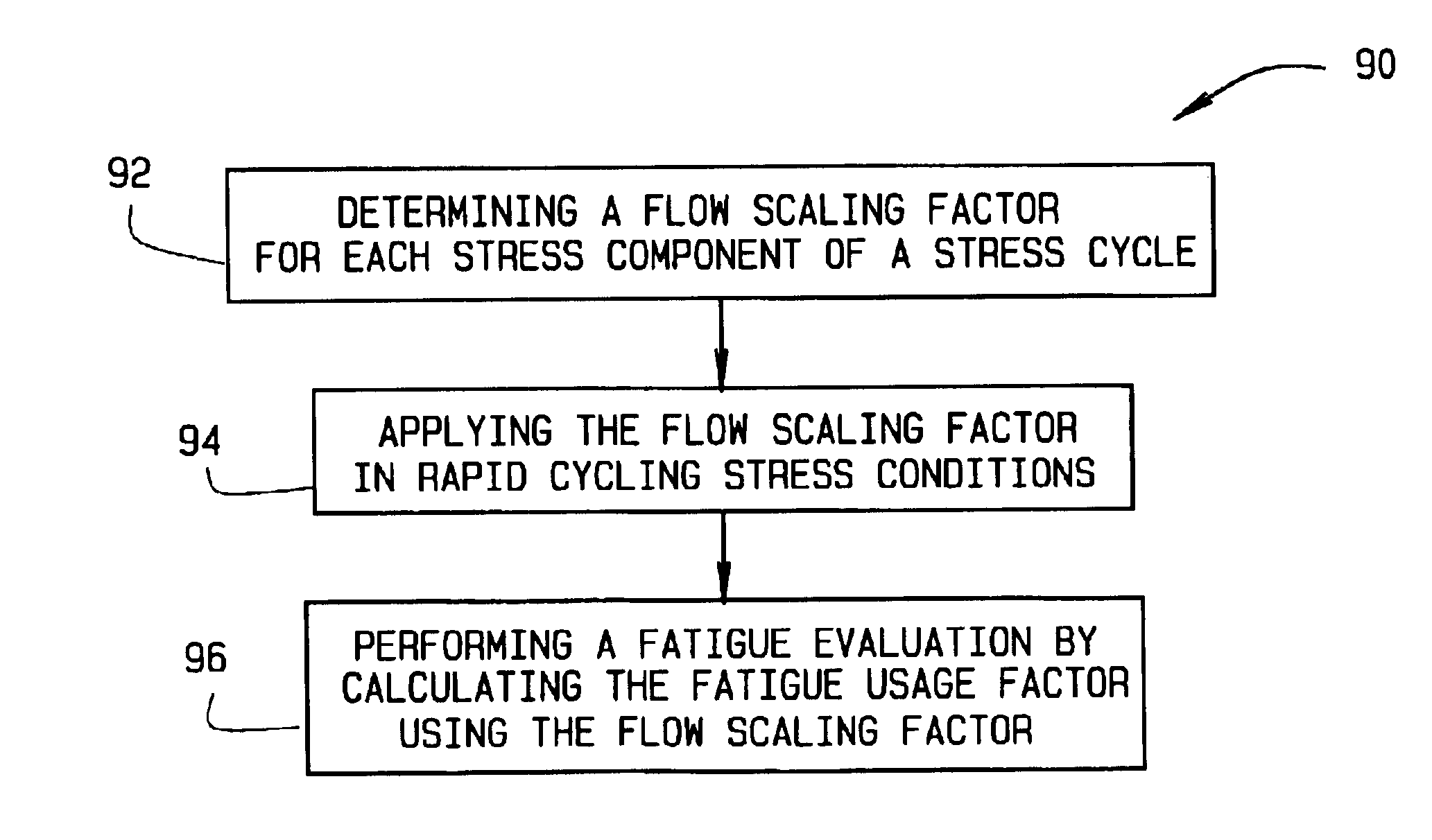
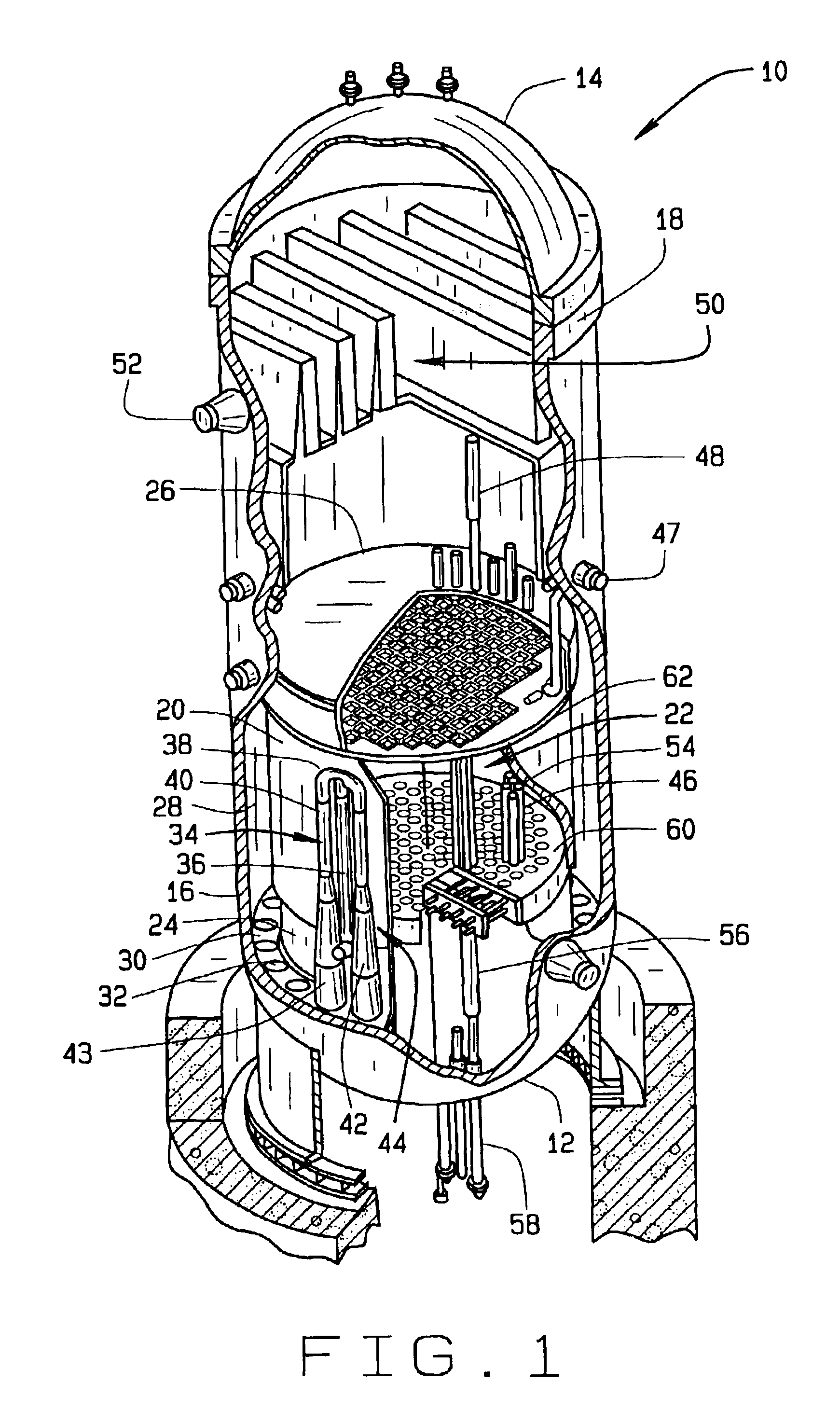
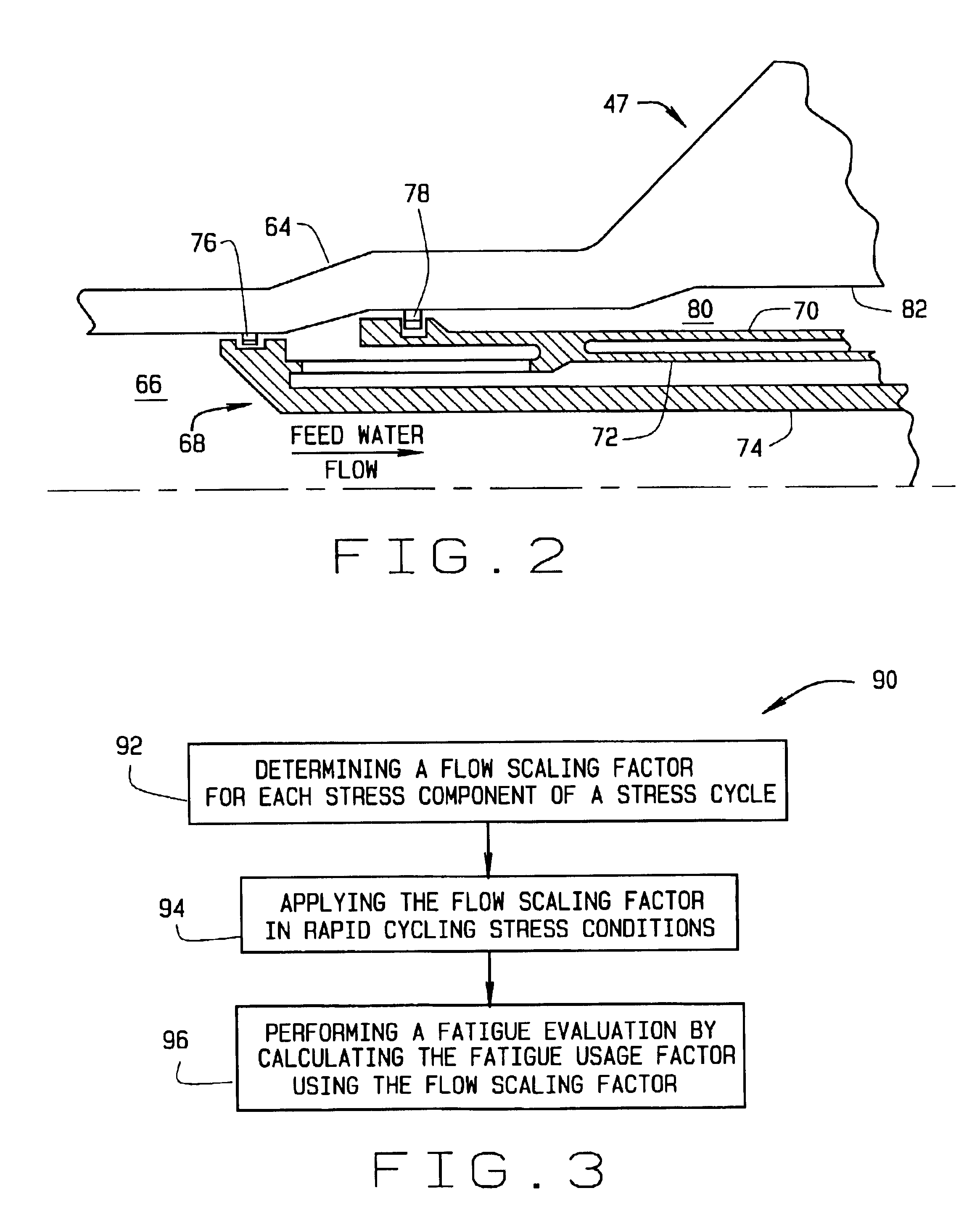
- A method and system for calculating a fatigue usage factor in nuclear reactors by determining a flow scaling factor for stress components, applying it to rapid cycling conditions, and performing a fatigue evaluation using a processor or server system, which accounts for changes in reactor operating conditions and reduces the conservatism in fatigue monitoring.

Safety Standards for High-Pressure Reactor Operations
High-pressure reactor operations are governed by comprehensive safety standards that have evolved significantly over the past decades, particularly in response to sonic fatigue challenges. These standards encompass multiple regulatory frameworks, including ASME Boiler and Pressure Vessel Code Section VIII, API 579 fitness-for-service guidelines, and ISO 14692 standards for composite pressure vessels. The integration of acoustic emission monitoring requirements has become increasingly prominent in recent revisions.
Current safety protocols mandate rigorous pre-operational assessments that include acoustic signature baseline establishment and continuous monitoring systems. The ASME Section VIII Division 3 specifically addresses alternative rules for construction of high-pressure vessels, incorporating advanced fatigue analysis methodologies that account for cyclic loading conditions typical in sonic fatigue scenarios. These standards require comprehensive documentation of operational parameters, including pressure cycling frequencies, acoustic emission thresholds, and material degradation indicators.
Regulatory compliance frameworks have expanded to include real-time monitoring requirements, with standards such as NACE MR0175 addressing material selection criteria for sour service environments where sonic fatigue risks are elevated. The implementation of condition-based maintenance protocols has become mandatory, requiring operators to establish clear action levels for acoustic emission events and vibration amplitudes that could indicate impending fatigue failure.
International harmonization efforts have led to the development of unified safety criteria, with particular emphasis on risk-based inspection methodologies outlined in API 580 and API 581. These standards incorporate probabilistic approaches to fatigue life assessment, enabling more accurate prediction of component reliability under sonic loading conditions. The integration of digital monitoring technologies has necessitated updates to cybersecurity requirements within safety management systems.
Emergency response protocols have been enhanced to address rapid failure modes associated with sonic fatigue, including automatic shutdown systems triggered by acoustic emission signatures exceeding predetermined thresholds. Training requirements now mandate specialized competency in acoustic monitoring interpretation and fatigue crack propagation assessment, ensuring operational personnel can effectively respond to early warning indicators of structural degradation in high-pressure reactor environments.
Current safety protocols mandate rigorous pre-operational assessments that include acoustic signature baseline establishment and continuous monitoring systems. The ASME Section VIII Division 3 specifically addresses alternative rules for construction of high-pressure vessels, incorporating advanced fatigue analysis methodologies that account for cyclic loading conditions typical in sonic fatigue scenarios. These standards require comprehensive documentation of operational parameters, including pressure cycling frequencies, acoustic emission thresholds, and material degradation indicators.
Regulatory compliance frameworks have expanded to include real-time monitoring requirements, with standards such as NACE MR0175 addressing material selection criteria for sour service environments where sonic fatigue risks are elevated. The implementation of condition-based maintenance protocols has become mandatory, requiring operators to establish clear action levels for acoustic emission events and vibration amplitudes that could indicate impending fatigue failure.
International harmonization efforts have led to the development of unified safety criteria, with particular emphasis on risk-based inspection methodologies outlined in API 580 and API 581. These standards incorporate probabilistic approaches to fatigue life assessment, enabling more accurate prediction of component reliability under sonic loading conditions. The integration of digital monitoring technologies has necessitated updates to cybersecurity requirements within safety management systems.
Emergency response protocols have been enhanced to address rapid failure modes associated with sonic fatigue, including automatic shutdown systems triggered by acoustic emission signatures exceeding predetermined thresholds. Training requirements now mandate specialized competency in acoustic monitoring interpretation and fatigue crack propagation assessment, ensuring operational personnel can effectively respond to early warning indicators of structural degradation in high-pressure reactor environments.
Material Science Breakthroughs for Fatigue Resistance
Recent advances in material science have revolutionized the approach to combating sonic fatigue in high-pressure reactor environments. The development of nanostructured metallic alloys represents a significant breakthrough, where grain boundary engineering at the nanoscale creates materials with enhanced fatigue resistance. These materials demonstrate superior crack propagation resistance under cyclic loading conditions typical of reactor operations.
Shape memory alloys have emerged as promising candidates for fatigue-resistant applications. These materials exhibit unique pseudoelastic behavior that allows them to recover from deformation cycles without accumulating permanent damage. Nickel-titanium and copper-based shape memory alloys show exceptional performance in high-frequency vibration environments, effectively dissipating acoustic energy while maintaining structural integrity.
Advanced composite materials incorporating carbon nanotubes and graphene reinforcements have shown remarkable improvements in fatigue life extension. The exceptional mechanical properties of these carbon-based nanomaterials, when properly integrated into metallic matrices, create hybrid structures that can withstand millions of stress cycles without significant degradation. The interfacial bonding between reinforcement and matrix plays a crucial role in determining overall fatigue performance.
Surface engineering techniques have achieved substantial progress in enhancing fatigue resistance. Laser shock peening and ultrasonic shot peening create compressive residual stress layers that significantly improve crack initiation resistance. These surface treatments can extend component life by factors of three to five in high-pressure reactor applications.
Self-healing materials represent an emerging frontier in fatigue resistance technology. Microcapsule-based healing systems and shape memory polymer networks can autonomously repair micro-cracks before they propagate to critical sizes. While still in development phases, these materials show potential for revolutionary improvements in reactor component longevity.
Additive manufacturing has enabled the creation of materials with optimized microstructures specifically designed for fatigue resistance. Selective laser melting and electron beam melting processes allow precise control over grain orientation and porosity, resulting in components with tailored mechanical properties for specific loading conditions in reactor environments.
Shape memory alloys have emerged as promising candidates for fatigue-resistant applications. These materials exhibit unique pseudoelastic behavior that allows them to recover from deformation cycles without accumulating permanent damage. Nickel-titanium and copper-based shape memory alloys show exceptional performance in high-frequency vibration environments, effectively dissipating acoustic energy while maintaining structural integrity.
Advanced composite materials incorporating carbon nanotubes and graphene reinforcements have shown remarkable improvements in fatigue life extension. The exceptional mechanical properties of these carbon-based nanomaterials, when properly integrated into metallic matrices, create hybrid structures that can withstand millions of stress cycles without significant degradation. The interfacial bonding between reinforcement and matrix plays a crucial role in determining overall fatigue performance.
Surface engineering techniques have achieved substantial progress in enhancing fatigue resistance. Laser shock peening and ultrasonic shot peening create compressive residual stress layers that significantly improve crack initiation resistance. These surface treatments can extend component life by factors of three to five in high-pressure reactor applications.
Self-healing materials represent an emerging frontier in fatigue resistance technology. Microcapsule-based healing systems and shape memory polymer networks can autonomously repair micro-cracks before they propagate to critical sizes. While still in development phases, these materials show potential for revolutionary improvements in reactor component longevity.
Additive manufacturing has enabled the creation of materials with optimized microstructures specifically designed for fatigue resistance. Selective laser melting and electron beam melting processes allow precise control over grain orientation and porosity, resulting in components with tailored mechanical properties for specific loading conditions in reactor environments.
Unlock deeper insights with PatSnap Eureka Quick Research — get a full tech report to explore trends and direct your research. Try now!
Generate Your Research Report Instantly with AI Agent
Supercharge your innovation with PatSnap Eureka AI Agent Platform!