

Budget Optimization in Pressurized Water Reactor Construction
MAR 10, 20269 MIN READ
Generate Your Research Report Instantly with AI Agent
PatSnap Eureka helps you evaluate technical feasibility & market potential.
PWR Construction Budget Challenges and Objectives
Pressurized Water Reactor construction projects represent one of the most capital-intensive endeavors in the energy sector, with total project costs frequently exceeding $10-20 billion per unit. The nuclear industry has witnessed significant cost escalations over the past decades, transforming from relatively predictable construction budgets in the 1970s to highly volatile and often overrun projects in recent years. This evolution reflects the increasing complexity of safety requirements, regulatory frameworks, and technological sophistication demanded in modern reactor designs.
The primary objective of budget optimization in PWR construction centers on achieving cost predictability while maintaining the highest safety standards. Historical data reveals that nuclear projects have experienced average cost overruns of 200-300% compared to initial estimates, with construction delays extending project timelines by 5-10 years beyond original schedules. These challenges have fundamentally altered the economic viability of nuclear power in many markets, necessitating innovative approaches to cost management and project execution.
Contemporary PWR construction faces multifaceted budgetary challenges stemming from regulatory compliance costs, which can account for 15-25% of total project expenses. The implementation of post-Fukushima safety enhancements has introduced additional layers of complexity, requiring advanced safety systems, enhanced containment structures, and redundant backup systems. These requirements, while essential for operational safety, significantly impact construction budgets and timelines.
Supply chain management represents another critical challenge, as the nuclear industry relies on specialized components with limited global suppliers. The concentration of manufacturing capabilities in specific regions creates bottlenecks and price volatility, particularly for reactor pressure vessels, steam generators, and control systems. Long lead times for critical components, often extending 3-5 years, compound scheduling difficulties and increase carrying costs throughout the construction phase.
The strategic objective of modern budget optimization initiatives focuses on standardization and modularization approaches. These methodologies aim to reduce design variations, streamline manufacturing processes, and enable economies of scale across multiple projects. Successful implementation of standardized designs has demonstrated potential cost reductions of 20-30% compared to customized approaches, while simultaneously improving construction predictability and quality control measures.
The primary objective of budget optimization in PWR construction centers on achieving cost predictability while maintaining the highest safety standards. Historical data reveals that nuclear projects have experienced average cost overruns of 200-300% compared to initial estimates, with construction delays extending project timelines by 5-10 years beyond original schedules. These challenges have fundamentally altered the economic viability of nuclear power in many markets, necessitating innovative approaches to cost management and project execution.
Contemporary PWR construction faces multifaceted budgetary challenges stemming from regulatory compliance costs, which can account for 15-25% of total project expenses. The implementation of post-Fukushima safety enhancements has introduced additional layers of complexity, requiring advanced safety systems, enhanced containment structures, and redundant backup systems. These requirements, while essential for operational safety, significantly impact construction budgets and timelines.
Supply chain management represents another critical challenge, as the nuclear industry relies on specialized components with limited global suppliers. The concentration of manufacturing capabilities in specific regions creates bottlenecks and price volatility, particularly for reactor pressure vessels, steam generators, and control systems. Long lead times for critical components, often extending 3-5 years, compound scheduling difficulties and increase carrying costs throughout the construction phase.
The strategic objective of modern budget optimization initiatives focuses on standardization and modularization approaches. These methodologies aim to reduce design variations, streamline manufacturing processes, and enable economies of scale across multiple projects. Successful implementation of standardized designs has demonstrated potential cost reductions of 20-30% compared to customized approaches, while simultaneously improving construction predictability and quality control measures.
Market Demand for Cost-Effective Nuclear Power Plants
The global nuclear power industry is experiencing a significant shift toward cost-effective reactor designs, driven by increasing energy demands and the urgent need for carbon-neutral electricity generation. Traditional nuclear power plants have faced criticism for their high capital costs and extended construction timelines, creating substantial market pressure for more economically viable solutions. This demand has intensified as countries worldwide commit to net-zero emissions targets while seeking reliable baseload power sources.
Pressurized Water Reactors represent the dominant technology in the current nuclear landscape, accounting for the majority of operational reactors globally. However, their construction costs have escalated substantially over recent decades, with many projects experiencing significant budget overruns and schedule delays. This trend has created a critical market gap for PWR designs that can deliver nuclear power at competitive costs compared to alternative energy sources.
The market demand for cost-effective nuclear solutions is particularly pronounced in emerging economies, where energy infrastructure expansion is essential for economic development. Countries in Asia, the Middle East, and Eastern Europe are actively seeking nuclear technologies that can provide reliable electricity generation without imposing excessive financial burdens on their national budgets. These markets prioritize standardized designs that can be deployed efficiently with predictable costs and timelines.
Established nuclear markets in North America and Europe are also driving demand for cost optimization in PWR construction. Aging nuclear fleets require replacement, but utilities and governments are increasingly reluctant to invest in traditional large-scale reactors due to their economic uncertainties. The market is responding by seeking innovative approaches to reduce construction complexity, standardize components, and streamline regulatory processes.
Small Modular Reactors based on PWR technology are emerging as a promising market segment, offering potential cost advantages through factory fabrication, modular deployment, and reduced site preparation requirements. This market segment addresses the growing demand for flexible nuclear capacity that can be scaled according to regional energy needs while maintaining economic viability.
The competitive landscape is evolving as traditional nuclear vendors face pressure to develop more cost-effective solutions, while new market entrants focus specifically on economic optimization. This dynamic is creating opportunities for innovative construction methodologies, advanced manufacturing techniques, and integrated project delivery approaches that can significantly reduce the total cost of PWR deployment.
Pressurized Water Reactors represent the dominant technology in the current nuclear landscape, accounting for the majority of operational reactors globally. However, their construction costs have escalated substantially over recent decades, with many projects experiencing significant budget overruns and schedule delays. This trend has created a critical market gap for PWR designs that can deliver nuclear power at competitive costs compared to alternative energy sources.
The market demand for cost-effective nuclear solutions is particularly pronounced in emerging economies, where energy infrastructure expansion is essential for economic development. Countries in Asia, the Middle East, and Eastern Europe are actively seeking nuclear technologies that can provide reliable electricity generation without imposing excessive financial burdens on their national budgets. These markets prioritize standardized designs that can be deployed efficiently with predictable costs and timelines.
Established nuclear markets in North America and Europe are also driving demand for cost optimization in PWR construction. Aging nuclear fleets require replacement, but utilities and governments are increasingly reluctant to invest in traditional large-scale reactors due to their economic uncertainties. The market is responding by seeking innovative approaches to reduce construction complexity, standardize components, and streamline regulatory processes.
Small Modular Reactors based on PWR technology are emerging as a promising market segment, offering potential cost advantages through factory fabrication, modular deployment, and reduced site preparation requirements. This market segment addresses the growing demand for flexible nuclear capacity that can be scaled according to regional energy needs while maintaining economic viability.
The competitive landscape is evolving as traditional nuclear vendors face pressure to develop more cost-effective solutions, while new market entrants focus specifically on economic optimization. This dynamic is creating opportunities for innovative construction methodologies, advanced manufacturing techniques, and integrated project delivery approaches that can significantly reduce the total cost of PWR deployment.
Current PWR Construction Costs and Overrun Issues
Pressurized Water Reactor construction projects have consistently experienced significant cost escalations over the past two decades, with average overruns ranging from 50% to 300% of initial budgets. The global PWR construction landscape reveals a pattern of systematic underestimation of project complexities, regulatory compliance costs, and technical challenges inherent in nuclear power plant development.
Recent high-profile projects exemplify these cost control failures. The Vogtle Units 3 and 4 in Georgia initially budgeted at $14 billion have exceeded $30 billion, representing a 114% cost overrun. Similarly, the V.C. Summer project in South Carolina was abandoned after spending $9 billion of a projected $11.5 billion budget due to mounting costs and schedule delays. European projects face comparable challenges, with the Flamanville 3 EPR in France experiencing costs rising from €3.3 billion to over €19 billion.
Construction cost overruns stem from multiple interconnected factors. Design modifications during construction phases contribute significantly to budget escalations, often triggered by evolving safety regulations or technical discoveries during implementation. The complexity of nuclear-grade component manufacturing and quality assurance requirements frequently leads to supplier delays and cost increases. Additionally, the scarcity of experienced nuclear construction workforce has driven labor costs substantially above initial projections.
Regulatory compliance represents another major cost driver, with licensing processes extending project timelines and requiring extensive documentation and safety system modifications. Post-Fukushima safety enhancements have introduced additional regulatory requirements, necessitating design changes and upgraded safety systems that were not anticipated in original budget estimates.
Supply chain disruptions and vendor consolidation have created bottlenecks in critical component delivery, forcing project delays and associated carrying costs. The limited number of qualified nuclear component manufacturers has reduced competitive pricing pressures while increasing dependency risks for major equipment procurement.
Schedule delays compound cost overruns through extended financing costs, inflation impacts, and prolonged overhead expenses. The average PWR construction timeline has extended from projected 5-6 years to actual completion periods of 10-15 years, dramatically increasing total project costs beyond initial financial models.
Current industry estimates place new PWR construction costs between $6,000 to $12,000 per kilowatt of installed capacity, significantly higher than initial projections of $3,000 to $5,000 per kilowatt. These escalating costs have fundamentally altered the economic competitiveness of nuclear power generation compared to alternative energy sources.
Recent high-profile projects exemplify these cost control failures. The Vogtle Units 3 and 4 in Georgia initially budgeted at $14 billion have exceeded $30 billion, representing a 114% cost overrun. Similarly, the V.C. Summer project in South Carolina was abandoned after spending $9 billion of a projected $11.5 billion budget due to mounting costs and schedule delays. European projects face comparable challenges, with the Flamanville 3 EPR in France experiencing costs rising from €3.3 billion to over €19 billion.
Construction cost overruns stem from multiple interconnected factors. Design modifications during construction phases contribute significantly to budget escalations, often triggered by evolving safety regulations or technical discoveries during implementation. The complexity of nuclear-grade component manufacturing and quality assurance requirements frequently leads to supplier delays and cost increases. Additionally, the scarcity of experienced nuclear construction workforce has driven labor costs substantially above initial projections.
Regulatory compliance represents another major cost driver, with licensing processes extending project timelines and requiring extensive documentation and safety system modifications. Post-Fukushima safety enhancements have introduced additional regulatory requirements, necessitating design changes and upgraded safety systems that were not anticipated in original budget estimates.
Supply chain disruptions and vendor consolidation have created bottlenecks in critical component delivery, forcing project delays and associated carrying costs. The limited number of qualified nuclear component manufacturers has reduced competitive pricing pressures while increasing dependency risks for major equipment procurement.
Schedule delays compound cost overruns through extended financing costs, inflation impacts, and prolonged overhead expenses. The average PWR construction timeline has extended from projected 5-6 years to actual completion periods of 10-15 years, dramatically increasing total project costs beyond initial financial models.
Current industry estimates place new PWR construction costs between $6,000 to $12,000 per kilowatt of installed capacity, significantly higher than initial projections of $3,000 to $5,000 per kilowatt. These escalating costs have fundamentally altered the economic competitiveness of nuclear power generation compared to alternative energy sources.
Existing Budget Optimization Solutions for PWR Projects
01 Reactor core design and fuel assembly optimization
Innovations in pressurized water reactor core design focus on optimizing fuel assembly configurations, fuel rod arrangements, and core geometry to improve thermal efficiency and power output. These designs aim to enhance neutron economy, reduce fuel consumption, and extend operational cycles while maintaining safety margins. Advanced fuel assembly structures incorporate improved spacer grids, guide tubes, and support systems to ensure stable operation under high pressure and temperature conditions.- Reactor core design and fuel assembly optimization: Innovations in pressurized water reactor core design focus on optimizing fuel assembly configurations, fuel rod arrangements, and core geometry to improve thermal efficiency and power output. These designs aim to enhance neutron economy, reduce fuel consumption, and extend operational cycles while maintaining safety margins. Advanced fuel assembly structures incorporate improved spacer grids, guide tubes, and support systems to ensure stable operation under high pressure and temperature conditions.
- Reactor pressure vessel and internal components: The pressure vessel and its internal components are critical for containing the reactor core and primary coolant under high pressure conditions. Innovations include advanced vessel designs with improved structural integrity, optimized internal flow paths, and enhanced component arrangements. These developments focus on reducing material stress, improving coolant circulation, and facilitating maintenance operations while ensuring long-term operational reliability and safety.
- Primary coolant system and circulation management: The primary coolant system manages heat transfer from the reactor core to steam generators through controlled circulation of pressurized water. Technical improvements include optimized pump designs, flow distribution systems, and thermal hydraulic management strategies. These innovations aim to enhance heat removal efficiency, minimize pressure drops, and ensure uniform temperature distribution throughout the reactor system while maintaining operational stability.
- Safety systems and emergency cooling mechanisms: Safety systems incorporate multiple redundant mechanisms for emergency core cooling, pressure relief, and containment protection. Advanced designs feature passive safety systems that operate without external power, improved emergency coolant injection systems, and enhanced containment structures. These systems are designed to prevent core damage and radioactive release under various accident scenarios, ensuring reactor safety through multiple independent protection layers.
- Control and instrumentation systems: Modern control systems integrate advanced monitoring, automation, and diagnostic capabilities for reactor operation management. Innovations include digital control platforms, real-time monitoring sensors, automated control rod positioning systems, and predictive maintenance algorithms. These systems enable precise power regulation, enhanced operational efficiency, and improved safety through continuous monitoring of critical parameters and automated response to abnormal conditions.
02 Reactor pressure vessel and internal components
The pressure vessel and its internal components are critical for containing the reactor core and primary coolant under high pressure conditions. Innovations include advanced vessel designs with improved structural integrity, optimized internal flow paths, and enhanced core support structures. These developments focus on reducing material stress, improving coolant circulation, and facilitating maintenance operations while ensuring long-term reliability and safety of the reactor system.Expand Specific Solutions03 Primary coolant system and circulation management
The primary coolant system manages heat transfer from the reactor core through pressurized water circulation. Technical improvements include advanced pump designs, optimized piping configurations, and enhanced flow control mechanisms. These innovations aim to improve heat removal efficiency, reduce pressure drops, and ensure uniform coolant distribution throughout the core. System designs also incorporate safety features for emergency cooling and pressure relief scenarios.Expand Specific Solutions04 Control rod systems and reactivity management
Control rod systems provide precise reactivity control for reactor operation and shutdown. Innovations include advanced control rod drive mechanisms, improved rod cluster designs, and enhanced positioning systems. These developments focus on achieving faster response times, more accurate positioning, and increased reliability. The systems incorporate fail-safe features and redundant mechanisms to ensure reactor safety under all operating conditions and emergency scenarios.Expand Specific Solutions05 Safety systems and accident mitigation features
Advanced safety systems incorporate multiple layers of protection including emergency core cooling systems, containment structures, and passive safety features. These innovations focus on accident prevention and mitigation through improved monitoring systems, automatic shutdown mechanisms, and enhanced cooling capabilities. Designs include provisions for severe accident scenarios with features such as core catchers, hydrogen recombiners, and filtered venting systems to protect both the reactor and surrounding environment.Expand Specific Solutions
Key Players in PWR Construction and Cost Control
The pressurized water reactor construction budget optimization field represents a mature nuclear technology sector experiencing steady growth driven by global clean energy transitions and nuclear capacity expansion programs. The industry operates in a consolidation phase with established market leaders including Westinghouse Electric, Framatome SA, and major Asian players like China General Nuclear Power Corp. and Mitsubishi Heavy Industries dominating the competitive landscape. Technology maturity is high, with companies like Areva NP SAS, Siemens AG, and Chinese state enterprises such as China Nuclear Power Engineering Co. and Shanghai Nuclear Engineering Research & Design Institute demonstrating advanced capabilities in reactor design, construction optimization, and cost management systems. Market dynamics show increasing emphasis on modular construction approaches and digital optimization tools, with emerging players like Nuclearis Corp. introducing innovative micro-reactor solutions that challenge traditional large-scale PWR economics, while established firms leverage decades of operational experience to refine budget optimization methodologies.
Mitsubishi Heavy Industries, Ltd.
Technical Solution: MHI develops budget optimization solutions for PWR construction through their advanced manufacturing capabilities and integrated project delivery approaches. The company employs sophisticated cost modeling software and predictive analytics to optimize material procurement and construction scheduling, reducing overall project costs by 15-20%. Their approach includes factory-based modular manufacturing of reactor components, which ensures quality control while reducing on-site construction time and associated labor costs. MHI implements lean manufacturing principles and Six Sigma methodologies throughout the construction process to eliminate waste and improve efficiency. The company also utilizes advanced welding and fabrication technologies that reduce material usage and improve construction speed, while their integrated supply chain management system optimizes vendor relationships and procurement timing to minimize costs.
Strengths: Advanced manufacturing capabilities, strong quality control systems, integrated supply chain management. Weaknesses: High technology development costs, limited recent PWR construction experience, competitive pressure from lower-cost alternatives.
China General Nuclear Power Corp.
Technical Solution: CGN implements cost-effective PWR construction through their HPR1000 (Hualong One) reactor design, which incorporates standardized components and simplified construction processes specifically optimized for budget efficiency. The company employs large-scale procurement strategies and domestic supply chain integration to reduce material costs by 20-30% compared to international alternatives. CGN utilizes advanced project management systems that integrate artificial intelligence for resource optimization and predictive maintenance scheduling during construction. Their approach includes modular construction techniques with pre-fabricated components and standardized installation procedures that reduce construction timelines and labor costs. The company also implements comprehensive risk management frameworks and contingency planning to prevent cost overruns during the construction phase.
Strengths: Cost-effective domestic supply chain, proven construction experience, government backing for large-scale projects. Weaknesses: Limited international market penetration, technology transfer restrictions, regulatory approval challenges in Western markets.
Core Innovations in PWR Construction Cost Reduction
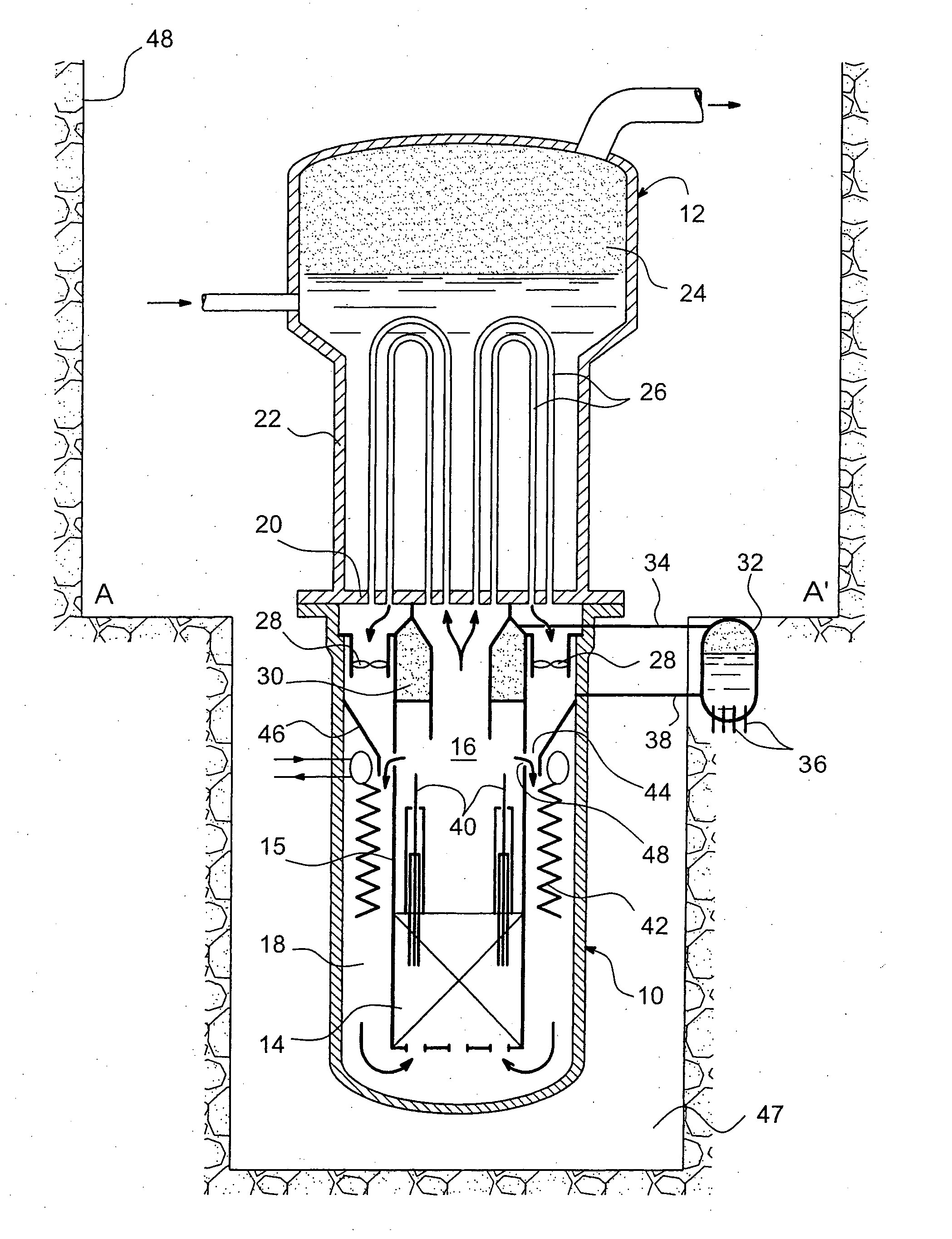
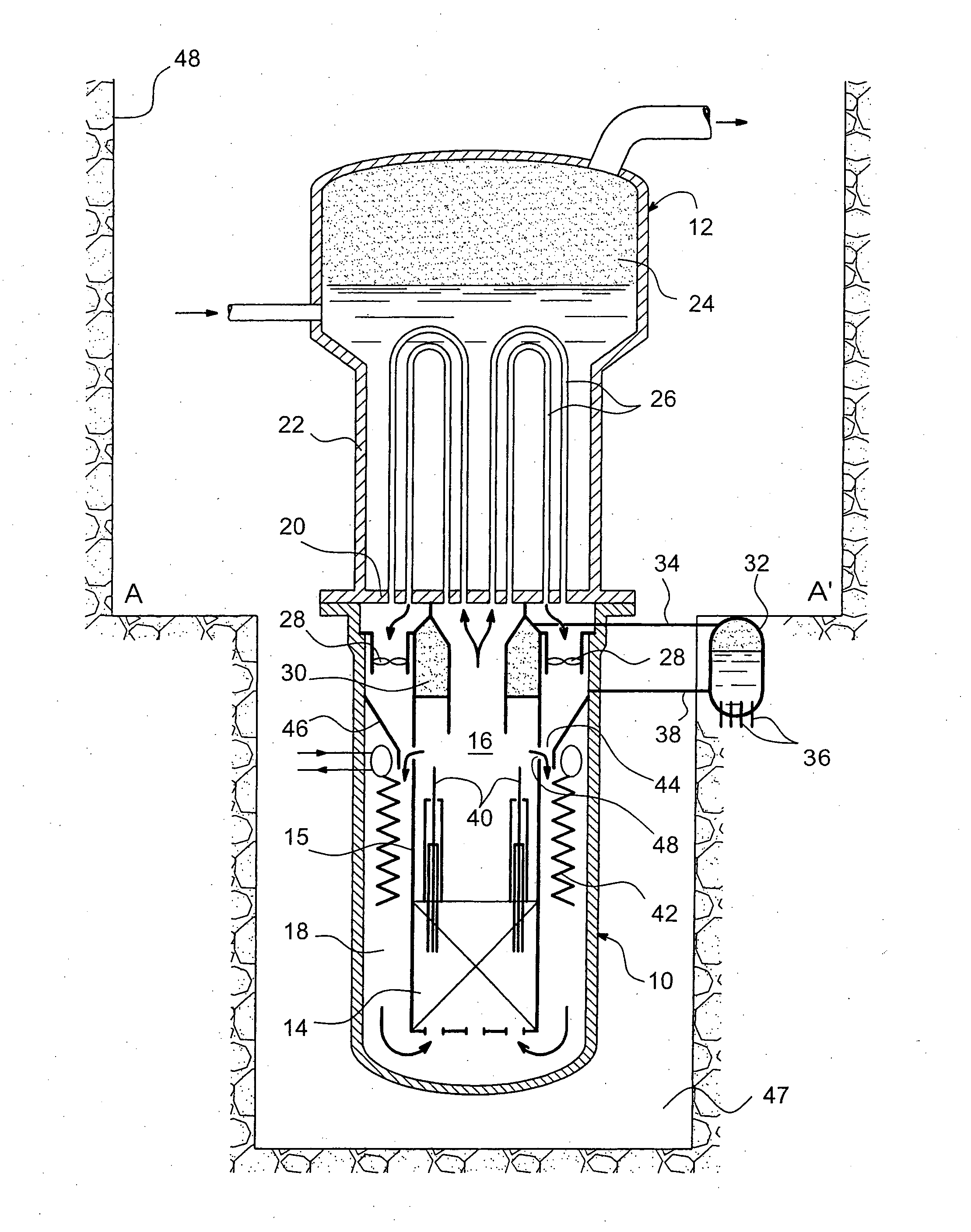
Compact pressurized water nuclear reactor
PatentInactiveUS20050018806A1
Innovation
- A compact pressurized water nuclear reactor design with integrated primary pumps, pressurizers, and control mechanisms within the reactor vessel, allowing for a fully integrated primary circuit and the use of advanced nuclear fuel assemblies, reducing the need for external components and enhancing safety.
Compact reactor with horizontal steam generators and pressurizer
PatentActiveUS20200005950A1
Innovation
- A compact PWR design with horizontal steam generators and a pressurizer, using nozzles for connections without large diameter pipes, allowing for a reduced volume and weight reactor pressure vessel, and positioning coolant pumps away from the core top to facilitate maintenance and reduce seismic stress.


Nuclear Regulatory Framework for PWR Construction
The nuclear regulatory framework governing PWR construction represents a complex multi-layered system designed to ensure safety, security, and environmental protection throughout the project lifecycle. This framework directly impacts budget optimization strategies by establishing mandatory compliance requirements, approval processes, and oversight mechanisms that construction teams must navigate efficiently.
At the international level, the International Atomic Energy Agency provides fundamental safety standards and guidelines that serve as the foundation for national regulatory approaches. These standards establish baseline requirements for design, construction, and operational safety that influence project costs through mandatory safety systems, quality assurance programs, and documentation requirements.
National regulatory bodies, such as the Nuclear Regulatory Commission in the United States, the Nuclear Safety and Security Commission in South Korea, and similar agencies worldwide, implement country-specific licensing frameworks. These agencies require comprehensive safety analysis reports, environmental impact assessments, and detailed construction authorization processes that can significantly affect project timelines and budgets.
The licensing process typically involves multiple phases including site permits, construction licenses, and operational licenses, each requiring extensive documentation, technical reviews, and public hearings. Budget optimization must account for the substantial costs associated with regulatory compliance, including specialized consulting services, extensive testing and validation programs, and potential delays due to regulatory review cycles.
Regulatory requirements also mandate specific quality assurance programs throughout construction, including independent oversight, material traceability systems, and comprehensive testing protocols. These requirements necessitate additional personnel, specialized equipment, and extended project schedules that must be factored into budget planning.
Furthermore, evolving regulatory standards and post-Fukushima safety enhancements have introduced additional compliance costs related to enhanced safety systems, cyber security measures, and emergency preparedness capabilities. Successful budget optimization strategies must anticipate regulatory changes and incorporate flexibility to accommodate emerging requirements while maintaining compliance with existing standards.
At the international level, the International Atomic Energy Agency provides fundamental safety standards and guidelines that serve as the foundation for national regulatory approaches. These standards establish baseline requirements for design, construction, and operational safety that influence project costs through mandatory safety systems, quality assurance programs, and documentation requirements.
National regulatory bodies, such as the Nuclear Regulatory Commission in the United States, the Nuclear Safety and Security Commission in South Korea, and similar agencies worldwide, implement country-specific licensing frameworks. These agencies require comprehensive safety analysis reports, environmental impact assessments, and detailed construction authorization processes that can significantly affect project timelines and budgets.
The licensing process typically involves multiple phases including site permits, construction licenses, and operational licenses, each requiring extensive documentation, technical reviews, and public hearings. Budget optimization must account for the substantial costs associated with regulatory compliance, including specialized consulting services, extensive testing and validation programs, and potential delays due to regulatory review cycles.
Regulatory requirements also mandate specific quality assurance programs throughout construction, including independent oversight, material traceability systems, and comprehensive testing protocols. These requirements necessitate additional personnel, specialized equipment, and extended project schedules that must be factored into budget planning.
Furthermore, evolving regulatory standards and post-Fukushima safety enhancements have introduced additional compliance costs related to enhanced safety systems, cyber security measures, and emergency preparedness capabilities. Successful budget optimization strategies must anticipate regulatory changes and incorporate flexibility to accommodate emerging requirements while maintaining compliance with existing standards.
Risk Management Strategies in PWR Budget Planning
Risk management in PWR budget planning requires a comprehensive framework that addresses the multifaceted uncertainties inherent in nuclear construction projects. The complexity of these projects, spanning decades from initial planning to commissioning, necessitates sophisticated risk assessment methodologies that can adapt to evolving regulatory requirements, technological changes, and market conditions.
Financial risk mitigation strategies form the cornerstone of effective PWR budget planning. These include establishing robust contingency reserves typically ranging from 15-25% of base construction costs, implementing phased funding approaches that align capital deployment with project milestones, and securing diverse financing sources to reduce dependency on single funding mechanisms. Currency hedging becomes particularly critical for international projects where equipment procurement spans multiple currencies over extended timeframes.
Regulatory compliance risks represent one of the most significant budget uncertainties in PWR construction. Effective strategies involve early engagement with regulatory authorities to establish clear licensing pathways, maintaining dedicated regulatory affairs teams throughout project lifecycle, and incorporating regulatory change provisions in contractor agreements. Historical analysis shows that projects with proactive regulatory engagement experience 20-30% fewer budget overruns compared to those adopting reactive approaches.
Supply chain risk management has gained prominence following recent global disruptions. Key strategies include diversifying critical component suppliers, establishing long-term supply agreements with penalty clauses for delays, and maintaining strategic inventory buffers for long-lead-time items. The concentration of nuclear-grade component manufacturing in limited geographic regions necessitates careful supplier relationship management and alternative sourcing strategies.
Technical risk mitigation focuses on design standardization and proven technology deployment. Utilizing reference plant designs with established construction experience significantly reduces technical uncertainties and associated cost overruns. First-of-a-kind engineering risks are minimized through comprehensive design validation, prototype testing, and lessons learned integration from similar projects globally.
Schedule risk management directly impacts budget performance through carrying cost implications and revenue delay impacts. Effective strategies include critical path optimization, weather contingency planning, workforce availability assessments, and modular construction approaches that reduce on-site assembly time. Integration of advanced project management tools enables real-time risk monitoring and proactive intervention capabilities.
Financial risk mitigation strategies form the cornerstone of effective PWR budget planning. These include establishing robust contingency reserves typically ranging from 15-25% of base construction costs, implementing phased funding approaches that align capital deployment with project milestones, and securing diverse financing sources to reduce dependency on single funding mechanisms. Currency hedging becomes particularly critical for international projects where equipment procurement spans multiple currencies over extended timeframes.
Regulatory compliance risks represent one of the most significant budget uncertainties in PWR construction. Effective strategies involve early engagement with regulatory authorities to establish clear licensing pathways, maintaining dedicated regulatory affairs teams throughout project lifecycle, and incorporating regulatory change provisions in contractor agreements. Historical analysis shows that projects with proactive regulatory engagement experience 20-30% fewer budget overruns compared to those adopting reactive approaches.
Supply chain risk management has gained prominence following recent global disruptions. Key strategies include diversifying critical component suppliers, establishing long-term supply agreements with penalty clauses for delays, and maintaining strategic inventory buffers for long-lead-time items. The concentration of nuclear-grade component manufacturing in limited geographic regions necessitates careful supplier relationship management and alternative sourcing strategies.
Technical risk mitigation focuses on design standardization and proven technology deployment. Utilizing reference plant designs with established construction experience significantly reduces technical uncertainties and associated cost overruns. First-of-a-kind engineering risks are minimized through comprehensive design validation, prototype testing, and lessons learned integration from similar projects globally.
Schedule risk management directly impacts budget performance through carrying cost implications and revenue delay impacts. Effective strategies include critical path optimization, weather contingency planning, workforce availability assessments, and modular construction approaches that reduce on-site assembly time. Integration of advanced project management tools enables real-time risk monitoring and proactive intervention capabilities.
Unlock deeper insights with PatSnap Eureka Quick Research — get a full tech report to explore trends and direct your research. Try now!
Generate Your Research Report Instantly with AI Agent
Supercharge your innovation with PatSnap Eureka AI Agent Platform!