

Optimizing Reticle Pellicles for Efficient Alignment in Robotic Systems
MAY 21, 20269 MIN READ
Generate Your Research Report Instantly with AI Agent
PatSnap Eureka helps you evaluate technical feasibility & market potential.
Reticle Pellicle Technology Background and Robotic Alignment Goals
Reticle pellicles represent a critical protective technology in semiconductor lithography systems, serving as ultra-thin transparent membranes that shield photomasks from contamination during the exposure process. These pellicles, typically composed of nitrocellulose or fluoropolymer materials with thickness ranging from 0.8 to 2.0 micrometers, maintain optical transparency while preventing particles from reaching the reticle surface. The technology has evolved significantly since its introduction in the 1980s, adapting to increasingly stringent requirements for advanced node manufacturing processes.
The integration of pellicle technology with robotic handling systems has emerged as a fundamental requirement in modern semiconductor fabrication facilities. As wafer sizes have grown and feature dimensions have shrunk to sub-7nm nodes, the precision demands for reticle positioning and alignment have intensified exponentially. Traditional manual handling methods have become obsolete, necessitating sophisticated robotic systems capable of managing pellicle-protected reticles with nanometer-level accuracy.
Current robotic alignment challenges in pellicle-equipped systems stem from the delicate nature of the pellicle membrane and its impact on optical measurement systems. The pellicle introduces additional optical interfaces that can affect laser interferometry and vision-based alignment systems commonly used in robotic handlers. Vibration sensitivity becomes particularly critical, as pellicle resonance frequencies typically range between 100-500 Hz, overlapping with common mechanical disturbances in automated systems.
The primary technical objectives for optimizing pellicle performance in robotic environments focus on three key areas: mechanical stability enhancement, optical interference minimization, and contamination prevention. Achieving sub-10nm alignment repeatability while maintaining pellicle integrity requires advanced damping mechanisms and vibration isolation techniques. Additionally, the development of pellicle-aware robotic control algorithms has become essential for preventing membrane damage during high-speed positioning operations.
Emerging requirements include compatibility with extreme ultraviolet lithography systems, where pellicle materials must withstand high-energy photon bombardment while maintaining structural integrity. The transition to EUV technology has introduced new challenges in pellicle design, particularly regarding material selection and thickness optimization to minimize absorption losses while preserving protective functionality in robotic handling scenarios.
The integration of pellicle technology with robotic handling systems has emerged as a fundamental requirement in modern semiconductor fabrication facilities. As wafer sizes have grown and feature dimensions have shrunk to sub-7nm nodes, the precision demands for reticle positioning and alignment have intensified exponentially. Traditional manual handling methods have become obsolete, necessitating sophisticated robotic systems capable of managing pellicle-protected reticles with nanometer-level accuracy.
Current robotic alignment challenges in pellicle-equipped systems stem from the delicate nature of the pellicle membrane and its impact on optical measurement systems. The pellicle introduces additional optical interfaces that can affect laser interferometry and vision-based alignment systems commonly used in robotic handlers. Vibration sensitivity becomes particularly critical, as pellicle resonance frequencies typically range between 100-500 Hz, overlapping with common mechanical disturbances in automated systems.
The primary technical objectives for optimizing pellicle performance in robotic environments focus on three key areas: mechanical stability enhancement, optical interference minimization, and contamination prevention. Achieving sub-10nm alignment repeatability while maintaining pellicle integrity requires advanced damping mechanisms and vibration isolation techniques. Additionally, the development of pellicle-aware robotic control algorithms has become essential for preventing membrane damage during high-speed positioning operations.
Emerging requirements include compatibility with extreme ultraviolet lithography systems, where pellicle materials must withstand high-energy photon bombardment while maintaining structural integrity. The transition to EUV technology has introduced new challenges in pellicle design, particularly regarding material selection and thickness optimization to minimize absorption losses while preserving protective functionality in robotic handling scenarios.
Market Demand for Advanced Robotic Vision Systems
The global robotics market is experiencing unprecedented growth driven by increasing automation demands across manufacturing, logistics, healthcare, and service sectors. Advanced robotic vision systems have emerged as critical enablers for next-generation autonomous operations, with precision alignment capabilities becoming essential for complex manufacturing processes, particularly in semiconductor fabrication and precision assembly applications.
Manufacturing industries are increasingly adopting robotic systems equipped with sophisticated vision technologies to achieve sub-micron positioning accuracy. The semiconductor sector represents a particularly demanding application area where reticle handling and alignment require exceptional precision. Current market trends indicate strong demand for robotic systems capable of handling delicate optical components while maintaining alignment tolerances within nanometer ranges.
The automotive industry has become a significant driver of advanced robotic vision system adoption, particularly for electric vehicle battery assembly and precision component manufacturing. These applications require robotic systems with enhanced visual feedback capabilities to ensure proper alignment of critical components. Similar demand patterns are emerging in aerospace manufacturing, where precision assembly of composite materials and electronic systems necessitates advanced vision-guided robotic solutions.
Healthcare and pharmaceutical sectors are generating substantial demand for sterile robotic systems with advanced vision capabilities. Laboratory automation, surgical assistance, and pharmaceutical manufacturing applications require robotic systems that can operate with high precision while maintaining contamination-free environments. The integration of pellicle-protected optical systems addresses both precision and cleanliness requirements in these sensitive applications.
Consumer electronics manufacturing continues to drive innovation in robotic vision systems, with miniaturization trends demanding increasingly precise component placement and alignment capabilities. The proliferation of flexible display technologies and advanced packaging techniques requires robotic systems capable of handling delicate materials while maintaining precise optical alignment throughout the manufacturing process.
Emerging applications in renewable energy manufacturing, particularly solar panel and wind turbine component assembly, are creating new market opportunities for advanced robotic vision systems. These applications often involve large-scale components requiring precise alignment over extended working distances, presenting unique challenges for optical system design and environmental protection.
The convergence of artificial intelligence and advanced optics is reshaping market expectations, with customers increasingly demanding adaptive vision systems capable of real-time optimization and self-calibration. This trend is driving development of more sophisticated pellicle technologies that can maintain optical performance while enabling advanced computational imaging capabilities.
Manufacturing industries are increasingly adopting robotic systems equipped with sophisticated vision technologies to achieve sub-micron positioning accuracy. The semiconductor sector represents a particularly demanding application area where reticle handling and alignment require exceptional precision. Current market trends indicate strong demand for robotic systems capable of handling delicate optical components while maintaining alignment tolerances within nanometer ranges.
The automotive industry has become a significant driver of advanced robotic vision system adoption, particularly for electric vehicle battery assembly and precision component manufacturing. These applications require robotic systems with enhanced visual feedback capabilities to ensure proper alignment of critical components. Similar demand patterns are emerging in aerospace manufacturing, where precision assembly of composite materials and electronic systems necessitates advanced vision-guided robotic solutions.
Healthcare and pharmaceutical sectors are generating substantial demand for sterile robotic systems with advanced vision capabilities. Laboratory automation, surgical assistance, and pharmaceutical manufacturing applications require robotic systems that can operate with high precision while maintaining contamination-free environments. The integration of pellicle-protected optical systems addresses both precision and cleanliness requirements in these sensitive applications.
Consumer electronics manufacturing continues to drive innovation in robotic vision systems, with miniaturization trends demanding increasingly precise component placement and alignment capabilities. The proliferation of flexible display technologies and advanced packaging techniques requires robotic systems capable of handling delicate materials while maintaining precise optical alignment throughout the manufacturing process.
Emerging applications in renewable energy manufacturing, particularly solar panel and wind turbine component assembly, are creating new market opportunities for advanced robotic vision systems. These applications often involve large-scale components requiring precise alignment over extended working distances, presenting unique challenges for optical system design and environmental protection.
The convergence of artificial intelligence and advanced optics is reshaping market expectations, with customers increasingly demanding adaptive vision systems capable of real-time optimization and self-calibration. This trend is driving development of more sophisticated pellicle technologies that can maintain optical performance while enabling advanced computational imaging capabilities.
Current Pellicle Performance Issues in Robotic Applications
Reticle pellicles in robotic systems face significant performance challenges that directly impact alignment accuracy and operational efficiency. Traditional pellicle materials exhibit thermal expansion coefficients that create dimensional instabilities under varying temperature conditions commonly encountered in robotic environments. These thermal fluctuations can cause pellicle deformation ranging from 0.5 to 2.0 micrometers, substantially compromising the precision required for high-accuracy alignment tasks.
Mechanical vibration represents another critical performance limitation affecting pellicle stability in robotic applications. Standard pellicle membranes demonstrate resonant frequencies between 200-800 Hz, which unfortunately overlap with common robotic system operating frequencies. This resonance coupling leads to unwanted oscillations that degrade alignment precision by introducing positional uncertainties of up to 1.5 micrometers during critical positioning operations.
Optical transmission degradation poses substantial challenges for pellicle performance in robotic vision systems. Current pellicle materials experience approximately 2-4% light transmission loss across the visible spectrum, with additional losses occurring due to surface contamination and aging effects. This optical degradation directly impacts the signal-to-noise ratio of alignment sensors, reducing detection accuracy and increasing processing time requirements for alignment algorithms.
Contamination susceptibility remains a persistent issue affecting pellicle longevity and performance consistency. Robotic environments often contain airborne particles, lubricants, and chemical vapors that accumulate on pellicle surfaces over time. These contaminants create localized optical distortions and can increase surface roughness by 10-15 nanometers, leading to progressive deterioration in alignment system performance and requiring frequent maintenance interventions.
Electrostatic charge accumulation on pellicle surfaces creates additional complications in robotic applications. Static charge buildup can reach levels of 2-5 kilovolts, attracting particulate matter and causing unpredictable pellicle deflections. This electrostatic interference particularly affects systems operating in low-humidity environments or those utilizing high-speed robotic movements that generate triboelectric effects.
Manufacturing tolerances and quality consistency issues further compound pellicle performance challenges. Current production methods yield pellicles with thickness variations of ±5-8%, creating non-uniform optical and mechanical properties across individual units. These variations result in inconsistent alignment performance between different robotic systems and complicate calibration procedures, ultimately affecting overall system reliability and repeatability in precision applications.
Mechanical vibration represents another critical performance limitation affecting pellicle stability in robotic applications. Standard pellicle membranes demonstrate resonant frequencies between 200-800 Hz, which unfortunately overlap with common robotic system operating frequencies. This resonance coupling leads to unwanted oscillations that degrade alignment precision by introducing positional uncertainties of up to 1.5 micrometers during critical positioning operations.
Optical transmission degradation poses substantial challenges for pellicle performance in robotic vision systems. Current pellicle materials experience approximately 2-4% light transmission loss across the visible spectrum, with additional losses occurring due to surface contamination and aging effects. This optical degradation directly impacts the signal-to-noise ratio of alignment sensors, reducing detection accuracy and increasing processing time requirements for alignment algorithms.
Contamination susceptibility remains a persistent issue affecting pellicle longevity and performance consistency. Robotic environments often contain airborne particles, lubricants, and chemical vapors that accumulate on pellicle surfaces over time. These contaminants create localized optical distortions and can increase surface roughness by 10-15 nanometers, leading to progressive deterioration in alignment system performance and requiring frequent maintenance interventions.
Electrostatic charge accumulation on pellicle surfaces creates additional complications in robotic applications. Static charge buildup can reach levels of 2-5 kilovolts, attracting particulate matter and causing unpredictable pellicle deflections. This electrostatic interference particularly affects systems operating in low-humidity environments or those utilizing high-speed robotic movements that generate triboelectric effects.
Manufacturing tolerances and quality consistency issues further compound pellicle performance challenges. Current production methods yield pellicles with thickness variations of ±5-8%, creating non-uniform optical and mechanical properties across individual units. These variations result in inconsistent alignment performance between different robotic systems and complicate calibration procedures, ultimately affecting overall system reliability and repeatability in precision applications.
Existing Pellicle Optimization Solutions for Robotics
01 Pellicle frame alignment and positioning systems
Advanced alignment systems utilize precision positioning mechanisms to ensure accurate placement of pellicle frames on reticles. These systems incorporate mechanical guides, reference points, and positioning fixtures that enable precise alignment between the pellicle frame and the reticle substrate. The alignment mechanisms help maintain consistent positioning accuracy and reduce alignment errors during the pellicle mounting process.- Pellicle frame alignment and positioning systems: Advanced positioning systems and frame structures are designed to ensure precise alignment of pellicles on reticles. These systems incorporate mechanical guides, reference points, and positioning mechanisms that enable accurate placement and maintain stability during lithographic processes. The alignment systems help minimize positioning errors and improve overall process reliability.
- Optical alignment detection and measurement methods: Optical detection systems and measurement techniques are employed to monitor and verify pellicle alignment accuracy. These methods utilize various optical principles including interferometry, image recognition, and laser-based measurement systems to detect misalignment and provide feedback for correction. The systems enable real-time monitoring and automated adjustment capabilities.
- Automated pellicle handling and installation equipment: Automated systems for pellicle handling, installation, and alignment reduce human error and improve consistency in pellicle placement. These systems incorporate robotic mechanisms, precision actuators, and control algorithms to achieve repeatable and accurate pellicle positioning. The automation enhances throughput while maintaining high alignment precision standards.
- Pellicle membrane tension and flatness control: Control systems and methods for managing pellicle membrane tension and maintaining optimal flatness are critical for alignment efficiency. These approaches involve tension adjustment mechanisms, flatness measurement systems, and feedback control loops that ensure the pellicle membrane remains properly positioned and stable during use. Proper tension control prevents distortion and maintains alignment accuracy.
- Reticle-pellicle interface optimization and contamination prevention: Interface design and contamination control methods focus on optimizing the connection between reticles and pellicles while preventing particle contamination that could affect alignment. These solutions include specialized mounting interfaces, clean room protocols, and protective systems that maintain the integrity of the reticle-pellicle assembly and preserve alignment accuracy throughout the lithographic process.
02 Optical alignment detection and measurement methods
Optical detection systems are employed to measure and verify pellicle alignment accuracy using various imaging and sensing technologies. These methods utilize laser interferometry, optical sensors, and vision systems to detect misalignment and provide real-time feedback for alignment corrections. The optical measurement techniques enable high-precision detection of angular and translational deviations in pellicle positioning.Expand Specific Solutions03 Automated alignment control and feedback systems
Automated control systems integrate sensors, actuators, and feedback mechanisms to achieve precise pellicle alignment without manual intervention. These systems utilize closed-loop control algorithms that continuously monitor alignment parameters and make real-time adjustments to maintain optimal positioning. The automation reduces human error and improves repeatability in pellicle alignment processes.Expand Specific Solutions04 Pellicle mounting fixture and tooling design
Specialized mounting fixtures and tooling are designed to facilitate accurate pellicle alignment during installation. These fixtures incorporate precision-machined surfaces, alignment pins, and clamping mechanisms that ensure consistent positioning relative to reticle features. The tooling design minimizes mechanical stress and distortion while maintaining alignment accuracy throughout the mounting process.Expand Specific Solutions05 Alignment verification and quality control methods
Quality control procedures and verification methods are implemented to validate pellicle alignment accuracy after installation. These methods include dimensional inspection, optical verification, and performance testing to ensure alignment specifications are met. The verification processes help identify alignment defects and enable corrective actions to maintain product quality standards.Expand Specific Solutions
Key Players in Pellicle and Robotic Vision Industry
The reticle pellicle optimization technology for robotic alignment systems represents an emerging niche within the broader semiconductor lithography and precision optics industry, currently in its early development stage with significant growth potential. The market remains relatively small but is expanding rapidly due to increasing demand for high-precision manufacturing in semiconductor fabrication and advanced display technologies. Technology maturity varies significantly across key players, with established leaders like ASML Holding NV, Canon Inc., and Nikon Corp. demonstrating advanced capabilities in lithography systems, while companies such as Samsung Electronics, FANUC Corp., and Shanghai Microelectronics Equipment are developing complementary robotic integration solutions. The competitive landscape shows a clear division between mature optical system providers and emerging automation specialists, with newer entrants like Dongfang Jingyuan Electron Ltd. focusing on specialized measurement equipment that supports pellicle alignment optimization in next-generation manufacturing environments.
Canon, Inc.
Technical Solution: Canon has developed pellicle handling and alignment technologies for their semiconductor lithography equipment, incorporating robotic systems for automated pellicle management. Their solution includes specialized pellicle frames with mechanical interfaces designed for robotic gripping and positioning. Canon's alignment system utilizes optical sensors and precision actuators to achieve accurate pellicle placement on reticles. The company's robotic integration features adaptive control algorithms that compensate for mechanical tolerances and environmental variations, ensuring reliable pellicle alignment in production environments while minimizing handling-induced defects and contamination risks.
Strengths: Strong optical engineering capabilities with reliable pellicle handling mechanisms and cost-effective solutions. Weaknesses: Smaller market share in advanced lithography compared to leading competitors.
FANUC Corp.
Technical Solution: FANUC provides robotic automation solutions that can be adapted for pellicle handling and alignment applications in semiconductor manufacturing. Their robotic systems feature high-precision servo motors and advanced motion control algorithms capable of achieving the sub-micron positioning accuracy required for pellicle alignment. FANUC's robots incorporate force sensing capabilities and adaptive control systems that can handle delicate pellicle components without damage. The company's solution includes specialized end-effectors designed for pellicle gripping and positioning, along with vision-guided alignment systems that enable automated pellicle placement on reticles with minimal human intervention.
Strengths: Excellent robotic precision and reliability with proven industrial automation expertise and flexible system integration. Weaknesses: Limited specialized knowledge in semiconductor pellicle applications compared to dedicated lithography equipment manufacturers.
Core Patents in Pellicle-Based Alignment Systems
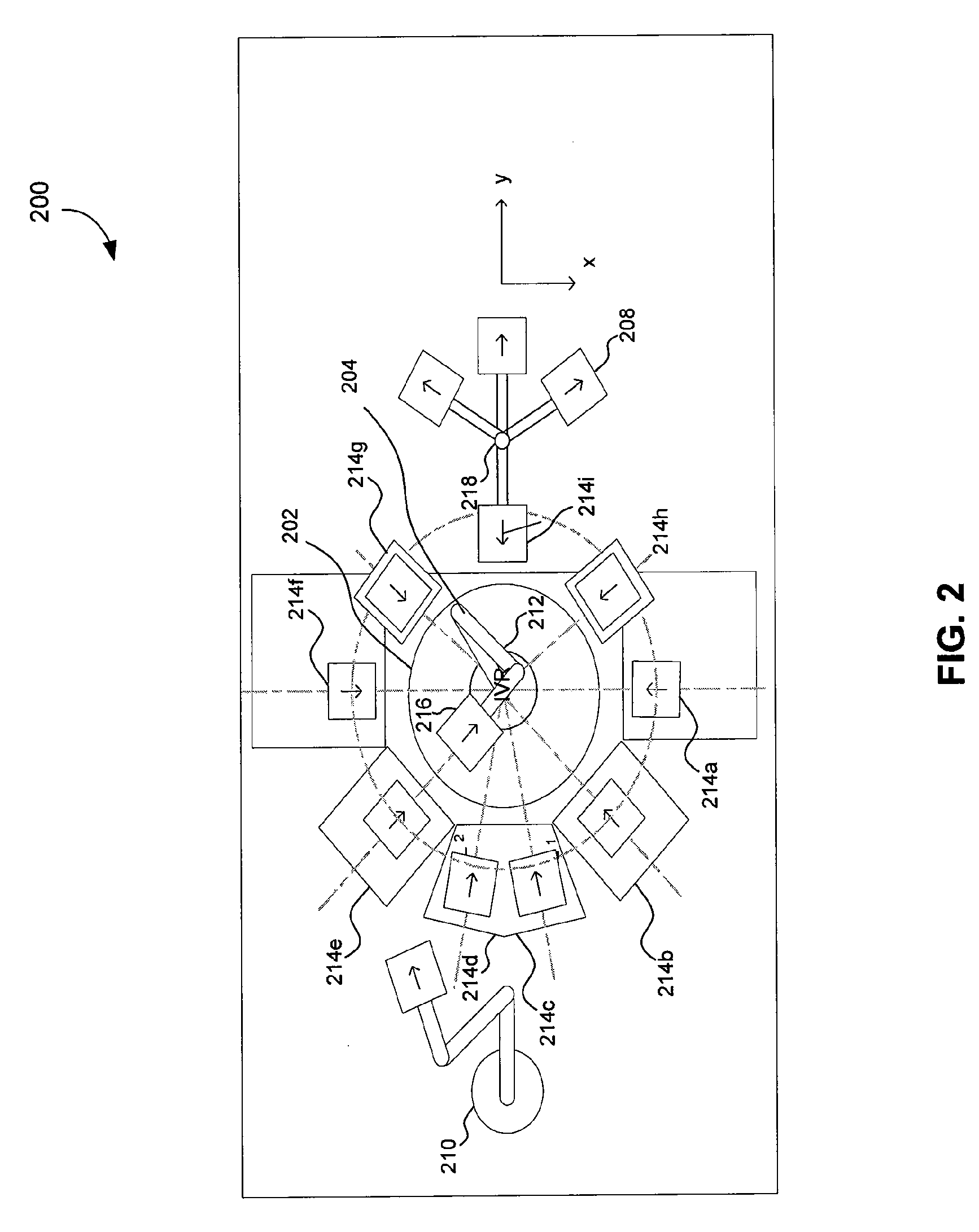
Robot Position Calibration Tool (RPCT)
PatentInactiveUS20090259337A1
Innovation
- A robot position calibration tool (RPCT) with a similar mechanical form factor to the payload, using wireless communication to determine alignment with transfer stations, minimizing sensor usage within the vacuum chamber and reducing particle generation by iteratively adjusting the robot's position until accurate alignment is achieved.
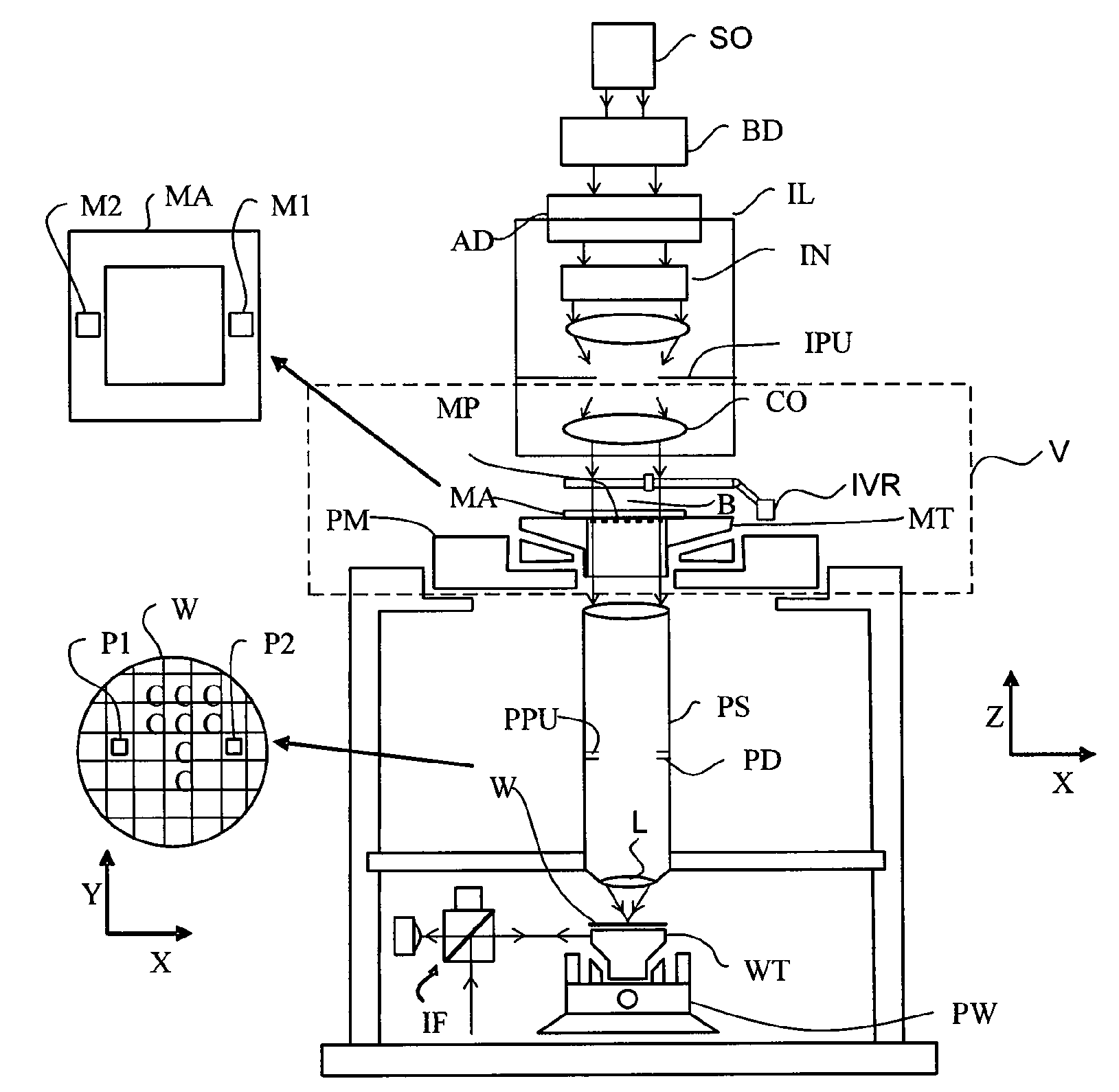
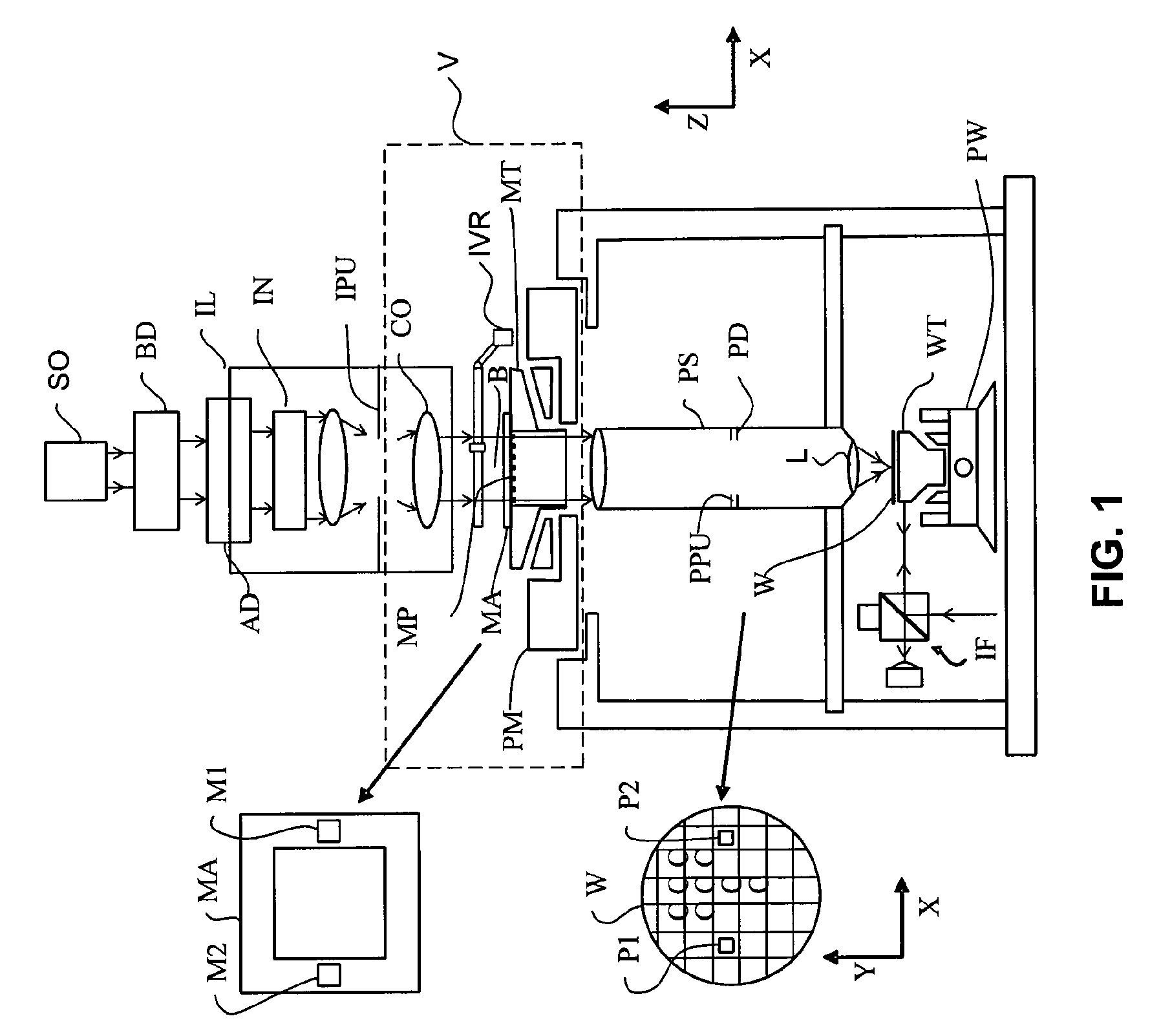

Method and arrangement for the manipulation of reticles
PatentWO2004006011A2
Innovation
- A sensor system is integrated to detect the reticle and pellicle dimensions, allowing precise control of the manipulator to prevent damage by determining the geometric parameters and controlling movements based on the detected data, using a combination of sensors such as CCD cameras and barcode readers to ensure accurate handling.


Manufacturing Standards for Robotic Vision Components
The manufacturing of robotic vision components, particularly reticle pellicles used in alignment systems, requires adherence to stringent quality standards that ensure optimal performance in automated environments. Current industry standards primarily derive from semiconductor manufacturing protocols, adapted for robotic applications where precision alignment is critical for operational efficiency.
ISO 9001:2015 serves as the foundational quality management framework, supplemented by ISO 14298 standards specifically addressing security printing and authentication technologies relevant to reticle manufacturing. These standards establish baseline requirements for material consistency, dimensional accuracy, and contamination control throughout the production process.
Manufacturing tolerances for reticle pellicles typically maintain dimensional accuracy within ±0.5 micrometers for critical alignment features. Surface roughness specifications require Ra values below 10 nanometers to minimize optical distortion during robotic vision processing. Material purity standards mandate contamination levels below 1 part per billion for metallic impurities that could affect optical transmission properties.
Quality control protocols incorporate multi-stage inspection processes utilizing coordinate measuring machines, optical profilometry, and spectroscopic analysis. Statistical process control methods monitor key parameters including pellicle tension uniformity, optical transmission consistency, and mechanical stability under operational stress conditions.
Environmental manufacturing standards require cleanroom facilities meeting ISO 14644-1 Class 100 specifications, with controlled temperature variations within ±1°C and humidity maintained at 45±5% relative humidity. These conditions prevent particle contamination and ensure consistent material properties during fabrication processes.
Traceability requirements mandate comprehensive documentation of raw material sources, processing parameters, and quality metrics throughout the manufacturing chain. This enables rapid identification and resolution of performance issues in deployed robotic systems while supporting continuous improvement initiatives in manufacturing processes.
ISO 9001:2015 serves as the foundational quality management framework, supplemented by ISO 14298 standards specifically addressing security printing and authentication technologies relevant to reticle manufacturing. These standards establish baseline requirements for material consistency, dimensional accuracy, and contamination control throughout the production process.
Manufacturing tolerances for reticle pellicles typically maintain dimensional accuracy within ±0.5 micrometers for critical alignment features. Surface roughness specifications require Ra values below 10 nanometers to minimize optical distortion during robotic vision processing. Material purity standards mandate contamination levels below 1 part per billion for metallic impurities that could affect optical transmission properties.
Quality control protocols incorporate multi-stage inspection processes utilizing coordinate measuring machines, optical profilometry, and spectroscopic analysis. Statistical process control methods monitor key parameters including pellicle tension uniformity, optical transmission consistency, and mechanical stability under operational stress conditions.
Environmental manufacturing standards require cleanroom facilities meeting ISO 14644-1 Class 100 specifications, with controlled temperature variations within ±1°C and humidity maintained at 45±5% relative humidity. These conditions prevent particle contamination and ensure consistent material properties during fabrication processes.
Traceability requirements mandate comprehensive documentation of raw material sources, processing parameters, and quality metrics throughout the manufacturing chain. This enables rapid identification and resolution of performance issues in deployed robotic systems while supporting continuous improvement initiatives in manufacturing processes.
Cost-Benefit Analysis of Pellicle Optimization
The economic evaluation of pellicle optimization in robotic reticle alignment systems reveals significant financial implications across multiple operational dimensions. Initial investment requirements encompass advanced pellicle materials, precision manufacturing equipment, and specialized coating technologies, typically ranging from $2-5 million for comprehensive system upgrades. However, these upfront costs are offset by substantial long-term operational savings through reduced maintenance cycles and enhanced system reliability.
Operational cost reductions manifest primarily through decreased downtime and improved throughput efficiency. Optimized pellicles demonstrate 40-60% reduction in contamination-related alignment failures, translating to approximately $150,000-300,000 annual savings per robotic system in high-volume manufacturing environments. Additionally, extended pellicle lifespan reduces replacement frequency from quarterly to bi-annual intervals, generating material cost savings of 35-45%.
Labor cost optimization emerges as a critical benefit driver, with automated alignment systems requiring 70% fewer manual interventions compared to conventional approaches. This reduction translates to approximately $80,000-120,000 annual labor cost savings per system, while simultaneously improving operator safety and reducing human error rates. Training costs also decrease significantly due to simplified maintenance protocols and enhanced system reliability.
Return on investment calculations indicate break-even points typically occurring within 18-24 months of implementation. Manufacturing facilities processing high-volume semiconductor wafers achieve faster ROI realization, often within 12-15 months, due to higher utilization rates and greater sensitivity to downtime costs. The total cost of ownership over a five-year period shows 25-35% reduction compared to non-optimized systems.
Risk mitigation benefits provide additional economic value through reduced insurance premiums and compliance costs. Enhanced pellicle performance decreases the probability of catastrophic alignment failures, which can result in multi-million dollar production losses. Quality assurance costs also decline due to improved process consistency and reduced defect rates, contributing an estimated 10-15% additional cost savings beyond direct operational improvements.
Operational cost reductions manifest primarily through decreased downtime and improved throughput efficiency. Optimized pellicles demonstrate 40-60% reduction in contamination-related alignment failures, translating to approximately $150,000-300,000 annual savings per robotic system in high-volume manufacturing environments. Additionally, extended pellicle lifespan reduces replacement frequency from quarterly to bi-annual intervals, generating material cost savings of 35-45%.
Labor cost optimization emerges as a critical benefit driver, with automated alignment systems requiring 70% fewer manual interventions compared to conventional approaches. This reduction translates to approximately $80,000-120,000 annual labor cost savings per system, while simultaneously improving operator safety and reducing human error rates. Training costs also decrease significantly due to simplified maintenance protocols and enhanced system reliability.
Return on investment calculations indicate break-even points typically occurring within 18-24 months of implementation. Manufacturing facilities processing high-volume semiconductor wafers achieve faster ROI realization, often within 12-15 months, due to higher utilization rates and greater sensitivity to downtime costs. The total cost of ownership over a five-year period shows 25-35% reduction compared to non-optimized systems.
Risk mitigation benefits provide additional economic value through reduced insurance premiums and compliance costs. Enhanced pellicle performance decreases the probability of catastrophic alignment failures, which can result in multi-million dollar production losses. Quality assurance costs also decline due to improved process consistency and reduced defect rates, contributing an estimated 10-15% additional cost savings beyond direct operational improvements.
Unlock deeper insights with PatSnap Eureka Quick Research — get a full tech report to explore trends and direct your research. Try now!
Generate Your Research Report Instantly with AI Agent
Supercharge your innovation with PatSnap Eureka AI Agent Platform!