

Optimizing Slitting Processes for Next-Generation Supercapacitors
MAY 28, 20269 MIN READ
Generate Your Research Report Instantly with AI Agent
Patsnap Eureka helps you evaluate technical feasibility & market potential.
Supercapacitor Slitting Technology Background and Objectives
Supercapacitors have emerged as critical energy storage devices bridging the gap between traditional capacitors and batteries, offering high power density, rapid charge-discharge cycles, and exceptional durability. The manufacturing of these devices requires precise fabrication processes, with slitting representing a fundamental step that directly impacts device performance and reliability. As the demand for next-generation supercapacitors intensifies across automotive, renewable energy, and consumer electronics sectors, the optimization of slitting processes has become increasingly crucial for achieving superior electrochemical performance and manufacturing efficiency.
The evolution of supercapacitor technology has progressed through distinct phases, beginning with early carbon-based systems in the 1960s to today's advanced hybrid and pseudocapacitive materials. Each technological advancement has demanded corresponding improvements in manufacturing processes, particularly in electrode preparation and assembly techniques. Slitting, which involves the precise cutting of electrode materials and separators into specific dimensions, has evolved from simple mechanical cutting methods to sophisticated laser-based and ultrasonic systems capable of handling increasingly complex material compositions and geometries.
Current market drivers are pushing the boundaries of supercapacitor performance requirements, necessitating electrode materials with enhanced surface areas, improved ionic conductivity, and optimized pore structures. These advanced materials, including graphene composites, carbon nanotubes, and metal oxide hybrids, present unique challenges during slitting operations due to their varied mechanical properties, thickness variations, and sensitivity to processing conditions. The precision required for next-generation devices demands slitting tolerances in the micrometer range while maintaining material integrity and preventing delamination or edge defects.
The primary objective of optimizing slitting processes centers on achieving consistent dimensional accuracy while preserving the electrochemical properties of active materials. This involves developing cutting methodologies that minimize heat-affected zones, reduce particle generation, and maintain uniform edge quality across diverse material systems. Additionally, the integration of real-time monitoring systems and adaptive process control mechanisms aims to ensure reproducible results and minimize material waste during high-volume production scenarios.
Future technological targets include the development of multi-layer slitting capabilities for integrated supercapacitor architectures, implementation of intelligent process optimization algorithms, and establishment of industry-standard quality metrics for evaluating slitting performance across different material platforms and device configurations.
The evolution of supercapacitor technology has progressed through distinct phases, beginning with early carbon-based systems in the 1960s to today's advanced hybrid and pseudocapacitive materials. Each technological advancement has demanded corresponding improvements in manufacturing processes, particularly in electrode preparation and assembly techniques. Slitting, which involves the precise cutting of electrode materials and separators into specific dimensions, has evolved from simple mechanical cutting methods to sophisticated laser-based and ultrasonic systems capable of handling increasingly complex material compositions and geometries.
Current market drivers are pushing the boundaries of supercapacitor performance requirements, necessitating electrode materials with enhanced surface areas, improved ionic conductivity, and optimized pore structures. These advanced materials, including graphene composites, carbon nanotubes, and metal oxide hybrids, present unique challenges during slitting operations due to their varied mechanical properties, thickness variations, and sensitivity to processing conditions. The precision required for next-generation devices demands slitting tolerances in the micrometer range while maintaining material integrity and preventing delamination or edge defects.
The primary objective of optimizing slitting processes centers on achieving consistent dimensional accuracy while preserving the electrochemical properties of active materials. This involves developing cutting methodologies that minimize heat-affected zones, reduce particle generation, and maintain uniform edge quality across diverse material systems. Additionally, the integration of real-time monitoring systems and adaptive process control mechanisms aims to ensure reproducible results and minimize material waste during high-volume production scenarios.
Future technological targets include the development of multi-layer slitting capabilities for integrated supercapacitor architectures, implementation of intelligent process optimization algorithms, and establishment of industry-standard quality metrics for evaluating slitting performance across different material platforms and device configurations.
Market Demand for Advanced Supercapacitor Manufacturing
The global supercapacitor market is experiencing unprecedented growth driven by the accelerating transition toward renewable energy systems and electric mobility solutions. Energy storage applications represent the largest demand segment, with grid-scale energy storage systems requiring supercapacitors that can deliver rapid charge-discharge cycles and extended operational lifespans. The integration of renewable energy sources such as solar and wind power creates substantial demand for advanced energy storage technologies capable of managing intermittent power generation patterns.
Electric vehicle manufacturers are increasingly incorporating supercapacitors into hybrid energy storage systems to complement traditional lithium-ion batteries. These applications demand supercapacitors with enhanced energy density and improved manufacturing precision, directly correlating with the need for optimized slitting processes that ensure consistent electrode dimensions and minimal material waste. The automotive sector's stringent quality requirements are pushing manufacturers to adopt more sophisticated production techniques.
Consumer electronics applications continue to drive demand for miniaturized supercapacitors with superior performance characteristics. Smartphones, wearable devices, and IoT sensors require compact energy storage solutions that can withstand frequent charging cycles while maintaining stable performance. This market segment particularly values supercapacitors manufactured with precise slitting processes that enable thinner electrode materials and more compact device architectures.
Industrial automation and backup power systems represent emerging high-growth segments where supercapacitors serve critical functions in maintaining operational continuity. Manufacturing facilities, data centers, and telecommunications infrastructure increasingly rely on supercapacitor-based uninterruptible power supplies that can respond instantaneously to power fluctuations. These applications require supercapacitors with exceptional reliability and consistent performance characteristics achievable through advanced manufacturing processes.
The aerospace and defense sectors are driving demand for specialized supercapacitors capable of operating under extreme environmental conditions. These applications require manufacturing processes that can produce supercapacitors with enhanced durability and performance stability, making precision slitting processes essential for achieving the required material integrity and dimensional accuracy.
Market demand is increasingly focused on supercapacitors with higher energy density, improved power delivery capabilities, and enhanced cycle life performance. These requirements are directly linked to manufacturing process optimization, particularly in electrode preparation and assembly stages where slitting precision significantly impacts final product performance and manufacturing yield rates.
Electric vehicle manufacturers are increasingly incorporating supercapacitors into hybrid energy storage systems to complement traditional lithium-ion batteries. These applications demand supercapacitors with enhanced energy density and improved manufacturing precision, directly correlating with the need for optimized slitting processes that ensure consistent electrode dimensions and minimal material waste. The automotive sector's stringent quality requirements are pushing manufacturers to adopt more sophisticated production techniques.
Consumer electronics applications continue to drive demand for miniaturized supercapacitors with superior performance characteristics. Smartphones, wearable devices, and IoT sensors require compact energy storage solutions that can withstand frequent charging cycles while maintaining stable performance. This market segment particularly values supercapacitors manufactured with precise slitting processes that enable thinner electrode materials and more compact device architectures.
Industrial automation and backup power systems represent emerging high-growth segments where supercapacitors serve critical functions in maintaining operational continuity. Manufacturing facilities, data centers, and telecommunications infrastructure increasingly rely on supercapacitor-based uninterruptible power supplies that can respond instantaneously to power fluctuations. These applications require supercapacitors with exceptional reliability and consistent performance characteristics achievable through advanced manufacturing processes.
The aerospace and defense sectors are driving demand for specialized supercapacitors capable of operating under extreme environmental conditions. These applications require manufacturing processes that can produce supercapacitors with enhanced durability and performance stability, making precision slitting processes essential for achieving the required material integrity and dimensional accuracy.
Market demand is increasingly focused on supercapacitors with higher energy density, improved power delivery capabilities, and enhanced cycle life performance. These requirements are directly linked to manufacturing process optimization, particularly in electrode preparation and assembly stages where slitting precision significantly impacts final product performance and manufacturing yield rates.
Current Slitting Process Challenges in Supercapacitor Production
The slitting process in supercapacitor manufacturing faces significant precision challenges that directly impact device performance and production efficiency. Traditional slitting methods struggle to achieve the ultra-precise tolerances required for next-generation supercapacitor electrodes, where dimensional variations as small as micrometers can substantially affect capacitance uniformity and energy density. Current blade-based slitting systems often produce edge burrs, delamination, and micro-cracks that compromise the structural integrity of electrode materials.
Material handling complexities present another critical challenge in contemporary slitting operations. Advanced supercapacitor electrodes incorporate increasingly sophisticated material compositions, including graphene-enhanced carbon films, metal oxide nanostructures, and hybrid polymer matrices. These materials exhibit varying mechanical properties, thermal sensitivities, and adhesion characteristics that conventional slitting equipment cannot adequately accommodate. The heterogeneous nature of these materials often leads to inconsistent cutting behavior across the electrode width.
Contamination control represents a persistent obstacle in current slitting processes. Microscopic particles generated during cutting operations can embed in electrode surfaces, creating localized impedance variations and reducing overall device reliability. Existing dust collection systems and cleanroom protocols frequently prove insufficient for managing the fine particulate matter produced when processing advanced electrode materials.
Thermal management during slitting operations poses additional complications for next-generation supercapacitor production. High-speed cutting generates localized heating that can alter the crystalline structure of sensitive electrode materials, particularly in temperature-sensitive polymer binders and electrolyte-infused substrates. Current cooling systems lack the precision required to maintain optimal temperature profiles across varying material thicknesses and cutting speeds.
Process scalability limitations constrain the transition from laboratory-scale prototypes to industrial production volumes. Existing slitting equipment designed for conventional capacitor materials cannot maintain the required precision standards when operating at the higher throughput rates demanded by commercial supercapacitor manufacturing. This scalability gap creates significant bottlenecks in bringing advanced supercapacitor technologies to market.
Quality monitoring and real-time process control capabilities in current slitting systems remain inadequate for next-generation requirements. Traditional inspection methods cannot detect the subtle defects that critically impact supercapacitor performance, while existing feedback control systems lack the responsiveness needed to correct process deviations before they affect product quality.
Material handling complexities present another critical challenge in contemporary slitting operations. Advanced supercapacitor electrodes incorporate increasingly sophisticated material compositions, including graphene-enhanced carbon films, metal oxide nanostructures, and hybrid polymer matrices. These materials exhibit varying mechanical properties, thermal sensitivities, and adhesion characteristics that conventional slitting equipment cannot adequately accommodate. The heterogeneous nature of these materials often leads to inconsistent cutting behavior across the electrode width.
Contamination control represents a persistent obstacle in current slitting processes. Microscopic particles generated during cutting operations can embed in electrode surfaces, creating localized impedance variations and reducing overall device reliability. Existing dust collection systems and cleanroom protocols frequently prove insufficient for managing the fine particulate matter produced when processing advanced electrode materials.
Thermal management during slitting operations poses additional complications for next-generation supercapacitor production. High-speed cutting generates localized heating that can alter the crystalline structure of sensitive electrode materials, particularly in temperature-sensitive polymer binders and electrolyte-infused substrates. Current cooling systems lack the precision required to maintain optimal temperature profiles across varying material thicknesses and cutting speeds.
Process scalability limitations constrain the transition from laboratory-scale prototypes to industrial production volumes. Existing slitting equipment designed for conventional capacitor materials cannot maintain the required precision standards when operating at the higher throughput rates demanded by commercial supercapacitor manufacturing. This scalability gap creates significant bottlenecks in bringing advanced supercapacitor technologies to market.
Quality monitoring and real-time process control capabilities in current slitting systems remain inadequate for next-generation requirements. Traditional inspection methods cannot detect the subtle defects that critically impact supercapacitor performance, while existing feedback control systems lack the responsiveness needed to correct process deviations before they affect product quality.
Existing Slitting Solutions for Energy Storage Devices
01 Blade and cutting tool optimization for slitting processes
Advanced blade designs and cutting tool configurations are employed to enhance slitting precision and efficiency. This includes optimized blade geometries, materials, and positioning systems that reduce cutting forces and improve edge quality. The optimization focuses on minimizing material waste and achieving consistent cut dimensions across various substrate materials.- Blade and cutting tool optimization: Advanced blade designs and cutting tool configurations are employed to enhance slitting precision and reduce material waste. These innovations focus on blade geometry, material composition, and edge treatments to achieve cleaner cuts with minimal burr formation. Optimization includes blade positioning systems and automated blade adjustment mechanisms that maintain consistent cutting quality throughout the process.
- Process control and monitoring systems: Sophisticated control systems integrate sensors and feedback mechanisms to monitor and adjust slitting parameters in real-time. These systems track variables such as tension, speed, and alignment to maintain optimal cutting conditions. Advanced algorithms analyze process data to predict and prevent defects while ensuring consistent product quality across different material types and thicknesses.
- Material handling and tension control: Optimized material handling systems ensure proper web tension and alignment during the slitting process. These systems incorporate advanced unwinding and rewinding mechanisms with precise tension control to prevent material deformation and edge defects. Specialized guides and rollers maintain material stability while accommodating various substrate properties and processing speeds.
- Speed and throughput enhancement: High-speed slitting technologies focus on maximizing production throughput while maintaining quality standards. These approaches involve optimized machine dynamics, improved acceleration profiles, and enhanced synchronization between different process components. Advanced drive systems and motion control enable faster processing speeds without compromising cut quality or material integrity.
- Quality measurement and defect reduction: Integrated quality assessment systems employ various measurement techniques to detect and minimize slitting defects. These systems utilize optical inspection, dimensional measurement, and surface analysis to identify issues such as edge roughness, width variations, and contamination. Automated feedback loops enable immediate process adjustments to maintain product specifications and reduce waste.
02 Process parameter control and monitoring systems
Real-time monitoring and control systems are implemented to optimize slitting process parameters such as cutting speed, tension, and pressure. These systems utilize sensors and feedback mechanisms to maintain optimal operating conditions and detect deviations that could affect product quality. Advanced algorithms are used to automatically adjust parameters for different material types and thicknesses.Expand Specific Solutions03 Material handling and web tension management
Sophisticated material handling systems and web tension control mechanisms are developed to ensure smooth material flow during slitting operations. These systems prevent material deformation, wrinkles, and edge defects by maintaining consistent tension throughout the process. The optimization includes unwinding and rewinding mechanisms that accommodate various material properties and roll sizes.Expand Specific Solutions04 Quality control and defect detection methods
Automated quality control systems are integrated into slitting processes to detect and prevent defects such as edge burrs, dimensional variations, and surface imperfections. These methods employ vision systems, measurement devices, and statistical process control techniques to ensure consistent product quality and reduce waste. The systems can automatically reject defective products and adjust process parameters to prevent recurring issues.Expand Specific Solutions05 Multi-layer and specialty material slitting techniques
Specialized slitting techniques are developed for processing multi-layer materials, composites, and specialty substrates that require unique handling approaches. These methods address challenges such as delamination, material separation, and maintaining layer integrity during the cutting process. The optimization includes customized tooling and process parameters tailored to specific material characteristics and end-use requirements.Expand Specific Solutions
Major Players in Supercapacitor Manufacturing Equipment
The supercapacitor slitting optimization market represents an emerging segment within the broader energy storage industry, currently in its early growth phase with significant expansion potential driven by increasing demand for high-performance energy storage solutions. The market encompasses established semiconductor giants like Samsung Electronics, SK Hynix, and Taiwan Semiconductor Manufacturing, alongside specialized component manufacturers such as Murata Manufacturing and Contemporary Amperex Technology. Technology maturity varies considerably across players, with companies like Applied Materials and Siemens AG leveraging advanced manufacturing expertise, while newer entrants like Guangdong Fenghua Chaorong Technology and SPP Technologies focus on specialized processing equipment. The competitive landscape features a mix of Asian manufacturers dominating production capacity, European technology leaders providing sophisticated automation solutions, and research institutions like Hanyang University driving innovation in precision slitting processes for next-generation supercapacitor applications.
Applied Materials, Inc.
Technical Solution: Applied Materials has developed advanced slitting and dicing technologies specifically for next-generation supercapacitor manufacturing. Their precision slitting systems utilize laser-based cutting mechanisms combined with mechanical blade technologies to achieve ultra-precise electrode material separation with minimal material waste. The company's integrated process control systems monitor cutting parameters in real-time, ensuring consistent edge quality and dimensional accuracy critical for supercapacitor performance. Their solutions include automated handling systems that prevent contamination during the slitting process and specialized blade materials designed for the unique properties of supercapacitor electrode materials.
Strengths: Industry-leading precision cutting technology, comprehensive process control systems, extensive experience in semiconductor manufacturing equipment. Weaknesses: High capital investment requirements, complex system integration needs.
Samsung Electronics Co., Ltd.
Technical Solution: Samsung has developed proprietary slitting processes for their supercapacitor production lines, focusing on high-throughput manufacturing while maintaining precision. Their approach combines advanced mechanical slitting with plasma-enhanced edge treatment to optimize the electrical properties of cut supercapacitor electrodes. The company has implemented AI-driven quality control systems that monitor slitting parameters and automatically adjust cutting speeds and blade pressure to minimize defects. Samsung's slitting technology also incorporates specialized atmosphere control to prevent oxidation of sensitive electrode materials during the cutting process.
Strengths: High-volume manufacturing expertise, integrated AI quality control, strong R&D capabilities in energy storage. Weaknesses: Technology primarily optimized for internal production, limited external equipment sales.
Core Patents in Precision Slitting for Supercapacitors
Slitting method and hardware for coated flexible substrates
PatentWO2024091582A1
Innovation
- A combination of laser ablation and blade slitting is employed, where a laser unit removes a portion of the lithium coating ahead of the blade, allowing for longer slit lengths and higher-quality edges, reducing maintenance time and enabling the slitting of rolls with thick lithium layers.


Fabrication of enhanced supercapacitors using atomic layer deposition of metal oxide on nanostructures
PatentWO2015112628A1
Innovation
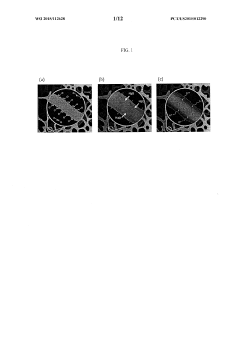
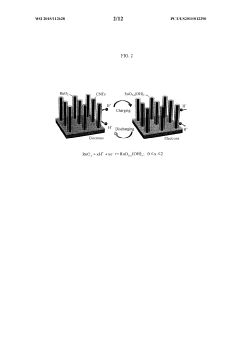
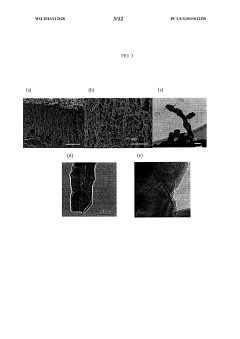
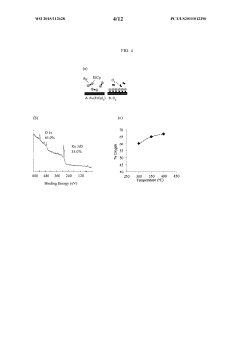
- The use of atomic layer deposition (ALD) to apply a thin, conformal coating of metal oxide pseudocapacitive materials, such as ruthenium oxide (RuOx), onto high surface area nanostructures like carbon nanotubes and porous silicon, combined with post-ALD electrochemical oxidation to enhance energy storage potential, allowing precise control over layer thickness and composition without binder molecules.
Environmental Standards for Supercapacitor Manufacturing
Environmental standards for supercapacitor manufacturing have become increasingly stringent as the industry scales up production to meet growing demand for energy storage solutions. The manufacturing process involves multiple chemical treatments, solvent usage, and material processing steps that generate various forms of waste and emissions requiring careful management and compliance monitoring.
Current regulatory frameworks governing supercapacitor production encompass air quality standards, wastewater discharge limits, hazardous waste management protocols, and workplace safety requirements. The European Union's REACH regulation and RoHS directive significantly impact material selection and processing methods, while similar standards in North America and Asia-Pacific regions establish comparable environmental protection measures. These regulations particularly focus on controlling volatile organic compound emissions from electrode coating processes and managing electrolyte-related chemical waste streams.
Slitting operations specifically face environmental challenges related to particulate matter generation, cutting fluid management, and material waste minimization. Advanced filtration systems and enclosed cutting environments have become standard requirements to contain airborne particles generated during precision cutting of electrode materials. The optimization of slitting processes directly contributes to environmental compliance by reducing material waste ratios and minimizing the need for rework operations that would otherwise increase overall environmental impact.
Emerging environmental standards are increasingly emphasizing lifecycle assessment approaches and carbon footprint reduction throughout the manufacturing chain. New regulations are being developed to address the environmental impact of nanomaterial handling in electrode production, requiring enhanced containment and monitoring systems. Water usage efficiency standards are also becoming more prominent, particularly in regions facing water scarcity challenges.
The integration of real-time environmental monitoring systems has become essential for maintaining compliance with evolving standards. These systems track emissions, waste generation rates, and resource consumption metrics continuously, enabling manufacturers to demonstrate adherence to environmental requirements while identifying opportunities for process improvements. Future regulatory trends indicate a shift toward more comprehensive sustainability metrics that will encompass energy efficiency, material recyclability, and end-of-life product management considerations.
Current regulatory frameworks governing supercapacitor production encompass air quality standards, wastewater discharge limits, hazardous waste management protocols, and workplace safety requirements. The European Union's REACH regulation and RoHS directive significantly impact material selection and processing methods, while similar standards in North America and Asia-Pacific regions establish comparable environmental protection measures. These regulations particularly focus on controlling volatile organic compound emissions from electrode coating processes and managing electrolyte-related chemical waste streams.
Slitting operations specifically face environmental challenges related to particulate matter generation, cutting fluid management, and material waste minimization. Advanced filtration systems and enclosed cutting environments have become standard requirements to contain airborne particles generated during precision cutting of electrode materials. The optimization of slitting processes directly contributes to environmental compliance by reducing material waste ratios and minimizing the need for rework operations that would otherwise increase overall environmental impact.
Emerging environmental standards are increasingly emphasizing lifecycle assessment approaches and carbon footprint reduction throughout the manufacturing chain. New regulations are being developed to address the environmental impact of nanomaterial handling in electrode production, requiring enhanced containment and monitoring systems. Water usage efficiency standards are also becoming more prominent, particularly in regions facing water scarcity challenges.
The integration of real-time environmental monitoring systems has become essential for maintaining compliance with evolving standards. These systems track emissions, waste generation rates, and resource consumption metrics continuously, enabling manufacturers to demonstrate adherence to environmental requirements while identifying opportunities for process improvements. Future regulatory trends indicate a shift toward more comprehensive sustainability metrics that will encompass energy efficiency, material recyclability, and end-of-life product management considerations.
Quality Control Systems for Slitting Process Optimization
Quality control systems for supercapacitor slitting processes require sophisticated monitoring and measurement technologies to ensure consistent electrode performance. Advanced vision inspection systems utilize high-resolution cameras and machine learning algorithms to detect surface defects, edge irregularities, and dimensional variations in real-time during the slitting operation. These systems can identify microscopic tears, burrs, or contamination that could compromise supercapacitor performance.
Precision measurement technologies form the backbone of effective quality control in slitting operations. Laser-based thickness gauges provide continuous monitoring of electrode material thickness with micrometer-level accuracy, while optical edge detection systems ensure consistent width tolerances across the entire length of slit electrodes. Tension monitoring sensors track material stress throughout the unwinding and rewinding processes, preventing excessive force that could damage delicate electrode structures.
Statistical process control methodologies enable real-time analysis of quality parameters and automatic adjustment of slitting parameters. These systems collect data from multiple sensors and apply control charts to identify trends and deviations before they result in defective products. Machine learning algorithms analyze historical quality data to predict optimal cutting speeds, blade pressures, and environmental conditions for different electrode materials.
Automated feedback control systems integrate quality measurements with slitting equipment to maintain consistent output quality. When deviations are detected, these systems can automatically adjust blade positioning, cutting speed, or material tension to correct the process. Advanced systems incorporate predictive maintenance algorithms that monitor blade wear patterns and recommend replacement schedules to prevent quality degradation.
Environmental monitoring systems track temperature, humidity, and particulate contamination levels in the slitting area, as these factors significantly impact electrode material properties and cutting quality. Clean room protocols and contamination control measures are essential for maintaining the purity required for high-performance supercapacitor electrodes.
Data management platforms consolidate quality information from multiple sources, providing comprehensive traceability and enabling continuous improvement initiatives. These systems generate detailed quality reports and facilitate root cause analysis when defects occur, supporting ongoing optimization of the slitting process for next-generation supercapacitor manufacturing.
Precision measurement technologies form the backbone of effective quality control in slitting operations. Laser-based thickness gauges provide continuous monitoring of electrode material thickness with micrometer-level accuracy, while optical edge detection systems ensure consistent width tolerances across the entire length of slit electrodes. Tension monitoring sensors track material stress throughout the unwinding and rewinding processes, preventing excessive force that could damage delicate electrode structures.
Statistical process control methodologies enable real-time analysis of quality parameters and automatic adjustment of slitting parameters. These systems collect data from multiple sensors and apply control charts to identify trends and deviations before they result in defective products. Machine learning algorithms analyze historical quality data to predict optimal cutting speeds, blade pressures, and environmental conditions for different electrode materials.
Automated feedback control systems integrate quality measurements with slitting equipment to maintain consistent output quality. When deviations are detected, these systems can automatically adjust blade positioning, cutting speed, or material tension to correct the process. Advanced systems incorporate predictive maintenance algorithms that monitor blade wear patterns and recommend replacement schedules to prevent quality degradation.
Environmental monitoring systems track temperature, humidity, and particulate contamination levels in the slitting area, as these factors significantly impact electrode material properties and cutting quality. Clean room protocols and contamination control measures are essential for maintaining the purity required for high-performance supercapacitor electrodes.
Data management platforms consolidate quality information from multiple sources, providing comprehensive traceability and enabling continuous improvement initiatives. These systems generate detailed quality reports and facilitate root cause analysis when defects occur, supporting ongoing optimization of the slitting process for next-generation supercapacitor manufacturing.
Unlock deeper insights with Patsnap Eureka Quick Research — get a full tech report to explore trends and direct your research. Try now!
Generate Your Research Report Instantly with AI Agent
Supercharge your innovation with Patsnap Eureka AI Agent Platform!