

Optimizing Superconducting Fault Current Limiters for Large-Scale Networks
MAY 21, 20269 MIN READ
Generate Your Research Report Instantly with AI Agent
PatSnap Eureka helps you evaluate technical feasibility & market potential.
Superconducting FCL Technology Background and Objectives
Superconducting Fault Current Limiters (SFCLs) represent a revolutionary approach to power system protection, leveraging the unique properties of superconducting materials to automatically limit excessive fault currents in electrical networks. The technology emerged from the convergence of superconductivity research and power system engineering needs, addressing the growing challenge of fault current management in increasingly complex electrical grids.
The fundamental principle underlying SFCL technology relies on the quantum mechanical phenomenon of superconductivity, where certain materials exhibit zero electrical resistance below critical temperature, current density, and magnetic field thresholds. When fault conditions occur, the superconducting material transitions to its normal resistive state, effectively limiting current flow without requiring external control systems or mechanical switching operations.
Historical development of SFCL technology began in the 1970s following advances in superconducting materials science. Early research focused on low-temperature superconductors requiring liquid helium cooling, which presented significant practical limitations. The discovery of high-temperature superconductors in the 1980s marked a pivotal breakthrough, enabling operation with liquid nitrogen cooling and making commercial applications economically viable.
The evolution of SFCL technology has progressed through several distinct phases, from laboratory demonstrations using conventional superconductors to field trials with high-temperature superconducting materials. Recent developments have concentrated on improving material properties, enhancing cooling efficiency, and developing hybrid designs that combine superconducting elements with conventional protection equipment.
Primary objectives driving current SFCL optimization efforts include achieving faster recovery times following fault clearance, reducing cooling system complexity and energy consumption, and developing scalable designs suitable for high-voltage transmission networks. Enhanced reliability and reduced maintenance requirements represent additional critical goals for widespread commercial deployment.
The technology aims to address fundamental limitations of conventional fault current limiting methods, including the increasing short-circuit levels in modern power systems, the need for equipment upgrades due to rising fault currents, and the desire for seamless integration with smart grid technologies. Advanced SFCL designs target improved coordination with existing protection schemes while providing enhanced system stability and reduced equipment stress during fault conditions.
The fundamental principle underlying SFCL technology relies on the quantum mechanical phenomenon of superconductivity, where certain materials exhibit zero electrical resistance below critical temperature, current density, and magnetic field thresholds. When fault conditions occur, the superconducting material transitions to its normal resistive state, effectively limiting current flow without requiring external control systems or mechanical switching operations.
Historical development of SFCL technology began in the 1970s following advances in superconducting materials science. Early research focused on low-temperature superconductors requiring liquid helium cooling, which presented significant practical limitations. The discovery of high-temperature superconductors in the 1980s marked a pivotal breakthrough, enabling operation with liquid nitrogen cooling and making commercial applications economically viable.
The evolution of SFCL technology has progressed through several distinct phases, from laboratory demonstrations using conventional superconductors to field trials with high-temperature superconducting materials. Recent developments have concentrated on improving material properties, enhancing cooling efficiency, and developing hybrid designs that combine superconducting elements with conventional protection equipment.
Primary objectives driving current SFCL optimization efforts include achieving faster recovery times following fault clearance, reducing cooling system complexity and energy consumption, and developing scalable designs suitable for high-voltage transmission networks. Enhanced reliability and reduced maintenance requirements represent additional critical goals for widespread commercial deployment.
The technology aims to address fundamental limitations of conventional fault current limiting methods, including the increasing short-circuit levels in modern power systems, the need for equipment upgrades due to rising fault currents, and the desire for seamless integration with smart grid technologies. Advanced SFCL designs target improved coordination with existing protection schemes while providing enhanced system stability and reduced equipment stress during fault conditions.
Market Demand for Grid Protection in Large-Scale Networks
The global electrical grid infrastructure faces unprecedented challenges as power systems expand and interconnect across vast geographical regions. Large-scale networks, including national grids and international power interconnections, require sophisticated protection mechanisms to maintain stability and prevent cascading failures. The increasing complexity of these networks, combined with growing electricity demand and the integration of renewable energy sources, has created an urgent need for advanced fault current limitation technologies.
Traditional circuit breakers and protection systems often struggle to handle the extreme fault currents that can occur in large-scale networks. These high fault currents can reach tens of thousands of amperes, potentially causing severe equipment damage, extended outages, and significant economic losses. The limitations of conventional protection equipment have become particularly evident as grid interconnections increase fault current levels beyond the interrupting capacity of existing infrastructure.
The market demand for superconducting fault current limiters has intensified due to several converging factors. Grid operators are increasingly concerned about the reliability and resilience of their networks, especially as extreme weather events and cyber threats pose new risks. The economic impact of major grid failures, which can cost billions of dollars and affect millions of customers, has driven utilities to seek more effective protection solutions.
Renewable energy integration presents additional challenges that fuel market demand for advanced protection technologies. Wind and solar installations often require grid reinforcement and enhanced fault protection capabilities. The intermittent nature of renewable sources can create voltage fluctuations and fault conditions that traditional protection systems may not handle optimally. Superconducting fault current limiters offer the ability to provide seamless protection while maintaining power quality during normal operations.
Regulatory frameworks worldwide are also driving market demand through stricter grid reliability standards and resilience requirements. Utilities must demonstrate their ability to maintain service continuity and protect critical infrastructure, creating a compelling business case for investing in advanced protection technologies. The growing emphasis on smart grid development further amplifies the need for intelligent, fast-responding protection systems that can integrate with modern grid management platforms.
The economic benefits of preventing major grid failures significantly outweigh the investment costs of superconducting fault current limiters. Market analysis indicates strong growth potential as utilities recognize the long-term value proposition of these advanced protection systems in maintaining grid stability and avoiding catastrophic outages.
Traditional circuit breakers and protection systems often struggle to handle the extreme fault currents that can occur in large-scale networks. These high fault currents can reach tens of thousands of amperes, potentially causing severe equipment damage, extended outages, and significant economic losses. The limitations of conventional protection equipment have become particularly evident as grid interconnections increase fault current levels beyond the interrupting capacity of existing infrastructure.
The market demand for superconducting fault current limiters has intensified due to several converging factors. Grid operators are increasingly concerned about the reliability and resilience of their networks, especially as extreme weather events and cyber threats pose new risks. The economic impact of major grid failures, which can cost billions of dollars and affect millions of customers, has driven utilities to seek more effective protection solutions.
Renewable energy integration presents additional challenges that fuel market demand for advanced protection technologies. Wind and solar installations often require grid reinforcement and enhanced fault protection capabilities. The intermittent nature of renewable sources can create voltage fluctuations and fault conditions that traditional protection systems may not handle optimally. Superconducting fault current limiters offer the ability to provide seamless protection while maintaining power quality during normal operations.
Regulatory frameworks worldwide are also driving market demand through stricter grid reliability standards and resilience requirements. Utilities must demonstrate their ability to maintain service continuity and protect critical infrastructure, creating a compelling business case for investing in advanced protection technologies. The growing emphasis on smart grid development further amplifies the need for intelligent, fast-responding protection systems that can integrate with modern grid management platforms.
The economic benefits of preventing major grid failures significantly outweigh the investment costs of superconducting fault current limiters. Market analysis indicates strong growth potential as utilities recognize the long-term value proposition of these advanced protection systems in maintaining grid stability and avoiding catastrophic outages.
Current SFCL Challenges in High-Capacity Power Systems
Superconducting Fault Current Limiters face significant technical obstacles when deployed in high-capacity power systems, primarily stemming from the fundamental physics of superconducting materials and the extreme operational demands of large-scale electrical networks. The most critical challenge lies in achieving sufficient current-carrying capacity while maintaining rapid fault detection and current limitation capabilities. Current SFCL technologies struggle to handle the massive fault currents that can exceed 50-100 kA in major transmission networks, often requiring complex parallel configurations that introduce reliability concerns.
Thermal management represents another formidable challenge, as SFCLs must operate at cryogenic temperatures typically below 77K for high-temperature superconductors or even lower for conventional superconductors. The cooling systems required for large-scale deployment consume substantial energy and add operational complexity, with cooling failures potentially compromising entire network protection schemes. Recovery time after fault events poses additional difficulties, as superconducting materials require time to return to their zero-resistance state, during which the system remains vulnerable.
Integration complexity with existing power system infrastructure creates substantial engineering challenges. High-capacity networks often employ sophisticated protection coordination schemes that must be recalibrated when SFCLs are introduced. The impedance characteristics of SFCLs during normal and fault conditions can interfere with traditional protective relay settings, requiring comprehensive system studies and potentially costly infrastructure modifications.
Manufacturing scalability and cost considerations present significant barriers to widespread adoption. Current SFCL production methods are not optimized for the large quantities required for major network deployments, resulting in prohibitively high per-unit costs. The specialized materials, particularly high-temperature superconducting tapes or wires, remain expensive and subject to supply chain constraints that limit deployment feasibility.
Reliability and maintenance challenges are amplified in high-capacity systems where equipment failures can have cascading effects across vast geographical areas. SFCLs must demonstrate exceptional reliability over decades of operation while withstanding repeated fault events, electromagnetic stresses, and environmental variations. The complexity of cryogenic systems introduces additional failure modes that traditional power equipment does not face.
Standardization gaps further complicate deployment, as industry standards for SFCL testing, performance verification, and grid integration remain underdeveloped. This lack of standardization creates uncertainty for utilities considering large-scale investments and complicates the approval processes required for critical infrastructure modifications.
Thermal management represents another formidable challenge, as SFCLs must operate at cryogenic temperatures typically below 77K for high-temperature superconductors or even lower for conventional superconductors. The cooling systems required for large-scale deployment consume substantial energy and add operational complexity, with cooling failures potentially compromising entire network protection schemes. Recovery time after fault events poses additional difficulties, as superconducting materials require time to return to their zero-resistance state, during which the system remains vulnerable.
Integration complexity with existing power system infrastructure creates substantial engineering challenges. High-capacity networks often employ sophisticated protection coordination schemes that must be recalibrated when SFCLs are introduced. The impedance characteristics of SFCLs during normal and fault conditions can interfere with traditional protective relay settings, requiring comprehensive system studies and potentially costly infrastructure modifications.
Manufacturing scalability and cost considerations present significant barriers to widespread adoption. Current SFCL production methods are not optimized for the large quantities required for major network deployments, resulting in prohibitively high per-unit costs. The specialized materials, particularly high-temperature superconducting tapes or wires, remain expensive and subject to supply chain constraints that limit deployment feasibility.
Reliability and maintenance challenges are amplified in high-capacity systems where equipment failures can have cascading effects across vast geographical areas. SFCLs must demonstrate exceptional reliability over decades of operation while withstanding repeated fault events, electromagnetic stresses, and environmental variations. The complexity of cryogenic systems introduces additional failure modes that traditional power equipment does not face.
Standardization gaps further complicate deployment, as industry standards for SFCL testing, performance verification, and grid integration remain underdeveloped. This lack of standardization creates uncertainty for utilities considering large-scale investments and complicates the approval processes required for critical infrastructure modifications.
Existing SFCL Solutions for Large-Scale Network Protection
01 Resistive superconducting fault current limiters
These devices utilize the transition of superconducting materials from zero resistance to normal resistance state when fault currents exceed critical values. The sudden increase in resistance limits the fault current effectively. The design typically incorporates high-temperature superconducting materials that can quickly transition between superconducting and resistive states to provide reliable fault current limitation.- Resistive superconducting fault current limiters: These devices utilize the transition of superconducting materials from zero resistance to normal resistance state when fault currents exceed critical values. The sudden increase in resistance limits the fault current effectively. The design typically incorporates high-temperature superconducting materials that can quickly transition between superconducting and resistive states to provide reliable fault current limitation.
- Inductive superconducting fault current limiters: These systems employ superconducting coils and magnetic coupling mechanisms to limit fault currents through inductive impedance. When fault conditions occur, the superconducting coil loses its zero-resistance property, creating significant impedance that restricts current flow. The design often includes primary and secondary windings with superconducting elements for enhanced performance.
- Hybrid superconducting fault current limiters: These advanced systems combine superconducting elements with conventional electrical components such as switches, reactors, or power electronics. The hybrid approach provides enhanced control capabilities and improved reliability by integrating the benefits of superconducting technology with proven conventional protection methods. This design allows for more flexible operation and better integration with existing power systems.
- Superconducting material optimization and cooling systems: This category focuses on the development and optimization of superconducting materials and their associated cooling mechanisms for fault current limiter applications. The technology involves advanced cryogenic systems, material composition improvements, and thermal management solutions to maintain superconducting properties under various operating conditions and ensure reliable performance during fault events.
- Control and monitoring systems for superconducting fault current limiters: These systems provide intelligent control, monitoring, and protection functions for superconducting fault current limiters. The technology includes sensors, control algorithms, communication interfaces, and diagnostic capabilities to ensure optimal operation, fault detection, and system integration. Advanced monitoring systems enable real-time assessment of superconductor status and automatic response to grid conditions.
02 Inductive superconducting fault current limiters
These systems employ superconducting coils and magnetic coupling mechanisms to limit fault currents through inductive impedance. When fault conditions occur, the superconducting coil loses its zero-resistance property, creating significant impedance that restricts current flow. The design often includes primary and secondary windings with superconducting elements for enhanced performance.Expand Specific Solutions03 Hybrid superconducting fault current limiters
These advanced systems combine multiple technologies such as superconducting elements with conventional switching devices or magnetic components. The hybrid approach provides enhanced reliability and performance by integrating the benefits of superconducting materials with proven electrical protection technologies. These designs often feature backup protection mechanisms and improved recovery characteristics.Expand Specific Solutions04 Superconducting fault current limiter control and monitoring systems
These encompass the electronic control circuits, monitoring systems, and protection algorithms required for proper operation of superconducting fault current limiters. The systems include temperature monitoring, quench detection, recovery control, and integration with power grid protection schemes. Advanced control methods ensure optimal performance and coordination with existing grid protection systems.Expand Specific Solutions05 Superconducting fault current limiter cooling and cryogenic systems
These systems provide the necessary cryogenic environment for maintaining superconducting materials at operating temperatures. The cooling systems include cryocoolers, thermal management components, and insulation systems designed to maintain stable low temperatures required for superconducting operation. Efficient thermal design is critical for reliable and cost-effective operation of superconducting fault current limiters.Expand Specific Solutions
Key Players in SFCL and Power Grid Industry
The superconducting fault current limiter (SFCL) technology for large-scale networks represents an emerging market in the early commercialization stage, with significant growth potential driven by increasing grid modernization demands and renewable energy integration. The market remains relatively niche but is expanding as utilities seek advanced grid protection solutions. Technology maturity varies significantly across key players, with American Superconductor Corp. leading commercial SFCL development and deployment, while State Grid Corp. of China and Korea Electric Power Corp. drive large-scale implementation initiatives. Research institutions like University of Bologna, Chinese Academy of Sciences' Institute of Electrical Engineering, and SuperGrid Institute SAS contribute fundamental breakthroughs in superconducting materials and system optimization. Industrial players including Nexans SA, Furukawa Electric, and LSIS Co. Ltd. focus on manufacturing scalable solutions, while companies like RICOR provide essential cryogenic cooling systems. The competitive landscape shows a clear division between technology developers, system integrators, and end-users, with Asian markets, particularly China and South Korea, demonstrating the most aggressive adoption strategies for grid-scale SFCL deployment.
State Grid Corp. of China
Technical Solution: State Grid Corporation of China has implemented comprehensive SFCL deployment strategies across multiple voltage levels in their extensive transmission network. Their approach focuses on saturated iron-core SFCLs and resistive HTS-based systems for 35kV to 220kV applications. The corporation has successfully installed and operated multiple SFCL units in Beijing, Shanghai, and other major cities, with systems capable of limiting fault currents from 25kA to 40kA. Their optimization strategy emphasizes network-wide coordination, where SFCLs are strategically placed at key substations to manage fault current distribution across interconnected grids. The company has also developed advanced monitoring and control systems that integrate SFCL operation with existing grid management infrastructure.
Strengths: Extensive real-world deployment experience and comprehensive grid integration capabilities. Weaknesses: Technology primarily focused on domestic market requirements and limited international technology transfer.
Nexans SA
Technical Solution: Nexans has developed superconducting fault current limiters integrated with their HTS cable technology for urban power networks. Their SFCL solutions utilize resistive-type configurations with HTS tapes that can handle fault currents up to 20kA in medium voltage applications. The company's unique approach combines SFCL functionality with superconducting cables in a single cryogenic system, reducing overall infrastructure costs and complexity. Their technology features distributed SFCL elements along cable routes, providing multiple protection points within large-scale networks. Nexans has implemented pilot projects in European cities, demonstrating the effectiveness of their integrated approach in reducing fault current levels while maintaining system reliability and power quality.
Strengths: Integrated cable and SFCL solutions reducing system complexity and installation costs. Weaknesses: Limited experience in high-voltage transmission applications and dependency on specialized installation expertise.
Core Innovations in High-Performance SFCL Design
Self-triggering superconducting fault current limiter
PatentInactiveUS7440244B2
Innovation
- A passive, scalable matrix fault current limiter design utilizing a trigger coil and shunt impedance, electrically connected in parallel with a superconducting element, where the trigger coil generates a uniform magnetic field to induce quenching and the shunt limits voltage, ensuring uniform quenching and reducing overheating risks.
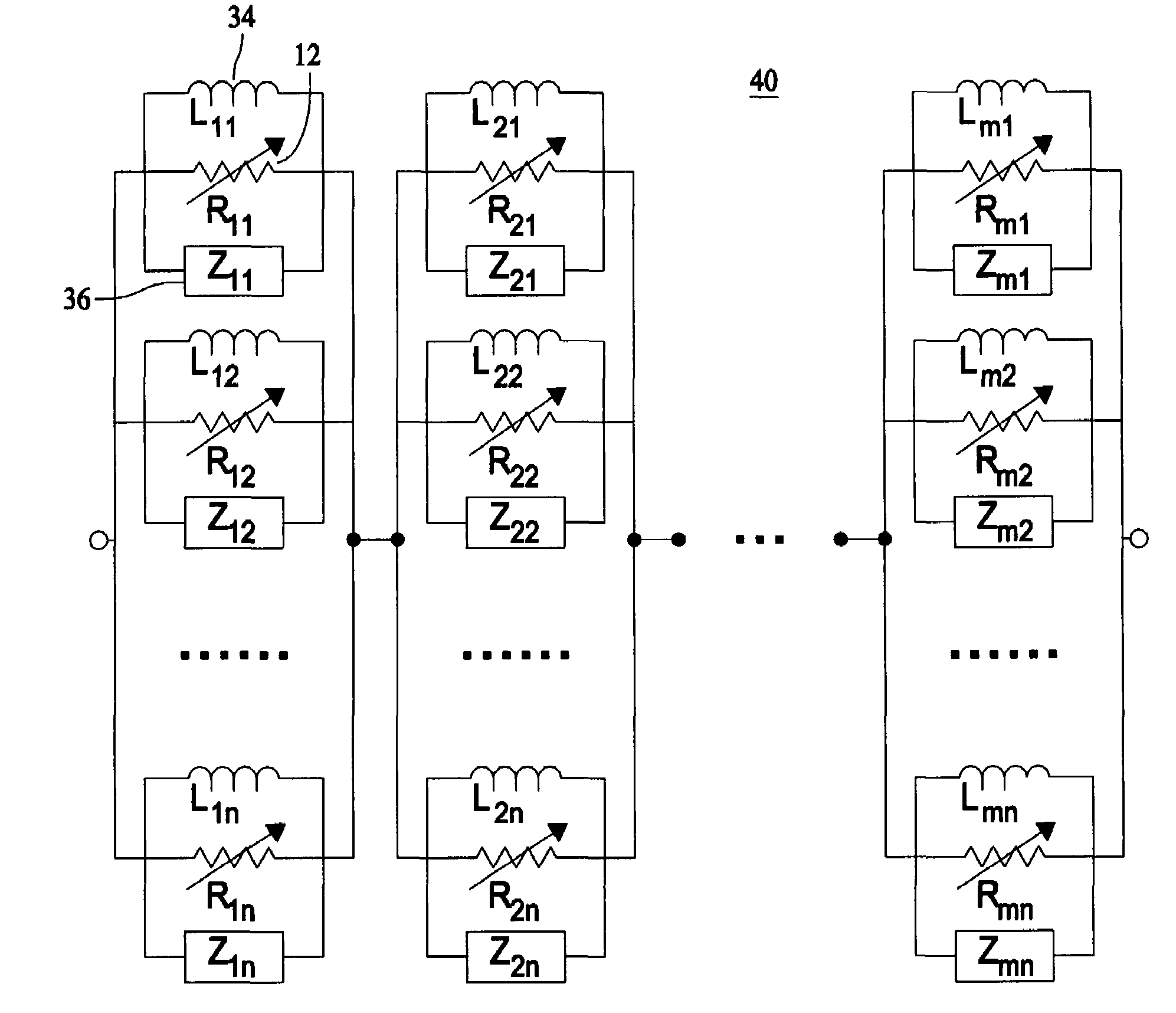
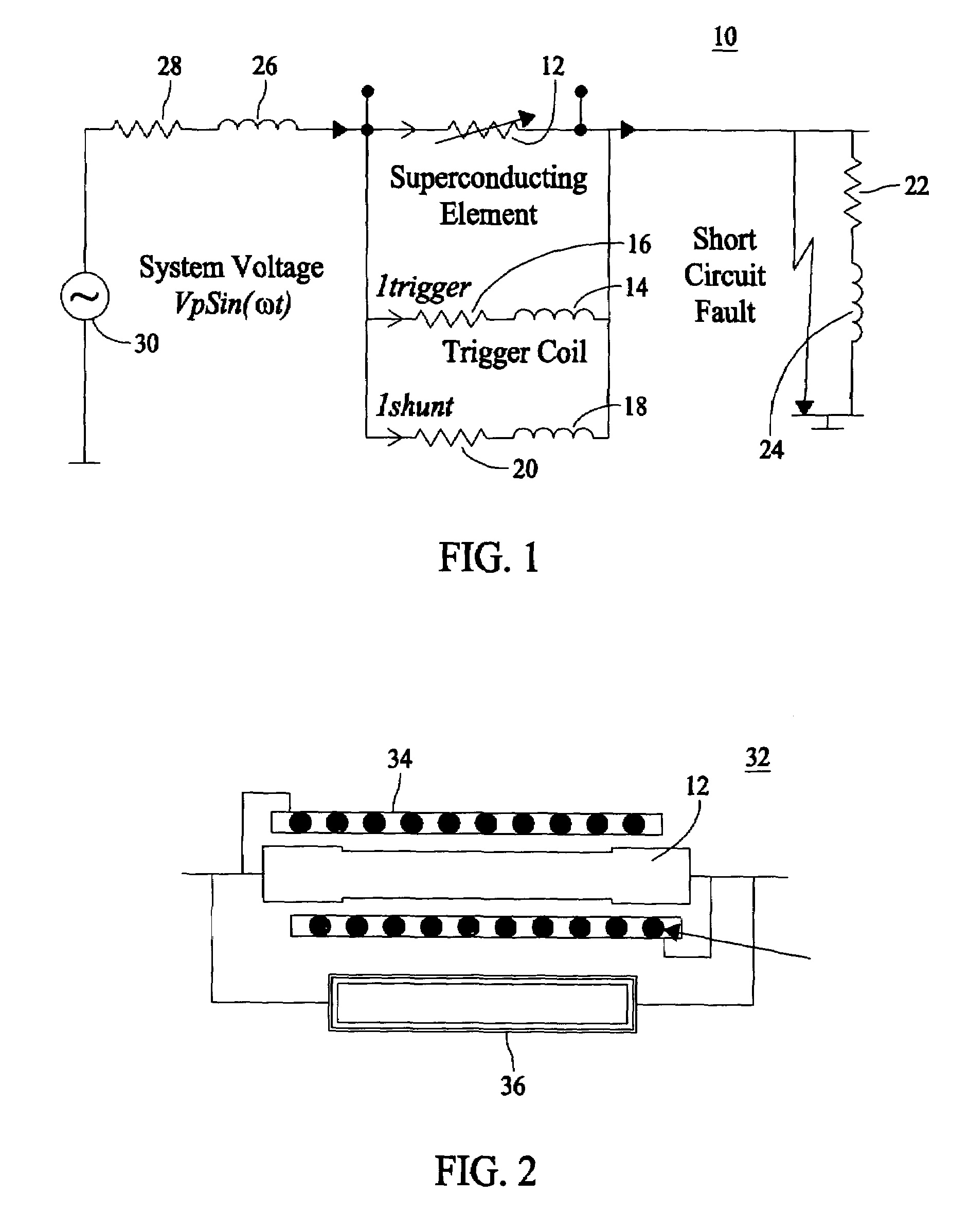
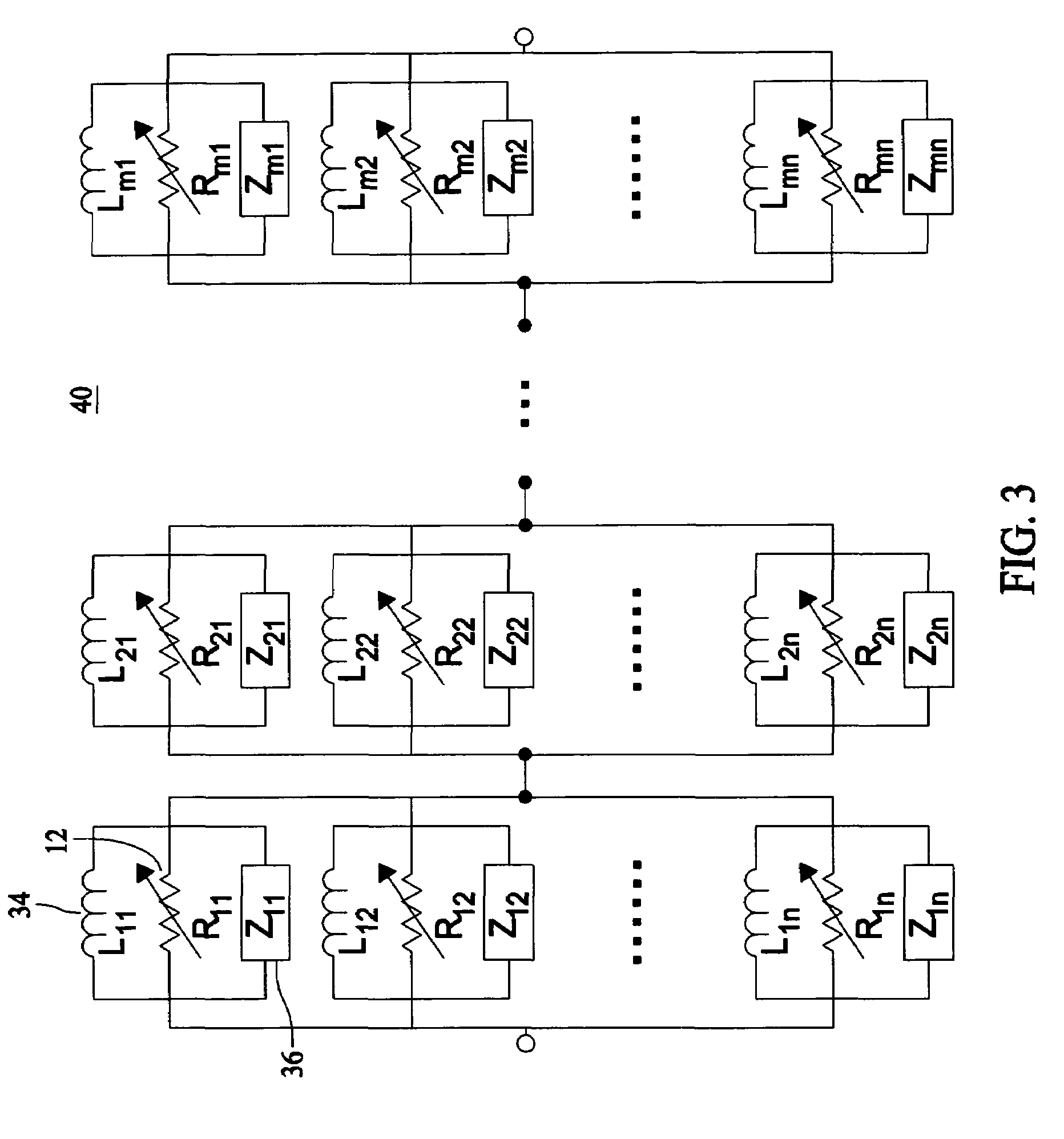

Technique for Limiting Transmission of Fault Current
PatentInactiveUS20100296208A1
Innovation
- A new SCFCL apparatus with an electrically decoupled enclosure, containing a superconducting circuit connected to terminals, and utilizing a coolant to maintain the circuit below a critical temperature, which isolates the enclosure from ground and allows it to float at a voltage between terminal voltages, reducing the footprint and enhancing high voltage performance.


Grid Integration Standards and Regulatory Framework
The integration of superconducting fault current limiters (SFCLs) into large-scale electrical networks requires comprehensive adherence to established grid integration standards and regulatory frameworks. Current international standards, including IEEE 1547 and IEC 61850, provide foundational guidelines for distributed energy resources and communication protocols, though specific provisions for superconducting technologies remain limited. The IEEE C37.90 series offers relevant testing standards for protective relaying equipment that can be adapted for SFCL applications.
Regulatory frameworks vary significantly across different jurisdictions, with the Federal Energy Regulatory Commission (FERC) in the United States establishing interconnection procedures under Order 2003 and subsequent amendments. European regulations under the Network Codes framework, particularly the Requirements for Generators (RfG) and Demand Connection Code (DCC), provide structured approaches for grid-connected equipment that SFCLs must comply with when integrated into transmission and distribution systems.
Grid codes typically mandate specific performance criteria including fault ride-through capabilities, power quality requirements, and protection coordination standards. SFCLs must demonstrate compliance with voltage and frequency operating ranges, typically ±10% for voltage and ±0.5 Hz for frequency variations. Response time requirements generally specify fault detection and current limitation within 2-5 milliseconds, aligning with existing protection system coordination schemes.
Certification processes require extensive testing protocols covering electromagnetic compatibility, environmental conditions, and safety standards. Type testing according to IEC 62271 series standards ensures equipment reliability under various operating conditions. Factory acceptance testing and site acceptance testing procedures must validate SFCL performance against specified parameters including recovery time, quench characteristics, and long-term operational stability.
Emerging regulatory considerations address cybersecurity requirements under frameworks like NERC CIP standards, requiring SFCLs with communication capabilities to implement appropriate security measures. Environmental regulations increasingly emphasize lifecycle assessment and recyclability of superconducting materials, influencing design specifications and operational procedures for large-scale deployments.
Regulatory frameworks vary significantly across different jurisdictions, with the Federal Energy Regulatory Commission (FERC) in the United States establishing interconnection procedures under Order 2003 and subsequent amendments. European regulations under the Network Codes framework, particularly the Requirements for Generators (RfG) and Demand Connection Code (DCC), provide structured approaches for grid-connected equipment that SFCLs must comply with when integrated into transmission and distribution systems.
Grid codes typically mandate specific performance criteria including fault ride-through capabilities, power quality requirements, and protection coordination standards. SFCLs must demonstrate compliance with voltage and frequency operating ranges, typically ±10% for voltage and ±0.5 Hz for frequency variations. Response time requirements generally specify fault detection and current limitation within 2-5 milliseconds, aligning with existing protection system coordination schemes.
Certification processes require extensive testing protocols covering electromagnetic compatibility, environmental conditions, and safety standards. Type testing according to IEC 62271 series standards ensures equipment reliability under various operating conditions. Factory acceptance testing and site acceptance testing procedures must validate SFCL performance against specified parameters including recovery time, quench characteristics, and long-term operational stability.
Emerging regulatory considerations address cybersecurity requirements under frameworks like NERC CIP standards, requiring SFCLs with communication capabilities to implement appropriate security measures. Environmental regulations increasingly emphasize lifecycle assessment and recyclability of superconducting materials, influencing design specifications and operational procedures for large-scale deployments.
Economic Viability and Cost-Benefit Analysis of SFCL
The economic viability of Superconducting Fault Current Limiters (SFCLs) in large-scale networks represents a critical factor determining their widespread adoption. Initial capital expenditure for SFCL systems remains substantial, with costs ranging from $2-5 million per unit for high-voltage applications. However, comprehensive cost-benefit analysis reveals compelling long-term value propositions that extend beyond simple equipment replacement scenarios.
Direct economic benefits manifest through reduced infrastructure requirements and enhanced system reliability. SFCLs enable utilities to defer costly substation upgrades and transmission line reinforcements by managing fault current levels within existing equipment ratings. This deferral capability can generate savings of $10-50 million per avoided substation upgrade, depending on voltage levels and capacity requirements. Additionally, SFCLs minimize equipment damage during fault events, reducing replacement costs for transformers, circuit breakers, and other critical components.
Operational cost reductions emerge from improved system stability and reduced maintenance requirements. SFCLs eliminate the need for frequent reconfiguration of protection systems as network topology evolves, reducing engineering and commissioning expenses. The technology also enables optimized power flow patterns, potentially reducing transmission losses by 2-5% in congested network segments, translating to annual savings of hundreds of thousands of dollars for major utilities.
Risk mitigation provides substantial but often undervalued economic benefits. SFCLs significantly reduce the probability of cascading failures and extended outages, which can cost utilities millions in lost revenue and regulatory penalties. The improved power quality and system stability also enhance customer satisfaction and reduce compensation claims for industrial customers experiencing power quality issues.
Return on investment calculations typically show payback periods of 8-15 years for SFCL installations, with net present values becoming positive within the first decade of operation. As manufacturing scales increase and superconducting material costs decline, economic attractiveness continues improving, making SFCLs increasingly competitive with conventional fault current management solutions.
Direct economic benefits manifest through reduced infrastructure requirements and enhanced system reliability. SFCLs enable utilities to defer costly substation upgrades and transmission line reinforcements by managing fault current levels within existing equipment ratings. This deferral capability can generate savings of $10-50 million per avoided substation upgrade, depending on voltage levels and capacity requirements. Additionally, SFCLs minimize equipment damage during fault events, reducing replacement costs for transformers, circuit breakers, and other critical components.
Operational cost reductions emerge from improved system stability and reduced maintenance requirements. SFCLs eliminate the need for frequent reconfiguration of protection systems as network topology evolves, reducing engineering and commissioning expenses. The technology also enables optimized power flow patterns, potentially reducing transmission losses by 2-5% in congested network segments, translating to annual savings of hundreds of thousands of dollars for major utilities.
Risk mitigation provides substantial but often undervalued economic benefits. SFCLs significantly reduce the probability of cascading failures and extended outages, which can cost utilities millions in lost revenue and regulatory penalties. The improved power quality and system stability also enhance customer satisfaction and reduce compensation claims for industrial customers experiencing power quality issues.
Return on investment calculations typically show payback periods of 8-15 years for SFCL installations, with net present values becoming positive within the first decade of operation. As manufacturing scales increase and superconducting material costs decline, economic attractiveness continues improving, making SFCLs increasingly competitive with conventional fault current management solutions.
Unlock deeper insights with PatSnap Eureka Quick Research — get a full tech report to explore trends and direct your research. Try now!
Generate Your Research Report Instantly with AI Agent
Supercharge your innovation with PatSnap Eureka AI Agent Platform!