
Peroxide Stability Under Varying pH Conditions
MAR 9, 20269 MIN READ
Generate Your Research Report Instantly with AI Agent
Patsnap Eureka helps you evaluate technical feasibility & market potential.
Peroxide Chemistry Background and Stability Goals
Peroxide compounds represent a critical class of chemical substances characterized by the presence of oxygen-oxygen single bonds (O-O), which inherently create reactive molecular structures with significant industrial and commercial applications. These compounds, ranging from simple hydrogen peroxide to complex organic peroxides, serve essential roles in bleaching, disinfection, polymerization initiation, and oxidation processes across multiple industries including textiles, paper manufacturing, water treatment, and pharmaceutical production.
The fundamental chemistry of peroxides involves the weak O-O bond, typically exhibiting bond energies between 35-50 kcal/mol, making these compounds thermodynamically unstable and prone to decomposition reactions. This inherent instability, while beneficial for their oxidizing properties, presents significant challenges in storage, handling, and application processes. The decomposition pathways generally involve homolytic or heterolytic cleavage of the peroxide bond, leading to the formation of highly reactive oxygen species and free radicals.
pH conditions dramatically influence peroxide stability through multiple mechanisms, including protonation-deprotonation equilibria, catalytic effects of hydrogen and hydroxide ions, and alterations in molecular conformation. Under acidic conditions, peroxides may undergo acid-catalyzed decomposition, while alkaline environments can promote base-catalyzed degradation pathways. The optimal pH range for peroxide stability varies significantly among different peroxide types, creating complex stability profiles that must be carefully managed.
Current industrial applications demand precise control over peroxide stability across diverse pH environments, from highly acidic bleaching processes to neutral biological systems and alkaline cleaning formulations. The challenge lies in maintaining sufficient reactivity for desired applications while preventing premature decomposition that leads to reduced efficacy, safety hazards, and economic losses.
The primary technical objectives for peroxide stability research focus on developing comprehensive understanding of pH-dependent degradation mechanisms, establishing predictive models for stability under varying conditions, and creating stabilization strategies that extend shelf life without compromising performance. Advanced stabilization approaches include chelating agents, buffer systems, and molecular modifications that enhance resistance to pH-induced decomposition while maintaining desired oxidative properties for specific applications.
The fundamental chemistry of peroxides involves the weak O-O bond, typically exhibiting bond energies between 35-50 kcal/mol, making these compounds thermodynamically unstable and prone to decomposition reactions. This inherent instability, while beneficial for their oxidizing properties, presents significant challenges in storage, handling, and application processes. The decomposition pathways generally involve homolytic or heterolytic cleavage of the peroxide bond, leading to the formation of highly reactive oxygen species and free radicals.
pH conditions dramatically influence peroxide stability through multiple mechanisms, including protonation-deprotonation equilibria, catalytic effects of hydrogen and hydroxide ions, and alterations in molecular conformation. Under acidic conditions, peroxides may undergo acid-catalyzed decomposition, while alkaline environments can promote base-catalyzed degradation pathways. The optimal pH range for peroxide stability varies significantly among different peroxide types, creating complex stability profiles that must be carefully managed.
Current industrial applications demand precise control over peroxide stability across diverse pH environments, from highly acidic bleaching processes to neutral biological systems and alkaline cleaning formulations. The challenge lies in maintaining sufficient reactivity for desired applications while preventing premature decomposition that leads to reduced efficacy, safety hazards, and economic losses.
The primary technical objectives for peroxide stability research focus on developing comprehensive understanding of pH-dependent degradation mechanisms, establishing predictive models for stability under varying conditions, and creating stabilization strategies that extend shelf life without compromising performance. Advanced stabilization approaches include chelating agents, buffer systems, and molecular modifications that enhance resistance to pH-induced decomposition while maintaining desired oxidative properties for specific applications.
Market Demand for pH-Stable Peroxide Applications
The global market for pH-stable peroxide applications demonstrates robust growth driven by increasing industrial demands across multiple sectors. Healthcare and pharmaceutical industries represent the largest consumption segment, where hydrogen peroxide solutions require consistent efficacy across varying physiological pH ranges. Medical device sterilization, wound care products, and pharmaceutical manufacturing processes necessitate peroxide formulations that maintain antimicrobial properties under both acidic and alkaline conditions.
Water treatment applications constitute another significant market driver, particularly in municipal wastewater treatment and industrial effluent processing. Advanced oxidation processes utilizing peroxide-based systems must function effectively across diverse pH environments encountered in different water sources. The growing emphasis on environmental remediation and stricter discharge regulations amplify demand for pH-resilient peroxide technologies.
The textile and pulp industries increasingly seek peroxide bleaching agents that deliver consistent performance regardless of substrate pH variations. Traditional peroxide systems often require extensive pH adjustment protocols, creating operational inefficiencies and increased chemical consumption. Market demand focuses on formulations that eliminate these preprocessing requirements while maintaining bleaching effectiveness.
Food processing and packaging sectors drive demand for pH-stable peroxide solutions in sanitization applications. Food contact surfaces and packaging materials present varying pH conditions, requiring antimicrobial agents that perform reliably across this spectrum. Regulatory compliance and food safety standards further intensify requirements for consistent peroxide performance.
Emerging applications in electronics manufacturing and semiconductor processing create new market opportunities. These industries require ultra-pure cleaning and etching solutions that maintain stability across controlled pH ranges without compromising product quality or introducing contaminants.
The agricultural sector increasingly adopts peroxide-based soil treatments and crop protection products. Soil pH variations significantly impact traditional peroxide effectiveness, creating substantial market potential for pH-stable formulations that ensure consistent agricultural outcomes across diverse growing conditions.
Market growth accelerates due to sustainability initiatives favoring peroxide over chlorine-based alternatives. Environmental regulations restricting halogenated compounds drive adoption of peroxide systems, particularly those offering operational flexibility across pH ranges without performance degradation.
Water treatment applications constitute another significant market driver, particularly in municipal wastewater treatment and industrial effluent processing. Advanced oxidation processes utilizing peroxide-based systems must function effectively across diverse pH environments encountered in different water sources. The growing emphasis on environmental remediation and stricter discharge regulations amplify demand for pH-resilient peroxide technologies.
The textile and pulp industries increasingly seek peroxide bleaching agents that deliver consistent performance regardless of substrate pH variations. Traditional peroxide systems often require extensive pH adjustment protocols, creating operational inefficiencies and increased chemical consumption. Market demand focuses on formulations that eliminate these preprocessing requirements while maintaining bleaching effectiveness.
Food processing and packaging sectors drive demand for pH-stable peroxide solutions in sanitization applications. Food contact surfaces and packaging materials present varying pH conditions, requiring antimicrobial agents that perform reliably across this spectrum. Regulatory compliance and food safety standards further intensify requirements for consistent peroxide performance.
Emerging applications in electronics manufacturing and semiconductor processing create new market opportunities. These industries require ultra-pure cleaning and etching solutions that maintain stability across controlled pH ranges without compromising product quality or introducing contaminants.
The agricultural sector increasingly adopts peroxide-based soil treatments and crop protection products. Soil pH variations significantly impact traditional peroxide effectiveness, creating substantial market potential for pH-stable formulations that ensure consistent agricultural outcomes across diverse growing conditions.
Market growth accelerates due to sustainability initiatives favoring peroxide over chlorine-based alternatives. Environmental regulations restricting halogenated compounds drive adoption of peroxide systems, particularly those offering operational flexibility across pH ranges without performance degradation.
Current Peroxide Stability Challenges Across pH Range
Peroxide compounds face significant stability challenges when exposed to varying pH conditions, with decomposition rates dramatically increasing under both highly acidic and alkaline environments. The fundamental issue stems from the inherent weakness of the oxygen-oxygen bond in peroxide molecules, which becomes increasingly susceptible to cleavage as pH deviates from neutral conditions. This instability manifests through multiple degradation pathways, including homolytic and heterolytic bond breaking, leading to the formation of reactive oxygen species and subsequent product deterioration.
In acidic environments below pH 4, peroxides undergo rapid protonation reactions that weaken the already fragile O-O bond structure. The presence of excess hydrogen ions catalyzes decomposition through acid-catalyzed mechanisms, resulting in accelerated breakdown rates that can increase exponentially with decreasing pH values. Metal ion contamination in acidic solutions further exacerbates this problem by providing alternative catalytic pathways for peroxide decomposition.
Alkaline conditions present equally challenging stability issues, with hydroxide ions promoting nucleophilic attack on peroxide bonds. At pH levels above 9, the rate of decomposition increases substantially due to base-catalyzed hydrolysis reactions. The formation of peroxide anions in alkaline media creates additional instability, as these charged species are more reactive than their neutral counterparts and prone to disproportionation reactions.
Temperature sensitivity compounds these pH-related challenges, as elevated temperatures accelerate all decomposition pathways regardless of pH conditions. The combination of unfavorable pH and increased temperature creates synergistic effects that can lead to complete peroxide degradation within hours or even minutes, depending on the specific compound and environmental conditions.
Industrial applications face particular difficulties in maintaining peroxide stability across varying pH ranges during manufacturing processes, storage, and end-use applications. Formulation chemists must navigate the narrow stability window while ensuring product efficacy, often requiring complex buffering systems and stabilizing additives. The challenge is further complicated by the need to maintain antimicrobial effectiveness in personal care products, bleaching efficiency in textile applications, and polymerization control in chemical synthesis processes.
Current stabilization approaches show limited effectiveness across broad pH ranges, with most solutions providing protection only within narrow pH windows. This limitation necessitates product-specific formulations and restricts the versatility of peroxide-based systems in applications requiring pH flexibility or exposure to varying environmental conditions.
In acidic environments below pH 4, peroxides undergo rapid protonation reactions that weaken the already fragile O-O bond structure. The presence of excess hydrogen ions catalyzes decomposition through acid-catalyzed mechanisms, resulting in accelerated breakdown rates that can increase exponentially with decreasing pH values. Metal ion contamination in acidic solutions further exacerbates this problem by providing alternative catalytic pathways for peroxide decomposition.
Alkaline conditions present equally challenging stability issues, with hydroxide ions promoting nucleophilic attack on peroxide bonds. At pH levels above 9, the rate of decomposition increases substantially due to base-catalyzed hydrolysis reactions. The formation of peroxide anions in alkaline media creates additional instability, as these charged species are more reactive than their neutral counterparts and prone to disproportionation reactions.
Temperature sensitivity compounds these pH-related challenges, as elevated temperatures accelerate all decomposition pathways regardless of pH conditions. The combination of unfavorable pH and increased temperature creates synergistic effects that can lead to complete peroxide degradation within hours or even minutes, depending on the specific compound and environmental conditions.
Industrial applications face particular difficulties in maintaining peroxide stability across varying pH ranges during manufacturing processes, storage, and end-use applications. Formulation chemists must navigate the narrow stability window while ensuring product efficacy, often requiring complex buffering systems and stabilizing additives. The challenge is further complicated by the need to maintain antimicrobial effectiveness in personal care products, bleaching efficiency in textile applications, and polymerization control in chemical synthesis processes.
Current stabilization approaches show limited effectiveness across broad pH ranges, with most solutions providing protection only within narrow pH windows. This limitation necessitates product-specific formulations and restricts the versatility of peroxide-based systems in applications requiring pH flexibility or exposure to varying environmental conditions.
Existing pH-Dependent Peroxide Stabilization Methods
01 Stabilization of peroxide compounds through chemical additives
Various chemical additives and stabilizers can be incorporated to enhance the stability of peroxide compounds. These stabilizers work by preventing decomposition, inhibiting catalytic degradation, and maintaining the active oxygen content over extended storage periods. Common stabilizing agents include chelating agents, pH adjusters, and antioxidants that protect peroxide formulations from premature breakdown.- Stabilization of peroxide compounds through chemical additives: Various chemical additives and stabilizers can be incorporated to enhance the stability of peroxide compounds. These stabilizers work by preventing decomposition, reducing reactivity, and extending shelf life. Common stabilizing agents include chelating agents, pH adjusters, and antioxidants that inhibit free radical formation and decomposition pathways.
- Formulation techniques for peroxide-based compositions: Specific formulation methods can improve peroxide stability in various applications. These techniques involve controlling factors such as concentration, pH levels, temperature, and the selection of compatible excipients. Proper formulation design ensures that peroxide compounds maintain their efficacy while minimizing degradation during storage and use.
- Packaging and storage solutions for peroxide stability: Specialized packaging materials and storage conditions play a crucial role in maintaining peroxide stability. This includes the use of light-resistant containers, oxygen barriers, and temperature-controlled environments. Innovative packaging designs can prevent exposure to environmental factors that trigger decomposition, such as moisture, heat, and UV radiation.
- Peroxide stabilization in industrial and manufacturing processes: Industrial applications require robust stabilization methods to handle peroxide compounds safely during manufacturing, transportation, and processing. This involves the development of process controls, monitoring systems, and the use of stabilizing agents that are compatible with large-scale operations. These methods ensure consistent product quality and worker safety.
- Testing and analytical methods for peroxide stability assessment: Various analytical techniques and testing protocols are employed to evaluate peroxide stability over time. These methods include accelerated stability testing, spectroscopic analysis, and chromatographic techniques to monitor decomposition rates and identify degradation products. Standardized testing procedures help predict shelf life and establish appropriate storage conditions.
02 Formulation techniques for peroxide-based compositions
Specific formulation methods can improve peroxide stability by controlling factors such as concentration, pH levels, and the presence of compatible ingredients. These techniques involve careful selection of carriers, solvents, and excipients that do not react adversely with peroxide compounds. The formulation approach also considers the physical form of the product, whether liquid, gel, or solid, to optimize stability during storage and use.Expand Specific Solutions03 Packaging and storage conditions for peroxide stability
The stability of peroxide compounds is significantly influenced by packaging materials and storage conditions. Specialized containers that minimize exposure to light, heat, and moisture are essential for maintaining peroxide integrity. Storage temperature control and the use of inert atmospheres or protective barriers help prevent degradation and extend shelf life of peroxide-containing products.Expand Specific Solutions04 Testing and measurement methods for peroxide stability
Various analytical methods and testing protocols are employed to assess and monitor peroxide stability over time. These methods include quantitative analysis of active oxygen content, accelerated aging studies, and stability testing under different environmental conditions. Standardized testing procedures help predict shelf life and ensure product quality throughout the distribution chain.Expand Specific Solutions05 Industrial applications requiring enhanced peroxide stability
Different industrial sectors require peroxide compounds with enhanced stability characteristics for specific applications. These include bleaching agents, polymerization initiators, disinfectants, and oxidizing agents used in various manufacturing processes. Each application demands tailored stability profiles to ensure consistent performance, safety, and efficacy under operational conditions specific to the intended use.Expand Specific Solutions
Key Players in Peroxide and Chemical Stabilizer Industry
The peroxide stability under varying pH conditions represents a mature technical challenge within the broader chemical industry, currently experiencing steady growth driven by increasing demand across healthcare, consumer products, and industrial applications. The market demonstrates significant scale with established players spanning multiple sectors, from specialty chemical manufacturers like Arkema Inc. and Evonik Operations GmbH to consumer goods giants such as Colgate-Palmolive Co. and Johnson & Johnson Vision Care Inc. Technology maturity varies considerably across applications, with companies like 3M Innovative Properties Co. and Henkel AG & Co. KGaA leading in advanced stabilization solutions, while pharmaceutical players including Merck & Co. Inc. and Novartis AG focus on specialized formulations. The competitive landscape shows consolidation around key technical capabilities, with Japanese companies like Kao Corp. and Tokuyama Corp. emphasizing precision chemistry approaches, indicating a market transitioning from basic pH management to sophisticated, application-specific stability solutions.
Ecolab USA, Inc.
Technical Solution: Ecolab has developed advanced peroxide stabilization technologies for industrial cleaning and disinfection applications. Their proprietary formulations incorporate chelating agents and pH buffering systems to maintain hydrogen peroxide stability across pH ranges from 2-12. The company's stabilization approach utilizes organic phosphonates and specialized sequestrants that prevent metal-catalyzed decomposition while maintaining antimicrobial efficacy. Their systems are designed to provide consistent peroxide activity in varying water chemistry conditions, with particular focus on maintaining stability in alkaline environments where peroxide typically degrades rapidly.
Strengths: Extensive industrial application experience, proven large-scale deployment, comprehensive water chemistry expertise. Weaknesses: Solutions primarily optimized for cleaning applications, may require adaptation for other industries, higher cost due to proprietary additives.
Evonik Operations GmbH
Technical Solution: Evonik has developed specialized organosilane-based stabilizers for peroxide systems operating under extreme pH conditions. Their DYNASYLAN product line includes silane coupling agents that create protective matrices around peroxide molecules, preventing pH-induced degradation. The technology incorporates aminosilanes and epoxysilanes that form stable complexes with hydrogen peroxide, maintaining activity across pH ranges of 1-13. Their approach focuses on creating micro-encapsulation effects that shield peroxide from environmental factors while allowing controlled release for intended applications.
Strengths: Novel silane-based approach, excellent chemical resistance, effective across extreme pH ranges. Weaknesses: Complex synthesis requirements, higher material costs, limited compatibility with certain formulation components.
Core Innovations in Peroxide pH Stability Enhancement
Stabilized hydrogen peroxide solutions
PatentInactiveUS8802613B2
Innovation
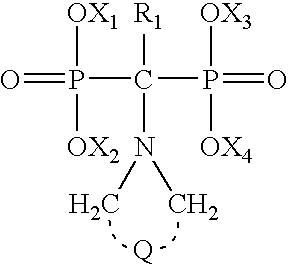
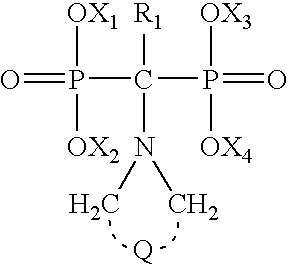
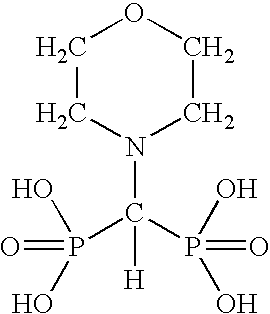
- A stabilized hydrogen peroxide solution is formulated using a combination of a cyclic amino methane diphosphonic acid compound stabilizer and a phosphonic acid based stabilizer, with a weight ratio of at least 2:1, which maintains stability even at high pH levels and in the presence of surfactants, effectively preventing decomposition.

Novel peroxide stabilizers
PatentUndeterminedNZ793746A
Innovation
- Novel use of cyclic carbonates as peroxide stabilizers, which represents a new class of stabilizing agents not previously explored for peroxide stability applications.
- Specific optimization of poly-phosphonic acid chelating agent to alkaline pH adjusting agent ratio (1:1 to 50:1) combined with pKb value limitation (≤3.0) for enhanced stabilization efficiency.
- Integration of chelating mechanism with pH buffering approach through poly-phosphonic acid agents and alkaline pH adjusters to address multiple destabilization pathways simultaneously.


Environmental Safety Regulations for Peroxide Handling
Environmental safety regulations for peroxide handling have evolved significantly over the past decades, driven by increased understanding of peroxide instability under varying pH conditions and associated risks. These regulations form a comprehensive framework that addresses storage, transportation, workplace exposure, and emergency response protocols across multiple jurisdictions.
The Occupational Safety and Health Administration (OSHA) establishes fundamental workplace safety standards for peroxide handling, mandating specific storage requirements based on concentration levels and pH sensitivity. Under OSHA 29 CFR 1910.104, hydrogen peroxide solutions exceeding 52% concentration require specialized storage facilities with pH monitoring systems and neutralization capabilities. The regulation emphasizes the critical relationship between pH fluctuations and peroxide decomposition rates, requiring employers to implement continuous monitoring protocols.
The Environmental Protection Agency (EPA) regulates peroxide handling through the Risk Management Program (RMP) under the Clean Air Act, particularly focusing on facilities storing threshold quantities of hydrogen peroxide. The EPA's regulations specifically address pH-related stability concerns, requiring process safety management systems that account for pH variations in storage and handling operations. Facilities must demonstrate understanding of how pH changes can trigger rapid decomposition and implement corresponding safety measures.
International regulations, including those from the European Chemicals Agency (ECHA) under REACH, provide additional layers of safety requirements. ECHA's guidelines specifically address the relationship between pH conditions and peroxide stability, requiring comprehensive safety data sheets that detail pH-dependent decomposition pathways and associated hazards. These regulations mandate that handlers understand the critical pH ranges where peroxide stability is compromised.
The Department of Transportation (DOT) classifies peroxides as hazardous materials under Class 5.2, with specific packaging and labeling requirements that consider pH stability factors. DOT regulations require that peroxide shipments maintain pH within specified ranges during transport, with mandatory documentation of pH monitoring procedures and emergency response protocols for pH-related incidents.
Recent regulatory developments have increasingly focused on pH-dependent risk assessment methodologies. The Chemical Safety Board (CSB) has issued recommendations emphasizing the need for dynamic risk assessment that considers pH variations as primary hazard factors. These recommendations are being incorporated into updated safety standards across multiple regulatory bodies.
Compliance with these regulations requires comprehensive understanding of peroxide chemistry under varying pH conditions, implementation of robust monitoring systems, and development of pH-specific emergency response procedures that address the unique challenges posed by pH-induced peroxide instability.
The Occupational Safety and Health Administration (OSHA) establishes fundamental workplace safety standards for peroxide handling, mandating specific storage requirements based on concentration levels and pH sensitivity. Under OSHA 29 CFR 1910.104, hydrogen peroxide solutions exceeding 52% concentration require specialized storage facilities with pH monitoring systems and neutralization capabilities. The regulation emphasizes the critical relationship between pH fluctuations and peroxide decomposition rates, requiring employers to implement continuous monitoring protocols.
The Environmental Protection Agency (EPA) regulates peroxide handling through the Risk Management Program (RMP) under the Clean Air Act, particularly focusing on facilities storing threshold quantities of hydrogen peroxide. The EPA's regulations specifically address pH-related stability concerns, requiring process safety management systems that account for pH variations in storage and handling operations. Facilities must demonstrate understanding of how pH changes can trigger rapid decomposition and implement corresponding safety measures.
International regulations, including those from the European Chemicals Agency (ECHA) under REACH, provide additional layers of safety requirements. ECHA's guidelines specifically address the relationship between pH conditions and peroxide stability, requiring comprehensive safety data sheets that detail pH-dependent decomposition pathways and associated hazards. These regulations mandate that handlers understand the critical pH ranges where peroxide stability is compromised.
The Department of Transportation (DOT) classifies peroxides as hazardous materials under Class 5.2, with specific packaging and labeling requirements that consider pH stability factors. DOT regulations require that peroxide shipments maintain pH within specified ranges during transport, with mandatory documentation of pH monitoring procedures and emergency response protocols for pH-related incidents.
Recent regulatory developments have increasingly focused on pH-dependent risk assessment methodologies. The Chemical Safety Board (CSB) has issued recommendations emphasizing the need for dynamic risk assessment that considers pH variations as primary hazard factors. These recommendations are being incorporated into updated safety standards across multiple regulatory bodies.
Compliance with these regulations requires comprehensive understanding of peroxide chemistry under varying pH conditions, implementation of robust monitoring systems, and development of pH-specific emergency response procedures that address the unique challenges posed by pH-induced peroxide instability.
Industrial Process Optimization for Peroxide Systems
Industrial process optimization for peroxide systems requires a comprehensive understanding of pH-dependent stability mechanisms to achieve maximum operational efficiency and cost-effectiveness. The relationship between pH conditions and peroxide decomposition rates directly impacts process design parameters, including reactor sizing, residence time calculations, and downstream separation requirements.
Process optimization strategies must account for the non-linear relationship between pH and peroxide stability. In alkaline conditions above pH 10, rapid decomposition necessitates shorter residence times and enhanced cooling systems to manage exothermic reactions. Conversely, acidic environments below pH 4 may require specialized corrosion-resistant materials and pH buffering systems to maintain consistent reaction conditions throughout extended processing cycles.
Temperature control integration with pH management represents a critical optimization parameter. Industrial systems typically employ cascade control strategies where pH sensors trigger automated dosing of stabilizing agents or neutralizing compounds. Advanced process control algorithms can predict decomposition rates based on real-time pH measurements, enabling proactive adjustments to maintain optimal peroxide concentrations.
Equipment design considerations include material selection for varying pH environments, with stainless steel grades 316L or higher recommended for acidic conditions, while specialized polymer linings may be required for highly alkaline systems. Heat exchanger design must accommodate rapid temperature fluctuations associated with pH-induced decomposition events.
Economic optimization involves balancing stabilizer costs against product yield losses. Mathematical models incorporating pH-dependent kinetics enable determination of optimal operating windows that minimize raw material consumption while maximizing throughput. Process intensification techniques, such as microreactor technology, offer enhanced pH control precision and improved heat transfer characteristics.
Continuous monitoring systems utilizing inline pH sensors coupled with peroxide concentration analyzers provide real-time feedback for automated process adjustments. These integrated control systems can reduce product variability by up to 15% while improving overall process safety through early detection of unstable operating conditions.
Process optimization strategies must account for the non-linear relationship between pH and peroxide stability. In alkaline conditions above pH 10, rapid decomposition necessitates shorter residence times and enhanced cooling systems to manage exothermic reactions. Conversely, acidic environments below pH 4 may require specialized corrosion-resistant materials and pH buffering systems to maintain consistent reaction conditions throughout extended processing cycles.
Temperature control integration with pH management represents a critical optimization parameter. Industrial systems typically employ cascade control strategies where pH sensors trigger automated dosing of stabilizing agents or neutralizing compounds. Advanced process control algorithms can predict decomposition rates based on real-time pH measurements, enabling proactive adjustments to maintain optimal peroxide concentrations.
Equipment design considerations include material selection for varying pH environments, with stainless steel grades 316L or higher recommended for acidic conditions, while specialized polymer linings may be required for highly alkaline systems. Heat exchanger design must accommodate rapid temperature fluctuations associated with pH-induced decomposition events.
Economic optimization involves balancing stabilizer costs against product yield losses. Mathematical models incorporating pH-dependent kinetics enable determination of optimal operating windows that minimize raw material consumption while maximizing throughput. Process intensification techniques, such as microreactor technology, offer enhanced pH control precision and improved heat transfer characteristics.
Continuous monitoring systems utilizing inline pH sensors coupled with peroxide concentration analyzers provide real-time feedback for automated process adjustments. These integrated control systems can reduce product variability by up to 15% while improving overall process safety through early detection of unstable operating conditions.
Unlock deeper insights with Patsnap Eureka Quick Research — get a full tech report to explore trends and direct your research. Try now!
Generate Your Research Report Instantly with AI Agent
Supercharge your innovation with Patsnap Eureka AI Agent Platform!