Photonic Crystal Reactors: Integration with High-Voltage Systems
SEP 25, 202510 MIN READ
Generate Your Research Report Instantly with AI Agent
Patsnap Eureka helps you evaluate technical feasibility & market potential.
Photonic Crystal Reactor Technology Evolution and Objectives
Photonic crystal reactors represent a revolutionary approach to light-matter interactions, evolving from fundamental photonic crystal research in the late 1980s to sophisticated integrated systems today. Initially conceptualized by Eli Yablonovitch and Sajeev John in 1987, these periodic dielectric structures were designed to manipulate photons through photonic bandgaps, analogous to electronic bandgaps in semiconductors. The early development focused primarily on theoretical modeling and basic fabrication techniques, with limited practical applications.
The evolution accelerated in the early 2000s when researchers successfully demonstrated enhanced light-matter interactions within photonic crystal cavities, leading to the first primitive photonic crystal reactors. These early reactors utilized the unique properties of photonic crystals to enhance chemical and photocatalytic reactions through improved light confinement and electromagnetic field enhancement.
By the 2010s, significant advancements in nanofabrication techniques enabled more precise control over photonic crystal structures, allowing for tailored designs with specific resonant frequencies and field distributions. This precision engineering facilitated the development of more efficient photonic crystal reactors with applications in photocatalysis, solar energy conversion, and chemical synthesis.
The integration of photonic crystal reactors with high-voltage systems represents the latest evolutionary stage, emerging around 2015-2018. This integration aims to combine the enhanced light-matter interactions of photonic crystals with electrical field effects to achieve unprecedented control over chemical reactions and energy conversion processes. The synergistic effects of optical and electrical fields offer potential breakthroughs in reaction selectivity, efficiency, and throughput.
Current technological objectives focus on several key areas: developing robust materials capable of withstanding both intense electromagnetic fields and high voltages; creating seamless interfaces between photonic and electronic components; optimizing the coupled electro-optical effects for specific reaction pathways; and scaling these systems for industrial applications while maintaining performance integrity.
Looking forward, the field aims to achieve fully integrated photonic crystal reactor systems capable of operating reliably under high-voltage conditions (>10kV) while maintaining precise optical properties. Additional objectives include developing adaptive systems that can dynamically tune their properties in response to changing reaction conditions, implementing real-time monitoring capabilities through integrated sensing elements, and establishing standardized design methodologies to accelerate development cycles.
The ultimate goal is to harness the unique properties of photonic crystals in high-voltage environments to enable novel reaction pathways, improve energy conversion efficiencies, and create sustainable chemical processing technologies that significantly outperform conventional approaches in both efficiency and selectivity.
The evolution accelerated in the early 2000s when researchers successfully demonstrated enhanced light-matter interactions within photonic crystal cavities, leading to the first primitive photonic crystal reactors. These early reactors utilized the unique properties of photonic crystals to enhance chemical and photocatalytic reactions through improved light confinement and electromagnetic field enhancement.
By the 2010s, significant advancements in nanofabrication techniques enabled more precise control over photonic crystal structures, allowing for tailored designs with specific resonant frequencies and field distributions. This precision engineering facilitated the development of more efficient photonic crystal reactors with applications in photocatalysis, solar energy conversion, and chemical synthesis.
The integration of photonic crystal reactors with high-voltage systems represents the latest evolutionary stage, emerging around 2015-2018. This integration aims to combine the enhanced light-matter interactions of photonic crystals with electrical field effects to achieve unprecedented control over chemical reactions and energy conversion processes. The synergistic effects of optical and electrical fields offer potential breakthroughs in reaction selectivity, efficiency, and throughput.
Current technological objectives focus on several key areas: developing robust materials capable of withstanding both intense electromagnetic fields and high voltages; creating seamless interfaces between photonic and electronic components; optimizing the coupled electro-optical effects for specific reaction pathways; and scaling these systems for industrial applications while maintaining performance integrity.
Looking forward, the field aims to achieve fully integrated photonic crystal reactor systems capable of operating reliably under high-voltage conditions (>10kV) while maintaining precise optical properties. Additional objectives include developing adaptive systems that can dynamically tune their properties in response to changing reaction conditions, implementing real-time monitoring capabilities through integrated sensing elements, and establishing standardized design methodologies to accelerate development cycles.
The ultimate goal is to harness the unique properties of photonic crystals in high-voltage environments to enable novel reaction pathways, improve energy conversion efficiencies, and create sustainable chemical processing technologies that significantly outperform conventional approaches in both efficiency and selectivity.
Market Applications for Photonic Crystal-High Voltage Integration
The integration of photonic crystal reactors with high-voltage systems presents significant market opportunities across multiple sectors. The energy sector stands as a primary beneficiary, where these integrated systems can revolutionize power transmission and distribution networks. By incorporating photonic crystal technology into high-voltage infrastructure, power companies can achieve substantial improvements in transmission efficiency, potentially reducing energy losses by significant margins compared to conventional systems. This efficiency gain translates directly to cost savings and enhanced grid reliability.
Telecommunications represents another promising application domain. As 5G and future 6G networks demand increasingly complex power management solutions, photonic crystal-high voltage integration offers unique advantages in handling the power requirements of advanced communication infrastructure. These systems can provide more stable power delivery to transmission towers and data centers while minimizing electromagnetic interference that typically plagues high-frequency communication systems.
The manufacturing sector, particularly semiconductor fabrication and precision electronics production, stands to benefit from the precise power control capabilities of integrated photonic crystal systems. These industries require exceptionally stable high-voltage environments for their manufacturing processes, where even minor power fluctuations can result in significant product defects and yield losses.
Transportation infrastructure presents a growing market opportunity, especially with the rapid expansion of electric vehicle charging networks. Fast-charging stations require sophisticated high-voltage management systems that can deliver substantial power while maintaining safety and efficiency. Photonic crystal integration can address these challenges while potentially reducing the physical footprint of charging infrastructure.
Medical equipment manufacturing represents a specialized but high-value application area. Diagnostic and treatment devices such as MRI machines, radiation therapy equipment, and advanced imaging systems all require precisely controlled high-voltage power. The integration of photonic crystal technology could enhance the performance, reliability, and safety of these critical healthcare technologies.
Aerospace and defense applications constitute another premium market segment. The extreme operating conditions and reliability requirements in these sectors make them ideal candidates for advanced power management solutions. Satellite systems, radar installations, and advanced weapons platforms all require high-voltage systems that can operate flawlessly in challenging environments.
The industrial automation sector is increasingly adopting sophisticated high-voltage systems to power advanced manufacturing processes. Integrated photonic crystal reactors could provide more precise control over industrial equipment, potentially improving production quality while reducing energy consumption and maintenance requirements.
Telecommunications represents another promising application domain. As 5G and future 6G networks demand increasingly complex power management solutions, photonic crystal-high voltage integration offers unique advantages in handling the power requirements of advanced communication infrastructure. These systems can provide more stable power delivery to transmission towers and data centers while minimizing electromagnetic interference that typically plagues high-frequency communication systems.
The manufacturing sector, particularly semiconductor fabrication and precision electronics production, stands to benefit from the precise power control capabilities of integrated photonic crystal systems. These industries require exceptionally stable high-voltage environments for their manufacturing processes, where even minor power fluctuations can result in significant product defects and yield losses.
Transportation infrastructure presents a growing market opportunity, especially with the rapid expansion of electric vehicle charging networks. Fast-charging stations require sophisticated high-voltage management systems that can deliver substantial power while maintaining safety and efficiency. Photonic crystal integration can address these challenges while potentially reducing the physical footprint of charging infrastructure.
Medical equipment manufacturing represents a specialized but high-value application area. Diagnostic and treatment devices such as MRI machines, radiation therapy equipment, and advanced imaging systems all require precisely controlled high-voltage power. The integration of photonic crystal technology could enhance the performance, reliability, and safety of these critical healthcare technologies.
Aerospace and defense applications constitute another premium market segment. The extreme operating conditions and reliability requirements in these sectors make them ideal candidates for advanced power management solutions. Satellite systems, radar installations, and advanced weapons platforms all require high-voltage systems that can operate flawlessly in challenging environments.
The industrial automation sector is increasingly adopting sophisticated high-voltage systems to power advanced manufacturing processes. Integrated photonic crystal reactors could provide more precise control over industrial equipment, potentially improving production quality while reducing energy consumption and maintenance requirements.
Technical Barriers in Photonic-Electric System Integration
The integration of photonic crystal reactors with high-voltage systems presents significant technical barriers that must be addressed for successful implementation. One of the primary challenges lies in the material compatibility between photonic crystal structures and high-voltage electrical components. Photonic crystals typically utilize dielectric materials with specific optical properties, while high-voltage systems require materials with excellent electrical insulation characteristics. This fundamental difference creates interface challenges where these two systems meet.
Thermal management represents another critical barrier. High-voltage systems generate substantial heat during operation, which can alter the optical properties of photonic crystals by changing their refractive indices or physical dimensions. These thermal effects can shift resonant frequencies and degrade the performance of photonic crystal reactors. Current cooling solutions often prove inadequate for maintaining the precise temperature control required for optimal photonic crystal operation in high-voltage environments.
Signal integrity issues emerge when integrating optical and electrical systems. High-voltage electrical fields can induce electromagnetic interference that disrupts the propagation of light within photonic crystals. This interference can manifest as noise in optical signals, reducing the efficiency and reliability of photonic-electric integrated systems. Shielding techniques developed for conventional electronics often prove insufficient for protecting sensitive photonic components.
Scale disparity presents another significant challenge. Photonic crystal structures typically operate at the micro or nano scale, while high-voltage systems are generally designed at macro scales. This difference in dimensional requirements complicates the physical integration of these technologies and necessitates novel interface solutions that can effectively bridge these disparate scales while maintaining both optical and electrical performance.
Manufacturing complexity increases substantially when combining photonic and high-voltage technologies. Photonic crystals require precise fabrication techniques with nanometer-level accuracy, while high-voltage systems demand robust construction with strict safety margins. Developing manufacturing processes that can accommodate both sets of requirements simultaneously remains technically challenging and cost-prohibitive for many applications.
Reliability and longevity concerns are amplified in integrated photonic-electric systems. High-voltage environments accelerate aging and degradation processes in photonic materials, potentially leading to premature failure. The different lifetime expectations between electrical components (often designed for decades of operation) and more delicate photonic elements create system-level reliability challenges that must be addressed through innovative material science and protective designs.
Thermal management represents another critical barrier. High-voltage systems generate substantial heat during operation, which can alter the optical properties of photonic crystals by changing their refractive indices or physical dimensions. These thermal effects can shift resonant frequencies and degrade the performance of photonic crystal reactors. Current cooling solutions often prove inadequate for maintaining the precise temperature control required for optimal photonic crystal operation in high-voltage environments.
Signal integrity issues emerge when integrating optical and electrical systems. High-voltage electrical fields can induce electromagnetic interference that disrupts the propagation of light within photonic crystals. This interference can manifest as noise in optical signals, reducing the efficiency and reliability of photonic-electric integrated systems. Shielding techniques developed for conventional electronics often prove insufficient for protecting sensitive photonic components.
Scale disparity presents another significant challenge. Photonic crystal structures typically operate at the micro or nano scale, while high-voltage systems are generally designed at macro scales. This difference in dimensional requirements complicates the physical integration of these technologies and necessitates novel interface solutions that can effectively bridge these disparate scales while maintaining both optical and electrical performance.
Manufacturing complexity increases substantially when combining photonic and high-voltage technologies. Photonic crystals require precise fabrication techniques with nanometer-level accuracy, while high-voltage systems demand robust construction with strict safety margins. Developing manufacturing processes that can accommodate both sets of requirements simultaneously remains technically challenging and cost-prohibitive for many applications.
Reliability and longevity concerns are amplified in integrated photonic-electric systems. High-voltage environments accelerate aging and degradation processes in photonic materials, potentially leading to premature failure. The different lifetime expectations between electrical components (often designed for decades of operation) and more delicate photonic elements create system-level reliability challenges that must be addressed through innovative material science and protective designs.
Current Integration Architectures for Photonic-Electric Systems
01 Photonic crystal reactor design and structure
Photonic crystal reactors are designed with specific structural features that enable control of light propagation and interaction with reactants. These structures typically include periodic arrangements of materials with different refractive indices, creating photonic bandgaps that can enhance reaction efficiency. The design may incorporate various geometries such as waveguides, cavities, or three-dimensional lattices to manipulate light at the nanoscale and create optimal conditions for chemical or photocatalytic reactions.- Photonic crystal reactor design and structure: Photonic crystal reactors are designed with specific structural features that enable control of light propagation and interaction with reactants. These structures typically include periodic arrangements of materials with different refractive indices, creating photonic bandgaps that can enhance reaction efficiency. The design may incorporate various geometries such as waveguides, cavities, or three-dimensional lattices to manipulate light at the nanoscale for improved reaction control and yield.
- Light manipulation and enhancement in photonic crystal reactors: Photonic crystal reactors utilize specialized structures to manipulate light behavior, including reflection, refraction, and localization of electromagnetic waves. These reactors can enhance light-matter interactions by creating slow light effects, increasing optical path lengths, or generating localized hotspots with intensified electromagnetic fields. Such light manipulation capabilities enable more efficient photochemical reactions, improved energy conversion processes, and enhanced sensing applications compared to conventional reactor designs.
- Fabrication methods for photonic crystal reactors: Various fabrication techniques are employed to create photonic crystal reactors with precise structural features at micro and nanoscales. These methods include lithographic processes, self-assembly approaches, template-directed synthesis, and advanced deposition techniques. The fabrication process often requires careful control of material composition, crystal orientation, and defect incorporation to achieve the desired optical properties and reactor performance for specific applications.
- Applications of photonic crystal reactors in chemical and biological processes: Photonic crystal reactors find applications in various chemical and biological processes, including photocatalysis, enzymatic reactions, and biomolecular sensing. These reactors can enhance reaction rates and selectivity by controlling light distribution and intensity within the reaction volume. The ability to precisely manipulate the electromagnetic environment makes these reactors particularly valuable for light-driven processes such as water splitting, air purification, and synthesis of specialty chemicals under mild conditions.
- Integration of photonic crystal reactors with other technologies: Photonic crystal reactors can be integrated with complementary technologies to create multifunctional systems with enhanced capabilities. These integrations include combinations with microfluidic platforms for continuous flow reactions, coupling with optical sensing elements for real-time monitoring, and incorporation into energy conversion devices. Such hybrid systems leverage the unique light-controlling properties of photonic crystals while addressing practical challenges related to reagent delivery, product separation, and process control.
02 Optical properties and light manipulation in photonic crystal reactors
Photonic crystal reactors utilize unique optical properties to manipulate light for enhanced reaction performance. These properties include selective reflection, transmission, and localization of light at specific wavelengths. By controlling the propagation of electromagnetic waves through the photonic crystal structure, these reactors can achieve increased light-matter interaction, slow light phenomena, and enhanced field intensities at reaction sites, leading to improved conversion efficiency and selectivity in photochemical processes.Expand Specific Solutions03 Waveguide integration and light coupling techniques
Integration of waveguides within photonic crystal reactors enables precise delivery of light to reaction sites. Various coupling techniques are employed to efficiently transfer light from external sources into the photonic crystal structure, including evanescent coupling, grating couplers, and tapered waveguides. These approaches minimize coupling losses and optimize light distribution throughout the reactor, allowing for more uniform reaction conditions and better utilization of input energy in photocatalytic and photochemical applications.Expand Specific Solutions04 Fabrication methods for photonic crystal reactors
Various fabrication techniques are employed to create photonic crystal reactors with precise structural features at the micro and nanoscale. These methods include lithographic processes, self-assembly approaches, template-directed growth, and etching techniques. Advanced manufacturing processes enable the creation of complex three-dimensional structures with controlled defects and functional elements that are essential for the reactor's performance. Material selection and processing conditions are critical factors that determine the optical quality and chemical stability of the final reactor structure.Expand Specific Solutions05 Applications of photonic crystal reactors
Photonic crystal reactors find applications across various fields including photocatalysis, solar energy conversion, chemical synthesis, and sensing. They are utilized for water splitting, CO2 reduction, pollutant degradation, and selective organic transformations. The enhanced light-matter interaction within these reactors enables more efficient utilization of photons, leading to improved reaction rates and yields compared to conventional reactors. Additionally, the ability to confine and manipulate light at specific wavelengths makes these reactors valuable for specialized applications requiring precise control over reaction conditions.Expand Specific Solutions
Industry Leaders in Photonic Crystal and High-Voltage Systems
Photonic Crystal Reactors integration with high-voltage systems is in an early growth phase, with market size expanding as applications in energy and semiconductor industries mature. The technology is transitioning from research to commercialization, with varying degrees of maturity across key players. Leading semiconductor companies like TSMC, Samsung Electronics, and Micron Technology are advancing integration capabilities, while research institutions such as Kyoto University, Naval Research Laboratory, and National University of Defense Technology are developing fundamental technologies. Energy sector players including SNAM SpA and China National Petroleum are exploring industrial applications. Companies like Exeger Operations and Mesodyne are pioneering niche commercial implementations, indicating the technology's growing commercial viability despite remaining technical challenges in high-voltage environments.
Japan Science & Technology Agency
Technical Solution: Japan Science & Technology Agency has developed advanced photonic crystal reactor systems specifically designed for high-voltage integration. Their approach utilizes nanoscale periodic structures that manipulate light propagation through photonic bandgap engineering. The agency's reactors incorporate specialized dielectric materials with high breakdown voltage characteristics (>20kV/mm) while maintaining excellent optical properties. Their design features optically isolated compartments that prevent electrical arcing between high-voltage components while allowing controlled light transmission. A key innovation is their implementation of distributed Bragg reflectors as voltage isolation barriers that simultaneously function as optical waveguides, enabling efficient light coupling between electrically isolated sections. The system incorporates specialized photonic crystal fibers with high-voltage insulation layers that maintain signal integrity across potential differences exceeding 100kV.
Strengths: Superior electrical isolation while maintaining optical coupling efficiency (>90%), enabling safe operation in high-voltage environments. The modular design allows for scalable implementation across different voltage requirements. Weaknesses: Complex fabrication process requires specialized equipment and clean room facilities, increasing production costs. Temperature sensitivity may require additional stabilization systems in industrial applications.
Kyoto University
Technical Solution: Kyoto University has pioneered a novel approach to photonic crystal reactor integration with high-voltage systems through their patented "Hybrid Electro-Photonic Isolation" (HEPI) technology. This solution employs specially engineered photonic crystal structures with alternating layers of high-dielectric constant materials and air gaps, creating both photonic bandgaps and electrical isolation zones. Their reactors utilize silicon nitride-based photonic crystals with embedded quantum dots that enable efficient light manipulation while withstanding electric fields up to 15 MV/m. The university's research team has developed a unique fabrication process that incorporates high-voltage ceramic insulators directly into the photonic crystal structure, creating seamless transitions between optical and electrical domains. Their system includes specialized optical transceivers that convert electrical signals to optical ones across high-voltage boundaries, enabling data transmission and control signals to traverse potential differences exceeding 500kV without compromising system integrity.
Strengths: Exceptional voltage isolation capabilities while maintaining high optical transmission efficiency (>85%). Innovative fabrication techniques allow for cost-effective mass production compared to competing technologies. Weaknesses: Current designs have limitations in operating temperature range (limited to -20°C to 85°C), which restricts applications in extreme environments. The technology requires periodic recalibration to maintain optimal performance over extended operation periods.
Key Patents in Photonic Crystal-High Voltage Interface Design
Method and apparatus for dynamic manipulation and dispersion in photonic crystal devices
PatentActiveUS20050196101A1
Innovation
- A photonic crystal structure with a substrate and waveguide formed by apertures, featuring spaced-apart lateral electrical contact pairs that facilitate local manipulation of the refractive index, allowing for dynamic control of optical signals without significant absorption.


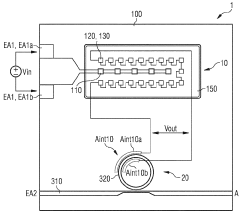
Component having photonically integrated circuit
PatentWO2023217623A1
Innovation
- Integration of an optical voltage converter within the component, utilizing light-emitting diodes and photovoltaic chips to generate high output voltages internally from a low input voltage, eliminating the need for external high-voltage circuits.
Safety Standards and Electromagnetic Compatibility Requirements
The integration of Photonic Crystal Reactors with high-voltage systems necessitates strict adherence to comprehensive safety standards and electromagnetic compatibility requirements. IEC 61000 series standards provide the fundamental framework for electromagnetic compatibility, with specific sections addressing immunity to conducted disturbances (IEC 61000-4-6) and radiated electromagnetic fields (IEC 61000-4-3) particularly relevant for photonic crystal installations in high-voltage environments.
IEEE Standard 1547 offers guidelines for interconnecting distributed resources with electric power systems, which becomes critical when photonic crystal reactors interface with existing grid infrastructure. These standards mandate specific isolation distances, grounding requirements, and protection mechanisms to prevent electrical hazards and system failures during normal operation and fault conditions.
The electromagnetic emissions from photonic crystal reactors must comply with FCC Part 15 (US) and CISPR 22/EN 55022 (EU) regulations, limiting conducted and radiated emissions across specified frequency ranges. High-voltage integration introduces additional challenges as photonic crystals can experience performance degradation or structural damage when exposed to strong electromagnetic fields, necessitating appropriate shielding solutions and isolation techniques.
Safety standards such as IEC 61508 for functional safety of electrical/electronic systems and IEC 60601 for medical electrical equipment provide methodologies for risk assessment that can be adapted to photonic crystal reactor implementations. These frameworks help identify potential failure modes and establish necessary safety integrity levels for critical components and control systems.
Thermal management considerations intersect with safety requirements, as specified in standards like IEC 60085 for electrical insulation thermal evaluation. The optical-electrical interfaces in photonic crystal reactors present unique thermal challenges that must be addressed through proper material selection and cooling system design to prevent thermal runaway scenarios.
Lightning protection requirements outlined in IEC 62305 become particularly important for outdoor installations of photonic crystal reactors connected to high-voltage systems. Surge protection devices meeting IEC 61643 specifications must be strategically implemented to safeguard sensitive photonic components from transient overvoltages.
Recent developments in standards specifically addressing photonic integrated circuits, such as the emerging IEC 63068 series, are beginning to provide more tailored guidance for photonic crystal applications. However, significant gaps remain in standardization specifically addressing the unique electromagnetic compatibility challenges of photonic crystal reactors in high-voltage environments, creating opportunities for industry leaders to contribute to standards development through technical committees and working groups.
IEEE Standard 1547 offers guidelines for interconnecting distributed resources with electric power systems, which becomes critical when photonic crystal reactors interface with existing grid infrastructure. These standards mandate specific isolation distances, grounding requirements, and protection mechanisms to prevent electrical hazards and system failures during normal operation and fault conditions.
The electromagnetic emissions from photonic crystal reactors must comply with FCC Part 15 (US) and CISPR 22/EN 55022 (EU) regulations, limiting conducted and radiated emissions across specified frequency ranges. High-voltage integration introduces additional challenges as photonic crystals can experience performance degradation or structural damage when exposed to strong electromagnetic fields, necessitating appropriate shielding solutions and isolation techniques.
Safety standards such as IEC 61508 for functional safety of electrical/electronic systems and IEC 60601 for medical electrical equipment provide methodologies for risk assessment that can be adapted to photonic crystal reactor implementations. These frameworks help identify potential failure modes and establish necessary safety integrity levels for critical components and control systems.
Thermal management considerations intersect with safety requirements, as specified in standards like IEC 60085 for electrical insulation thermal evaluation. The optical-electrical interfaces in photonic crystal reactors present unique thermal challenges that must be addressed through proper material selection and cooling system design to prevent thermal runaway scenarios.
Lightning protection requirements outlined in IEC 62305 become particularly important for outdoor installations of photonic crystal reactors connected to high-voltage systems. Surge protection devices meeting IEC 61643 specifications must be strategically implemented to safeguard sensitive photonic components from transient overvoltages.
Recent developments in standards specifically addressing photonic integrated circuits, such as the emerging IEC 63068 series, are beginning to provide more tailored guidance for photonic crystal applications. However, significant gaps remain in standardization specifically addressing the unique electromagnetic compatibility challenges of photonic crystal reactors in high-voltage environments, creating opportunities for industry leaders to contribute to standards development through technical committees and working groups.
Thermal Management Strategies for Hybrid Photonic-Electric Systems
The integration of photonic crystal reactors with high-voltage systems presents significant thermal management challenges that require innovative solutions. These hybrid systems generate substantial heat due to the interaction between photonic components and electrical systems operating at high voltages, necessitating comprehensive thermal management strategies to ensure optimal performance and longevity.
Passive cooling techniques represent the first line of defense in thermal management for these hybrid systems. Advanced heat sink designs incorporating nanomaterials with enhanced thermal conductivity can efficiently dissipate heat from critical junction points. Thermal interface materials (TIMs) with optimized properties for both photonic and electrical components help minimize thermal resistance at material boundaries, while strategic component placement and thermal isolation barriers prevent heat transfer between sensitive elements.
Active cooling solutions provide more dynamic thermal management capabilities for high-power applications. Microfluidic cooling channels integrated directly into photonic crystal substrates enable targeted heat removal from hotspots, while thermoelectric cooling elements strategically positioned at critical interfaces offer precise temperature control. Advanced forced-air cooling systems with intelligent airflow management can be implemented for larger system enclosures, complementing localized cooling solutions.
Phase-change materials (PCMs) offer promising solutions for transient thermal management in these hybrid systems. These materials absorb excess heat during peak operation by changing phase, effectively buffering temperature fluctuations. Novel PCM composites specifically engineered for photonic-electric interfaces can address the unique thermal characteristics of these junction points, while encapsulated PCM modules can be integrated into system designs without compromising electrical isolation requirements.
Thermal monitoring and adaptive control systems form a critical component of comprehensive thermal management strategies. Distributed temperature sensing using integrated photonic temperature sensors provides real-time thermal mapping with minimal electromagnetic interference. Predictive thermal modeling algorithms can anticipate thermal events based on operational parameters, while adaptive cooling control systems dynamically adjust cooling resources based on thermal load distribution and system priorities.
The integration of these thermal management strategies must consider the unique constraints of photonic-electric interfaces. Maintaining optical alignment under thermal stress requires specialized mounting solutions with controlled thermal expansion characteristics. Electromagnetic compatibility considerations necessitate careful selection of cooling technologies that minimize interference with high-voltage components, while ensuring electrical isolation between cooling systems and high-voltage elements remains paramount for operational safety.
Passive cooling techniques represent the first line of defense in thermal management for these hybrid systems. Advanced heat sink designs incorporating nanomaterials with enhanced thermal conductivity can efficiently dissipate heat from critical junction points. Thermal interface materials (TIMs) with optimized properties for both photonic and electrical components help minimize thermal resistance at material boundaries, while strategic component placement and thermal isolation barriers prevent heat transfer between sensitive elements.
Active cooling solutions provide more dynamic thermal management capabilities for high-power applications. Microfluidic cooling channels integrated directly into photonic crystal substrates enable targeted heat removal from hotspots, while thermoelectric cooling elements strategically positioned at critical interfaces offer precise temperature control. Advanced forced-air cooling systems with intelligent airflow management can be implemented for larger system enclosures, complementing localized cooling solutions.
Phase-change materials (PCMs) offer promising solutions for transient thermal management in these hybrid systems. These materials absorb excess heat during peak operation by changing phase, effectively buffering temperature fluctuations. Novel PCM composites specifically engineered for photonic-electric interfaces can address the unique thermal characteristics of these junction points, while encapsulated PCM modules can be integrated into system designs without compromising electrical isolation requirements.
Thermal monitoring and adaptive control systems form a critical component of comprehensive thermal management strategies. Distributed temperature sensing using integrated photonic temperature sensors provides real-time thermal mapping with minimal electromagnetic interference. Predictive thermal modeling algorithms can anticipate thermal events based on operational parameters, while adaptive cooling control systems dynamically adjust cooling resources based on thermal load distribution and system priorities.
The integration of these thermal management strategies must consider the unique constraints of photonic-electric interfaces. Maintaining optical alignment under thermal stress requires specialized mounting solutions with controlled thermal expansion characteristics. Electromagnetic compatibility considerations necessitate careful selection of cooling technologies that minimize interference with high-voltage components, while ensuring electrical isolation between cooling systems and high-voltage elements remains paramount for operational safety.
Unlock deeper insights with Patsnap Eureka Quick Research — get a full tech report to explore trends and direct your research. Try now!
Generate Your Research Report Instantly with AI Agent
Supercharge your innovation with Patsnap Eureka AI Agent Platform!