

Precision Fermentation vs Recombinant DNA Techniques: Applicability
MAY 18, 20269 MIN READ
Generate Your Research Report Instantly with AI Agent
PatSnap Eureka helps you evaluate technical feasibility & market potential.
Precision Fermentation and Recombinant DNA Technology Background
Precision fermentation and recombinant DNA technology represent two interconnected yet distinct biotechnological approaches that have revolutionized the production of complex biological molecules. Both technologies emerged from the foundational discoveries in molecular biology during the mid-20th century, building upon breakthroughs in understanding DNA structure, protein synthesis, and cellular metabolism.
Recombinant DNA technology, first developed in the 1970s, involves the artificial combination of genetic material from different sources to create modified organisms capable of producing desired proteins or compounds. This technique relies on molecular tools such as restriction enzymes, ligases, and vectors to insert foreign genes into host organisms, fundamentally altering their genetic makeup to express non-native products.
Precision fermentation, while utilizing recombinant DNA as its foundation, represents a more specialized application focused on optimizing fermentation processes for large-scale production. This approach combines genetic engineering with advanced bioprocess engineering to create highly efficient microbial factories. The technology has evolved from traditional fermentation methods used for centuries in food and beverage production, enhanced by modern genetic modification capabilities.
The convergence of these technologies has been driven by increasing demand for sustainable alternatives to traditional manufacturing processes, particularly in pharmaceuticals, food ingredients, and specialty chemicals. Environmental concerns, resource scarcity, and the need for more precise control over product quality have accelerated development in both fields.
Historical milestones include the first recombinant insulin production in 1982, which demonstrated commercial viability, followed by expanding applications in enzyme production, therapeutic proteins, and more recently, alternative proteins and biomaterials. The integration of computational biology, synthetic biology, and process optimization has further enhanced the precision and efficiency of these approaches.
Today, both technologies continue to evolve rapidly, with advances in gene editing tools like CRISPR, improved fermentation monitoring systems, and enhanced strain engineering capabilities driving new applications across diverse industries.
Recombinant DNA technology, first developed in the 1970s, involves the artificial combination of genetic material from different sources to create modified organisms capable of producing desired proteins or compounds. This technique relies on molecular tools such as restriction enzymes, ligases, and vectors to insert foreign genes into host organisms, fundamentally altering their genetic makeup to express non-native products.
Precision fermentation, while utilizing recombinant DNA as its foundation, represents a more specialized application focused on optimizing fermentation processes for large-scale production. This approach combines genetic engineering with advanced bioprocess engineering to create highly efficient microbial factories. The technology has evolved from traditional fermentation methods used for centuries in food and beverage production, enhanced by modern genetic modification capabilities.
The convergence of these technologies has been driven by increasing demand for sustainable alternatives to traditional manufacturing processes, particularly in pharmaceuticals, food ingredients, and specialty chemicals. Environmental concerns, resource scarcity, and the need for more precise control over product quality have accelerated development in both fields.
Historical milestones include the first recombinant insulin production in 1982, which demonstrated commercial viability, followed by expanding applications in enzyme production, therapeutic proteins, and more recently, alternative proteins and biomaterials. The integration of computational biology, synthetic biology, and process optimization has further enhanced the precision and efficiency of these approaches.
Today, both technologies continue to evolve rapidly, with advances in gene editing tools like CRISPR, improved fermentation monitoring systems, and enhanced strain engineering capabilities driving new applications across diverse industries.
Market Demand for Biotechnology Production Methods
The biotechnology production methods market is experiencing unprecedented growth driven by increasing demand for sustainable manufacturing alternatives across pharmaceutical, food, and industrial sectors. Traditional chemical synthesis and animal-derived production methods face mounting pressure from regulatory requirements, environmental concerns, and supply chain vulnerabilities, creating substantial market opportunities for advanced biotechnological approaches.
Precision fermentation has emerged as a critical technology for producing complex proteins, enzymes, and specialty chemicals at commercial scale. The market demand stems primarily from the food industry's need for animal-free proteins, dairy alternatives, and functional ingredients. Major food corporations are actively seeking scalable production methods to meet consumer preferences for sustainable and ethically-produced products. The pharmaceutical sector also drives significant demand for precision fermentation capabilities, particularly for manufacturing therapeutic proteins, vaccines, and specialized drug compounds where traditional production methods prove inadequate or economically unfeasible.
Recombinant DNA techniques continue to dominate the biopharmaceutical production landscape, with established market demand for insulin, growth hormones, monoclonal antibodies, and gene therapies. The global expansion of personalized medicine and biologics development has intensified requirements for flexible, rapid-deployment production systems. Healthcare providers and pharmaceutical companies increasingly prioritize production methods that can accommodate diverse molecular targets while maintaining regulatory compliance and cost-effectiveness.
The industrial biotechnology segment presents expanding opportunities for both technologies, driven by corporate sustainability commitments and carbon reduction targets. Chemical manufacturers seek biotechnology-based alternatives for producing specialty chemicals, polymers, and materials traditionally derived from petroleum sources. This transition reflects both regulatory pressure and market demand for environmentally responsible manufacturing processes.
Emerging markets in Asia-Pacific and Latin America contribute significantly to demand growth, as these regions develop biotechnology infrastructure and regulatory frameworks. Local pharmaceutical companies and food manufacturers in these markets require accessible, cost-effective production technologies that can operate within diverse regulatory environments while meeting international quality standards.
The convergence of these market forces creates a dynamic landscape where precision fermentation and recombinant DNA techniques serve complementary roles, with selection criteria increasingly focused on product-specific requirements, production economics, and regulatory pathways rather than technology preferences alone.
Precision fermentation has emerged as a critical technology for producing complex proteins, enzymes, and specialty chemicals at commercial scale. The market demand stems primarily from the food industry's need for animal-free proteins, dairy alternatives, and functional ingredients. Major food corporations are actively seeking scalable production methods to meet consumer preferences for sustainable and ethically-produced products. The pharmaceutical sector also drives significant demand for precision fermentation capabilities, particularly for manufacturing therapeutic proteins, vaccines, and specialized drug compounds where traditional production methods prove inadequate or economically unfeasible.
Recombinant DNA techniques continue to dominate the biopharmaceutical production landscape, with established market demand for insulin, growth hormones, monoclonal antibodies, and gene therapies. The global expansion of personalized medicine and biologics development has intensified requirements for flexible, rapid-deployment production systems. Healthcare providers and pharmaceutical companies increasingly prioritize production methods that can accommodate diverse molecular targets while maintaining regulatory compliance and cost-effectiveness.
The industrial biotechnology segment presents expanding opportunities for both technologies, driven by corporate sustainability commitments and carbon reduction targets. Chemical manufacturers seek biotechnology-based alternatives for producing specialty chemicals, polymers, and materials traditionally derived from petroleum sources. This transition reflects both regulatory pressure and market demand for environmentally responsible manufacturing processes.
Emerging markets in Asia-Pacific and Latin America contribute significantly to demand growth, as these regions develop biotechnology infrastructure and regulatory frameworks. Local pharmaceutical companies and food manufacturers in these markets require accessible, cost-effective production technologies that can operate within diverse regulatory environments while meeting international quality standards.
The convergence of these market forces creates a dynamic landscape where precision fermentation and recombinant DNA techniques serve complementary roles, with selection criteria increasingly focused on product-specific requirements, production economics, and regulatory pathways rather than technology preferences alone.
Current State of Precision Fermentation vs Recombinant DNA
Precision fermentation and recombinant DNA techniques represent two interconnected yet distinct biotechnological approaches that have reached varying levels of commercial maturity. Precision fermentation has emerged as a sophisticated manufacturing platform that leverages genetically modified microorganisms to produce complex biomolecules at industrial scale. This technology has demonstrated remarkable success in producing proteins, enzymes, and specialty chemicals with applications spanning pharmaceuticals, food ingredients, and industrial biotechnology.
The current landscape shows precision fermentation achieving significant commercial traction, particularly in the production of recombinant proteins for therapeutic applications. Companies like Ginkgo Bioworks, Perfect Day, and Zymergen have established large-scale fermentation facilities capable of producing thousands of tons of target molecules annually. The technology has proven especially effective for manufacturing dairy proteins, meat alternatives, and pharmaceutical intermediates, with production costs approaching economic viability for consumer markets.
Recombinant DNA technology, as the foundational genetic engineering toolkit, has reached full technical maturity with standardized protocols and widespread industrial adoption. CRISPR-Cas9, synthetic biology platforms, and advanced gene editing tools have dramatically reduced the time and cost required to engineer production organisms. Current capabilities include precise metabolic pathway engineering, multi-gene circuit construction, and sophisticated regulatory control systems that enable fine-tuned production optimization.
The integration between these technologies has created powerful synergies, where recombinant DNA techniques serve as the design and construction phase, while precision fermentation provides the manufacturing execution. Modern bioprocessing facilities routinely achieve product titers exceeding 100 g/L for recombinant proteins, with some systems reaching over 200 g/L for optimized targets. Downstream processing technologies have similarly advanced, with continuous chromatography and membrane-based purification systems enabling cost-effective product recovery.
However, significant technical challenges persist across both domains. Precision fermentation faces ongoing difficulties with complex protein folding, post-translational modifications, and scale-up consistency. Production of certain biomolecules, particularly those requiring extensive glycosylation or complex assembly, remains technically challenging and economically prohibitive. Additionally, contamination risks and batch-to-batch variability continue to impact commercial reliability.
Recombinant DNA approaches encounter limitations in pathway complexity, metabolic burden management, and genetic stability during extended fermentation runs. While synthetic biology tools have expanded design capabilities, predicting and controlling complex biological systems remains imperfect, often requiring extensive empirical optimization cycles that extend development timelines and increase costs.
The current landscape shows precision fermentation achieving significant commercial traction, particularly in the production of recombinant proteins for therapeutic applications. Companies like Ginkgo Bioworks, Perfect Day, and Zymergen have established large-scale fermentation facilities capable of producing thousands of tons of target molecules annually. The technology has proven especially effective for manufacturing dairy proteins, meat alternatives, and pharmaceutical intermediates, with production costs approaching economic viability for consumer markets.
Recombinant DNA technology, as the foundational genetic engineering toolkit, has reached full technical maturity with standardized protocols and widespread industrial adoption. CRISPR-Cas9, synthetic biology platforms, and advanced gene editing tools have dramatically reduced the time and cost required to engineer production organisms. Current capabilities include precise metabolic pathway engineering, multi-gene circuit construction, and sophisticated regulatory control systems that enable fine-tuned production optimization.
The integration between these technologies has created powerful synergies, where recombinant DNA techniques serve as the design and construction phase, while precision fermentation provides the manufacturing execution. Modern bioprocessing facilities routinely achieve product titers exceeding 100 g/L for recombinant proteins, with some systems reaching over 200 g/L for optimized targets. Downstream processing technologies have similarly advanced, with continuous chromatography and membrane-based purification systems enabling cost-effective product recovery.
However, significant technical challenges persist across both domains. Precision fermentation faces ongoing difficulties with complex protein folding, post-translational modifications, and scale-up consistency. Production of certain biomolecules, particularly those requiring extensive glycosylation or complex assembly, remains technically challenging and economically prohibitive. Additionally, contamination risks and batch-to-batch variability continue to impact commercial reliability.
Recombinant DNA approaches encounter limitations in pathway complexity, metabolic burden management, and genetic stability during extended fermentation runs. While synthetic biology tools have expanded design capabilities, predicting and controlling complex biological systems remains imperfect, often requiring extensive empirical optimization cycles that extend development timelines and increase costs.
Existing Biotechnology Production Solutions
01 Recombinant protein production systems
Development of systems for producing recombinant proteins using genetically modified microorganisms. These systems involve the insertion of foreign genes into host cells to enable the production of desired proteins through fermentation processes. The technology focuses on optimizing expression vectors, host cell selection, and cultivation conditions to maximize protein yield and quality.- Recombinant protein production systems: Development of engineered microorganisms and cell lines for the production of recombinant proteins through precision fermentation. These systems utilize genetically modified hosts to express heterologous proteins with improved yield, stability, and functionality. The techniques involve optimization of expression vectors, promoter systems, and fermentation conditions to achieve high-level protein production.
- Genetic engineering of fermentation microorganisms: Application of recombinant DNA techniques to modify microorganisms for enhanced fermentation capabilities. This includes the introduction of novel metabolic pathways, improvement of substrate utilization, and optimization of product formation through genetic modifications. The engineered strains demonstrate improved performance in industrial fermentation processes.
- Precision fermentation for biomolecule synthesis: Utilization of precisely controlled fermentation processes combined with recombinant DNA technology for the synthesis of complex biomolecules. These methods enable the production of pharmaceuticals, enzymes, and other bioactive compounds through engineered biological systems with enhanced specificity and efficiency.
- Recombinant DNA cloning and expression vectors: Development and optimization of cloning systems and expression vectors for recombinant DNA applications in fermentation processes. This encompasses the design of plasmids, selection markers, and regulatory elements that enable efficient transformation and expression of target genes in various host organisms.
- Fermentation process optimization and control: Advanced techniques for monitoring and controlling precision fermentation processes involving recombinant organisms. This includes the development of bioprocess parameters, cultivation strategies, and downstream processing methods to maximize the efficiency of recombinant product formation and recovery.
02 Genetic engineering of fermentation organisms
Techniques for modifying microorganisms through recombinant DNA technology to enhance their fermentation capabilities. This includes the development of genetically modified bacteria, yeast, and other microorganisms with improved metabolic pathways, increased productivity, and enhanced resistance to environmental stresses during fermentation processes.Expand Specific Solutions03 Precision fermentation process optimization
Methods and systems for controlling and optimizing fermentation processes using advanced monitoring and control techniques. This involves the development of precise cultivation parameters, real-time monitoring systems, and automated control mechanisms to ensure consistent product quality and maximize fermentation efficiency in industrial-scale production.Expand Specific Solutions04 Recombinant DNA vector construction and cloning
Technologies for constructing and utilizing recombinant DNA vectors for gene cloning and expression. This includes the development of plasmids, expression vectors, and cloning systems that enable the efficient transfer and expression of target genes in various host organisms for fermentation-based production applications.Expand Specific Solutions05 Industrial biotechnology applications
Commercial applications of precision fermentation and recombinant DNA techniques for producing various biotechnology products. This encompasses the development of industrial processes for manufacturing pharmaceuticals, enzymes, food ingredients, and other valuable compounds using genetically engineered microorganisms in controlled fermentation environments.Expand Specific Solutions
Key Players in Precision Fermentation and Recombinant DNA
The precision fermentation versus recombinant DNA techniques landscape represents a mature biotechnology sector experiencing rapid evolution driven by sustainability demands and cost optimization needs. The market demonstrates substantial growth potential, particularly in pharmaceuticals, food ingredients, and industrial enzymes, with established players like Novozymes A/S, Codexis Inc., and BASF Corp. leading enzyme development and bioprocessing innovations. Technology maturity varies significantly across applications, with companies like Life Technologies Corp. and F. Hoffmann-La Roche Ltd. advancing sophisticated recombinant systems, while Ajinomoto Co. Inc. and Cargill Inc. focus on scalable fermentation processes for food applications. Academic institutions including California Institute of Technology and University of California contribute fundamental research, while industrial biotechnology firms like Aldevron LLC and Libragen SA specialize in contract manufacturing services, indicating a well-established ecosystem supporting both traditional recombinant approaches and emerging precision fermentation technologies.
Codexis, Inc.
Technical Solution: Codexis specializes in protein engineering using both precision fermentation and recombinant DNA techniques through their CodeEvolver platform. Their approach combines directed evolution with computational design to create novel enzymes for pharmaceutical, food, and industrial applications. The company utilizes engineered microbial hosts for precision fermentation to produce these custom enzymes at commercial scale. Their technology platform enables rapid screening of enzyme variants and optimization of production strains, allowing for efficient development of biocatalysts that can replace traditional chemical processes with more sustainable and cost-effective biological alternatives.
Strengths: Proprietary protein engineering platform, proven track record in pharmaceutical applications, rapid development cycles. Weaknesses: Limited to enzyme-based solutions, dependency on specialized technical expertise.
DuPont de Nemours, Inc.
Technical Solution: DuPont has established comprehensive precision fermentation capabilities focusing on sustainable ingredient production for food, nutrition, and industrial markets. Their technology platform integrates advanced strain engineering with optimized fermentation processes to produce proteins, enzymes, and specialty chemicals. The company leverages recombinant DNA techniques to develop proprietary microbial strains capable of producing complex molecules including alternative proteins, food ingredients, and bio-based materials. Their approach emphasizes scalability and cost-effectiveness, utilizing large-scale fermentation infrastructure to meet commercial demand while maintaining product quality and regulatory compliance standards.
Strengths: Extensive fermentation infrastructure, strong market presence in multiple sectors, regulatory expertise. Weaknesses: Large corporate structure may limit agility, significant competition in commodity markets.
Core Innovations in Fermentation and DNA Technologies
Metabolic rate shifts in fermentations expressing recombinant proteins
PatentInactiveEP1332222B1
Innovation
- The method involves culturing recombinant host cells at high metabolic and growth rates, followed by a controlled reduction in metabolic rate at the time of protein expression induction, allowing for improved protein folding and assembly, specifically by manipulating oxygen uptake and glucose feed rates to optimize protein synthesis and assembly.


Process for plasmid DNA fermentation
PatentInactiveUS20110281304A1
Innovation
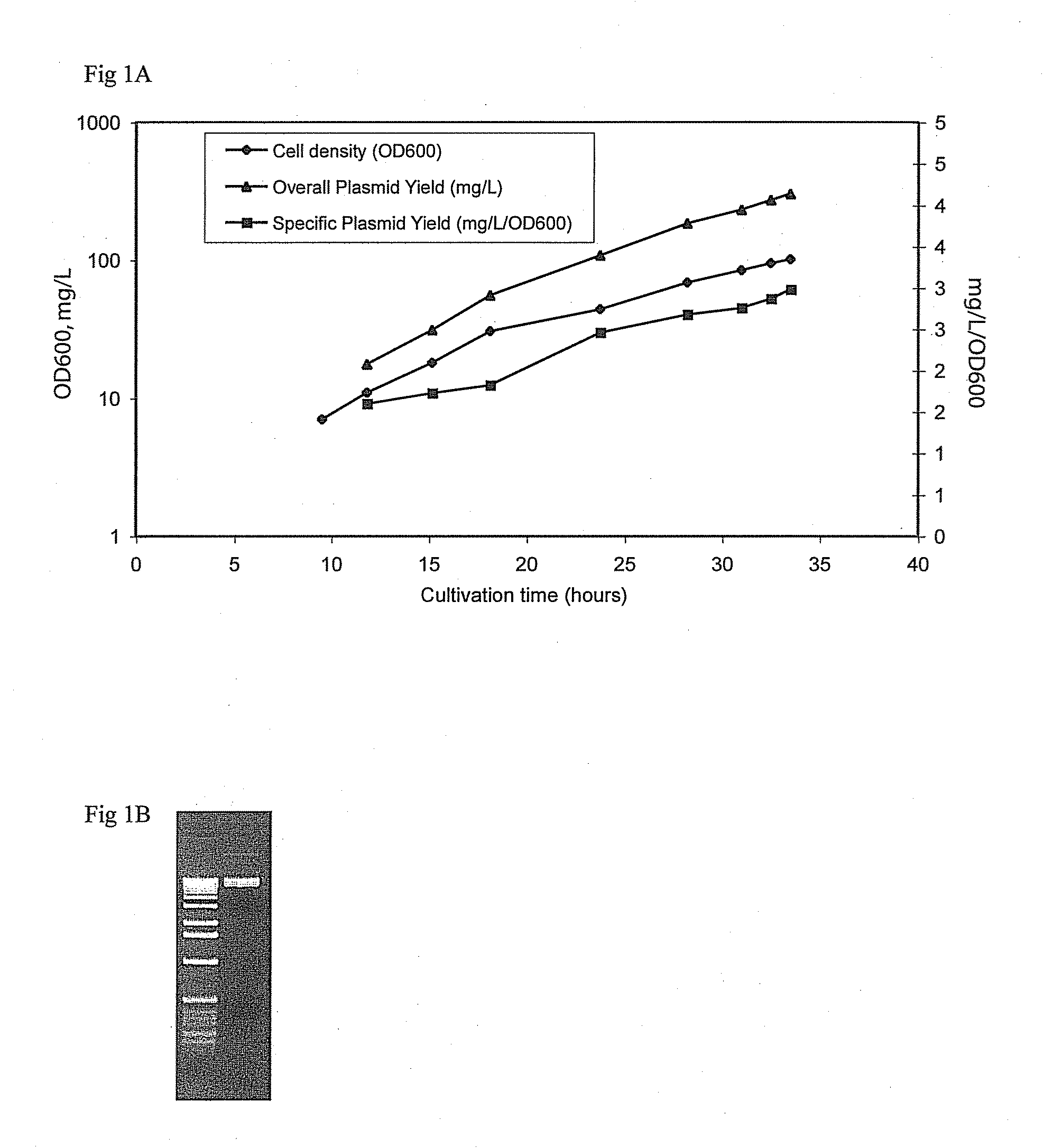
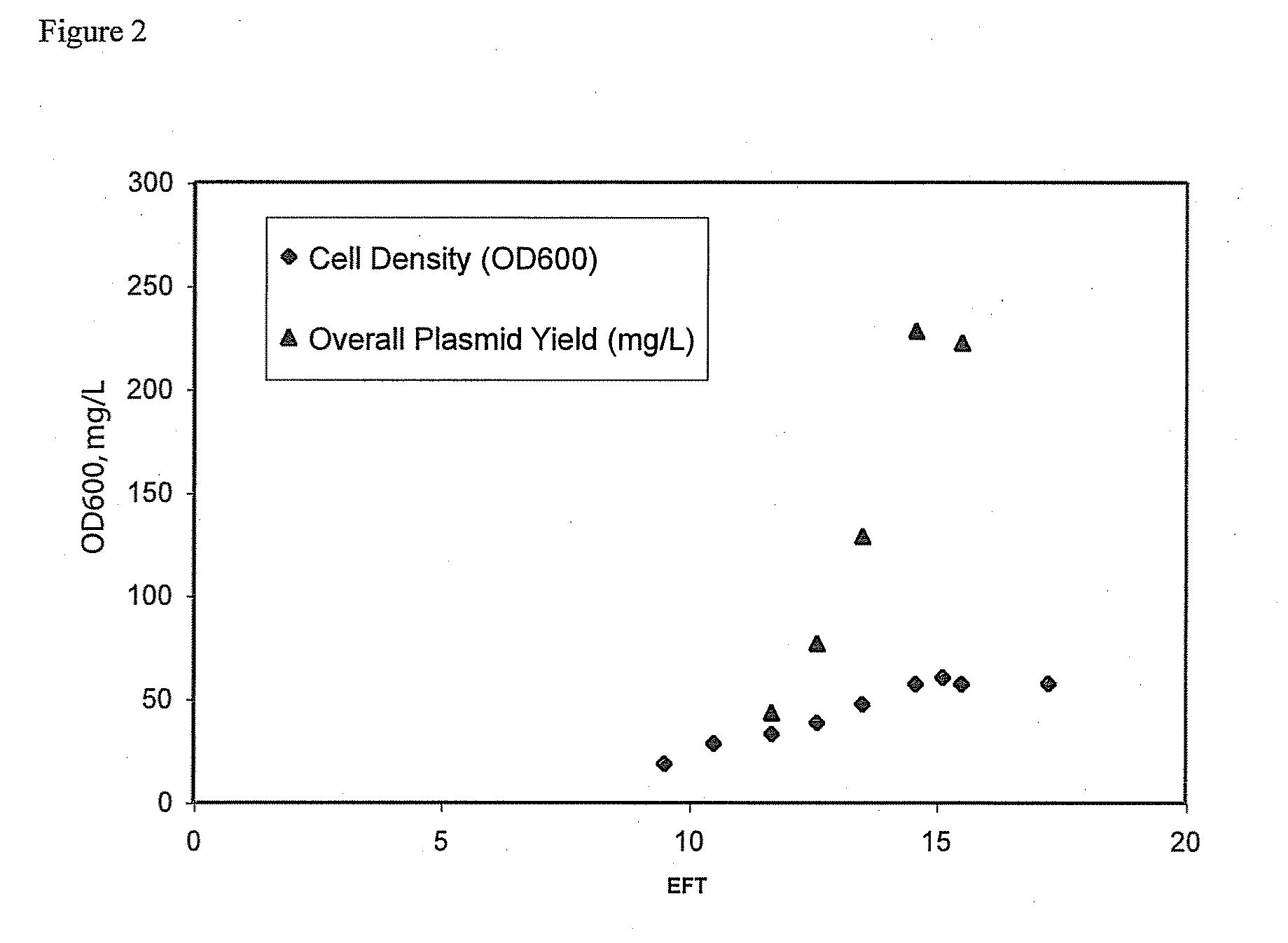
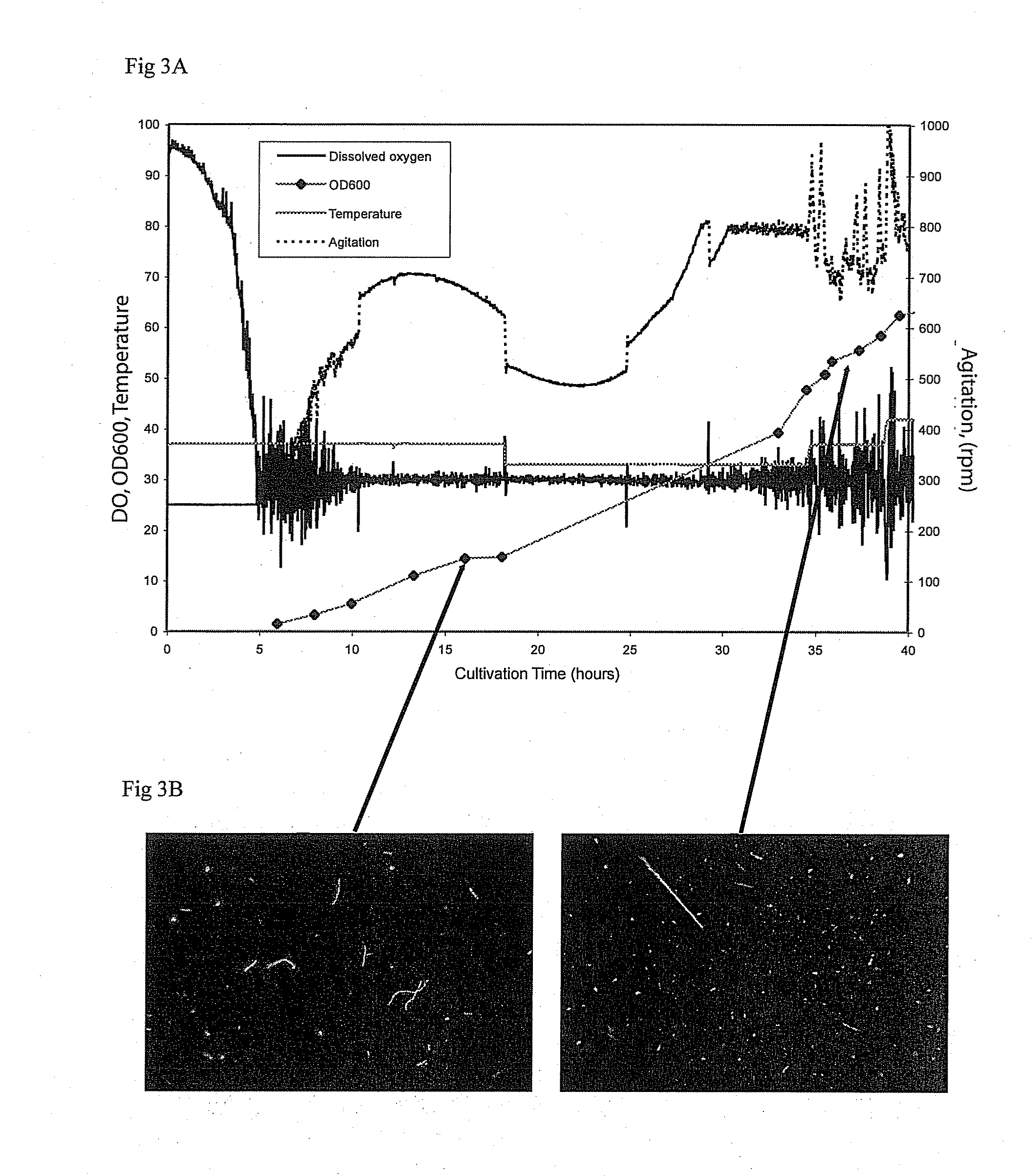
- The method involves a fed-batch fermentation process with a reduced growth rate at a lower temperature, followed by a temperature up-shift to induce plasmid production, using semi-defined glycerol media and optimized growth conditions to enhance plasmid yield and purity, while maintaining or improving plasmid integrity.

Regulatory Framework for Biotechnology Applications
The regulatory landscape for biotechnology applications involving precision fermentation and recombinant DNA techniques presents a complex framework that varies significantly across global jurisdictions. In the United States, the FDA operates under the "Generally Recognized as Safe" (GRAS) framework for food ingredients produced through precision fermentation, while recombinant DNA products fall under more stringent biotechnology regulations requiring comprehensive safety assessments.
The European Union maintains a more precautionary approach through its Novel Food Regulation (EU) 2015/2283, which requires extensive pre-market authorization for both precision fermentation products and genetically modified organisms. This regulatory pathway typically involves detailed molecular characterization, toxicological studies, and allergenicity assessments that can extend approval timelines to several years.
Regulatory agencies distinguish between these technologies based on the final product characteristics rather than production methods. Precision fermentation products that are substantially equivalent to conventional counterparts often face streamlined approval processes, particularly when using microorganisms with established safety profiles. Conversely, recombinant DNA techniques producing novel proteins or modified organisms encounter more rigorous oversight requirements.
Key regulatory considerations include containment protocols, environmental release assessments, and labeling requirements. The FDA's biotechnology framework emphasizes risk-based evaluation, focusing on product safety rather than production methodology. However, transparency requirements mandate disclosure of genetic modifications in certain applications, particularly for pharmaceutical and agricultural uses.
International harmonization efforts through organizations like Codex Alimentarius aim to establish consistent standards, yet significant regional variations persist. Countries like Singapore and Canada have developed expedited pathways for precision fermentation products, recognizing their potential for sustainable food production while maintaining safety standards.
The regulatory trajectory indicates increasing acceptance of precision fermentation technologies, with agencies developing specialized guidelines that acknowledge the controlled nature of these processes compared to traditional genetic modification approaches.
The European Union maintains a more precautionary approach through its Novel Food Regulation (EU) 2015/2283, which requires extensive pre-market authorization for both precision fermentation products and genetically modified organisms. This regulatory pathway typically involves detailed molecular characterization, toxicological studies, and allergenicity assessments that can extend approval timelines to several years.
Regulatory agencies distinguish between these technologies based on the final product characteristics rather than production methods. Precision fermentation products that are substantially equivalent to conventional counterparts often face streamlined approval processes, particularly when using microorganisms with established safety profiles. Conversely, recombinant DNA techniques producing novel proteins or modified organisms encounter more rigorous oversight requirements.
Key regulatory considerations include containment protocols, environmental release assessments, and labeling requirements. The FDA's biotechnology framework emphasizes risk-based evaluation, focusing on product safety rather than production methodology. However, transparency requirements mandate disclosure of genetic modifications in certain applications, particularly for pharmaceutical and agricultural uses.
International harmonization efforts through organizations like Codex Alimentarius aim to establish consistent standards, yet significant regional variations persist. Countries like Singapore and Canada have developed expedited pathways for precision fermentation products, recognizing their potential for sustainable food production while maintaining safety standards.
The regulatory trajectory indicates increasing acceptance of precision fermentation technologies, with agencies developing specialized guidelines that acknowledge the controlled nature of these processes compared to traditional genetic modification approaches.
Cost-Effectiveness Analysis of Production Techniques
The cost-effectiveness analysis of precision fermentation versus recombinant DNA techniques reveals significant economic disparities across different production scales and target molecules. Precision fermentation demonstrates superior cost efficiency for large-scale production of complex proteins, with manufacturing costs typically ranging from $50-200 per kilogram for established products. The technique benefits from economies of scale, where increased production volumes substantially reduce per-unit costs due to optimized fermentation infrastructure utilization.
Initial capital expenditure requirements differ markedly between the two approaches. Precision fermentation facilities demand substantial upfront investments, typically $100-500 million for commercial-scale operations, including specialized bioreactors, downstream processing equipment, and quality control systems. Conversely, recombinant DNA production facilities require lower initial investments, generally $20-100 million, making them more accessible for smaller-scale operations and specialized applications.
Operating cost structures present contrasting profiles. Precision fermentation exhibits lower variable costs per unit at high production volumes, with raw material costs representing 30-40% of total production expenses. Energy consumption, primarily for maintaining optimal fermentation conditions, accounts for 15-20% of operational costs. Recombinant DNA techniques typically incur higher per-unit variable costs but offer greater flexibility in production scheduling and product switching.
Time-to-market considerations significantly impact overall cost-effectiveness calculations. Precision fermentation projects typically require 3-5 years from concept to commercial production, with development costs ranging $50-150 million. Recombinant DNA approaches often achieve faster market entry, requiring 2-3 years and $20-80 million in development investments, providing earlier revenue generation opportunities.
Product yield optimization directly influences economic viability. Precision fermentation achieves higher volumetric productivity for target molecules, often exceeding 10-50 grams per liter, compared to recombinant DNA systems typically yielding 1-10 grams per liter. This productivity advantage translates to reduced facility footprint requirements and lower infrastructure costs per unit of output.
Risk-adjusted return calculations favor precision fermentation for high-volume, established markets, while recombinant DNA techniques demonstrate superior economics for niche applications, rapid prototyping, and products requiring frequent modifications or customization.
Initial capital expenditure requirements differ markedly between the two approaches. Precision fermentation facilities demand substantial upfront investments, typically $100-500 million for commercial-scale operations, including specialized bioreactors, downstream processing equipment, and quality control systems. Conversely, recombinant DNA production facilities require lower initial investments, generally $20-100 million, making them more accessible for smaller-scale operations and specialized applications.
Operating cost structures present contrasting profiles. Precision fermentation exhibits lower variable costs per unit at high production volumes, with raw material costs representing 30-40% of total production expenses. Energy consumption, primarily for maintaining optimal fermentation conditions, accounts for 15-20% of operational costs. Recombinant DNA techniques typically incur higher per-unit variable costs but offer greater flexibility in production scheduling and product switching.
Time-to-market considerations significantly impact overall cost-effectiveness calculations. Precision fermentation projects typically require 3-5 years from concept to commercial production, with development costs ranging $50-150 million. Recombinant DNA approaches often achieve faster market entry, requiring 2-3 years and $20-80 million in development investments, providing earlier revenue generation opportunities.
Product yield optimization directly influences economic viability. Precision fermentation achieves higher volumetric productivity for target molecules, often exceeding 10-50 grams per liter, compared to recombinant DNA systems typically yielding 1-10 grams per liter. This productivity advantage translates to reduced facility footprint requirements and lower infrastructure costs per unit of output.
Risk-adjusted return calculations favor precision fermentation for high-volume, established markets, while recombinant DNA techniques demonstrate superior economics for niche applications, rapid prototyping, and products requiring frequent modifications or customization.
Unlock deeper insights with PatSnap Eureka Quick Research — get a full tech report to explore trends and direct your research. Try now!
Generate Your Research Report Instantly with AI Agent
Supercharge your innovation with PatSnap Eureka AI Agent Platform!