

Precision Robotics vs Teleoperations: Practical Benefits
MAR 2, 20269 MIN READ
Generate Your Research Report Instantly with AI Agent
PatSnap Eureka helps you evaluate technical feasibility & market potential.
Precision Robotics and Teleoperation Technology Background
Precision robotics and teleoperation technologies represent two fundamental paradigms in automated control systems, each addressing distinct operational requirements across various industrial and scientific applications. Precision robotics focuses on autonomous systems capable of executing highly accurate, repeatable tasks with minimal human intervention, while teleoperation emphasizes human-machine collaboration through remote control interfaces that leverage human cognitive abilities and adaptability.
The evolution of precision robotics traces back to the 1960s with the introduction of industrial manipulators, progressing through decades of advancement in sensor integration, control algorithms, and mechanical design. Early systems relied on simple position control, but modern precision robots incorporate sophisticated feedback mechanisms, vision systems, and artificial intelligence to achieve sub-millimeter accuracy in complex environments. This technological progression has been driven by manufacturing demands for consistent quality, reduced cycle times, and operation in hazardous environments.
Teleoperation technology emerged from different origins, initially developed for nuclear material handling and space exploration in the 1940s and 1950s. The fundamental principle involves extending human sensorimotor capabilities across distance and scale barriers, enabling operators to perform complex tasks in environments where direct human presence is impossible or dangerous. Modern teleoperation systems integrate advanced haptic feedback, high-resolution visual displays, and intuitive control interfaces to create seamless human-machine partnerships.
The convergence of these technologies has accelerated with advances in communication networks, sensor miniaturization, and computational power. Contemporary applications increasingly blur the boundaries between autonomous precision and human-guided operation, leading to hybrid systems that combine the reliability of robotic precision with the adaptability of human intelligence. This technological synthesis addresses limitations inherent in purely autonomous or purely teleoperated approaches.
Current market drivers include demands for enhanced safety in hazardous operations, precision requirements in medical procedures, quality consistency in manufacturing, and operational efficiency in remote or inaccessible environments. The integration of artificial intelligence, machine learning, and advanced sensor technologies continues to expand the capabilities and application domains of both precision robotics and teleoperation systems, establishing new benchmarks for performance and reliability in automated control applications.
The evolution of precision robotics traces back to the 1960s with the introduction of industrial manipulators, progressing through decades of advancement in sensor integration, control algorithms, and mechanical design. Early systems relied on simple position control, but modern precision robots incorporate sophisticated feedback mechanisms, vision systems, and artificial intelligence to achieve sub-millimeter accuracy in complex environments. This technological progression has been driven by manufacturing demands for consistent quality, reduced cycle times, and operation in hazardous environments.
Teleoperation technology emerged from different origins, initially developed for nuclear material handling and space exploration in the 1940s and 1950s. The fundamental principle involves extending human sensorimotor capabilities across distance and scale barriers, enabling operators to perform complex tasks in environments where direct human presence is impossible or dangerous. Modern teleoperation systems integrate advanced haptic feedback, high-resolution visual displays, and intuitive control interfaces to create seamless human-machine partnerships.
The convergence of these technologies has accelerated with advances in communication networks, sensor miniaturization, and computational power. Contemporary applications increasingly blur the boundaries between autonomous precision and human-guided operation, leading to hybrid systems that combine the reliability of robotic precision with the adaptability of human intelligence. This technological synthesis addresses limitations inherent in purely autonomous or purely teleoperated approaches.
Current market drivers include demands for enhanced safety in hazardous operations, precision requirements in medical procedures, quality consistency in manufacturing, and operational efficiency in remote or inaccessible environments. The integration of artificial intelligence, machine learning, and advanced sensor technologies continues to expand the capabilities and application domains of both precision robotics and teleoperation systems, establishing new benchmarks for performance and reliability in automated control applications.
Market Demand for Precision Robotic Teleoperation Systems
The global market for precision robotic teleoperation systems is experiencing unprecedented growth driven by the convergence of advanced robotics, high-speed communication networks, and increasing demand for remote precision operations across multiple industries. Healthcare sector represents the largest market segment, where surgical robots enabling remote procedures have demonstrated significant clinical value and patient outcomes improvement.
Manufacturing industries are rapidly adopting teleoperated precision robotics to address skilled labor shortages and enhance operational safety in hazardous environments. The automotive, aerospace, and electronics sectors particularly value these systems for their ability to perform intricate assembly tasks and quality control operations remotely, reducing human exposure to dangerous conditions while maintaining production efficiency.
Space exploration and deep-sea operations constitute emerging high-value market segments where teleoperation capabilities are essential rather than optional. These applications require extreme precision combined with the ability to operate in environments completely inaccessible to human operators, creating substantial demand for advanced teleoperation technologies.
The nuclear industry presents another critical market driver, where decommissioning aging facilities and handling radioactive materials necessitate precise robotic operations controlled from safe distances. Recent global events have accelerated investment in these capabilities, expanding market opportunities significantly.
Geographic market distribution shows North America and Europe leading in adoption rates, primarily due to advanced healthcare infrastructure and stringent safety regulations in industrial operations. Asia-Pacific markets are experiencing rapid growth, driven by manufacturing automation needs and increasing healthcare investments in countries like Japan, South Korea, and China.
Market capacity expansion is further supported by the growing acceptance of remote work paradigms and distributed operations models. Organizations increasingly recognize that teleoperated precision robotics can extend expert capabilities across geographic boundaries, enabling specialized skills to be deployed globally without physical presence requirements.
The integration of artificial intelligence and machine learning technologies with teleoperation systems is creating new market opportunities by reducing operator training requirements and improving system reliability. This technological convergence is attracting investment from both traditional robotics companies and technology giants seeking to establish positions in the expanding market.
Manufacturing industries are rapidly adopting teleoperated precision robotics to address skilled labor shortages and enhance operational safety in hazardous environments. The automotive, aerospace, and electronics sectors particularly value these systems for their ability to perform intricate assembly tasks and quality control operations remotely, reducing human exposure to dangerous conditions while maintaining production efficiency.
Space exploration and deep-sea operations constitute emerging high-value market segments where teleoperation capabilities are essential rather than optional. These applications require extreme precision combined with the ability to operate in environments completely inaccessible to human operators, creating substantial demand for advanced teleoperation technologies.
The nuclear industry presents another critical market driver, where decommissioning aging facilities and handling radioactive materials necessitate precise robotic operations controlled from safe distances. Recent global events have accelerated investment in these capabilities, expanding market opportunities significantly.
Geographic market distribution shows North America and Europe leading in adoption rates, primarily due to advanced healthcare infrastructure and stringent safety regulations in industrial operations. Asia-Pacific markets are experiencing rapid growth, driven by manufacturing automation needs and increasing healthcare investments in countries like Japan, South Korea, and China.
Market capacity expansion is further supported by the growing acceptance of remote work paradigms and distributed operations models. Organizations increasingly recognize that teleoperated precision robotics can extend expert capabilities across geographic boundaries, enabling specialized skills to be deployed globally without physical presence requirements.
The integration of artificial intelligence and machine learning technologies with teleoperation systems is creating new market opportunities by reducing operator training requirements and improving system reliability. This technological convergence is attracting investment from both traditional robotics companies and technology giants seeking to establish positions in the expanding market.
Current State of Precision Robotics and Teleoperation Challenges
Precision robotics has achieved remarkable technological maturity across multiple domains, with surgical robotics leading the advancement through systems like da Vinci Surgical System, which has performed over 10 million procedures globally. These platforms demonstrate sub-millimeter accuracy in controlled environments, utilizing advanced sensor fusion, machine learning algorithms, and sophisticated control systems. Manufacturing applications have similarly progressed, with precision assembly robots achieving repeatability within ±0.02mm for semiconductor and electronics production.
Current precision robotic systems excel in structured environments where tasks are well-defined and predictable. Industrial applications benefit from deterministic workflows, enabling robots to perform complex assembly operations with consistent quality. However, these systems face significant limitations when encountering unstructured environments or unexpected variations in task parameters.
Teleoperation technology has evolved substantially, incorporating haptic feedback systems, force reflection, and advanced human-machine interfaces. Modern telerobotic platforms achieve latency reductions below 50 milliseconds for local operations, enabling near real-time control. High-definition visual feedback combined with stereoscopic displays provides operators with enhanced spatial awareness and depth perception.
Despite technological progress, several critical challenges persist in both domains. Precision robotics struggles with adaptability to dynamic environments, requiring extensive programming for task variations. Sensor limitations in complex scenarios often result in reduced performance when environmental conditions deviate from programmed parameters. The integration of artificial intelligence has improved autonomous decision-making, yet robots still lack human-level adaptability for complex manipulation tasks.
Teleoperation faces distinct challenges related to communication delays, particularly in remote applications where network latency can exceed 200 milliseconds. This latency significantly impacts operator performance in precision tasks, creating safety concerns and reducing operational efficiency. Haptic feedback systems, while advanced, still cannot fully replicate the tactile sensitivity of direct human manipulation.
Operator fatigue represents another significant challenge in teleoperation, as prolonged use of current interfaces can lead to decreased precision and increased error rates. The cognitive load required for interpreting visual feedback while managing control inputs creates bottlenecks in complex operations.
Both technologies face integration challenges when deployed in hybrid systems. Seamless transitions between autonomous precision robotics and human teleoperation require sophisticated control architectures that can maintain operational continuity while preserving safety protocols. Current solutions often involve complete system handovers rather than collaborative operation modes.
The convergence of these technologies presents opportunities for addressing individual limitations through complementary capabilities, yet technical barriers remain in achieving optimal integration for practical applications.
Current precision robotic systems excel in structured environments where tasks are well-defined and predictable. Industrial applications benefit from deterministic workflows, enabling robots to perform complex assembly operations with consistent quality. However, these systems face significant limitations when encountering unstructured environments or unexpected variations in task parameters.
Teleoperation technology has evolved substantially, incorporating haptic feedback systems, force reflection, and advanced human-machine interfaces. Modern telerobotic platforms achieve latency reductions below 50 milliseconds for local operations, enabling near real-time control. High-definition visual feedback combined with stereoscopic displays provides operators with enhanced spatial awareness and depth perception.
Despite technological progress, several critical challenges persist in both domains. Precision robotics struggles with adaptability to dynamic environments, requiring extensive programming for task variations. Sensor limitations in complex scenarios often result in reduced performance when environmental conditions deviate from programmed parameters. The integration of artificial intelligence has improved autonomous decision-making, yet robots still lack human-level adaptability for complex manipulation tasks.
Teleoperation faces distinct challenges related to communication delays, particularly in remote applications where network latency can exceed 200 milliseconds. This latency significantly impacts operator performance in precision tasks, creating safety concerns and reducing operational efficiency. Haptic feedback systems, while advanced, still cannot fully replicate the tactile sensitivity of direct human manipulation.
Operator fatigue represents another significant challenge in teleoperation, as prolonged use of current interfaces can lead to decreased precision and increased error rates. The cognitive load required for interpreting visual feedback while managing control inputs creates bottlenecks in complex operations.
Both technologies face integration challenges when deployed in hybrid systems. Seamless transitions between autonomous precision robotics and human teleoperation require sophisticated control architectures that can maintain operational continuity while preserving safety protocols. Current solutions often involve complete system handovers rather than collaborative operation modes.
The convergence of these technologies presents opportunities for addressing individual limitations through complementary capabilities, yet technical barriers remain in achieving optimal integration for practical applications.
Current Technical Solutions for Precision Teleoperation
01 Enhanced precision and accuracy in robotic manipulation
Precision robotics systems incorporate advanced control mechanisms and sensor feedback to achieve high-accuracy positioning and manipulation tasks. These systems utilize sophisticated algorithms and mechanical designs to minimize errors and improve repeatability in operations. The integration of real-time monitoring and adaptive control enables robots to perform delicate tasks with minimal deviation from intended trajectories.- Enhanced precision and accuracy in robotic manipulation: Precision robotics systems incorporate advanced control mechanisms and sensor feedback to achieve high-accuracy positioning and manipulation tasks. These systems utilize sophisticated algorithms and mechanical designs to minimize errors and improve repeatability in operations. The integration of real-time monitoring and adaptive control enables robots to perform delicate tasks with submillimeter precision, making them suitable for applications requiring exact positioning and fine motor control.
- Remote operation capabilities for hazardous environments: Teleoperation systems enable operators to control robotic devices from safe distances, particularly beneficial in dangerous or inaccessible locations. These systems provide intuitive interfaces and haptic feedback mechanisms that allow human operators to perform complex tasks remotely while maintaining situational awareness. The technology facilitates operations in extreme conditions such as radiation zones, underwater environments, or disaster sites where direct human presence would be unsafe or impossible.
- Improved surgical and medical procedures: Robotic systems designed for medical applications provide surgeons with enhanced dexterity and visualization capabilities during minimally invasive procedures. These platforms offer tremor filtration, motion scaling, and three-dimensional visualization that surpass human limitations. The technology enables more precise incisions, reduced tissue trauma, faster patient recovery times, and the ability to perform complex procedures through smaller access points, ultimately improving patient outcomes and reducing complications.
- Increased productivity in manufacturing and assembly: Precision robotic systems in industrial settings enhance production efficiency through consistent performance, reduced cycle times, and minimal defect rates. These automated solutions can operate continuously with high repeatability, performing complex assembly tasks that would be time-consuming or ergonomically challenging for human workers. The integration of vision systems and adaptive programming allows robots to handle variations in parts and processes, leading to improved quality control and reduced waste in manufacturing operations.
- Training and skill development through simulation: Teleoperation platforms provide valuable training environments where operators can develop proficiency without risk to equipment or personnel. These systems incorporate realistic simulation capabilities that replicate actual operating conditions, allowing trainees to practice complex maneuvers and emergency procedures. The technology enables skill assessment, performance metrics tracking, and progressive difficulty levels that accelerate the learning curve while reducing training costs and equipment wear associated with traditional hands-on training methods.
02 Remote operation capabilities for hazardous environments
Teleoperations technology enables operators to control robotic systems from safe distances, particularly beneficial in dangerous or inaccessible locations. These systems provide real-time feedback and intuitive control interfaces that allow human operators to perform complex tasks remotely. Applications include operations in radioactive areas, underwater environments, and space exploration where direct human presence is impractical or unsafe.Expand Specific Solutions03 Improved surgical and medical procedures
Robotic systems designed for medical applications offer enhanced precision in minimally invasive procedures, reducing patient trauma and recovery time. These systems provide surgeons with improved dexterity, visualization, and control beyond human hand limitations. The technology enables complex procedures through smaller incisions with greater accuracy and consistency.Expand Specific Solutions04 Advanced haptic feedback and force sensing
Teleoperation systems incorporate haptic feedback mechanisms that provide operators with tactile sensations and force information from remote environments. This technology enhances the operator's ability to perform delicate manipulation tasks by conveying physical interaction data in real-time. The integration of force sensors and feedback devices improves task performance and reduces the risk of damage to objects being manipulated.Expand Specific Solutions05 Autonomous and semi-autonomous operation modes
Modern precision robotic systems feature intelligent control architectures that enable varying levels of autonomy, from fully manual teleoperation to supervised autonomous execution. These systems can adapt to changing conditions and make decisions based on sensor input and programmed objectives. The flexibility to switch between operation modes allows for optimal performance across different task requirements and environmental conditions.Expand Specific Solutions
Key Players in Precision Robotics and Teleoperation Industry
The precision robotics versus teleoperations landscape represents a rapidly evolving sector at the intersection of advanced automation and human-machine interfaces. The industry is experiencing significant growth driven by applications across medical robotics, industrial automation, and emerging sectors like data center management. Market leaders include established players such as Intuitive Surgical Operations dominating surgical robotics, industrial giants like KUKA Deutschland and Kawasaki Heavy Industries advancing manufacturing automation, and technology innovators including Honda Motor, Sony Group, and Samsung Electronics integrating AI-driven precision systems. Emerging specialists like Extend Robotics, DistalMotion SA, and Watney Robotics are pushing technological boundaries in teleoperation interfaces and autonomous systems. The technology maturity varies significantly across applications, with surgical robotics reaching commercial maturity while advanced teleoperation systems remain in development phases, supported by research institutions like Carnegie Mellon University and Chinese Academy of Sciences driving fundamental innovations.
Intuitive Surgical Operations, Inc.
Technical Solution: Intuitive Surgical has developed the da Vinci Surgical System, which represents a hybrid approach combining precision robotics with teleoperation capabilities. The system features high-definition 3D visualization, wristed instruments with 7 degrees of freedom that exceed human hand dexterity, and tremor filtration technology. The surgeon operates from a console using intuitive hand and finger movements that are translated into precise micro-movements of the instruments inside the patient. This approach provides enhanced precision through robotic stabilization while maintaining the surgeon's decision-making control through teleoperation, offering practical benefits including reduced invasiveness, shorter recovery times, and improved surgical outcomes in complex procedures.
Strengths: Market leader with extensive clinical validation, superior precision and dexterity, reduced patient trauma. Weaknesses: High cost, steep learning curve, limited haptic feedback.
Extend Robotics Ltd.
Technical Solution: Extend Robotics specializes in haptic teleoperation systems that bridge precision robotics with remote operation capabilities. Their technology focuses on providing high-fidelity force feedback and tactile sensation transmission, enabling operators to perform precise manipulations remotely while feeling the interaction forces. The system combines robotic precision with human dexterity through advanced haptic interfaces, allowing for applications in hazardous environments, remote maintenance, and delicate assembly tasks. The practical benefits include enabling human expertise in dangerous or inaccessible locations, maintaining precision through robotic stabilization, and reducing operator fatigue through ergonomic teleoperation interfaces while preserving the nuanced control that human operators provide.
Strengths: Advanced haptic feedback technology, versatile applications across industries, enhanced safety for operators. Weaknesses: Complex system integration, potential latency issues in remote operations.
Core Technologies in Precision Robotics Control Systems
System and methods for robotic teleoperation intention estimation
PatentPendingUS20250083325A1
Innovation
- A system for robotic teleoperation that includes a robotic teleoperation input, a feature extractor, a multi-window model, a hierarchical neural network, and a teleoperated robotic element, which processes human operator inputs to estimate intentions and guide the robotic actions accurately.


Method and system for controlling a telerobotic robot
PatentWO2022233606A1
Innovation
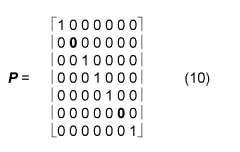
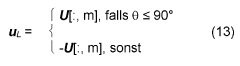
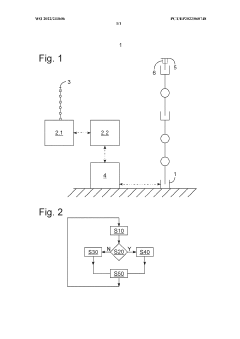
- A method and system that uses an input device with a movable actuating means to command target poses and forces, incorporating virtual boundaries to provide haptic feedback and prevent unauthorized movements, enhancing control precision and safety through inverse kinematics and virtual spring simulations.
Safety Standards and Regulations for Teleoperated Systems
The regulatory landscape for teleoperated systems represents a complex intersection of robotics, telecommunications, and safety engineering standards. Current frameworks primarily derive from traditional industrial automation standards such as ISO 10218 for industrial robots and IEC 61508 for functional safety systems. However, these existing standards inadequately address the unique challenges posed by remote operation, particularly concerning communication latency, operator situational awareness, and fail-safe mechanisms during connectivity loss.
International standardization bodies are actively developing specialized frameworks for teleoperated systems. The ISO/TC 299 Robotics committee has initiated work on ISO 23482, which specifically addresses safety requirements for personal care robots including teleoperated variants. Similarly, the IEC 62061 standard for safety-related electrical control systems is being extended to encompass remote operation scenarios. These emerging standards emphasize risk assessment methodologies that account for communication delays, environmental uncertainties at remote sites, and human factors in operator interfaces.
Regional regulatory approaches vary significantly across major markets. The European Union's Machinery Directive 2006/42/EC requires CE marking for teleoperated systems, mandating comprehensive risk assessments and safety documentation. The directive's essential health and safety requirements specifically address remote control operations, requiring fail-safe mechanisms and emergency stop capabilities. In contrast, the United States relies on industry-specific regulations through agencies like OSHA for workplace safety and FDA for medical applications, creating a more fragmented regulatory environment.
Critical safety requirements for teleoperated systems center on communication integrity and operator competency. Standards mandate redundant communication channels, encrypted data transmission, and defined maximum allowable latency thresholds. Operator certification requirements are emerging, particularly for high-risk applications such as surgical robotics and hazardous material handling. These certifications typically require demonstrated proficiency in both normal operations and emergency response procedures.
Compliance verification presents unique challenges for teleoperated systems due to their distributed nature. Testing protocols must validate not only the robotic hardware but also the entire communication infrastructure and human-machine interfaces. Third-party certification bodies are developing specialized testing facilities that can simulate various network conditions and failure modes to ensure robust system performance under adverse conditions.
International standardization bodies are actively developing specialized frameworks for teleoperated systems. The ISO/TC 299 Robotics committee has initiated work on ISO 23482, which specifically addresses safety requirements for personal care robots including teleoperated variants. Similarly, the IEC 62061 standard for safety-related electrical control systems is being extended to encompass remote operation scenarios. These emerging standards emphasize risk assessment methodologies that account for communication delays, environmental uncertainties at remote sites, and human factors in operator interfaces.
Regional regulatory approaches vary significantly across major markets. The European Union's Machinery Directive 2006/42/EC requires CE marking for teleoperated systems, mandating comprehensive risk assessments and safety documentation. The directive's essential health and safety requirements specifically address remote control operations, requiring fail-safe mechanisms and emergency stop capabilities. In contrast, the United States relies on industry-specific regulations through agencies like OSHA for workplace safety and FDA for medical applications, creating a more fragmented regulatory environment.
Critical safety requirements for teleoperated systems center on communication integrity and operator competency. Standards mandate redundant communication channels, encrypted data transmission, and defined maximum allowable latency thresholds. Operator certification requirements are emerging, particularly for high-risk applications such as surgical robotics and hazardous material handling. These certifications typically require demonstrated proficiency in both normal operations and emergency response procedures.
Compliance verification presents unique challenges for teleoperated systems due to their distributed nature. Testing protocols must validate not only the robotic hardware but also the entire communication infrastructure and human-machine interfaces. Third-party certification bodies are developing specialized testing facilities that can simulate various network conditions and failure modes to ensure robust system performance under adverse conditions.
Human-Machine Interface Design for Teleoperation Systems
The design of human-machine interfaces for teleoperation systems represents a critical convergence point where precision robotics capabilities must be seamlessly translated into intuitive operator control mechanisms. Effective interface design directly impacts the practical benefits that can be realized from teleoperation systems, particularly in applications requiring high precision and real-time responsiveness.
Modern teleoperation interfaces must address the fundamental challenge of bridging the gap between human cognitive capabilities and robotic precision. Visual feedback systems form the cornerstone of effective interface design, incorporating high-resolution cameras, depth sensors, and augmented reality overlays to provide operators with comprehensive situational awareness. These visual elements must be carefully calibrated to minimize latency while maximizing information density without overwhelming the operator.
Haptic feedback mechanisms constitute another essential component, enabling operators to perceive force, texture, and resistance through specialized controllers and exoskeletons. The integration of tactile feedback significantly enhances precision control by allowing operators to feel the interaction between robotic end-effectors and target objects. This sensory information proves particularly valuable in delicate manipulation tasks where visual cues alone may be insufficient.
Control input methods have evolved beyond traditional joysticks and keyboards to encompass gesture recognition, eye tracking, and brain-computer interfaces. Multi-modal input systems allow operators to leverage natural human movements and intentions, translating them into precise robotic actions. The design must account for operator fatigue, learning curves, and the need for emergency override capabilities.
Adaptive interface architectures represent an emerging trend, utilizing machine learning algorithms to customize control parameters based on individual operator preferences and task requirements. These systems can automatically adjust sensitivity, filter tremor, and predict operator intentions to enhance overall system performance. The interface must also accommodate varying levels of autonomy, seamlessly transitioning between direct teleoperation and supervisory control modes.
Ergonomic considerations play a crucial role in sustained operation scenarios, with interface layouts optimized for extended use periods. The integration of biometric monitoring can provide real-time feedback on operator stress levels and cognitive load, enabling dynamic interface adjustments to maintain optimal performance throughout extended missions.
Modern teleoperation interfaces must address the fundamental challenge of bridging the gap between human cognitive capabilities and robotic precision. Visual feedback systems form the cornerstone of effective interface design, incorporating high-resolution cameras, depth sensors, and augmented reality overlays to provide operators with comprehensive situational awareness. These visual elements must be carefully calibrated to minimize latency while maximizing information density without overwhelming the operator.
Haptic feedback mechanisms constitute another essential component, enabling operators to perceive force, texture, and resistance through specialized controllers and exoskeletons. The integration of tactile feedback significantly enhances precision control by allowing operators to feel the interaction between robotic end-effectors and target objects. This sensory information proves particularly valuable in delicate manipulation tasks where visual cues alone may be insufficient.
Control input methods have evolved beyond traditional joysticks and keyboards to encompass gesture recognition, eye tracking, and brain-computer interfaces. Multi-modal input systems allow operators to leverage natural human movements and intentions, translating them into precise robotic actions. The design must account for operator fatigue, learning curves, and the need for emergency override capabilities.
Adaptive interface architectures represent an emerging trend, utilizing machine learning algorithms to customize control parameters based on individual operator preferences and task requirements. These systems can automatically adjust sensitivity, filter tremor, and predict operator intentions to enhance overall system performance. The interface must also accommodate varying levels of autonomy, seamlessly transitioning between direct teleoperation and supervisory control modes.
Ergonomic considerations play a crucial role in sustained operation scenarios, with interface layouts optimized for extended use periods. The integration of biometric monitoring can provide real-time feedback on operator stress levels and cognitive load, enabling dynamic interface adjustments to maintain optimal performance throughout extended missions.
Unlock deeper insights with PatSnap Eureka Quick Research — get a full tech report to explore trends and direct your research. Try now!
Generate Your Research Report Instantly with AI Agent
Supercharge your innovation with PatSnap Eureka AI Agent Platform!