Biofertilizers: Progressive Developments in Enzyme Production
Enzyme Biofertilizer Evolution and Objectives
Enzyme biofertilizers have emerged as a revolutionary approach in sustainable agriculture, offering a promising alternative to conventional chemical fertilizers. The evolution of enzyme production for biofertilizers has been driven by the growing demand for environmentally friendly and efficient agricultural practices. This field has witnessed significant advancements over the past few decades, with researchers and industry players continuously striving to enhance enzyme production techniques and improve the efficacy of biofertilizers.
The journey of enzyme biofertilizers began with the recognition of the vital role that soil microorganisms play in nutrient cycling and plant growth promotion. Early developments focused on isolating and characterizing beneficial microorganisms capable of producing enzymes that could enhance soil fertility and plant nutrition. As the understanding of microbial ecology and enzyme biochemistry deepened, researchers started exploring ways to optimize enzyme production and formulation for biofertilizer applications.
One of the key objectives in the progressive development of enzyme production for biofertilizers has been to increase the yield and stability of enzymes. This has led to the exploration of various fermentation techniques, including solid-state and submerged fermentation, as well as the development of novel bioreactor designs. Additionally, genetic engineering approaches have been employed to create microbial strains with enhanced enzyme production capabilities, targeting specific enzymes such as phosphatases, cellulases, and nitrogen-fixing enzymes.
Another crucial aspect of enzyme biofertilizer evolution has been the focus on improving the delivery and efficacy of enzymes in soil environments. This has involved the development of innovative formulation techniques, such as microencapsulation and immobilization, to protect enzymes from degradation and extend their shelf life. Furthermore, researchers have been working on enhancing the compatibility of enzyme biofertilizers with existing agricultural practices and developing synergistic combinations of enzymes and beneficial microorganisms.
The objectives of ongoing research in enzyme production for biofertilizers are multifaceted. Scientists aim to develop more cost-effective production methods to make enzyme biofertilizers economically competitive with chemical fertilizers. There is also a strong emphasis on creating biofertilizers that can perform consistently across diverse soil types and environmental conditions. Additionally, researchers are exploring the potential of enzyme biofertilizers in addressing specific agricultural challenges, such as nutrient deficiencies in degraded soils and improving crop resilience to abiotic stresses.
As the field continues to evolve, the integration of cutting-edge technologies like nanotechnology and artificial intelligence is expected to further revolutionize enzyme production for biofertilizers. These advancements aim to enhance the precision and efficiency of biofertilizer applications, ultimately contributing to sustainable agricultural practices and global food security.
Biofertilizer Market Analysis
The biofertilizer market has been experiencing significant growth in recent years, driven by increasing awareness of sustainable agriculture practices and the need for environmentally friendly alternatives to chemical fertilizers. The global biofertilizer market size was valued at approximately $2.3 billion in 2020 and is projected to reach $3.9 billion by 2026, growing at a CAGR of 11.2% during the forecast period.
Several factors contribute to the expanding market for biofertilizers. The rising demand for organic food products has led to an increased adoption of organic farming practices, which rely heavily on biofertilizers. Additionally, government initiatives promoting sustainable agriculture and environmental conservation have further boosted the market growth. Developing countries, particularly in Asia-Pacific and Latin America, are emerging as key markets for biofertilizers due to their large agricultural sectors and growing awareness of the benefits of bio-based products.
The market is segmented based on type, crop type, and region. Nitrogen-fixing biofertilizers dominate the market, accounting for the largest share due to their widespread use in various crops. Cereals and grains represent the largest crop segment for biofertilizer application, followed by fruits and vegetables. Geographically, Asia-Pacific leads the market, with countries like India and China being major consumers and producers of biofertilizers.
Key players in the biofertilizer market include Novozymes A/S, Rizobacter Argentina S.A., Lallemand Inc., and National Fertilizers Limited. These companies are focusing on research and development to improve enzyme production techniques and enhance the efficacy of biofertilizers. Collaborations with academic institutions and government agencies are also common strategies to accelerate innovation in this field.
Despite the positive growth outlook, the biofertilizer market faces challenges such as limited awareness among farmers in some regions, high production costs, and the need for proper storage and application techniques. However, ongoing research in enzyme production for biofertilizers is addressing these issues by developing more stable and efficient formulations. As technology advances and production costs decrease, the market is expected to witness further expansion and penetration into new agricultural sectors.
Enzyme Production Challenges
The production of enzymes for biofertilizers faces several significant challenges that hinder the widespread adoption and efficiency of these eco-friendly agricultural inputs. One of the primary obstacles is the high cost associated with enzyme production, which often involves complex fermentation processes and expensive raw materials. This economic barrier makes it difficult for biofertilizer manufacturers to compete with traditional chemical fertilizers in terms of pricing, limiting market penetration.
Another major challenge is the stability of enzymes under various environmental conditions. Enzymes are sensitive to factors such as temperature, pH, and moisture, which can significantly affect their activity and shelf life. This instability poses problems in storage, transportation, and application of enzyme-based biofertilizers, potentially reducing their effectiveness in the field.
The scalability of enzyme production processes presents an additional hurdle. While laboratory-scale production may yield promising results, scaling up to industrial levels often encounters issues related to maintaining consistent quality, optimizing fermentation conditions, and managing large-scale purification processes. These challenges can lead to reduced enzyme yields and increased production costs.
Furthermore, the specificity of enzymes for particular substrates or environmental conditions limits their broad applicability. Different soil types, crops, and climatic conditions may require tailored enzyme formulations, necessitating a diverse range of enzyme products. This diversity complicates production processes and increases research and development costs for manufacturers.
Regulatory challenges also play a significant role in enzyme production for biofertilizers. The lack of standardized regulations and approval processes for biofertilizers in many countries creates uncertainty for producers and can slow down the introduction of new enzyme-based products to the market. Additionally, concerns about the potential environmental impact of introducing engineered enzymes into ecosystems may lead to stringent regulatory requirements.
Lastly, the limited understanding of soil-microbe-enzyme interactions poses a challenge to optimizing enzyme formulations for maximum efficacy. The complex nature of soil ecosystems and the variability in microbial populations across different agricultural environments make it difficult to predict and control the performance of enzyme-based biofertilizers consistently.
Current Enzyme Production Methods
01 Microbial enzyme production for biofertilizers
Microorganisms are utilized to produce enzymes that can be incorporated into biofertilizers. These enzymes help break down organic matter, release nutrients, and improve soil fertility. The process involves cultivating specific microbial strains under controlled conditions to optimize enzyme production.- Microbial enzyme production for biofertilizers: Microorganisms are utilized to produce enzymes that can be incorporated into biofertilizers. These enzymes help break down organic matter, improve nutrient availability, and enhance plant growth. The process involves cultivating specific microbial strains under controlled conditions to optimize enzyme production.
- Formulation of enzyme-based biofertilizers: Enzyme-based biofertilizers are formulated by combining produced enzymes with suitable carriers and additives. This process involves selecting appropriate enzymes, determining optimal concentrations, and ensuring product stability. The formulation may include additional beneficial microorganisms or organic matter to enhance overall effectiveness.
- Novel enzyme production techniques for biofertilizers: Innovative techniques are developed to enhance enzyme production for biofertilizers. These may include genetic engineering of microorganisms, optimization of fermentation conditions, or use of novel substrates. The goal is to increase enzyme yield, improve enzyme stability, or produce enzymes with enhanced catalytic properties.
- Enzyme immobilization for biofertilizer applications: Enzymes are immobilized on various supports to improve their stability and reusability in biofertilizer applications. This technique allows for controlled release of enzymes in soil, prolonging their activity and enhancing nutrient availability to plants over extended periods.
- Quality control and standardization of enzyme-based biofertilizers: Methods are developed for quality control and standardization of enzyme-based biofertilizers. This includes techniques for enzyme activity assays, stability testing, and efficacy evaluation. Standardization ensures consistent product quality and performance across different batches and formulations.
02 Plant-based enzyme production for biofertilizers
Enzymes derived from plant sources are used in the production of biofertilizers. These enzymes are extracted from plant tissues or produced through plant cell cultures. They offer a sustainable alternative to microbial enzymes and can enhance nutrient availability in the soil.Expand Specific Solutions03 Enzyme immobilization techniques for biofertilizers
Various methods are employed to immobilize enzymes used in biofertilizers. This process enhances enzyme stability, allows for controlled release, and prolongs the effectiveness of the biofertilizer. Immobilization techniques include encapsulation, adsorption, and covalent binding to carrier materials.Expand Specific Solutions04 Formulation of multi-enzyme biofertilizers
Biofertilizers are developed using a combination of different enzymes to target various aspects of soil health and plant nutrition. These multi-enzyme formulations can include cellulases, proteases, phosphatases, and other enzymes that work synergistically to improve nutrient availability and soil structure.Expand Specific Solutions05 Nanotechnology in enzyme-based biofertilizers
Nanotechnology is applied in the production and delivery of enzyme-based biofertilizers. Nanoparticles are used to enhance enzyme stability, improve soil penetration, and control the release of enzymes. This approach increases the efficiency and effectiveness of biofertilizers in various soil types and environmental conditions.Expand Specific Solutions
Key Biofertilizer Producers
The enzyme production for biofertilizers market is in a growth phase, driven by increasing demand for sustainable agricultural practices. The market size is expanding, with projections indicating significant growth potential in the coming years. Technologically, the field is advancing rapidly, with companies like Novozymes A/S and DSM IP Assets BV leading innovation. Academic institutions such as Massachusetts Institute of Technology and Michigan State University are contributing to research advancements. The involvement of diverse players, including biotechnology firms like Codexis, Inc. and Amyris, Inc., alongside traditional agricultural companies, indicates a competitive and dynamic landscape with opportunities for further technological breakthroughs and market expansion.
DSM IP Assets BV
Michigan State University
Innovative Enzyme Engineering
- Utilization of waste protein raw materials as a substrate for enzyme production, promoting resource recycling and reducing costs.
- Implementation of a specific strain activation step to enhance the activity of fermenting strains, leading to improved enzyme production.
- Development of an environmentally friendly production process for bio-organic fertilizers with high activity and good fertilizer efficiency.
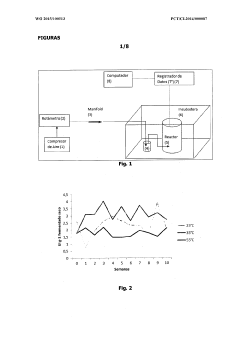
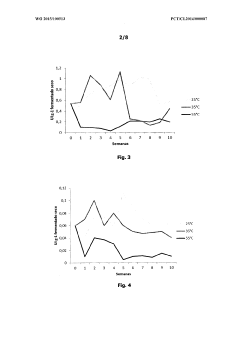
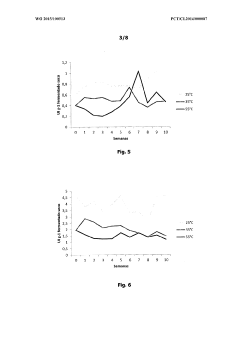
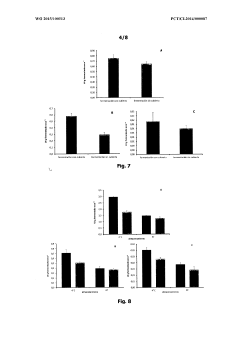
- A biofertilizer process involving solid-state fermentation, enzyme immobilization using allophan nanoparticles, and a second fermentation stage to produce and encapsulate enzymes like phosphatases, sulfastases, and glutaminases, which are then combined with organic substrates and beneficial microorganisms to create a controlled release of nutrients matching plant needs.
Environmental Impact Assessment
The environmental impact assessment of progressive developments in enzyme production for biofertilizers reveals both positive and negative implications for ecosystems and agricultural sustainability. On the positive side, enzyme-enhanced biofertilizers contribute to reduced chemical fertilizer usage, leading to decreased soil and water pollution. These biofertilizers improve nutrient availability and soil structure, promoting healthier plant growth and increased crop yields without the harmful side effects associated with synthetic fertilizers.
Furthermore, the production of enzymes for biofertilizers often involves environmentally friendly processes, such as fermentation, which have a lower carbon footprint compared to traditional chemical fertilizer manufacturing. This shift towards more sustainable production methods aligns with global efforts to mitigate climate change and reduce greenhouse gas emissions in the agricultural sector.
However, the environmental impact assessment also highlights potential concerns. The large-scale production of enzymes may require significant energy inputs and resources, potentially offsetting some of the environmental benefits. Additionally, the introduction of engineered enzymes into soil ecosystems raises questions about long-term effects on soil microbiota and biodiversity.
Water consumption in enzyme production processes is another factor to consider. While generally less water-intensive than chemical fertilizer production, enzyme manufacturing still requires substantial water resources, which could strain local water supplies in water-scarce regions.
The assessment also examines the potential for unintended consequences, such as the development of microbial resistance to certain enzymes or changes in soil pH levels due to prolonged use of enzyme-enhanced biofertilizers. These factors necessitate ongoing monitoring and research to ensure the long-term sustainability of this technology.
Land use changes associated with increased biofertilizer adoption are also evaluated. While reducing the need for extensive chemical fertilizer production facilities, enzyme production for biofertilizers may lead to the expansion of fermentation plants and associated infrastructure, potentially impacting local ecosystems and biodiversity.
In conclusion, the environmental impact assessment of progressive developments in enzyme production for biofertilizers indicates a generally positive trend towards more sustainable agricultural practices. However, it also underscores the importance of continued research, careful implementation, and regular monitoring to maximize benefits while minimizing potential environmental risks.
Regulatory Framework for Biofertilizers
The regulatory framework for biofertilizers plays a crucial role in ensuring the safety, efficacy, and sustainable use of these products in agriculture. As enzyme production for biofertilizers continues to advance, regulatory bodies worldwide are adapting their policies to keep pace with technological developments.
In many countries, biofertilizers are regulated under broader fertilizer or soil amendment laws. However, there is a growing trend towards developing specific regulations for biofertilizers due to their unique biological nature. These regulations typically cover aspects such as product registration, quality control, labeling requirements, and environmental impact assessments.
The European Union, for instance, has introduced the EU Fertilising Products Regulation (EU) 2019/1009, which came into effect in July 2022. This regulation includes provisions for biostimulants and organic fertilizers, encompassing many biofertilizer products. It sets standards for nutrient content, contaminants, and microbial safety, while also addressing labeling and traceability requirements.
In the United States, biofertilizers fall under the jurisdiction of individual states, with oversight from the Environmental Protection Agency (EPA) and the Department of Agriculture (USDA). The National Organic Program (NOP) provides guidelines for the use of biofertilizers in organic farming, while the Organic Materials Review Institute (OMRI) certifies products for organic use.
India, a major player in biofertilizer production and use, has established the Fertilizer Control Order (FCO) under the Essential Commodities Act. This order specifies quality standards, testing methods, and registration procedures for various types of biofertilizers, including those containing enzymes.
As enzyme production technologies advance, regulatory frameworks are evolving to address new challenges. These include assessing the environmental impact of genetically modified microorganisms used in enzyme production, ensuring the stability and shelf-life of enzyme-based biofertilizers, and developing standardized testing protocols for enzyme activity and efficacy.
Regulatory bodies are also focusing on harmonizing international standards to facilitate global trade in biofertilizers. The International Organization for Standardization (ISO) has established technical committees to develop standards for biofertilizers, including methods for quality assessment and performance evaluation.
Looking ahead, regulatory frameworks will need to continue adapting to address emerging technologies in enzyme production, such as synthetic biology and nanotechnology. Balancing innovation with safety and environmental protection will remain a key challenge for policymakers in this rapidly evolving field.