Proton Membrane vs PEMFC Efficiency: Output Comparison
MAR 10, 20269 MIN READ
Generate Your Research Report Instantly with AI Agent
PatSnap Eureka helps you evaluate technical feasibility & market potential.
PEMFC Technology Background and Efficiency Goals
Proton Exchange Membrane Fuel Cells (PEMFCs) represent a pivotal clean energy technology that has evolved significantly since their initial development in the 1960s for NASA's Gemini space program. Originally designed to provide reliable power in space applications, PEMFCs have undergone substantial technological advancement to become viable solutions for automotive, stationary power generation, and portable electronics applications. The technology operates on the principle of electrochemical conversion, where hydrogen and oxygen react through a proton-conducting membrane to generate electricity, water, and heat.
The historical development trajectory of PEMFC technology demonstrates remarkable progress in addressing fundamental challenges. Early systems suffered from limited durability, high costs, and performance degradation under varying operating conditions. Through decades of research and development, significant improvements have been achieved in membrane materials, catalyst formulations, and system integration approaches. The transition from perfluorosulfonic acid membranes to advanced composite materials has enhanced proton conductivity while reducing membrane thickness and associated resistance losses.
Contemporary PEMFC development focuses on achieving ambitious efficiency targets that align with commercial viability requirements. Current state-of-the-art systems demonstrate electrical efficiencies ranging from 50-60% under optimal operating conditions, with system-level efficiencies typically achieving 40-50% when accounting for auxiliary components and thermal management requirements. These performance metrics represent substantial improvements over earlier generations, yet significant opportunities remain for further enhancement.
The primary efficiency goals driving current research initiatives center on maximizing power density while minimizing parasitic losses throughout the system. Key performance targets include achieving electrical efficiencies exceeding 65% at rated power output, extending operational durability beyond 5,000 hours for automotive applications, and reducing cold-start times to under 30 seconds in sub-zero conditions. Additionally, cost reduction objectives aim to achieve system costs below $40 per kilowatt for high-volume production scenarios.
Emerging research directions emphasize the critical relationship between proton membrane properties and overall system efficiency. Advanced membrane materials incorporating nanostructured architectures, hybrid organic-inorganic compositions, and optimized proton transport pathways represent promising avenues for achieving next-generation performance targets. The integration of artificial intelligence and machine learning approaches for real-time system optimization further enhances the potential for maximizing efficiency across diverse operating conditions and application requirements.
The historical development trajectory of PEMFC technology demonstrates remarkable progress in addressing fundamental challenges. Early systems suffered from limited durability, high costs, and performance degradation under varying operating conditions. Through decades of research and development, significant improvements have been achieved in membrane materials, catalyst formulations, and system integration approaches. The transition from perfluorosulfonic acid membranes to advanced composite materials has enhanced proton conductivity while reducing membrane thickness and associated resistance losses.
Contemporary PEMFC development focuses on achieving ambitious efficiency targets that align with commercial viability requirements. Current state-of-the-art systems demonstrate electrical efficiencies ranging from 50-60% under optimal operating conditions, with system-level efficiencies typically achieving 40-50% when accounting for auxiliary components and thermal management requirements. These performance metrics represent substantial improvements over earlier generations, yet significant opportunities remain for further enhancement.
The primary efficiency goals driving current research initiatives center on maximizing power density while minimizing parasitic losses throughout the system. Key performance targets include achieving electrical efficiencies exceeding 65% at rated power output, extending operational durability beyond 5,000 hours for automotive applications, and reducing cold-start times to under 30 seconds in sub-zero conditions. Additionally, cost reduction objectives aim to achieve system costs below $40 per kilowatt for high-volume production scenarios.
Emerging research directions emphasize the critical relationship between proton membrane properties and overall system efficiency. Advanced membrane materials incorporating nanostructured architectures, hybrid organic-inorganic compositions, and optimized proton transport pathways represent promising avenues for achieving next-generation performance targets. The integration of artificial intelligence and machine learning approaches for real-time system optimization further enhances the potential for maximizing efficiency across diverse operating conditions and application requirements.
Market Demand for High-Efficiency Fuel Cell Systems
The global fuel cell market is experiencing unprecedented growth driven by the urgent need for clean energy solutions and decarbonization initiatives across multiple sectors. Transportation applications represent the largest demand segment, with automotive manufacturers increasingly adopting fuel cell technology for heavy-duty vehicles, buses, and long-haul trucking where battery limitations become apparent. The maritime and aviation industries are also emerging as significant demand drivers, seeking high-efficiency fuel cell systems to meet stringent emission regulations and sustainability targets.
Industrial applications constitute another major demand category, particularly in material handling equipment, backup power systems, and stationary power generation. Data centers and telecommunications infrastructure require reliable, high-efficiency fuel cell systems to ensure uninterrupted operations while reducing carbon footprints. The growing emphasis on grid stability and renewable energy integration has created substantial demand for fuel cell systems in energy storage and peak shaving applications.
Regional demand patterns reveal strong growth in Asia-Pacific markets, led by government policies promoting hydrogen economy development and substantial infrastructure investments. European markets demonstrate robust demand driven by aggressive decarbonization mandates and industrial transformation initiatives. North American demand is accelerating through federal incentives and state-level clean energy programs, particularly in California and northeastern states.
The efficiency comparison between proton exchange membrane fuel cells and advanced membrane technologies directly impacts market adoption rates. Higher efficiency translates to improved total cost of ownership, extended operational range, and enhanced competitiveness against alternative technologies. Commercial customers increasingly prioritize efficiency metrics when evaluating fuel cell solutions, as operational efficiency directly correlates with economic viability and environmental benefits.
Market demand is particularly strong for fuel cell systems achieving efficiency levels above industry benchmarks, as these systems offer superior performance in demanding applications. The growing sophistication of end-users has created market segmentation based on efficiency requirements, with premium applications willing to invest in higher-efficiency solutions that deliver long-term operational advantages and regulatory compliance benefits.
Industrial applications constitute another major demand category, particularly in material handling equipment, backup power systems, and stationary power generation. Data centers and telecommunications infrastructure require reliable, high-efficiency fuel cell systems to ensure uninterrupted operations while reducing carbon footprints. The growing emphasis on grid stability and renewable energy integration has created substantial demand for fuel cell systems in energy storage and peak shaving applications.
Regional demand patterns reveal strong growth in Asia-Pacific markets, led by government policies promoting hydrogen economy development and substantial infrastructure investments. European markets demonstrate robust demand driven by aggressive decarbonization mandates and industrial transformation initiatives. North American demand is accelerating through federal incentives and state-level clean energy programs, particularly in California and northeastern states.
The efficiency comparison between proton exchange membrane fuel cells and advanced membrane technologies directly impacts market adoption rates. Higher efficiency translates to improved total cost of ownership, extended operational range, and enhanced competitiveness against alternative technologies. Commercial customers increasingly prioritize efficiency metrics when evaluating fuel cell solutions, as operational efficiency directly correlates with economic viability and environmental benefits.
Market demand is particularly strong for fuel cell systems achieving efficiency levels above industry benchmarks, as these systems offer superior performance in demanding applications. The growing sophistication of end-users has created market segmentation based on efficiency requirements, with premium applications willing to invest in higher-efficiency solutions that deliver long-term operational advantages and regulatory compliance benefits.
Current PEMFC Performance Status and Technical Challenges
Current PEMFC technology demonstrates significant performance achievements while facing persistent technical barriers that limit widespread commercial deployment. State-of-the-art PEMFC systems achieve power densities ranging from 1.0 to 1.4 kW/L and specific power outputs of 1.5 to 2.0 kW/kg under optimal operating conditions. These systems typically operate at efficiencies between 50-60% in real-world applications, with laboratory demonstrations reaching up to 65% efficiency under controlled conditions.
The proton exchange membrane represents the critical component determining overall system performance, with current Nafion-based membranes exhibiting proton conductivities of 0.1-0.2 S/cm at 80°C and 100% relative humidity. However, membrane performance degrades significantly under low humidity conditions, dropping to 0.01-0.05 S/cm at 30% relative humidity, creating substantial efficiency losses in practical applications.
Temperature management remains a fundamental challenge, as PEMFC systems must balance optimal reaction kinetics with membrane stability. Current systems operate within narrow temperature windows of 60-80°C, limiting thermal efficiency and requiring complex cooling systems that reduce overall energy density. Higher temperature operation above 100°C could improve efficiency but causes rapid membrane degradation and reduced lifetime.
Water management presents another critical technical hurdle, requiring precise balance between membrane hydration and electrode flooding. Current systems employ complex humidification and water recovery systems that add weight, volume, and parasitic power losses of 10-15% of total system output. Inadequate water management leads to membrane dehydration or electrode flooding, both causing significant performance degradation.
Catalyst loading and utilization efficiency represent ongoing challenges, with current systems requiring 0.1-0.4 mg Pt/cm² to achieve acceptable performance levels. Platinum utilization rates remain below 30% in most commercial systems due to mass transport limitations and non-uniform catalyst distribution, contributing to high system costs and limited scalability.
Durability concerns significantly impact commercial viability, with current PEMFC systems demonstrating lifetimes of 5,000-8,000 hours under automotive conditions and 40,000-60,000 hours for stationary applications. Membrane degradation, catalyst dissolution, and carbon support corrosion limit long-term performance stability, requiring frequent maintenance and component replacement that increases operational costs.
System integration challenges include complex balance-of-plant components that reduce overall efficiency and increase system complexity. Air compression, hydrogen circulation, thermal management, and control systems consume 15-25% of gross power output, significantly impacting net system efficiency and economic competitiveness compared to conventional power generation technologies.
The proton exchange membrane represents the critical component determining overall system performance, with current Nafion-based membranes exhibiting proton conductivities of 0.1-0.2 S/cm at 80°C and 100% relative humidity. However, membrane performance degrades significantly under low humidity conditions, dropping to 0.01-0.05 S/cm at 30% relative humidity, creating substantial efficiency losses in practical applications.
Temperature management remains a fundamental challenge, as PEMFC systems must balance optimal reaction kinetics with membrane stability. Current systems operate within narrow temperature windows of 60-80°C, limiting thermal efficiency and requiring complex cooling systems that reduce overall energy density. Higher temperature operation above 100°C could improve efficiency but causes rapid membrane degradation and reduced lifetime.
Water management presents another critical technical hurdle, requiring precise balance between membrane hydration and electrode flooding. Current systems employ complex humidification and water recovery systems that add weight, volume, and parasitic power losses of 10-15% of total system output. Inadequate water management leads to membrane dehydration or electrode flooding, both causing significant performance degradation.
Catalyst loading and utilization efficiency represent ongoing challenges, with current systems requiring 0.1-0.4 mg Pt/cm² to achieve acceptable performance levels. Platinum utilization rates remain below 30% in most commercial systems due to mass transport limitations and non-uniform catalyst distribution, contributing to high system costs and limited scalability.
Durability concerns significantly impact commercial viability, with current PEMFC systems demonstrating lifetimes of 5,000-8,000 hours under automotive conditions and 40,000-60,000 hours for stationary applications. Membrane degradation, catalyst dissolution, and carbon support corrosion limit long-term performance stability, requiring frequent maintenance and component replacement that increases operational costs.
System integration challenges include complex balance-of-plant components that reduce overall efficiency and increase system complexity. Air compression, hydrogen circulation, thermal management, and control systems consume 15-25% of gross power output, significantly impacting net system efficiency and economic competitiveness compared to conventional power generation technologies.
Current Membrane Solutions for PEMFC Efficiency
01 Membrane electrode assembly optimization for improved PEMFC efficiency
Optimizing the membrane electrode assembly structure and composition can significantly enhance proton exchange membrane fuel cell efficiency. This includes improvements in catalyst layer design, gas diffusion layer properties, and membrane materials to reduce resistance and improve electrochemical reactions. Advanced manufacturing techniques and material selection contribute to better ion conductivity and reduced activation losses.- Membrane electrode assembly optimization for enhanced PEMFC efficiency: Improvements in membrane electrode assembly design and composition can significantly enhance proton exchange membrane fuel cell efficiency. This includes optimizing the catalyst layer structure, improving the interface between membrane and electrodes, and enhancing proton conductivity. Advanced materials and manufacturing techniques are employed to reduce resistance and improve overall cell performance.
- Water management systems for improved PEMFC performance: Effective water management is critical for maintaining optimal humidity levels within the fuel cell, which directly impacts efficiency. Technologies include advanced humidification systems, water recovery mechanisms, and moisture control strategies that prevent flooding or drying of the membrane. Proper water balance ensures consistent proton conductivity and prevents performance degradation.
- Thermal management and temperature control for PEMFC efficiency: Maintaining optimal operating temperature is essential for maximizing fuel cell efficiency and longevity. Innovations include advanced cooling systems, heat exchangers, and thermal regulation mechanisms that ensure uniform temperature distribution across the cell stack. Effective thermal management prevents hot spots, reduces degradation, and maintains consistent electrochemical reaction rates.
- Gas flow field design and distribution optimization: The design of gas flow channels and distribution patterns significantly affects reactant delivery and product removal, thereby influencing overall efficiency. Advanced flow field configurations, including serpentine, parallel, and interdigitated designs, optimize gas distribution, minimize pressure drops, and enhance mass transport. Computational modeling and experimental validation are used to develop optimal flow patterns.
- Stack configuration and system integration for enhanced efficiency: The overall fuel cell stack design and integration with balance-of-plant components play a crucial role in system efficiency. This includes optimizing cell stacking arrangements, electrical connections, manifold designs, and integration with auxiliary systems such as air compressors and hydrogen supply. System-level optimization ensures minimal parasitic losses and maximum net power output.
02 Water management systems to enhance PEMFC performance
Effective water management is critical for maintaining optimal humidity levels within the fuel cell, preventing membrane dehydration or flooding. Innovative designs for water transport, drainage channels, and humidification systems help maintain proper water balance, thereby improving overall efficiency and durability. These systems ensure stable operation across varying load conditions.Expand Specific Solutions03 Thermal management and heat dissipation strategies
Efficient thermal management systems are essential for maintaining optimal operating temperatures in fuel cells. Advanced cooling plate designs, heat exchanger configurations, and temperature control mechanisms prevent overheating and ensure uniform temperature distribution. Proper thermal management reduces degradation and maintains high efficiency during continuous operation.Expand Specific Solutions04 Gas flow field design and distribution optimization
Optimized flow field patterns and channel geometries improve reactant gas distribution across the active area, enhancing mass transport and reducing concentration losses. Innovative bipolar plate designs with serpentine, parallel, or interdigitated flow channels ensure uniform gas delivery and efficient removal of reaction products, leading to improved power density and efficiency.Expand Specific Solutions05 Stack configuration and system integration for efficiency enhancement
Advanced stack assembly methods and system integration approaches optimize the overall fuel cell system efficiency. This includes cell interconnection techniques, compression systems, and auxiliary component integration that minimize parasitic losses. Proper stack design ensures uniform current distribution and reduces internal resistance, contributing to higher system-level efficiency.Expand Specific Solutions
Major Players in PEMFC and Membrane Industry
The proton membrane and PEMFC efficiency comparison represents a mature technology sector experiencing significant growth driven by global hydrogen economy initiatives. The market demonstrates substantial expansion potential, particularly in automotive, stationary power, and industrial applications, with increasing investments from both public and private sectors. The competitive landscape features a diverse ecosystem spanning established automotive manufacturers like Toyota Motor Corp., Mercedes-Benz Group AG, and Ford Motor Co., alongside specialized fuel cell companies such as Celadyne Technologies and Versogen. Technology maturity varies significantly across players, with leading research institutions including Tsinghua University, Nanyang Technological University, and University of Delaware advancing fundamental membrane science, while government research organizations like CEA, CNRS, and CSIR drive innovation through substantial R&D investments. Industrial players such as Samsung SDI and Sunrise Power focus on commercial-scale manufacturing and system integration, indicating the technology's transition from laboratory research to market deployment, though efficiency optimization and cost reduction remain critical competitive differentiators.
Celadyne Technologies, Inc.
Technical Solution: Celadyne specializes in developing next-generation proton exchange membranes using proprietary polymer chemistry to achieve superior conductivity and mechanical properties. Their PEM technology demonstrates enhanced proton transport efficiency with conductivity values exceeding 200 mS/cm at operating temperatures, while maintaining chemical stability under harsh fuel cell conditions. The company's membrane technology focuses on reducing crossover losses and improving water management, leading to higher fuel cell efficiency and extended operational lifetime compared to conventional Nafion-based systems.
Strengths: Advanced polymer chemistry expertise, high proton conductivity, reduced crossover losses. Weaknesses: Limited commercial scale production, higher material costs than conventional membranes.
Toyota Motor Corp.
Technical Solution: Toyota has developed advanced PEMFC technology with their Mirai fuel cell vehicle, achieving system efficiency of approximately 60% through optimized proton exchange membrane design and stack configuration. Their technology focuses on reducing platinum catalyst loading while maintaining high power density output of 3.1 kW/L. The company has implemented innovative membrane electrode assembly (MEA) designs that enhance proton conductivity and reduce membrane resistance, resulting in improved overall fuel cell performance and durability under various operating conditions.
Strengths: Proven commercial application experience, high system integration capabilities, strong durability testing. Weaknesses: High manufacturing costs, limited hydrogen infrastructure dependency.
Core Membrane Innovations for Enhanced PEMFC Output
Polymer-zeolite nanocomposite membranes for proton-exchange-membrane fuel cells
PatentInactiveUS8324415B2
Innovation
- Development of polymer/zeolite nanocomposite membranes with sulfonic acid functionalized zeolite nanocrystals incorporated into a fluorinated sulfonic acid containing polymer matrix, enhancing proton conductivity and reducing methanol crossover, while maintaining mechanical stability and CO tolerance at elevated temperatures.


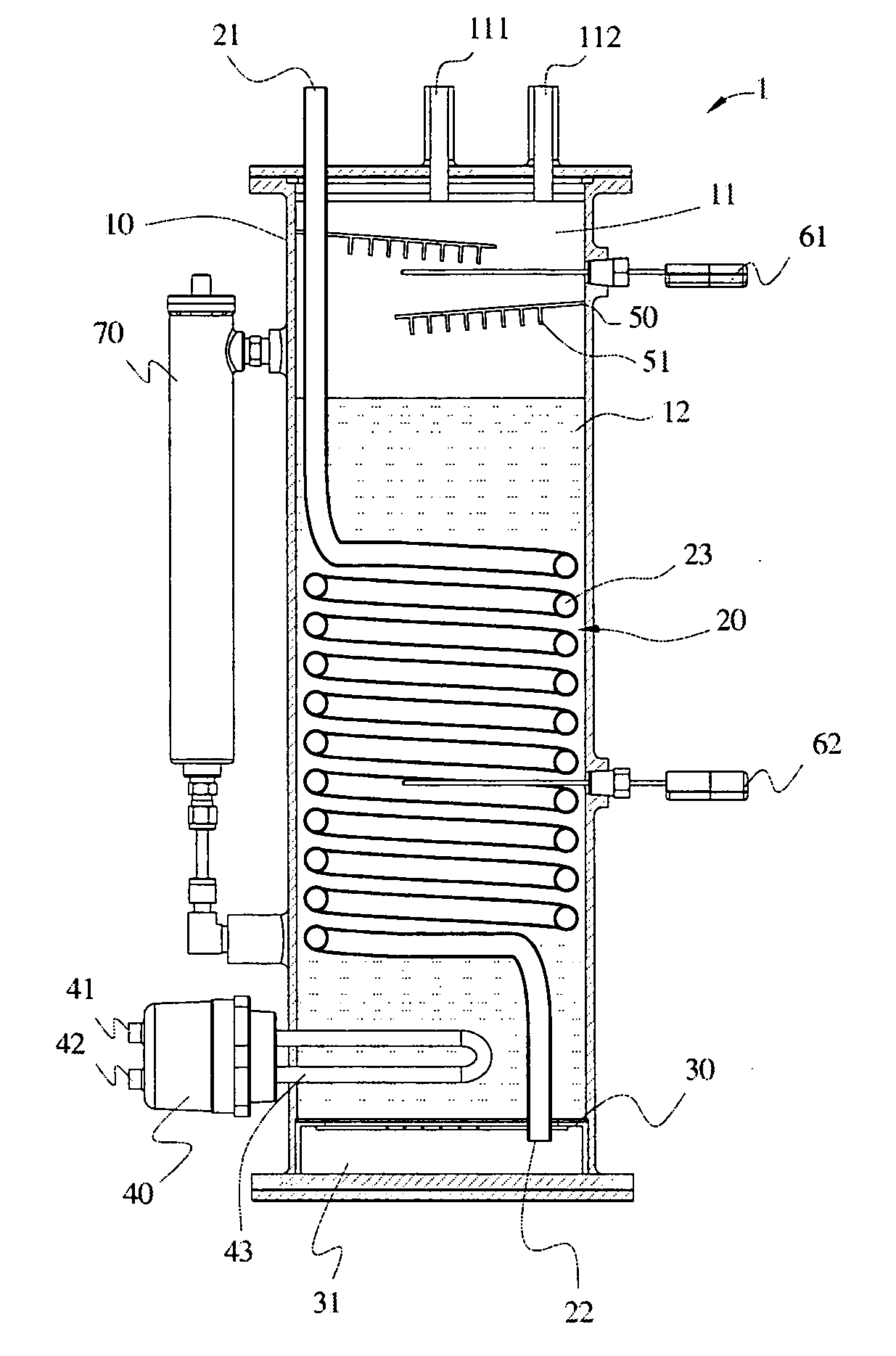
External gas humidifier for fuel cell
PatentActiveUS20070257384A1
Innovation
- An external gas humidifier with a barrel, preheating serpentine, gas disperser, and baffle plates is designed to utilize recycled high-temperature waste heat to efficiently heat and humidify reactant gases, increasing moisture content and preventing flooding by enhancing contact area and retention time with humidifying liquid.
Environmental Impact Assessment of PEMFC Systems
Proton Exchange Membrane Fuel Cell (PEMFC) systems present significant environmental advantages compared to conventional energy generation technologies, particularly in terms of operational emissions and lifecycle environmental impact. The primary environmental benefit stems from their zero-emission operation at the point of use, producing only water vapor and heat as byproducts during electricity generation. This characteristic makes PEMFC systems particularly attractive for urban applications where air quality concerns are paramount.
The lifecycle environmental assessment of PEMFC systems reveals a complex picture that extends beyond operational emissions. Manufacturing processes for key components, particularly the proton exchange membrane and platinum-based catalysts, involve energy-intensive procedures and rare material extraction. The environmental footprint of platinum mining and processing represents a significant consideration, as does the carbon intensity of the electricity used during manufacturing phases.
Water consumption and management constitute another critical environmental dimension. PEMFC systems require high-purity water for optimal performance, and the water production during operation must be effectively managed to prevent environmental contamination. The water balance varies significantly depending on operating conditions, with higher efficiency operations generally producing more recoverable water.
End-of-life considerations present both challenges and opportunities for environmental impact mitigation. The recovery and recycling of platinum catalysts offer substantial environmental benefits, potentially reducing the need for primary platinum extraction. However, membrane disposal and the handling of other system components require careful environmental management protocols.
Comparative studies indicate that PEMFC systems demonstrate superior environmental performance metrics when powered by renewable hydrogen sources. The environmental impact differential becomes more pronounced in applications requiring high power density and frequent cycling, where the efficiency advantages of optimized proton membranes translate directly into reduced resource consumption and lower overall environmental burden throughout the system lifecycle.
The lifecycle environmental assessment of PEMFC systems reveals a complex picture that extends beyond operational emissions. Manufacturing processes for key components, particularly the proton exchange membrane and platinum-based catalysts, involve energy-intensive procedures and rare material extraction. The environmental footprint of platinum mining and processing represents a significant consideration, as does the carbon intensity of the electricity used during manufacturing phases.
Water consumption and management constitute another critical environmental dimension. PEMFC systems require high-purity water for optimal performance, and the water production during operation must be effectively managed to prevent environmental contamination. The water balance varies significantly depending on operating conditions, with higher efficiency operations generally producing more recoverable water.
End-of-life considerations present both challenges and opportunities for environmental impact mitigation. The recovery and recycling of platinum catalysts offer substantial environmental benefits, potentially reducing the need for primary platinum extraction. However, membrane disposal and the handling of other system components require careful environmental management protocols.
Comparative studies indicate that PEMFC systems demonstrate superior environmental performance metrics when powered by renewable hydrogen sources. The environmental impact differential becomes more pronounced in applications requiring high power density and frequent cycling, where the efficiency advantages of optimized proton membranes translate directly into reduced resource consumption and lower overall environmental burden throughout the system lifecycle.
Cost-Performance Analysis of PEMFC Technologies
The cost-performance analysis of PEMFC technologies reveals significant variations across different membrane types and system configurations. Current market data indicates that Nafion-based PEMFCs, while offering superior proton conductivity and durability, command premium pricing at approximately $800-1200 per kW for automotive applications. Alternative membrane materials such as sulfonated polyether ether ketone (SPEEK) and polybenzimidazole (PBI) present cost advantages of 30-40% compared to Nafion, though with trade-offs in performance metrics.
Performance evaluation demonstrates that high-end PEMFC systems achieve power densities exceeding 4 kW/L with efficiency rates of 50-60% under optimal operating conditions. However, cost-effective solutions typically operate at lower power densities of 2-3 kW/L, resulting in larger system footprints but maintaining competitive efficiency levels around 45-55%. The balance between initial capital expenditure and operational efficiency becomes critical in determining total cost of ownership.
Manufacturing scale significantly impacts cost structures, with current production volumes of 10,000-50,000 units annually yielding costs of $100-200 per kW for stack components. Industry projections suggest that scaling to 500,000 units could reduce costs to $30-50 per kW, making PEMFC technology economically viable for broader market adoption. Membrane electrode assembly (MEA) costs represent 40-50% of total stack expenses, highlighting the importance of membrane technology optimization.
Operational cost analysis reveals that catalyst loading directly correlates with both performance and economic viability. Ultra-low platinum loading systems (0.1-0.2 mg/cm²) demonstrate acceptable performance degradation rates while reducing material costs by 60-70% compared to conventional loadings. System lifetime considerations show that premium membrane technologies justify higher initial investments through extended operational periods of 8,000-10,000 hours versus 4,000-6,000 hours for cost-optimized alternatives.
The economic landscape indicates that achieving cost parity with conventional technologies requires continued focus on membrane durability, catalyst efficiency, and manufacturing process optimization while maintaining performance standards essential for commercial applications.
Performance evaluation demonstrates that high-end PEMFC systems achieve power densities exceeding 4 kW/L with efficiency rates of 50-60% under optimal operating conditions. However, cost-effective solutions typically operate at lower power densities of 2-3 kW/L, resulting in larger system footprints but maintaining competitive efficiency levels around 45-55%. The balance between initial capital expenditure and operational efficiency becomes critical in determining total cost of ownership.
Manufacturing scale significantly impacts cost structures, with current production volumes of 10,000-50,000 units annually yielding costs of $100-200 per kW for stack components. Industry projections suggest that scaling to 500,000 units could reduce costs to $30-50 per kW, making PEMFC technology economically viable for broader market adoption. Membrane electrode assembly (MEA) costs represent 40-50% of total stack expenses, highlighting the importance of membrane technology optimization.
Operational cost analysis reveals that catalyst loading directly correlates with both performance and economic viability. Ultra-low platinum loading systems (0.1-0.2 mg/cm²) demonstrate acceptable performance degradation rates while reducing material costs by 60-70% compared to conventional loadings. System lifetime considerations show that premium membrane technologies justify higher initial investments through extended operational periods of 8,000-10,000 hours versus 4,000-6,000 hours for cost-optimized alternatives.
The economic landscape indicates that achieving cost parity with conventional technologies requires continued focus on membrane durability, catalyst efficiency, and manufacturing process optimization while maintaining performance standards essential for commercial applications.
Unlock deeper insights with PatSnap Eureka Quick Research — get a full tech report to explore trends and direct your research. Try now!
Generate Your Research Report Instantly with AI Agent
Supercharge your innovation with PatSnap Eureka AI Agent Platform!