
Pyroelectric Materials vs Thermoelectrics: Energy Conversion Efficiency
MAY 13, 20269 MIN READ
Generate Your Research Report Instantly with AI Agent
Patsnap Eureka helps you evaluate technical feasibility & market potential.
Pyroelectric vs Thermoelectric Energy Conversion Background
Energy conversion technologies have evolved significantly over the past century, driven by the increasing demand for sustainable and efficient power generation solutions. The quest for alternative energy sources has led researchers to explore various physical phenomena that can transform ambient energy into usable electrical power. Among these phenomena, pyroelectric and thermoelectric effects have emerged as promising candidates for energy harvesting applications, each offering unique advantages and facing distinct challenges.
The pyroelectric effect, first discovered in ancient Greece through observations of tourmaline crystals, involves the generation of electrical charge in response to temperature fluctuations. This phenomenon occurs in materials lacking a center of symmetry, where spontaneous polarization changes with temperature variations. The effect has found applications ranging from infrared sensors to energy harvesting devices, particularly in scenarios where temporal temperature changes are prevalent.
Thermoelectric energy conversion, based on the Seebeck effect discovered in 1821, enables direct conversion of temperature differences into electrical voltage. This technology has demonstrated remarkable versatility, functioning effectively in both steady-state and transient thermal conditions. Unlike pyroelectric systems that require temperature fluctuations, thermoelectric devices can operate continuously as long as a temperature gradient exists across the material.
The fundamental distinction between these two approaches lies in their operational mechanisms and energy conversion pathways. Pyroelectric materials respond to the rate of temperature change, making them particularly suitable for dynamic thermal environments. Thermoelectric materials, conversely, exploit spatial temperature gradients to generate power, offering advantages in applications with consistent heat sources or sinks.
Recent technological advances have intensified interest in comparing the energy conversion efficiency of these two approaches. The development of advanced materials, including nanostructured composites and engineered crystal structures, has significantly enhanced the performance capabilities of both technologies. This evolution has created new opportunities for optimizing energy harvesting systems across diverse applications, from wearable electronics to industrial waste heat recovery.
The convergence of materials science innovations and growing energy efficiency requirements has established a critical need to evaluate the relative merits of pyroelectric versus thermoelectric energy conversion. Understanding their comparative efficiency profiles, operational characteristics, and application-specific advantages has become essential for strategic technology selection and development planning in the renewable energy sector.
The pyroelectric effect, first discovered in ancient Greece through observations of tourmaline crystals, involves the generation of electrical charge in response to temperature fluctuations. This phenomenon occurs in materials lacking a center of symmetry, where spontaneous polarization changes with temperature variations. The effect has found applications ranging from infrared sensors to energy harvesting devices, particularly in scenarios where temporal temperature changes are prevalent.
Thermoelectric energy conversion, based on the Seebeck effect discovered in 1821, enables direct conversion of temperature differences into electrical voltage. This technology has demonstrated remarkable versatility, functioning effectively in both steady-state and transient thermal conditions. Unlike pyroelectric systems that require temperature fluctuations, thermoelectric devices can operate continuously as long as a temperature gradient exists across the material.
The fundamental distinction between these two approaches lies in their operational mechanisms and energy conversion pathways. Pyroelectric materials respond to the rate of temperature change, making them particularly suitable for dynamic thermal environments. Thermoelectric materials, conversely, exploit spatial temperature gradients to generate power, offering advantages in applications with consistent heat sources or sinks.
Recent technological advances have intensified interest in comparing the energy conversion efficiency of these two approaches. The development of advanced materials, including nanostructured composites and engineered crystal structures, has significantly enhanced the performance capabilities of both technologies. This evolution has created new opportunities for optimizing energy harvesting systems across diverse applications, from wearable electronics to industrial waste heat recovery.
The convergence of materials science innovations and growing energy efficiency requirements has established a critical need to evaluate the relative merits of pyroelectric versus thermoelectric energy conversion. Understanding their comparative efficiency profiles, operational characteristics, and application-specific advantages has become essential for strategic technology selection and development planning in the renewable energy sector.
Market Demand for Advanced Energy Harvesting Technologies
The global energy harvesting market is experiencing unprecedented growth driven by the proliferation of Internet of Things devices, wireless sensor networks, and autonomous systems requiring sustainable power solutions. Traditional battery-powered systems face limitations in remote applications, maintenance accessibility, and environmental sustainability, creating substantial demand for self-powered energy conversion technologies. This market shift has positioned both pyroelectric and thermoelectric materials as critical components in next-generation energy harvesting solutions.
Industrial automation represents a significant demand driver, where temperature fluctuations and waste heat are abundant energy sources. Manufacturing facilities generate substantial thermal gradients through industrial processes, creating opportunities for thermoelectric generators to convert waste heat into usable electrical power. Simultaneously, pyroelectric materials find applications in temperature monitoring systems and thermal event detection, where rapid temperature changes can be harvested for sensor operation.
The automotive sector demonstrates growing interest in energy harvesting technologies for powering distributed sensor networks in electric and autonomous vehicles. Thermoelectric materials show promise for recovering waste heat from exhaust systems and electronic components, while pyroelectric materials can harvest energy from temperature variations in cabin environments and engine compartments. This application domain requires materials with enhanced efficiency and durability under harsh operating conditions.
Consumer electronics and wearable devices constitute another expanding market segment demanding miniaturized energy harvesting solutions. Body heat differentials present opportunities for thermoelectric generators in smartwatches and fitness trackers, while pyroelectric materials can harvest energy from ambient temperature fluctuations. The market demands increasingly efficient materials capable of generating sufficient power for low-energy electronic components.
Smart building and infrastructure applications drive demand for maintenance-free sensor networks powered by ambient energy sources. HVAC systems, structural monitoring, and environmental sensing applications require reliable energy harvesting solutions that can operate continuously without battery replacement. Both pyroelectric and thermoelectric technologies compete in this space, with market preference determined by specific thermal conditions and power requirements.
The aerospace and defense sectors represent high-value market segments requiring robust energy harvesting solutions for remote sensing and communication systems. These applications demand materials with superior efficiency and reliability under extreme environmental conditions, driving research investments in advanced pyroelectric and thermoelectric materials with enhanced performance characteristics.
Industrial automation represents a significant demand driver, where temperature fluctuations and waste heat are abundant energy sources. Manufacturing facilities generate substantial thermal gradients through industrial processes, creating opportunities for thermoelectric generators to convert waste heat into usable electrical power. Simultaneously, pyroelectric materials find applications in temperature monitoring systems and thermal event detection, where rapid temperature changes can be harvested for sensor operation.
The automotive sector demonstrates growing interest in energy harvesting technologies for powering distributed sensor networks in electric and autonomous vehicles. Thermoelectric materials show promise for recovering waste heat from exhaust systems and electronic components, while pyroelectric materials can harvest energy from temperature variations in cabin environments and engine compartments. This application domain requires materials with enhanced efficiency and durability under harsh operating conditions.
Consumer electronics and wearable devices constitute another expanding market segment demanding miniaturized energy harvesting solutions. Body heat differentials present opportunities for thermoelectric generators in smartwatches and fitness trackers, while pyroelectric materials can harvest energy from ambient temperature fluctuations. The market demands increasingly efficient materials capable of generating sufficient power for low-energy electronic components.
Smart building and infrastructure applications drive demand for maintenance-free sensor networks powered by ambient energy sources. HVAC systems, structural monitoring, and environmental sensing applications require reliable energy harvesting solutions that can operate continuously without battery replacement. Both pyroelectric and thermoelectric technologies compete in this space, with market preference determined by specific thermal conditions and power requirements.
The aerospace and defense sectors represent high-value market segments requiring robust energy harvesting solutions for remote sensing and communication systems. These applications demand materials with superior efficiency and reliability under extreme environmental conditions, driving research investments in advanced pyroelectric and thermoelectric materials with enhanced performance characteristics.
Current Efficiency Limitations in Pyroelectric and Thermoelectric Materials
Pyroelectric materials face significant efficiency constraints primarily due to their inherently low energy conversion rates and narrow operational temperature ranges. The fundamental limitation stems from the relatively small pyroelectric coefficients of most materials, typically ranging from 10^-8 to 10^-4 C/m²K. This results in minimal charge generation per unit temperature change, severely restricting power output capabilities. Additionally, pyroelectric devices suffer from thermal hysteresis effects and require continuous temperature fluctuations rather than steady-state conditions, making them unsuitable for consistent energy harvesting applications.
Thermoelectric materials encounter the persistent challenge of achieving high dimensionless figure of merit (ZT) values, which remain below 3 for most commercially viable materials. The interdependence of electrical conductivity, thermal conductivity, and Seebeck coefficient creates an optimization paradox where improving one parameter often degrades others. Current state-of-the-art materials like bismuth telluride achieve ZT values around 1.2-1.5 at room temperature, translating to conversion efficiencies of merely 8-12% under practical operating conditions.
Both material categories struggle with temperature-dependent performance degradation. Pyroelectric materials experience reduced sensitivity at elevated temperatures due to approaching Curie points, while thermoelectric materials face increased phonon scattering and reduced carrier mobility. The thermal stability of these materials under prolonged operation remains a critical bottleneck, particularly for high-temperature applications where theoretical efficiencies should be maximized.
Manufacturing and material purity constraints further limit practical efficiency achievements. Pyroelectric ceramics require precise stoichiometry and grain structure control to maintain optimal polarization properties. Thermoelectric materials demand ultra-low thermal conductivity while preserving electrical properties, necessitating complex nanostructuring techniques that are difficult to scale economically.
Interface resistance and contact losses represent additional efficiency barriers in both technologies. Pyroelectric devices suffer from charge leakage and electrode degradation, while thermoelectric modules experience significant losses at hot and cold side interfaces. These parasitic effects can reduce overall system efficiency by 20-40% compared to theoretical material-level performance, highlighting the gap between laboratory achievements and real-world applications.
Thermoelectric materials encounter the persistent challenge of achieving high dimensionless figure of merit (ZT) values, which remain below 3 for most commercially viable materials. The interdependence of electrical conductivity, thermal conductivity, and Seebeck coefficient creates an optimization paradox where improving one parameter often degrades others. Current state-of-the-art materials like bismuth telluride achieve ZT values around 1.2-1.5 at room temperature, translating to conversion efficiencies of merely 8-12% under practical operating conditions.
Both material categories struggle with temperature-dependent performance degradation. Pyroelectric materials experience reduced sensitivity at elevated temperatures due to approaching Curie points, while thermoelectric materials face increased phonon scattering and reduced carrier mobility. The thermal stability of these materials under prolonged operation remains a critical bottleneck, particularly for high-temperature applications where theoretical efficiencies should be maximized.
Manufacturing and material purity constraints further limit practical efficiency achievements. Pyroelectric ceramics require precise stoichiometry and grain structure control to maintain optimal polarization properties. Thermoelectric materials demand ultra-low thermal conductivity while preserving electrical properties, necessitating complex nanostructuring techniques that are difficult to scale economically.
Interface resistance and contact losses represent additional efficiency barriers in both technologies. Pyroelectric devices suffer from charge leakage and electrode degradation, while thermoelectric modules experience significant losses at hot and cold side interfaces. These parasitic effects can reduce overall system efficiency by 20-40% compared to theoretical material-level performance, highlighting the gap between laboratory achievements and real-world applications.
Existing Energy Conversion Efficiency Solutions
01 Pyroelectric material composition and structure optimization
Development of advanced pyroelectric materials with enhanced crystalline structures and optimized compositions to improve temperature-to-electricity conversion efficiency. These materials focus on achieving higher pyroelectric coefficients through specific crystal orientations, doping strategies, and nanostructuring techniques that maximize the polarization change with temperature variations.- Pyroelectric material composition and structure optimization: Development of advanced pyroelectric materials with enhanced crystalline structures and optimized compositions to improve temperature-to-electricity conversion efficiency. These materials focus on achieving higher pyroelectric coefficients through specific crystal orientations, doping strategies, and material processing techniques that maximize the polarization change with temperature variations.
- Thermoelectric device architecture and design: Innovative device architectures and structural designs for thermoelectric systems that enhance energy conversion efficiency through optimized heat flow management, improved electrical connectivity, and reduced thermal losses. These designs incorporate advanced geometries, multi-stage configurations, and integrated heat exchangers to maximize the temperature gradient across thermoelectric elements.
- Hybrid pyroelectric-thermoelectric energy harvesting systems: Combined energy harvesting systems that integrate both pyroelectric and thermoelectric mechanisms to capture energy from multiple thermal sources simultaneously. These hybrid approaches leverage the complementary characteristics of both technologies to achieve higher overall energy conversion efficiency and broader operational temperature ranges.
- Advanced thermoelectric material development: Research and development of novel thermoelectric materials with improved figure of merit through enhanced electrical conductivity, reduced thermal conductivity, and optimized Seebeck coefficient. These materials include nanostructured compounds, quantum dot systems, and engineered alloys designed to maximize thermoelectric performance across various temperature ranges.
- Energy conversion efficiency optimization techniques: Methods and techniques for optimizing the overall energy conversion efficiency of pyroelectric and thermoelectric systems through advanced control algorithms, impedance matching, power management circuits, and thermal interface optimization. These approaches focus on maximizing power output while minimizing system losses and improving long-term stability.
02 Thermoelectric material design and fabrication methods
Advanced thermoelectric materials engineered for superior energy conversion performance through innovative synthesis methods and material engineering. These approaches include the development of nanostructured materials, quantum dot systems, and composite structures that enhance the thermoelectric figure of merit by optimizing electrical conductivity while minimizing thermal conductivity.Expand Specific Solutions03 Device architecture and system integration
Comprehensive device designs that integrate pyroelectric and thermoelectric materials into functional energy harvesting systems. These architectures focus on optimizing heat transfer mechanisms, electrical connections, and thermal management to maximize overall system efficiency and power output in practical applications.Expand Specific Solutions04 Hybrid energy conversion systems
Innovative approaches combining pyroelectric and thermoelectric effects in unified systems to achieve enhanced energy conversion efficiency. These hybrid systems leverage the complementary characteristics of both phenomena to capture energy from various thermal sources and temperature gradients simultaneously.Expand Specific Solutions05 Performance enhancement and optimization techniques
Advanced methodologies for improving energy conversion efficiency through surface treatments, interface engineering, and operational parameter optimization. These techniques include impedance matching, thermal cycling optimization, and the development of specialized coatings or treatments that enhance the fundamental energy conversion processes.Expand Specific Solutions
Key Players in Pyroelectric and Thermoelectric Industries
The pyroelectric materials versus thermoelectrics energy conversion efficiency landscape represents an emerging technology sector in early development stages with significant growth potential. The market remains relatively nascent, driven by increasing demand for sustainable energy harvesting solutions across automotive, electronics, and industrial applications. Technology maturity varies considerably across key players, with established corporations like Intel Corp., Toyota Motor Corp., and Corning Inc. leveraging advanced manufacturing capabilities alongside specialized research entities. Academic institutions including Northwestern University, California Institute of Technology, and Xi'an Jiaotong University are pioneering fundamental research breakthroughs. Government research organizations such as Canada Department of Natural Resources and Commissariat à l'énergie atomique contribute substantial R&D investments. Companies like Symetrix Corp. and IQE Plc focus on specialized semiconductor applications, while materials specialists including Shanghai Institute of Ceramics advance ceramic-based solutions, creating a diverse competitive ecosystem with varying technological approaches and commercialization timelines.
Northwestern University
Technical Solution: Northwestern University has developed breakthrough thermoelectric materials using nanostructured skutterudites and half-Heusler alloys, achieving ZT values exceeding 2.0 at high temperatures. Their research focuses on optimizing the electronic and thermal transport properties through atomic-scale engineering and defect control. The team has also investigated pyroelectric energy harvesting using barium titanate-based ceramics and polymer composites, demonstrating energy conversion efficiencies of 4-7% for thermal cycling applications. Their comparative analysis shows thermoelectric materials provide superior performance for steady-state temperature gradients, while pyroelectric materials excel in dynamic thermal environments.
Strengths: World-class materials research capabilities and comprehensive theoretical understanding. Weaknesses: Technology transfer and commercialization challenges, limited industrial partnerships.
California Institute of Technology
Technical Solution: Caltech researchers have pioneered nanostructured thermoelectric materials achieving record-high ZT values of 2.6 using lead telluride with embedded nanoparticles. Their approach combines band structure engineering with phonon scattering optimization to maximize the power factor while minimizing thermal conductivity. The research team has also developed novel pyroelectric materials based on ferroelectric polymers and ceramic composites, achieving energy conversion efficiencies of 8-12% for temperature-driven applications. Their comparative studies demonstrate that thermoelectric materials generally outperform pyroelectric materials for continuous energy harvesting applications.
Strengths: Cutting-edge research capabilities and fundamental materials science expertise. Weaknesses: Technology primarily at research stage, limited commercial manufacturing experience.
Core Material Innovations for Enhanced Energy Conversion
Thermoelectric and Pyroelectric Energy Conversion Devices
PatentInactiveUS20080295879A1
Innovation
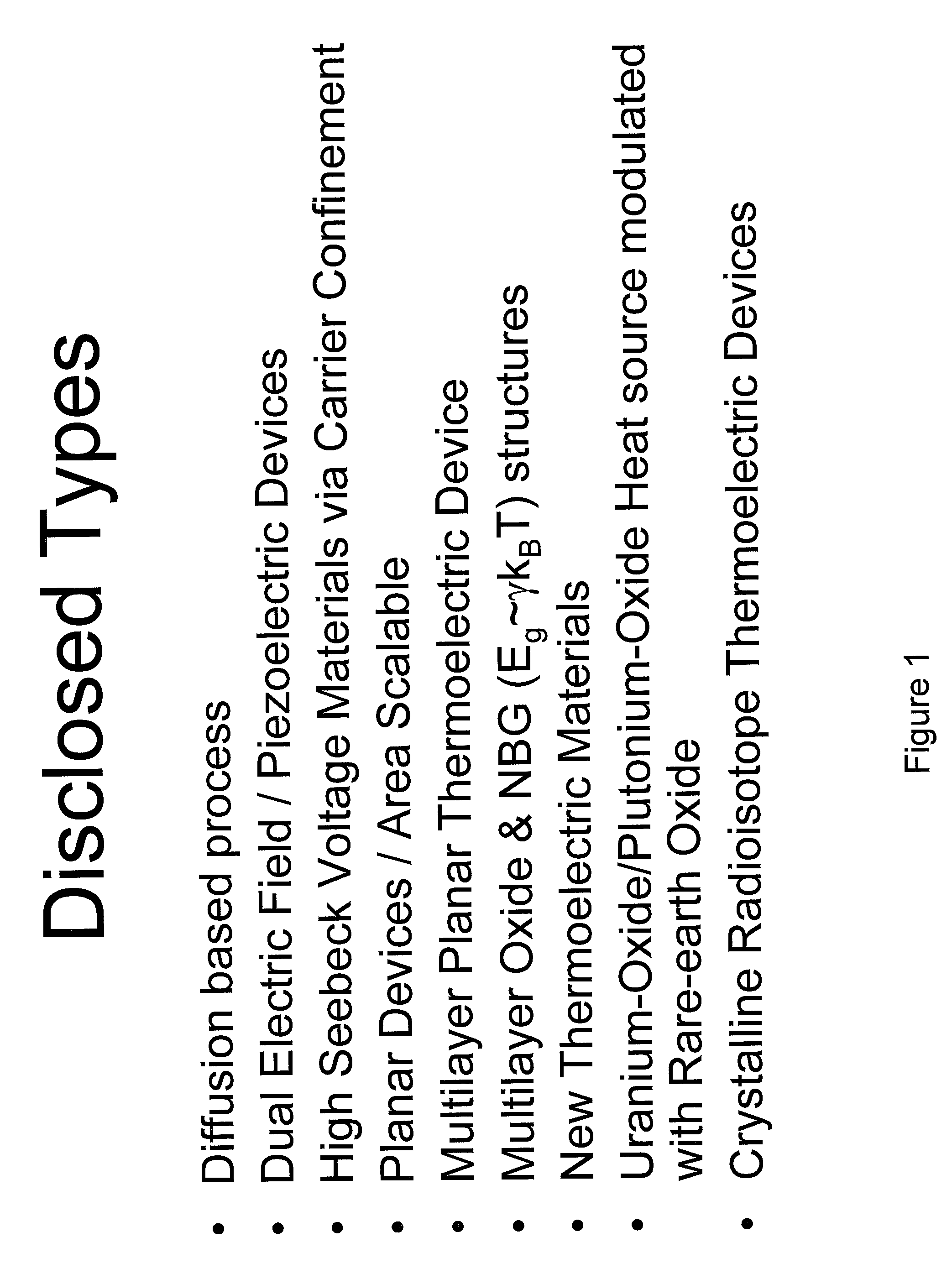
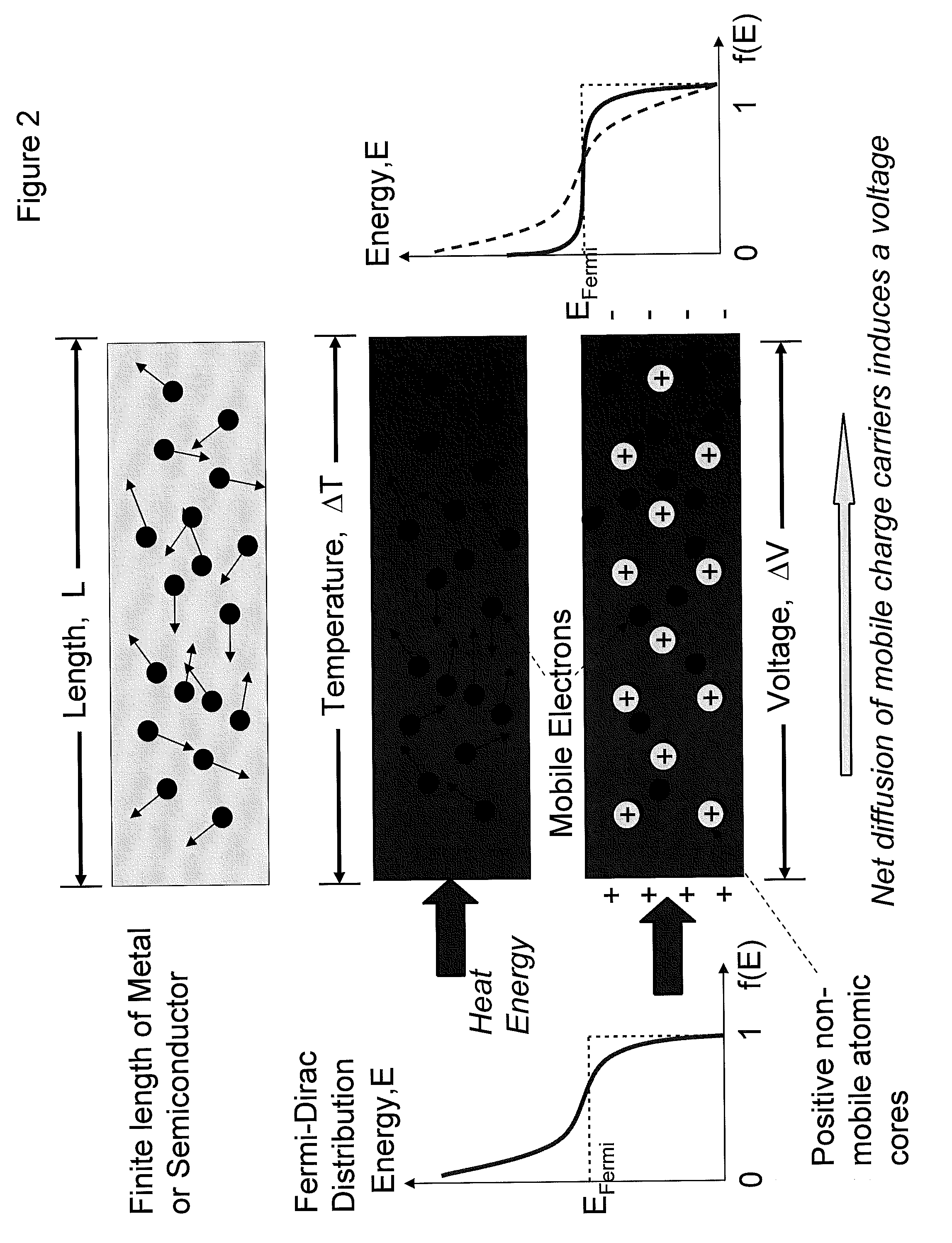
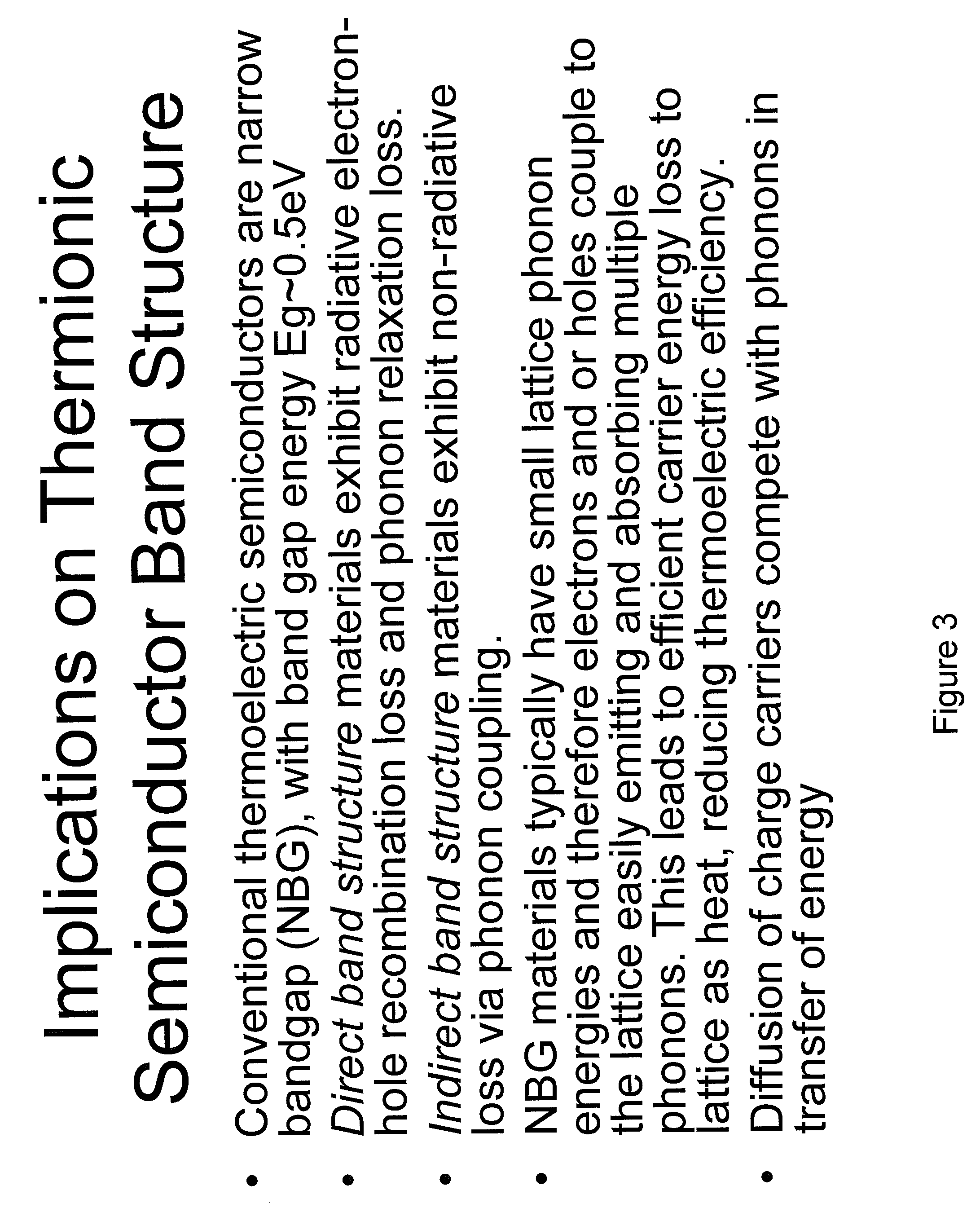
- The use of high-temperature thermoelectric materials and scalable device architectures, specifically germanium-rare-earth-metal compounds and silicon-rare-earth-metal compounds to form band gap engineered electronic junctions for efficient thermoelectric conversion, along with the integration of pyroelectric and ferroelectric effects to enhance energy conversion.

Environmental Impact Assessment of Energy Materials
The environmental implications of pyroelectric and thermoelectric materials present distinct challenges and opportunities across their respective lifecycles. Both material categories require careful assessment of their ecological footprint, from raw material extraction through manufacturing processes to end-of-life disposal considerations.
Pyroelectric materials, predominantly lead-based ceramics such as lead zirconate titanate (PZT), pose significant environmental concerns due to their toxic heavy metal content. Lead extraction and processing contribute to soil and water contamination, while manufacturing processes often involve high-temperature sintering that generates substantial carbon emissions. The disposal of lead-containing pyroelectric devices requires specialized hazardous waste management protocols to prevent environmental contamination.
Thermoelectric materials present a more complex environmental profile depending on their composition. Traditional bismuth telluride-based materials involve rare earth elements with environmentally intensive mining processes. However, emerging organic thermoelectric materials and abundant element-based compounds offer more sustainable alternatives with reduced environmental impact during extraction and processing phases.
Manufacturing energy requirements differ significantly between these technologies. Pyroelectric device fabrication typically demands lower processing temperatures and simpler manufacturing steps, resulting in reduced energy consumption per unit. Conversely, thermoelectric module production often requires precise doping processes and complex assembly procedures that increase manufacturing energy intensity.
The operational environmental impact varies considerably based on application efficiency. Thermoelectric systems, despite lower conversion efficiencies, can operate continuously under steady temperature gradients, potentially offsetting their higher manufacturing impact through extended service life. Pyroelectric systems, while requiring temperature fluctuations, demonstrate superior power density in specific applications, reducing material requirements per unit energy output.
End-of-life considerations favor thermoelectric materials, particularly those based on abundant elements, which offer better recyclability prospects. Advanced thermoelectric materials increasingly incorporate design-for-recycling principles, enabling material recovery and reuse. Pyroelectric materials face greater disposal challenges due to lead content restrictions and limited recycling infrastructure.
Lifecycle assessment studies indicate that material selection significantly influences overall environmental performance, with emerging sustainable alternatives showing promise for reducing the ecological footprint of both energy conversion technologies.
Pyroelectric materials, predominantly lead-based ceramics such as lead zirconate titanate (PZT), pose significant environmental concerns due to their toxic heavy metal content. Lead extraction and processing contribute to soil and water contamination, while manufacturing processes often involve high-temperature sintering that generates substantial carbon emissions. The disposal of lead-containing pyroelectric devices requires specialized hazardous waste management protocols to prevent environmental contamination.
Thermoelectric materials present a more complex environmental profile depending on their composition. Traditional bismuth telluride-based materials involve rare earth elements with environmentally intensive mining processes. However, emerging organic thermoelectric materials and abundant element-based compounds offer more sustainable alternatives with reduced environmental impact during extraction and processing phases.
Manufacturing energy requirements differ significantly between these technologies. Pyroelectric device fabrication typically demands lower processing temperatures and simpler manufacturing steps, resulting in reduced energy consumption per unit. Conversely, thermoelectric module production often requires precise doping processes and complex assembly procedures that increase manufacturing energy intensity.
The operational environmental impact varies considerably based on application efficiency. Thermoelectric systems, despite lower conversion efficiencies, can operate continuously under steady temperature gradients, potentially offsetting their higher manufacturing impact through extended service life. Pyroelectric systems, while requiring temperature fluctuations, demonstrate superior power density in specific applications, reducing material requirements per unit energy output.
End-of-life considerations favor thermoelectric materials, particularly those based on abundant elements, which offer better recyclability prospects. Advanced thermoelectric materials increasingly incorporate design-for-recycling principles, enabling material recovery and reuse. Pyroelectric materials face greater disposal challenges due to lead content restrictions and limited recycling infrastructure.
Lifecycle assessment studies indicate that material selection significantly influences overall environmental performance, with emerging sustainable alternatives showing promise for reducing the ecological footprint of both energy conversion technologies.
Cost-Performance Trade-offs in Energy Conversion Technologies
The economic viability of pyroelectric and thermoelectric energy conversion technologies presents distinct cost-performance profiles that significantly influence their commercial adoption and market penetration. Pyroelectric materials typically demonstrate lower manufacturing costs due to their simpler device architectures and established ceramic processing techniques, with material costs ranging from $10-50 per kilogram for common compositions like lead zirconate titanate (PZT) and barium titanate. However, their energy conversion efficiency remains relatively modest, typically achieving 1-3% under optimal temperature cycling conditions.
Thermoelectric materials exhibit a more complex cost structure, with high-performance compounds such as bismuth telluride, lead telluride, and skutterudites commanding premium prices of $100-500 per kilogram. Advanced nanostructured thermoelectric materials can exceed $1000 per kilogram due to sophisticated synthesis requirements and rare element content. Despite higher material costs, thermoelectric devices offer superior continuous operation capabilities and efficiency rates of 5-15% for commercial modules, with laboratory demonstrations reaching 20-25%.
The manufacturing complexity further differentiates these technologies economically. Pyroelectric devices require relatively straightforward fabrication processes, including powder processing, sintering, and electrode deposition, resulting in lower capital equipment investments. Thermoelectric module production demands precise segmentation, metallization, and assembly processes, increasing manufacturing costs by 200-400% compared to pyroelectric counterparts.
Performance degradation patterns also impact long-term cost effectiveness. Pyroelectric materials generally exhibit excellent stability under thermal cycling, maintaining performance over 10^6 cycles with minimal degradation. Thermoelectric devices face challenges from thermal stress, sublimation, and contact resistance evolution, potentially requiring replacement every 5-10 years in demanding applications.
The cost-performance optimization reveals application-specific advantages. Pyroelectric systems excel in low-power, intermittent energy harvesting scenarios where initial cost minimization outweighs efficiency considerations. Thermoelectric technologies justify higher investments in continuous operation environments where sustained power generation and higher efficiency translate to superior lifetime energy yields and economic returns.
Thermoelectric materials exhibit a more complex cost structure, with high-performance compounds such as bismuth telluride, lead telluride, and skutterudites commanding premium prices of $100-500 per kilogram. Advanced nanostructured thermoelectric materials can exceed $1000 per kilogram due to sophisticated synthesis requirements and rare element content. Despite higher material costs, thermoelectric devices offer superior continuous operation capabilities and efficiency rates of 5-15% for commercial modules, with laboratory demonstrations reaching 20-25%.
The manufacturing complexity further differentiates these technologies economically. Pyroelectric devices require relatively straightforward fabrication processes, including powder processing, sintering, and electrode deposition, resulting in lower capital equipment investments. Thermoelectric module production demands precise segmentation, metallization, and assembly processes, increasing manufacturing costs by 200-400% compared to pyroelectric counterparts.
Performance degradation patterns also impact long-term cost effectiveness. Pyroelectric materials generally exhibit excellent stability under thermal cycling, maintaining performance over 10^6 cycles with minimal degradation. Thermoelectric devices face challenges from thermal stress, sublimation, and contact resistance evolution, potentially requiring replacement every 5-10 years in demanding applications.
The cost-performance optimization reveals application-specific advantages. Pyroelectric systems excel in low-power, intermittent energy harvesting scenarios where initial cost minimization outweighs efficiency considerations. Thermoelectric technologies justify higher investments in continuous operation environments where sustained power generation and higher efficiency translate to superior lifetime energy yields and economic returns.
Unlock deeper insights with Patsnap Eureka Quick Research — get a full tech report to explore trends and direct your research. Try now!
Generate Your Research Report Instantly with AI Agent
Supercharge your innovation with Patsnap Eureka AI Agent Platform!