Quantify Deformation Capacity of Electroactive Polymers Under Strain
APR 30, 20269 MIN READ
Generate Your Research Report Instantly with AI Agent
PatSnap Eureka helps you evaluate technical feasibility & market potential.
Electroactive Polymer Deformation Background and Objectives
Electroactive polymers represent a revolutionary class of smart materials that undergo mechanical deformation when subjected to electrical stimulation. These materials, often referred to as "artificial muscles," have garnered significant attention due to their ability to convert electrical energy directly into mechanical work. The fundamental principle underlying EAPs involves the interaction between applied electric fields and the polymer's molecular structure, resulting in dimensional changes that can be precisely controlled and reversed.
The development of EAPs traces back to the 1880s when Wilhelm Röntgen first observed electrostrictive effects in rubber materials. However, substantial progress occurred in the latter half of the 20th century with the discovery of piezoelectric polymers and ionic polymer-metal composites. The field experienced accelerated growth in the 1990s with breakthroughs in dielectric elastomers and conducting polymers, establishing EAPs as viable candidates for actuator applications.
Current technological evolution in EAPs focuses on two primary categories: ionic EAPs, which operate through ion migration and require low voltages, and electronic EAPs, which function via electrostatic forces and typically demand higher voltages. Each category presents distinct advantages and limitations in terms of response speed, force generation, and operational requirements.
The quantification of deformation capacity under strain represents a critical challenge in EAP development. Traditional characterization methods often fail to capture the complex nonlinear behavior exhibited by these materials under varying electrical and mechanical loading conditions. The strain-dependent response of EAPs involves intricate coupling between electrical, mechanical, and thermal phenomena, making accurate measurement and prediction extremely challenging.
The primary objective of quantifying EAP deformation capacity is to establish reliable predictive models that can guide material design and application development. This involves developing standardized testing protocols, advanced measurement techniques, and comprehensive mathematical frameworks that account for the multiphysics nature of EAP behavior. Such quantification is essential for optimizing material performance, ensuring reliability in practical applications, and accelerating the transition from laboratory research to commercial implementation.
Understanding deformation capacity under strain is particularly crucial for applications requiring precise positioning, high-frequency operation, or long-term durability. The ability to predict and control EAP response under various loading conditions directly impacts their viability in robotics, biomedical devices, and adaptive structures where performance consistency is paramount.
The development of EAPs traces back to the 1880s when Wilhelm Röntgen first observed electrostrictive effects in rubber materials. However, substantial progress occurred in the latter half of the 20th century with the discovery of piezoelectric polymers and ionic polymer-metal composites. The field experienced accelerated growth in the 1990s with breakthroughs in dielectric elastomers and conducting polymers, establishing EAPs as viable candidates for actuator applications.
Current technological evolution in EAPs focuses on two primary categories: ionic EAPs, which operate through ion migration and require low voltages, and electronic EAPs, which function via electrostatic forces and typically demand higher voltages. Each category presents distinct advantages and limitations in terms of response speed, force generation, and operational requirements.
The quantification of deformation capacity under strain represents a critical challenge in EAP development. Traditional characterization methods often fail to capture the complex nonlinear behavior exhibited by these materials under varying electrical and mechanical loading conditions. The strain-dependent response of EAPs involves intricate coupling between electrical, mechanical, and thermal phenomena, making accurate measurement and prediction extremely challenging.
The primary objective of quantifying EAP deformation capacity is to establish reliable predictive models that can guide material design and application development. This involves developing standardized testing protocols, advanced measurement techniques, and comprehensive mathematical frameworks that account for the multiphysics nature of EAP behavior. Such quantification is essential for optimizing material performance, ensuring reliability in practical applications, and accelerating the transition from laboratory research to commercial implementation.
Understanding deformation capacity under strain is particularly crucial for applications requiring precise positioning, high-frequency operation, or long-term durability. The ability to predict and control EAP response under various loading conditions directly impacts their viability in robotics, biomedical devices, and adaptive structures where performance consistency is paramount.
Market Demand for Quantified EAP Strain Applications
The market demand for quantified electroactive polymer (EAP) strain applications is experiencing significant growth across multiple industrial sectors, driven by the increasing need for precise actuation and sensing capabilities in advanced engineering systems. This demand stems from the unique properties of EAPs that enable large deformations under relatively low electrical stimuli, making them attractive alternatives to traditional actuators and sensors.
The robotics industry represents one of the most prominent market segments driving demand for quantified EAP strain applications. Soft robotics applications require actuators that can mimic biological muscle behavior, where precise control over deformation capacity is essential for achieving desired motion profiles. The ability to quantify and predict EAP strain responses enables engineers to design more sophisticated robotic systems with improved dexterity and adaptability.
Biomedical device manufacturing constitutes another critical market segment with substantial demand for quantified EAP strain technologies. Medical devices such as artificial muscles, drug delivery systems, and minimally invasive surgical instruments require precise control over mechanical deformation. The quantification of EAP strain capacity allows for better prediction of device performance and ensures compliance with stringent medical safety standards.
The aerospace and automotive industries are increasingly adopting EAP-based solutions for morphing structures and adaptive components. These applications demand rigorous quantification of deformation capacity to ensure structural integrity and performance reliability under varying operational conditions. The ability to precisely predict strain behavior enables engineers to optimize component designs and reduce system weight while maintaining performance standards.
Consumer electronics manufacturers are exploring EAP applications in haptic feedback systems, flexible displays, and wearable devices. The miniaturization trends in electronics require actuators with well-characterized strain properties to ensure consistent user experiences and device reliability. Market demand in this sector is particularly focused on EAPs with predictable and repeatable deformation characteristics.
The industrial automation sector presents growing opportunities for quantified EAP strain applications, particularly in precision manufacturing and quality control systems. These applications require actuators with well-defined strain-response relationships to achieve the accuracy and repeatability demanded by modern manufacturing processes.
Market growth is further accelerated by the increasing emphasis on energy efficiency and sustainability in engineering applications. EAPs offer advantages over traditional electromagnetic actuators in terms of power consumption and noise generation, making them attractive for applications where these factors are critical design considerations.
The robotics industry represents one of the most prominent market segments driving demand for quantified EAP strain applications. Soft robotics applications require actuators that can mimic biological muscle behavior, where precise control over deformation capacity is essential for achieving desired motion profiles. The ability to quantify and predict EAP strain responses enables engineers to design more sophisticated robotic systems with improved dexterity and adaptability.
Biomedical device manufacturing constitutes another critical market segment with substantial demand for quantified EAP strain technologies. Medical devices such as artificial muscles, drug delivery systems, and minimally invasive surgical instruments require precise control over mechanical deformation. The quantification of EAP strain capacity allows for better prediction of device performance and ensures compliance with stringent medical safety standards.
The aerospace and automotive industries are increasingly adopting EAP-based solutions for morphing structures and adaptive components. These applications demand rigorous quantification of deformation capacity to ensure structural integrity and performance reliability under varying operational conditions. The ability to precisely predict strain behavior enables engineers to optimize component designs and reduce system weight while maintaining performance standards.
Consumer electronics manufacturers are exploring EAP applications in haptic feedback systems, flexible displays, and wearable devices. The miniaturization trends in electronics require actuators with well-characterized strain properties to ensure consistent user experiences and device reliability. Market demand in this sector is particularly focused on EAPs with predictable and repeatable deformation characteristics.
The industrial automation sector presents growing opportunities for quantified EAP strain applications, particularly in precision manufacturing and quality control systems. These applications require actuators with well-defined strain-response relationships to achieve the accuracy and repeatability demanded by modern manufacturing processes.
Market growth is further accelerated by the increasing emphasis on energy efficiency and sustainability in engineering applications. EAPs offer advantages over traditional electromagnetic actuators in terms of power consumption and noise generation, making them attractive for applications where these factors are critical design considerations.
Current EAP Deformation Measurement Challenges
Accurate quantification of electroactive polymer deformation capacity faces significant measurement challenges that limit both research advancement and commercial applications. Traditional mechanical testing methods, originally designed for conventional materials, often prove inadequate for capturing the unique electromechanical coupling behaviors exhibited by EAPs under electrical stimulation.
One primary challenge lies in the simultaneous measurement of electrical and mechanical parameters during active deformation. Conventional strain measurement techniques, such as mechanical extensometers or clip-on gauges, can interfere with the electric field distribution across the polymer sample, leading to measurement artifacts and reduced accuracy. The conductive nature of many measurement devices creates electromagnetic interference that affects both the applied electrical stimulus and the resulting mechanical response.
The dynamic nature of EAP deformation presents another significant obstacle. Many electroactive polymers exhibit time-dependent responses, including creep, relaxation, and hysteresis effects that vary with frequency, temperature, and humidity conditions. Standard quasi-static testing protocols fail to capture these dynamic behaviors adequately, while high-frequency testing introduces additional complexities related to signal noise and measurement synchronization.
Environmental sensitivity compounds measurement difficulties considerably. EAP performance is highly dependent on temperature, humidity, and atmospheric conditions, requiring controlled testing environments that may not reflect real-world operating conditions. Maintaining stable environmental parameters while conducting precise deformation measurements demands sophisticated experimental setups that are often cost-prohibitive for routine characterization.
Scale-dependent measurement challenges emerge when transitioning from laboratory samples to practical device geometries. Microscale deformations in thin-film EAPs require different measurement approaches compared to bulk polymer actuators, yet standardized protocols for multi-scale characterization remain underdeveloped. The heterogeneous nature of many EAP materials further complicates measurements, as local deformation variations may not be captured by global measurement techniques.
Calibration and standardization issues persist across the field, with different research groups employing varying measurement protocols that limit data comparability. The absence of universally accepted testing standards for EAP deformation capacity quantification hinders technology transfer and commercial development efforts.
One primary challenge lies in the simultaneous measurement of electrical and mechanical parameters during active deformation. Conventional strain measurement techniques, such as mechanical extensometers or clip-on gauges, can interfere with the electric field distribution across the polymer sample, leading to measurement artifacts and reduced accuracy. The conductive nature of many measurement devices creates electromagnetic interference that affects both the applied electrical stimulus and the resulting mechanical response.
The dynamic nature of EAP deformation presents another significant obstacle. Many electroactive polymers exhibit time-dependent responses, including creep, relaxation, and hysteresis effects that vary with frequency, temperature, and humidity conditions. Standard quasi-static testing protocols fail to capture these dynamic behaviors adequately, while high-frequency testing introduces additional complexities related to signal noise and measurement synchronization.
Environmental sensitivity compounds measurement difficulties considerably. EAP performance is highly dependent on temperature, humidity, and atmospheric conditions, requiring controlled testing environments that may not reflect real-world operating conditions. Maintaining stable environmental parameters while conducting precise deformation measurements demands sophisticated experimental setups that are often cost-prohibitive for routine characterization.
Scale-dependent measurement challenges emerge when transitioning from laboratory samples to practical device geometries. Microscale deformations in thin-film EAPs require different measurement approaches compared to bulk polymer actuators, yet standardized protocols for multi-scale characterization remain underdeveloped. The heterogeneous nature of many EAP materials further complicates measurements, as local deformation variations may not be captured by global measurement techniques.
Calibration and standardization issues persist across the field, with different research groups employing varying measurement protocols that limit data comparability. The absence of universally accepted testing standards for EAP deformation capacity quantification hinders technology transfer and commercial development efforts.
Existing EAP Deformation Measurement Solutions
01 Ionic electroactive polymer actuators and their deformation mechanisms
Ionic electroactive polymers demonstrate significant deformation capacity through ion migration and swelling mechanisms. These materials can achieve large strain deformations when subjected to electrical stimulation, making them suitable for actuator applications. The deformation is typically reversible and can be controlled by varying the applied voltage and current.- Ionic electroactive polymer actuators and their deformation mechanisms: Ionic electroactive polymers utilize ion migration and redistribution to achieve mechanical deformation when subjected to electrical stimulation. These materials demonstrate significant bending and flexing capabilities through the movement of mobile ions within the polymer matrix, creating asymmetric swelling that results in controllable actuation. The deformation capacity is influenced by ion concentration, polymer structure, and applied voltage levels.
- Dielectric elastomer actuators with large strain deformation: Dielectric elastomer actuators achieve substantial deformation through electrostatic forces generated between compliant electrodes. These systems can produce large area expansions and contractions when high voltages are applied across thin elastomeric films. The deformation capacity depends on material properties such as dielectric constant, elastic modulus, and breakdown strength of the polymer substrate.
- Conductive polymer actuators with controlled dimensional changes: Conductive polymers exhibit reversible dimensional changes through electrochemical doping and dedoping processes. The insertion and extraction of ions during redox reactions cause volumetric expansion and contraction, enabling precise control over deformation magnitude and direction. These materials offer fast response times and can operate in various environmental conditions while maintaining their actuation properties.
- Piezoelectric polymer films and their electromechanical coupling: Piezoelectric polymers demonstrate direct conversion between electrical energy and mechanical deformation through their inherent electromechanical coupling properties. These materials can generate precise displacements proportional to applied electric fields, offering excellent position control and high-frequency response capabilities. The deformation characteristics are determined by piezoelectric coefficients and polymer crystallinity.
- Shape memory polymer actuators with programmable deformation: Shape memory polymers can be programmed to recover predetermined shapes when activated by electrical stimuli, providing large deformation amplitudes and complex motion patterns. These materials store mechanical energy in temporary configurations and release it upon electrical activation, enabling significant shape changes and multi-directional actuation capabilities. The deformation capacity is governed by the degree of shape fixity and recovery efficiency.
02 Conductive polymer composites for enhanced deformation performance
Conductive polymer composites incorporate conductive fillers or additives to improve their electroactive properties and deformation capacity. These materials combine the flexibility of polymers with enhanced electrical conductivity, resulting in improved actuation performance and strain response. The composite structure allows for better control over mechanical and electrical properties.Expand Specific Solutions03 Piezoelectric polymer films and their deformation characteristics
Piezoelectric polymer films exhibit deformation capacity through the direct piezoelectric effect, where mechanical deformation occurs in response to applied electric fields. These materials can achieve precise and rapid deformation with good repeatability. The deformation is typically proportional to the applied electric field strength and can be bidirectional.Expand Specific Solutions04 Shape memory electroactive polymers and programmable deformation
Shape memory electroactive polymers can be programmed to exhibit specific deformation patterns when electrically activated. These materials can return to predetermined shapes or configurations upon electrical stimulation, offering controllable and repeatable deformation cycles. The deformation capacity can be tailored through molecular design and processing conditions.Expand Specific Solutions05 Electrostrictive and dielectric elastomer deformation systems
Electrostrictive polymers and dielectric elastomers achieve large deformation capacity through electrostatic forces and molecular reorientation. These materials can produce significant strain changes with relatively low driving voltages and exhibit fast response times. The deformation mechanism is based on Maxwell stress and electrostriction effects in the polymer matrix.Expand Specific Solutions
Key Players in EAP and Strain Sensing Industry
The electroactive polymer deformation quantification field represents an emerging technology sector in its early-to-mid development stage, characterized by significant research activity but limited commercial maturity. The market remains relatively niche with substantial growth potential as applications expand across automotive, aerospace, and healthcare sectors. Technology maturity varies considerably among key players, with established chemical giants like Dow Global Technologies, Covestro Deutschland, and BASF Corp leading in materials development, while research institutions including SRI International, University of California, and Northwestern University drive fundamental innovation. Industrial manufacturers such as General Motors, Boeing, and Mitsubishi Heavy Industries are actively exploring applications, indicating strong commercial interest. Asian companies like LG Chem, Mitsui Chemicals, and Nitto Denko demonstrate advanced polymer expertise, while European players including Danfoss and Schaeffler Technologies contribute specialized engineering solutions. The competitive landscape suggests a technology transitioning from laboratory research toward practical implementation, with diverse stakeholders positioning for future market opportunities.
SRI International
Technical Solution: SRI International has developed comprehensive methodologies for quantifying deformation capacity of electroactive polymers under strain through their pioneering work on dielectric elastomer actuators. Their approach involves systematic characterization of electromechanical coupling properties, including measurement of dielectric constant changes, elastic modulus variations, and breakdown field strength under different strain conditions. They utilize specialized testing equipment to apply controlled mechanical strain while simultaneously measuring electrical properties and actuation performance. Their quantification methods include development of constitutive models that correlate applied electric field, mechanical stress, and resulting deformation, enabling prediction of maximum achievable strain before material failure. SRI's methodology also incorporates fatigue testing protocols to assess long-term deformation capacity degradation under cyclic loading conditions.
Strengths: Pioneer in EAP research with extensive experience and proven methodologies. Comprehensive testing protocols covering both static and dynamic conditions. Weaknesses: Limited commercial scalability of testing methods, primarily focused on research applications.
Covestro Deutschland AG
Technical Solution: Covestro has developed advanced material characterization techniques for electroactive polymers, focusing on thermoplastic polyurethane-based systems. Their quantification approach involves multi-scale testing from molecular to macroscopic levels, utilizing dynamic mechanical analysis (DMA) to measure viscoelastic properties under varying strain rates and temperatures. They employ specialized electromechanical testing setups that can apply up to 300% strain while monitoring electrical conductivity and dielectric properties in real-time. Their methodology includes development of predictive models based on polymer chain orientation and crystallinity changes under deformation. Covestro's approach also incorporates accelerated aging tests to quantify how environmental factors affect long-term deformation capacity, providing crucial data for industrial applications requiring reliable performance over extended periods.
Strengths: Strong materials science expertise with industrial-scale production capabilities. Comprehensive multi-scale characterization approach. Weaknesses: Limited focus on novel EAP chemistries, primarily concentrated on established polymer systems.
Core Innovations in EAP Strain Quantification
Bistable electroactive polymers
PatentInactiveUS8237324B2
Innovation
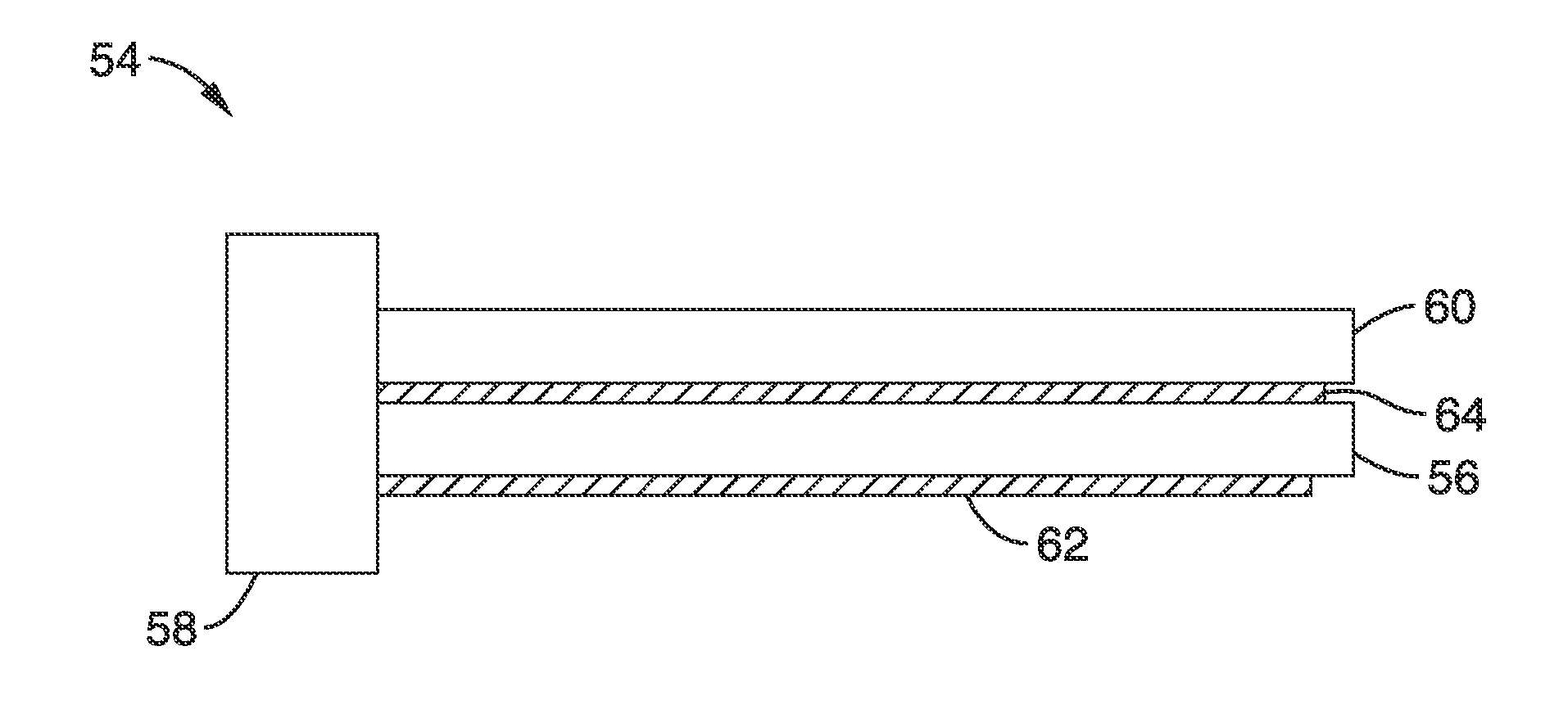
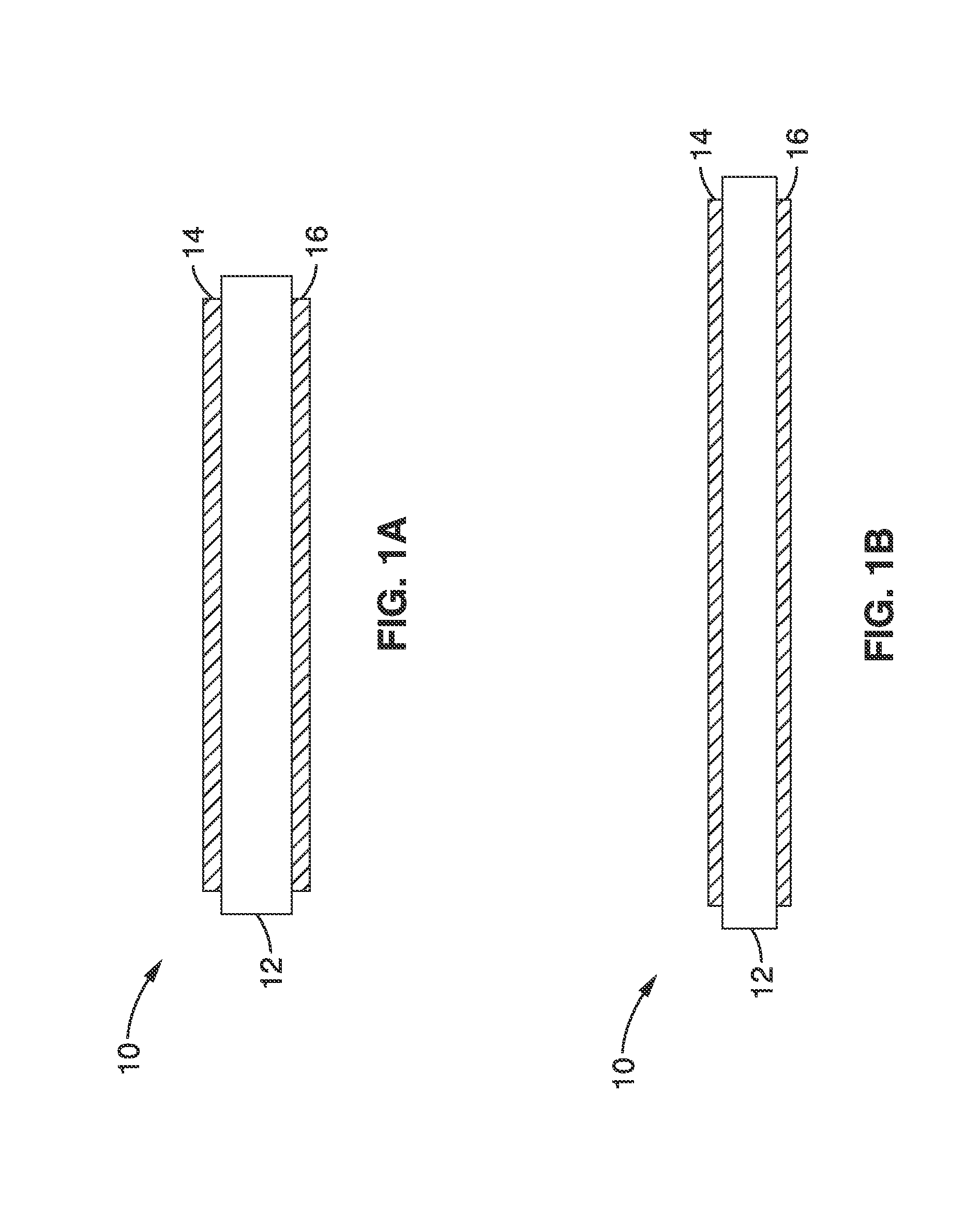
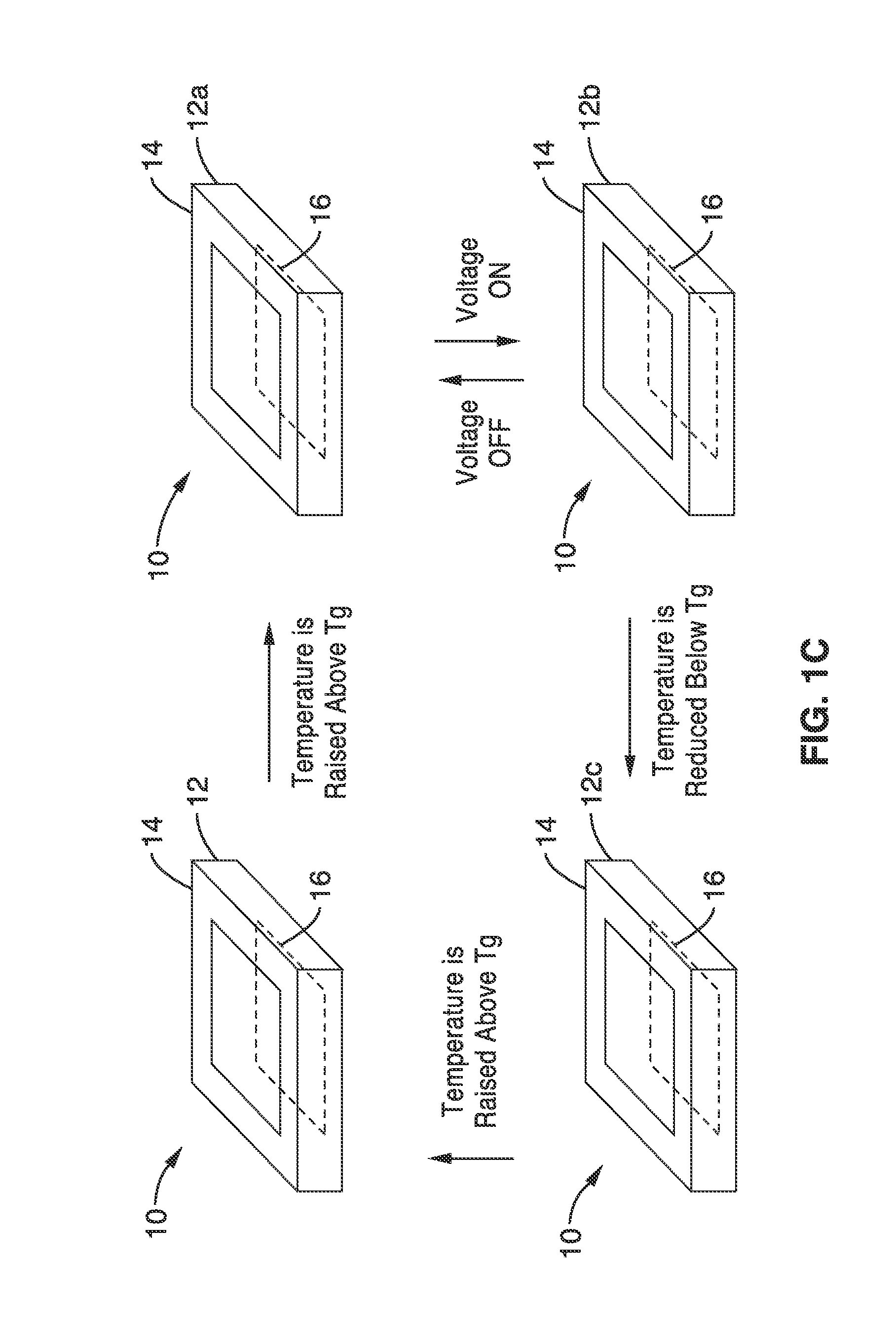
- Development of a bistable electroactive polymer with a shape memory polymer and dielectrically induced actuation mechanism, utilizing compliant electrodes and pre-straining techniques to achieve reversible and repeatable deformation at high strains, allowing the polymer to retain shape upon cooling and recover upon heating.

Electroactive polymers, methods of manufacture, and structures formed thereof
PatentInactiveUS20210178732A1
Innovation
- A method involving chemical pre-straining of dielectric polymeric materials using swelling agents like methyl ethyl ketone (MEK) to induce strain memory, followed by doping with conductive particulates and applying a conductive polymeric paste to form layered structures where all components share the same polymeric base material, ensuring cross-linking and enhanced electrical contact.

Standardization Framework for EAP Performance Metrics
The establishment of a comprehensive standardization framework for EAP performance metrics represents a critical need in advancing the field of electroactive polymers. Currently, the lack of unified measurement standards creates significant barriers to meaningful comparison of research results across different laboratories and institutions. This fragmentation hinders both academic progress and commercial development, as manufacturers and researchers struggle to communicate performance characteristics using inconsistent methodologies.
International standardization organizations, including ISO and ASTM, have begun recognizing the importance of developing specific standards for smart materials. The IEEE Standards Association has initiated preliminary discussions on electroactive material characterization, while the International Electrotechnical Commission has established working groups focused on actuator performance metrics. These efforts indicate growing momentum toward establishing formal standardization protocols for EAP technologies.
A robust standardization framework must encompass multiple performance dimensions beyond basic deformation capacity. Key metrics should include strain magnitude measurement protocols, force output quantification methods, response time characterization standards, and cyclic durability assessment procedures. Additionally, environmental testing conditions must be standardized to ensure reproducible results across different operating temperatures, humidity levels, and electrical field strengths.
The framework should establish standardized testing apparatus specifications, including electrode configurations, sample preparation procedures, and measurement equipment calibration requirements. Standardized sample geometries and mounting methods are essential for eliminating variability introduced by experimental setup differences. Furthermore, data reporting formats must be unified to facilitate meta-analyses and comparative studies across the research community.
Implementation challenges include achieving consensus among diverse stakeholders, from academic researchers to industrial manufacturers. Regional variations in testing capabilities and equipment availability may require phased implementation approaches. The framework must balance comprehensiveness with practical feasibility, ensuring that smaller research groups can comply without prohibitive equipment investments while maintaining rigorous scientific standards for performance evaluation.
International standardization organizations, including ISO and ASTM, have begun recognizing the importance of developing specific standards for smart materials. The IEEE Standards Association has initiated preliminary discussions on electroactive material characterization, while the International Electrotechnical Commission has established working groups focused on actuator performance metrics. These efforts indicate growing momentum toward establishing formal standardization protocols for EAP technologies.
A robust standardization framework must encompass multiple performance dimensions beyond basic deformation capacity. Key metrics should include strain magnitude measurement protocols, force output quantification methods, response time characterization standards, and cyclic durability assessment procedures. Additionally, environmental testing conditions must be standardized to ensure reproducible results across different operating temperatures, humidity levels, and electrical field strengths.
The framework should establish standardized testing apparatus specifications, including electrode configurations, sample preparation procedures, and measurement equipment calibration requirements. Standardized sample geometries and mounting methods are essential for eliminating variability introduced by experimental setup differences. Furthermore, data reporting formats must be unified to facilitate meta-analyses and comparative studies across the research community.
Implementation challenges include achieving consensus among diverse stakeholders, from academic researchers to industrial manufacturers. Regional variations in testing capabilities and equipment availability may require phased implementation approaches. The framework must balance comprehensiveness with practical feasibility, ensuring that smaller research groups can comply without prohibitive equipment investments while maintaining rigorous scientific standards for performance evaluation.
Safety Considerations in High-Strain EAP Applications
High-strain electroactive polymer applications present unique safety challenges that must be comprehensively addressed during system design and implementation. The inherent properties of EAPs operating under extreme deformation conditions create potential hazards that extend beyond conventional material failure modes, requiring specialized safety protocols and risk mitigation strategies.
Electrical safety represents the primary concern in high-strain EAP systems, as these materials typically require high voltage activation ranging from hundreds to thousands of volts. Under extreme strain conditions, the risk of dielectric breakdown increases significantly due to reduced material thickness and potential defect propagation. Arc formation and electrical discharge can occur when the polymer matrix experiences micro-cracking or delamination, potentially leading to fire hazards or electrical shock. Proper insulation design, voltage regulation systems, and fail-safe mechanisms must be integrated to prevent catastrophic electrical failures.
Material degradation under prolonged high-strain cycling poses substantial safety risks through unpredictable failure modes. EAPs subjected to repeated large deformations may experience fatigue-induced cracking, permanent set, or sudden rupture without warning. These failure mechanisms can result in rapid energy release, projectile formation, or system malfunction in critical applications. Comprehensive material characterization and real-time monitoring systems are essential to predict and prevent such failures.
Environmental factors significantly amplify safety concerns in high-strain EAP applications. Temperature variations can alter material properties unpredictably, while humidity exposure may compromise electrical insulation and accelerate degradation. Chemical compatibility issues arise when EAPs interact with surrounding materials or environmental contaminants, potentially leading to toxic gas evolution or corrosive reactions.
System-level safety considerations include proper containment design to manage potential material ejection during failure, redundant control systems to prevent runaway actuation, and emergency shutdown protocols. Personnel protection requires specialized training for handling high-voltage EAP systems and appropriate personal protective equipment. Regular inspection schedules, predictive maintenance protocols, and standardized testing procedures form the foundation of safe high-strain EAP operation, ensuring reliable performance while minimizing risks to equipment and personnel.
Electrical safety represents the primary concern in high-strain EAP systems, as these materials typically require high voltage activation ranging from hundreds to thousands of volts. Under extreme strain conditions, the risk of dielectric breakdown increases significantly due to reduced material thickness and potential defect propagation. Arc formation and electrical discharge can occur when the polymer matrix experiences micro-cracking or delamination, potentially leading to fire hazards or electrical shock. Proper insulation design, voltage regulation systems, and fail-safe mechanisms must be integrated to prevent catastrophic electrical failures.
Material degradation under prolonged high-strain cycling poses substantial safety risks through unpredictable failure modes. EAPs subjected to repeated large deformations may experience fatigue-induced cracking, permanent set, or sudden rupture without warning. These failure mechanisms can result in rapid energy release, projectile formation, or system malfunction in critical applications. Comprehensive material characterization and real-time monitoring systems are essential to predict and prevent such failures.
Environmental factors significantly amplify safety concerns in high-strain EAP applications. Temperature variations can alter material properties unpredictably, while humidity exposure may compromise electrical insulation and accelerate degradation. Chemical compatibility issues arise when EAPs interact with surrounding materials or environmental contaminants, potentially leading to toxic gas evolution or corrosive reactions.
System-level safety considerations include proper containment design to manage potential material ejection during failure, redundant control systems to prevent runaway actuation, and emergency shutdown protocols. Personnel protection requires specialized training for handling high-voltage EAP systems and appropriate personal protective equipment. Regular inspection schedules, predictive maintenance protocols, and standardized testing procedures form the foundation of safe high-strain EAP operation, ensuring reliable performance while minimizing risks to equipment and personnel.
Unlock deeper insights with PatSnap Eureka Quick Research — get a full tech report to explore trends and direct your research. Try now!
Generate Your Research Report Instantly with AI Agent
Supercharge your innovation with PatSnap Eureka AI Agent Platform!