
Quantify Force Output of Electroactive Polymers in Compression Tests
APR 30, 20269 MIN READ
Generate Your Research Report Instantly with AI Agent
Patsnap Eureka helps you evaluate technical feasibility & market potential.
EAP Force Quantification Background and Objectives
Electroactive polymers represent a revolutionary class of smart materials that undergo mechanical deformation when subjected to electrical stimulation, fundamentally altering the landscape of actuator technology. These materials, often referred to as "artificial muscles," possess the unique capability to convert electrical energy directly into mechanical work, making them invaluable for applications ranging from robotics and biomedical devices to aerospace systems and consumer electronics.
The historical development of EAP technology traces back to the 1880s when Wilhelm Röntgen first observed electrostrictive behavior in rubber materials. However, significant advancement occurred in the late 20th century with the discovery of high-performance ionic and electronic EAPs. The field experienced exponential growth following the development of dielectric elastomers in the 1990s and ionic polymer-metal composites in the early 2000s, establishing EAPs as viable alternatives to traditional electromagnetic actuators.
Current technological evolution demonstrates a clear trajectory toward enhanced force output capabilities and improved material durability. Recent breakthroughs in polymer synthesis, electrode design, and composite architectures have yielded EAPs capable of generating substantial mechanical forces while maintaining flexibility and lightweight characteristics. The integration of nanomaterials and advanced manufacturing techniques has further accelerated performance improvements, positioning EAPs at the forefront of next-generation actuator technologies.
The primary objective of quantifying force output in compression testing centers on establishing standardized methodologies for accurately measuring and characterizing the mechanical performance of EAP materials under controlled loading conditions. This quantification is essential for validating theoretical models, optimizing material formulations, and ensuring reliable performance predictions in real-world applications.
Achieving precise force quantification requires addressing several critical technical challenges, including the development of specialized testing apparatus capable of simultaneous electrical stimulation and mechanical loading, implementation of high-resolution force measurement systems, and establishment of standardized testing protocols that account for the unique viscoelastic properties of polymer materials. The ultimate goal involves creating comprehensive performance databases that enable engineers to select appropriate EAP materials for specific applications while predicting long-term operational behavior under various environmental and loading conditions.
The historical development of EAP technology traces back to the 1880s when Wilhelm Röntgen first observed electrostrictive behavior in rubber materials. However, significant advancement occurred in the late 20th century with the discovery of high-performance ionic and electronic EAPs. The field experienced exponential growth following the development of dielectric elastomers in the 1990s and ionic polymer-metal composites in the early 2000s, establishing EAPs as viable alternatives to traditional electromagnetic actuators.
Current technological evolution demonstrates a clear trajectory toward enhanced force output capabilities and improved material durability. Recent breakthroughs in polymer synthesis, electrode design, and composite architectures have yielded EAPs capable of generating substantial mechanical forces while maintaining flexibility and lightweight characteristics. The integration of nanomaterials and advanced manufacturing techniques has further accelerated performance improvements, positioning EAPs at the forefront of next-generation actuator technologies.
The primary objective of quantifying force output in compression testing centers on establishing standardized methodologies for accurately measuring and characterizing the mechanical performance of EAP materials under controlled loading conditions. This quantification is essential for validating theoretical models, optimizing material formulations, and ensuring reliable performance predictions in real-world applications.
Achieving precise force quantification requires addressing several critical technical challenges, including the development of specialized testing apparatus capable of simultaneous electrical stimulation and mechanical loading, implementation of high-resolution force measurement systems, and establishment of standardized testing protocols that account for the unique viscoelastic properties of polymer materials. The ultimate goal involves creating comprehensive performance databases that enable engineers to select appropriate EAP materials for specific applications while predicting long-term operational behavior under various environmental and loading conditions.
Market Demand for EAP Actuator Applications
The market demand for electroactive polymer (EAP) actuator applications is experiencing significant growth across multiple industrial sectors, driven by the unique advantages these materials offer over traditional actuation technologies. The ability to quantify force output in compression tests has become a critical factor in determining market viability and application-specific suitability of EAP actuators.
Robotics and automation represent the largest market segment for EAP actuators, where precise force control and biomimetic movement capabilities are essential. Soft robotics applications particularly benefit from EAP actuators due to their inherent compliance and ability to generate smooth, continuous motion. The demand in this sector is fueled by the need for safer human-robot interaction and more adaptable robotic systems that can handle delicate objects or operate in unstructured environments.
The biomedical device market shows substantial growth potential for EAP actuators, especially in applications requiring miniaturization and biocompatibility. Medical devices such as drug delivery systems, artificial muscles, and prosthetic components demand actuators with well-characterized force output profiles. The compression testing data becomes crucial for regulatory approval processes and ensuring patient safety in these applications.
Aerospace and automotive industries are increasingly adopting EAP actuators for morphing structures, active vibration control, and adaptive components. These sectors require actuators that can operate reliably under varying environmental conditions while maintaining consistent force output characteristics. The lightweight nature of EAP materials combined with their force generation capabilities makes them attractive alternatives to traditional hydraulic and pneumatic systems.
Consumer electronics and haptic feedback systems represent an emerging market segment where EAP actuators enable new user interface experiences. The demand for tactile feedback in touchscreens, wearable devices, and virtual reality systems is driving innovation in compact, energy-efficient actuator designs. Precise force quantification ensures consistent user experience across different device configurations.
The market growth is also supported by increasing investment in research and development activities focused on improving EAP material properties and manufacturing processes. As compression testing methodologies become more standardized and force output characteristics better understood, market confidence in EAP actuator reliability continues to strengthen, leading to broader industrial adoption.
Robotics and automation represent the largest market segment for EAP actuators, where precise force control and biomimetic movement capabilities are essential. Soft robotics applications particularly benefit from EAP actuators due to their inherent compliance and ability to generate smooth, continuous motion. The demand in this sector is fueled by the need for safer human-robot interaction and more adaptable robotic systems that can handle delicate objects or operate in unstructured environments.
The biomedical device market shows substantial growth potential for EAP actuators, especially in applications requiring miniaturization and biocompatibility. Medical devices such as drug delivery systems, artificial muscles, and prosthetic components demand actuators with well-characterized force output profiles. The compression testing data becomes crucial for regulatory approval processes and ensuring patient safety in these applications.
Aerospace and automotive industries are increasingly adopting EAP actuators for morphing structures, active vibration control, and adaptive components. These sectors require actuators that can operate reliably under varying environmental conditions while maintaining consistent force output characteristics. The lightweight nature of EAP materials combined with their force generation capabilities makes them attractive alternatives to traditional hydraulic and pneumatic systems.
Consumer electronics and haptic feedback systems represent an emerging market segment where EAP actuators enable new user interface experiences. The demand for tactile feedback in touchscreens, wearable devices, and virtual reality systems is driving innovation in compact, energy-efficient actuator designs. Precise force quantification ensures consistent user experience across different device configurations.
The market growth is also supported by increasing investment in research and development activities focused on improving EAP material properties and manufacturing processes. As compression testing methodologies become more standardized and force output characteristics better understood, market confidence in EAP actuator reliability continues to strengthen, leading to broader industrial adoption.
Current EAP Compression Testing Challenges
The quantification of force output in electroactive polymer (EAP) compression testing faces significant methodological challenges that limit accurate performance assessment and standardization across research institutions. Current testing protocols lack unified standards, resulting in inconsistent measurement approaches that compromise data reliability and cross-study comparisons.
Mechanical testing equipment presents substantial limitations when applied to EAP materials. Traditional compression testing machines often exhibit insufficient sensitivity to detect the relatively small force outputs generated by EAP actuators, particularly in the micro-Newton to milli-Newton range. The high electrical impedance and capacitive nature of many EAP materials create electromagnetic interference issues that can corrupt force measurements during electrical activation.
Sample preparation and mounting procedures introduce considerable variability in test results. EAP materials are highly sensitive to environmental conditions, with humidity, temperature, and atmospheric pressure significantly affecting their electromechanical response. Achieving consistent electrode contact and maintaining uniform electric field distribution across the sample during compression remains technically challenging, often leading to localized activation and non-uniform force generation.
Electrical characterization during mechanical testing poses complex measurement challenges. Simultaneous monitoring of electrical parameters such as voltage, current, and capacitance while measuring mechanical force output requires sophisticated instrumentation capable of isolating electrical and mechanical signals. The dynamic nature of EAP response, with time-dependent creep and relaxation behaviors, complicates the establishment of steady-state force measurements.
Data interpretation difficulties arise from the complex coupling between electrical and mechanical domains in EAP materials. The nonlinear relationship between applied voltage and force output, combined with hysteresis effects and frequency-dependent responses, makes it challenging to establish reliable force-voltage correlations. Additionally, the viscoelastic nature of polymer materials introduces time-dependent effects that are difficult to separate from purely electromechanical responses.
Calibration and validation procedures for EAP compression testing remain underdeveloped. The absence of standardized reference materials and certified force standards specifically designed for EAP applications hinders the establishment of traceable measurement protocols. This limitation significantly impacts the reproducibility of research results and slows the development of reliable performance benchmarks for different EAP material systems.
Mechanical testing equipment presents substantial limitations when applied to EAP materials. Traditional compression testing machines often exhibit insufficient sensitivity to detect the relatively small force outputs generated by EAP actuators, particularly in the micro-Newton to milli-Newton range. The high electrical impedance and capacitive nature of many EAP materials create electromagnetic interference issues that can corrupt force measurements during electrical activation.
Sample preparation and mounting procedures introduce considerable variability in test results. EAP materials are highly sensitive to environmental conditions, with humidity, temperature, and atmospheric pressure significantly affecting their electromechanical response. Achieving consistent electrode contact and maintaining uniform electric field distribution across the sample during compression remains technically challenging, often leading to localized activation and non-uniform force generation.
Electrical characterization during mechanical testing poses complex measurement challenges. Simultaneous monitoring of electrical parameters such as voltage, current, and capacitance while measuring mechanical force output requires sophisticated instrumentation capable of isolating electrical and mechanical signals. The dynamic nature of EAP response, with time-dependent creep and relaxation behaviors, complicates the establishment of steady-state force measurements.
Data interpretation difficulties arise from the complex coupling between electrical and mechanical domains in EAP materials. The nonlinear relationship between applied voltage and force output, combined with hysteresis effects and frequency-dependent responses, makes it challenging to establish reliable force-voltage correlations. Additionally, the viscoelastic nature of polymer materials introduces time-dependent effects that are difficult to separate from purely electromechanical responses.
Calibration and validation procedures for EAP compression testing remain underdeveloped. The absence of standardized reference materials and certified force standards specifically designed for EAP applications hinders the establishment of traceable measurement protocols. This limitation significantly impacts the reproducibility of research results and slows the development of reliable performance benchmarks for different EAP material systems.
Existing EAP Force Quantification Solutions
01 Electroactive polymer actuator mechanisms and configurations
Various mechanisms and structural configurations are employed in electroactive polymer systems to generate mechanical force output. These include different actuator designs, electrode arrangements, and polymer matrix structures that enable controlled deformation and force generation when electrical stimulation is applied. The configurations can be optimized for specific force output requirements and operational parameters.- Electroactive polymer actuator mechanisms and configurations: Various mechanisms and configurations are employed in electroactive polymer systems to generate mechanical force output. These include different actuator designs, electrode arrangements, and polymer structures that enable controlled deformation and movement when electrical stimulation is applied. The configurations can be optimized for specific force requirements and operational parameters.
- Force measurement and control systems for electroactive polymers: Systems and methods for measuring, monitoring, and controlling the force output of electroactive polymers are essential for practical applications. These include feedback mechanisms, sensor integration, and control algorithms that ensure precise force generation and maintain desired performance characteristics during operation.
- Material composition and enhancement for improved force output: The development of specialized polymer compositions and material enhancements focuses on maximizing force generation capabilities. This includes the incorporation of conductive fillers, cross-linking agents, and other additives that improve the electromechanical properties and force output characteristics of the polymer materials.
- Applications in robotic and mechanical systems: Electroactive polymers are integrated into various robotic and mechanical systems where controlled force output is required. These applications leverage the unique properties of electroactive materials to create artificial muscles, grippers, and other mechanical components that can generate precise forces for specific tasks and operations.
- Electrical stimulation and activation methods: Different electrical stimulation techniques and activation methods are employed to optimize the force output of electroactive polymers. These methods include various voltage patterns, frequency modulation, and electrical field configurations that maximize the mechanical response and force generation efficiency of the polymer systems.
02 Force measurement and control systems for electroactive polymers
Systems and methods for measuring, monitoring, and controlling the force output of electroactive polymer devices are essential for their practical applications. These include feedback control mechanisms, force sensing techniques, and calibration methods that ensure precise and repeatable force generation. The control systems enable real-time adjustment of electrical parameters to achieve desired mechanical outputs.Expand Specific Solutions03 Material composition and enhancement techniques
The force output characteristics of electroactive polymers can be significantly improved through specific material compositions, additives, and processing techniques. Various polymer formulations, conductive fillers, and structural modifications are employed to enhance the electromechanical properties and increase the force generation capability of the polymer systems.Expand Specific Solutions04 Applications in robotic and mechanical systems
Electroactive polymers are integrated into robotic actuators, mechanical devices, and automation systems where controlled force output is required. These applications leverage the unique properties of electroactive polymers to create compact, lightweight, and efficient actuating mechanisms for various industrial and consumer applications.Expand Specific Solutions05 Electrical stimulation and power management
The electrical aspects of electroactive polymer systems, including voltage application methods, power supply designs, and electrical signal processing, are crucial for optimizing force output. Various electrical stimulation patterns, power management strategies, and circuit designs are employed to maximize efficiency and control the mechanical response of the polymer materials.Expand Specific Solutions
Key Players in EAP and Smart Materials Industry
The electroactive polymer force quantification field represents an emerging technology sector in early development stages with significant growth potential. The market remains relatively small but shows promising expansion driven by applications in soft robotics, actuators, and biomedical devices. Technology maturity varies considerably across key players, with academic institutions like Southwest Jiaotong University, Zhejiang University, and Centre National de la Recherche Scientifique leading fundamental research into polymer characterization and testing methodologies. Industrial players including 3M Innovative Properties Co., Dow Global Technologies LLC, and LG Chem Ltd. are advancing commercial applications, while specialized companies like P2i Ltd. focus on nano-coating technologies that enhance polymer performance. The competitive landscape indicates a technology transition from laboratory research to practical implementation, with established chemical giants leveraging their materials expertise alongside innovative startups developing specialized testing equipment and measurement solutions for accurate force output quantification.
3M Innovative Properties Co.
Technical Solution: 3M has developed proprietary testing methodologies for quantifying electroactive polymer force output in compression applications, particularly focusing on industrial and consumer product applications. Their approach utilizes standardized compression testing equipment modified with specialized electrodes and force measurement systems. The methodology incorporates automated testing protocols that can evaluate multiple samples simultaneously while maintaining consistent electrical stimulation parameters. Their testing framework includes environmental conditioning chambers that allow force measurement under various temperature and humidity conditions, essential for real-world application validation. The system employs advanced data analytics to correlate electrical input parameters with mechanical force output, enabling optimization of electroactive polymer formulations for specific compression force requirements.
Strengths: Industrial-scale testing capabilities with robust standardization and commercial application focus. Weaknesses: Proprietary methodologies may limit academic collaboration and technology transfer opportunities.
SRI International
Technical Solution: SRI International has developed comprehensive electroactive polymer testing methodologies that utilize advanced compression testing systems with integrated force measurement capabilities. Their approach combines high-precision load cells with real-time electrical stimulation monitoring to quantify force output during compression cycles. The testing protocol includes multi-axis force measurement systems that can capture both normal and shear forces generated by electroactive polymers under various electrical field conditions. Their methodology incorporates temperature-controlled environments and humidity regulation to ensure consistent testing conditions, while utilizing data acquisition systems capable of measuring forces ranging from micro-Newtons to several Newtons with high temporal resolution.
Strengths: Established research infrastructure with proven testing methodologies and high-precision measurement capabilities. Weaknesses: Limited commercial scalability and high equipment costs for implementation.
Core Innovations in EAP Compression Force Analysis
Electroactive polymers transducers and actuators
PatentInactiveUS6940211B2
Innovation
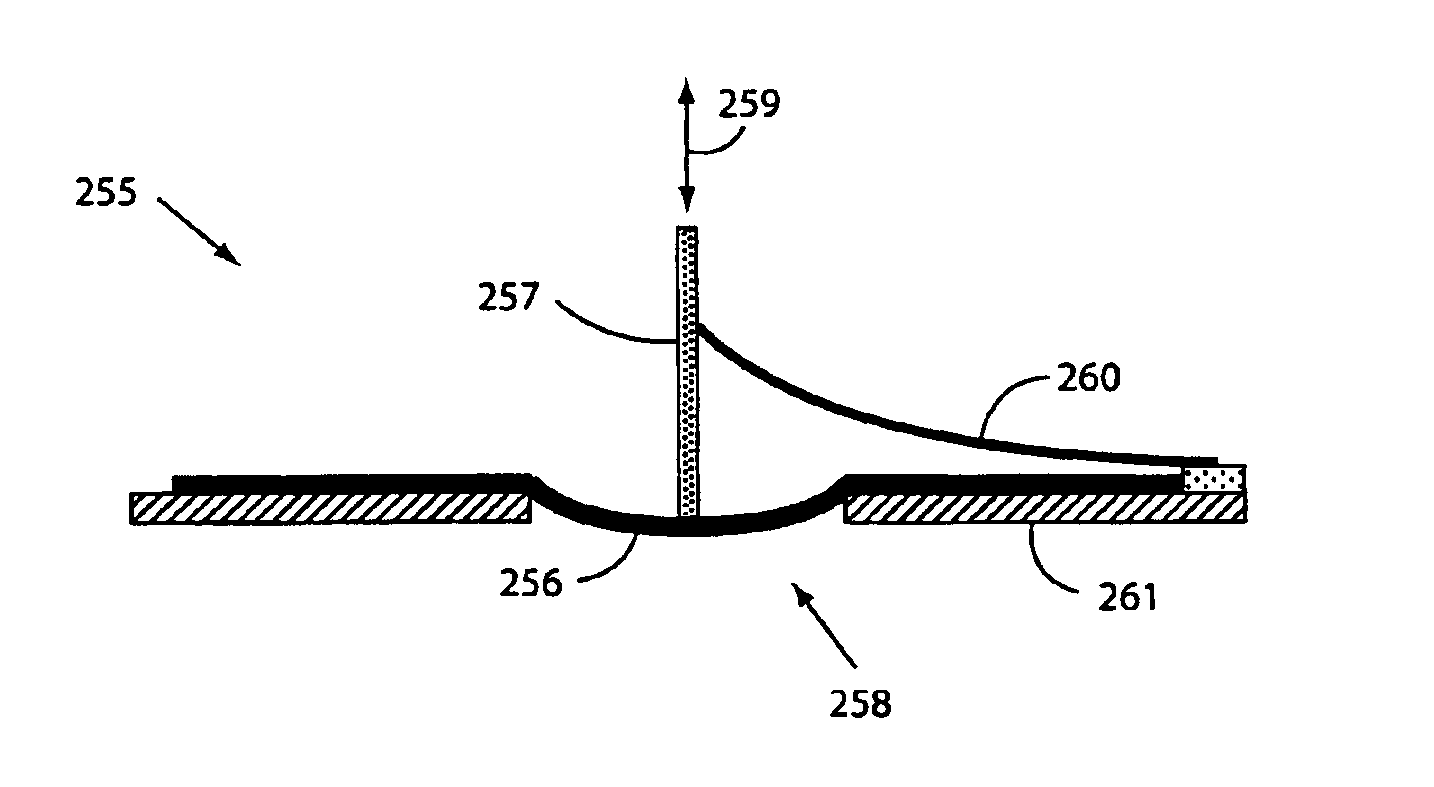
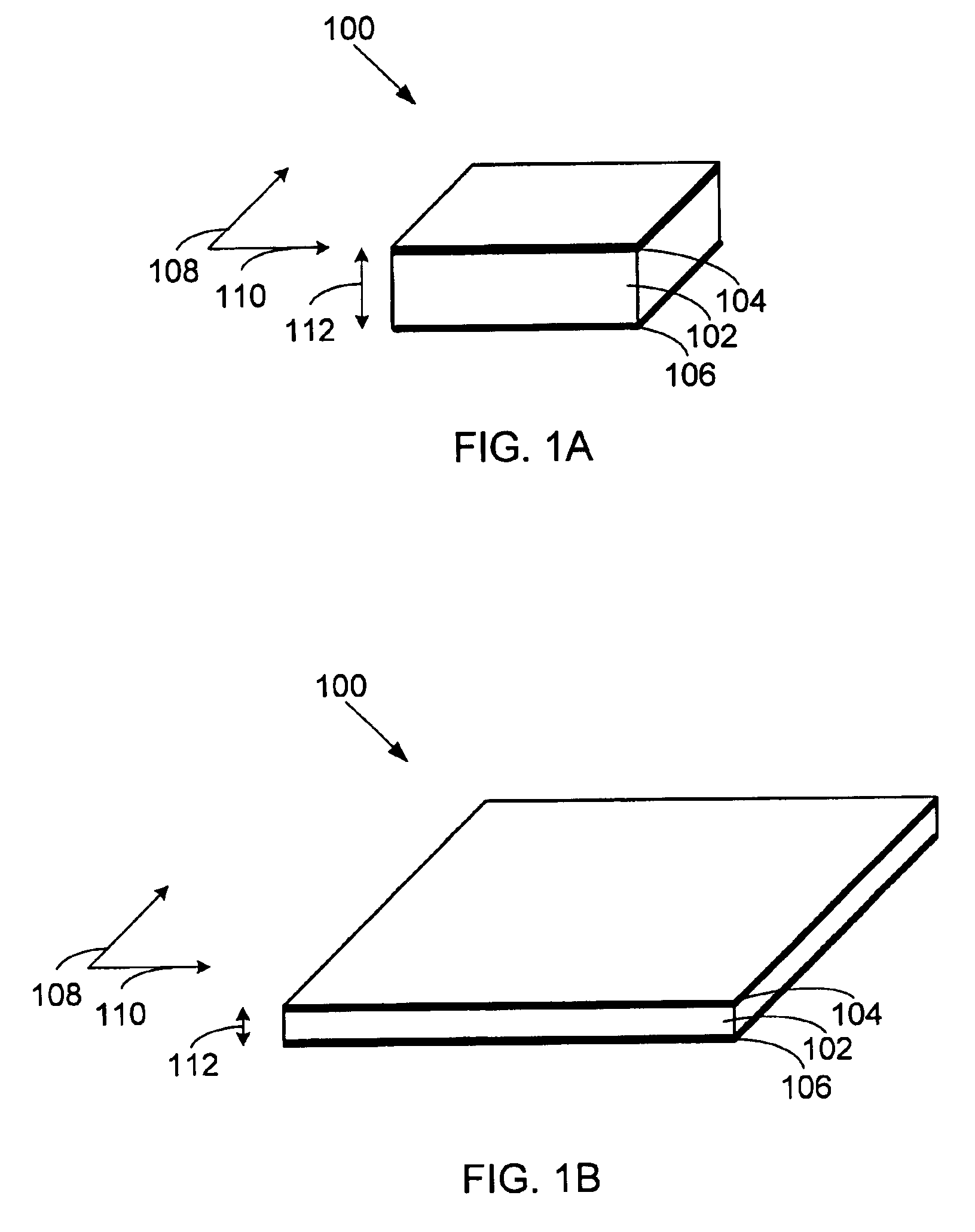
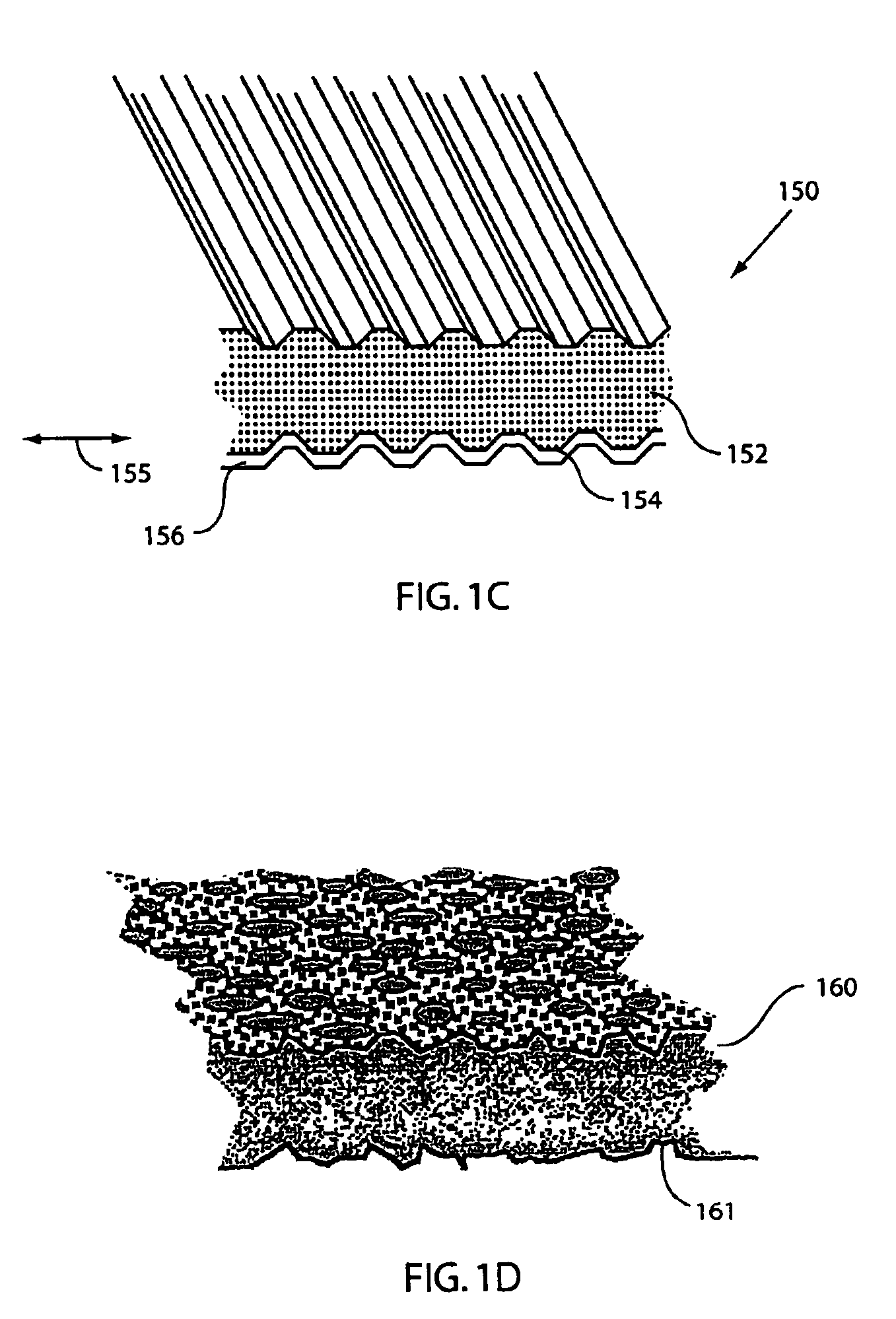
- Pre-strained electroactive polymers with compliant electrodes that deflect significantly in response to electrical energy, allowing for high mechanical work output and improved mechanical response, fabricated using techniques like mechanical stretching and fixing to solid members, and processed through methods like casting or spin coating.

Increased force generation in electroactive polymers
PatentActiveUS9951757B2
Innovation
- The method involves using a combination of direct current (DC) and alternating current (AC) to actuate electroactive polymer devices, with specific voltage ratios and frequencies applied across electrodes to enhance force generation, utilizing an electroactive polymer laminate structure that includes an ionic exchange membrane layer and ion conducting binder layers.


Standardization Framework for EAP Testing
The development of a comprehensive standardization framework for electroactive polymer (EAP) testing represents a critical need in advancing the field's commercial viability and scientific rigor. Current testing methodologies for quantifying force output in compression applications lack uniformity across research institutions and industrial laboratories, creating significant barriers to technology transfer and comparative analysis.
Existing international standards organizations, including ASTM International and ISO, have yet to establish dedicated protocols specifically addressing EAP compression testing. This gap has resulted in fragmented approaches where researchers employ varying test conditions, measurement techniques, and data interpretation methods. The absence of standardized procedures particularly affects force quantification accuracy, as different laboratories may use disparate loading rates, environmental conditions, and electrode configurations.
A robust standardization framework must encompass several key components to ensure reproducible and meaningful results. Test specimen preparation protocols should define precise dimensions, electrode placement methodologies, and pre-conditioning requirements. Environmental control parameters, including temperature, humidity, and atmospheric composition, require strict specification given EAPs' sensitivity to ambient conditions. Additionally, the framework must establish standardized electrical stimulation protocols, defining voltage ranges, frequency parameters, and waveform characteristics.
Measurement instrumentation standards represent another crucial element, specifying force sensor accuracy requirements, data acquisition sampling rates, and calibration procedures. The framework should mandate specific compression test configurations, including fixture designs, loading mechanisms, and displacement measurement systems to ensure consistent mechanical boundary conditions across different testing facilities.
Data reporting and analysis protocols must be standardized to enable meaningful comparison of results across different research groups and applications. This includes defining metrics for force output quantification, establishing statistical analysis requirements, and specifying minimum dataset completeness standards. The framework should also address safety considerations specific to EAP testing, including electrical safety protocols and handling procedures for potentially hazardous materials.
Implementation of such a standardization framework would significantly accelerate EAP technology development by enabling reliable performance benchmarking, facilitating technology transfer between research and industry, and supporting regulatory approval processes for commercial applications.
Existing international standards organizations, including ASTM International and ISO, have yet to establish dedicated protocols specifically addressing EAP compression testing. This gap has resulted in fragmented approaches where researchers employ varying test conditions, measurement techniques, and data interpretation methods. The absence of standardized procedures particularly affects force quantification accuracy, as different laboratories may use disparate loading rates, environmental conditions, and electrode configurations.
A robust standardization framework must encompass several key components to ensure reproducible and meaningful results. Test specimen preparation protocols should define precise dimensions, electrode placement methodologies, and pre-conditioning requirements. Environmental control parameters, including temperature, humidity, and atmospheric composition, require strict specification given EAPs' sensitivity to ambient conditions. Additionally, the framework must establish standardized electrical stimulation protocols, defining voltage ranges, frequency parameters, and waveform characteristics.
Measurement instrumentation standards represent another crucial element, specifying force sensor accuracy requirements, data acquisition sampling rates, and calibration procedures. The framework should mandate specific compression test configurations, including fixture designs, loading mechanisms, and displacement measurement systems to ensure consistent mechanical boundary conditions across different testing facilities.
Data reporting and analysis protocols must be standardized to enable meaningful comparison of results across different research groups and applications. This includes defining metrics for force output quantification, establishing statistical analysis requirements, and specifying minimum dataset completeness standards. The framework should also address safety considerations specific to EAP testing, including electrical safety protocols and handling procedures for potentially hazardous materials.
Implementation of such a standardization framework would significantly accelerate EAP technology development by enabling reliable performance benchmarking, facilitating technology transfer between research and industry, and supporting regulatory approval processes for commercial applications.
Material Safety in EAP Compression Testing
Material safety considerations in electroactive polymer compression testing represent a critical aspect of experimental design and laboratory operations. The unique properties of EAPs, including their electrical conductivity, chemical composition, and mechanical behavior under stress, necessitate comprehensive safety protocols to protect personnel and equipment during compression testing procedures.
The primary safety concerns stem from the electrical nature of EAP materials, which require high voltage activation during testing. Compression tests often involve applying electrical fields ranging from several hundred to thousands of volts per millimeter, creating potential hazards including electrical shock, arc formation, and electromagnetic interference. Proper insulation of testing apparatus, implementation of emergency shutdown systems, and use of appropriate personal protective equipment are essential to mitigate these electrical risks.
Chemical safety protocols must address the potential release of toxic substances during compression testing. Many EAP materials contain organic solvents, ionic liquids, or polymer additives that may become airborne or leak during mechanical deformation. Adequate ventilation systems, chemical-resistant work surfaces, and appropriate disposal methods for contaminated materials are crucial for maintaining safe laboratory conditions.
Mechanical safety considerations focus on the high forces generated during compression testing and the potential for sudden material failure. EAP samples may exhibit unpredictable failure modes, including explosive decompression or ejection of material fragments. Testing chambers should incorporate protective barriers, and operators must maintain safe distances during high-force compression cycles.
Environmental monitoring systems play a vital role in ensuring continuous safety during extended testing periods. Real-time detection of electrical anomalies, chemical vapors, and mechanical stress concentrations enables immediate response to potentially dangerous conditions. Temperature monitoring is particularly important as EAP materials may generate significant heat during electrical activation under compression.
Proper training protocols for laboratory personnel must encompass both theoretical understanding of EAP safety principles and practical experience with emergency procedures. Regular safety audits and equipment calibration ensure that protective systems remain effective throughout the testing program, maintaining the highest standards of laboratory safety while enabling accurate force quantification measurements.
The primary safety concerns stem from the electrical nature of EAP materials, which require high voltage activation during testing. Compression tests often involve applying electrical fields ranging from several hundred to thousands of volts per millimeter, creating potential hazards including electrical shock, arc formation, and electromagnetic interference. Proper insulation of testing apparatus, implementation of emergency shutdown systems, and use of appropriate personal protective equipment are essential to mitigate these electrical risks.
Chemical safety protocols must address the potential release of toxic substances during compression testing. Many EAP materials contain organic solvents, ionic liquids, or polymer additives that may become airborne or leak during mechanical deformation. Adequate ventilation systems, chemical-resistant work surfaces, and appropriate disposal methods for contaminated materials are crucial for maintaining safe laboratory conditions.
Mechanical safety considerations focus on the high forces generated during compression testing and the potential for sudden material failure. EAP samples may exhibit unpredictable failure modes, including explosive decompression or ejection of material fragments. Testing chambers should incorporate protective barriers, and operators must maintain safe distances during high-force compression cycles.
Environmental monitoring systems play a vital role in ensuring continuous safety during extended testing periods. Real-time detection of electrical anomalies, chemical vapors, and mechanical stress concentrations enables immediate response to potentially dangerous conditions. Temperature monitoring is particularly important as EAP materials may generate significant heat during electrical activation under compression.
Proper training protocols for laboratory personnel must encompass both theoretical understanding of EAP safety principles and practical experience with emergency procedures. Regular safety audits and equipment calibration ensure that protective systems remain effective throughout the testing program, maintaining the highest standards of laboratory safety while enabling accurate force quantification measurements.
Unlock deeper insights with Patsnap Eureka Quick Research — get a full tech report to explore trends and direct your research. Try now!
Generate Your Research Report Instantly with AI Agent
Supercharge your innovation with Patsnap Eureka AI Agent Platform!