

Quantify Tandem OLED optical loss using transfer-matrix modeling
MAY 9, 20269 MIN READ
Generate Your Research Report Instantly with AI Agent
PatSnap Eureka helps you evaluate technical feasibility & market potential.
Tandem OLED Development Background and Optical Efficiency Goals
Tandem OLED technology emerged as a revolutionary approach to address the fundamental limitations of conventional single-unit OLED devices. The development trajectory began in the early 2000s when researchers recognized that stacking multiple emissive units could theoretically double or triple the luminous efficiency while maintaining the same current density. This breakthrough concept was driven by the industry's urgent need to overcome the efficiency ceiling that plagued early OLED displays, particularly in achieving the brightness levels required for outdoor visibility and extended device lifespans.
The core principle behind tandem OLEDs involves vertically stacking two or more electroluminescent units separated by charge generation layers (CGLs) or intermediate connectors. Each unit operates independently while sharing the same electrical pathway, effectively multiplying the photon output per injected electron. This architecture addresses critical challenges including limited external quantum efficiency, inadequate brightness uniformity, and accelerated degradation under high current densities that characterized first-generation OLED technologies.
Historical development milestones include the initial proof-of-concept demonstrations by major research institutions around 2003-2005, followed by industrial implementation efforts led by companies like Universal Display Corporation and Samsung Display. The technology gained significant momentum around 2010-2012 when manufacturing processes became sufficiently mature to enable commercial viability. Key breakthrough moments included the successful integration of phosphorescent emitters in tandem structures and the development of stable intermediate electrode materials.
Current optical efficiency targets for tandem OLED systems aim to achieve external quantum efficiencies exceeding 40-50% for green emission and 25-30% for blue emission, representing substantial improvements over conventional single-unit devices. Industry roadmaps project power efficiency goals of 150-200 lumens per watt for white tandem OLEDs, positioning them competitively against established lighting technologies. These ambitious targets necessitate precise optical modeling and loss quantification methodologies.
The imperative for accurate optical loss analysis using transfer-matrix modeling stems from the complex multi-layer interference effects inherent in tandem architectures. Unlike single-unit devices, tandem OLEDs exhibit intricate optical coupling between emissive layers, substrate interactions, and electrode transparency variations that significantly impact overall device performance. Understanding and minimizing these optical losses has become paramount for achieving next-generation efficiency benchmarks and commercial success in premium display applications.
The core principle behind tandem OLEDs involves vertically stacking two or more electroluminescent units separated by charge generation layers (CGLs) or intermediate connectors. Each unit operates independently while sharing the same electrical pathway, effectively multiplying the photon output per injected electron. This architecture addresses critical challenges including limited external quantum efficiency, inadequate brightness uniformity, and accelerated degradation under high current densities that characterized first-generation OLED technologies.
Historical development milestones include the initial proof-of-concept demonstrations by major research institutions around 2003-2005, followed by industrial implementation efforts led by companies like Universal Display Corporation and Samsung Display. The technology gained significant momentum around 2010-2012 when manufacturing processes became sufficiently mature to enable commercial viability. Key breakthrough moments included the successful integration of phosphorescent emitters in tandem structures and the development of stable intermediate electrode materials.
Current optical efficiency targets for tandem OLED systems aim to achieve external quantum efficiencies exceeding 40-50% for green emission and 25-30% for blue emission, representing substantial improvements over conventional single-unit devices. Industry roadmaps project power efficiency goals of 150-200 lumens per watt for white tandem OLEDs, positioning them competitively against established lighting technologies. These ambitious targets necessitate precise optical modeling and loss quantification methodologies.
The imperative for accurate optical loss analysis using transfer-matrix modeling stems from the complex multi-layer interference effects inherent in tandem architectures. Unlike single-unit devices, tandem OLEDs exhibit intricate optical coupling between emissive layers, substrate interactions, and electrode transparency variations that significantly impact overall device performance. Understanding and minimizing these optical losses has become paramount for achieving next-generation efficiency benchmarks and commercial success in premium display applications.
Market Demand for High-Efficiency Tandem OLED Displays
The global display industry is experiencing unprecedented demand for high-efficiency OLED technologies, driven by the convergence of consumer electronics evolution, sustainability requirements, and performance expectations. Tandem OLED displays represent a critical technological advancement addressing the fundamental limitations of conventional single-layer OLED architectures, particularly in power consumption and operational longevity.
Consumer electronics manufacturers are increasingly prioritizing energy efficiency as a core product differentiator, especially in premium smartphone, tablet, and laptop segments. The proliferation of always-on display features, high refresh rate requirements, and extended battery life expectations has created substantial market pressure for OLED technologies that can deliver superior brightness while minimizing power consumption. Tandem OLED architectures, which utilize multiple emissive layers to achieve enhanced efficiency, directly address these market demands.
The automotive display sector represents another significant growth driver for high-efficiency tandem OLED technology. Modern vehicles incorporate multiple high-resolution displays for infotainment, instrument clusters, and heads-up display systems. These applications demand exceptional brightness levels for daylight visibility while maintaining energy efficiency to preserve vehicle battery life, particularly in electric vehicles where every watt of power consumption impacts driving range.
Professional display markets, including medical imaging, broadcast monitoring, and industrial applications, require displays with consistent performance over extended operational periods. Traditional OLED displays suffer from brightness degradation and color shift over time, creating reliability concerns in mission-critical applications. Tandem OLED technology offers improved stability and extended operational lifetime, making it increasingly attractive for these demanding applications.
The emergence of augmented reality and virtual reality platforms has created new market segments requiring ultra-high brightness displays with minimal power consumption. These applications demand pixel densities and brightness levels that challenge conventional OLED architectures, positioning tandem OLED technology as a potential solution for next-generation immersive display systems.
Manufacturing cost considerations continue to influence market adoption patterns. While tandem OLED displays require more complex fabrication processes, the potential for reduced power consumption and extended device lifetime creates compelling value propositions for premium product segments where performance justifies higher initial costs.
Consumer electronics manufacturers are increasingly prioritizing energy efficiency as a core product differentiator, especially in premium smartphone, tablet, and laptop segments. The proliferation of always-on display features, high refresh rate requirements, and extended battery life expectations has created substantial market pressure for OLED technologies that can deliver superior brightness while minimizing power consumption. Tandem OLED architectures, which utilize multiple emissive layers to achieve enhanced efficiency, directly address these market demands.
The automotive display sector represents another significant growth driver for high-efficiency tandem OLED technology. Modern vehicles incorporate multiple high-resolution displays for infotainment, instrument clusters, and heads-up display systems. These applications demand exceptional brightness levels for daylight visibility while maintaining energy efficiency to preserve vehicle battery life, particularly in electric vehicles where every watt of power consumption impacts driving range.
Professional display markets, including medical imaging, broadcast monitoring, and industrial applications, require displays with consistent performance over extended operational periods. Traditional OLED displays suffer from brightness degradation and color shift over time, creating reliability concerns in mission-critical applications. Tandem OLED technology offers improved stability and extended operational lifetime, making it increasingly attractive for these demanding applications.
The emergence of augmented reality and virtual reality platforms has created new market segments requiring ultra-high brightness displays with minimal power consumption. These applications demand pixel densities and brightness levels that challenge conventional OLED architectures, positioning tandem OLED technology as a potential solution for next-generation immersive display systems.
Manufacturing cost considerations continue to influence market adoption patterns. While tandem OLED displays require more complex fabrication processes, the potential for reduced power consumption and extended device lifetime creates compelling value propositions for premium product segments where performance justifies higher initial costs.
Current Optical Loss Challenges in Tandem OLED Structures
Tandem OLED structures face significant optical loss challenges that fundamentally limit their efficiency potential despite theoretical advantages. The primary loss mechanism stems from the complex multi-layer architecture required for tandem configurations, where light must traverse multiple organic layers, electrodes, and charge generation layers before emission. Each interface introduces reflection losses, absorption losses, and scattering effects that cumulatively reduce overall device performance.
Parasitic absorption represents one of the most critical loss factors in tandem OLEDs. The charge generation layer, typically composed of metal oxides or doped organic materials, exhibits inherent absorption across the visible spectrum. Additionally, the increased number of organic layers compared to single-unit devices introduces cumulative absorption losses, particularly in the blue spectral region where organic materials typically show higher absorption coefficients.
Optical interference effects within the tandem cavity structure create wavelength-dependent losses that are difficult to predict without sophisticated modeling approaches. The multiple reflective interfaces between different refractive index materials generate complex standing wave patterns that can either enhance or suppress emission depending on the cavity dimensions and wavelength. These interference effects often result in spectral distortions and reduced color purity.
Charge transport layers in tandem structures contribute additional optical losses through both absorption and scattering mechanisms. The electron transport layers and hole transport layers, while essential for electrical functionality, typically exhibit non-negligible absorption in the blue and UV regions. Furthermore, morphological imperfections in these layers can introduce light scattering that reduces extraction efficiency.
The interconnecting layer between sub-cells presents unique optical challenges due to its dual functionality requirements. This layer must simultaneously provide electrical connection between sub-units while maintaining optical transparency. Current solutions often involve trade-offs between electrical performance and optical losses, with many implementations showing significant absorption losses in specific wavelength ranges.
Microcavity effects in tandem structures are more complex than in single-unit devices due to the presence of multiple emissive zones. The optical field distribution becomes highly non-uniform, leading to position-dependent emission characteristics and potential losses from destructive interference. These effects are particularly pronounced when the spacing between emissive layers approaches the coherence length of the emitted light.
Current measurement techniques for quantifying these losses often lack the precision needed for comprehensive analysis. Traditional photometric methods cannot adequately separate the various loss mechanisms, making it difficult to identify optimization targets. This limitation has driven the need for advanced modeling approaches, such as transfer-matrix methods, that can provide detailed analysis of individual loss contributions and guide structural optimization strategies.
Parasitic absorption represents one of the most critical loss factors in tandem OLEDs. The charge generation layer, typically composed of metal oxides or doped organic materials, exhibits inherent absorption across the visible spectrum. Additionally, the increased number of organic layers compared to single-unit devices introduces cumulative absorption losses, particularly in the blue spectral region where organic materials typically show higher absorption coefficients.
Optical interference effects within the tandem cavity structure create wavelength-dependent losses that are difficult to predict without sophisticated modeling approaches. The multiple reflective interfaces between different refractive index materials generate complex standing wave patterns that can either enhance or suppress emission depending on the cavity dimensions and wavelength. These interference effects often result in spectral distortions and reduced color purity.
Charge transport layers in tandem structures contribute additional optical losses through both absorption and scattering mechanisms. The electron transport layers and hole transport layers, while essential for electrical functionality, typically exhibit non-negligible absorption in the blue and UV regions. Furthermore, morphological imperfections in these layers can introduce light scattering that reduces extraction efficiency.
The interconnecting layer between sub-cells presents unique optical challenges due to its dual functionality requirements. This layer must simultaneously provide electrical connection between sub-units while maintaining optical transparency. Current solutions often involve trade-offs between electrical performance and optical losses, with many implementations showing significant absorption losses in specific wavelength ranges.
Microcavity effects in tandem structures are more complex than in single-unit devices due to the presence of multiple emissive zones. The optical field distribution becomes highly non-uniform, leading to position-dependent emission characteristics and potential losses from destructive interference. These effects are particularly pronounced when the spacing between emissive layers approaches the coherence length of the emitted light.
Current measurement techniques for quantifying these losses often lack the precision needed for comprehensive analysis. Traditional photometric methods cannot adequately separate the various loss mechanisms, making it difficult to identify optimization targets. This limitation has driven the need for advanced modeling approaches, such as transfer-matrix methods, that can provide detailed analysis of individual loss contributions and guide structural optimization strategies.
Current Transfer-Matrix Solutions for OLED Loss Analysis
01 Optical coupling and light extraction optimization
Methods for improving light extraction efficiency in tandem OLED devices by optimizing optical coupling between stacked units. This includes the use of intermediate layers, optical spacers, and specific refractive index matching techniques to minimize internal reflection losses and enhance overall light output efficiency.- Optical coupling and light extraction optimization: Methods for improving light extraction efficiency in tandem OLED devices through optimized optical coupling structures and light outcoupling techniques. These approaches focus on reducing internal reflection losses and enhancing the overall light output by implementing specialized optical architectures and coupling mechanisms that minimize optical losses at interfaces between different layers.
- Intermediate connector layer design: Development of intermediate connector layers or charge generation layers between multiple OLED units to minimize optical and electrical losses. These layers serve as efficient charge recombination zones while maintaining optical transparency and reducing absorption losses that can occur at the interfaces between stacked organic light-emitting units.
- Substrate and electrode optimization: Techniques for optimizing substrate materials and electrode configurations to reduce optical losses in tandem OLED structures. This includes the use of transparent conductive materials, optimized electrode thickness, and substrate surface treatments that minimize light absorption and scattering while maintaining electrical conductivity and device performance.
- Optical modeling and simulation methods: Computational approaches and optical modeling techniques for predicting and analyzing optical losses in tandem OLED devices. These methods enable the optimization of device architecture through simulation of light propagation, interference effects, and absorption mechanisms to identify and minimize sources of optical loss before device fabrication.
- Microcavity and resonance structure control: Implementation of controlled microcavity effects and optical resonance structures to enhance light extraction and reduce optical losses. These approaches utilize precise control of layer thicknesses and refractive indices to create constructive interference patterns that improve light outcoupling efficiency while suppressing unwanted optical modes that contribute to losses.
02 Charge generation layer design
Development of charge generation layers between OLED units to facilitate efficient charge injection and transport while minimizing optical losses. These layers serve as intermediate electrodes that enable proper electrical connection between stacked units without significantly affecting light transmission properties.Expand Specific Solutions03 Electrode transparency and conductivity balance
Optimization of transparent electrode materials and structures to achieve the ideal balance between electrical conductivity and optical transparency. This involves the development of novel transparent conductive materials, thin metal layers, and hybrid electrode structures that minimize absorption losses while maintaining adequate conductivity.Expand Specific Solutions04 Microcavity effects and optical modeling
Control and utilization of microcavity effects in tandem OLED structures to reduce optical losses and enhance light extraction. This includes precise thickness control of organic layers, optimization of cavity resonance conditions, and advanced optical modeling techniques to predict and minimize loss mechanisms.Expand Specific Solutions05 Advanced device architectures and materials
Implementation of novel device architectures and advanced materials specifically designed to minimize optical losses in tandem configurations. This encompasses the use of high-efficiency emissive materials, optimized layer stacking sequences, and innovative structural designs that reduce parasitic absorption and scattering losses.Expand Specific Solutions
Key Players in Tandem OLED and Optical Modeling Industry
The tandem OLED optical loss quantification field represents a rapidly evolving segment within the broader OLED display industry, currently in its advanced development stage with significant commercial momentum. The market demonstrates substantial growth potential, driven by increasing demand for high-efficiency displays in premium smartphones, automotive applications, and emerging flexible display technologies. Technology maturity varies significantly across key players, with Samsung Display Co., Ltd. and BOE Technology Group Co., Ltd. leading in manufacturing capabilities and commercial deployment. Chinese manufacturers including Wuhan Tianma Microelectronics Co., Ltd., Shenzhen China Star Optoelectronics, and TCL China Star Optoelectronics have achieved considerable technical advancement, while specialized companies like Cambridge Display Technology Ltd., IGNIS Innovation, Inc., and Novaled GmbH contribute critical materials and compensation technologies. Research institutions such as Tsinghua University and Delft University of Technology provide fundamental research support, indicating strong academic-industry collaboration driving innovation in transfer-matrix modeling approaches for optical optimization.
Samsung Display Co., Ltd.
Technical Solution: Samsung Display employs advanced transfer-matrix modeling techniques to quantify optical losses in their tandem OLED structures. Their approach involves comprehensive analysis of light propagation through multiple organic layers, utilizing sophisticated computational models to calculate transmission and reflection coefficients at each interface. The company has developed proprietary algorithms that account for interference effects between the two emissive units in tandem configurations, enabling precise quantification of parasitic absorption losses, outcoupling efficiency degradation, and microcavity effects. Their modeling framework incorporates wavelength-dependent refractive indices and extinction coefficients for all organic and electrode materials, allowing for accurate prediction of optical performance across the visible spectrum.
Strengths: Industry-leading expertise in OLED manufacturing with extensive material database and validation capabilities. Weaknesses: Proprietary nature limits academic collaboration and external verification of modeling accuracy.
BOE Technology Group Co., Ltd.
Technical Solution: BOE Technology has developed comprehensive transfer-matrix modeling capabilities for analyzing optical losses in tandem OLED devices. Their methodology focuses on layer-by-layer optical analysis, incorporating complex refractive index data for organic materials and transparent electrodes. The company utilizes matrix formalism to calculate Fresnel coefficients and propagation constants through the multilayer stack, with particular emphasis on quantifying losses at the charge generation layer interface. Their modeling approach includes consideration of thin-film interference effects, surface plasmon losses at metal interfaces, and substrate mode coupling. BOE's simulation framework enables optimization of layer thicknesses and material selection to minimize optical losses while maintaining electrical performance in tandem architectures.
Strengths: Strong manufacturing background provides practical validation of modeling results and extensive material characterization capabilities. Weaknesses: Limited publication of detailed methodologies restricts external assessment of modeling sophistication.
Core Transfer-Matrix Innovations for Tandem OLED Optimization
Organic Light-Emitting Device
PatentActiveUS20170229675A1
Innovation
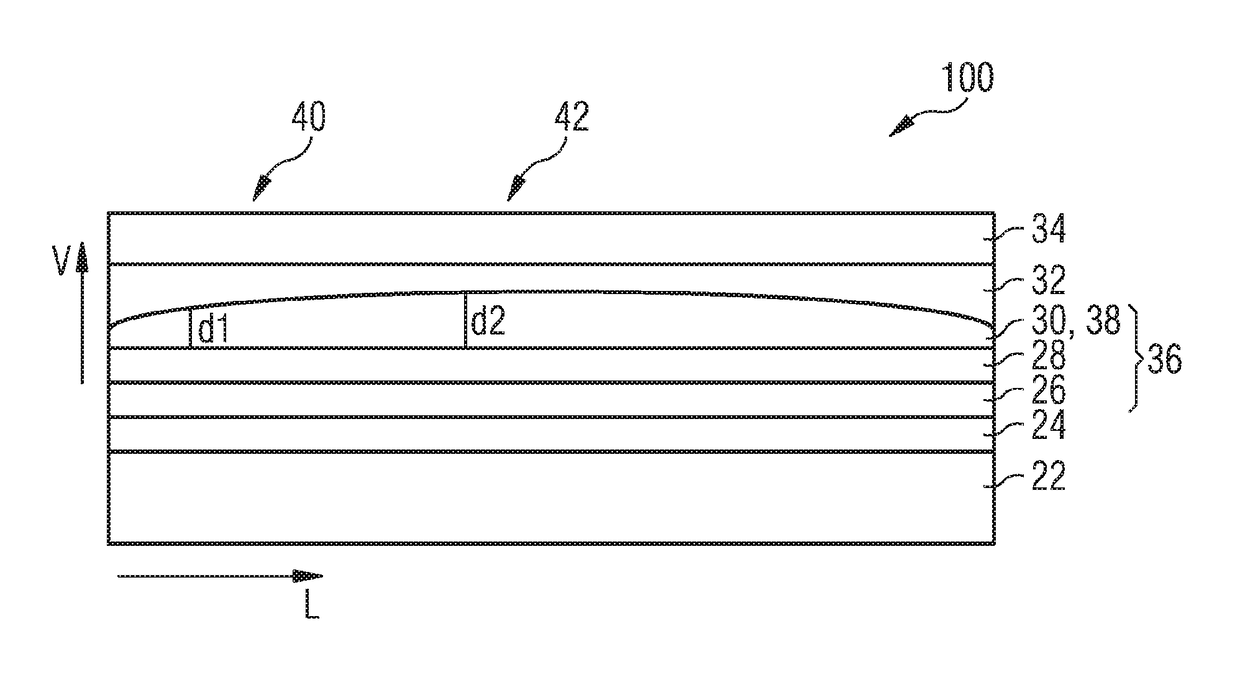
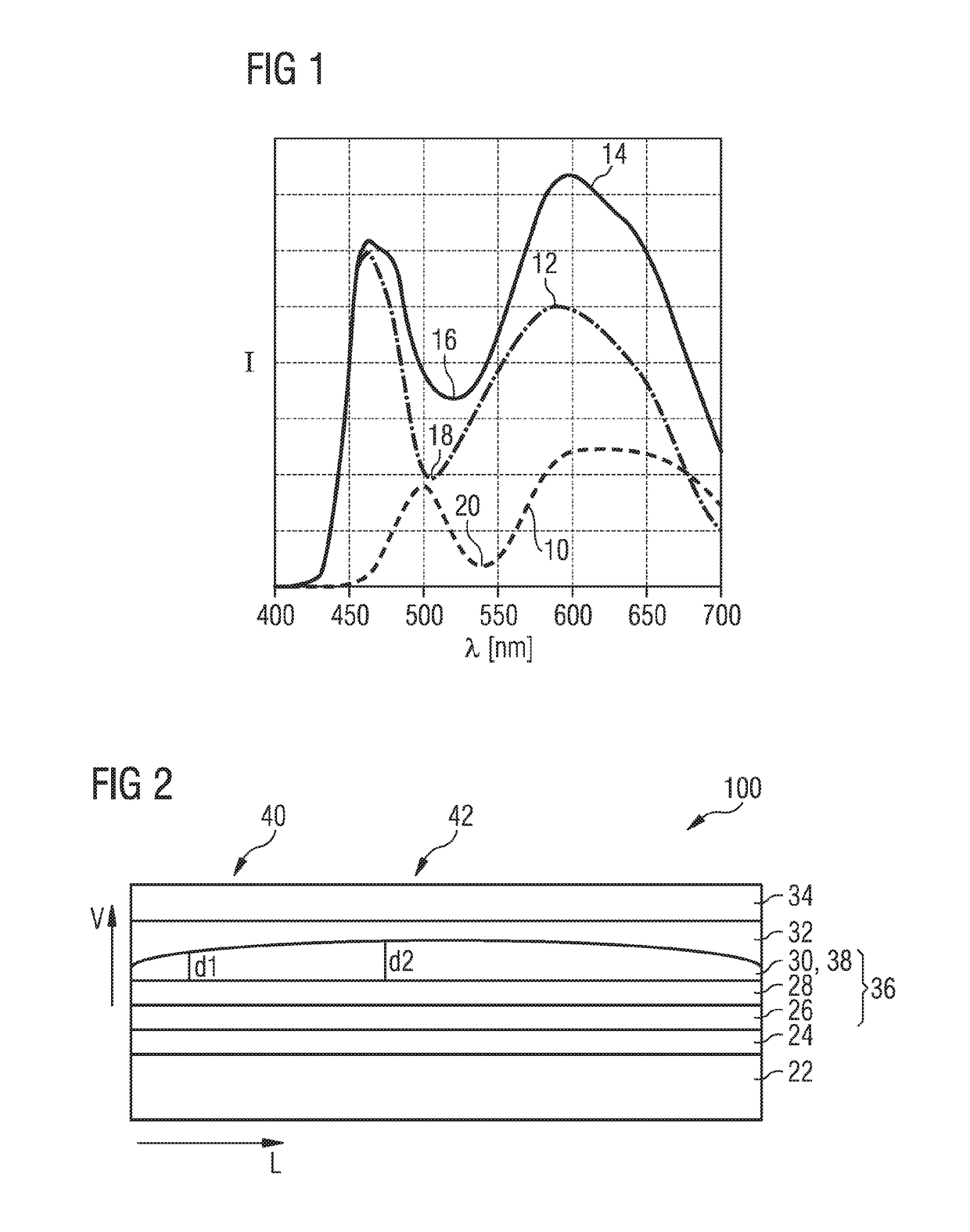
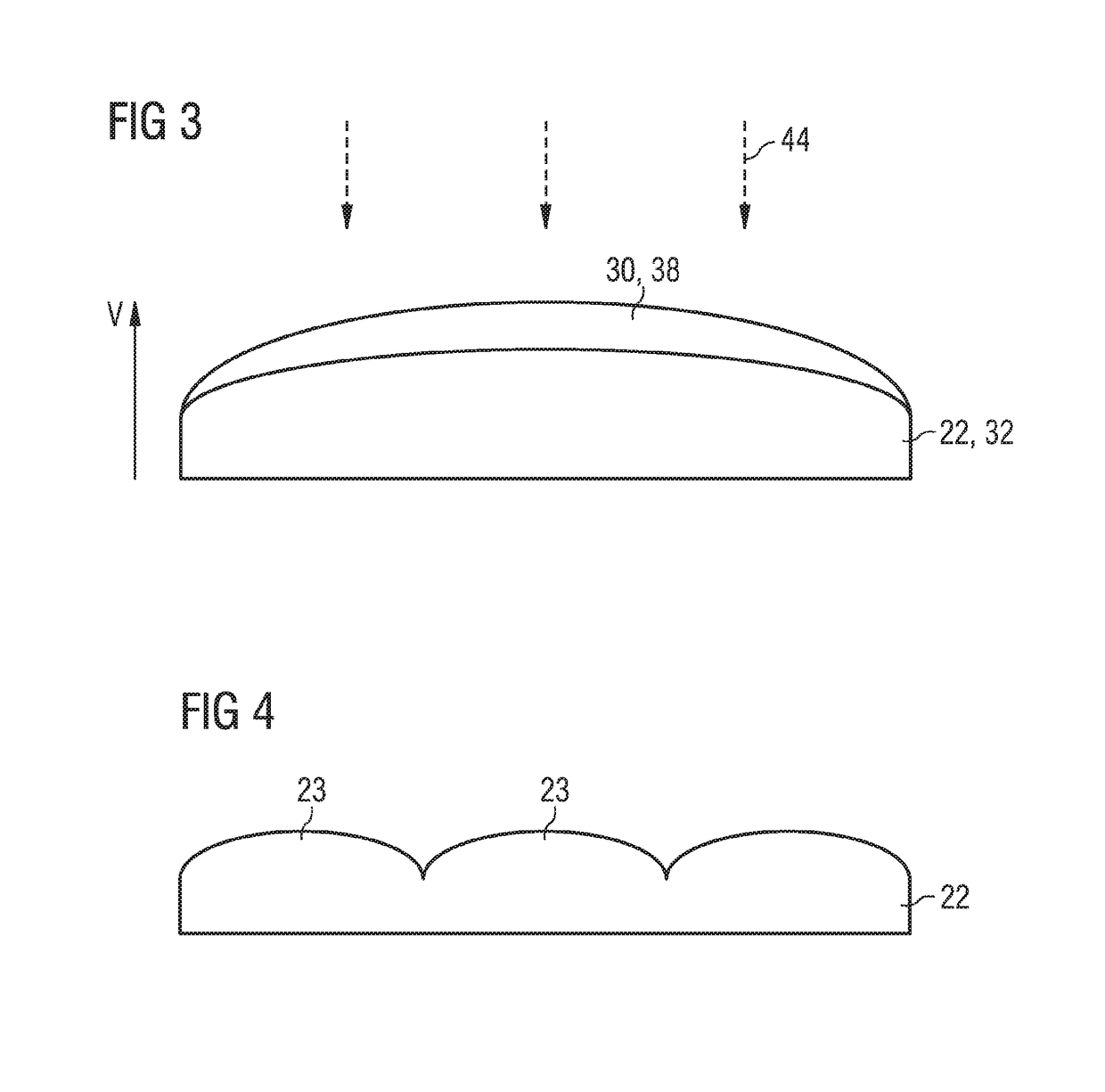
- Incorporating an inhomogeneity layer with varying thickness in the organic light-emitting device's layer stack, which modifies the geometrical boundary conditions, allowing for the reduction of suppression and enhancement of specific spectral regions, thereby improving the Color Rendering Index without significantly increasing the operating voltage.

Improved tandem OLED device
PatentWO2009005597A1
Innovation
- Incorporating an organic gallium complex in the n-type doped organic layer of the connector, which includes an electron accepting organic layer and an n-type doped organic layer, to reduce drive voltage and maintain chromaticity near CIE D65, allowing for a tandem OLED device with improved luminous efficiency and extended lifetime.


Manufacturing Standards for Tandem OLED Production
The establishment of comprehensive manufacturing standards for tandem OLED production represents a critical foundation for achieving consistent optical performance and minimizing losses quantified through transfer-matrix modeling. These standards must address the precise control of layer thickness, material purity, and interface quality that directly impact optical transmission and reflection characteristics within the complex multilayer structure.
Substrate preparation standards require stringent cleanliness protocols and surface treatment specifications to ensure optimal adhesion and optical clarity. The substrate must meet flatness tolerances within nanometer ranges, as surface irregularities can introduce scattering losses that significantly affect the transfer-matrix calculations. Temperature and humidity control during substrate handling prevents contamination that could alter refractive index profiles.
Deposition process standards encompass vacuum levels, deposition rates, and temperature control for each functional layer. Organic material deposition requires precise control of evaporation rates to maintain stoichiometric ratios and prevent optical constant variations. The intermediate connecting layer, crucial for tandem architecture, demands particularly tight thickness control as variations directly influence optical coupling efficiency between sub-cells.
Quality control protocols must include real-time monitoring of layer thickness using spectroscopic ellipsometry or similar techniques. These measurements provide immediate feedback for process adjustments and generate data essential for accurate transfer-matrix modeling. Optical constant verification through spectrophotometry ensures material properties align with theoretical models used in loss calculations.
Environmental control standards specify cleanroom classifications, particulate limits, and atmospheric composition during manufacturing. Oxygen and moisture levels require continuous monitoring as these contaminants can degrade organic materials and alter optical properties. Lighting conditions must utilize specific wavelengths to prevent photodegradation of light-sensitive materials during processing.
Encapsulation standards address barrier layer requirements and sealing procedures that maintain optical integrity throughout device lifetime. The encapsulation process must preserve the carefully controlled optical stack while providing environmental protection, ensuring that transfer-matrix modeling predictions remain valid under operational conditions.
Substrate preparation standards require stringent cleanliness protocols and surface treatment specifications to ensure optimal adhesion and optical clarity. The substrate must meet flatness tolerances within nanometer ranges, as surface irregularities can introduce scattering losses that significantly affect the transfer-matrix calculations. Temperature and humidity control during substrate handling prevents contamination that could alter refractive index profiles.
Deposition process standards encompass vacuum levels, deposition rates, and temperature control for each functional layer. Organic material deposition requires precise control of evaporation rates to maintain stoichiometric ratios and prevent optical constant variations. The intermediate connecting layer, crucial for tandem architecture, demands particularly tight thickness control as variations directly influence optical coupling efficiency between sub-cells.
Quality control protocols must include real-time monitoring of layer thickness using spectroscopic ellipsometry or similar techniques. These measurements provide immediate feedback for process adjustments and generate data essential for accurate transfer-matrix modeling. Optical constant verification through spectrophotometry ensures material properties align with theoretical models used in loss calculations.
Environmental control standards specify cleanroom classifications, particulate limits, and atmospheric composition during manufacturing. Oxygen and moisture levels require continuous monitoring as these contaminants can degrade organic materials and alter optical properties. Lighting conditions must utilize specific wavelengths to prevent photodegradation of light-sensitive materials during processing.
Encapsulation standards address barrier layer requirements and sealing procedures that maintain optical integrity throughout device lifetime. The encapsulation process must preserve the carefully controlled optical stack while providing environmental protection, ensuring that transfer-matrix modeling predictions remain valid under operational conditions.
Energy Efficiency Regulations for Advanced Display Technologies
The regulatory landscape for advanced display technologies is experiencing unprecedented transformation as governments worldwide recognize the critical role of energy efficiency in combating climate change and reducing electronic waste. Traditional display regulations, primarily focused on basic power consumption metrics, are evolving to address the sophisticated energy management requirements of next-generation technologies like tandem OLEDs. These emerging frameworks necessitate comprehensive optical loss quantification methodologies to establish accurate efficiency baselines and performance standards.
Current regulatory initiatives span multiple jurisdictions, with the European Union leading through its Ecodesign Directive extensions and Energy Labeling Regulation updates specifically targeting advanced display systems. The United States Environmental Protection Agency has similarly expanded ENERGY STAR criteria to encompass multi-layer OLED architectures, while Asian markets including Japan, South Korea, and China are developing parallel frameworks that emphasize both energy efficiency and manufacturing sustainability metrics.
The complexity of tandem OLED structures presents unique regulatory challenges that traditional measurement protocols cannot adequately address. Existing standards primarily rely on surface-level power consumption assessments, failing to capture the intricate optical losses occurring within multi-layer architectures. Transfer-matrix modeling emerges as a critical tool for regulatory compliance, enabling precise quantification of internal optical losses that significantly impact overall device efficiency ratings.
Regulatory bodies are increasingly demanding detailed optical loss documentation as part of certification processes, requiring manufacturers to demonstrate comprehensive understanding of energy dissipation mechanisms within their devices. This shift toward granular efficiency analysis reflects growing recognition that surface-level measurements inadequately represent true device performance, particularly for advanced architectures where internal optical losses can account for substantial energy waste.
Future regulatory developments indicate mandatory adoption of sophisticated modeling techniques for efficiency certification, with transfer-matrix methodologies likely becoming standard requirements for tandem OLED compliance. Manufacturers must prepare for increasingly stringent documentation requirements that demand precise optical loss quantification, positioning advanced modeling capabilities as essential components of regulatory strategy rather than optional research tools.
Current regulatory initiatives span multiple jurisdictions, with the European Union leading through its Ecodesign Directive extensions and Energy Labeling Regulation updates specifically targeting advanced display systems. The United States Environmental Protection Agency has similarly expanded ENERGY STAR criteria to encompass multi-layer OLED architectures, while Asian markets including Japan, South Korea, and China are developing parallel frameworks that emphasize both energy efficiency and manufacturing sustainability metrics.
The complexity of tandem OLED structures presents unique regulatory challenges that traditional measurement protocols cannot adequately address. Existing standards primarily rely on surface-level power consumption assessments, failing to capture the intricate optical losses occurring within multi-layer architectures. Transfer-matrix modeling emerges as a critical tool for regulatory compliance, enabling precise quantification of internal optical losses that significantly impact overall device efficiency ratings.
Regulatory bodies are increasingly demanding detailed optical loss documentation as part of certification processes, requiring manufacturers to demonstrate comprehensive understanding of energy dissipation mechanisms within their devices. This shift toward granular efficiency analysis reflects growing recognition that surface-level measurements inadequately represent true device performance, particularly for advanced architectures where internal optical losses can account for substantial energy waste.
Future regulatory developments indicate mandatory adoption of sophisticated modeling techniques for efficiency certification, with transfer-matrix methodologies likely becoming standard requirements for tandem OLED compliance. Manufacturers must prepare for increasingly stringent documentation requirements that demand precise optical loss quantification, positioning advanced modeling capabilities as essential components of regulatory strategy rather than optional research tools.
Unlock deeper insights with PatSnap Eureka Quick Research — get a full tech report to explore trends and direct your research. Try now!
Generate Your Research Report Instantly with AI Agent
Supercharge your innovation with PatSnap Eureka AI Agent Platform!