
Quantify THD in Grid-forming Inverters Using FFT Analysis
APR 7, 20269 MIN READ
Generate Your Research Report Instantly with AI Agent
Patsnap Eureka helps you evaluate technical feasibility & market potential.
Grid-forming Inverter THD Background and Objectives
Grid-forming inverters represent a paradigm shift in power electronics, evolving from traditional grid-following inverters that rely on existing grid voltage and frequency references. Unlike their predecessors, grid-forming inverters possess the capability to establish and maintain grid voltage and frequency independently, making them essential for modern power systems with high renewable energy penetration and microgrid applications.
The development of grid-forming technology emerged from the increasing need for grid stability as conventional synchronous generators are gradually replaced by renewable energy sources. Traditional grid-following inverters require a strong grid connection to operate effectively, but as the proportion of inverter-based resources grows, the grid becomes weaker and more susceptible to instability. Grid-forming inverters address this challenge by providing virtual inertia and voltage support, essentially mimicking the behavior of synchronous machines.
Total Harmonic Distortion has become a critical parameter in evaluating grid-forming inverter performance due to its direct impact on power quality and grid compliance. THD quantifies the deviation of the output waveform from a pure sinusoidal signal, expressed as the ratio of harmonic content to the fundamental frequency component. In grid-forming applications, maintaining low THD levels is crucial for ensuring compatibility with sensitive loads and meeting stringent grid codes.
The significance of THD analysis in grid-forming inverters extends beyond basic power quality considerations. These inverters must maintain stable operation under various loading conditions, including nonlinear loads that can introduce harmonic distortion back into the system. The ability to accurately quantify THD enables engineers to optimize control algorithms, filter designs, and switching strategies to minimize harmonic content while maintaining system stability.
Fast Fourier Transform analysis has emerged as the predominant method for THD quantification due to its computational efficiency and accuracy in frequency domain analysis. FFT enables real-time monitoring and control of harmonic content, facilitating adaptive control strategies that can respond dynamically to changing grid conditions. This capability is particularly important for grid-forming inverters operating in islanded mode or weak grid conditions.
The primary objective of implementing FFT-based THD analysis in grid-forming inverters encompasses multiple technical goals. These include achieving compliance with international standards such as IEEE 519 and IEC 61000, optimizing inverter control performance under diverse operating conditions, and enabling predictive maintenance through continuous harmonic monitoring. Additionally, accurate THD quantification supports the development of advanced control algorithms that can proactively mitigate harmonic distortion while maintaining grid stability and power quality standards.
The development of grid-forming technology emerged from the increasing need for grid stability as conventional synchronous generators are gradually replaced by renewable energy sources. Traditional grid-following inverters require a strong grid connection to operate effectively, but as the proportion of inverter-based resources grows, the grid becomes weaker and more susceptible to instability. Grid-forming inverters address this challenge by providing virtual inertia and voltage support, essentially mimicking the behavior of synchronous machines.
Total Harmonic Distortion has become a critical parameter in evaluating grid-forming inverter performance due to its direct impact on power quality and grid compliance. THD quantifies the deviation of the output waveform from a pure sinusoidal signal, expressed as the ratio of harmonic content to the fundamental frequency component. In grid-forming applications, maintaining low THD levels is crucial for ensuring compatibility with sensitive loads and meeting stringent grid codes.
The significance of THD analysis in grid-forming inverters extends beyond basic power quality considerations. These inverters must maintain stable operation under various loading conditions, including nonlinear loads that can introduce harmonic distortion back into the system. The ability to accurately quantify THD enables engineers to optimize control algorithms, filter designs, and switching strategies to minimize harmonic content while maintaining system stability.
Fast Fourier Transform analysis has emerged as the predominant method for THD quantification due to its computational efficiency and accuracy in frequency domain analysis. FFT enables real-time monitoring and control of harmonic content, facilitating adaptive control strategies that can respond dynamically to changing grid conditions. This capability is particularly important for grid-forming inverters operating in islanded mode or weak grid conditions.
The primary objective of implementing FFT-based THD analysis in grid-forming inverters encompasses multiple technical goals. These include achieving compliance with international standards such as IEEE 519 and IEC 61000, optimizing inverter control performance under diverse operating conditions, and enabling predictive maintenance through continuous harmonic monitoring. Additionally, accurate THD quantification supports the development of advanced control algorithms that can proactively mitigate harmonic distortion while maintaining grid stability and power quality standards.
Market Demand for Low-THD Grid-forming Solutions
The global power electronics market is experiencing unprecedented growth driven by the accelerating transition toward renewable energy systems and grid modernization initiatives. Grid-forming inverters represent a critical technology enabling this transformation, as they provide essential grid stabilization services that traditional grid-following inverters cannot deliver. The ability to maintain grid voltage and frequency independently makes these systems indispensable for microgrids, islanded operations, and weak grid applications.
Total Harmonic Distortion has emerged as a paramount concern in modern power systems, directly impacting power quality, equipment lifespan, and regulatory compliance. Utilities and industrial customers are increasingly demanding solutions that maintain THD levels well below regulatory thresholds while providing robust grid-forming capabilities. This demand is particularly acute in applications involving sensitive electronic equipment, data centers, and precision manufacturing facilities where power quality directly affects operational efficiency and equipment reliability.
The renewable energy sector represents the largest market segment driving demand for low-THD grid-forming solutions. Solar and wind installations require inverters capable of seamlessly transitioning between grid-tied and islanded modes while maintaining exceptional power quality. Energy storage systems integration further amplifies this need, as these systems must provide clean, stable power during both charging and discharging cycles.
Industrial microgrids constitute another rapidly expanding market segment. Manufacturing facilities, hospitals, and critical infrastructure operators require uninterrupted power supply with minimal harmonic content. These applications often involve substantial investments in sensitive equipment that can be damaged or disrupted by poor power quality, making low-THD performance a non-negotiable requirement rather than a desirable feature.
Regulatory frameworks worldwide are tightening harmonic distortion limits, creating additional market pressure for advanced THD quantification and control technologies. Standards such as IEEE 519 and IEC 61000 series establish strict THD limits that grid-forming inverters must consistently meet across varying load conditions and operating scenarios.
The market demand extends beyond hardware solutions to encompass advanced monitoring and analysis capabilities. Real-time THD quantification using FFT analysis enables predictive maintenance, performance optimization, and compliance verification. This creates opportunities for integrated solutions combining hardware excellence with sophisticated analytical capabilities, positioning companies that master both aspects for significant competitive advantage in the evolving power electronics landscape.
Total Harmonic Distortion has emerged as a paramount concern in modern power systems, directly impacting power quality, equipment lifespan, and regulatory compliance. Utilities and industrial customers are increasingly demanding solutions that maintain THD levels well below regulatory thresholds while providing robust grid-forming capabilities. This demand is particularly acute in applications involving sensitive electronic equipment, data centers, and precision manufacturing facilities where power quality directly affects operational efficiency and equipment reliability.
The renewable energy sector represents the largest market segment driving demand for low-THD grid-forming solutions. Solar and wind installations require inverters capable of seamlessly transitioning between grid-tied and islanded modes while maintaining exceptional power quality. Energy storage systems integration further amplifies this need, as these systems must provide clean, stable power during both charging and discharging cycles.
Industrial microgrids constitute another rapidly expanding market segment. Manufacturing facilities, hospitals, and critical infrastructure operators require uninterrupted power supply with minimal harmonic content. These applications often involve substantial investments in sensitive equipment that can be damaged or disrupted by poor power quality, making low-THD performance a non-negotiable requirement rather than a desirable feature.
Regulatory frameworks worldwide are tightening harmonic distortion limits, creating additional market pressure for advanced THD quantification and control technologies. Standards such as IEEE 519 and IEC 61000 series establish strict THD limits that grid-forming inverters must consistently meet across varying load conditions and operating scenarios.
The market demand extends beyond hardware solutions to encompass advanced monitoring and analysis capabilities. Real-time THD quantification using FFT analysis enables predictive maintenance, performance optimization, and compliance verification. This creates opportunities for integrated solutions combining hardware excellence with sophisticated analytical capabilities, positioning companies that master both aspects for significant competitive advantage in the evolving power electronics landscape.
Current THD Challenges in Grid-forming Inverters
Grid-forming inverters face significant total harmonic distortion challenges that fundamentally impact their ability to maintain stable grid operations. Unlike grid-following inverters that synchronize with existing grid voltage, grid-forming inverters must independently establish and maintain voltage waveform quality, making them inherently more susceptible to harmonic generation and propagation.
The primary THD challenge stems from the inverter's switching behavior and control system limitations. High-frequency switching operations create inherent harmonic content that requires sophisticated filtering and control strategies. Traditional PWM switching techniques, while effective for basic power conversion, introduce characteristic harmonics at switching frequencies and their multiples, creating complex spectral signatures that can exceed acceptable THD limits.
Control system bandwidth limitations present another critical challenge. Grid-forming inverters must simultaneously manage voltage magnitude, frequency regulation, and harmonic suppression while responding to dynamic load changes. The finite bandwidth of control loops creates delays in harmonic compensation, particularly for higher-order harmonics that require faster response times than conventional control systems can provide.
Nonlinear load interactions significantly exacerbate THD issues in grid-forming applications. When serving rectifier loads, motor drives, or other nonlinear equipment, these inverters must absorb harmonic currents while maintaining sinusoidal output voltage. This dual requirement creates a fundamental tension between voltage quality maintenance and current handling capability, often resulting in voltage distortion that propagates throughout the microgrid.
Grid impedance variations introduce additional complexity to THD management. Unlike utility grids with relatively stable impedance characteristics, microgrids served by grid-forming inverters experience significant impedance fluctuations due to load switching, cable configurations, and parallel inverter operations. These variations alter harmonic resonance points and modify the effectiveness of harmonic mitigation strategies.
Multiple inverter interactions create resonance phenomena that amplify specific harmonic frequencies. When several grid-forming inverters operate in parallel, their individual control systems can interact in ways that create unstable harmonic conditions. These interactions are particularly problematic in the frequency ranges where individual inverter control bandwidths overlap, leading to harmonic amplification rather than cancellation.
Temperature and aging effects compound THD challenges over operational lifetimes. Component parameter drift affects filter characteristics and control system performance, gradually degrading harmonic suppression capabilities. Power semiconductor aging alters switching characteristics, while passive component degradation reduces filter effectiveness, creating time-varying THD performance that requires adaptive compensation strategies.
The primary THD challenge stems from the inverter's switching behavior and control system limitations. High-frequency switching operations create inherent harmonic content that requires sophisticated filtering and control strategies. Traditional PWM switching techniques, while effective for basic power conversion, introduce characteristic harmonics at switching frequencies and their multiples, creating complex spectral signatures that can exceed acceptable THD limits.
Control system bandwidth limitations present another critical challenge. Grid-forming inverters must simultaneously manage voltage magnitude, frequency regulation, and harmonic suppression while responding to dynamic load changes. The finite bandwidth of control loops creates delays in harmonic compensation, particularly for higher-order harmonics that require faster response times than conventional control systems can provide.
Nonlinear load interactions significantly exacerbate THD issues in grid-forming applications. When serving rectifier loads, motor drives, or other nonlinear equipment, these inverters must absorb harmonic currents while maintaining sinusoidal output voltage. This dual requirement creates a fundamental tension between voltage quality maintenance and current handling capability, often resulting in voltage distortion that propagates throughout the microgrid.
Grid impedance variations introduce additional complexity to THD management. Unlike utility grids with relatively stable impedance characteristics, microgrids served by grid-forming inverters experience significant impedance fluctuations due to load switching, cable configurations, and parallel inverter operations. These variations alter harmonic resonance points and modify the effectiveness of harmonic mitigation strategies.
Multiple inverter interactions create resonance phenomena that amplify specific harmonic frequencies. When several grid-forming inverters operate in parallel, their individual control systems can interact in ways that create unstable harmonic conditions. These interactions are particularly problematic in the frequency ranges where individual inverter control bandwidths overlap, leading to harmonic amplification rather than cancellation.
Temperature and aging effects compound THD challenges over operational lifetimes. Component parameter drift affects filter characteristics and control system performance, gradually degrading harmonic suppression capabilities. Power semiconductor aging alters switching characteristics, while passive component degradation reduces filter effectiveness, creating time-varying THD performance that requires adaptive compensation strategies.
Existing FFT THD Quantification Solutions
01 Advanced control strategies for THD reduction in grid-forming inverters
Grid-forming inverters employ sophisticated control algorithms to minimize total harmonic distortion (THD) in the output voltage and current. These control strategies include proportional-resonant controllers, repetitive controllers, and multi-loop control schemes that actively suppress harmonic components. The control methods focus on improving voltage quality by reducing harmonic content through precise regulation of the inverter switching patterns and feedback compensation mechanisms.- Control strategies for reducing THD in grid-forming inverters: Various control strategies can be implemented in grid-forming inverters to reduce total harmonic distortion (THD). These include advanced modulation techniques, harmonic compensation algorithms, and feedback control methods that actively monitor and suppress harmonic content in the output voltage and current. The control strategies aim to maintain sinusoidal waveforms and improve power quality by minimizing distortion components.
- Filter design and optimization for THD reduction: Proper design and optimization of output filters, including LC, LCL, and higher-order filters, play a crucial role in reducing THD in grid-forming inverters. Filter parameters such as inductance, capacitance, and damping resistance are carefully selected to attenuate high-frequency harmonics while maintaining system stability and dynamic response. Advanced filter topologies can effectively suppress harmonic distortion and improve the quality of the output waveform.
- PWM techniques and switching frequency optimization: Pulse width modulation (PWM) techniques and switching frequency selection significantly impact THD performance in grid-forming inverters. Advanced PWM methods such as space vector modulation, selective harmonic elimination, and multi-level modulation can reduce harmonic content. Optimizing switching frequency balances between harmonic performance and switching losses, contributing to lower THD while maintaining efficiency.
- Virtual impedance and droop control for harmonic mitigation: Virtual impedance concepts and droop control methods can be employed in grid-forming inverters to improve harmonic performance and reduce THD. These techniques provide additional degrees of freedom in shaping the inverter output impedance characteristics, enabling better harmonic current sharing and suppression in both standalone and parallel operation modes. The virtual impedance can be designed to present high impedance at harmonic frequencies.
- Multi-level inverter topologies for improved THD: Multi-level inverter topologies offer inherent advantages in reducing THD compared to conventional two-level inverters. These topologies generate output voltages with multiple levels, resulting in waveforms that more closely approximate sinusoidal shapes with reduced harmonic content. Various multi-level configurations including neutral-point-clamped, flying capacitor, and cascaded H-bridge topologies can be utilized in grid-forming applications to achieve lower THD.
02 Filter design and optimization for harmonic mitigation
The implementation of optimized filter configurations plays a crucial role in reducing THD in grid-forming inverters. Various filter topologies including LC, LCL, and higher-order filters are designed to attenuate switching harmonics and improve power quality. Filter parameter optimization considers trade-offs between harmonic attenuation, system stability, dynamic response, and cost-effectiveness to achieve acceptable THD levels while maintaining system performance.Expand Specific Solutions03 Modulation techniques for harmonic content reduction
Advanced modulation strategies are employed in grid-forming inverters to inherently reduce harmonic generation at the source. These techniques include space vector modulation, selective harmonic elimination, and optimized pulse width modulation schemes that minimize low-order harmonics. The modulation methods are designed to distribute harmonic energy across higher frequency ranges where filtering is more effective, thereby improving the overall THD performance.Expand Specific Solutions04 Virtual impedance and damping methods for THD improvement
Virtual impedance techniques are implemented in grid-forming inverters to enhance system stability and reduce harmonic distortion. These methods emulate resistive, inductive, or capacitive characteristics through control algorithms without physical components. Virtual damping strategies help suppress resonances and harmonic oscillations that contribute to elevated THD levels, particularly in weak grid conditions or when multiple inverters operate in parallel.Expand Specific Solutions05 Real-time harmonic monitoring and adaptive compensation
Grid-forming inverters incorporate real-time THD monitoring systems with adaptive compensation capabilities to maintain power quality under varying operating conditions. These systems continuously measure harmonic content and dynamically adjust control parameters or inject compensating signals to counteract distortion. The adaptive approach enables the inverter to respond to changes in load characteristics, grid impedance variations, and other factors that influence harmonic performance.Expand Specific Solutions
Key Players in Grid-forming Inverter Technology
The grid-forming inverter THD quantification using FFT analysis represents a rapidly evolving sector within the broader power electronics and renewable energy integration market. The industry is transitioning from early adoption to mainstream deployment, driven by increasing renewable energy penetration and grid modernization requirements. Market growth is substantial, with global inverter markets projected to reach multi-billion dollar valuations by 2030. Technology maturity varies significantly among key players: established giants like Hitachi Ltd., Mitsubishi Electric Corp., and Eaton Corp. demonstrate advanced capabilities in power systems integration, while specialized semiconductor companies such as Wolfspeed Inc. lead in wide bandgap device innovation. Chinese state enterprises including State Grid Corp. of China and TBEA subsidiaries focus on large-scale grid applications, whereas technology leaders like Sony Group Corp. and Sharp Corp. contribute advanced semiconductor solutions. Academic institutions like Rutgers University and Institute of Science Tokyo drive fundamental research, creating a competitive landscape characterized by both technological sophistication and market fragmentation across different application segments.
State Grid Corp. of China
Technical Solution: State Grid has developed comprehensive THD measurement and analysis systems for grid-forming inverters using advanced FFT algorithms. Their approach integrates real-time harmonic monitoring with adaptive filtering techniques to accurately quantify THD under varying grid conditions. The system employs high-resolution FFT analysis with windowing functions to minimize spectral leakage and improve measurement accuracy. They have implemented distributed measurement networks that can simultaneously monitor multiple inverter installations, providing centralized THD assessment capabilities. The technology includes automated reporting systems that track THD compliance with grid codes and standards, enabling proactive maintenance and optimization of inverter performance in large-scale renewable energy installations.
Strengths: Extensive grid infrastructure experience, comprehensive monitoring capabilities, proven large-scale deployment. Weaknesses: May lack cutting-edge semiconductor innovations, potentially slower adaptation to emerging inverter technologies.
Hitachi Ltd.
Technical Solution: Hitachi has developed integrated power electronics solutions with embedded THD monitoring capabilities using advanced FFT analysis techniques. Their system combines hardware-based signal conditioning with software-defined measurement algorithms that can adapt to different inverter topologies and control strategies. The technology features high-speed data acquisition systems capable of capturing transient harmonic behavior during grid-forming mode transitions. Hitachi's approach includes predictive analytics that use historical THD data to optimize inverter control parameters and minimize harmonic distortion. They have implemented distributed measurement architectures that enable coordinated THD assessment across multiple grid-forming inverters in microgrid applications. The solution integrates with existing SCADA systems and provides standardized communication protocols for seamless integration with grid management systems.
Strengths: Comprehensive industrial automation experience, integrated hardware-software solutions, strong grid infrastructure knowledge. Weaknesses: May have slower innovation cycles compared to specialized power electronics companies, potentially higher system complexity.
Core FFT Algorithms for Inverter THD Analysis
Power waveform harmonic analysis using summed samples
PatentActiveUS7502237B2
Innovation
- The method involves recursively processing power waveform samples to generate aggregate and harmonic component signal energy values, using bin-limited DFT computations and adjusting sampling periods to maintain a fixed number of samples within the estimated period of the first harmonic, thereby reducing computational and memory requirements.
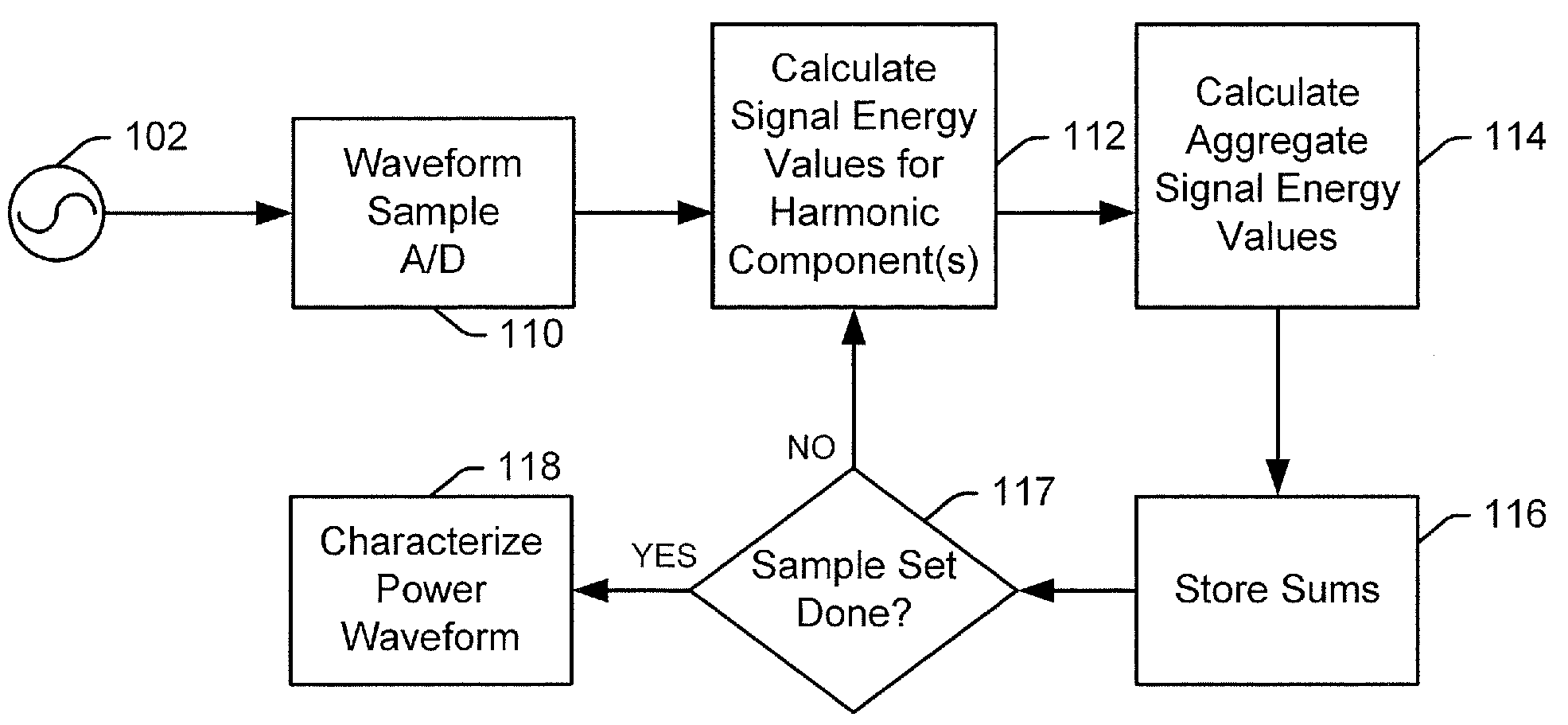
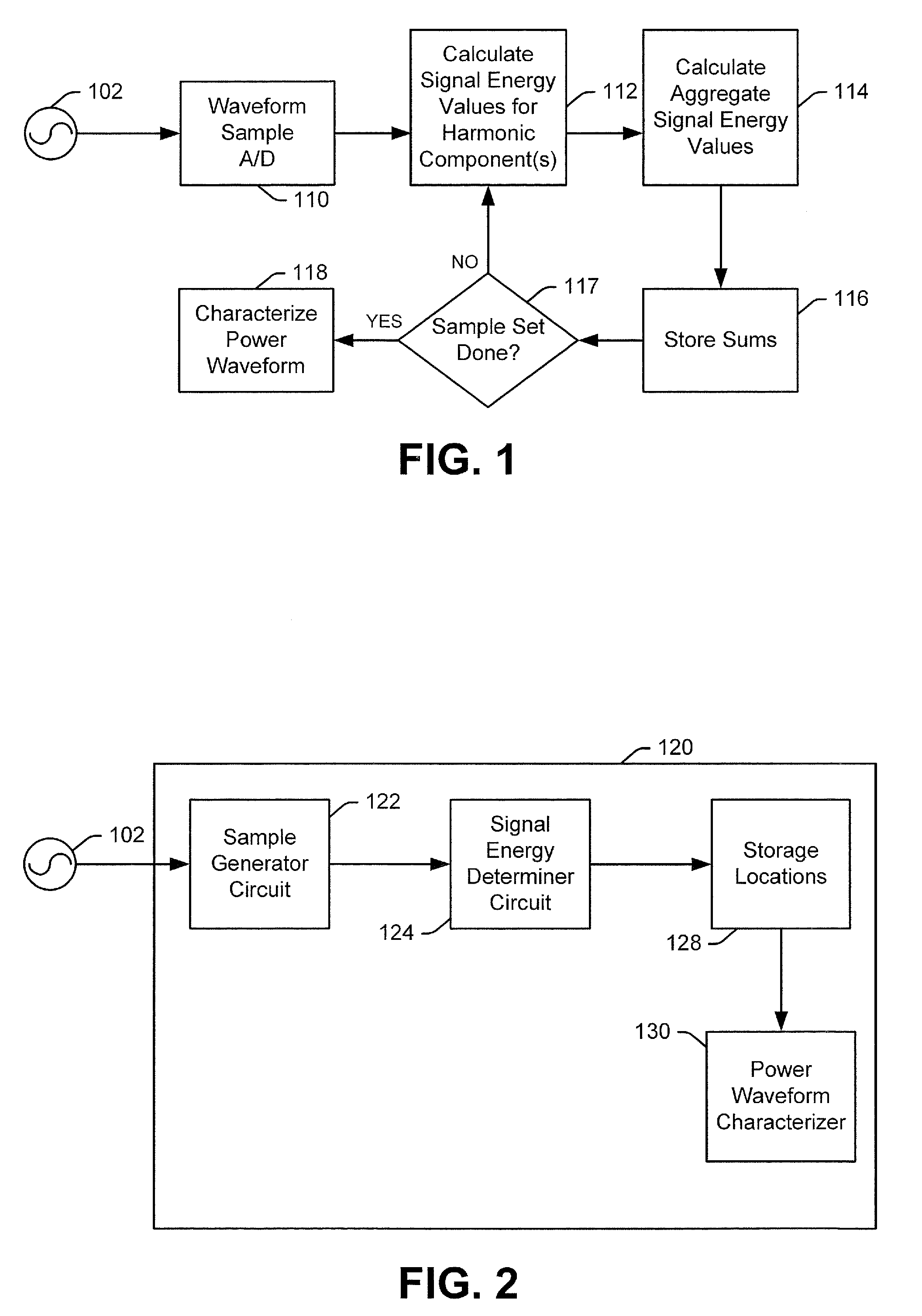
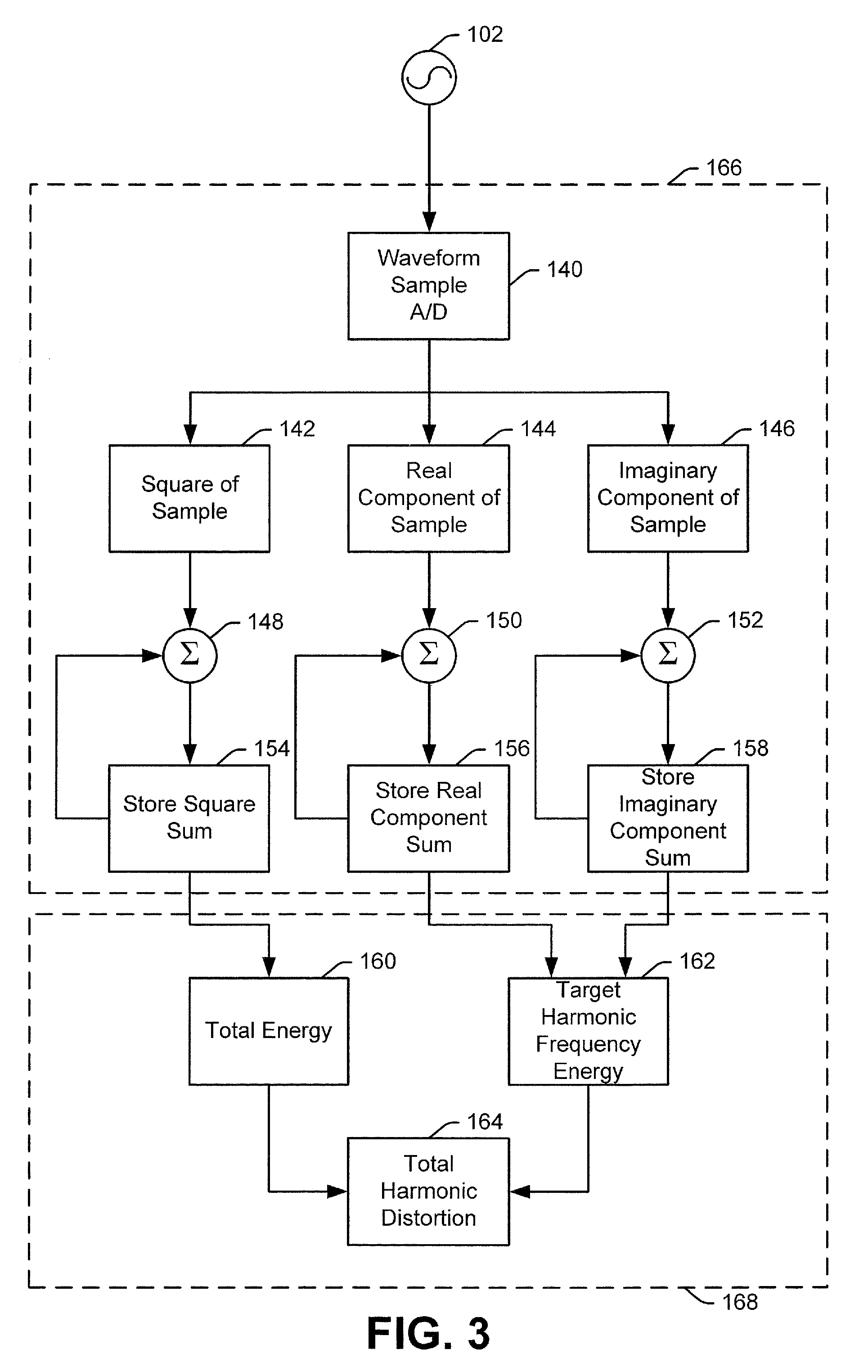

Method for measurement of total harmonic distortion
PatentActiveUS20120081104A1
Innovation
- A multi-pass method using a narrow band filtering algorithm, such as the Goertzel algorithm, is employed to filter out broadband noise and accurately determine THD by analyzing signal measurements at specific harmonic frequencies, reducing computational requirements and improving accuracy.


Grid Code Standards for Inverter THD Compliance
Grid code standards represent the regulatory framework that governs the integration and operation of grid-forming inverters within electrical power systems. These standards establish mandatory requirements for Total Harmonic Distortion (THD) levels to ensure power quality, system stability, and electromagnetic compatibility across diverse grid infrastructures.
International standards such as IEEE 519, IEC 61000-3-6, and EN 50160 define specific THD limits for grid-connected inverters. IEEE 519 typically restricts voltage THD to 5% at the point of common coupling, while current THD limits vary based on the short-circuit ratio and system voltage levels. These thresholds ensure that harmonic emissions from grid-forming inverters do not compromise the overall power quality or interfere with other connected equipment.
Regional grid codes introduce additional complexity through jurisdiction-specific requirements. European grid codes under the Network Code on Requirements for Grid Connection emphasize dynamic THD compliance during transient conditions. North American standards focus on steady-state harmonic performance with stringent measurement protocols. Asian markets, particularly in China and Japan, have developed hybrid approaches combining international standards with local grid characteristics and renewable energy integration targets.
Compliance verification procedures mandate rigorous testing methodologies that directly relate to FFT-based THD quantification. Grid codes specify measurement windows, sampling frequencies, and harmonic analysis techniques that align with FFT implementation requirements. These standards typically require continuous monitoring capabilities, establishing the foundation for real-time THD assessment using digital signal processing techniques.
The evolution of grid codes reflects the increasing penetration of grid-forming inverters in modern power systems. Recent updates emphasize adaptive THD limits based on grid conditions, requiring sophisticated measurement and control systems. Future regulatory trends indicate movement toward dynamic compliance frameworks that can accommodate the variable nature of renewable energy sources while maintaining stringent power quality standards.
Certification processes under these grid codes necessitate comprehensive harmonic analysis capabilities, making FFT-based THD quantification an essential requirement rather than an optional feature. This regulatory landscape drives the technical specifications for measurement accuracy, response time, and computational efficiency in grid-forming inverter designs.
International standards such as IEEE 519, IEC 61000-3-6, and EN 50160 define specific THD limits for grid-connected inverters. IEEE 519 typically restricts voltage THD to 5% at the point of common coupling, while current THD limits vary based on the short-circuit ratio and system voltage levels. These thresholds ensure that harmonic emissions from grid-forming inverters do not compromise the overall power quality or interfere with other connected equipment.
Regional grid codes introduce additional complexity through jurisdiction-specific requirements. European grid codes under the Network Code on Requirements for Grid Connection emphasize dynamic THD compliance during transient conditions. North American standards focus on steady-state harmonic performance with stringent measurement protocols. Asian markets, particularly in China and Japan, have developed hybrid approaches combining international standards with local grid characteristics and renewable energy integration targets.
Compliance verification procedures mandate rigorous testing methodologies that directly relate to FFT-based THD quantification. Grid codes specify measurement windows, sampling frequencies, and harmonic analysis techniques that align with FFT implementation requirements. These standards typically require continuous monitoring capabilities, establishing the foundation for real-time THD assessment using digital signal processing techniques.
The evolution of grid codes reflects the increasing penetration of grid-forming inverters in modern power systems. Recent updates emphasize adaptive THD limits based on grid conditions, requiring sophisticated measurement and control systems. Future regulatory trends indicate movement toward dynamic compliance frameworks that can accommodate the variable nature of renewable energy sources while maintaining stringent power quality standards.
Certification processes under these grid codes necessitate comprehensive harmonic analysis capabilities, making FFT-based THD quantification an essential requirement rather than an optional feature. This regulatory landscape drives the technical specifications for measurement accuracy, response time, and computational efficiency in grid-forming inverter designs.
Power Quality Impact Assessment Methods
Power quality assessment in grid-forming inverter systems requires comprehensive methodological frameworks that can accurately evaluate the impact of harmonic distortion on electrical networks. The quantification of Total Harmonic Distortion (THD) through Fast Fourier Transform (FFT) analysis represents a fundamental component within broader power quality evaluation strategies, necessitating systematic approaches that integrate multiple assessment dimensions.
Traditional power quality impact assessment methods have evolved from simple voltage and frequency monitoring to sophisticated multi-parameter evaluation frameworks. These methodologies typically encompass harmonic analysis, voltage stability assessment, frequency deviation monitoring, and transient response evaluation. The integration of FFT-based THD quantification within these frameworks provides critical insights into the spectral characteristics of grid-forming inverter outputs and their potential impacts on connected loads and grid infrastructure.
Contemporary assessment approaches utilize standardized metrics defined by international standards such as IEEE 519 and IEC 61000 series, which establish acceptable THD limits and measurement procedures. These standards provide the foundation for developing comprehensive evaluation protocols that consider both individual harmonic components and aggregate distortion levels. The application of FFT analysis enables precise identification of specific harmonic frequencies and their magnitudes, facilitating targeted mitigation strategies.
Advanced assessment methodologies incorporate real-time monitoring capabilities that continuously evaluate power quality parameters across multiple operational scenarios. These systems employ sophisticated signal processing techniques, including windowing functions and spectral leakage compensation, to enhance the accuracy of FFT-based THD measurements. The temporal analysis of THD variations provides valuable insights into the dynamic behavior of grid-forming inverters under varying load conditions and grid disturbances.
Modern power quality impact assessment frameworks also integrate probabilistic analysis methods that account for the stochastic nature of renewable energy sources and load variations. These approaches utilize statistical models to predict THD levels under different operational scenarios, enabling proactive power quality management. The combination of deterministic FFT analysis with probabilistic forecasting methods creates robust assessment tools that support both real-time monitoring and long-term planning activities.
The implementation of machine learning algorithms within power quality assessment methodologies represents an emerging trend that enhances the predictive capabilities of traditional FFT-based analysis. These intelligent systems can identify patterns in THD behavior and predict potential power quality issues before they impact grid operations, supporting the development of adaptive control strategies for grid-forming inverters.
Traditional power quality impact assessment methods have evolved from simple voltage and frequency monitoring to sophisticated multi-parameter evaluation frameworks. These methodologies typically encompass harmonic analysis, voltage stability assessment, frequency deviation monitoring, and transient response evaluation. The integration of FFT-based THD quantification within these frameworks provides critical insights into the spectral characteristics of grid-forming inverter outputs and their potential impacts on connected loads and grid infrastructure.
Contemporary assessment approaches utilize standardized metrics defined by international standards such as IEEE 519 and IEC 61000 series, which establish acceptable THD limits and measurement procedures. These standards provide the foundation for developing comprehensive evaluation protocols that consider both individual harmonic components and aggregate distortion levels. The application of FFT analysis enables precise identification of specific harmonic frequencies and their magnitudes, facilitating targeted mitigation strategies.
Advanced assessment methodologies incorporate real-time monitoring capabilities that continuously evaluate power quality parameters across multiple operational scenarios. These systems employ sophisticated signal processing techniques, including windowing functions and spectral leakage compensation, to enhance the accuracy of FFT-based THD measurements. The temporal analysis of THD variations provides valuable insights into the dynamic behavior of grid-forming inverters under varying load conditions and grid disturbances.
Modern power quality impact assessment frameworks also integrate probabilistic analysis methods that account for the stochastic nature of renewable energy sources and load variations. These approaches utilize statistical models to predict THD levels under different operational scenarios, enabling proactive power quality management. The combination of deterministic FFT analysis with probabilistic forecasting methods creates robust assessment tools that support both real-time monitoring and long-term planning activities.
The implementation of machine learning algorithms within power quality assessment methodologies represents an emerging trend that enhances the predictive capabilities of traditional FFT-based analysis. These intelligent systems can identify patterns in THD behavior and predict potential power quality issues before they impact grid operations, supporting the development of adaptive control strategies for grid-forming inverters.
Unlock deeper insights with Patsnap Eureka Quick Research — get a full tech report to explore trends and direct your research. Try now!
Generate Your Research Report Instantly with AI Agent
Supercharge your innovation with Patsnap Eureka AI Agent Platform!