Rarefaction Wave vs Pressure Wave: Measurement Techniques
MAR 11, 20269 MIN READ
Generate Your Research Report Instantly with AI Agent
Patsnap Eureka helps you evaluate technical feasibility & market potential.
Rarefaction and Pressure Wave Physics Background
Wave propagation in materials represents a fundamental mechanism for energy and momentum transfer, manifesting in two primary forms: pressure waves and rarefaction waves. These phenomena occur when mechanical disturbances propagate through solid, liquid, or gaseous media, creating regions of compression and expansion that travel at characteristic velocities determined by the material properties.
Pressure waves, also known as compression waves or P-waves, are characterized by particle motion parallel to the direction of wave propagation. During pressure wave transmission, material particles oscillate back and forth along the wave's path, creating alternating regions of high and low pressure. The wave velocity in these systems depends on the bulk modulus and density of the medium, following the relationship v = √(K/ρ), where K represents the bulk modulus and ρ the material density.
Rarefaction waves represent the complementary phenomenon, occurring when material undergoes expansion or tension. These waves propagate through regions where the local pressure drops below the ambient level, creating zones of reduced density. In rarefaction wave propagation, the material experiences tensile stress states, and the wave characteristics are governed by similar fundamental equations but operate under different boundary conditions and stress states.
The physics underlying both wave types involves the conservation of mass, momentum, and energy. When a disturbance initiates wave propagation, the material's elastic properties determine how quickly the disturbance travels and how the local stress and strain fields evolve. The wave equation ∂²u/∂t² = c²∂²u/∂x² governs the temporal and spatial evolution of particle displacement u, where c represents the wave speed.
Critical differences emerge in the material response mechanisms. Pressure waves typically exhibit higher propagation velocities due to the material's resistance to compression, while rarefaction waves may encounter limitations based on the material's tensile strength. In extreme cases, rarefaction waves can lead to cavitation in liquids or spallation in solids when the tensile stress exceeds the material's cohesive strength.
The interaction between these wave types becomes particularly complex in dynamic loading scenarios, where reflected and transmitted waves at material interfaces create intricate stress patterns. Understanding these fundamental physics principles provides the foundation for developing sophisticated measurement techniques capable of accurately characterizing both pressure and rarefaction wave phenomena in various engineering applications.
Pressure waves, also known as compression waves or P-waves, are characterized by particle motion parallel to the direction of wave propagation. During pressure wave transmission, material particles oscillate back and forth along the wave's path, creating alternating regions of high and low pressure. The wave velocity in these systems depends on the bulk modulus and density of the medium, following the relationship v = √(K/ρ), where K represents the bulk modulus and ρ the material density.
Rarefaction waves represent the complementary phenomenon, occurring when material undergoes expansion or tension. These waves propagate through regions where the local pressure drops below the ambient level, creating zones of reduced density. In rarefaction wave propagation, the material experiences tensile stress states, and the wave characteristics are governed by similar fundamental equations but operate under different boundary conditions and stress states.
The physics underlying both wave types involves the conservation of mass, momentum, and energy. When a disturbance initiates wave propagation, the material's elastic properties determine how quickly the disturbance travels and how the local stress and strain fields evolve. The wave equation ∂²u/∂t² = c²∂²u/∂x² governs the temporal and spatial evolution of particle displacement u, where c represents the wave speed.
Critical differences emerge in the material response mechanisms. Pressure waves typically exhibit higher propagation velocities due to the material's resistance to compression, while rarefaction waves may encounter limitations based on the material's tensile strength. In extreme cases, rarefaction waves can lead to cavitation in liquids or spallation in solids when the tensile stress exceeds the material's cohesive strength.
The interaction between these wave types becomes particularly complex in dynamic loading scenarios, where reflected and transmitted waves at material interfaces create intricate stress patterns. Understanding these fundamental physics principles provides the foundation for developing sophisticated measurement techniques capable of accurately characterizing both pressure and rarefaction wave phenomena in various engineering applications.
Market Demand for Advanced Wave Measurement Systems
The global market for advanced wave measurement systems is experiencing significant growth driven by increasing demands across multiple industrial sectors. Traditional measurement techniques are proving inadequate for modern applications requiring precise differentiation between rarefaction and pressure waves, creating substantial opportunities for innovative measurement solutions.
Aerospace and defense industries represent the largest market segment, where accurate wave measurement is critical for hypersonic vehicle development, shock tube testing, and blast analysis applications. The growing emphasis on hypersonic research programs worldwide has intensified the need for sophisticated measurement systems capable of capturing transient wave phenomena with microsecond precision.
The oil and gas sector demonstrates strong demand for advanced wave measurement technologies, particularly in seismic exploration and pipeline monitoring applications. Enhanced oil recovery techniques and unconventional resource extraction methods require precise wave propagation analysis to optimize drilling operations and ensure structural integrity of underground installations.
Automotive industry adoption is accelerating due to stringent safety regulations and the development of advanced driver assistance systems. Crash testing facilities and automotive research centers require high-fidelity wave measurement capabilities to analyze impact dynamics and validate simulation models for vehicle safety systems.
Medical device manufacturers are emerging as a significant market driver, particularly in ultrasonic imaging and therapeutic applications. The development of focused ultrasound treatments and advanced diagnostic equipment demands precise wave characterization capabilities that exceed conventional measurement system performance.
Research institutions and universities constitute a growing market segment, driven by increased funding for fundamental wave physics research and materials science studies. Academic laboratories require versatile measurement systems capable of supporting diverse research applications across multiple disciplines.
The industrial non-destructive testing market shows consistent growth, with manufacturing facilities seeking advanced wave measurement solutions for quality control and structural health monitoring. Industries processing composite materials and advanced alloys particularly benefit from sophisticated wave analysis capabilities.
Market growth is further supported by increasing regulatory requirements across industries, mandating more precise measurement and documentation of wave-related phenomena for safety and compliance purposes.
Aerospace and defense industries represent the largest market segment, where accurate wave measurement is critical for hypersonic vehicle development, shock tube testing, and blast analysis applications. The growing emphasis on hypersonic research programs worldwide has intensified the need for sophisticated measurement systems capable of capturing transient wave phenomena with microsecond precision.
The oil and gas sector demonstrates strong demand for advanced wave measurement technologies, particularly in seismic exploration and pipeline monitoring applications. Enhanced oil recovery techniques and unconventional resource extraction methods require precise wave propagation analysis to optimize drilling operations and ensure structural integrity of underground installations.
Automotive industry adoption is accelerating due to stringent safety regulations and the development of advanced driver assistance systems. Crash testing facilities and automotive research centers require high-fidelity wave measurement capabilities to analyze impact dynamics and validate simulation models for vehicle safety systems.
Medical device manufacturers are emerging as a significant market driver, particularly in ultrasonic imaging and therapeutic applications. The development of focused ultrasound treatments and advanced diagnostic equipment demands precise wave characterization capabilities that exceed conventional measurement system performance.
Research institutions and universities constitute a growing market segment, driven by increased funding for fundamental wave physics research and materials science studies. Academic laboratories require versatile measurement systems capable of supporting diverse research applications across multiple disciplines.
The industrial non-destructive testing market shows consistent growth, with manufacturing facilities seeking advanced wave measurement solutions for quality control and structural health monitoring. Industries processing composite materials and advanced alloys particularly benefit from sophisticated wave analysis capabilities.
Market growth is further supported by increasing regulatory requirements across industries, mandating more precise measurement and documentation of wave-related phenomena for safety and compliance purposes.
Current Measurement Challenges and Technical Limitations
The measurement of rarefaction and pressure waves presents significant technical challenges that stem from the fundamental differences in their physical characteristics and propagation behaviors. Rarefaction waves, characterized by negative pressure gradients and density reductions, require specialized detection methods that can accurately capture subtle changes in medium properties. Traditional pressure sensors often struggle with the low-amplitude signals typical of rarefaction phenomena, leading to poor signal-to-noise ratios and measurement uncertainties.
Temporal resolution limitations pose another critical challenge in wave measurement systems. The rapid propagation speeds of both wave types, particularly in high-velocity scenarios, demand measurement equipment with microsecond or even nanosecond response times. Current piezoelectric transducers and strain gauge systems frequently exhibit bandwidth limitations that prevent accurate capture of wave front characteristics and peak amplitudes during transient events.
Spatial measurement accuracy remains problematic due to the discrete nature of sensor placement and the continuous propagation of wave phenomena. The inability to achieve truly continuous spatial monitoring results in interpolation errors and potential loss of critical wave interaction data. This limitation becomes particularly pronounced when measuring wave reflections, refractions, and interference patterns that occur between measurement points.
Environmental interference significantly impacts measurement reliability across various applications. Temperature fluctuations, electromagnetic noise, and mechanical vibrations introduce artifacts that can mask genuine wave signals or create false readings. The challenge intensifies in industrial environments where multiple wave sources operate simultaneously, creating complex superposition effects that are difficult to decompose and analyze accurately.
Calibration and standardization issues further complicate measurement efforts, as no universally accepted reference standards exist for rarefaction wave measurements. The lack of standardized calibration procedures leads to inconsistencies between different measurement systems and research facilities. Additionally, the nonlinear behavior of many measurement transducers at extreme pressure ranges introduces systematic errors that are difficult to compensate through conventional calibration methods.
Data processing limitations also constrain current measurement capabilities. Real-time analysis of high-frequency wave data requires substantial computational resources, often forcing researchers to choose between measurement resolution and processing speed. The complexity of separating rarefaction and pressure wave components from composite signals remains a significant algorithmic challenge that limits the accuracy of current measurement techniques.
Temporal resolution limitations pose another critical challenge in wave measurement systems. The rapid propagation speeds of both wave types, particularly in high-velocity scenarios, demand measurement equipment with microsecond or even nanosecond response times. Current piezoelectric transducers and strain gauge systems frequently exhibit bandwidth limitations that prevent accurate capture of wave front characteristics and peak amplitudes during transient events.
Spatial measurement accuracy remains problematic due to the discrete nature of sensor placement and the continuous propagation of wave phenomena. The inability to achieve truly continuous spatial monitoring results in interpolation errors and potential loss of critical wave interaction data. This limitation becomes particularly pronounced when measuring wave reflections, refractions, and interference patterns that occur between measurement points.
Environmental interference significantly impacts measurement reliability across various applications. Temperature fluctuations, electromagnetic noise, and mechanical vibrations introduce artifacts that can mask genuine wave signals or create false readings. The challenge intensifies in industrial environments where multiple wave sources operate simultaneously, creating complex superposition effects that are difficult to decompose and analyze accurately.
Calibration and standardization issues further complicate measurement efforts, as no universally accepted reference standards exist for rarefaction wave measurements. The lack of standardized calibration procedures leads to inconsistencies between different measurement systems and research facilities. Additionally, the nonlinear behavior of many measurement transducers at extreme pressure ranges introduces systematic errors that are difficult to compensate through conventional calibration methods.
Data processing limitations also constrain current measurement capabilities. Real-time analysis of high-frequency wave data requires substantial computational resources, often forcing researchers to choose between measurement resolution and processing speed. The complexity of separating rarefaction and pressure wave components from composite signals remains a significant algorithmic challenge that limits the accuracy of current measurement techniques.
Existing Wave Measurement Solutions and Methodologies
01 Pressure transducer-based measurement systems
Measurement techniques utilizing pressure transducers or sensors to detect and measure pressure waves and rarefaction waves in various media. These systems typically employ piezoelectric or piezoresistive sensors that convert pressure variations into electrical signals for analysis. The transducers can be positioned at strategic locations to capture wave propagation characteristics, amplitude, and timing information.- Pressure transducer-based measurement systems: Measurement techniques utilizing pressure transducers or sensors to detect and measure pressure waves and rarefaction waves in various media. These systems typically employ piezoelectric or piezoresistive sensors that convert pressure variations into electrical signals for analysis. The transducers can be positioned at strategic locations to capture wave propagation characteristics, amplitude, and timing information.
- Shock tube and wave tube apparatus: Specialized apparatus designed for generating and measuring pressure waves and rarefaction waves in controlled environments. These devices typically consist of tubes or chambers where waves can be generated through rapid pressure changes and measured using various sensing mechanisms. The apparatus allows for precise control of wave parameters and standardized testing conditions for research and calibration purposes.
- Optical and laser-based measurement methods: Non-contact measurement techniques employing optical or laser-based systems to detect pressure waves and rarefaction waves. These methods utilize principles such as interferometry, schlieren imaging, or laser Doppler velocimetry to visualize and quantify wave phenomena without physical intrusion into the measurement field. The optical approaches provide high spatial and temporal resolution for capturing rapid wave dynamics.
- Multi-sensor array and distributed measurement systems: Advanced measurement configurations utilizing multiple sensors arranged in arrays or distributed networks to capture spatial and temporal characteristics of wave propagation. These systems enable simultaneous measurements at multiple locations, allowing for wave velocity determination, directional analysis, and three-dimensional mapping of pressure fields. Data from multiple sensors can be synchronized and processed to reconstruct complete wave profiles.
- Signal processing and data acquisition techniques: Specialized methods for processing and analyzing signals obtained from pressure wave and rarefaction wave measurements. These techniques include high-speed data acquisition systems, digital filtering, frequency analysis, and waveform reconstruction algorithms. Advanced processing methods enable extraction of key wave parameters such as peak pressure, rise time, duration, and energy content from raw sensor data.
02 Shock tube and wave tube apparatus
Specialized apparatus designed for generating and measuring pressure waves and rarefaction waves in controlled environments. These devices typically consist of tubes or chambers where waves can be generated through rapid pressure changes and measured using various sensing mechanisms. The apparatus allows for precise control of wave parameters and standardized testing conditions for research and calibration purposes.Expand Specific Solutions03 Optical and laser-based measurement methods
Non-contact measurement techniques employing optical or laser-based systems to detect pressure waves and rarefaction waves through changes in refractive index or light interference patterns. These methods offer high temporal and spatial resolution without disturbing the flow field being measured. The systems can capture rapid pressure fluctuations and wave propagation in transparent or semi-transparent media.Expand Specific Solutions04 Multi-sensor array and distributed measurement systems
Advanced measurement configurations utilizing multiple sensors arranged in arrays or distributed patterns to capture spatial and temporal characteristics of wave propagation. These systems enable simultaneous measurement at multiple locations, allowing for wave velocity determination, direction analysis, and three-dimensional mapping of pressure fields. Data from multiple sensors can be synchronized and processed to provide comprehensive wave characterization.Expand Specific Solutions05 Signal processing and data acquisition techniques
Specialized methods for processing and analyzing signals obtained from pressure wave measurements, including filtering, amplification, and digital conversion techniques. These approaches involve high-speed data acquisition systems capable of capturing rapid pressure fluctuations, along with algorithms for wave identification, characterization, and noise reduction. The techniques enable accurate extraction of wave parameters such as amplitude, frequency, and propagation velocity from raw sensor data.Expand Specific Solutions
Key Players in Wave Measurement Instrumentation Industry
The rarefaction wave versus pressure wave measurement techniques field represents an emerging technological domain currently in its early-to-mid development stage, with significant growth potential driven by applications across aerospace, automotive, and industrial sectors. The market demonstrates moderate fragmentation with established players like Siemens AG and Robert Bosch GmbH leveraging their extensive R&D capabilities alongside specialized firms such as STORZ MEDICAL AG focusing on shock wave applications. Technology maturity varies considerably, with companies like IBM and NTT Inc. advancing computational measurement approaches, while research institutions including Chinese Academy of Sciences Institute of Acoustics and Naval Research Laboratory drive fundamental innovations. Industrial giants such as ExxonMobil and Schlumberger Technologies apply these techniques in energy exploration, while semiconductor leaders like ASML Netherlands BV utilize precision wave measurement for manufacturing processes, indicating diverse technological readiness levels across different application domains.
Siemens AG
Technical Solution: Siemens has developed advanced ultrasonic measurement systems that can differentiate between rarefaction and pressure waves using multi-element transducer arrays and sophisticated signal processing algorithms. Their technology employs time-of-flight analysis combined with amplitude modulation techniques to accurately measure wave propagation characteristics in various media. The system utilizes digital beamforming and adaptive filtering to enhance signal-to-noise ratio, enabling precise detection of wave phase relationships and pressure variations in real-time industrial applications.
Strengths: Robust industrial-grade equipment with high accuracy and reliability. Weaknesses: High cost and complexity requiring specialized training for operation.
Naval Research Laboratory
Technical Solution: NRL has developed specialized hydroacoustic measurement systems for underwater applications that can distinguish between different wave types using advanced sonar technology and signal processing. Their approach combines multiple frequency analysis with spatial filtering techniques to isolate rarefaction and pressure wave components in marine environments. The system employs adaptive beamforming and real-time spectral analysis for accurate wave characterization in challenging underwater conditions.
Strengths: Specialized expertise in underwater acoustics and military-grade precision equipment. Weaknesses: Technology primarily designed for defense applications with limited civilian commercial availability.
Core Innovations in Wave Differentiation Technologies
Apparatus for measuring a propagation velocity of a blood pressure wave
PatentInactiveUS20120179053A1
Innovation
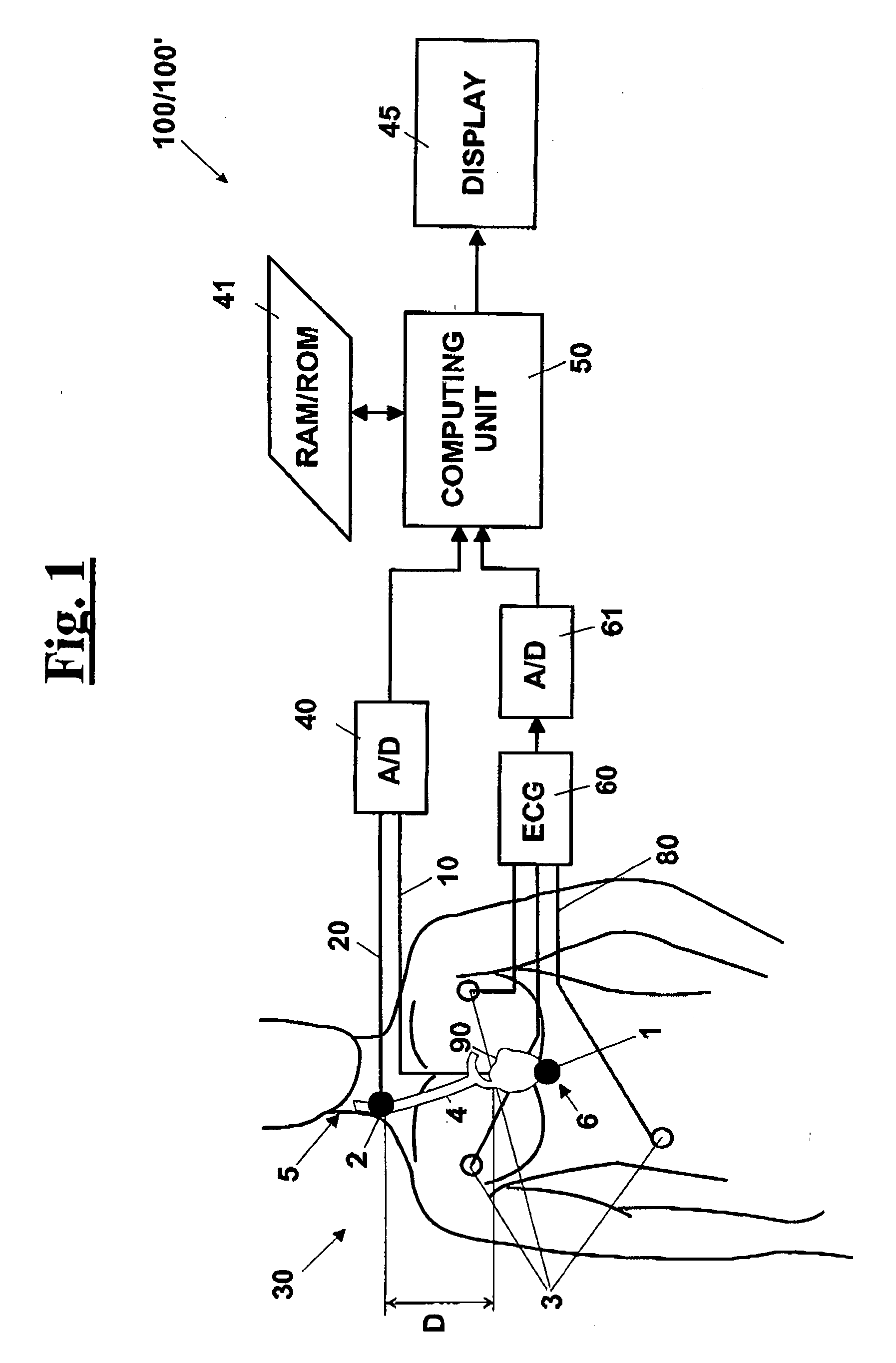
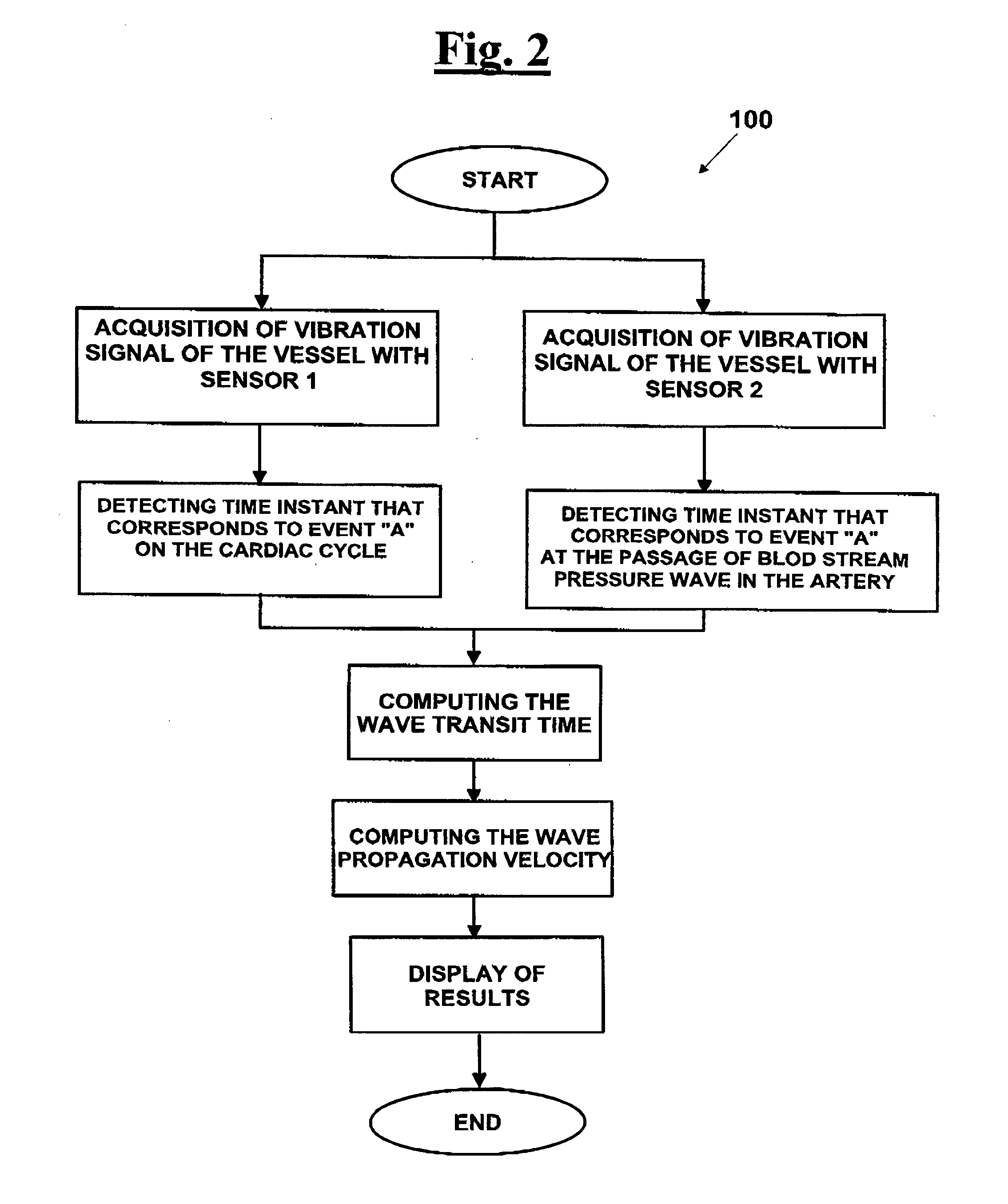
- An apparatus using cutaneous vibration sensors applied with light contact to measure PWV in the central arterial system, avoiding pressure application that could alter hemodynamics, with sensors placed at the heart and an arterial vessel to detect vibrations caused by the heartbeat and pressure wave, calculating PWV as the ratio of distance between the sensors and transit time of the pressure wave.
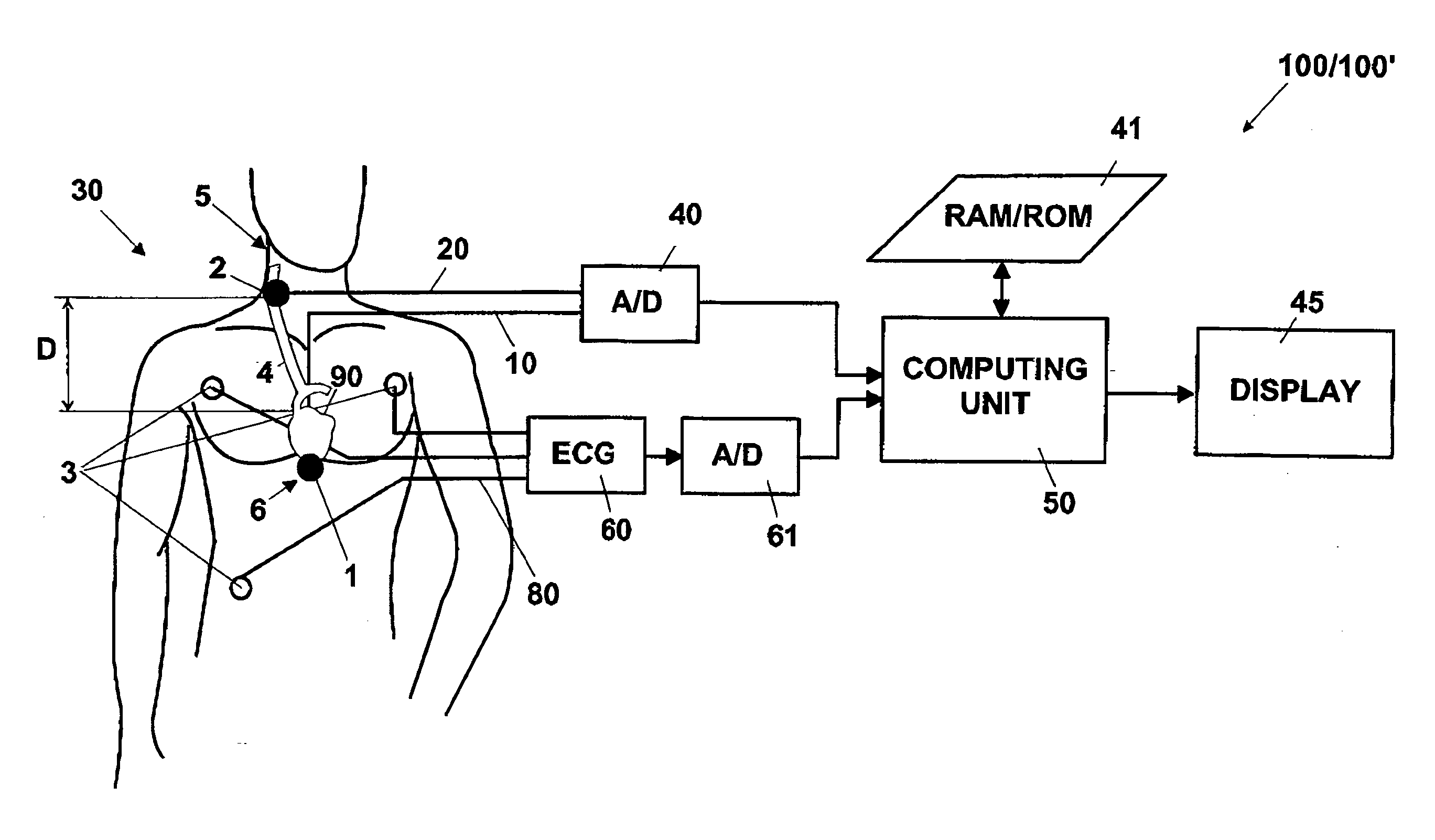

Apparatus for determining the amount of pressure wave reflection in a person's arterial tree
PatentInactiveGB2356250B
Innovation
- Uses digital volume pulse waveform analysis to non-invasively determine pressure wave reflection in arterial tree through optical measurement of light transmission through body parts.
- Employs first derivative analysis to identify inflection points after the first peak for quantifying pressure wave reflection, providing a mathematical approach to arterial stiffness assessment.
- Combines optical transmission measurement with waveform morphology analysis to extract cardiovascular health parameters from easily accessible body locations like fingers or earlobes.


Safety Standards for Wave Measurement Equipment
The measurement of rarefaction and pressure waves requires adherence to stringent safety standards to protect personnel, equipment, and ensure data integrity. International standards organizations have established comprehensive frameworks governing wave measurement equipment design, operation, and maintenance protocols.
Equipment certification standards mandate that all wave measurement devices undergo rigorous testing before deployment. IEC 61010 series standards define electrical safety requirements for measurement instruments, while ISO 12100 establishes machinery safety principles applicable to automated measurement systems. These standards require fail-safe mechanisms, emergency shutdown procedures, and protective barriers around high-energy measurement apparatus.
Personnel safety protocols encompass multiple protection layers for operators working with wave measurement equipment. Mandatory personal protective equipment includes acoustic protection for high-intensity pressure wave measurements and electromagnetic shielding for sensitive electronic instruments. Training certification requirements ensure operators understand hazard identification, emergency response procedures, and proper equipment handling techniques.
Environmental safety considerations address both laboratory and field measurement scenarios. Containment protocols prevent acoustic energy leakage during pressure wave generation, while electromagnetic compatibility standards minimize interference with surrounding equipment. Ventilation requirements ensure safe operation of pneumatic and hydraulic wave generation systems, particularly when measuring rarefaction phenomena in controlled environments.
Data integrity and measurement accuracy standards establish calibration requirements and traceability protocols. Regular equipment validation ensures measurement reliability while preventing safety incidents caused by instrument malfunction. Quality management systems following ISO 9001 principles integrate safety considerations into routine measurement procedures.
Regulatory compliance frameworks vary by application domain and geographic region. Medical ultrasound applications follow FDA guidelines and IEC 60601 medical device standards, while industrial applications adhere to OSHA workplace safety regulations. International harmonization efforts through organizations like the International Committee for Weights and Measures ensure consistent safety approaches across different measurement applications and research institutions.
Equipment certification standards mandate that all wave measurement devices undergo rigorous testing before deployment. IEC 61010 series standards define electrical safety requirements for measurement instruments, while ISO 12100 establishes machinery safety principles applicable to automated measurement systems. These standards require fail-safe mechanisms, emergency shutdown procedures, and protective barriers around high-energy measurement apparatus.
Personnel safety protocols encompass multiple protection layers for operators working with wave measurement equipment. Mandatory personal protective equipment includes acoustic protection for high-intensity pressure wave measurements and electromagnetic shielding for sensitive electronic instruments. Training certification requirements ensure operators understand hazard identification, emergency response procedures, and proper equipment handling techniques.
Environmental safety considerations address both laboratory and field measurement scenarios. Containment protocols prevent acoustic energy leakage during pressure wave generation, while electromagnetic compatibility standards minimize interference with surrounding equipment. Ventilation requirements ensure safe operation of pneumatic and hydraulic wave generation systems, particularly when measuring rarefaction phenomena in controlled environments.
Data integrity and measurement accuracy standards establish calibration requirements and traceability protocols. Regular equipment validation ensures measurement reliability while preventing safety incidents caused by instrument malfunction. Quality management systems following ISO 9001 principles integrate safety considerations into routine measurement procedures.
Regulatory compliance frameworks vary by application domain and geographic region. Medical ultrasound applications follow FDA guidelines and IEC 60601 medical device standards, while industrial applications adhere to OSHA workplace safety regulations. International harmonization efforts through organizations like the International Committee for Weights and Measures ensure consistent safety approaches across different measurement applications and research institutions.
Calibration and Accuracy Standards for Wave Sensors
The establishment of robust calibration and accuracy standards for wave sensors represents a critical foundation for reliable measurement of both rarefaction and pressure waves across diverse industrial applications. Current international standards, including ISO 16063 series and ASTM E1316, provide comprehensive frameworks for sensor calibration, though specific provisions for distinguishing between rarefaction and pressure wave measurements require enhanced precision protocols.
Primary calibration methods employ reference standard transducers with traceability to national metrology institutes, typically achieving uncertainties below 1% for pressure wave measurements and 2-3% for rarefaction wave detection. The calibration process involves controlled acoustic environments using pistonphones, electrostatic actuators, and laser interferometry systems to generate known wave amplitudes and frequencies. These reference signals enable systematic characterization of sensor response across operational frequency ranges from infrasonic to ultrasonic domains.
Accuracy verification protocols must account for the fundamental differences between compression and rarefaction phases of acoustic waves. Pressure wave sensors typically demonstrate higher accuracy due to their positive displacement characteristics, while rarefaction wave detection faces inherent challenges related to cavitation thresholds and negative pressure limitations in liquid media. Standard uncertainty budgets incorporate factors including temperature coefficients, frequency response variations, and cross-sensitivity to environmental parameters.
Emerging calibration standards emphasize dynamic range requirements spanning from micro-Pascal sensitivity for rarefaction detection to mega-Pascal levels for shock wave measurements. Advanced calibration facilities now utilize reciprocity techniques and primary standard microphones to establish reference conditions with expanded uncertainties typically ranging from 0.1 dB at low frequencies to 0.5 dB at ultrasonic frequencies.
Quality assurance protocols mandate regular recalibration intervals, typically annually for critical applications, with intermediate verification checks using portable calibrators. Traceability documentation ensures measurement consistency across different laboratories and applications, supporting regulatory compliance in aerospace, automotive, and biomedical sectors where wave measurement accuracy directly impacts safety and performance outcomes.
Primary calibration methods employ reference standard transducers with traceability to national metrology institutes, typically achieving uncertainties below 1% for pressure wave measurements and 2-3% for rarefaction wave detection. The calibration process involves controlled acoustic environments using pistonphones, electrostatic actuators, and laser interferometry systems to generate known wave amplitudes and frequencies. These reference signals enable systematic characterization of sensor response across operational frequency ranges from infrasonic to ultrasonic domains.
Accuracy verification protocols must account for the fundamental differences between compression and rarefaction phases of acoustic waves. Pressure wave sensors typically demonstrate higher accuracy due to their positive displacement characteristics, while rarefaction wave detection faces inherent challenges related to cavitation thresholds and negative pressure limitations in liquid media. Standard uncertainty budgets incorporate factors including temperature coefficients, frequency response variations, and cross-sensitivity to environmental parameters.
Emerging calibration standards emphasize dynamic range requirements spanning from micro-Pascal sensitivity for rarefaction detection to mega-Pascal levels for shock wave measurements. Advanced calibration facilities now utilize reciprocity techniques and primary standard microphones to establish reference conditions with expanded uncertainties typically ranging from 0.1 dB at low frequencies to 0.5 dB at ultrasonic frequencies.
Quality assurance protocols mandate regular recalibration intervals, typically annually for critical applications, with intermediate verification checks using portable calibrators. Traceability documentation ensures measurement consistency across different laboratories and applications, supporting regulatory compliance in aerospace, automotive, and biomedical sectors where wave measurement accuracy directly impacts safety and performance outcomes.
Unlock deeper insights with Patsnap Eureka Quick Research — get a full tech report to explore trends and direct your research. Try now!
Generate Your Research Report Instantly with AI Agent
Supercharge your innovation with Patsnap Eureka AI Agent Platform!