

Reactive Sputtering: Controlling Deposition Rate Variability
MAY 19, 20269 MIN READ
Generate Your Research Report Instantly with AI Agent
PatSnap Eureka helps you evaluate technical feasibility & market potential.
Reactive Sputtering Background and Deposition Goals
Reactive sputtering represents a sophisticated thin film deposition technique that has evolved significantly since its introduction in the 1960s. This process combines the fundamental principles of physical vapor deposition with controlled chemical reactions, enabling the formation of compound materials such as oxides, nitrides, carbides, and sulfides directly during the deposition process. Unlike conventional sputtering that deposits elemental materials, reactive sputtering introduces reactive gases into the chamber, creating a dynamic environment where target erosion and film formation occur simultaneously with chemical reactions.
The historical development of reactive sputtering emerged from the need to deposit compound materials with precise stoichiometry and enhanced properties. Early implementations faced significant challenges related to process stability and reproducibility, particularly the phenomenon known as "target poisoning," where the target surface becomes covered with reaction products, dramatically altering the deposition characteristics. This led to the development of various control strategies and feedback mechanisms that form the foundation of modern reactive sputtering systems.
The primary technical objectives in reactive sputtering center on achieving precise control over film composition, structure, and properties while maintaining stable and reproducible deposition rates. The fundamental challenge lies in managing the complex interplay between sputtering yield, reactive gas consumption, and target surface conditions. As reactive gas flow increases, the system typically transitions through distinct operating modes, from metallic to compound deposition, often exhibiting hysteresis behavior that complicates process control.
Contemporary reactive sputtering aims to achieve several critical goals: maintaining consistent deposition rates across varying reactive gas flows, ensuring uniform film composition and thickness distribution, minimizing target poisoning effects, and optimizing energy efficiency. Advanced systems now incorporate real-time monitoring and feedback control mechanisms, including optical emission spectroscopy, mass spectrometry, and impedance monitoring, to maintain stable operating conditions.
The evolution toward industrial-scale applications has driven the development of large-area uniform deposition capabilities, enhanced process repeatability, and improved target utilization efficiency. Modern reactive sputtering systems target deposition rate variability of less than 5% across production runs, with composition control within ±2% of target stoichiometry. These stringent requirements have necessitated sophisticated process modeling, advanced control algorithms, and comprehensive understanding of the underlying physical and chemical mechanisms governing reactive sputtering processes.
The historical development of reactive sputtering emerged from the need to deposit compound materials with precise stoichiometry and enhanced properties. Early implementations faced significant challenges related to process stability and reproducibility, particularly the phenomenon known as "target poisoning," where the target surface becomes covered with reaction products, dramatically altering the deposition characteristics. This led to the development of various control strategies and feedback mechanisms that form the foundation of modern reactive sputtering systems.
The primary technical objectives in reactive sputtering center on achieving precise control over film composition, structure, and properties while maintaining stable and reproducible deposition rates. The fundamental challenge lies in managing the complex interplay between sputtering yield, reactive gas consumption, and target surface conditions. As reactive gas flow increases, the system typically transitions through distinct operating modes, from metallic to compound deposition, often exhibiting hysteresis behavior that complicates process control.
Contemporary reactive sputtering aims to achieve several critical goals: maintaining consistent deposition rates across varying reactive gas flows, ensuring uniform film composition and thickness distribution, minimizing target poisoning effects, and optimizing energy efficiency. Advanced systems now incorporate real-time monitoring and feedback control mechanisms, including optical emission spectroscopy, mass spectrometry, and impedance monitoring, to maintain stable operating conditions.
The evolution toward industrial-scale applications has driven the development of large-area uniform deposition capabilities, enhanced process repeatability, and improved target utilization efficiency. Modern reactive sputtering systems target deposition rate variability of less than 5% across production runs, with composition control within ±2% of target stoichiometry. These stringent requirements have necessitated sophisticated process modeling, advanced control algorithms, and comprehensive understanding of the underlying physical and chemical mechanisms governing reactive sputtering processes.
Market Demand for Controlled Reactive Sputtering
The semiconductor industry represents the largest market segment driving demand for controlled reactive sputtering technologies. Advanced semiconductor manufacturing requires precise thin film deposition with atomic-level control over thickness uniformity and composition. As device geometries continue shrinking below 5nm nodes, manufacturers face increasingly stringent requirements for process repeatability and yield optimization. The variability in deposition rates directly impacts device performance characteristics, making controlled reactive sputtering essential for maintaining competitive manufacturing capabilities.
Display technology manufacturers constitute another significant market segment requiring enhanced deposition rate control. Modern display panels, including OLED and quantum dot displays, demand uniform coating across large substrate areas with minimal thickness variation. The optical properties of these devices are highly sensitive to film thickness variations, creating strong market pull for improved process control solutions. Manufacturers are actively seeking technologies that can reduce scrap rates and improve production efficiency.
The photovoltaic industry presents substantial growth opportunities for controlled reactive sputtering applications. Solar cell efficiency improvements depend heavily on optimized thin film layers, particularly for transparent conductive oxides and barrier layers. Market pressure to reduce manufacturing costs while improving cell efficiency drives demand for more precise deposition control technologies. The industry's transition toward larger wafer formats further amplifies the need for uniform deposition across extended substrate areas.
Emerging applications in flexible electronics and wearable devices are creating new market demands for controlled reactive sputtering. These applications require deposition on temperature-sensitive substrates with complex geometries, necessitating precise control over reactive gas flows and deposition rates. The growing Internet of Things market and flexible display applications are expanding the addressable market for advanced sputtering control technologies.
The automotive electronics sector increasingly requires high-reliability thin film components for sensor applications and power electronics. These applications demand exceptional process stability and reproducibility, driving adoption of controlled reactive sputtering systems. The transition toward electric vehicles and autonomous driving technologies is accelerating demand for precision-deposited films in automotive applications.
Market drivers include regulatory requirements for improved energy efficiency, consumer demand for higher-performance electronic devices, and manufacturing cost pressures requiring enhanced process yields. The convergence of these factors creates a compelling market environment for technologies that can effectively control reactive sputtering deposition rate variability across diverse industrial applications.
Display technology manufacturers constitute another significant market segment requiring enhanced deposition rate control. Modern display panels, including OLED and quantum dot displays, demand uniform coating across large substrate areas with minimal thickness variation. The optical properties of these devices are highly sensitive to film thickness variations, creating strong market pull for improved process control solutions. Manufacturers are actively seeking technologies that can reduce scrap rates and improve production efficiency.
The photovoltaic industry presents substantial growth opportunities for controlled reactive sputtering applications. Solar cell efficiency improvements depend heavily on optimized thin film layers, particularly for transparent conductive oxides and barrier layers. Market pressure to reduce manufacturing costs while improving cell efficiency drives demand for more precise deposition control technologies. The industry's transition toward larger wafer formats further amplifies the need for uniform deposition across extended substrate areas.
Emerging applications in flexible electronics and wearable devices are creating new market demands for controlled reactive sputtering. These applications require deposition on temperature-sensitive substrates with complex geometries, necessitating precise control over reactive gas flows and deposition rates. The growing Internet of Things market and flexible display applications are expanding the addressable market for advanced sputtering control technologies.
The automotive electronics sector increasingly requires high-reliability thin film components for sensor applications and power electronics. These applications demand exceptional process stability and reproducibility, driving adoption of controlled reactive sputtering systems. The transition toward electric vehicles and autonomous driving technologies is accelerating demand for precision-deposited films in automotive applications.
Market drivers include regulatory requirements for improved energy efficiency, consumer demand for higher-performance electronic devices, and manufacturing cost pressures requiring enhanced process yields. The convergence of these factors creates a compelling market environment for technologies that can effectively control reactive sputtering deposition rate variability across diverse industrial applications.
Current Challenges in Deposition Rate Control
Reactive sputtering processes face significant challenges in maintaining consistent deposition rates due to the complex interplay between target poisoning and process dynamics. Target poisoning occurs when reactive gas species chemically interact with the metallic target surface, forming compound layers that dramatically alter sputtering yields. This phenomenon creates a feedback loop where increased compound formation reduces the availability of metallic species for reaction, leading to unpredictable rate fluctuations that can vary by orders of magnitude during a single deposition cycle.
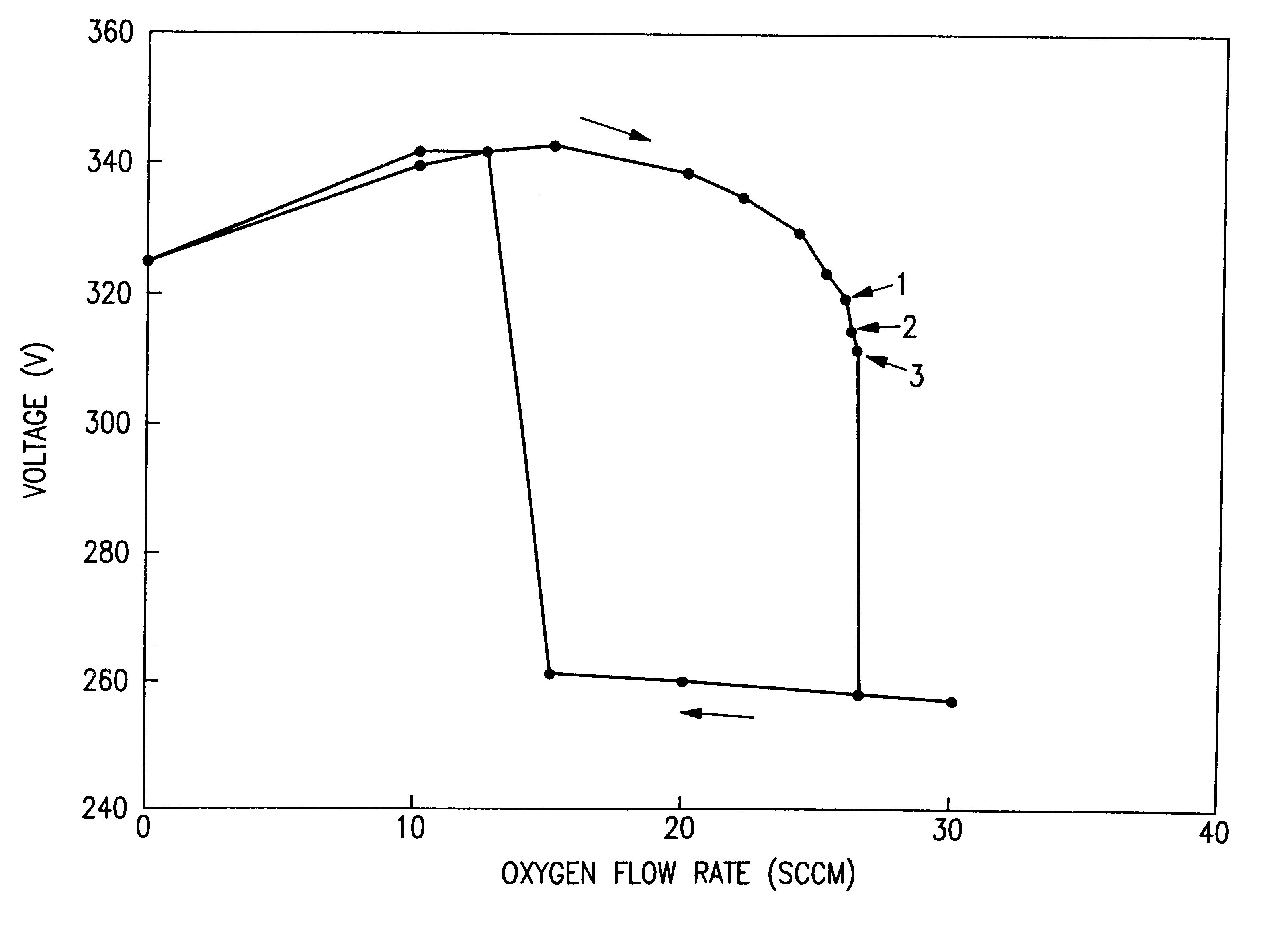
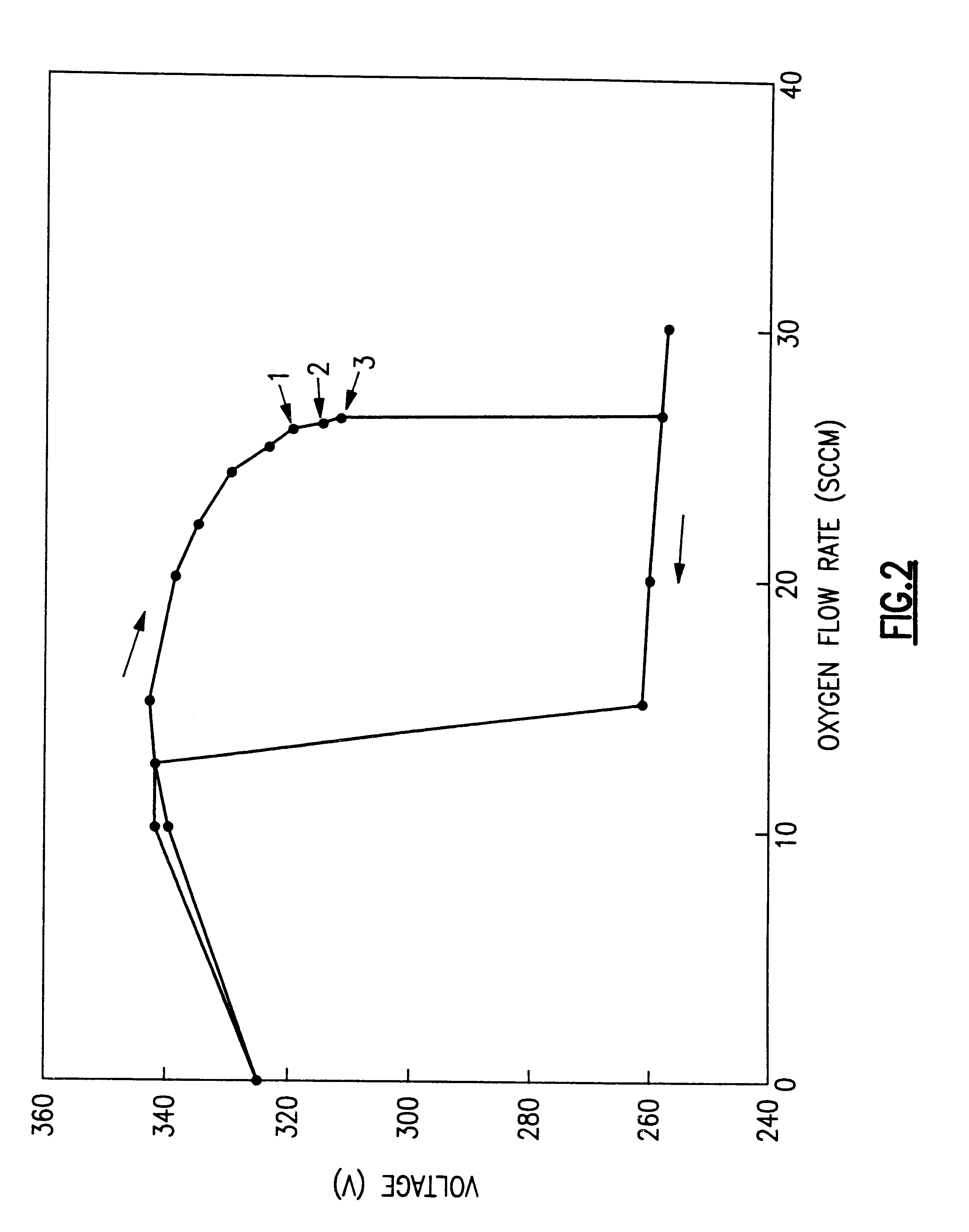
The hysteresis effect represents one of the most critical control challenges in reactive sputtering systems. As reactive gas flow increases, the system exhibits different deposition behaviors during ramp-up versus ramp-down phases, creating a bistable operating region where small parameter changes can trigger sudden transitions between metallic and compound sputtering modes. This hysteresis makes it extremely difficult to maintain stable operation at intermediate stoichiometries, where many technologically important materials require precise composition control.
Process instabilities are further exacerbated by the non-linear relationship between reactive gas partial pressure and deposition rate. Traditional feedback control systems struggle with the inherent time delays between gas flow adjustments and their effects on target surface chemistry. The gettering action of freshly deposited films continuously consumes reactive species, creating dynamic equilibrium conditions that shift unpredictably based on substrate temperature, deposition geometry, and pumping speed variations.
Plasma impedance matching presents additional complications as target surface composition changes alter the electrical characteristics of the discharge. The transition from metallic to compound target surfaces can cause significant shifts in plasma voltage and current distribution, affecting not only deposition rates but also film uniformity and quality. These electrical variations often occur faster than mechanical or thermal control systems can respond, leading to process excursions.
Chamber geometry and pumping configuration significantly influence deposition rate stability through their effects on reactive gas distribution and residence time. Non-uniform gas mixing can create localized variations in target poisoning, while inadequate pumping capacity near the substrate can lead to pressure buildup that shifts the reactive gas balance. The challenge is compounded in industrial systems where substrate loading variations and chamber conditioning states introduce additional variables that affect the reactive gas consumption dynamics and overall process reproducibility.
The hysteresis effect represents one of the most critical control challenges in reactive sputtering systems. As reactive gas flow increases, the system exhibits different deposition behaviors during ramp-up versus ramp-down phases, creating a bistable operating region where small parameter changes can trigger sudden transitions between metallic and compound sputtering modes. This hysteresis makes it extremely difficult to maintain stable operation at intermediate stoichiometries, where many technologically important materials require precise composition control.
Process instabilities are further exacerbated by the non-linear relationship between reactive gas partial pressure and deposition rate. Traditional feedback control systems struggle with the inherent time delays between gas flow adjustments and their effects on target surface chemistry. The gettering action of freshly deposited films continuously consumes reactive species, creating dynamic equilibrium conditions that shift unpredictably based on substrate temperature, deposition geometry, and pumping speed variations.
Plasma impedance matching presents additional complications as target surface composition changes alter the electrical characteristics of the discharge. The transition from metallic to compound target surfaces can cause significant shifts in plasma voltage and current distribution, affecting not only deposition rates but also film uniformity and quality. These electrical variations often occur faster than mechanical or thermal control systems can respond, leading to process excursions.
Chamber geometry and pumping configuration significantly influence deposition rate stability through their effects on reactive gas distribution and residence time. Non-uniform gas mixing can create localized variations in target poisoning, while inadequate pumping capacity near the substrate can lead to pressure buildup that shifts the reactive gas balance. The challenge is compounded in industrial systems where substrate loading variations and chamber conditioning states introduce additional variables that affect the reactive gas consumption dynamics and overall process reproducibility.
Existing Rate Control Solutions
01 Process parameter control and monitoring systems
Advanced control systems and monitoring techniques are employed to maintain stable deposition rates during reactive sputtering. These systems utilize real-time feedback mechanisms to adjust process parameters such as gas flow rates, pressure, and power to compensate for variations in deposition conditions. Automated control algorithms help maintain consistent target composition and deposition rate throughout the process.- Process parameter control and monitoring systems: Advanced control systems and monitoring techniques are employed to maintain stable deposition rates during reactive sputtering. These systems utilize real-time feedback mechanisms to adjust process parameters such as gas flow rates, pressure, and power to compensate for variations in deposition conditions. Automated control algorithms help maintain consistent target composition and deposition rate throughout the process.
- Target composition and material optimization: The selection and optimization of target materials significantly influence deposition rate stability in reactive sputtering processes. Different target compositions and structures can provide more consistent sputtering behavior and reduce rate variations. Material properties such as grain structure, purity, and thermal conductivity affect the uniformity of the sputtering process and help minimize deposition rate fluctuations.
- Reactive gas flow and pressure management: Precise control of reactive gas introduction and chamber pressure is critical for maintaining stable deposition rates. Gas flow distribution systems and pressure regulation mechanisms help ensure uniform reactive gas concentration throughout the chamber. Proper management of gas dynamics prevents localized variations that can cause deposition rate instabilities and improves overall process reproducibility.
- Power supply and electrical parameter optimization: Electrical parameters including power density, frequency, and waveform characteristics directly impact deposition rate consistency in reactive sputtering. Advanced power supply systems with precise control capabilities help maintain stable plasma conditions and reduce rate variations. Optimization of electrical parameters ensures consistent ion bombardment energy and flux, leading to more uniform deposition rates across the substrate surface.
- Substrate positioning and chamber geometry effects: The geometric configuration of the sputtering chamber and substrate positioning significantly influence deposition rate uniformity. Optimized chamber designs and substrate positioning systems help achieve more consistent deposition rates across large substrate areas. Proper geometric arrangements minimize shadowing effects and ensure uniform plasma distribution, reducing spatial variations in deposition rate throughout the process.
02 Target composition and material optimization
The selection and optimization of target materials significantly influence deposition rate stability in reactive sputtering processes. Different target compositions and structures can provide more consistent sputtering behavior and reduce rate variations. Material properties such as grain structure, purity, and thermal conductivity affect the uniformity of the sputtering process and help minimize deposition rate fluctuations.Expand Specific Solutions03 Reactive gas flow management
Precise control of reactive gas introduction and distribution is critical for maintaining stable deposition rates. Gas flow management systems regulate the supply of reactive gases to prevent target poisoning and maintain optimal reaction conditions. Proper gas distribution ensures uniform reactive conditions across the target surface, leading to more consistent deposition rates and film properties.Expand Specific Solutions04 Power supply and electrical parameter optimization
The configuration and control of power supply systems play a crucial role in deposition rate stability. Advanced power delivery methods, including pulsed and modulated power systems, help maintain consistent plasma conditions and reduce rate variations. Electrical parameter optimization involves adjusting voltage, current, and frequency to achieve stable sputtering conditions while minimizing target arcing and other instabilities.Expand Specific Solutions05 Chamber design and substrate positioning
The physical configuration of the sputtering chamber and substrate positioning systems directly impact deposition rate uniformity and stability. Optimized chamber geometries, target-to-substrate distances, and substrate rotation or movement mechanisms help achieve consistent deposition rates across the substrate surface. Proper chamber design also includes considerations for gas flow patterns and plasma confinement to minimize rate variations.Expand Specific Solutions
Key Players in Sputtering Equipment Industry
The reactive sputtering industry is in a mature development stage, characterized by established technological foundations yet ongoing innovation challenges in deposition rate control. The global market demonstrates substantial scale, driven by semiconductor manufacturing, display technologies, and advanced coating applications. Technology maturity varies significantly across market players, with semiconductor equipment leaders like Applied Materials, Taiwan Semiconductor Manufacturing, and Samsung Display representing highly advanced capabilities in process control and automation. Mid-tier players including ULVAC, Veeco Instruments, and VON ARDENNE focus on specialized equipment solutions, while materials suppliers like Kobe Steel and Bekaert contribute essential target materials. Research institutions such as Fraunhofer-Gesellschaft and University of South Florida drive fundamental advances in reactive process understanding. The competitive landscape reflects a fragmented ecosystem where equipment manufacturers, materials suppliers, and end-users collaborate to address persistent challenges in achieving consistent, controllable deposition rates across diverse reactive sputtering applications.
Applied Materials, Inc.
Technical Solution: Applied Materials employs advanced process control systems with real-time monitoring capabilities to manage reactive sputtering deposition rate variability. Their Endura platform integrates plasma emission monitoring (PEM) and optical emission spectroscopy (OES) to continuously track reactive gas consumption and target poisoning effects[1][3]. The system utilizes closed-loop feedback control algorithms that automatically adjust reactive gas flow rates, power delivery, and pressure parameters to maintain consistent deposition rates within ±2% variation[5]. Their proprietary etch rate monitor (ERM) technology provides in-situ thickness measurement during deposition, enabling immediate correction of rate fluctuations. The platform also incorporates predictive maintenance algorithms that anticipate target condition changes and proactively adjust process parameters to compensate for target aging effects[7].
Strengths: Industry-leading process control accuracy with comprehensive real-time monitoring systems and extensive semiconductor manufacturing experience. Weaknesses: High capital investment requirements and complex system integration needs for smaller operations.
Oerlikon Surface Solutions AG
Technical Solution: Oerlikon's INNOVA coating platform addresses reactive sputtering rate variability through their Advanced Process Control (APC) system, which combines real-time plasma diagnostics with predictive modeling algorithms[26][28]. The system utilizes high-frequency impedance analysis to monitor target surface conditions and detect the onset of poisoning effects before they significantly impact deposition rates. Their proprietary Reactive Gas Management (RGM) technology employs cascaded flow control with multiple injection points to maintain optimal reactive species distribution throughout the chamber[30]. The platform features adaptive power control that automatically switches between constant power and constant voltage modes based on target surface state, maintaining stable sputtering conditions during reactive gas flow variations. Oerlikon's machine learning algorithms continuously optimize process parameters based on film thickness measurements and optical properties, achieving deposition rate stability within ±2% while maintaining target stoichiometry requirements[32][33].
Strengths: Comprehensive process control capabilities with strong industrial coating experience and global service network. Weaknesses: Higher cost structure and complex system setup requirements for basic applications.
Core Innovations in Rate Stabilization
Stable high rate reactive sputtering
PatentInactiveUS6537428B1
Innovation
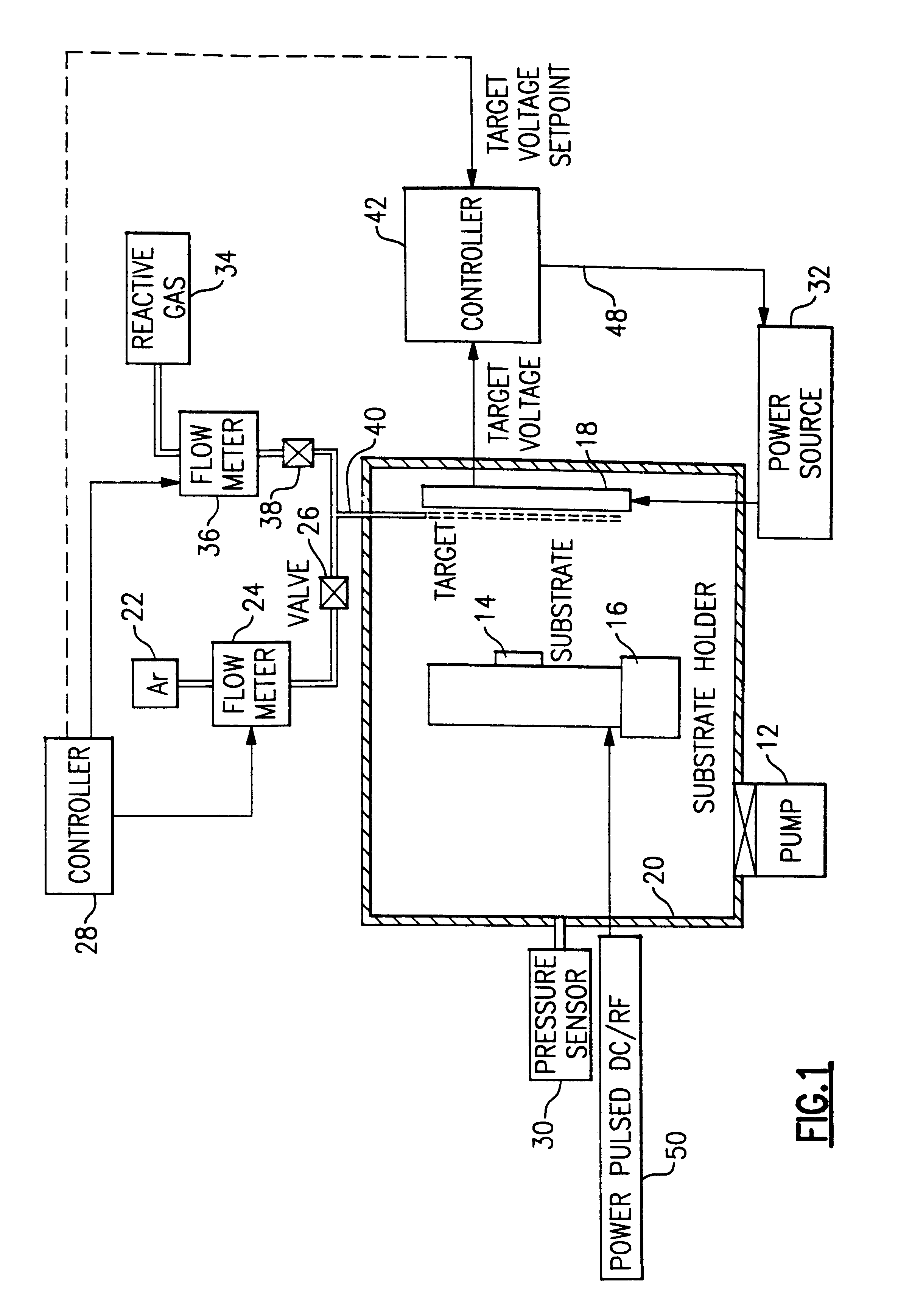
- A reactive sputtering system that controls the power supplied to the cathode to stabilize the cathode voltage, balancing the arrival and removal rates of reactive species by adjusting power based on measured cathode voltage and reactive gas flow rates, using a hysteresis curve to maintain operation near the high-rate deposition edge.

High-rate reactive sputtering of dielectric stoichiometric films
PatentInactiveKR1020200071144A
Innovation
- A method and apparatus that control the pulsed reactive gas flow rate into a vacuum chamber at a constant target voltage, using selected process parameters to stabilize the deposition in the transition region between metallic and covered modes, minimizing arcing and ensuring high deposition rates.


Process Monitoring and Feedback Systems
Process monitoring and feedback systems represent critical technological infrastructure for addressing deposition rate variability in reactive sputtering processes. These systems integrate real-time sensing capabilities with automated control mechanisms to maintain consistent film properties and deposition rates throughout the manufacturing cycle. Advanced monitoring architectures typically incorporate multiple sensor modalities including optical emission spectroscopy, mass spectrometry, and electrical parameter tracking to provide comprehensive process state awareness.
Modern feedback control implementations utilize sophisticated algorithms that can rapidly respond to process disturbances before they significantly impact deposition uniformity. Plasma impedance monitoring systems have emerged as particularly effective tools, capable of detecting subtle changes in reactive gas consumption patterns that precede target poisoning events. These systems typically operate with response times in the millisecond range, enabling preemptive adjustments to gas flow rates and power delivery parameters.
Optical emission spectroscopy-based monitoring systems provide real-time analysis of plasma chemistry by tracking specific spectral lines associated with target material and reactive species. Machine learning algorithms increasingly enhance these systems' predictive capabilities, enabling identification of process drift patterns before they manifest as measurable deposition rate variations. Integration with historical process databases allows for predictive maintenance scheduling and optimization of cleaning cycles.
Advanced feedback architectures incorporate multi-variable control strategies that simultaneously regulate multiple process parameters including reactive gas partial pressure, sputtering power, and substrate temperature. These systems demonstrate particular effectiveness in maintaining stable deposition rates during long production runs where traditional open-loop control methods typically exhibit significant drift. Closed-loop control of reactive gas flow based on real-time stoichiometry measurements has shown capability to reduce deposition rate variability by up to 80% compared to conventional time-based gas flow control methods.
Emerging monitoring technologies focus on in-situ film property measurement capabilities, enabling direct feedback control based on actual deposited film characteristics rather than indirect process parameters. These developments promise further improvements in deposition rate stability and overall process reproducibility for industrial reactive sputtering applications.
Modern feedback control implementations utilize sophisticated algorithms that can rapidly respond to process disturbances before they significantly impact deposition uniformity. Plasma impedance monitoring systems have emerged as particularly effective tools, capable of detecting subtle changes in reactive gas consumption patterns that precede target poisoning events. These systems typically operate with response times in the millisecond range, enabling preemptive adjustments to gas flow rates and power delivery parameters.
Optical emission spectroscopy-based monitoring systems provide real-time analysis of plasma chemistry by tracking specific spectral lines associated with target material and reactive species. Machine learning algorithms increasingly enhance these systems' predictive capabilities, enabling identification of process drift patterns before they manifest as measurable deposition rate variations. Integration with historical process databases allows for predictive maintenance scheduling and optimization of cleaning cycles.
Advanced feedback architectures incorporate multi-variable control strategies that simultaneously regulate multiple process parameters including reactive gas partial pressure, sputtering power, and substrate temperature. These systems demonstrate particular effectiveness in maintaining stable deposition rates during long production runs where traditional open-loop control methods typically exhibit significant drift. Closed-loop control of reactive gas flow based on real-time stoichiometry measurements has shown capability to reduce deposition rate variability by up to 80% compared to conventional time-based gas flow control methods.
Emerging monitoring technologies focus on in-situ film property measurement capabilities, enabling direct feedback control based on actual deposited film characteristics rather than indirect process parameters. These developments promise further improvements in deposition rate stability and overall process reproducibility for industrial reactive sputtering applications.
Industrial Standards for Sputtering Quality
The establishment of comprehensive industrial standards for sputtering quality has become increasingly critical as reactive sputtering processes demand higher precision and reproducibility across manufacturing environments. Current industry standards primarily focus on ISO 14644 cleanroom classifications, ASTM specifications for thin film characterization, and SEMI standards for semiconductor manufacturing equipment. These frameworks provide foundational guidelines for environmental controls, substrate preparation, and basic process parameters, yet they often lack specific provisions for managing the unique challenges associated with reactive sputtering deposition rate variability.
International standards organizations have recognized the need for more specialized quality metrics in reactive sputtering applications. The International Organization for Standardization has been developing ISO 23034 series standards specifically addressing physical vapor deposition processes, including reactive sputtering parameters such as target utilization efficiency, gas flow stability, and deposition uniformity. These emerging standards emphasize statistical process control methodologies and require manufacturers to implement real-time monitoring systems capable of detecting deposition rate fluctuations within specified tolerance bands.
Industry-specific quality standards vary significantly across sectors, with semiconductor manufacturing adhering to the most stringent requirements. JEDEC standards mandate deposition rate control within ±2% variation for critical applications, while automotive and optical coating industries typically accept ±5% tolerances. Aerospace applications often require custom qualification procedures that exceed standard commercial specifications, particularly for thermal barrier coatings and corrosion-resistant films where deposition uniformity directly impacts component reliability and service life.
Certification and compliance frameworks for reactive sputtering quality increasingly incorporate advanced metrology requirements. Standards now specify mandatory in-situ monitoring techniques, including optical emission spectroscopy for plasma composition analysis and quartz crystal microbalance systems for real-time rate measurement. Quality management systems must demonstrate traceability to national measurement standards and maintain comprehensive documentation of process parameters, environmental conditions, and material properties throughout the deposition cycle.
The evolution toward Industry 4.0 manufacturing paradigms has prompted the development of digital quality standards that integrate artificial intelligence and machine learning algorithms for predictive process control. These next-generation standards emphasize data-driven quality assurance methodologies, requiring manufacturers to implement comprehensive data collection systems and establish statistical models for predicting and preventing deposition rate variability before it impacts product quality.
International standards organizations have recognized the need for more specialized quality metrics in reactive sputtering applications. The International Organization for Standardization has been developing ISO 23034 series standards specifically addressing physical vapor deposition processes, including reactive sputtering parameters such as target utilization efficiency, gas flow stability, and deposition uniformity. These emerging standards emphasize statistical process control methodologies and require manufacturers to implement real-time monitoring systems capable of detecting deposition rate fluctuations within specified tolerance bands.
Industry-specific quality standards vary significantly across sectors, with semiconductor manufacturing adhering to the most stringent requirements. JEDEC standards mandate deposition rate control within ±2% variation for critical applications, while automotive and optical coating industries typically accept ±5% tolerances. Aerospace applications often require custom qualification procedures that exceed standard commercial specifications, particularly for thermal barrier coatings and corrosion-resistant films where deposition uniformity directly impacts component reliability and service life.
Certification and compliance frameworks for reactive sputtering quality increasingly incorporate advanced metrology requirements. Standards now specify mandatory in-situ monitoring techniques, including optical emission spectroscopy for plasma composition analysis and quartz crystal microbalance systems for real-time rate measurement. Quality management systems must demonstrate traceability to national measurement standards and maintain comprehensive documentation of process parameters, environmental conditions, and material properties throughout the deposition cycle.
The evolution toward Industry 4.0 manufacturing paradigms has prompted the development of digital quality standards that integrate artificial intelligence and machine learning algorithms for predictive process control. These next-generation standards emphasize data-driven quality assurance methodologies, requiring manufacturers to implement comprehensive data collection systems and establish statistical models for predicting and preventing deposition rate variability before it impacts product quality.
Unlock deeper insights with PatSnap Eureka Quick Research — get a full tech report to explore trends and direct your research. Try now!
Generate Your Research Report Instantly with AI Agent
Supercharge your innovation with PatSnap Eureka AI Agent Platform!