
Reduce Energy Consumption in Multipoint Control Units
MAR 17, 20269 MIN READ
Generate Your Research Report Instantly with AI Agent
Patsnap Eureka helps you evaluate technical feasibility & market potential.
MCU Energy Efficiency Background and Objectives
Multipoint Control Units (MCUs) have emerged as critical components in modern distributed systems, serving as central coordination hubs for managing multiple endpoints in applications ranging from video conferencing systems to industrial automation networks. The evolution of MCU technology has been driven by the increasing demand for real-time communication and control across diverse network architectures, where centralized processing and resource allocation play pivotal roles in system performance.
The historical development of MCU technology traces back to early telecommunications infrastructure, where basic switching and routing functions required minimal computational resources. However, the exponential growth in data processing requirements, coupled with the proliferation of IoT devices and edge computing applications, has transformed MCUs into sophisticated processing units that handle complex algorithms, protocol translations, and resource management tasks simultaneously.
Current MCU implementations face significant energy consumption challenges due to their always-on operational requirements and intensive computational workloads. Traditional MCU architectures often operate at fixed performance levels regardless of actual processing demands, leading to substantial energy waste during periods of low activity. This inefficiency becomes particularly pronounced in large-scale deployments where hundreds or thousands of MCUs operate continuously across distributed networks.
The primary objective of reducing energy consumption in MCUs encompasses multiple technical dimensions. Power optimization must be achieved without compromising system reliability, response times, or processing capabilities. This requires developing intelligent power management strategies that can dynamically adjust operational parameters based on real-time workload analysis and predictive algorithms.
Advanced energy efficiency targets include implementing adaptive voltage and frequency scaling mechanisms, optimizing task scheduling algorithms, and developing low-power standby modes that maintain essential connectivity while minimizing unnecessary power draw. Additionally, the integration of machine learning algorithms for predictive load balancing represents a promising avenue for achieving substantial energy reductions while maintaining optimal system performance across varying operational conditions.
The historical development of MCU technology traces back to early telecommunications infrastructure, where basic switching and routing functions required minimal computational resources. However, the exponential growth in data processing requirements, coupled with the proliferation of IoT devices and edge computing applications, has transformed MCUs into sophisticated processing units that handle complex algorithms, protocol translations, and resource management tasks simultaneously.
Current MCU implementations face significant energy consumption challenges due to their always-on operational requirements and intensive computational workloads. Traditional MCU architectures often operate at fixed performance levels regardless of actual processing demands, leading to substantial energy waste during periods of low activity. This inefficiency becomes particularly pronounced in large-scale deployments where hundreds or thousands of MCUs operate continuously across distributed networks.
The primary objective of reducing energy consumption in MCUs encompasses multiple technical dimensions. Power optimization must be achieved without compromising system reliability, response times, or processing capabilities. This requires developing intelligent power management strategies that can dynamically adjust operational parameters based on real-time workload analysis and predictive algorithms.
Advanced energy efficiency targets include implementing adaptive voltage and frequency scaling mechanisms, optimizing task scheduling algorithms, and developing low-power standby modes that maintain essential connectivity while minimizing unnecessary power draw. Additionally, the integration of machine learning algorithms for predictive load balancing represents a promising avenue for achieving substantial energy reductions while maintaining optimal system performance across varying operational conditions.
Market Demand for Low-Power MCU Solutions
The global market for low-power microcontroller units (MCUs) is experiencing unprecedented growth driven by the proliferation of Internet of Things (IoT) devices, battery-powered systems, and energy-conscious applications. This surge in demand stems from the critical need to extend device operational lifespans while maintaining performance standards across diverse application domains.
Industrial automation represents a significant market segment where multipoint control units require extended operational periods without frequent maintenance interventions. Manufacturing facilities increasingly deploy wireless sensor networks and distributed control systems that must operate reliably for years on limited power sources. The automotive sector similarly demands low-power MCU solutions for advanced driver assistance systems, tire pressure monitoring, and vehicle-to-everything communication modules that cannot compromise vehicle battery life.
Consumer electronics markets are driving substantial demand for energy-efficient MCU solutions in wearable devices, smart home appliances, and portable medical equipment. These applications require MCUs capable of maintaining connectivity and processing capabilities while operating on coin cell batteries for extended periods. The healthcare industry particularly values low-power solutions for implantable devices and remote patient monitoring systems where battery replacement procedures carry significant risks and costs.
Smart city infrastructure initiatives worldwide are creating massive demand for low-power MCU solutions in environmental monitoring systems, smart lighting networks, and traffic management systems. These deployments often involve thousands of nodes that must operate autonomously for years without maintenance, making energy efficiency a paramount concern for municipal procurement decisions.
The telecommunications industry requires low-power MCU solutions for massive IoT deployments supporting smart agriculture, asset tracking, and environmental monitoring applications. Network operators seek MCU solutions that can maintain cellular or wireless connectivity while minimizing power consumption to reduce operational costs and extend device lifecycles.
Market research indicates that battery-powered applications represent the fastest-growing segment for low-power MCU demand, with particular emphasis on solutions that can achieve microampere-level current consumption during active operation and nanoampere-level consumption during sleep modes. This market trend directly correlates with the technical challenge of reducing energy consumption in multipoint control units, where multiple communication interfaces and processing tasks must be balanced against stringent power budgets.
Industrial automation represents a significant market segment where multipoint control units require extended operational periods without frequent maintenance interventions. Manufacturing facilities increasingly deploy wireless sensor networks and distributed control systems that must operate reliably for years on limited power sources. The automotive sector similarly demands low-power MCU solutions for advanced driver assistance systems, tire pressure monitoring, and vehicle-to-everything communication modules that cannot compromise vehicle battery life.
Consumer electronics markets are driving substantial demand for energy-efficient MCU solutions in wearable devices, smart home appliances, and portable medical equipment. These applications require MCUs capable of maintaining connectivity and processing capabilities while operating on coin cell batteries for extended periods. The healthcare industry particularly values low-power solutions for implantable devices and remote patient monitoring systems where battery replacement procedures carry significant risks and costs.
Smart city infrastructure initiatives worldwide are creating massive demand for low-power MCU solutions in environmental monitoring systems, smart lighting networks, and traffic management systems. These deployments often involve thousands of nodes that must operate autonomously for years without maintenance, making energy efficiency a paramount concern for municipal procurement decisions.
The telecommunications industry requires low-power MCU solutions for massive IoT deployments supporting smart agriculture, asset tracking, and environmental monitoring applications. Network operators seek MCU solutions that can maintain cellular or wireless connectivity while minimizing power consumption to reduce operational costs and extend device lifecycles.
Market research indicates that battery-powered applications represent the fastest-growing segment for low-power MCU demand, with particular emphasis on solutions that can achieve microampere-level current consumption during active operation and nanoampere-level consumption during sleep modes. This market trend directly correlates with the technical challenge of reducing energy consumption in multipoint control units, where multiple communication interfaces and processing tasks must be balanced against stringent power budgets.
Current MCU Power Consumption Challenges
Multipoint Control Units (MCUs) face significant power consumption challenges that have become increasingly critical as system complexity and performance demands continue to escalate. Traditional MCU architectures often operate with inefficient power management strategies, leading to substantial energy waste during both active processing and idle states. The continuous operation of multiple processing cores, communication interfaces, and peripheral components creates a cumulative power drain that significantly impacts overall system efficiency.
One of the primary challenges stems from the inherent design philosophy of maintaining constant readiness across all MCU subsystems. Legacy power management approaches typically keep all functional blocks powered and clocked at full capacity, regardless of actual utilization requirements. This results in substantial static power consumption, particularly in advanced semiconductor processes where leakage currents become increasingly problematic as transistor dimensions shrink.
The complexity of modern multipoint communication protocols exacerbates power consumption issues. MCUs must simultaneously manage multiple communication channels, each requiring dedicated processing resources and maintaining active transceivers. The overhead associated with protocol stack management, buffer handling, and real-time response requirements creates sustained high-power operating conditions that are difficult to optimize without compromising system performance.
Thermal management presents another critical constraint affecting power consumption strategies. As MCUs operate at higher power levels, thermal dissipation becomes a limiting factor that can trigger protective throttling mechanisms, paradoxically increasing overall energy consumption through reduced operational efficiency. The thermal cycling effects also impact long-term reliability and performance consistency.
Clock domain management across multiple processing units introduces additional complexity in power optimization efforts. Synchronization requirements between different functional blocks often prevent aggressive clock gating strategies, while maintaining phase-locked loops and clock distribution networks contributes significantly to baseline power consumption.
Memory subsystem power consumption represents a substantial portion of total MCU energy usage, particularly in applications requiring frequent data access across multiple processing contexts. The need to maintain data coherency and provide low-latency access to shared resources limits opportunities for implementing deep sleep modes in memory controllers and cache hierarchies.
Current power measurement and monitoring capabilities in existing MCU architectures often lack the granularity necessary for implementing sophisticated dynamic power management strategies. Without detailed real-time power consumption visibility across individual functional blocks, system designers cannot effectively optimize power allocation or implement predictive power management algorithms.
One of the primary challenges stems from the inherent design philosophy of maintaining constant readiness across all MCU subsystems. Legacy power management approaches typically keep all functional blocks powered and clocked at full capacity, regardless of actual utilization requirements. This results in substantial static power consumption, particularly in advanced semiconductor processes where leakage currents become increasingly problematic as transistor dimensions shrink.
The complexity of modern multipoint communication protocols exacerbates power consumption issues. MCUs must simultaneously manage multiple communication channels, each requiring dedicated processing resources and maintaining active transceivers. The overhead associated with protocol stack management, buffer handling, and real-time response requirements creates sustained high-power operating conditions that are difficult to optimize without compromising system performance.
Thermal management presents another critical constraint affecting power consumption strategies. As MCUs operate at higher power levels, thermal dissipation becomes a limiting factor that can trigger protective throttling mechanisms, paradoxically increasing overall energy consumption through reduced operational efficiency. The thermal cycling effects also impact long-term reliability and performance consistency.
Clock domain management across multiple processing units introduces additional complexity in power optimization efforts. Synchronization requirements between different functional blocks often prevent aggressive clock gating strategies, while maintaining phase-locked loops and clock distribution networks contributes significantly to baseline power consumption.
Memory subsystem power consumption represents a substantial portion of total MCU energy usage, particularly in applications requiring frequent data access across multiple processing contexts. The need to maintain data coherency and provide low-latency access to shared resources limits opportunities for implementing deep sleep modes in memory controllers and cache hierarchies.
Current power measurement and monitoring capabilities in existing MCU architectures often lack the granularity necessary for implementing sophisticated dynamic power management strategies. Without detailed real-time power consumption visibility across individual functional blocks, system designers cannot effectively optimize power allocation or implement predictive power management algorithms.
Existing Low-Power MCU Design Solutions
01 Power management and energy-saving control strategies
Multipoint control units can implement various power management strategies to reduce energy consumption. These strategies include dynamic power allocation, sleep mode activation during idle periods, and intelligent load balancing across multiple control points. Advanced algorithms can monitor usage patterns and automatically adjust power states to minimize unnecessary energy expenditure while maintaining system responsiveness and performance.- Power management and energy-saving control strategies: Multipoint control units can implement various power management strategies to reduce energy consumption. These strategies include dynamic power allocation, sleep mode activation during idle periods, and intelligent load balancing across multiple control points. Advanced algorithms can monitor usage patterns and automatically adjust power states to minimize unnecessary energy expenditure while maintaining system responsiveness and performance.
- Efficient communication protocols and data transmission: Energy consumption in multipoint control units can be significantly reduced through optimized communication protocols. These protocols minimize data transmission overhead, reduce redundant signaling, and implement efficient packet routing mechanisms. By streamlining communication between control points and reducing the frequency and duration of data exchanges, overall system energy consumption can be substantially decreased.
- Hardware optimization and component selection: The physical design and component selection of multipoint control units play a crucial role in energy efficiency. This includes using low-power processors, energy-efficient memory modules, and optimized circuit designs. Hardware-level power gating, voltage scaling, and thermal management techniques can be integrated to reduce power consumption during various operational states without compromising functionality.
- Adaptive scheduling and resource allocation: Multipoint control units can employ adaptive scheduling algorithms to optimize resource allocation and reduce energy waste. These systems dynamically adjust processing priorities, distribute workloads efficiently among multiple control points, and consolidate tasks to minimize active components. Predictive scheduling based on historical usage patterns can further enhance energy efficiency by preemptively adjusting system configurations.
- Monitoring and feedback systems for energy optimization: Real-time monitoring and feedback mechanisms enable continuous optimization of energy consumption in multipoint control units. These systems track power usage across different components and operational modes, providing data for adaptive control decisions. Integration of sensors and analytics allows for identification of energy inefficiencies and automatic implementation of corrective measures to maintain optimal energy performance.
02 Efficient communication protocols and data transmission optimization
Energy consumption in multipoint control units can be significantly reduced through optimized communication protocols and data transmission methods. This includes implementing efficient encoding schemes, reducing redundant data transfers, and utilizing low-power communication modes. Adaptive bandwidth allocation and selective data routing help minimize the energy required for inter-unit communication while maintaining system coordination and control accuracy.Expand Specific Solutions03 Hardware optimization and component selection
The physical design and component selection of multipoint control units directly impact energy consumption. This approach focuses on utilizing energy-efficient processors, low-power memory systems, and optimized circuit designs. Integration of power-efficient semiconductors and voltage regulation systems can substantially decrease overall power draw. Thermal management solutions also contribute to energy efficiency by reducing cooling requirements.Expand Specific Solutions04 Distributed processing and workload optimization
Energy efficiency can be enhanced through intelligent distribution of processing tasks across multiple control units. This involves load balancing algorithms that distribute computational workload based on current power states and processing capabilities of individual units. By preventing overutilization of specific units and enabling selective activation of processing resources, overall system energy consumption can be minimized while maintaining required performance levels.Expand Specific Solutions05 Monitoring and adaptive control systems
Real-time monitoring and adaptive control mechanisms enable multipoint control units to continuously optimize energy consumption. These systems track power usage metrics, environmental conditions, and operational demands to dynamically adjust control parameters. Predictive algorithms can anticipate usage patterns and proactively modify system configurations to achieve optimal energy efficiency without compromising functionality or user requirements.Expand Specific Solutions
Key Players in MCU and Power Management Industry
The multipoint control unit energy consumption reduction technology represents a mature market segment within the broader telecommunications and computing infrastructure industry. The market has reached a substantial scale driven by increasing demand for energy-efficient communication systems and regulatory pressures for reduced power consumption. Technology maturity varies significantly across market players, with established semiconductor giants like Intel Corp., AMD, and Samsung Electronics leading in advanced power management solutions, while telecommunications equipment providers such as Huawei Technologies and ZTE Corp. focus on system-level optimizations. Traditional technology companies including IBM, NEC Corp., and Fujitsu Ltd. contribute enterprise-grade solutions, whereas specialized firms like Renesas Electronics and STMicroelectronics offer targeted semiconductor innovations. The competitive landscape shows consolidation around proven energy reduction methodologies, indicating the technology has moved beyond experimental phases into commercial deployment and optimization stages.
Intel Corp.
Technical Solution: Intel develops advanced power management technologies for multipoint control units through their integrated circuit solutions. Their approach focuses on dynamic voltage and frequency scaling (DVFS) combined with intelligent power gating mechanisms. The company implements multi-core processing architectures that allow selective activation of processing units based on workload demands, significantly reducing idle power consumption. Intel's power management framework includes sophisticated algorithms that monitor system utilization patterns and automatically adjust power states across different control nodes. Their solutions incorporate hardware-level power islands and clock gating techniques that can reduce energy consumption by up to 40% in distributed control systems while maintaining real-time performance requirements.
Strengths: Industry-leading processor efficiency, comprehensive power management ecosystem, strong real-time performance capabilities. Weaknesses: Higher initial cost, complex integration requirements for legacy systems.
Huawei Technologies Co., Ltd.
Technical Solution: Huawei's energy reduction strategy for multipoint control units centers on their proprietary distributed intelligence architecture combined with AI-driven power optimization. Their solution employs edge computing nodes that utilize machine learning algorithms to predict control system demands and preemptively adjust power allocation across multiple control points. The technology integrates advanced sleep mode protocols that can dynamically shut down non-critical control functions during low-demand periods. Huawei's approach includes network-level power coordination where control units communicate their power states to optimize overall system efficiency. Their implementation features adaptive power scaling that responds to environmental conditions and operational patterns, achieving energy savings of 30-45% compared to traditional centralized control systems.
Strengths: Advanced AI integration, comprehensive network optimization, strong telecommunications infrastructure expertise. Weaknesses: Limited market access in some regions, dependency on proprietary protocols.
Core Innovations in MCU Energy Reduction
System and method for controlling one or more multipoint control units as one multipoint control unit
PatentActiveUS8843550B2
Innovation
- A Virtual MCU (VMCU) is introduced to control and schedule multiple MCUs from a single point, optimizing resource allocation and enabling efficient scheduling by interconnecting MCUs to manage conferences across multiple units, allowing for real-time identification of reservation and capability factors, and dynamic assignment of resources.


Multi-processor control device and method
PatentActiveUS8069357B2
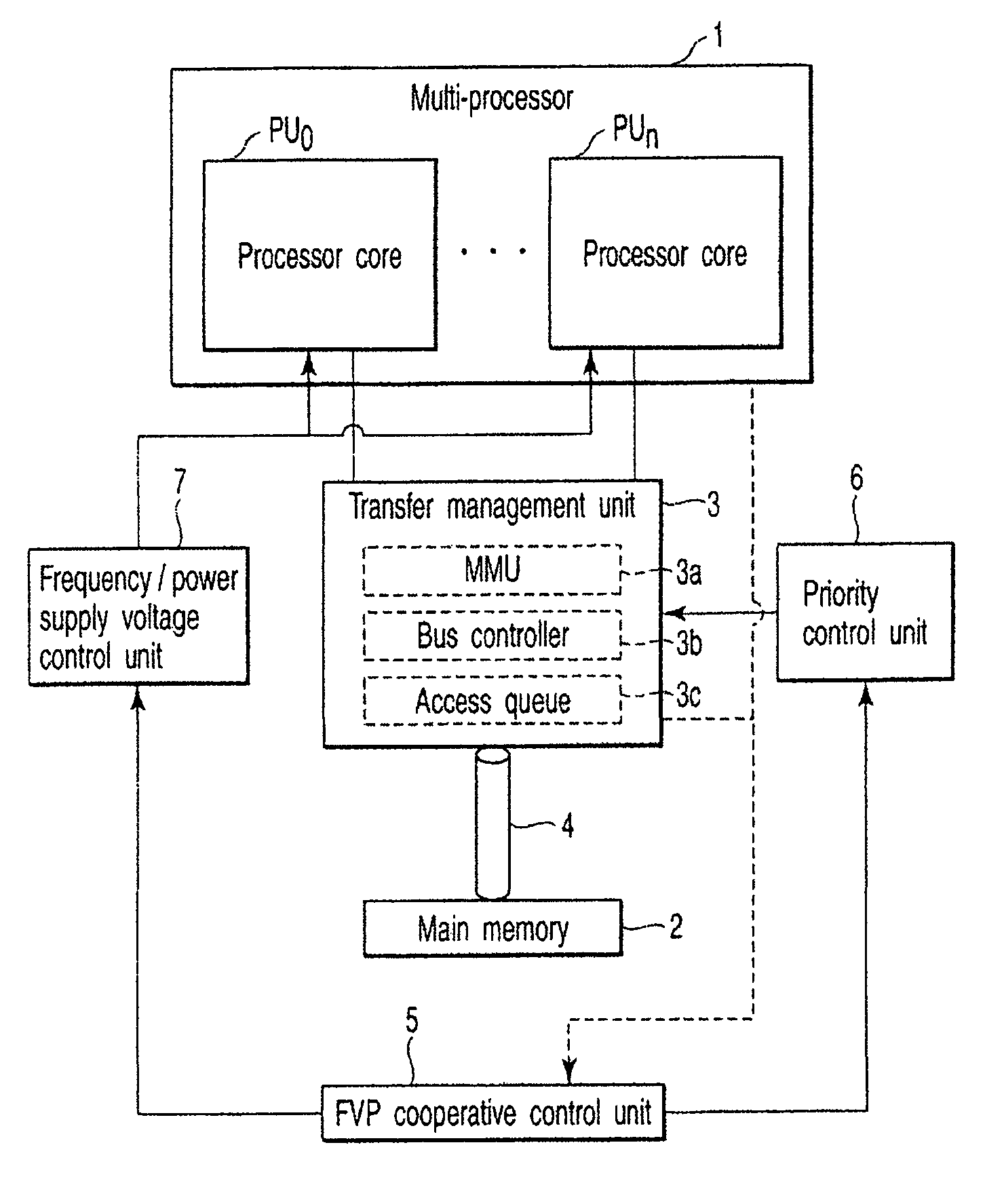
Innovation
- A multi-processor control device and method that utilize a cooperative control unit to determine priorities of requests and adjust frequencies and power supply voltages of processor cores, minimizing total power and energy consumption while satisfying performance constraints by prioritizing access requests based on contention states and program emergences.


Energy Efficiency Standards for MCU Applications
Energy efficiency standards for Multipoint Control Unit (MCU) applications have emerged as critical regulatory frameworks driving the development of low-power embedded systems across various industries. These standards establish mandatory and voluntary guidelines that define maximum power consumption thresholds, operational efficiency metrics, and performance benchmarks for MCU-based devices operating in distributed control environments.
The IEEE 1621 standard serves as a foundational framework for measuring and reporting power consumption in electronic devices, providing standardized methodologies for power measurement across different operational modes including active, idle, and sleep states. This standard has been particularly influential in establishing baseline requirements for MCU power profiling and consumption reporting.
International Energy Agency (IEA) guidelines complement IEEE standards by focusing on system-level energy efficiency requirements for networked control systems. These guidelines emphasize the importance of dynamic power management, requiring MCU applications to demonstrate measurable energy savings through adaptive operational modes and intelligent resource allocation strategies.
Regional standards such as the European Union's Energy-related Products (ErP) Directive 2009/125/EC impose specific energy efficiency requirements on electronic control systems, including MCU-based applications used in industrial automation, building management, and automotive systems. The directive mandates minimum energy performance standards and encourages the adoption of advanced power management techniques.
ENERGY STAR specifications for small network equipment have established power consumption limits for networked control devices, directly impacting MCU applications in IoT and industrial control scenarios. These specifications require devices to demonstrate power scaling capabilities and implement effective sleep mode transitions to minimize standby power consumption.
Industry-specific standards further refine energy efficiency requirements for specialized MCU applications. The ISO 50001 energy management standard provides a framework for organizations to develop energy-efficient control systems, while automotive standards like ISO 26262 incorporate energy efficiency considerations into functional safety requirements for MCU-based automotive control units.
Emerging standards are beginning to address the unique challenges of multipoint control architectures, focusing on distributed power management strategies and inter-node communication efficiency. These evolving frameworks recognize the need for coordinated energy optimization across multiple MCU nodes while maintaining system reliability and performance requirements.
The IEEE 1621 standard serves as a foundational framework for measuring and reporting power consumption in electronic devices, providing standardized methodologies for power measurement across different operational modes including active, idle, and sleep states. This standard has been particularly influential in establishing baseline requirements for MCU power profiling and consumption reporting.
International Energy Agency (IEA) guidelines complement IEEE standards by focusing on system-level energy efficiency requirements for networked control systems. These guidelines emphasize the importance of dynamic power management, requiring MCU applications to demonstrate measurable energy savings through adaptive operational modes and intelligent resource allocation strategies.
Regional standards such as the European Union's Energy-related Products (ErP) Directive 2009/125/EC impose specific energy efficiency requirements on electronic control systems, including MCU-based applications used in industrial automation, building management, and automotive systems. The directive mandates minimum energy performance standards and encourages the adoption of advanced power management techniques.
ENERGY STAR specifications for small network equipment have established power consumption limits for networked control devices, directly impacting MCU applications in IoT and industrial control scenarios. These specifications require devices to demonstrate power scaling capabilities and implement effective sleep mode transitions to minimize standby power consumption.
Industry-specific standards further refine energy efficiency requirements for specialized MCU applications. The ISO 50001 energy management standard provides a framework for organizations to develop energy-efficient control systems, while automotive standards like ISO 26262 incorporate energy efficiency considerations into functional safety requirements for MCU-based automotive control units.
Emerging standards are beginning to address the unique challenges of multipoint control architectures, focusing on distributed power management strategies and inter-node communication efficiency. These evolving frameworks recognize the need for coordinated energy optimization across multiple MCU nodes while maintaining system reliability and performance requirements.
Thermal Management in High-Density MCU Systems
Thermal management represents a critical challenge in high-density multipoint control unit (MCU) systems where reducing energy consumption directly correlates with heat generation control. As MCU integration density increases, the thermal footprint becomes a primary limiting factor for system performance and reliability. Modern high-density MCU architectures generate significant heat loads that must be effectively dissipated to maintain optimal operating temperatures and prevent thermal throttling.
The relationship between energy consumption and thermal management in MCU systems is fundamentally interconnected. Lower power consumption directly translates to reduced heat generation, creating a positive feedback loop where efficient thermal design enables sustained high-performance operation. Advanced thermal management techniques include dynamic thermal monitoring, adaptive cooling strategies, and intelligent heat distribution mechanisms that work synergistically with power reduction methodologies.
Contemporary high-density MCU systems employ sophisticated thermal interface materials and heat spreading technologies to address localized hotspots. These solutions include graphene-based thermal pads, vapor chamber cooling, and micro-channel heat exchangers that can handle power densities exceeding 100W/cm². The integration of these thermal solutions must be carefully balanced with space constraints and cost considerations in multipoint control applications.
Thermal-aware design methodologies have emerged as essential approaches for managing heat in energy-efficient MCU systems. These methodologies incorporate predictive thermal modeling, real-time temperature monitoring, and adaptive performance scaling to maintain optimal operating conditions. Advanced thermal simulation tools enable designers to optimize component placement and thermal pathways during the design phase, reducing the need for reactive cooling solutions.
The implementation of intelligent thermal management systems includes features such as temperature-based frequency scaling, selective component shutdown, and dynamic workload distribution across multiple processing units. These systems utilize embedded thermal sensors and machine learning algorithms to predict thermal behavior and proactively adjust system parameters to prevent overheating while maintaining performance requirements.
Future developments in thermal management for high-density MCU systems focus on integrated cooling solutions, advanced materials with superior thermal conductivity, and novel heat dissipation architectures. These innovations will enable even higher integration densities while supporting aggressive energy consumption reduction targets in next-generation multipoint control applications.
The relationship between energy consumption and thermal management in MCU systems is fundamentally interconnected. Lower power consumption directly translates to reduced heat generation, creating a positive feedback loop where efficient thermal design enables sustained high-performance operation. Advanced thermal management techniques include dynamic thermal monitoring, adaptive cooling strategies, and intelligent heat distribution mechanisms that work synergistically with power reduction methodologies.
Contemporary high-density MCU systems employ sophisticated thermal interface materials and heat spreading technologies to address localized hotspots. These solutions include graphene-based thermal pads, vapor chamber cooling, and micro-channel heat exchangers that can handle power densities exceeding 100W/cm². The integration of these thermal solutions must be carefully balanced with space constraints and cost considerations in multipoint control applications.
Thermal-aware design methodologies have emerged as essential approaches for managing heat in energy-efficient MCU systems. These methodologies incorporate predictive thermal modeling, real-time temperature monitoring, and adaptive performance scaling to maintain optimal operating conditions. Advanced thermal simulation tools enable designers to optimize component placement and thermal pathways during the design phase, reducing the need for reactive cooling solutions.
The implementation of intelligent thermal management systems includes features such as temperature-based frequency scaling, selective component shutdown, and dynamic workload distribution across multiple processing units. These systems utilize embedded thermal sensors and machine learning algorithms to predict thermal behavior and proactively adjust system parameters to prevent overheating while maintaining performance requirements.
Future developments in thermal management for high-density MCU systems focus on integrated cooling solutions, advanced materials with superior thermal conductivity, and novel heat dissipation architectures. These innovations will enable even higher integration densities while supporting aggressive energy consumption reduction targets in next-generation multipoint control applications.
Unlock deeper insights with Patsnap Eureka Quick Research — get a full tech report to explore trends and direct your research. Try now!
Generate Your Research Report Instantly with AI Agent
Supercharge your innovation with Patsnap Eureka AI Agent Platform!