Abscisic Acid and its Effects on Cellular Senescence Regulation
JUL 14, 20258 MIN READ
Generate Your Research Report Instantly with AI Agent
Patsnap Eureka helps you evaluate technical feasibility & market potential.
ABA Research Background
Abscisic acid (ABA) is a plant hormone that plays a crucial role in various physiological processes, including seed dormancy, plant growth, and stress responses. Discovered in the 1960s, ABA has been the subject of extensive research due to its significant impact on plant development and adaptation to environmental stresses.
Initially identified as a growth inhibitor in cotton fruits, ABA was later found to be ubiquitous in higher plants. Its chemical structure was elucidated in 1965, revealing it to be a sesquiterpene compound. This discovery paved the way for further investigations into its biosynthesis, signaling pathways, and physiological functions.
Over the past decades, research on ABA has expanded beyond its role in plant biology to explore its potential effects on cellular senescence regulation in various organisms, including animals and humans. This shift in focus has opened up new avenues for understanding the broader implications of ABA in biological systems.
The study of ABA's effects on cellular senescence regulation has gained momentum due to the increasing interest in aging-related research and the search for potential interventions to mitigate age-related diseases. Cellular senescence, a process where cells cease to divide and undergo distinct phenotypic changes, has been linked to various age-related pathologies and is considered a hallmark of aging.
Recent investigations have revealed intriguing connections between ABA and cellular senescence pathways. Some studies have suggested that ABA may influence key regulators of senescence, such as p53 and p16, while others have explored its potential antioxidant properties and effects on telomere maintenance.
The research landscape surrounding ABA and cellular senescence regulation encompasses a wide range of experimental approaches, from in vitro studies using cell cultures to in vivo experiments in model organisms. These studies aim to elucidate the molecular mechanisms through which ABA may modulate senescence processes and explore its potential therapeutic applications.
As the field progresses, researchers are increasingly focusing on the cross-kingdom effects of ABA, investigating how this plant hormone may interact with animal cellular pathways. This interdisciplinary approach has the potential to uncover novel insights into the evolutionary conservation of stress response mechanisms and aging processes across different species.
The ongoing research on ABA and its effects on cellular senescence regulation represents a promising area of study with implications for both plant science and human health. As our understanding of these complex interactions deepens, it may lead to innovative strategies for managing age-related diseases and improving overall health span.
Initially identified as a growth inhibitor in cotton fruits, ABA was later found to be ubiquitous in higher plants. Its chemical structure was elucidated in 1965, revealing it to be a sesquiterpene compound. This discovery paved the way for further investigations into its biosynthesis, signaling pathways, and physiological functions.
Over the past decades, research on ABA has expanded beyond its role in plant biology to explore its potential effects on cellular senescence regulation in various organisms, including animals and humans. This shift in focus has opened up new avenues for understanding the broader implications of ABA in biological systems.
The study of ABA's effects on cellular senescence regulation has gained momentum due to the increasing interest in aging-related research and the search for potential interventions to mitigate age-related diseases. Cellular senescence, a process where cells cease to divide and undergo distinct phenotypic changes, has been linked to various age-related pathologies and is considered a hallmark of aging.
Recent investigations have revealed intriguing connections between ABA and cellular senescence pathways. Some studies have suggested that ABA may influence key regulators of senescence, such as p53 and p16, while others have explored its potential antioxidant properties and effects on telomere maintenance.
The research landscape surrounding ABA and cellular senescence regulation encompasses a wide range of experimental approaches, from in vitro studies using cell cultures to in vivo experiments in model organisms. These studies aim to elucidate the molecular mechanisms through which ABA may modulate senescence processes and explore its potential therapeutic applications.
As the field progresses, researchers are increasingly focusing on the cross-kingdom effects of ABA, investigating how this plant hormone may interact with animal cellular pathways. This interdisciplinary approach has the potential to uncover novel insights into the evolutionary conservation of stress response mechanisms and aging processes across different species.
The ongoing research on ABA and its effects on cellular senescence regulation represents a promising area of study with implications for both plant science and human health. As our understanding of these complex interactions deepens, it may lead to innovative strategies for managing age-related diseases and improving overall health span.
Market Demand Analysis
The market demand for abscisic acid (ABA) and its applications in cellular senescence regulation has been steadily growing, driven by increasing research interest and potential commercial applications. The agricultural sector represents a significant portion of this demand, as ABA plays a crucial role in plant stress responses and crop yield improvement. Farmers and agribusinesses are seeking innovative solutions to enhance crop resilience against environmental stresses, particularly in the face of climate change and water scarcity.
In the pharmaceutical and healthcare industries, there is a rising interest in ABA's potential effects on human cellular senescence. As the global population ages, the demand for anti-aging products and therapies is expanding rapidly. Research into ABA's role in regulating cellular senescence could lead to the development of novel treatments for age-related diseases and cosmeceutical products, tapping into the multi-billion dollar anti-aging market.
The biotechnology sector is also showing increased demand for ABA-related research and products. Companies are investing in the development of ABA-based biostimulants and plant growth regulators, aiming to improve crop productivity and stress tolerance. This trend is particularly evident in regions facing agricultural challenges due to climate change and water scarcity.
Academic and research institutions continue to drive demand for ABA and related compounds for basic and applied research. The growing body of knowledge surrounding ABA's mechanisms of action and its potential applications in various fields is fueling further investigation and creating new market opportunities.
Environmental concerns and the push for sustainable agriculture are also contributing to the market demand for ABA-related technologies. As governments and consumers increasingly prioritize eco-friendly farming practices, there is a growing interest in natural plant growth regulators and stress-mitigation strategies that can reduce the use of synthetic chemicals in agriculture.
The nutraceutical and functional food industries are exploring the potential health benefits of ABA, particularly its reported effects on glucose metabolism and insulin sensitivity. This emerging market segment could significantly expand the demand for ABA-derived products in the coming years.
Overall, the market for ABA and its applications in cellular senescence regulation is diverse and expanding. While the agricultural sector remains a primary driver of demand, the potential applications in human health, biotechnology, and environmental sustainability are opening up new market opportunities and attracting investment from various industries.
In the pharmaceutical and healthcare industries, there is a rising interest in ABA's potential effects on human cellular senescence. As the global population ages, the demand for anti-aging products and therapies is expanding rapidly. Research into ABA's role in regulating cellular senescence could lead to the development of novel treatments for age-related diseases and cosmeceutical products, tapping into the multi-billion dollar anti-aging market.
The biotechnology sector is also showing increased demand for ABA-related research and products. Companies are investing in the development of ABA-based biostimulants and plant growth regulators, aiming to improve crop productivity and stress tolerance. This trend is particularly evident in regions facing agricultural challenges due to climate change and water scarcity.
Academic and research institutions continue to drive demand for ABA and related compounds for basic and applied research. The growing body of knowledge surrounding ABA's mechanisms of action and its potential applications in various fields is fueling further investigation and creating new market opportunities.
Environmental concerns and the push for sustainable agriculture are also contributing to the market demand for ABA-related technologies. As governments and consumers increasingly prioritize eco-friendly farming practices, there is a growing interest in natural plant growth regulators and stress-mitigation strategies that can reduce the use of synthetic chemicals in agriculture.
The nutraceutical and functional food industries are exploring the potential health benefits of ABA, particularly its reported effects on glucose metabolism and insulin sensitivity. This emerging market segment could significantly expand the demand for ABA-derived products in the coming years.
Overall, the market for ABA and its applications in cellular senescence regulation is diverse and expanding. While the agricultural sector remains a primary driver of demand, the potential applications in human health, biotechnology, and environmental sustainability are opening up new market opportunities and attracting investment from various industries.
ABA and Senescence Status
Abscisic acid (ABA) is a plant hormone that plays a crucial role in various physiological processes, including stress responses and senescence. The current status of research on ABA and its effects on cellular senescence regulation reveals a complex interplay between this phytohormone and the aging process in plants.
Recent studies have shown that ABA levels increase significantly during leaf senescence, suggesting its involvement in the regulation of this process. The accumulation of ABA triggers a cascade of molecular events that lead to the expression of senescence-associated genes (SAGs). These genes are responsible for the degradation of cellular components and the remobilization of nutrients, which are hallmarks of the senescence process.
One of the key mechanisms by which ABA influences senescence is through its interaction with reactive oxygen species (ROS). ABA has been found to promote the production of ROS, which act as signaling molecules in the senescence pathway. The increased ROS levels lead to oxidative stress, triggering the expression of senescence-related transcription factors and ultimately accelerating the aging process.
Furthermore, ABA has been shown to modulate the activity of other hormones involved in senescence regulation. For instance, it antagonizes the effects of cytokinins, which are known to delay senescence. This hormonal crosstalk adds another layer of complexity to the role of ABA in senescence regulation.
Recent research has also uncovered the involvement of ABA in autophagy, a cellular recycling process that plays a crucial role in senescence. ABA has been found to promote autophagy, which contributes to the degradation of cellular components during senescence. This finding highlights the multifaceted nature of ABA's influence on the senescence process.
The current understanding of ABA's role in senescence is not limited to leaves but extends to other plant organs as well. Studies have shown that ABA is involved in the senescence of flowers, fruits, and even root systems. This broader perspective emphasizes the importance of ABA as a universal regulator of plant senescence.
Despite these advances, there are still many unanswered questions regarding the precise mechanisms by which ABA regulates senescence. The complex network of signaling pathways and the interplay between ABA and other hormones present challenges in fully elucidating its role. Ongoing research is focused on unraveling these intricate relationships and identifying potential targets for manipulating senescence processes in plants.
Recent studies have shown that ABA levels increase significantly during leaf senescence, suggesting its involvement in the regulation of this process. The accumulation of ABA triggers a cascade of molecular events that lead to the expression of senescence-associated genes (SAGs). These genes are responsible for the degradation of cellular components and the remobilization of nutrients, which are hallmarks of the senescence process.
One of the key mechanisms by which ABA influences senescence is through its interaction with reactive oxygen species (ROS). ABA has been found to promote the production of ROS, which act as signaling molecules in the senescence pathway. The increased ROS levels lead to oxidative stress, triggering the expression of senescence-related transcription factors and ultimately accelerating the aging process.
Furthermore, ABA has been shown to modulate the activity of other hormones involved in senescence regulation. For instance, it antagonizes the effects of cytokinins, which are known to delay senescence. This hormonal crosstalk adds another layer of complexity to the role of ABA in senescence regulation.
Recent research has also uncovered the involvement of ABA in autophagy, a cellular recycling process that plays a crucial role in senescence. ABA has been found to promote autophagy, which contributes to the degradation of cellular components during senescence. This finding highlights the multifaceted nature of ABA's influence on the senescence process.
The current understanding of ABA's role in senescence is not limited to leaves but extends to other plant organs as well. Studies have shown that ABA is involved in the senescence of flowers, fruits, and even root systems. This broader perspective emphasizes the importance of ABA as a universal regulator of plant senescence.
Despite these advances, there are still many unanswered questions regarding the precise mechanisms by which ABA regulates senescence. The complex network of signaling pathways and the interplay between ABA and other hormones present challenges in fully elucidating its role. Ongoing research is focused on unraveling these intricate relationships and identifying potential targets for manipulating senescence processes in plants.
Current ABA Applications
01 Role of abscisic acid in plant senescence
Abscisic acid (ABA) plays a crucial role in regulating plant senescence processes. It is involved in various physiological responses, including leaf senescence, fruit ripening, and seed dormancy. ABA signaling pathways contribute to the initiation and progression of cellular senescence in plants, affecting gene expression and metabolic changes associated with aging.- Role of abscisic acid in plant senescence: Abscisic acid (ABA) plays a crucial role in regulating plant senescence processes. It is involved in various physiological responses, including leaf senescence, fruit ripening, and stress-induced senescence. ABA signaling pathways contribute to the initiation and progression of cellular senescence in plants, affecting gene expression and metabolic changes associated with aging.
- ABA-mediated stress responses and senescence: Abscisic acid is a key mediator in plant stress responses, which can accelerate cellular senescence. It regulates stomatal closure, osmotic adjustment, and antioxidant systems during drought, salinity, and temperature stress. The crosstalk between ABA-induced stress responses and senescence pathways influences plant survival and productivity under adverse conditions.
- ABA signaling in fruit ripening and senescence: Abscisic acid is involved in the regulation of fruit ripening and senescence processes. It influences ethylene biosynthesis, cell wall degradation, and changes in pigmentation during fruit maturation. Understanding ABA's role in fruit senescence is crucial for developing strategies to control fruit quality and extend shelf life in various crop species.
- Genetic manipulation of ABA pathways to modulate senescence: Researchers are exploring genetic approaches to manipulate ABA biosynthesis, signaling, and degradation pathways to control cellular senescence in plants. This includes the development of transgenic plants with altered ABA sensitivity or metabolism, aiming to enhance crop productivity, stress tolerance, and post-harvest quality by delaying or accelerating senescence processes as needed.
- ABA-related compounds and senescence regulation: Various ABA-related compounds and analogs are being studied for their potential to regulate cellular senescence in plants. These include synthetic ABA mimics, ABA receptor agonists or antagonists, and compounds that modulate ABA metabolism or signaling. Such compounds may have applications in agriculture for controlling plant growth, stress responses, and senescence-related processes.
02 ABA-mediated stress responses and senescence
Abscisic acid is a key mediator in plant stress responses, which can accelerate senescence. It regulates stomatal closure, water loss, and osmotic adjustments during drought stress. ABA also influences the production of reactive oxygen species and antioxidants, which are closely linked to cellular senescence processes. Understanding these mechanisms can lead to improved crop stress tolerance and delayed senescence.Expand Specific Solutions03 Genetic manipulation of ABA pathways to control senescence
Researchers are exploring genetic approaches to modulate ABA biosynthesis, signaling, and degradation pathways to control cellular senescence in plants. This includes the development of transgenic plants with altered ABA sensitivity or metabolism, as well as the identification and characterization of genes involved in ABA-mediated senescence processes. Such genetic manipulations aim to extend plant longevity and improve crop yields.Expand Specific Solutions04 ABA interactions with other phytohormones in senescence regulation
Abscisic acid interacts with other plant hormones, such as ethylene, jasmonic acid, and cytokinins, to regulate cellular senescence. These complex hormonal interactions influence the timing and progression of senescence processes. Understanding the crosstalk between ABA and other phytohormones is crucial for developing strategies to manipulate senescence in agricultural and horticultural applications.Expand Specific Solutions05 Applications of ABA in controlling senescence for crop improvement
The knowledge of ABA's role in cellular senescence is being applied to develop agricultural technologies for crop improvement. This includes the use of ABA analogs or inhibitors to manipulate senescence processes, extending the shelf life of fruits and vegetables, improving seed storage, and enhancing crop productivity under stress conditions. These applications aim to optimize plant growth, yield, and post-harvest quality.Expand Specific Solutions
Key Players in ABA Field
The research on Abscisic Acid and its effects on cellular senescence regulation is in a developing stage, with growing market potential due to its applications in agriculture and biotechnology. The global market for plant growth regulators, including Abscisic Acid, is expanding, driven by increasing demand for crop yield improvement and stress tolerance. Technologically, the field is advancing rapidly, with companies like Valent BioSciences Corp., Sumitomo Chemical Co., Ltd., and Syngenta Participations AG leading in commercial applications. Academic institutions such as China Agricultural University and The Rockefeller University are contributing significantly to fundamental research, while companies like Lomon Bio Technology Co. Ltd. are focusing on large-scale production and commercial applications of Abscisic Acid derivatives.
The Regents of the University of California
Technical Solution: The University of California system has made significant contributions to the understanding of abscisic acid (ABA) and its role in cellular senescence regulation. Their research focuses on elucidating the molecular mechanisms of ABA signaling and its impact on senescence-associated gene expression. They have identified key components of the ABA signaling pathway, including the PYR/PYL/RCAR family of ABA receptors [5]. Their studies have revealed that ABA promotes senescence by activating specific transcription factors, such as ABI5 and ABFs, which regulate the expression of senescence-associated genes [6]. The university has also developed innovative approaches to modulate ABA sensitivity in plants, including the use of small molecule agonists and antagonists of ABA receptors [7]. Furthermore, they have explored the role of ABA in stress-induced senescence and its interaction with reactive oxygen species signaling pathways [8].
Strengths: Cutting-edge research in plant molecular biology and biochemistry; strong collaboration network across multiple campuses. Weaknesses: Complex intellectual property landscape due to multiple contributors; potential challenges in commercialization of academic research.
China Agricultural University
Technical Solution: China Agricultural University has developed a comprehensive research program on abscisic acid (ABA) and its effects on cellular senescence regulation. Their approach involves using advanced genetic engineering techniques to manipulate ABA biosynthesis and signaling pathways in model plant systems. They have successfully identified key genes involved in ABA-mediated senescence, such as the PYL9 ABA receptor [1]. Their research has shown that overexpression of PYL9 can enhance drought tolerance and delay leaf senescence in Arabidopsis [2]. Additionally, they have explored the cross-talk between ABA and other phytohormones in regulating senescence, particularly focusing on the antagonistic relationship between ABA and cytokinins [3]. The university has also developed novel ABA analogs with improved stability and efficacy in controlling plant senescence [4].
Strengths: Strong expertise in plant molecular biology and genetics; access to advanced research facilities. Weaknesses: May face challenges in translating research findings to field applications; potential regulatory hurdles for genetically modified organisms.
ABA Senescence Mechanisms
Senescent cell-associated antigen-binding domains, antibodies and chimeric antigen receptors comprising the same, and uses thereof
PatentActiveUS20240009242A1
Innovation
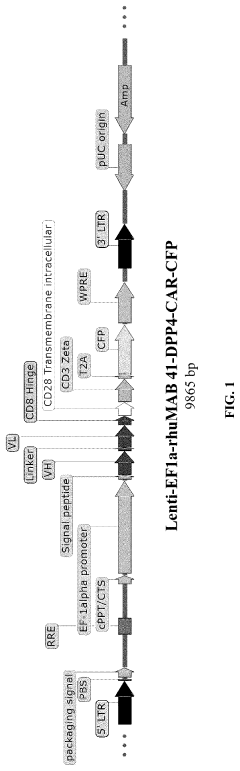
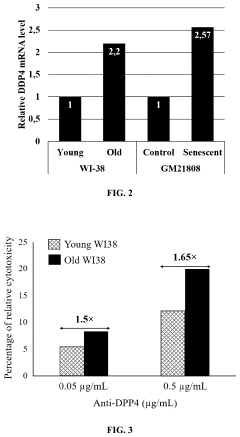
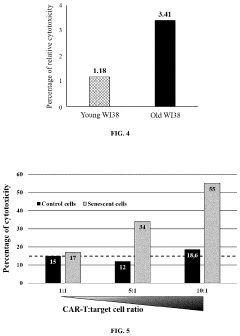
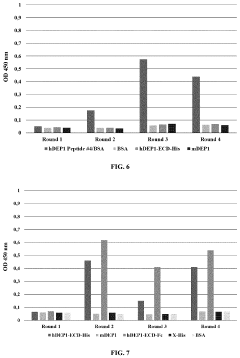
- Development of antibodies and chimeric antigen receptors (CARs) targeting DPP4 and DEP1, which are specifically expressed on senescent cells, to induce their clearance through immune mechanisms like antibody-dependent cell cytotoxicity and complement-dependent cytotoxicity.
Anti-senescence compounds and uses thereof
PatentWO2016118014A2
Innovation
- Development of a peptide with a specific amino acid sequence, such as LTLRKEPASEIAQSILEAYSQNGWANRRSGGKRP, and inhibitors like NQDI and R406, which selectively induce apoptosis in senescent cells, and can be used in combination with chemotherapeutic agents to treat age-related disorders and cancer.

ABA Regulatory Landscape
The ABA regulatory landscape is a complex network of signaling pathways and molecular interactions that govern the plant hormone abscisic acid's (ABA) influence on cellular processes, including senescence regulation. This intricate system involves numerous components, including receptors, transcription factors, and downstream effectors, which collectively orchestrate the plant's response to various environmental stresses and developmental cues.
At the core of the ABA signaling pathway are the PYR/PYL/RCAR receptors, which serve as the primary sensors for ABA. Upon binding to ABA, these receptors undergo conformational changes that enable them to interact with and inhibit protein phosphatase 2C (PP2C) enzymes. This inhibition releases the suppression of SNF1-related protein kinases (SnRK2s), which are key positive regulators of ABA signaling.
The activation of SnRK2s triggers a cascade of phosphorylation events, leading to the regulation of various downstream targets. Among these targets are transcription factors such as ABA-responsive element binding factors (ABFs) and ABA-insensitive 5 (ABI5). These transcription factors bind to ABA-responsive elements (ABREs) in the promoter regions of ABA-responsive genes, initiating the transcription of genes involved in stress responses and senescence processes.
In the context of cellular senescence regulation, the ABA regulatory landscape intersects with other hormonal pathways and signaling networks. For instance, ABA interacts with ethylene and jasmonic acid signaling, both of which are known to promote senescence. The crosstalk between these pathways involves shared transcription factors and regulatory elements, creating a fine-tuned system for modulating senescence progression.
The ABA regulatory landscape also encompasses epigenetic modifications that influence gene expression patterns during senescence. Histone modifications and DNA methylation changes have been observed in response to ABA signaling, contributing to the dynamic regulation of senescence-associated genes. These epigenetic alterations can lead to long-lasting effects on gene expression, potentially explaining some of the sustained responses to ABA during senescence.
Furthermore, the ABA regulatory landscape includes post-transcriptional and post-translational modifications that fine-tune the activity of key components. MicroRNAs (miRNAs) have been identified as important regulators of ABA signaling genes, providing an additional layer of control over the senescence process. Protein ubiquitination and SUMOylation also play crucial roles in modulating the stability and activity of ABA signaling components, allowing for rapid adjustments in response to changing environmental conditions.
At the core of the ABA signaling pathway are the PYR/PYL/RCAR receptors, which serve as the primary sensors for ABA. Upon binding to ABA, these receptors undergo conformational changes that enable them to interact with and inhibit protein phosphatase 2C (PP2C) enzymes. This inhibition releases the suppression of SNF1-related protein kinases (SnRK2s), which are key positive regulators of ABA signaling.
The activation of SnRK2s triggers a cascade of phosphorylation events, leading to the regulation of various downstream targets. Among these targets are transcription factors such as ABA-responsive element binding factors (ABFs) and ABA-insensitive 5 (ABI5). These transcription factors bind to ABA-responsive elements (ABREs) in the promoter regions of ABA-responsive genes, initiating the transcription of genes involved in stress responses and senescence processes.
In the context of cellular senescence regulation, the ABA regulatory landscape intersects with other hormonal pathways and signaling networks. For instance, ABA interacts with ethylene and jasmonic acid signaling, both of which are known to promote senescence. The crosstalk between these pathways involves shared transcription factors and regulatory elements, creating a fine-tuned system for modulating senescence progression.
The ABA regulatory landscape also encompasses epigenetic modifications that influence gene expression patterns during senescence. Histone modifications and DNA methylation changes have been observed in response to ABA signaling, contributing to the dynamic regulation of senescence-associated genes. These epigenetic alterations can lead to long-lasting effects on gene expression, potentially explaining some of the sustained responses to ABA during senescence.
Furthermore, the ABA regulatory landscape includes post-transcriptional and post-translational modifications that fine-tune the activity of key components. MicroRNAs (miRNAs) have been identified as important regulators of ABA signaling genes, providing an additional layer of control over the senescence process. Protein ubiquitination and SUMOylation also play crucial roles in modulating the stability and activity of ABA signaling components, allowing for rapid adjustments in response to changing environmental conditions.
ABA Environmental Impact
Abscisic acid (ABA) plays a crucial role in plant responses to environmental stresses, making its environmental impact a significant area of study. ABA's influence extends beyond plant physiology, affecting ecosystem dynamics and agricultural practices. In response to drought conditions, ABA triggers stomatal closure, reducing water loss through transpiration. This mechanism helps plants conserve water during periods of scarcity, but it also decreases carbon dioxide uptake, potentially impacting photosynthesis rates and overall plant productivity.
The environmental impact of ABA is particularly evident in its role in seed dormancy and germination. By regulating these processes, ABA influences plant population dynamics and species distribution patterns. In ecosystems experiencing changing climate conditions, ABA-mediated responses can determine which plant species thrive or decline, ultimately shaping biodiversity and ecosystem structure.
ABA's effects on root growth and architecture have far-reaching consequences for soil structure and nutrient cycling. By promoting root growth under water-limited conditions, ABA enhances plants' ability to access deeper water sources. This adaptation not only improves plant survival but also impacts soil moisture distribution and microbial communities in the rhizosphere.
In agricultural contexts, understanding ABA's environmental impact is crucial for developing drought-resistant crops and optimizing irrigation strategies. Manipulating ABA signaling pathways in crops can lead to improved water use efficiency, potentially reducing agricultural water consumption on a global scale. However, such modifications may have unintended consequences on crop-pest interactions and ecosystem balance, necessitating careful consideration in agricultural management practices.
ABA's role in plant-pathogen interactions adds another layer to its environmental impact. By modulating plant defense responses, ABA influences the spread and severity of plant diseases in natural and agricultural ecosystems. This interplay between ABA, plant immunity, and pathogen virulence can have cascading effects on food security and ecosystem health.
The environmental impact of ABA extends to its interactions with other plant hormones and signaling molecules. These complex interactions regulate plant responses to multiple environmental stressors simultaneously, shaping plant communities' resilience to climate change. As global temperatures rise and extreme weather events become more frequent, ABA's role in mediating plant adaptation to these challenges becomes increasingly significant.
The environmental impact of ABA is particularly evident in its role in seed dormancy and germination. By regulating these processes, ABA influences plant population dynamics and species distribution patterns. In ecosystems experiencing changing climate conditions, ABA-mediated responses can determine which plant species thrive or decline, ultimately shaping biodiversity and ecosystem structure.
ABA's effects on root growth and architecture have far-reaching consequences for soil structure and nutrient cycling. By promoting root growth under water-limited conditions, ABA enhances plants' ability to access deeper water sources. This adaptation not only improves plant survival but also impacts soil moisture distribution and microbial communities in the rhizosphere.
In agricultural contexts, understanding ABA's environmental impact is crucial for developing drought-resistant crops and optimizing irrigation strategies. Manipulating ABA signaling pathways in crops can lead to improved water use efficiency, potentially reducing agricultural water consumption on a global scale. However, such modifications may have unintended consequences on crop-pest interactions and ecosystem balance, necessitating careful consideration in agricultural management practices.
ABA's role in plant-pathogen interactions adds another layer to its environmental impact. By modulating plant defense responses, ABA influences the spread and severity of plant diseases in natural and agricultural ecosystems. This interplay between ABA, plant immunity, and pathogen virulence can have cascading effects on food security and ecosystem health.
The environmental impact of ABA extends to its interactions with other plant hormones and signaling molecules. These complex interactions regulate plant responses to multiple environmental stressors simultaneously, shaping plant communities' resilience to climate change. As global temperatures rise and extreme weather events become more frequent, ABA's role in mediating plant adaptation to these challenges becomes increasingly significant.
Unlock deeper insights with Patsnap Eureka Quick Research — get a full tech report to explore trends and direct your research. Try now!
Generate Your Research Report Instantly with AI Agent
Supercharge your innovation with Patsnap Eureka AI Agent Platform!