
Automatic Transfer Switch vs Soft-Load Transfer: Generator Impact
AUG 25, 20268 MIN READ
Generate Your Research Report Instantly with AI Agent
Patsnap Eureka helps you evaluate technical feasibility & market potential.
ATS vs Soft-Load Transfer Technology Background and Objectives
The evolution of power transfer technology has been fundamentally shaped by the critical need to maintain continuous electrical supply in mission-critical applications. Traditional Automatic Transfer Switches (ATS) emerged in the mid-20th century as electromechanical solutions designed to rapidly switch loads between primary and backup power sources during utility failures. These systems prioritized speed and reliability, typically completing transfers within milliseconds to seconds, but introduced significant mechanical stress on generators through instantaneous load application.
As power quality requirements intensified and generator protection became increasingly important, the limitations of conventional ATS technology became apparent. The abrupt load transitions inherent in traditional switching mechanisms created substantial voltage transients, frequency deviations, and mechanical shock to generator components. These impacts manifested as accelerated wear on engine bearings, increased fuel consumption during load acceptance, and potential voltage sag affecting sensitive electronic equipment.
Soft-Load Transfer technology represents a paradigm shift in power transfer methodology, emerging from advancements in power electronics and digital control systems over the past two decades. This approach introduces controlled, gradual load transitions that allow generators to accommodate power demands progressively rather than instantaneously. By implementing sophisticated algorithms and power conditioning circuits, soft-load systems minimize the electrical and mechanical stresses traditionally associated with emergency power transfers.
The primary objective of this research is to comprehensively evaluate the comparative impacts of ATS and Soft-Load Transfer technologies on generator performance, longevity, and operational efficiency. This investigation aims to quantify the differences in mechanical stress, fuel efficiency, voltage stability, and maintenance requirements between these two approaches. Additionally, the research seeks to establish technical guidelines for selecting appropriate transfer technologies based on specific application requirements, load characteristics, and generator specifications.
Understanding these technological distinctions is essential for optimizing backup power system design, reducing total cost of ownership, and ensuring reliable power delivery in critical infrastructure environments including healthcare facilities, data centers, telecommunications networks, and industrial operations.
As power quality requirements intensified and generator protection became increasingly important, the limitations of conventional ATS technology became apparent. The abrupt load transitions inherent in traditional switching mechanisms created substantial voltage transients, frequency deviations, and mechanical shock to generator components. These impacts manifested as accelerated wear on engine bearings, increased fuel consumption during load acceptance, and potential voltage sag affecting sensitive electronic equipment.
Soft-Load Transfer technology represents a paradigm shift in power transfer methodology, emerging from advancements in power electronics and digital control systems over the past two decades. This approach introduces controlled, gradual load transitions that allow generators to accommodate power demands progressively rather than instantaneously. By implementing sophisticated algorithms and power conditioning circuits, soft-load systems minimize the electrical and mechanical stresses traditionally associated with emergency power transfers.
The primary objective of this research is to comprehensively evaluate the comparative impacts of ATS and Soft-Load Transfer technologies on generator performance, longevity, and operational efficiency. This investigation aims to quantify the differences in mechanical stress, fuel efficiency, voltage stability, and maintenance requirements between these two approaches. Additionally, the research seeks to establish technical guidelines for selecting appropriate transfer technologies based on specific application requirements, load characteristics, and generator specifications.
Understanding these technological distinctions is essential for optimizing backup power system design, reducing total cost of ownership, and ensuring reliable power delivery in critical infrastructure environments including healthcare facilities, data centers, telecommunications networks, and industrial operations.
Market Demand for Generator Transfer Solutions
The global market for generator transfer solutions is experiencing robust growth driven by increasing demand for reliable backup power systems across multiple sectors. Critical infrastructure facilities including hospitals, data centers, telecommunications networks, and emergency services require uninterrupted power supply, making transfer switch technology essential for operational continuity. The rising frequency of grid instabilities, extreme weather events, and planned maintenance outages has amplified the necessity for sophisticated transfer mechanisms that can seamlessly transition between utility and generator power sources.
Industrial and commercial facilities represent a substantial portion of market demand, particularly in manufacturing plants, financial institutions, and large-scale retail operations where power interruptions translate directly into significant revenue losses and operational disruptions. These sectors increasingly prioritize not only reliability but also equipment longevity, making the choice between Automatic Transfer Switches and Soft-Load Transfer systems a critical procurement decision that impacts both immediate operational needs and long-term asset management strategies.
The residential sector is emerging as a significant growth area, particularly in regions prone to natural disasters or experiencing aging electrical infrastructure. Homeowners investing in standby generator systems are becoming more sophisticated in their understanding of transfer technology options, seeking solutions that balance cost-effectiveness with generator protection and operational efficiency. This trend is particularly pronounced in North American and European markets where residential backup power adoption rates continue to climb.
Regulatory frameworks and building codes are increasingly mandating specific performance standards for emergency power systems, particularly in healthcare and life-safety applications. These requirements often specify maximum transfer times and operational parameters that influence technology selection between traditional ATS and soft-load alternatives. Compliance considerations are driving facility managers and system designers to carefully evaluate how different transfer methodologies impact generator stress, fuel efficiency, and maintenance intervals.
The market is also witnessing growing interest in hybrid and renewable energy integration scenarios, where transfer solutions must accommodate multiple power sources including solar arrays, battery storage systems, and conventional generators. This complexity is creating demand for more intelligent transfer systems capable of managing sophisticated load prioritization and source optimization strategies while minimizing mechanical and electrical stress on generation equipment.
Industrial and commercial facilities represent a substantial portion of market demand, particularly in manufacturing plants, financial institutions, and large-scale retail operations where power interruptions translate directly into significant revenue losses and operational disruptions. These sectors increasingly prioritize not only reliability but also equipment longevity, making the choice between Automatic Transfer Switches and Soft-Load Transfer systems a critical procurement decision that impacts both immediate operational needs and long-term asset management strategies.
The residential sector is emerging as a significant growth area, particularly in regions prone to natural disasters or experiencing aging electrical infrastructure. Homeowners investing in standby generator systems are becoming more sophisticated in their understanding of transfer technology options, seeking solutions that balance cost-effectiveness with generator protection and operational efficiency. This trend is particularly pronounced in North American and European markets where residential backup power adoption rates continue to climb.
Regulatory frameworks and building codes are increasingly mandating specific performance standards for emergency power systems, particularly in healthcare and life-safety applications. These requirements often specify maximum transfer times and operational parameters that influence technology selection between traditional ATS and soft-load alternatives. Compliance considerations are driving facility managers and system designers to carefully evaluate how different transfer methodologies impact generator stress, fuel efficiency, and maintenance intervals.
The market is also witnessing growing interest in hybrid and renewable energy integration scenarios, where transfer solutions must accommodate multiple power sources including solar arrays, battery storage systems, and conventional generators. This complexity is creating demand for more intelligent transfer systems capable of managing sophisticated load prioritization and source optimization strategies while minimizing mechanical and electrical stress on generation equipment.
Current Status and Challenges in Generator Switching Technologies
Generator switching technologies have evolved significantly over the past decades, driven by increasing demands for power reliability and equipment protection. The two predominant approaches—Automatic Transfer Switch (ATS) and Soft-Load Transfer (SLT)—represent distinct philosophies in managing power transitions between utility and backup generator sources. ATS systems employ mechanical contactors that execute rapid switching operations, typically completing transfers within milliseconds to seconds. In contrast, SLT technologies utilize power electronics and sophisticated control algorithms to achieve seamless load transitions with minimal electrical disturbances.
Current implementations face several critical technical challenges that impact generator performance and longevity. Traditional ATS systems, while proven and cost-effective, subject generators to substantial mechanical and electrical stress during switching events. The instantaneous load application can cause voltage transients exceeding 20% of nominal values and frequency deviations that stress generator windings and excitation systems. These transient conditions accelerate insulation degradation and bearing wear, particularly in frequent switching scenarios common in modern microgrids and data center applications.
Soft-Load Transfer technologies address many ATS limitations but introduce complexity and cost considerations. SLT systems require precise synchronization between sources, demanding advanced phase-matching algorithms and real-time monitoring capabilities. The power electronics components necessary for gradual load ramping increase system costs by 40-60% compared to conventional ATS solutions. Additionally, SLT implementations require sophisticated control systems capable of managing multiple generator paralleling scenarios and handling fault conditions without compromising transfer reliability.
Geographic distribution of these technologies reveals distinct adoption patterns. North American markets predominantly favor ATS solutions due to established infrastructure and regulatory frameworks emphasizing transfer speed. European and Asian markets show increasing SLT adoption, driven by stricter power quality standards and higher penetration of sensitive electronic loads. Emerging markets face unique constraints, balancing initial investment costs against long-term operational benefits and generator maintenance expenses.
The primary technical bottleneck remains the lack of standardized evaluation metrics for comparing generator impact across switching methodologies. Existing standards focus primarily on transfer time and voltage regulation, inadequately addressing cumulative stress effects, fuel efficiency implications, and lifecycle cost considerations. This gap complicates technology selection decisions and hinders development of hybrid solutions that could optimize both transfer performance and generator protection.
Current implementations face several critical technical challenges that impact generator performance and longevity. Traditional ATS systems, while proven and cost-effective, subject generators to substantial mechanical and electrical stress during switching events. The instantaneous load application can cause voltage transients exceeding 20% of nominal values and frequency deviations that stress generator windings and excitation systems. These transient conditions accelerate insulation degradation and bearing wear, particularly in frequent switching scenarios common in modern microgrids and data center applications.
Soft-Load Transfer technologies address many ATS limitations but introduce complexity and cost considerations. SLT systems require precise synchronization between sources, demanding advanced phase-matching algorithms and real-time monitoring capabilities. The power electronics components necessary for gradual load ramping increase system costs by 40-60% compared to conventional ATS solutions. Additionally, SLT implementations require sophisticated control systems capable of managing multiple generator paralleling scenarios and handling fault conditions without compromising transfer reliability.
Geographic distribution of these technologies reveals distinct adoption patterns. North American markets predominantly favor ATS solutions due to established infrastructure and regulatory frameworks emphasizing transfer speed. European and Asian markets show increasing SLT adoption, driven by stricter power quality standards and higher penetration of sensitive electronic loads. Emerging markets face unique constraints, balancing initial investment costs against long-term operational benefits and generator maintenance expenses.
The primary technical bottleneck remains the lack of standardized evaluation metrics for comparing generator impact across switching methodologies. Existing standards focus primarily on transfer time and voltage regulation, inadequately addressing cumulative stress effects, fuel efficiency implications, and lifecycle cost considerations. This gap complicates technology selection decisions and hinders development of hybrid solutions that could optimize both transfer performance and generator protection.
Mainstream Transfer Switch Solutions and Technical Details
01 Soft-load transfer control methods
Automatic transfer switches can implement soft-load transfer techniques to minimize electrical transients during switching operations. These methods involve gradually ramping up or synchronizing the load transfer between power sources to reduce voltage spikes and current surges. The control algorithms monitor voltage and phase relationships between sources before initiating transfer, ensuring smooth transitions that protect sensitive equipment from damage.- Soft-load transfer control methods: Automatic transfer switches can implement soft-load transfer techniques to minimize electrical impact during power source switching. These methods involve gradual voltage ramping, phase synchronization, and controlled switching sequences to reduce transient currents and voltage spikes. The soft-load transfer approach ensures smooth transitions between power sources, protecting sensitive equipment from sudden electrical disturbances and extending the lifespan of connected loads.
- Phase synchronization and voltage matching: Advanced automatic transfer switches incorporate phase synchronization circuits that monitor and match the phase angle and voltage magnitude between the primary and secondary power sources before transfer. This synchronization process minimizes the voltage differential and phase displacement during switching, significantly reducing the mechanical and electrical stress on the system. The technology ensures that the transfer occurs at the optimal moment when both sources are closely aligned.
- Current limiting and surge suppression: Automatic transfer switches can integrate current limiting mechanisms and surge suppression devices to mitigate transfer impact. These systems employ electronic components or mechanical devices that restrict inrush currents during the switching process. The surge suppression elements absorb transient energy spikes, protecting downstream equipment from voltage transients and current surges that typically occur during power source transitions.
- Intelligent transfer timing control: Modern automatic transfer switches utilize microprocessor-based control systems that analyze power quality parameters and determine optimal transfer timing. These intelligent controllers monitor voltage, frequency, and phase relationships to calculate the best moment for switching. The systems can implement programmable delay times and adjustable transfer thresholds to customize the soft-load transfer characteristics based on specific application requirements and load sensitivity.
- Load pre-conditioning and gradual transfer: Some automatic transfer switch designs incorporate load pre-conditioning techniques that prepare the electrical system before actual transfer occurs. These methods may include temporary load reduction, capacitor bank switching, or impedance matching circuits that gradually transition the load from one source to another. The gradual transfer approach distributes the switching impact over a longer time period, minimizing peak transient effects and ensuring stable operation throughout the transfer process.
02 Phase synchronization and voltage matching
Transfer switches incorporate phase synchronization mechanisms to align the voltage waveforms of different power sources before switching. This technology detects phase angles and voltage magnitudes of both the primary and backup sources, adjusting the transfer timing to occur at optimal points in the AC cycle. By matching these electrical parameters, the system significantly reduces the mechanical and electrical stress on connected loads during transfer operations.Expand Specific Solutions03 Pre-transfer load conditioning
Advanced automatic transfer switches employ pre-transfer load conditioning techniques that prepare the electrical system before switching occurs. These systems may include capacitor banks, inductors, or active power conditioning circuits that stabilize voltage levels and reduce harmonic distortion. The conditioning process ensures that loads experience minimal disturbance during the transition between power sources, maintaining continuous operation of critical equipment.Expand Specific Solutions04 Delayed transfer and break-before-make switching
Some automatic transfer switch designs implement delayed transfer sequences with break-before-make switching logic to reduce transfer impact. These systems introduce controlled time delays between disconnecting from one source and connecting to another, allowing transient voltages to dissipate. The timing parameters can be adjusted based on load characteristics and system requirements to optimize the balance between transfer speed and electrical stress reduction.Expand Specific Solutions05 Intelligent load monitoring and adaptive transfer
Modern automatic transfer switches incorporate intelligent monitoring systems that continuously analyze load conditions and adapt transfer strategies accordingly. These systems use sensors and microprocessor-based controllers to measure current, voltage, power factor, and other electrical parameters in real-time. Based on this data, the switch can dynamically adjust transfer timing, sequencing, and methods to minimize impact on specific load types, whether resistive, inductive, or capacitive in nature.Expand Specific Solutions
Core Patents in ATS and Soft-Load Transfer Technologies
Retrofit kit for converting a transfer switch to a switch for soft-load transfer, and soft-load power distribution system and method
PatentInactiveUS20060028069A1
Innovation
- A retrofit kit that converts a conventional transfer switch into a soft-load transfer switch by adding a bypass switch and sensors to monitor and synchronize alternating current voltages, allowing for seamless transitions between power sources while maintaining continuous load supply.
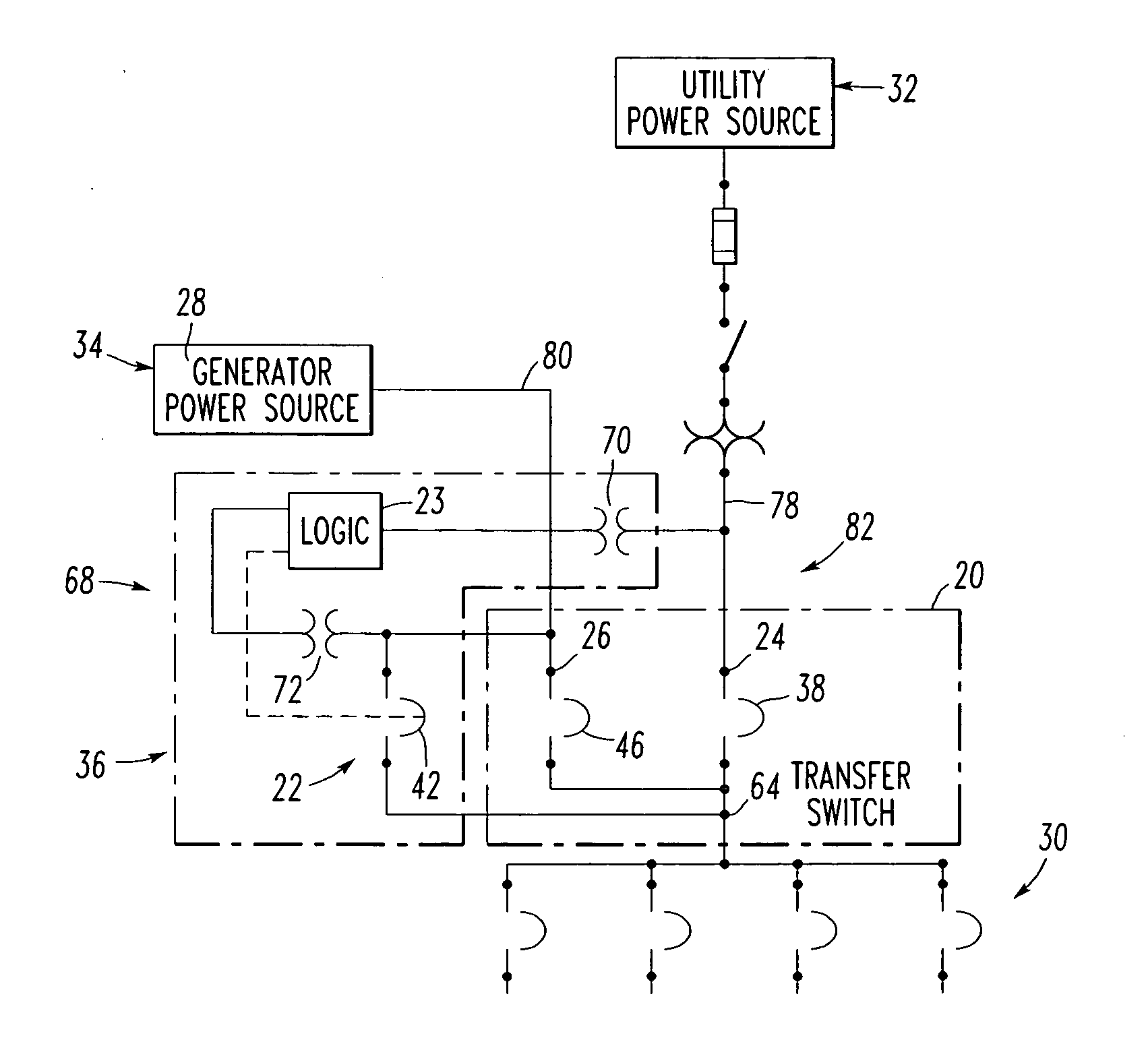
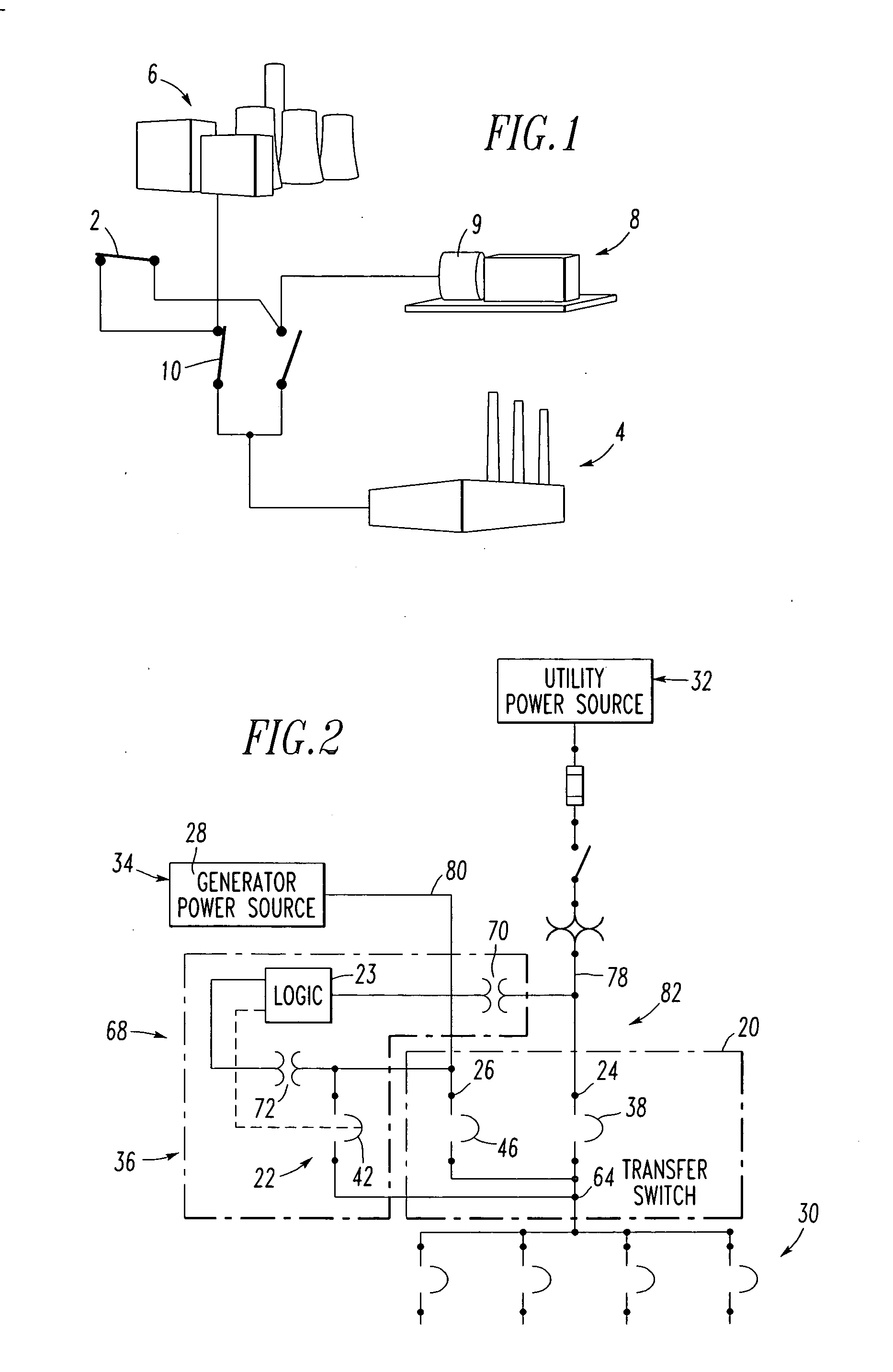
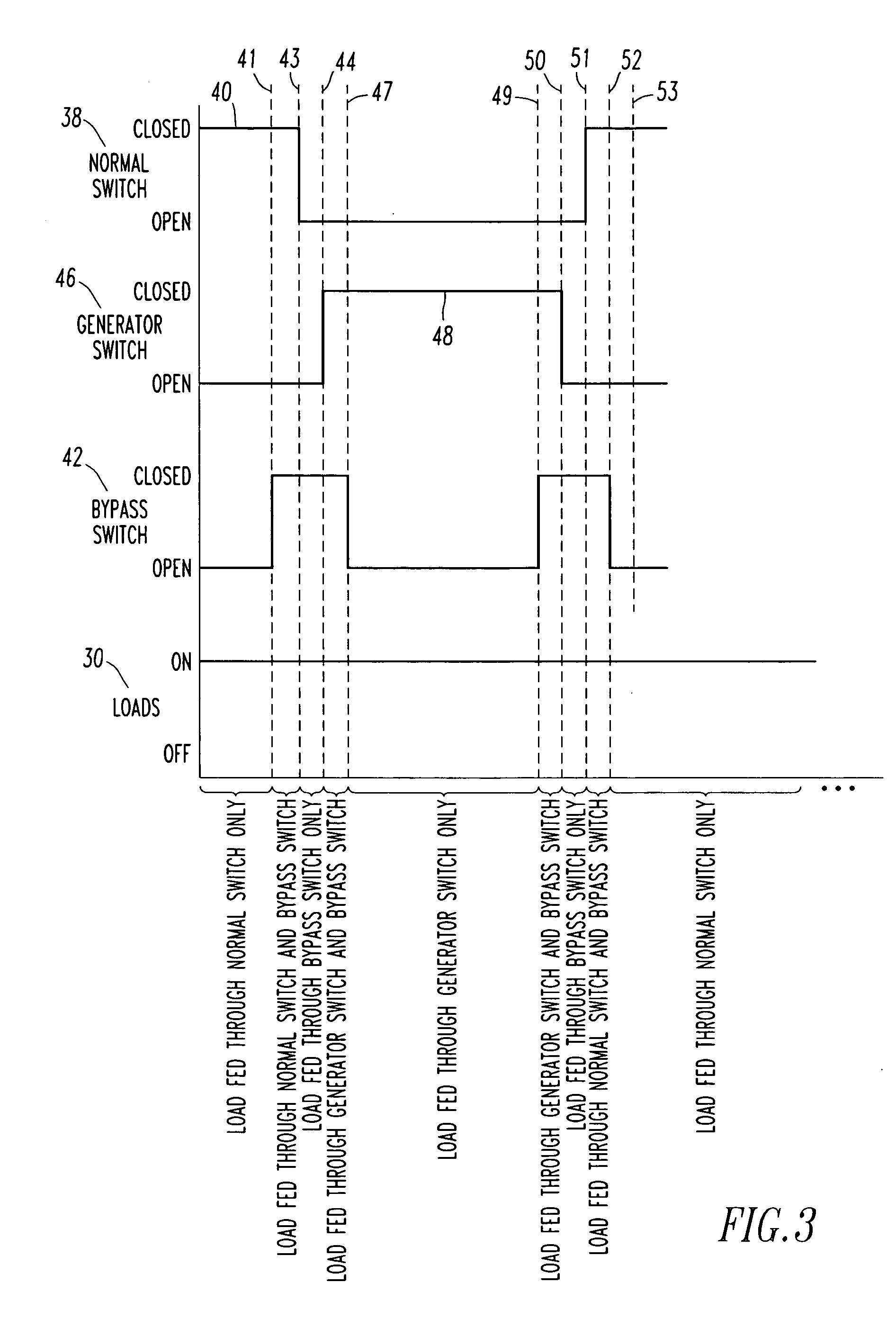

Automatic transfer switch
PatentInactiveAU2000058784A1
Innovation
- An automatic transfer switch apparatus that detects utility voltage failure, starts a backup generator, and prioritizes electrical circuit connections using a controller with sensors and relay switches to manage load shedding and generator output, ensuring continuous power supply while preventing overload.
Grid Code and Safety Standards for Transfer Switches
Transfer switch operations are subject to stringent regulatory frameworks that govern their design, installation, and operational parameters to ensure electrical safety and grid stability. International standards such as IEC 60947-6-1 and UL 1008 establish fundamental requirements for Automatic Transfer Switches, defining performance criteria including voltage tolerance, switching time limits, and endurance testing protocols. These standards mandate that ATS devices must operate within specified voltage and frequency ranges while maintaining adequate isolation between power sources to prevent backfeeding and parallel operation hazards.
Grid codes imposed by regional transmission system operators introduce additional constraints on transfer switch behavior, particularly concerning generator synchronization and load transfer dynamics. Many jurisdictions require compliance with IEEE 1547 for distributed energy resources, which stipulates anti-islanding protection and voltage ride-through capabilities. These regulations directly influence the selection between hard-switching ATS and soft-load transfer technologies, as grid codes increasingly favor solutions that minimize transient disturbances during source transitions.
Safety standards address critical operational scenarios including fault conditions, emergency power restoration, and maintenance procedures. NFPA 110 specifies requirements for emergency power supply systems, mandating regular testing intervals and performance verification for transfer switches serving life safety applications. The standard distinguishes between Level 1 and Level 2 equipment based on failure tolerance, with implications for transfer switch redundancy and monitoring capabilities.
Compliance verification involves type testing, routine testing, and field acceptance procedures as outlined in relevant standards. Manufacturers must demonstrate conformity through witnessed testing of short-circuit withstand capability, mechanical endurance, and environmental resilience. For soft-load transfer systems incorporating power electronics, additional electromagnetic compatibility standards such as IEC 61000 series apply to limit harmonic injection and conducted emissions that could affect grid quality or interfere with protective relaying systems.
Regional variations in grid codes create implementation challenges for multinational installations, requiring careful analysis of local requirements regarding neutral grounding configurations, protection coordination, and utility interconnection agreements. Emerging standards for microgrids and hybrid power systems are expanding the regulatory landscape, introducing new performance metrics for seamless transfer operations and bidirectional power flow management.
Grid codes imposed by regional transmission system operators introduce additional constraints on transfer switch behavior, particularly concerning generator synchronization and load transfer dynamics. Many jurisdictions require compliance with IEEE 1547 for distributed energy resources, which stipulates anti-islanding protection and voltage ride-through capabilities. These regulations directly influence the selection between hard-switching ATS and soft-load transfer technologies, as grid codes increasingly favor solutions that minimize transient disturbances during source transitions.
Safety standards address critical operational scenarios including fault conditions, emergency power restoration, and maintenance procedures. NFPA 110 specifies requirements for emergency power supply systems, mandating regular testing intervals and performance verification for transfer switches serving life safety applications. The standard distinguishes between Level 1 and Level 2 equipment based on failure tolerance, with implications for transfer switch redundancy and monitoring capabilities.
Compliance verification involves type testing, routine testing, and field acceptance procedures as outlined in relevant standards. Manufacturers must demonstrate conformity through witnessed testing of short-circuit withstand capability, mechanical endurance, and environmental resilience. For soft-load transfer systems incorporating power electronics, additional electromagnetic compatibility standards such as IEC 61000 series apply to limit harmonic injection and conducted emissions that could affect grid quality or interfere with protective relaying systems.
Regional variations in grid codes create implementation challenges for multinational installations, requiring careful analysis of local requirements regarding neutral grounding configurations, protection coordination, and utility interconnection agreements. Emerging standards for microgrids and hybrid power systems are expanding the regulatory landscape, introducing new performance metrics for seamless transfer operations and bidirectional power flow management.
Generator Lifespan and Reliability Impact Assessment
The selection between Automatic Transfer Switch (ATS) and Soft-Load Transfer (SLT) systems fundamentally influences generator operational longevity through distinct mechanical and electrical stress patterns. ATS implementations subject generators to abrupt load transitions, creating instantaneous current surges that can reach 300-600% of rated capacity during switching events. These transient conditions accelerate insulation degradation in stator windings and impose cyclical thermal stress on rotor components, potentially reducing mean time between failures by 15-25% in high-frequency switching environments.
Soft-Load Transfer technology mitigates these detrimental effects through progressive load ramping mechanisms, typically implementing 2-8 second transition periods that maintain generator operation within designed thermal and electrical parameters. Field data from industrial installations demonstrates that SLT-equipped generators exhibit 30-40% lower bearing wear rates and reduced carbon brush erosion compared to conventional ATS configurations. The gradual synchronization process inherent to SLT systems minimizes voltage transients below 5% deviation, substantially decreasing the probability of insulation breakdown events that constitute primary failure modes in emergency power systems.
Reliability metrics reveal significant divergence between transfer methodologies. Generators operating with ATS systems experience elevated failure rates in voltage regulation circuits and automatic voltage regulator components due to repetitive shock loading. Statistical analysis of maintenance records indicates that ATS-connected units require premature overhaul interventions approximately 18 months earlier than SLT-protected equivalents under comparable duty cycles. The cumulative effect of mechanical shock during hard transfers accelerates fatigue in engine mounting systems and fuel injection components, particularly affecting high-speed diesel generators operating above 1500 RPM.
Long-term reliability assessments must account for operational context, as mission-critical applications requiring frequent transfer operations demonstrate pronounced lifespan differentials. Soft-Load Transfer systems provide measurable advantages in preserving generator asset value through reduced maintenance frequency and extended component replacement intervals, though initial capital investment typically exceeds ATS implementations by 40-60%. The economic justification for SLT adoption strengthens proportionally with transfer frequency and generator replacement cost considerations.
Soft-Load Transfer technology mitigates these detrimental effects through progressive load ramping mechanisms, typically implementing 2-8 second transition periods that maintain generator operation within designed thermal and electrical parameters. Field data from industrial installations demonstrates that SLT-equipped generators exhibit 30-40% lower bearing wear rates and reduced carbon brush erosion compared to conventional ATS configurations. The gradual synchronization process inherent to SLT systems minimizes voltage transients below 5% deviation, substantially decreasing the probability of insulation breakdown events that constitute primary failure modes in emergency power systems.
Reliability metrics reveal significant divergence between transfer methodologies. Generators operating with ATS systems experience elevated failure rates in voltage regulation circuits and automatic voltage regulator components due to repetitive shock loading. Statistical analysis of maintenance records indicates that ATS-connected units require premature overhaul interventions approximately 18 months earlier than SLT-protected equivalents under comparable duty cycles. The cumulative effect of mechanical shock during hard transfers accelerates fatigue in engine mounting systems and fuel injection components, particularly affecting high-speed diesel generators operating above 1500 RPM.
Long-term reliability assessments must account for operational context, as mission-critical applications requiring frequent transfer operations demonstrate pronounced lifespan differentials. Soft-Load Transfer systems provide measurable advantages in preserving generator asset value through reduced maintenance frequency and extended component replacement intervals, though initial capital investment typically exceeds ATS implementations by 40-60%. The economic justification for SLT adoption strengthens proportionally with transfer frequency and generator replacement cost considerations.
Unlock deeper insights with Patsnap Eureka Quick Research — get a full tech report to explore trends and direct your research. Try now!
Generate Your Research Report Instantly with AI Agent
Supercharge your innovation with Patsnap Eureka AI Agent Platform!