
Electrostatic Actuators for Tactile Feedback Devices
MAR 10, 20269 MIN READ
Generate Your Research Report Instantly with AI Agent
Patsnap Eureka helps you evaluate technical feasibility & market potential.
Electrostatic Actuator Technology Background and Objectives
Electrostatic actuators represent a fundamental class of micro-electromechanical systems (MEMS) devices that convert electrical energy into mechanical motion through electrostatic forces. The development of these actuators traces back to the early 1960s when researchers first explored the potential of electrostatic forces for precision actuation applications. Initially conceived for applications in optical systems and precision positioning, electrostatic actuators have evolved significantly over the past six decades.
The evolution of electrostatic actuator technology has been driven by advances in microfabrication techniques, materials science, and control electronics. Early implementations were limited by manufacturing constraints and power requirements, but the advent of silicon-based MEMS processing in the 1980s revolutionized the field. This technological breakthrough enabled the creation of miniaturized, high-precision actuators with improved performance characteristics and reduced power consumption.
In the context of tactile feedback devices, electrostatic actuators have emerged as a promising solution due to their unique operational characteristics. Unlike electromagnetic or piezoelectric alternatives, electrostatic actuators offer several distinct advantages including low power consumption, fast response times, and the ability to generate precise, controllable forces. These properties make them particularly suitable for haptic applications where subtle tactile sensations must be accurately reproduced.
The primary objective of current research in electrostatic actuators for tactile feedback devices centers on achieving enhanced force output while maintaining energy efficiency. Researchers aim to develop actuators capable of generating sufficient tactile forces to create realistic haptic sensations across a wide range of applications, from consumer electronics to medical devices and virtual reality systems.
Another critical objective involves improving the bandwidth and response characteristics of these actuators. Modern tactile feedback applications require actuators that can respond rapidly to control signals and operate effectively across a broad frequency range to reproduce complex tactile textures and sensations. This necessitates optimization of actuator geometry, electrode configurations, and drive electronics.
Miniaturization remains a key technological goal, as tactile feedback devices increasingly demand compact, lightweight actuators that can be integrated into portable devices without compromising performance. This objective drives research into novel actuator architectures, advanced materials, and innovative fabrication techniques that enable higher force density and improved integration capabilities.
The development of reliable, long-term operation capabilities represents another fundamental objective. Tactile feedback devices must operate consistently over millions of actuation cycles while maintaining performance specifications. This requires addressing challenges related to material fatigue, electrical breakdown, and mechanical wear in electrostatic actuator systems.
The evolution of electrostatic actuator technology has been driven by advances in microfabrication techniques, materials science, and control electronics. Early implementations were limited by manufacturing constraints and power requirements, but the advent of silicon-based MEMS processing in the 1980s revolutionized the field. This technological breakthrough enabled the creation of miniaturized, high-precision actuators with improved performance characteristics and reduced power consumption.
In the context of tactile feedback devices, electrostatic actuators have emerged as a promising solution due to their unique operational characteristics. Unlike electromagnetic or piezoelectric alternatives, electrostatic actuators offer several distinct advantages including low power consumption, fast response times, and the ability to generate precise, controllable forces. These properties make them particularly suitable for haptic applications where subtle tactile sensations must be accurately reproduced.
The primary objective of current research in electrostatic actuators for tactile feedback devices centers on achieving enhanced force output while maintaining energy efficiency. Researchers aim to develop actuators capable of generating sufficient tactile forces to create realistic haptic sensations across a wide range of applications, from consumer electronics to medical devices and virtual reality systems.
Another critical objective involves improving the bandwidth and response characteristics of these actuators. Modern tactile feedback applications require actuators that can respond rapidly to control signals and operate effectively across a broad frequency range to reproduce complex tactile textures and sensations. This necessitates optimization of actuator geometry, electrode configurations, and drive electronics.
Miniaturization remains a key technological goal, as tactile feedback devices increasingly demand compact, lightweight actuators that can be integrated into portable devices without compromising performance. This objective drives research into novel actuator architectures, advanced materials, and innovative fabrication techniques that enable higher force density and improved integration capabilities.
The development of reliable, long-term operation capabilities represents another fundamental objective. Tactile feedback devices must operate consistently over millions of actuation cycles while maintaining performance specifications. This requires addressing challenges related to material fatigue, electrical breakdown, and mechanical wear in electrostatic actuator systems.
Market Demand for Tactile Feedback Solutions
The global tactile feedback market is experiencing unprecedented growth driven by the convergence of multiple technological trends and evolving user expectations across diverse industries. Consumer electronics manufacturers are increasingly integrating haptic technologies into smartphones, tablets, gaming controllers, and wearable devices to enhance user engagement and provide more intuitive interfaces. The automotive sector represents another significant demand driver, with manufacturers seeking advanced tactile feedback solutions for touchscreen infotainment systems, steering wheel controls, and dashboard interfaces to improve driver safety and user experience.
Virtual and augmented reality applications constitute a rapidly expanding market segment where tactile feedback devices are essential for creating immersive experiences. Gaming industry demand continues to surge as developers recognize the competitive advantage of incorporating realistic haptic sensations into gameplay mechanics. Medical device manufacturers are also driving substantial demand for precise tactile feedback systems in surgical simulators, rehabilitation equipment, and assistive technologies for visually impaired users.
The industrial automation sector presents emerging opportunities for tactile feedback solutions in human-machine interfaces, robotic control systems, and training simulators. Educational technology markets are increasingly adopting haptic devices for interactive learning experiences, particularly in STEM education and professional training programs. Smart home and IoT device manufacturers are exploring tactile feedback integration to enhance user interaction with connected appliances and control systems.
Market demand is particularly strong for miniaturized, energy-efficient tactile feedback solutions that can be seamlessly integrated into portable devices without compromising battery life or form factor constraints. Electrostatic actuators are gaining attention due to their potential to address these specific requirements while offering superior response times and precision compared to traditional electromagnetic alternatives.
Regional demand patterns show significant growth in Asia-Pacific markets, driven by consumer electronics manufacturing hubs and increasing adoption of advanced user interface technologies. North American and European markets demonstrate strong demand for premium tactile feedback solutions in automotive and medical applications, where performance and reliability requirements are paramount.
The market is also witnessing increased demand for customizable tactile feedback solutions that can be tailored to specific application requirements, driving innovation in actuator design and control systems. This trend is particularly evident in professional and industrial applications where standardized solutions may not meet specialized performance criteria.
Virtual and augmented reality applications constitute a rapidly expanding market segment where tactile feedback devices are essential for creating immersive experiences. Gaming industry demand continues to surge as developers recognize the competitive advantage of incorporating realistic haptic sensations into gameplay mechanics. Medical device manufacturers are also driving substantial demand for precise tactile feedback systems in surgical simulators, rehabilitation equipment, and assistive technologies for visually impaired users.
The industrial automation sector presents emerging opportunities for tactile feedback solutions in human-machine interfaces, robotic control systems, and training simulators. Educational technology markets are increasingly adopting haptic devices for interactive learning experiences, particularly in STEM education and professional training programs. Smart home and IoT device manufacturers are exploring tactile feedback integration to enhance user interaction with connected appliances and control systems.
Market demand is particularly strong for miniaturized, energy-efficient tactile feedback solutions that can be seamlessly integrated into portable devices without compromising battery life or form factor constraints. Electrostatic actuators are gaining attention due to their potential to address these specific requirements while offering superior response times and precision compared to traditional electromagnetic alternatives.
Regional demand patterns show significant growth in Asia-Pacific markets, driven by consumer electronics manufacturing hubs and increasing adoption of advanced user interface technologies. North American and European markets demonstrate strong demand for premium tactile feedback solutions in automotive and medical applications, where performance and reliability requirements are paramount.
The market is also witnessing increased demand for customizable tactile feedback solutions that can be tailored to specific application requirements, driving innovation in actuator design and control systems. This trend is particularly evident in professional and industrial applications where standardized solutions may not meet specialized performance criteria.
Current State and Challenges of Electrostatic Actuators
Electrostatic actuators have emerged as a promising technology for tactile feedback devices, leveraging the fundamental principle of electrostatic force generation between charged surfaces. These actuators operate by applying high voltage across thin dielectric layers, creating attractive or repulsive forces that can be translated into tactile sensations. The technology has gained significant traction in recent years due to its potential for creating ultra-thin, lightweight, and energy-efficient haptic interfaces.
Current electrostatic actuator implementations primarily utilize two main configurations: parallel plate actuators and comb-drive structures. Parallel plate designs offer simplicity in manufacturing and control, while comb-drive architectures provide enhanced force output and displacement capabilities. Leading research institutions and technology companies have developed various prototypes demonstrating force outputs ranging from millinewtons to several newtons, with response times in the microsecond range.
The geographical distribution of electrostatic actuator research shows concentrated activity in North America, Europe, and East Asia. Silicon Valley companies lead in commercial applications, while European research institutions excel in fundamental research and novel material development. Asian manufacturers, particularly in Japan and South Korea, focus on integration with consumer electronics and display technologies.
Despite significant progress, several critical challenges continue to impede widespread adoption of electrostatic actuators in tactile feedback applications. High voltage requirements, typically ranging from hundreds to thousands of volts, present substantial safety concerns and necessitate complex power management systems. This voltage dependency also leads to increased power consumption and heat generation, particularly problematic for portable devices.
Reliability and durability issues represent another major constraint. Electrostatic actuators are susceptible to dielectric breakdown, charge accumulation, and performance degradation over extended operation cycles. Environmental factors such as humidity, temperature variations, and contamination significantly impact actuator performance and longevity.
Manufacturing scalability poses additional challenges, as current fabrication processes often require specialized cleanroom facilities and precise material deposition techniques. The integration of electrostatic actuators with existing electronic systems demands sophisticated driver circuits and control algorithms, increasing overall system complexity and cost.
Force output limitations remain a persistent concern, particularly for applications requiring strong tactile sensations. While electrostatic forces can achieve high precision, generating substantial force magnitudes often requires large actuator areas or extremely high voltages, creating design trade-offs between performance, size, and safety considerations.
Current electrostatic actuator implementations primarily utilize two main configurations: parallel plate actuators and comb-drive structures. Parallel plate designs offer simplicity in manufacturing and control, while comb-drive architectures provide enhanced force output and displacement capabilities. Leading research institutions and technology companies have developed various prototypes demonstrating force outputs ranging from millinewtons to several newtons, with response times in the microsecond range.
The geographical distribution of electrostatic actuator research shows concentrated activity in North America, Europe, and East Asia. Silicon Valley companies lead in commercial applications, while European research institutions excel in fundamental research and novel material development. Asian manufacturers, particularly in Japan and South Korea, focus on integration with consumer electronics and display technologies.
Despite significant progress, several critical challenges continue to impede widespread adoption of electrostatic actuators in tactile feedback applications. High voltage requirements, typically ranging from hundreds to thousands of volts, present substantial safety concerns and necessitate complex power management systems. This voltage dependency also leads to increased power consumption and heat generation, particularly problematic for portable devices.
Reliability and durability issues represent another major constraint. Electrostatic actuators are susceptible to dielectric breakdown, charge accumulation, and performance degradation over extended operation cycles. Environmental factors such as humidity, temperature variations, and contamination significantly impact actuator performance and longevity.
Manufacturing scalability poses additional challenges, as current fabrication processes often require specialized cleanroom facilities and precise material deposition techniques. The integration of electrostatic actuators with existing electronic systems demands sophisticated driver circuits and control algorithms, increasing overall system complexity and cost.
Force output limitations remain a persistent concern, particularly for applications requiring strong tactile sensations. While electrostatic forces can achieve high precision, generating substantial force magnitudes often requires large actuator areas or extremely high voltages, creating design trade-offs between performance, size, and safety considerations.
Existing Electrostatic Actuator Solutions
01 Electrostatic actuator structures and configurations
Various structural designs and configurations of electrostatic actuators have been developed to optimize performance. These include comb-drive structures, parallel plate configurations, and multi-layer arrangements. The structural design affects key parameters such as displacement range, force generation, and operational stability. Different electrode geometries and spacing arrangements are utilized to achieve desired actuation characteristics and improve efficiency.- Electrostatic actuator structures and configurations: Various structural designs and configurations of electrostatic actuators have been developed to optimize performance. These include different electrode arrangements, gap configurations, and geometric designs that enhance electrostatic force generation. The structures may incorporate multiple layers, specific spacing between electrodes, and optimized shapes to achieve desired actuation characteristics. Different materials and fabrication methods are employed to create these structures with precise dimensions and properties.
- Electrostatic actuators for MEMS and microdevices: Electrostatic actuation principles are widely applied in microelectromechanical systems and microdevices. These actuators enable precise movement and control at microscale dimensions, making them suitable for various applications including sensors, switches, and optical devices. The technology leverages electrostatic forces between closely spaced electrodes to generate motion with low power consumption and high precision. Integration with microfabrication processes allows for compact and efficient device designs.
- Drive and control methods for electrostatic actuators: Various driving and control techniques have been developed to operate electrostatic actuators effectively. These methods include voltage control strategies, feedback mechanisms, and signal processing approaches to achieve precise positioning and movement. The control systems may incorporate sensing elements to monitor actuator position and adjust driving signals accordingly. Different waveform patterns and timing sequences are employed to optimize actuation performance and reduce power consumption.
- Electrostatic actuators with enhanced force and displacement: Innovations focus on improving the force output and displacement range of electrostatic actuators. These enhancements involve optimized electrode designs, increased effective surface areas, and novel actuation mechanisms that amplify the electrostatic forces. Techniques such as comb-drive structures, curved electrodes, and multi-stage configurations are employed to achieve greater actuation distances and forces while maintaining compact dimensions. Material selection and surface treatments also contribute to improved performance characteristics.
- Applications of electrostatic actuators in specific devices: Electrostatic actuators are implemented in various specialized applications and devices. These include optical systems such as mirrors and lenses, haptic feedback devices, valves and pumps for fluid control, and positioning systems. The actuators provide advantages such as fast response times, low power requirements, and compatibility with miniaturization. Specific designs are tailored to meet the requirements of different applications, including environmental resistance, reliability, and integration with other system components.
02 Electrostatic actuators for MEMS devices
Electrostatic actuators are widely employed in microelectromechanical systems for various applications including optical switching, micro-mirrors, and micro-positioning systems. These actuators leverage electrostatic forces at microscale to achieve precise control and movement. The integration of electrostatic actuation mechanisms in MEMS devices enables compact design, low power consumption, and high-speed operation suitable for advanced technological applications.Expand Specific Solutions03 Control and driving methods for electrostatic actuators
Various control strategies and driving methods have been developed to improve the performance and reliability of electrostatic actuators. These include voltage control schemes, feedback mechanisms, and pulse-width modulation techniques. Advanced driving methods address issues such as pull-in instability, hysteresis, and nonlinear behavior. The implementation of sophisticated control algorithms enables precise positioning and enhanced dynamic response characteristics.Expand Specific Solutions04 Materials and fabrication techniques for electrostatic actuators
The selection of appropriate materials and fabrication processes is critical for electrostatic actuator performance. Various materials including silicon, polymers, and composite structures are utilized based on application requirements. Fabrication techniques encompass photolithography, etching processes, and deposition methods to create precise actuator structures. Material properties such as dielectric constant, mechanical strength, and thermal stability significantly influence actuator characteristics and operational lifetime.Expand Specific Solutions05 Applications of electrostatic actuators in haptic and tactile systems
Electrostatic actuators are increasingly utilized in haptic feedback systems and tactile display technologies. These applications leverage the rapid response and controllable force generation capabilities of electrostatic actuation to create realistic touch sensations. The actuators can produce various tactile effects including vibration, texture simulation, and surface deformation. Integration into user interface devices enables enhanced human-machine interaction and immersive user experiences.Expand Specific Solutions
Key Players in Electrostatic Actuator Industry
The electrostatic actuators for tactile feedback devices market represents an emerging segment within the broader haptics industry, currently in its early-to-mid development stage with significant growth potential driven by increasing demand for immersive user experiences across consumer electronics, automotive, and VR/AR applications. The market demonstrates substantial scale opportunities, evidenced by established players like Immersion Corp., Apple, Samsung Electronics, and Sony Group Corp. who have integrated haptic technologies into billions of consumer devices. Technology maturity varies significantly across participants, with specialized haptics companies like Immersion Corp. and Tanvas leading in advanced surface haptics solutions, while tech giants like Apple, Samsung, and Huawei focus on integration into consumer products. Emerging players such as Titan Haptics are developing next-generation technologies like linear magnetic RAM, while traditional component manufacturers including TDK Electronics and Samsung Electro-Mechanics provide foundational electromechanical components, creating a diverse competitive landscape spanning from research institutions to global technology leaders.
Immersion Corp.
Technical Solution: Immersion Corporation develops advanced electrostatic actuator technologies for tactile feedback devices, focusing on high-resolution haptic interfaces. Their electrostatic actuators utilize controlled electric fields to generate precise tactile sensations through surface deformation and friction modulation. The company's technology enables ultra-thin form factors suitable for touchscreens and wearable devices, with response times in microseconds and power consumption significantly lower than traditional electromagnetic actuators. Their electrostatic solutions support multi-touch haptic feedback with spatial resolution down to individual pixels, enabling realistic texture simulation and enhanced user interaction experiences across consumer electronics, automotive interfaces, and medical training applications.
Strengths: Industry-leading expertise in haptic technology with extensive patent portfolio, proven commercial deployment across multiple sectors, excellent power efficiency and response time. Weaknesses: Higher manufacturing complexity compared to conventional actuators, sensitivity to environmental conditions like humidity, requires specialized driver electronics.
Apple, Inc.
Technical Solution: Apple has developed proprietary electrostatic actuator systems integrated into their touch interfaces, particularly for next-generation haptic feedback in mobile devices and potential AR/VR applications. Their approach focuses on creating localized electrostatic fields that can simulate various textures and surface properties directly on glass surfaces. The technology enables users to feel different materials, textures, and virtual buttons without physical displacement, using controlled electrostatic attraction between the user's finger and the device surface. Apple's implementation emphasizes seamless integration with existing capacitive touch sensing, allowing simultaneous touch detection and haptic feedback generation with minimal additional hardware complexity.
Strengths: Seamless integration with existing touch technology, strong R&D capabilities, extensive ecosystem for deployment across multiple product lines. Weaknesses: Limited to surface-based tactile feedback, requires direct skin contact, potential interference with touch sensing accuracy.
Core Patents in Electrostatic Tactile Technology
Haptic actuator module and assembly using electrostatic attraction and pin stimulation
PatentPendingUS20250296116A1
Innovation
- A haptic actuator module utilizing electrostatic attraction and pin stimulation, where electrodes are positioned on a dielectric elastomer, applying voltage to compress a partial region and expand the remaining region, raising a protruding pin for tactile feedback.


Tactile feedback device
PatentActiveUS20180129286A1
Innovation
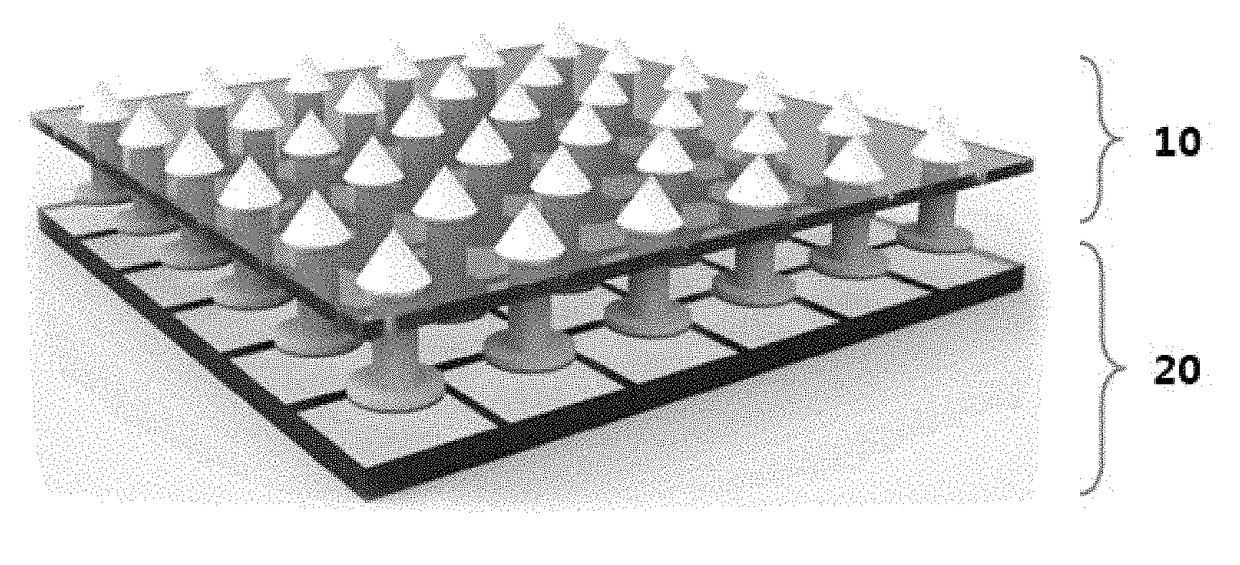
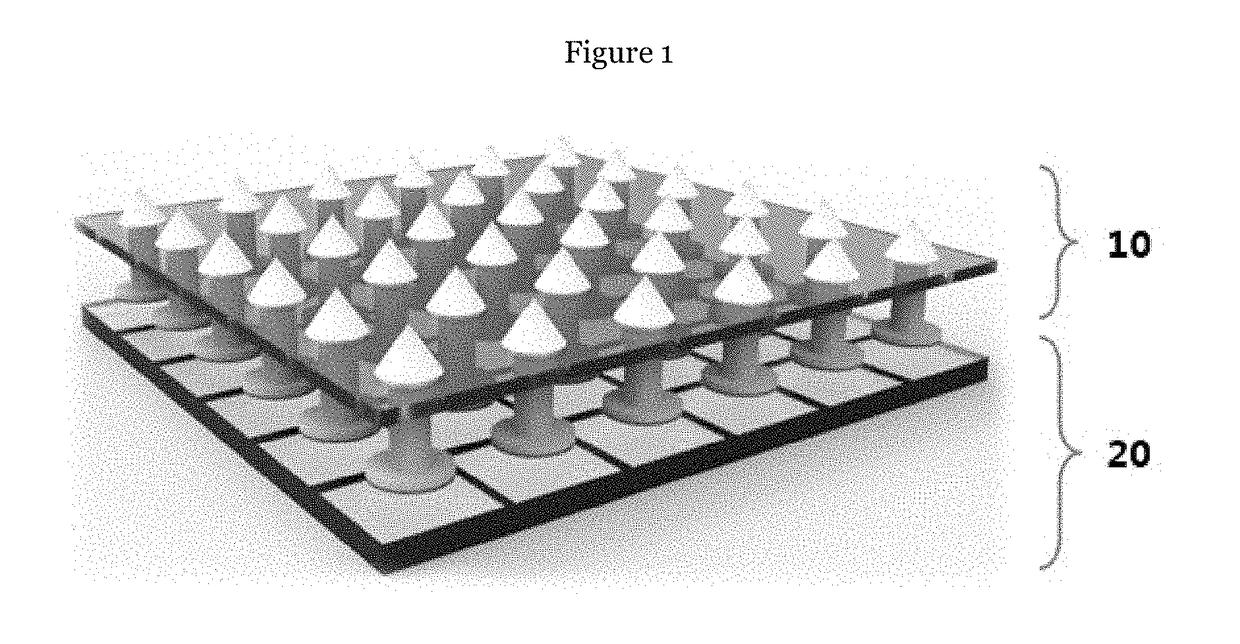
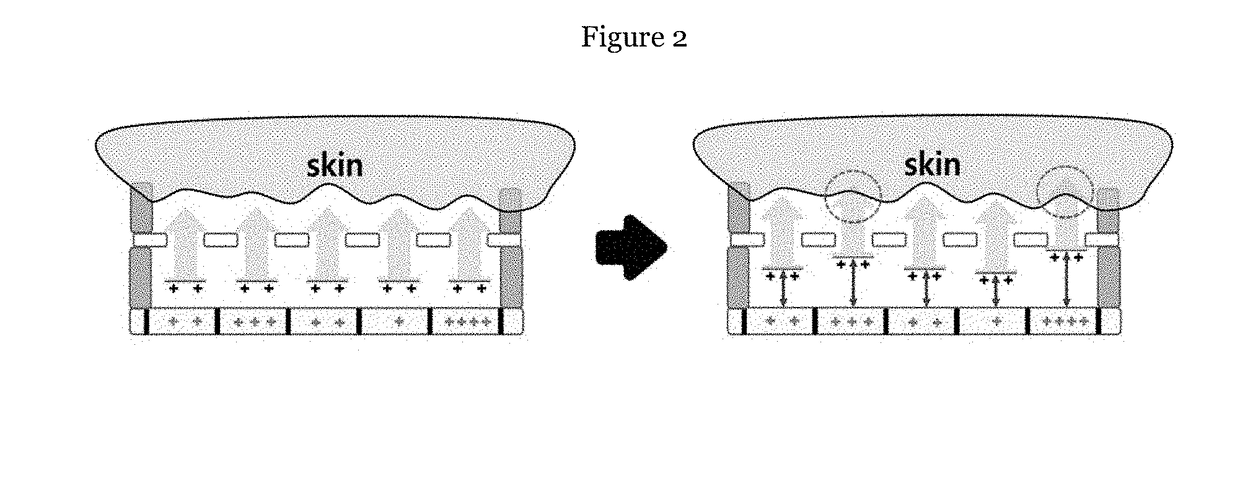
- A tactile feedback device utilizing an array of surface charge generation units and pressure-generation units that employ electrostatic forces to create repulsive or attractive forces, allowing precise control of tactile feedback through pixel-level surface charge induction and pressure-transfer protrusions, optimized with materials like MoS2, CYTOP, and P(VDF-TrFE) for efficient and durable feedback.

Safety Standards for Electrostatic Devices
The development of safety standards for electrostatic devices used in tactile feedback applications represents a critical regulatory framework that ensures user protection while enabling technological advancement. Current international standards primarily derive from IEC 62368-1 and IEC 61010-1, which establish fundamental safety requirements for electronic equipment. However, these general standards require specific adaptations for electrostatic actuators operating at voltages typically ranging from 100V to several kilovolts.
Electrical safety considerations form the cornerstone of electrostatic device standards. The primary concern involves high-voltage isolation and protection against electrical shock, particularly given that tactile feedback devices require direct human contact. Standards mandate multiple layers of insulation, with clearance distances determined by working voltages and pollution degrees. For devices operating above 1kV, reinforced insulation or double insulation systems become mandatory, along with comprehensive ground fault protection mechanisms.
Human exposure limits constitute another fundamental aspect of safety standardization. The IEEE C95.1 standard provides guidance on electromagnetic field exposure, though specific provisions for electrostatic fields in tactile applications remain under development. Current recommendations limit surface electric field strength to 30kV/m for continuous exposure, with peak exposure limits reaching 100kV/m for brief tactile interactions lasting less than one second.
Material safety requirements address both electrical and mechanical aspects of electrostatic actuators. Dielectric materials must demonstrate long-term stability under high electric fields, with breakdown voltages exceeding operational requirements by safety factors of 2.5 to 4.0. Additionally, materials in direct contact with users must comply with biocompatibility standards such as ISO 10993, ensuring no adverse skin reactions during prolonged use.
Environmental testing protocols establish operational safety boundaries under various conditions. Temperature cycling tests verify insulation integrity across operating ranges, while humidity testing ensures consistent performance in moisture-rich environments. Vibration and shock testing protocols, adapted from military standards MIL-STD-810, validate mechanical robustness of high-voltage components within portable tactile devices.
Emerging regulatory frameworks specifically address electrostatic tactile devices through collaborative efforts between IEEE, IEC, and national standards organizations. These developing standards emphasize risk assessment methodologies that balance innovation potential with user safety, establishing clear certification pathways for manufacturers while maintaining rigorous safety requirements for this rapidly evolving technology sector.
Electrical safety considerations form the cornerstone of electrostatic device standards. The primary concern involves high-voltage isolation and protection against electrical shock, particularly given that tactile feedback devices require direct human contact. Standards mandate multiple layers of insulation, with clearance distances determined by working voltages and pollution degrees. For devices operating above 1kV, reinforced insulation or double insulation systems become mandatory, along with comprehensive ground fault protection mechanisms.
Human exposure limits constitute another fundamental aspect of safety standardization. The IEEE C95.1 standard provides guidance on electromagnetic field exposure, though specific provisions for electrostatic fields in tactile applications remain under development. Current recommendations limit surface electric field strength to 30kV/m for continuous exposure, with peak exposure limits reaching 100kV/m for brief tactile interactions lasting less than one second.
Material safety requirements address both electrical and mechanical aspects of electrostatic actuators. Dielectric materials must demonstrate long-term stability under high electric fields, with breakdown voltages exceeding operational requirements by safety factors of 2.5 to 4.0. Additionally, materials in direct contact with users must comply with biocompatibility standards such as ISO 10993, ensuring no adverse skin reactions during prolonged use.
Environmental testing protocols establish operational safety boundaries under various conditions. Temperature cycling tests verify insulation integrity across operating ranges, while humidity testing ensures consistent performance in moisture-rich environments. Vibration and shock testing protocols, adapted from military standards MIL-STD-810, validate mechanical robustness of high-voltage components within portable tactile devices.
Emerging regulatory frameworks specifically address electrostatic tactile devices through collaborative efforts between IEEE, IEC, and national standards organizations. These developing standards emphasize risk assessment methodologies that balance innovation potential with user safety, establishing clear certification pathways for manufacturers while maintaining rigorous safety requirements for this rapidly evolving technology sector.
Human Factors in Tactile Interface Design
Human factors play a critical role in the design of tactile interfaces utilizing electrostatic actuators, as the effectiveness of tactile feedback systems fundamentally depends on how well they align with human sensory capabilities and cognitive processes. The human tactile system exhibits remarkable sensitivity to various stimuli parameters, including force magnitude, frequency, spatial distribution, and temporal patterns, all of which must be carefully considered when designing electrostatic actuator-based feedback devices.
The threshold sensitivity of human fingertips varies significantly across different frequency ranges, with peak sensitivity occurring between 200-300 Hz for vibrotactile stimuli. Electrostatic actuators must be calibrated to operate within these optimal frequency ranges to ensure maximum perceptual impact. Additionally, spatial resolution capabilities of human touch receptors influence the minimum spacing requirements between individual actuator elements in array configurations.
Cognitive load considerations are paramount in tactile interface design, as users must process tactile information while simultaneously engaging with visual and auditory interfaces. The design must minimize cognitive burden by providing intuitive tactile patterns that align with users' mental models and expectations. Research indicates that tactile feedback effectiveness decreases when users are required to learn complex haptic vocabularies or interpret abstract tactile symbols.
User comfort and safety represent fundamental design constraints that directly impact actuator specifications. Prolonged exposure to electrostatic fields requires careful consideration of current density limits and voltage thresholds to prevent skin irritation or discomfort. The actuator surface materials and textures must accommodate extended contact periods while maintaining consistent tactile output quality.
Individual variability in tactile sensitivity presents significant design challenges, as tactile thresholds can vary by orders of magnitude between users due to factors such as age, skin condition, and neurological differences. Adaptive calibration systems become essential to accommodate this variability, requiring electrostatic actuators capable of wide dynamic range operation and real-time parameter adjustment based on user feedback and performance metrics.
The threshold sensitivity of human fingertips varies significantly across different frequency ranges, with peak sensitivity occurring between 200-300 Hz for vibrotactile stimuli. Electrostatic actuators must be calibrated to operate within these optimal frequency ranges to ensure maximum perceptual impact. Additionally, spatial resolution capabilities of human touch receptors influence the minimum spacing requirements between individual actuator elements in array configurations.
Cognitive load considerations are paramount in tactile interface design, as users must process tactile information while simultaneously engaging with visual and auditory interfaces. The design must minimize cognitive burden by providing intuitive tactile patterns that align with users' mental models and expectations. Research indicates that tactile feedback effectiveness decreases when users are required to learn complex haptic vocabularies or interpret abstract tactile symbols.
User comfort and safety represent fundamental design constraints that directly impact actuator specifications. Prolonged exposure to electrostatic fields requires careful consideration of current density limits and voltage thresholds to prevent skin irritation or discomfort. The actuator surface materials and textures must accommodate extended contact periods while maintaining consistent tactile output quality.
Individual variability in tactile sensitivity presents significant design challenges, as tactile thresholds can vary by orders of magnitude between users due to factors such as age, skin condition, and neurological differences. Adaptive calibration systems become essential to accommodate this variability, requiring electrostatic actuators capable of wide dynamic range operation and real-time parameter adjustment based on user feedback and performance metrics.
Unlock deeper insights with Patsnap Eureka Quick Research — get a full tech report to explore trends and direct your research. Try now!
Generate Your Research Report Instantly with AI Agent
Supercharge your innovation with Patsnap Eureka AI Agent Platform!