Linear Accelerator Alignment Technologies for Beam Precision
FEB 13, 20269 MIN READ
Generate Your Research Report Instantly with AI Agent
PatSnap Eureka helps you evaluate technical feasibility & market potential.
Linear Accelerator Alignment Background and Precision Objectives
Linear accelerators have become indispensable instruments in modern physics research, medical treatment, and industrial applications since their inception in the 1920s. The fundamental principle involves accelerating charged particles through a series of radiofrequency cavities arranged in a linear configuration, enabling particles to achieve high energies for various scientific and practical purposes. As accelerator technology has evolved from early proof-of-concept devices to sophisticated multi-kilometer facilities, the demand for beam precision has intensified dramatically, driven by increasingly stringent requirements in fields such as high-energy physics experiments, advanced radiotherapy, and free-electron laser operations.
The historical development of alignment technologies has progressed through distinct phases, beginning with conventional optical surveying methods in early accelerators, advancing to laser-based systems in the 1970s and 1980s, and culminating in today's integration of advanced metrology techniques including laser trackers, hydrostatic leveling systems, and coordinate measuring machines. This evolution reflects the growing recognition that beam quality and accelerator performance are fundamentally constrained by the precision with which accelerator components can be positioned and maintained in their designed locations.
Contemporary linear accelerators face unprecedented alignment challenges as beam specifications become more demanding. Modern facilities require positioning accuracies at the micrometer or even sub-micrometer level across distances spanning hundreds of meters or kilometers. Such stringent requirements emerge from the physics of beam dynamics, where even minute misalignments of accelerating structures, focusing magnets, or diagnostic devices can lead to beam trajectory deviations, emittance growth, and ultimately degraded performance or complete beam loss.
The primary objective of current alignment research centers on developing methodologies and technologies capable of achieving and maintaining positioning accuracies better than 10 micrometers over extended distances, while simultaneously addressing practical constraints including thermal drift, ground settlement, mechanical vibrations, and the need for rapid realignment procedures during operational periods. These objectives must be balanced against economic considerations and operational efficiency requirements that characterize modern accelerator facilities.
The historical development of alignment technologies has progressed through distinct phases, beginning with conventional optical surveying methods in early accelerators, advancing to laser-based systems in the 1970s and 1980s, and culminating in today's integration of advanced metrology techniques including laser trackers, hydrostatic leveling systems, and coordinate measuring machines. This evolution reflects the growing recognition that beam quality and accelerator performance are fundamentally constrained by the precision with which accelerator components can be positioned and maintained in their designed locations.
Contemporary linear accelerators face unprecedented alignment challenges as beam specifications become more demanding. Modern facilities require positioning accuracies at the micrometer or even sub-micrometer level across distances spanning hundreds of meters or kilometers. Such stringent requirements emerge from the physics of beam dynamics, where even minute misalignments of accelerating structures, focusing magnets, or diagnostic devices can lead to beam trajectory deviations, emittance growth, and ultimately degraded performance or complete beam loss.
The primary objective of current alignment research centers on developing methodologies and technologies capable of achieving and maintaining positioning accuracies better than 10 micrometers over extended distances, while simultaneously addressing practical constraints including thermal drift, ground settlement, mechanical vibrations, and the need for rapid realignment procedures during operational periods. These objectives must be balanced against economic considerations and operational efficiency requirements that characterize modern accelerator facilities.
Market Demand for High-Precision Particle Accelerators
The global market for high-precision particle accelerators has experienced substantial growth driven by expanding applications across scientific research, medical treatment, and industrial processing sectors. Scientific institutions worldwide continue to invest heavily in next-generation accelerator facilities for fundamental physics research, particularly in exploring particle physics phenomena and materials science at unprecedented energy levels. This sustained investment reflects the critical role these instruments play in advancing human understanding of matter and energy.
Medical applications represent one of the fastest-growing segments within the accelerator market. Proton therapy and heavy-ion therapy facilities require exceptionally precise beam alignment to deliver targeted radiation treatments for cancer patients while minimizing damage to surrounding healthy tissue. The increasing prevalence of cancer globally and the proven clinical advantages of particle therapy have stimulated significant demand for medical accelerators with submicron alignment capabilities. Healthcare providers and research hospitals are actively expanding their particle therapy centers to meet patient demand and improve treatment outcomes.
Industrial applications have emerged as another significant demand driver. High-precision accelerators serve critical functions in semiconductor manufacturing, materials modification, sterilization processes, and non-destructive testing. The semiconductor industry particularly requires advanced accelerator technologies for ion implantation and lithography processes as device geometries continue to shrink. These industrial users demand reliable, cost-effective systems with minimal downtime and consistent beam quality.
The demand landscape also reflects geographical variations, with substantial investments concentrated in North America, Europe, and Asia-Pacific regions. Emerging economies are increasingly establishing national accelerator facilities to support domestic research capabilities and reduce dependence on international facilities. This geographical diversification creates opportunities for alignment technology providers to serve diverse market segments with varying technical requirements and budget constraints.
Future market expansion will likely be influenced by technological advancements that reduce operational costs, improve reliability, and enable more compact accelerator designs. The push toward smaller footprint facilities for medical and industrial applications intensifies the need for innovative alignment solutions that maintain precision while accommodating space constraints. Additionally, the development of next-generation colliders and light sources will continue to drive demand for cutting-edge alignment technologies capable of meeting increasingly stringent beam precision requirements.
Medical applications represent one of the fastest-growing segments within the accelerator market. Proton therapy and heavy-ion therapy facilities require exceptionally precise beam alignment to deliver targeted radiation treatments for cancer patients while minimizing damage to surrounding healthy tissue. The increasing prevalence of cancer globally and the proven clinical advantages of particle therapy have stimulated significant demand for medical accelerators with submicron alignment capabilities. Healthcare providers and research hospitals are actively expanding their particle therapy centers to meet patient demand and improve treatment outcomes.
Industrial applications have emerged as another significant demand driver. High-precision accelerators serve critical functions in semiconductor manufacturing, materials modification, sterilization processes, and non-destructive testing. The semiconductor industry particularly requires advanced accelerator technologies for ion implantation and lithography processes as device geometries continue to shrink. These industrial users demand reliable, cost-effective systems with minimal downtime and consistent beam quality.
The demand landscape also reflects geographical variations, with substantial investments concentrated in North America, Europe, and Asia-Pacific regions. Emerging economies are increasingly establishing national accelerator facilities to support domestic research capabilities and reduce dependence on international facilities. This geographical diversification creates opportunities for alignment technology providers to serve diverse market segments with varying technical requirements and budget constraints.
Future market expansion will likely be influenced by technological advancements that reduce operational costs, improve reliability, and enable more compact accelerator designs. The push toward smaller footprint facilities for medical and industrial applications intensifies the need for innovative alignment solutions that maintain precision while accommodating space constraints. Additionally, the development of next-generation colliders and light sources will continue to drive demand for cutting-edge alignment technologies capable of meeting increasingly stringent beam precision requirements.
Current Alignment Status and Technical Challenges
Linear accelerator alignment represents a critical technical domain where precision requirements have intensified dramatically with advancing beam physics applications. Modern facilities demand beam positioning accuracies approaching sub-micrometer levels, yet achieving such tolerances across extended accelerator structures spanning hundreds of meters presents formidable engineering challenges. The current alignment landscape reveals a significant gap between theoretical precision requirements and practical implementation capabilities, particularly in maintaining long-term stability under operational conditions.
Conventional alignment methodologies predominantly rely on laser tracker systems, hydrostatic leveling networks, and stretched wire techniques. While these approaches have served adequately for earlier generation accelerators, they encounter substantial limitations when confronting contemporary precision demands. Laser-based systems, though offering high instantaneous accuracy, suffer from atmospheric turbulence effects and require frequent recalibration. Hydrostatic leveling provides excellent vertical reference but lacks the spatial resolution needed for three-dimensional component positioning. Stretched wire methods face mechanical tension variations and environmental sensitivity issues that compromise measurement repeatability.
The primary technical challenges manifest across multiple dimensions. Thermal drift constitutes a persistent obstacle, as temperature fluctuations induce structural deformations that exceed allowable alignment tolerances. Ground settlement and seismic micro-movements introduce gradual positional shifts requiring continuous monitoring and correction. Mechanical vibrations from auxiliary equipment propagate through support structures, degrading beam stability. Additionally, the sheer scale of modern accelerator facilities complicates the establishment of unified reference coordinate systems with consistent accuracy throughout the entire beamline.
Measurement uncertainty accumulation over extended distances represents another critical constraint. Traditional survey techniques propagate errors along measurement chains, resulting in unacceptable position uncertainties at remote locations. The integration of multiple measurement modalities introduces systematic biases that remain difficult to characterize and compensate. Furthermore, the dynamic nature of accelerator operations demands real-time alignment monitoring capabilities that current static measurement approaches cannot adequately provide.
Emerging requirements for free-electron lasers and advanced light sources have exposed additional technical gaps. These applications necessitate not only absolute positioning accuracy but also precise angular alignment and temporal stability. The interdependence between magnetic element alignment and beam trajectory optimization adds complexity requiring sophisticated computational models and iterative adjustment procedures that current methodologies struggle to accommodate efficiently.
Conventional alignment methodologies predominantly rely on laser tracker systems, hydrostatic leveling networks, and stretched wire techniques. While these approaches have served adequately for earlier generation accelerators, they encounter substantial limitations when confronting contemporary precision demands. Laser-based systems, though offering high instantaneous accuracy, suffer from atmospheric turbulence effects and require frequent recalibration. Hydrostatic leveling provides excellent vertical reference but lacks the spatial resolution needed for three-dimensional component positioning. Stretched wire methods face mechanical tension variations and environmental sensitivity issues that compromise measurement repeatability.
The primary technical challenges manifest across multiple dimensions. Thermal drift constitutes a persistent obstacle, as temperature fluctuations induce structural deformations that exceed allowable alignment tolerances. Ground settlement and seismic micro-movements introduce gradual positional shifts requiring continuous monitoring and correction. Mechanical vibrations from auxiliary equipment propagate through support structures, degrading beam stability. Additionally, the sheer scale of modern accelerator facilities complicates the establishment of unified reference coordinate systems with consistent accuracy throughout the entire beamline.
Measurement uncertainty accumulation over extended distances represents another critical constraint. Traditional survey techniques propagate errors along measurement chains, resulting in unacceptable position uncertainties at remote locations. The integration of multiple measurement modalities introduces systematic biases that remain difficult to characterize and compensate. Furthermore, the dynamic nature of accelerator operations demands real-time alignment monitoring capabilities that current static measurement approaches cannot adequately provide.
Emerging requirements for free-electron lasers and advanced light sources have exposed additional technical gaps. These applications necessitate not only absolute positioning accuracy but also precise angular alignment and temporal stability. The interdependence between magnetic element alignment and beam trajectory optimization adds complexity requiring sophisticated computational models and iterative adjustment procedures that current methodologies struggle to accommodate efficiently.
Mainstream Alignment Solutions and Techniques
01 Laser-based alignment systems for beam positioning
Laser alignment systems are employed to achieve precise beam positioning in linear accelerators. These systems utilize laser beams as reference lines to align accelerator components and monitor beam trajectory. The technology enables real-time measurement and adjustment of beam position, ensuring optimal alignment throughout the accelerator structure. Advanced laser interferometry and optical measurement techniques provide high-resolution positioning data for maintaining beam precision.- Laser-based alignment systems for beam positioning: Laser alignment systems are employed to achieve precise beam positioning in linear accelerators. These systems utilize laser beams as reference lines to align accelerator components and monitor beam trajectory. The technology enables real-time measurement and adjustment of beam position, ensuring optimal alignment throughout the accelerator structure. Advanced laser interferometry and optical measurement techniques provide high-resolution positioning data for maintaining beam precision.
- Automated alignment control and feedback mechanisms: Automated control systems integrate sensors and actuators to continuously monitor and adjust beam alignment. These systems employ feedback loops that detect deviations from the desired beam path and automatically correct positioning errors. The technology includes computerized control algorithms that process alignment data and execute corrective actions in real-time, minimizing manual intervention and improving overall beam stability and precision.
- Mechanical alignment structures and adjustment devices: Precision mechanical systems provide the physical framework for maintaining beam alignment in linear accelerators. These structures include adjustable mounting systems, positioning stages, and alignment fixtures that allow fine-tuning of accelerator components. The mechanical designs incorporate high-stability materials and kinematic mounting principles to minimize drift and maintain long-term alignment accuracy under operational conditions.
- Beam position monitoring and measurement systems: Specialized monitoring systems measure beam position and trajectory with high precision throughout the accelerator. These systems utilize various detection technologies including electromagnetic sensors, beam position monitors, and diagnostic instruments that provide detailed information about beam characteristics. The measurement data enables operators to assess alignment quality and identify areas requiring adjustment to maintain optimal beam precision.
- Calibration and error correction methodologies: Comprehensive calibration procedures and error correction algorithms ensure sustained beam alignment accuracy. These methodologies involve systematic measurement of alignment parameters, identification of systematic errors, and application of correction factors. Advanced computational techniques analyze alignment data to distinguish between random and systematic deviations, enabling targeted corrections that enhance overall beam precision and accelerator performance.
02 Automated alignment control and feedback systems
Automated control systems integrate sensors and actuators to continuously monitor and adjust beam alignment. These systems employ feedback loops that detect deviations from optimal beam paths and automatically correct positioning errors. The technology includes computerized control algorithms that process alignment data and execute corrective actions in real-time, minimizing manual intervention and improving overall beam stability and precision.Expand Specific Solutions03 Mechanical alignment structures and adjustment mechanisms
Precision mechanical structures provide stable mounting and fine adjustment capabilities for accelerator components. These mechanisms include adjustable support frames, positioning stages, and alignment fixtures that allow micro-level adjustments in multiple axes. The designs incorporate thermal compensation features and vibration isolation to maintain alignment stability under varying operational conditions.Expand Specific Solutions04 Beam monitoring and diagnostic instrumentation
Specialized diagnostic instruments measure beam parameters and alignment characteristics with high precision. These tools include beam position monitors, profile detectors, and trajectory measurement devices that provide detailed information about beam quality and alignment status. The instrumentation enables operators to assess alignment accuracy and identify potential issues before they affect accelerator performance.Expand Specific Solutions05 Calibration methods and alignment verification techniques
Systematic calibration procedures ensure the accuracy and reliability of alignment systems. These methods involve reference measurement techniques, coordinate system establishment, and periodic verification protocols. The approaches include both initial alignment procedures during installation and ongoing calibration routines to maintain long-term precision, accounting for mechanical drift and environmental factors.Expand Specific Solutions
Major Players in Accelerator Alignment Technology
The linear accelerator alignment technology field is experiencing robust growth driven by increasing demand for precision beam control in medical radiotherapy and particle physics research. The competitive landscape is dominated by established medical device manufacturers like Varian Medical Systems, Elekta AB, and Accuray Inc., who lead in clinical applications, alongside specialized research institutions including China Institute of Atomic Energy, Institute of High Energy Physics, and Institute of Modern Physics, Chinese Academy of Sciences, advancing fundamental accelerator physics. Technology maturity varies significantly: medical linear accelerators demonstrate high commercial readiness with proven clinical deployment, while next-generation alignment systems from TAE Technologies and research institutes remain in advanced development stages. The market shows strong consolidation trends, with semiconductor equipment leaders like Applied Materials Israel and Hitachi High-Tech America expanding into precision positioning technologies, while imaging specialists such as Shanghai United Imaging Healthcare integrate alignment solutions into comprehensive treatment platforms.
Institute of Modern Physics, Chinese Academy of Sciences
Technical Solution: The Institute of Modern Physics has developed advanced alignment systems for heavy-ion accelerator complexes, incorporating both conventional surveying techniques and modern laser-based metrology. Their alignment framework utilizes total station networks integrated with digital leveling systems to establish three-dimensional reference coordinate systems with accuracy better than 0.1mm over 100-meter baselines. The technology employs specialized alignment fixtures and tooling designed for precise positioning of quadrupole magnets, RF cavities, and beam diagnostic components. Their methodology includes sophisticated error propagation analysis and alignment tolerance budgeting based on beam optics simulations. The institute has implemented automated alignment verification systems using laser trackers and photogrammetry for rapid component surveying. Their beam-based alignment techniques utilize closed-orbit correction algorithms and response matrix analysis to iteratively improve component positioning, particularly for complex multi-stage accelerator chains including cyclotrons, linear accelerators, and storage rings with demonstrated beam transmission efficiency improvements exceeding 15% through optimized alignment.
Strengths: Extensive experience with diverse accelerator types including heavy-ion and rare isotope facilities; strong integration of mechanical alignment with beam physics optimization. Weaknesses: Technologies primarily developed for specific institutional facilities may require adaptation for broader applications; documentation and knowledge transfer may be limited compared to commercial vendors.
The Institute of High Energy Physics
Technical Solution: The Institute of High Energy Physics has developed sophisticated alignment technologies for large-scale particle accelerator facilities, particularly for synchrotron and linear collider applications. Their approach utilizes network-based laser tracker systems combined with hydrostatic leveling sensors to establish absolute reference networks with micron-level precision over hundreds of meters. The alignment methodology incorporates stretched wire positioning systems and frequency scanning interferometry for component placement verification. Their technology features advanced statistical analysis algorithms that process alignment data from multiple measurement modalities to optimize beam trajectory. The institute has pioneered techniques for thermal drift compensation and ground settlement monitoring, implementing continuous alignment surveillance systems that detect deviations in real-time. Their beam-based alignment procedures utilize orbit response matrices and dispersion measurements to refine accelerator component positions, achieving beam position stability better than 10 micrometers in research accelerators.
Strengths: Deep expertise in large-scale accelerator physics with proven implementations in major research facilities; comprehensive understanding of beam dynamics and alignment interdependencies. Weaknesses: Research-focused approach may lack commercial product maturity; solutions may require significant customization for different accelerator types and operational requirements.
Core Alignment Patents and Innovations
Radiation beam alignment for medical linear accelerators
PatentPendingGB2608263A
Innovation
- Uses an imaging-based method with radiation opaque marker shadow analysis to directly measure beam axis position relative to target, enabling quantitative assessment of beam alignment accuracy across different parameter values.
- Employs systematic parametric optimization approach by testing multiple beam alignment parameter values and calculating target-to-beam-axis distances to determine the optimum bending magnet current setting.
- Combines radiation field imaging with geometric analysis of marker shadow center and beam axis location to provide objective, reproducible alignment measurements independent of operator judgment.


Method of calibrating a radiotherapy system
PatentActiveUS20120312974A1
Innovation
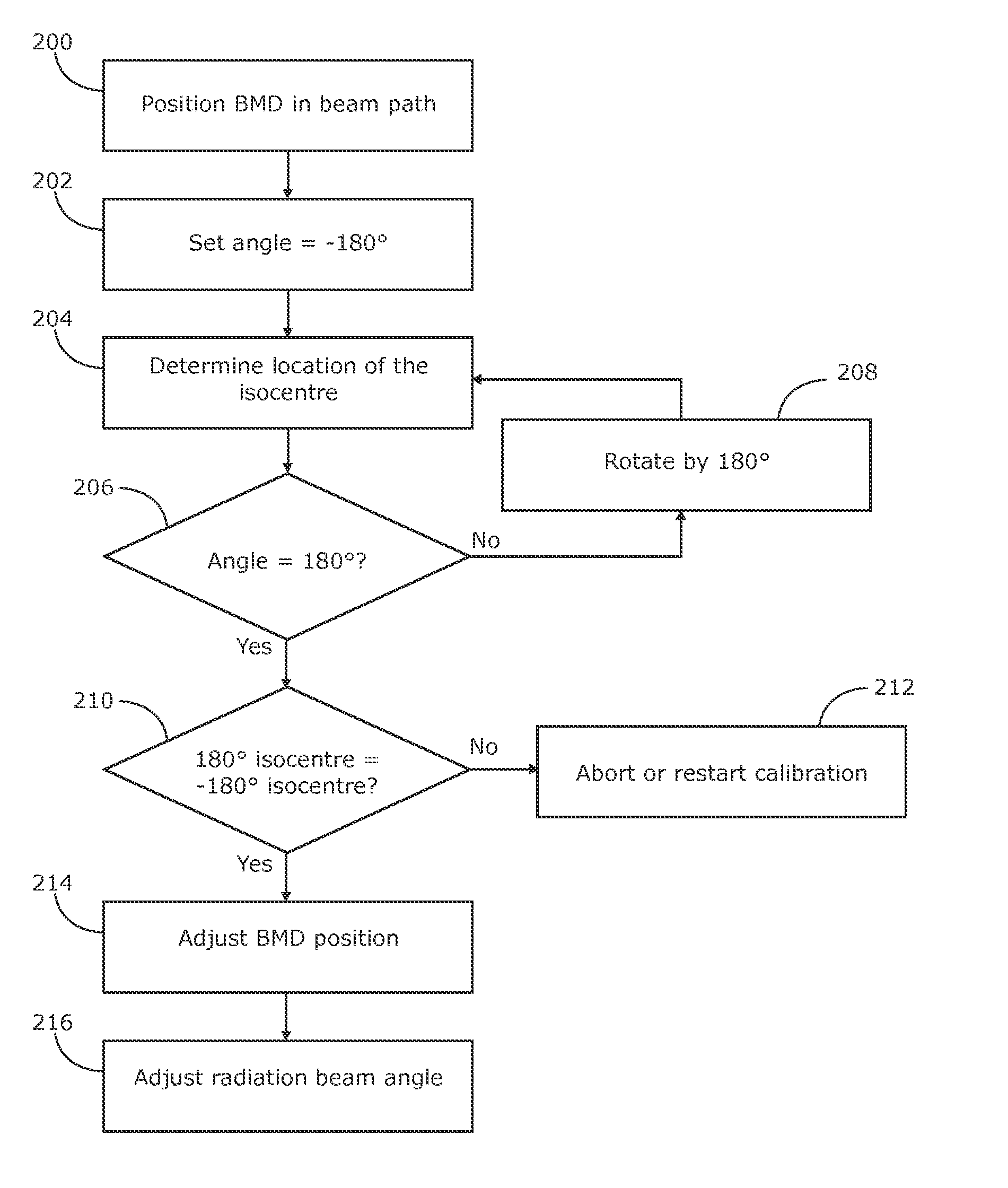
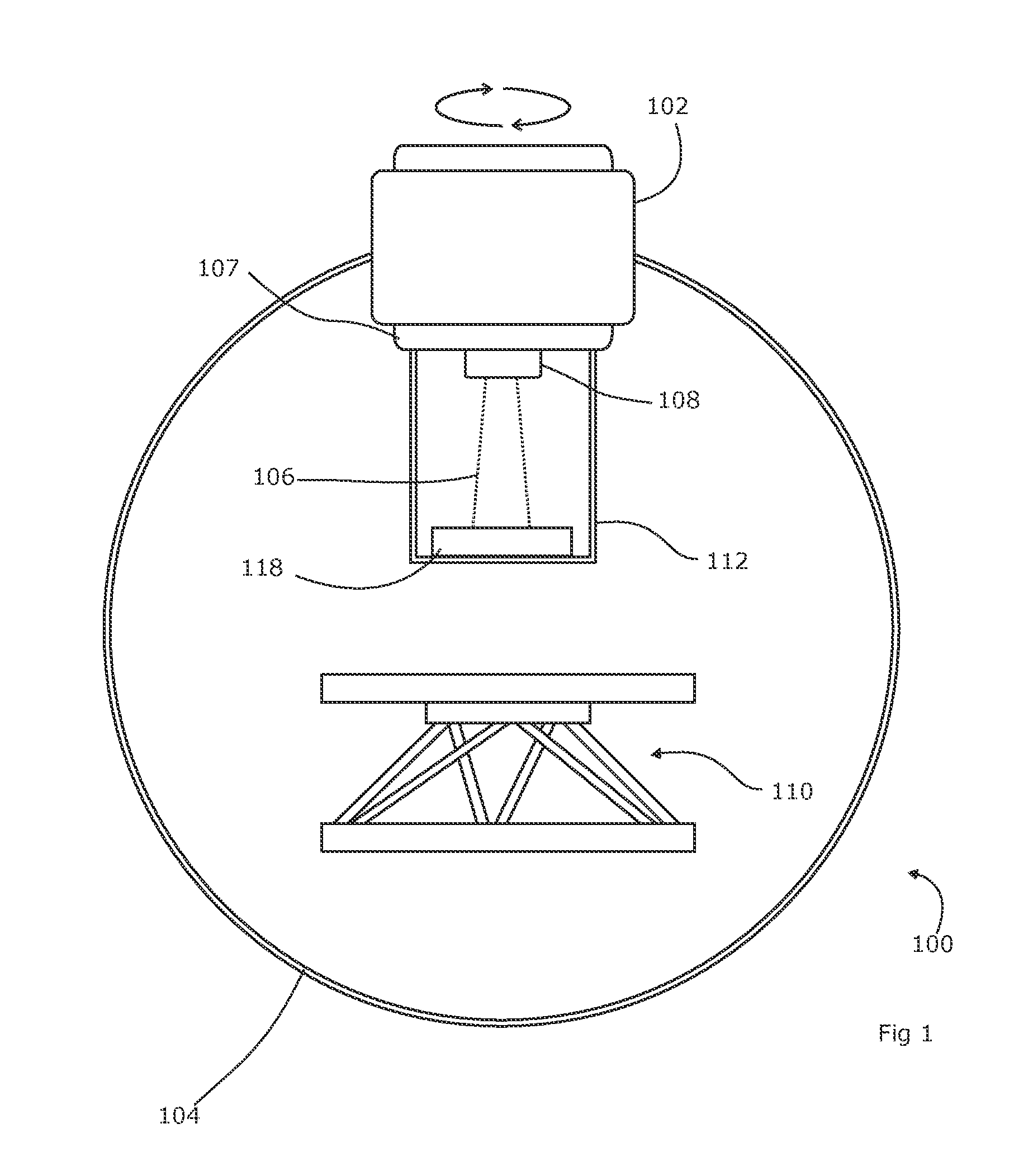
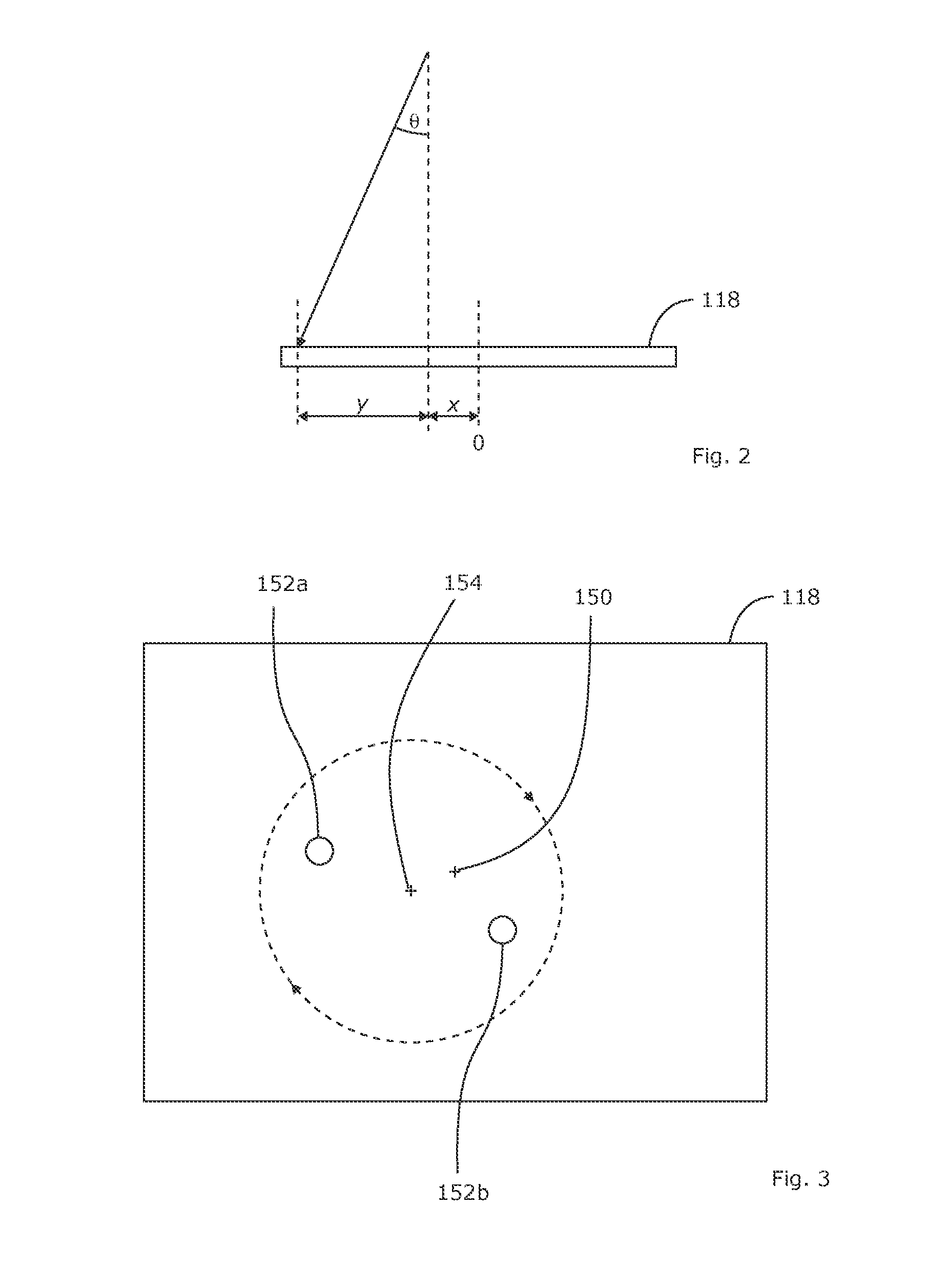
- A method involving a beam measurement device, such as an ion chamber array, is used to accurately locate the center of the radiation beam, where the radiation head is rotated 180° to determine the beam's center twice, and the device is adjusted to align with the midpoint of the displacement, ensuring precise alignment without mechanical backlash.

Safety Standards and Radiation Regulations
Linear accelerator facilities operating at high energies inherently generate ionizing radiation, necessitating stringent adherence to safety standards and regulatory frameworks to protect personnel, the public, and the environment. International organizations such as the International Atomic Energy Agency (IAEA) and the International Commission on Radiological Protection (ICRP) establish fundamental safety principles that form the basis for national regulations governing accelerator operations. These standards mandate comprehensive radiation protection programs encompassing dose limitation, optimization of protection measures, and justification of practices involving radiation exposure.
Regulatory compliance requires detailed documentation of radiation shielding designs, access control systems, and personnel monitoring protocols. Facilities must demonstrate that beam alignment technologies and operational procedures maintain radiation levels as low as reasonably achievable (ALARA). This includes establishing controlled areas with appropriate physical barriers, interlocks, and warning systems that prevent unauthorized access during beam operations. Regular calibration of radiation detection equipment and systematic area monitoring ensure continuous verification of safety conditions.
Beam alignment activities present specific radiological challenges, as misaligned beams can create unexpected radiation hotspots or activate accelerator components beyond predicted levels. Safety protocols must account for residual activation of alignment targets and diagnostic devices, requiring appropriate cooling periods and remote handling procedures. Personnel involved in alignment operations require specialized training in radiation safety principles, emergency response procedures, and the proper use of personal protective equipment and dosimetry devices.
National regulatory bodies enforce licensing requirements that mandate periodic safety assessments, incident reporting mechanisms, and independent audits of radiation protection programs. Compliance with standards such as those outlined in IAEA Safety Series documents and regional directives ensures that alignment technology implementations incorporate fail-safe mechanisms and redundant safety systems. Environmental monitoring programs track potential releases and verify that public dose limits remain well below regulatory thresholds, maintaining community confidence in accelerator facility operations.
Regulatory compliance requires detailed documentation of radiation shielding designs, access control systems, and personnel monitoring protocols. Facilities must demonstrate that beam alignment technologies and operational procedures maintain radiation levels as low as reasonably achievable (ALARA). This includes establishing controlled areas with appropriate physical barriers, interlocks, and warning systems that prevent unauthorized access during beam operations. Regular calibration of radiation detection equipment and systematic area monitoring ensure continuous verification of safety conditions.
Beam alignment activities present specific radiological challenges, as misaligned beams can create unexpected radiation hotspots or activate accelerator components beyond predicted levels. Safety protocols must account for residual activation of alignment targets and diagnostic devices, requiring appropriate cooling periods and remote handling procedures. Personnel involved in alignment operations require specialized training in radiation safety principles, emergency response procedures, and the proper use of personal protective equipment and dosimetry devices.
National regulatory bodies enforce licensing requirements that mandate periodic safety assessments, incident reporting mechanisms, and independent audits of radiation protection programs. Compliance with standards such as those outlined in IAEA Safety Series documents and regional directives ensures that alignment technology implementations incorporate fail-safe mechanisms and redundant safety systems. Environmental monitoring programs track potential releases and verify that public dose limits remain well below regulatory thresholds, maintaining community confidence in accelerator facility operations.
Integration with AI-Based Alignment Systems
The integration of artificial intelligence into linear accelerator alignment systems represents a transformative approach to achieving and maintaining beam precision. Machine learning algorithms, particularly deep learning networks, have demonstrated remarkable capabilities in processing complex alignment data patterns that traditional methods struggle to interpret. These AI systems can analyze vast amounts of sensor data in real-time, identifying subtle misalignment signatures that might escape conventional detection thresholds. Neural networks trained on historical alignment datasets can predict potential drift patterns before they manifest as measurable beam quality degradation, enabling proactive correction strategies rather than reactive adjustments.
Current AI-based alignment implementations leverage computer vision techniques combined with precision measurement data to create comprehensive alignment models. Convolutional neural networks process beam position monitor readings alongside environmental parameters such as temperature fluctuations and mechanical vibrations, establishing correlations that inform predictive maintenance schedules. Reinforcement learning algorithms have shown particular promise in optimizing alignment correction sequences, learning optimal adjustment strategies through iterative simulation and real-world application feedback loops.
The fusion of AI with traditional alignment methodologies introduces adaptive capabilities that significantly enhance system resilience. Automated decision-making frameworks can execute micro-adjustments at frequencies impossible for human operators, maintaining alignment tolerances within nanometer ranges despite dynamic operational conditions. Edge computing architectures deployed at alignment stations enable distributed intelligence, where local AI agents coordinate through centralized optimization algorithms to achieve global alignment objectives across entire accelerator structures.
Challenges in AI integration primarily concern model interpretability and validation protocols. Establishing trust in AI-driven alignment decisions requires transparent algorithmic reasoning and rigorous verification against established physical models. Data quality and quantity remain critical factors, as training robust AI systems demands extensive datasets encompassing diverse operational scenarios and failure modes. Ongoing research focuses on developing hybrid systems that combine physics-informed neural networks with empirical learning, ensuring AI recommendations align with fundamental beam dynamics principles while exploiting pattern recognition advantages.
Current AI-based alignment implementations leverage computer vision techniques combined with precision measurement data to create comprehensive alignment models. Convolutional neural networks process beam position monitor readings alongside environmental parameters such as temperature fluctuations and mechanical vibrations, establishing correlations that inform predictive maintenance schedules. Reinforcement learning algorithms have shown particular promise in optimizing alignment correction sequences, learning optimal adjustment strategies through iterative simulation and real-world application feedback loops.
The fusion of AI with traditional alignment methodologies introduces adaptive capabilities that significantly enhance system resilience. Automated decision-making frameworks can execute micro-adjustments at frequencies impossible for human operators, maintaining alignment tolerances within nanometer ranges despite dynamic operational conditions. Edge computing architectures deployed at alignment stations enable distributed intelligence, where local AI agents coordinate through centralized optimization algorithms to achieve global alignment objectives across entire accelerator structures.
Challenges in AI integration primarily concern model interpretability and validation protocols. Establishing trust in AI-driven alignment decisions requires transparent algorithmic reasoning and rigorous verification against established physical models. Data quality and quantity remain critical factors, as training robust AI systems demands extensive datasets encompassing diverse operational scenarios and failure modes. Ongoing research focuses on developing hybrid systems that combine physics-informed neural networks with empirical learning, ensuring AI recommendations align with fundamental beam dynamics principles while exploiting pattern recognition advantages.
Unlock deeper insights with PatSnap Eureka Quick Research — get a full tech report to explore trends and direct your research. Try now!
Generate Your Research Report Instantly with AI Agent
Supercharge your innovation with PatSnap Eureka AI Agent Platform!