

Morphing Wing Elasticity Thresholds vs Static Wing Modifications
MAY 18, 20269 MIN READ
Generate Your Research Report Instantly with AI Agent
PatSnap Eureka helps you evaluate technical feasibility & market potential.
Morphing Wing Technology Background and Objectives
Morphing wing technology represents a paradigm shift in aerospace engineering, drawing inspiration from natural flight mechanisms observed in birds and insects. Unlike conventional fixed-wing aircraft that rely on separate control surfaces for maneuverability, morphing wings can continuously alter their geometric properties during flight to optimize aerodynamic performance across varying flight conditions.
The concept emerged from biomimetic studies of avian flight, where researchers observed how birds seamlessly modify wing shape, camber, and span to achieve superior efficiency during different flight phases. This biological inspiration led to the development of adaptive wing structures that could potentially revolutionize aircraft design by eliminating the aerodynamic penalties associated with traditional control surfaces and discrete wing configurations.
Historical development of morphing wing technology began in the early 20th century with basic variable-sweep wing designs, but significant advancement occurred during the 1990s with the introduction of smart materials and advanced computational modeling capabilities. The integration of shape memory alloys, piezoelectric actuators, and flexible composite materials enabled more sophisticated morphing mechanisms that could respond to real-time flight conditions.
The primary technical objective of current morphing wing research focuses on determining optimal elasticity thresholds that enable effective shape transformation while maintaining structural integrity under aerodynamic loads. This involves establishing critical parameters for material flexibility, actuation force requirements, and deformation limits that ensure safe and efficient morphing capabilities throughout the operational envelope.
Contemporary research emphasizes the comparative analysis between morphing wing systems and static wing modifications, seeking to quantify performance benefits and identify application-specific advantages. The goal extends beyond simple shape changing to encompass intelligent adaptation that can optimize lift-to-drag ratios, reduce fuel consumption, minimize noise signatures, and enhance overall flight performance across diverse mission profiles.
Advanced objectives include developing autonomous morphing control systems that can predict optimal wing configurations based on flight conditions, weather patterns, and mission requirements. This involves integrating artificial intelligence algorithms with real-time sensor feedback to create self-optimizing wing structures that continuously adapt without pilot intervention, representing the ultimate evolution of adaptive flight technology.
The concept emerged from biomimetic studies of avian flight, where researchers observed how birds seamlessly modify wing shape, camber, and span to achieve superior efficiency during different flight phases. This biological inspiration led to the development of adaptive wing structures that could potentially revolutionize aircraft design by eliminating the aerodynamic penalties associated with traditional control surfaces and discrete wing configurations.
Historical development of morphing wing technology began in the early 20th century with basic variable-sweep wing designs, but significant advancement occurred during the 1990s with the introduction of smart materials and advanced computational modeling capabilities. The integration of shape memory alloys, piezoelectric actuators, and flexible composite materials enabled more sophisticated morphing mechanisms that could respond to real-time flight conditions.
The primary technical objective of current morphing wing research focuses on determining optimal elasticity thresholds that enable effective shape transformation while maintaining structural integrity under aerodynamic loads. This involves establishing critical parameters for material flexibility, actuation force requirements, and deformation limits that ensure safe and efficient morphing capabilities throughout the operational envelope.
Contemporary research emphasizes the comparative analysis between morphing wing systems and static wing modifications, seeking to quantify performance benefits and identify application-specific advantages. The goal extends beyond simple shape changing to encompass intelligent adaptation that can optimize lift-to-drag ratios, reduce fuel consumption, minimize noise signatures, and enhance overall flight performance across diverse mission profiles.
Advanced objectives include developing autonomous morphing control systems that can predict optimal wing configurations based on flight conditions, weather patterns, and mission requirements. This involves integrating artificial intelligence algorithms with real-time sensor feedback to create self-optimizing wing structures that continuously adapt without pilot intervention, representing the ultimate evolution of adaptive flight technology.
Market Demand for Adaptive Wing Systems
The aerospace industry is experiencing unprecedented demand for adaptive wing systems driven by stringent environmental regulations and fuel efficiency requirements. Commercial aviation operators face mounting pressure to reduce carbon emissions while maintaining operational profitability, creating substantial market pull for morphing wing technologies that can optimize aerodynamic performance across diverse flight conditions.
Military and defense sectors represent another significant demand driver, where adaptive wing systems offer tactical advantages through enhanced maneuverability and mission flexibility. Modern combat aircraft require wings capable of real-time configuration changes to optimize performance for different mission phases, from high-speed intercept to low-speed surveillance operations.
The unmanned aerial vehicle market demonstrates particularly strong appetite for morphing wing solutions. UAV manufacturers seek lightweight, energy-efficient systems that can extend flight endurance and operational range. Adaptive wings enable these platforms to optimize lift-to-drag ratios dynamically, addressing critical performance limitations in current fixed-wing designs.
Regional aircraft manufacturers are increasingly incorporating adaptive wing concepts into next-generation designs to meet evolving efficiency standards. The market demand extends beyond traditional aerospace applications into emerging sectors including urban air mobility and electric aviation, where morphing capabilities can compensate for power limitations inherent in electric propulsion systems.
Supply chain analysis reveals growing investment in smart materials and actuator technologies essential for morphing wing implementation. Component suppliers report increased procurement inquiries for shape memory alloys, piezoelectric actuators, and flexible composite structures, indicating robust downstream demand from aircraft manufacturers.
Market research indicates that airlines prioritize fuel savings and operational flexibility when evaluating new aircraft technologies. Morphing wings that can reduce fuel consumption while maintaining structural integrity across varied flight profiles align directly with these operational requirements, creating favorable market conditions for technology adoption.
The convergence of regulatory pressure, operational economics, and technological maturity is establishing a compelling market environment for adaptive wing systems across multiple aerospace segments.
Military and defense sectors represent another significant demand driver, where adaptive wing systems offer tactical advantages through enhanced maneuverability and mission flexibility. Modern combat aircraft require wings capable of real-time configuration changes to optimize performance for different mission phases, from high-speed intercept to low-speed surveillance operations.
The unmanned aerial vehicle market demonstrates particularly strong appetite for morphing wing solutions. UAV manufacturers seek lightweight, energy-efficient systems that can extend flight endurance and operational range. Adaptive wings enable these platforms to optimize lift-to-drag ratios dynamically, addressing critical performance limitations in current fixed-wing designs.
Regional aircraft manufacturers are increasingly incorporating adaptive wing concepts into next-generation designs to meet evolving efficiency standards. The market demand extends beyond traditional aerospace applications into emerging sectors including urban air mobility and electric aviation, where morphing capabilities can compensate for power limitations inherent in electric propulsion systems.
Supply chain analysis reveals growing investment in smart materials and actuator technologies essential for morphing wing implementation. Component suppliers report increased procurement inquiries for shape memory alloys, piezoelectric actuators, and flexible composite structures, indicating robust downstream demand from aircraft manufacturers.
Market research indicates that airlines prioritize fuel savings and operational flexibility when evaluating new aircraft technologies. Morphing wings that can reduce fuel consumption while maintaining structural integrity across varied flight profiles align directly with these operational requirements, creating favorable market conditions for technology adoption.
The convergence of regulatory pressure, operational economics, and technological maturity is establishing a compelling market environment for adaptive wing systems across multiple aerospace segments.
Current State of Morphing Wing Elasticity Research
Morphing wing technology has emerged as a transformative approach in aerospace engineering, representing a paradigm shift from traditional fixed-wing configurations to adaptive structures that can dynamically alter their shape during flight. Current research in morphing wing elasticity focuses on understanding the fundamental material properties and structural behaviors that enable controlled deformation while maintaining structural integrity and aerodynamic performance.
The elasticity research landscape encompasses multiple dimensional approaches, including span-wise morphing, chord-wise morphing, and twist morphing capabilities. Leading research institutions such as NASA Langley Research Center, MIT, and the University of Bristol have established comprehensive testing frameworks to evaluate elastic deformation limits in morphing wing structures. These studies primarily concentrate on determining critical elasticity thresholds that define the operational boundaries between reversible deformation and permanent structural damage.
Contemporary elasticity research employs advanced computational modeling techniques, including finite element analysis and multi-physics simulations, to predict material behavior under various loading conditions. Researchers utilize shape memory alloys, piezoelectric actuators, and flexible composite materials to achieve desired morphing characteristics while maintaining acceptable stress distributions throughout the wing structure.
Experimental validation remains a cornerstone of current elasticity research, with wind tunnel testing and flight demonstrations providing crucial data on real-world performance. The NASA X-56A Multi-Utility Technology Testbed and the FlexFly demonstrator have generated significant datasets regarding elasticity thresholds under operational conditions, revealing complex interactions between aerodynamic loads and structural deformation.
Current research identifies several critical elasticity parameters, including maximum strain limits, fatigue resistance under cyclic loading, and temperature-dependent material properties. Studies indicate that optimal elasticity thresholds typically range between 2-8% strain for composite morphing structures, depending on material composition and environmental conditions.
The integration of smart materials and adaptive control systems represents a significant focus area, with researchers investigating real-time elasticity monitoring and active strain management. These developments enable precise control of morphing wing behavior while preventing exceeding critical elasticity thresholds that could compromise structural safety.
Ongoing challenges in elasticity research include developing standardized testing protocols, establishing certification frameworks for morphing wing aircraft, and addressing the complex interactions between multiple morphing modes operating simultaneously within acceptable elasticity limits.
The elasticity research landscape encompasses multiple dimensional approaches, including span-wise morphing, chord-wise morphing, and twist morphing capabilities. Leading research institutions such as NASA Langley Research Center, MIT, and the University of Bristol have established comprehensive testing frameworks to evaluate elastic deformation limits in morphing wing structures. These studies primarily concentrate on determining critical elasticity thresholds that define the operational boundaries between reversible deformation and permanent structural damage.
Contemporary elasticity research employs advanced computational modeling techniques, including finite element analysis and multi-physics simulations, to predict material behavior under various loading conditions. Researchers utilize shape memory alloys, piezoelectric actuators, and flexible composite materials to achieve desired morphing characteristics while maintaining acceptable stress distributions throughout the wing structure.
Experimental validation remains a cornerstone of current elasticity research, with wind tunnel testing and flight demonstrations providing crucial data on real-world performance. The NASA X-56A Multi-Utility Technology Testbed and the FlexFly demonstrator have generated significant datasets regarding elasticity thresholds under operational conditions, revealing complex interactions between aerodynamic loads and structural deformation.
Current research identifies several critical elasticity parameters, including maximum strain limits, fatigue resistance under cyclic loading, and temperature-dependent material properties. Studies indicate that optimal elasticity thresholds typically range between 2-8% strain for composite morphing structures, depending on material composition and environmental conditions.
The integration of smart materials and adaptive control systems represents a significant focus area, with researchers investigating real-time elasticity monitoring and active strain management. These developments enable precise control of morphing wing behavior while preventing exceeding critical elasticity thresholds that could compromise structural safety.
Ongoing challenges in elasticity research include developing standardized testing protocols, establishing certification frameworks for morphing wing aircraft, and addressing the complex interactions between multiple morphing modes operating simultaneously within acceptable elasticity limits.
Existing Morphing vs Static Wing Solutions
01 Adaptive wing structure design and control systems
Advanced control systems and structural designs that enable wings to adapt their shape and configuration in response to flight conditions. These systems incorporate sensors, actuators, and feedback mechanisms to optimize wing performance by adjusting geometric parameters such as camber, twist, and span. The adaptive mechanisms allow for real-time morphing capabilities that enhance aerodynamic efficiency across different flight phases.- Adaptive wing structure design and morphing mechanisms: Technologies focused on developing wing structures that can change shape and configuration during flight through various morphing mechanisms. These systems incorporate flexible materials and actuators to enable controlled deformation of wing geometry for optimized aerodynamic performance across different flight conditions.
- Material elasticity control and threshold determination: Methods for determining and controlling the elastic properties of materials used in morphing wing applications. This includes establishing critical elasticity thresholds that define the operational limits of wing deformation while maintaining structural integrity and performance requirements.
- Smart material integration for wing morphing: Integration of smart materials such as shape memory alloys and piezoelectric actuators that respond to external stimuli to achieve controlled wing morphing. These materials enable precise control over wing deformation based on predetermined elasticity parameters and operational thresholds.
- Structural optimization and load distribution: Techniques for optimizing the structural design of morphing wings to ensure proper load distribution and stress management during shape changes. This involves analyzing the relationship between material properties, geometric constraints, and operational loads to maintain structural performance within elasticity limits.
- Control systems and monitoring for morphing wing operations: Development of control algorithms and monitoring systems that manage wing morphing operations based on real-time assessment of material elasticity and structural conditions. These systems ensure that morphing operations remain within safe operational thresholds while optimizing aerodynamic performance.
02 Material elasticity and deformation characteristics
Specialized materials and their elastic properties that enable controlled deformation of wing structures. These materials exhibit specific elasticity thresholds that allow for predictable and reversible shape changes while maintaining structural integrity. The materials are engineered to provide optimal flexibility-to-strength ratios for morphing applications, including smart materials and composite structures with tailored elastic responses.Expand Specific Solutions03 Threshold determination and measurement systems
Methods and systems for determining and monitoring the critical elasticity thresholds of morphing wing components. These approaches involve computational analysis, experimental testing, and real-time monitoring to establish safe operating limits and prevent structural failure. The systems incorporate various measurement techniques to assess material stress, strain, and deformation limits during morphing operations.Expand Specific Solutions04 Actuator and mechanism integration
Integration of actuators, mechanisms, and drive systems that work within defined elasticity thresholds to achieve controlled wing morphing. These systems include hydraulic, pneumatic, electric, and smart material actuators that provide the necessary forces for shape change while respecting material limits. The mechanisms are designed to distribute loads effectively and ensure smooth morphing transitions.Expand Specific Solutions05 Structural optimization and safety factors
Optimization techniques and safety considerations for morphing wing structures operating near elasticity thresholds. These approaches involve structural analysis, fatigue assessment, and reliability engineering to ensure safe operation throughout the morphing envelope. The methods include computational modeling, testing protocols, and design guidelines that account for cyclic loading, environmental factors, and long-term durability requirements.Expand Specific Solutions
Key Players in Morphing Wing Development
The morphing wing elasticity research field represents an emerging technology sector in early development stages, characterized by significant academic involvement and limited commercial deployment. The market remains nascent with substantial growth potential as aerospace manufacturers seek adaptive wing solutions for enhanced fuel efficiency and performance optimization. Technology maturity varies considerably across stakeholders, with leading Chinese institutions like Nanjing University of Aeronautics & Astronautics, Northwestern Polytechnical University, and Beihang University conducting fundamental research alongside international academic centers such as University of Bristol and California Institute of Technology. Major aerospace manufacturers including Boeing, Airbus Operations, and Commercial Aircraft Corporation of China are exploring practical applications, while specialized companies like Bombardier and regional players such as Chengdu Aircraft Industrial Group contribute to incremental developments. The competitive landscape shows a clear divide between research-focused institutions advancing theoretical understanding and industry players working toward commercial viability, indicating the technology is transitioning from laboratory concepts toward prototype development phases.
Northwestern Polytechnical University
Technical Solution: Northwestern Polytechnical University has developed innovative morphing wing designs using bio-inspired elasticity control mechanisms. Their research focuses on variable stiffness structures that can dynamically adjust elasticity thresholds through pneumatic and hydraulic actuation systems. The university's approach incorporates advanced computational fluid dynamics modeling to optimize the relationship between wing flexibility and aerodynamic performance, demonstrating superior lift-to-drag ratios compared to conventional static wing configurations under various flight conditions.
Strengths: Strong theoretical foundation and extensive simulation capabilities for morphing wing analysis. Weaknesses: Limited industrial application experience and prototype testing at scale.
Beihang University
Technical Solution: Beihang University has developed morphing wing technologies utilizing shape memory polymer composites that enable controlled elasticity modulation. Their research emphasizes thermally-activated morphing mechanisms that can alter wing stiffness properties in response to flight conditions. The university's approach integrates multi-functional materials with embedded heating elements to achieve reversible shape changes, providing adaptive aerodynamic characteristics that surpass static wing performance in terms of maneuverability and efficiency across different flight regimes.
Strengths: Advanced materials research capabilities and strong collaboration with Chinese aerospace industry. Weaknesses: Technology readiness level still in early development phases with limited flight validation.
Core Elasticity Threshold Innovations
Aircraft wing, aircraft wing composite material, and method of manufacture thereof
PatentInactiveUS20060145031A1
Innovation
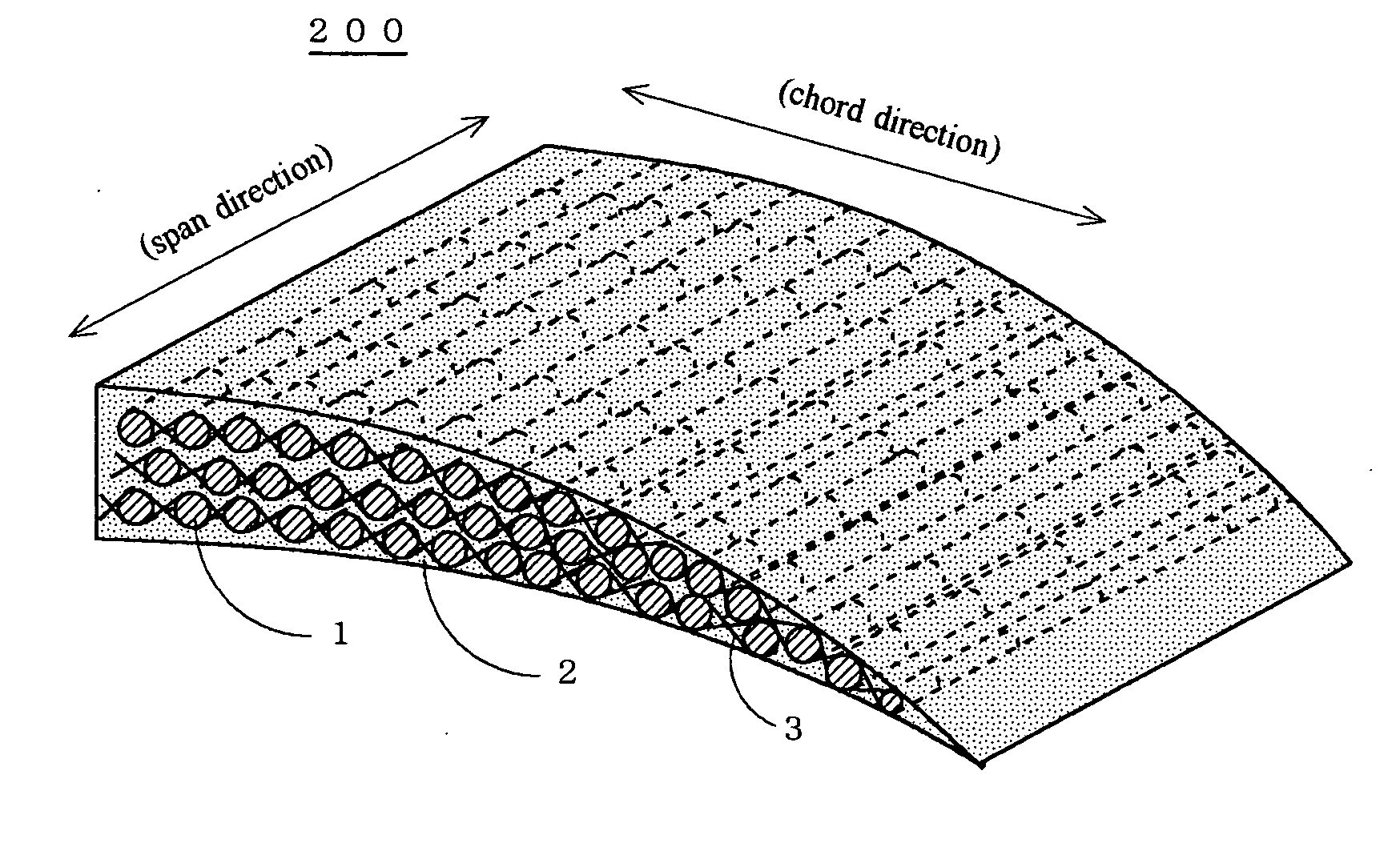
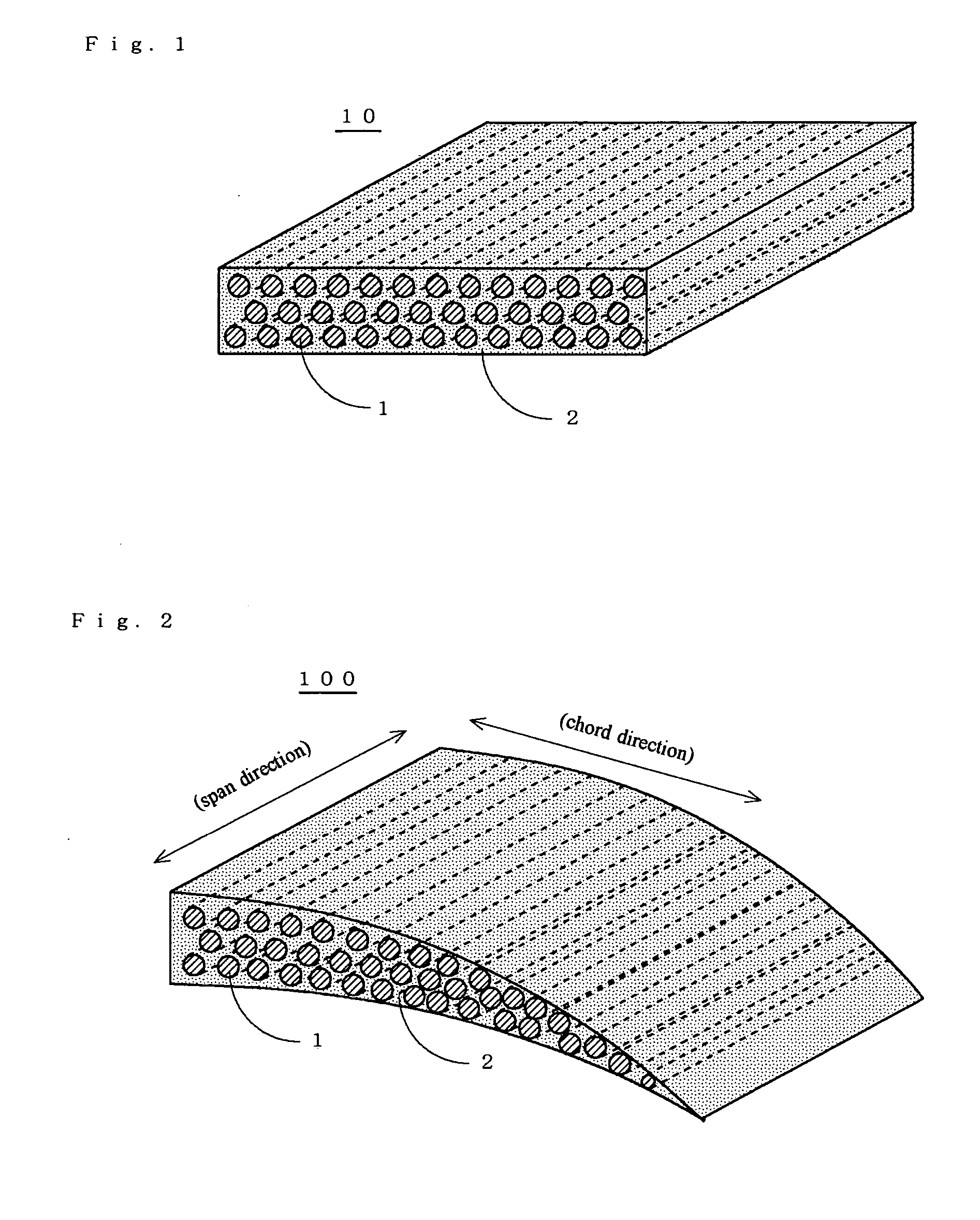
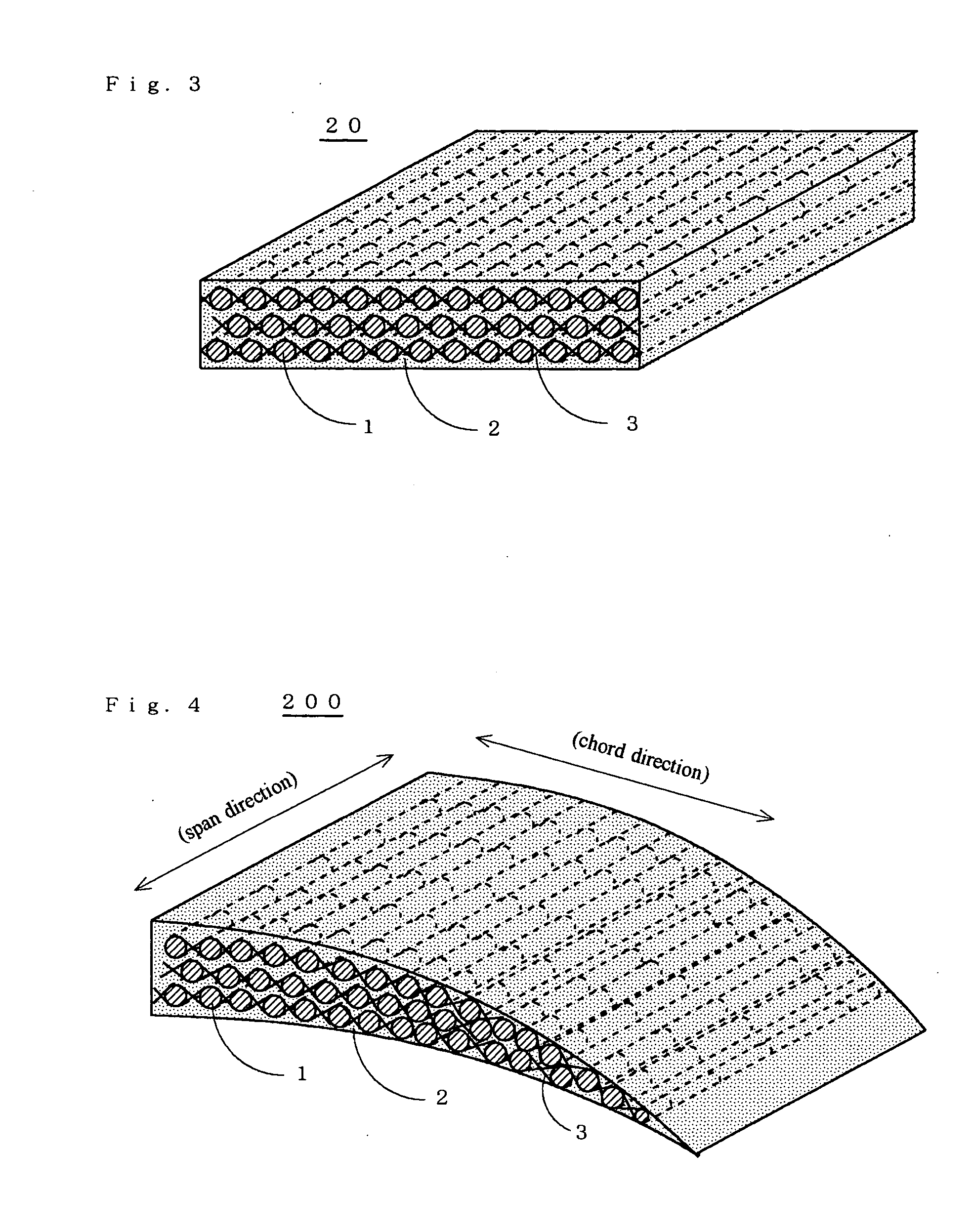
- The aircraft wing is designed with axially long objects made from anisotropic reinforcing materials, oriented parallel to the wing span direction, and filled with an elastic material to enhance stiffness and flexibility, while binding means like yarns or three-dimensional woven fabrics are used to prevent peeling and improve fracture strength.

Smart material trailing edge variable chord morphing wing
PatentInactiveUS20150251747A1
Innovation
- A wing design featuring a rigid leading edge, an elastic central portion, and a morphing beam with smart and elastic materials that can change chord length significantly without major weight or reliability penalties, allowing for optimal aerodynamic efficiency across diverse flight conditions.


Aviation Regulatory Framework for Morphing Wings
The aviation regulatory framework for morphing wings represents one of the most complex challenges in modern aerospace certification, as traditional airworthiness standards were developed around fixed-geometry aircraft configurations. Current regulatory bodies, including the Federal Aviation Administration (FAA), European Union Aviation Safety Agency (EASA), and Transport Canada Civil Aviation (TCCA), are grappling with how to adapt existing certification processes to accommodate dynamically changing wing structures that fundamentally alter aircraft performance characteristics during flight.
The primary regulatory challenge stems from the fact that morphing wing technology introduces variable aerodynamic properties that cannot be adequately addressed by conventional static certification methods. Traditional airworthiness regulations require demonstration of structural integrity, flutter characteristics, and performance parameters for fixed configurations, whereas morphing wings present continuously variable states that demand new certification paradigms. The elasticity threshold research becomes particularly relevant as regulators must establish acceptable limits for wing deformation while ensuring structural safety margins are maintained throughout the morphing envelope.
Current regulatory approaches are evolving toward performance-based standards rather than prescriptive design requirements. The FAA's Part 23 rewrite and EASA's CS-23 amendments have begun incorporating more flexible certification pathways that could potentially accommodate morphing wing technologies. However, specific guidance for variable-geometry systems remains largely undeveloped, creating uncertainty for manufacturers pursuing morphing wing development programs.
International harmonization efforts are underway through the International Civil Aviation Organization (ICAO) to establish consistent global standards for morphing wing certification. These initiatives focus on developing new means of compliance that address the unique challenges of variable-geometry aircraft, including real-time structural health monitoring requirements, adaptive control system validation, and failure mode analysis for morphing mechanisms.
The regulatory framework must also address operational considerations, including pilot training requirements for morphing wing aircraft, maintenance protocols for complex actuation systems, and air traffic control implications of aircraft with variable performance characteristics. Environmental certification presents additional challenges, as noise and emissions profiles may vary significantly across different morphing configurations, requiring comprehensive testing across the entire operational envelope.
Future regulatory development will likely emphasize risk-based certification approaches, leveraging advanced simulation capabilities and continuous monitoring systems to validate morphing wing safety throughout the aircraft's operational life, rather than relying solely on pre-certification testing of discrete configurations.
The primary regulatory challenge stems from the fact that morphing wing technology introduces variable aerodynamic properties that cannot be adequately addressed by conventional static certification methods. Traditional airworthiness regulations require demonstration of structural integrity, flutter characteristics, and performance parameters for fixed configurations, whereas morphing wings present continuously variable states that demand new certification paradigms. The elasticity threshold research becomes particularly relevant as regulators must establish acceptable limits for wing deformation while ensuring structural safety margins are maintained throughout the morphing envelope.
Current regulatory approaches are evolving toward performance-based standards rather than prescriptive design requirements. The FAA's Part 23 rewrite and EASA's CS-23 amendments have begun incorporating more flexible certification pathways that could potentially accommodate morphing wing technologies. However, specific guidance for variable-geometry systems remains largely undeveloped, creating uncertainty for manufacturers pursuing morphing wing development programs.
International harmonization efforts are underway through the International Civil Aviation Organization (ICAO) to establish consistent global standards for morphing wing certification. These initiatives focus on developing new means of compliance that address the unique challenges of variable-geometry aircraft, including real-time structural health monitoring requirements, adaptive control system validation, and failure mode analysis for morphing mechanisms.
The regulatory framework must also address operational considerations, including pilot training requirements for morphing wing aircraft, maintenance protocols for complex actuation systems, and air traffic control implications of aircraft with variable performance characteristics. Environmental certification presents additional challenges, as noise and emissions profiles may vary significantly across different morphing configurations, requiring comprehensive testing across the entire operational envelope.
Future regulatory development will likely emphasize risk-based certification approaches, leveraging advanced simulation capabilities and continuous monitoring systems to validate morphing wing safety throughout the aircraft's operational life, rather than relying solely on pre-certification testing of discrete configurations.
Environmental Impact of Adaptive Aircraft Systems
The environmental implications of adaptive aircraft systems, particularly morphing wing technologies, present both significant opportunities and challenges for sustainable aviation. These systems fundamentally alter the environmental footprint of aircraft operations through multiple pathways, requiring comprehensive assessment of their ecological impact across the entire operational lifecycle.
Fuel consumption reduction represents the most immediate environmental benefit of morphing wing systems. By optimizing wing geometry in real-time to match flight conditions, these adaptive systems can achieve fuel efficiency improvements of 8-15% compared to conventional static wing configurations. This translates to proportional reductions in carbon dioxide emissions, with potential annual savings of millions of tons of CO2 across global aviation fleets. The ability to maintain optimal lift-to-drag ratios throughout different flight phases eliminates the aerodynamic compromises inherent in fixed-wing designs.
Noise pollution mitigation constitutes another critical environmental advantage. Morphing wing systems enable smoother airflow transitions and reduced turbulence generation, particularly during takeoff and landing phases when noise impact on surrounding communities is most severe. The adaptive wing surfaces can minimize vortex formation and pressure fluctuations that contribute to aerodynamic noise, potentially reducing aircraft noise signatures by 3-5 decibels.
However, the manufacturing and maintenance requirements of adaptive systems introduce environmental complexities. The production of smart materials, actuators, and control systems typically involves energy-intensive processes and specialized materials with higher embodied carbon footprints. Advanced composites and shape-memory alloys used in morphing mechanisms require significant energy inputs during manufacturing and may present end-of-life disposal challenges.
Lifecycle assessment considerations reveal that the environmental benefits of morphing wing systems become apparent only after sufficient operational hours to offset the additional manufacturing impact. Current analyses suggest a break-even point of approximately 2,000-3,000 flight hours, after which the cumulative environmental benefits become increasingly significant.
The integration of morphing wing technologies also influences broader aircraft system efficiency. Reduced structural loads and optimized flight profiles can extend component lifespans, reducing maintenance frequency and associated environmental impacts. Additionally, the potential for weight reduction through elimination of traditional control surfaces contributes to overall system efficiency improvements.
Fuel consumption reduction represents the most immediate environmental benefit of morphing wing systems. By optimizing wing geometry in real-time to match flight conditions, these adaptive systems can achieve fuel efficiency improvements of 8-15% compared to conventional static wing configurations. This translates to proportional reductions in carbon dioxide emissions, with potential annual savings of millions of tons of CO2 across global aviation fleets. The ability to maintain optimal lift-to-drag ratios throughout different flight phases eliminates the aerodynamic compromises inherent in fixed-wing designs.
Noise pollution mitigation constitutes another critical environmental advantage. Morphing wing systems enable smoother airflow transitions and reduced turbulence generation, particularly during takeoff and landing phases when noise impact on surrounding communities is most severe. The adaptive wing surfaces can minimize vortex formation and pressure fluctuations that contribute to aerodynamic noise, potentially reducing aircraft noise signatures by 3-5 decibels.
However, the manufacturing and maintenance requirements of adaptive systems introduce environmental complexities. The production of smart materials, actuators, and control systems typically involves energy-intensive processes and specialized materials with higher embodied carbon footprints. Advanced composites and shape-memory alloys used in morphing mechanisms require significant energy inputs during manufacturing and may present end-of-life disposal challenges.
Lifecycle assessment considerations reveal that the environmental benefits of morphing wing systems become apparent only after sufficient operational hours to offset the additional manufacturing impact. Current analyses suggest a break-even point of approximately 2,000-3,000 flight hours, after which the cumulative environmental benefits become increasingly significant.
The integration of morphing wing technologies also influences broader aircraft system efficiency. Reduced structural loads and optimized flight profiles can extend component lifespans, reducing maintenance frequency and associated environmental impacts. Additionally, the potential for weight reduction through elimination of traditional control surfaces contributes to overall system efficiency improvements.
Unlock deeper insights with PatSnap Eureka Quick Research — get a full tech report to explore trends and direct your research. Try now!
Generate Your Research Report Instantly with AI Agent
Supercharge your innovation with PatSnap Eureka AI Agent Platform!