What Antibacterial Coating Features Are Most Effective
OCT 15, 20259 MIN READ
Generate Your Research Report Instantly with AI Agent
Patsnap Eureka helps you evaluate technical feasibility & market potential.
Antibacterial Coating Technology Background and Objectives
Antibacterial coatings have emerged as a critical technology in combating the growing threat of pathogenic microorganisms across various sectors including healthcare, food processing, and consumer products. The evolution of this technology can be traced back to the early 20th century with simple silver-based antimicrobial applications, progressing through significant advancements in material science and nanotechnology in recent decades.
The development trajectory has been particularly accelerated since the early 2000s, driven by increasing antibiotic resistance concerns and healthcare-associated infections. This has prompted extensive research into more sophisticated coating technologies that can effectively eliminate or inhibit bacterial growth without contributing to resistance development or causing environmental harm.
Current technological trends indicate a shift from conventional biocide-releasing systems toward more sustainable, long-lasting solutions that incorporate smart-release mechanisms, contact-killing surfaces, and anti-adhesion properties. The integration of nanotechnology has revolutionized the field, enabling unprecedented control over surface properties at the molecular level.
The primary objective of antibacterial coating research is to develop solutions that demonstrate broad-spectrum efficacy against both Gram-positive and Gram-negative bacteria, while maintaining long-term stability under various environmental conditions. Additionally, these coatings must be non-toxic to humans and environmentally benign, addressing growing concerns about chemical leaching and bioaccumulation.
Another critical goal is to create coatings that can be applied across diverse substrate materials including metals, polymers, ceramics, and textiles, without compromising the mechanical or aesthetic properties of the base material. This versatility is essential for widespread adoption across industries.
Cost-effectiveness and scalability represent significant technical objectives, as many current high-performance antibacterial technologies remain prohibitively expensive for mass-market applications. Research aims to develop formulations that can be manufactured using conventional industrial processes without specialized equipment or extreme conditions.
The healthcare sector presents particularly demanding requirements, with coatings needing to withstand rigorous sterilization procedures and maintain efficacy in the presence of bodily fluids and cleaning agents. In this context, research is increasingly focused on multi-functional coatings that combine antibacterial properties with anti-fouling, anti-inflammatory, or tissue-integration capabilities.
Looking forward, the field is moving toward biomimetic approaches that replicate naturally occurring antibacterial mechanisms found in plants, animals, and microorganisms. These bio-inspired strategies offer promising avenues for developing next-generation coatings with enhanced performance and reduced environmental impact.
The development trajectory has been particularly accelerated since the early 2000s, driven by increasing antibiotic resistance concerns and healthcare-associated infections. This has prompted extensive research into more sophisticated coating technologies that can effectively eliminate or inhibit bacterial growth without contributing to resistance development or causing environmental harm.
Current technological trends indicate a shift from conventional biocide-releasing systems toward more sustainable, long-lasting solutions that incorporate smart-release mechanisms, contact-killing surfaces, and anti-adhesion properties. The integration of nanotechnology has revolutionized the field, enabling unprecedented control over surface properties at the molecular level.
The primary objective of antibacterial coating research is to develop solutions that demonstrate broad-spectrum efficacy against both Gram-positive and Gram-negative bacteria, while maintaining long-term stability under various environmental conditions. Additionally, these coatings must be non-toxic to humans and environmentally benign, addressing growing concerns about chemical leaching and bioaccumulation.
Another critical goal is to create coatings that can be applied across diverse substrate materials including metals, polymers, ceramics, and textiles, without compromising the mechanical or aesthetic properties of the base material. This versatility is essential for widespread adoption across industries.
Cost-effectiveness and scalability represent significant technical objectives, as many current high-performance antibacterial technologies remain prohibitively expensive for mass-market applications. Research aims to develop formulations that can be manufactured using conventional industrial processes without specialized equipment or extreme conditions.
The healthcare sector presents particularly demanding requirements, with coatings needing to withstand rigorous sterilization procedures and maintain efficacy in the presence of bodily fluids and cleaning agents. In this context, research is increasingly focused on multi-functional coatings that combine antibacterial properties with anti-fouling, anti-inflammatory, or tissue-integration capabilities.
Looking forward, the field is moving toward biomimetic approaches that replicate naturally occurring antibacterial mechanisms found in plants, animals, and microorganisms. These bio-inspired strategies offer promising avenues for developing next-generation coatings with enhanced performance and reduced environmental impact.
Market Demand Analysis for Antibacterial Surfaces
The global market for antibacterial surfaces has experienced significant growth in recent years, driven by increasing awareness of infection control and hygiene standards across multiple sectors. The COVID-19 pandemic has accelerated this trend, creating unprecedented demand for antimicrobial solutions in healthcare facilities, public spaces, and consumer products. Market research indicates that the global antimicrobial coatings market was valued at approximately $3.9 billion in 2021 and is projected to reach $6.8 billion by 2026, growing at a CAGR of 11.8%.
Healthcare remains the dominant sector for antibacterial surfaces, accounting for nearly 40% of the total market share. Hospitals, clinics, and other medical facilities are increasingly implementing antimicrobial surfaces to reduce healthcare-associated infections (HAIs), which affect millions of patients globally each year and result in substantial healthcare costs. The economic burden of HAIs in the United States alone exceeds $30 billion annually, creating a strong financial incentive for preventive solutions.
Beyond healthcare, several other sectors are driving market expansion. The food processing industry requires antibacterial surfaces to maintain hygiene standards and prevent contamination. The consumer electronics market has seen growing demand for antibacterial coatings on frequently touched devices such as smartphones, tablets, and keyboards. Additionally, the transportation sector, including public transit and aviation, has increased investment in antimicrobial surfaces following the pandemic.
Regional analysis reveals that North America currently leads the market, followed by Europe and Asia-Pacific. However, the Asia-Pacific region is expected to witness the highest growth rate in the coming years due to rapid industrialization, increasing healthcare expenditure, and growing awareness about infection control in countries like China, India, and Japan.
Consumer preferences are evolving toward more sustainable and non-toxic antibacterial solutions. There is increasing demand for environmentally friendly coatings that do not rely on heavy metals or chemicals with potential ecological impacts. This shift is particularly evident in consumer products and food-contact surfaces, where safety concerns are paramount.
Regulatory frameworks are also shaping market dynamics. Stringent regulations regarding the use of certain biocides and antimicrobial agents, particularly in Europe and North America, are pushing manufacturers to develop compliant alternatives. The FDA in the United States and the European Chemicals Agency have established guidelines for antimicrobial products that influence product development and marketing strategies.
Market research indicates that durability and long-term efficacy remain key purchasing factors for institutional buyers. Products that maintain antibacterial properties after repeated cleaning cycles or extended use command premium pricing and greater market acceptance.
Healthcare remains the dominant sector for antibacterial surfaces, accounting for nearly 40% of the total market share. Hospitals, clinics, and other medical facilities are increasingly implementing antimicrobial surfaces to reduce healthcare-associated infections (HAIs), which affect millions of patients globally each year and result in substantial healthcare costs. The economic burden of HAIs in the United States alone exceeds $30 billion annually, creating a strong financial incentive for preventive solutions.
Beyond healthcare, several other sectors are driving market expansion. The food processing industry requires antibacterial surfaces to maintain hygiene standards and prevent contamination. The consumer electronics market has seen growing demand for antibacterial coatings on frequently touched devices such as smartphones, tablets, and keyboards. Additionally, the transportation sector, including public transit and aviation, has increased investment in antimicrobial surfaces following the pandemic.
Regional analysis reveals that North America currently leads the market, followed by Europe and Asia-Pacific. However, the Asia-Pacific region is expected to witness the highest growth rate in the coming years due to rapid industrialization, increasing healthcare expenditure, and growing awareness about infection control in countries like China, India, and Japan.
Consumer preferences are evolving toward more sustainable and non-toxic antibacterial solutions. There is increasing demand for environmentally friendly coatings that do not rely on heavy metals or chemicals with potential ecological impacts. This shift is particularly evident in consumer products and food-contact surfaces, where safety concerns are paramount.
Regulatory frameworks are also shaping market dynamics. Stringent regulations regarding the use of certain biocides and antimicrobial agents, particularly in Europe and North America, are pushing manufacturers to develop compliant alternatives. The FDA in the United States and the European Chemicals Agency have established guidelines for antimicrobial products that influence product development and marketing strategies.
Market research indicates that durability and long-term efficacy remain key purchasing factors for institutional buyers. Products that maintain antibacterial properties after repeated cleaning cycles or extended use command premium pricing and greater market acceptance.
Current Antibacterial Coating Technologies and Challenges
Antibacterial coatings have emerged as a critical solution to combat the growing threat of pathogenic microorganisms in healthcare settings, food processing facilities, and consumer products. Currently, several technologies dominate the market, each with distinct mechanisms of action and efficacy profiles. Metal-based coatings, particularly those incorporating silver, copper, and zinc oxide nanoparticles, demonstrate broad-spectrum antimicrobial activity through multiple mechanisms including cell membrane disruption and DNA damage. These coatings have gained significant traction due to their long-lasting efficacy, though concerns regarding potential environmental impacts and cytotoxicity at higher concentrations remain.
Quaternary ammonium compounds (QACs) represent another prominent category, functioning by disrupting bacterial cell membranes through their positively charged molecules. While effective against a wide range of microorganisms, the development of bacterial resistance to QACs poses a significant challenge for long-term applications, particularly in healthcare environments where antimicrobial stewardship is paramount.
Photocatalytic coatings, typically based on titanium dioxide (TiO₂), generate reactive oxygen species when exposed to light, offering a self-cleaning mechanism that destroys microorganisms without requiring additional chemical agents. However, their effectiveness is limited in low-light conditions, restricting their application in certain indoor environments.
Enzyme-based coatings represent an emerging technology that targets specific components of bacterial cell walls. These highly selective coatings minimize the risk of developing antimicrobial resistance but face challenges related to stability and shelf life under varying environmental conditions.
Despite these advancements, significant technical challenges persist across all antibacterial coating technologies. Durability remains a primary concern, as mechanical wear, chemical degradation, and repeated cleaning procedures can compromise coating integrity and efficacy over time. Many coatings demonstrate reduced performance after exposure to common cleaning agents or environmental stressors, necessitating frequent reapplication.
Biocompatibility presents another critical challenge, particularly for medical devices and food-contact surfaces. Balancing potent antimicrobial activity with human safety requires careful formulation and extensive testing. Additionally, the emergence of antimicrobial resistance threatens the long-term viability of certain coating technologies, driving the need for multi-modal approaches that combine different mechanisms of action.
Manufacturing scalability and cost-effectiveness represent significant barriers to widespread adoption. Complex application processes, specialized equipment requirements, and expensive raw materials contribute to higher implementation costs, limiting market penetration despite proven efficacy. Furthermore, regulatory hurdles vary significantly across regions, creating a complex landscape for product development and commercialization.
Quaternary ammonium compounds (QACs) represent another prominent category, functioning by disrupting bacterial cell membranes through their positively charged molecules. While effective against a wide range of microorganisms, the development of bacterial resistance to QACs poses a significant challenge for long-term applications, particularly in healthcare environments where antimicrobial stewardship is paramount.
Photocatalytic coatings, typically based on titanium dioxide (TiO₂), generate reactive oxygen species when exposed to light, offering a self-cleaning mechanism that destroys microorganisms without requiring additional chemical agents. However, their effectiveness is limited in low-light conditions, restricting their application in certain indoor environments.
Enzyme-based coatings represent an emerging technology that targets specific components of bacterial cell walls. These highly selective coatings minimize the risk of developing antimicrobial resistance but face challenges related to stability and shelf life under varying environmental conditions.
Despite these advancements, significant technical challenges persist across all antibacterial coating technologies. Durability remains a primary concern, as mechanical wear, chemical degradation, and repeated cleaning procedures can compromise coating integrity and efficacy over time. Many coatings demonstrate reduced performance after exposure to common cleaning agents or environmental stressors, necessitating frequent reapplication.
Biocompatibility presents another critical challenge, particularly for medical devices and food-contact surfaces. Balancing potent antimicrobial activity with human safety requires careful formulation and extensive testing. Additionally, the emergence of antimicrobial resistance threatens the long-term viability of certain coating technologies, driving the need for multi-modal approaches that combine different mechanisms of action.
Manufacturing scalability and cost-effectiveness represent significant barriers to widespread adoption. Complex application processes, specialized equipment requirements, and expensive raw materials contribute to higher implementation costs, limiting market penetration despite proven efficacy. Furthermore, regulatory hurdles vary significantly across regions, creating a complex landscape for product development and commercialization.
Existing Antibacterial Coating Mechanisms and Formulations
01 Metal-based antibacterial coatings
Metal-based antibacterial coatings utilize silver, copper, zinc, and other metals to provide effective antimicrobial properties. These metals release ions that disrupt bacterial cell membranes and interfere with cellular processes. The effectiveness of these coatings depends on the concentration of metal ions, release rate, and surface area. Metal-based coatings provide long-lasting protection against a broad spectrum of bacteria and are commonly used in medical devices, food packaging, and public spaces.- Metal-based antibacterial coatings: Metal-based antibacterial coatings utilize silver, copper, zinc, and other metals to provide effective antimicrobial properties. These metals release ions that disrupt bacterial cell membranes and interfere with cellular processes, preventing bacterial growth and colonization. The effectiveness of these coatings depends on the concentration of metal ions, release rate, and the specific bacterial strains targeted. These coatings can be applied to various surfaces including medical devices, textiles, and industrial equipment.
- Polymer-based antibacterial coatings: Polymer-based antibacterial coatings incorporate antimicrobial agents within polymer matrices to create surfaces that inhibit bacterial growth. These coatings can be designed to release antimicrobial compounds gradually or to have contact-killing properties through cationic polymers that disrupt bacterial cell membranes. The effectiveness of these coatings is influenced by the polymer composition, the type of antimicrobial agent used, and the method of application. These coatings offer durability and can be tailored for specific applications.
- Nanoparticle-enhanced antibacterial coatings: Nanoparticle-enhanced antibacterial coatings utilize nanoscale materials to improve antimicrobial efficacy. These nanoparticles, including metal nanoparticles, metal oxide nanoparticles, and carbon-based nanomaterials, provide increased surface area and enhanced reactivity compared to bulk materials. The effectiveness of these coatings is attributed to multiple mechanisms including ion release, reactive oxygen species generation, and direct physical interaction with bacterial cells. These advanced coatings demonstrate broad-spectrum activity against various pathogens and can maintain effectiveness for extended periods.
- Natural compound-based antibacterial coatings: Natural compound-based antibacterial coatings utilize plant extracts, essential oils, enzymes, and other naturally derived substances to inhibit bacterial growth. These coatings offer environmentally friendly alternatives to synthetic antimicrobials while providing effective protection against various pathogens. The antimicrobial mechanisms include disruption of cell membranes, inhibition of enzyme activity, and interference with bacterial communication systems. These coatings are particularly valuable in applications where biocompatibility and sustainability are priorities.
- Testing methods for antibacterial coating effectiveness: Various testing methods are employed to evaluate the effectiveness of antibacterial coatings. These include standardized laboratory tests such as zone of inhibition assays, minimum inhibitory concentration determinations, time-kill studies, and biofilm inhibition tests. Advanced techniques like confocal microscopy, atomic force microscopy, and flow cytometry provide detailed insights into coating performance. Real-world testing in relevant environments is also crucial to assess long-term effectiveness under actual use conditions. These comprehensive evaluation approaches ensure that antibacterial coatings meet performance requirements for specific applications.
02 Polymer-based antibacterial coatings
Polymer-based antibacterial coatings incorporate antimicrobial agents within polymer matrices to create surfaces that inhibit bacterial growth. These coatings can be designed to release antimicrobial compounds gradually or to have inherent antibacterial properties through positively charged functional groups that disrupt bacterial cell membranes. The effectiveness of these coatings depends on the polymer composition, antimicrobial agent concentration, and release kinetics. These coatings offer customizable properties including durability, flexibility, and controlled release of active ingredients.Expand Specific Solutions03 Nanoparticle-enhanced antibacterial coatings
Nanoparticle-enhanced antibacterial coatings utilize nanoscale materials to improve antimicrobial efficacy. These nanoparticles provide increased surface area and enhanced reactivity, resulting in superior antibacterial performance. Common nanoparticles include silver, zinc oxide, copper oxide, and titanium dioxide, which can penetrate bacterial cell walls more effectively than their bulk counterparts. The effectiveness of these coatings depends on particle size, distribution, and stability. These advanced coatings demonstrate improved durability and sustained antimicrobial activity compared to conventional coatings.Expand Specific Solutions04 Natural compound-based antibacterial coatings
Natural compound-based antibacterial coatings utilize plant extracts, essential oils, enzymes, and other biological materials to provide environmentally friendly antimicrobial protection. These coatings harness compounds like chitosan, plant polyphenols, and essential oils that have inherent antibacterial properties. The effectiveness of these coatings depends on the concentration of active compounds, stability, and application method. These eco-friendly alternatives offer reduced toxicity and environmental impact while still providing significant antibacterial efficacy against common pathogens.Expand Specific Solutions05 Testing methods for antibacterial coating effectiveness
Various testing methods are employed to evaluate the effectiveness of antibacterial coatings. These include zone of inhibition tests, bacterial adhesion assays, time-kill studies, and accelerated aging tests. Advanced techniques such as confocal microscopy, atomic force microscopy, and flow cytometry provide detailed analysis of coating performance. The effectiveness of antibacterial coatings is measured by parameters including bacterial reduction rate, duration of activity, and performance under various environmental conditions. Standardized testing protocols ensure reliable comparison between different coating technologies.Expand Specific Solutions
Leading Companies and Research Institutions in Antibacterial Coatings
The antibacterial coating market is currently in a growth phase, with increasing demand driven by healthcare, food safety, and consumer goods sectors. The global market size is estimated to reach $6-8 billion by 2025, growing at a CAGR of 10-12%. Technologically, the field shows varying maturity levels across different application areas. Leading research institutions like Fraunhofer-Gesellschaft, CNRS, and A*STAR are advancing fundamental science, while companies such as BASF, Bio-Gate AG, and Orthobond Corp. are commercializing innovative solutions. Chinese institutions including Changchun Institute and Shandong Weigao Group are rapidly gaining ground with cost-effective approaches. The most promising technologies combine long-lasting efficacy, environmental sustainability, and cost-effectiveness, with silver-based coatings and novel polymer composites showing particular promise.
Oerlikon Surface Solutions AG
Technical Solution: Oerlikon Surface Solutions has developed advanced physical vapor deposition (PVD) and plasma-enhanced chemical vapor deposition (PECVD) technologies for creating high-performance antimicrobial coatings. Their proprietary BALIMED ANTISEPT coating technology incorporates silver ions into a specialized matrix that can be applied to medical instruments and implants through a vacuum deposition process. This creates an extremely thin (1-5 μm) but highly effective antimicrobial layer that doesn't alter the mechanical properties of the underlying material. The company's plasma-assisted coating processes enable the creation of nanostructured surfaces that combine antimicrobial properties with other functional benefits such as wear resistance and reduced friction. Oerlikon has also pioneered hybrid coating systems that integrate antimicrobial agents with diamond-like carbon (DLC) layers, providing multifunctional protection for high-demand applications[5]. Their coatings have demonstrated sustained antimicrobial activity for periods exceeding 24 months in laboratory testing, with minimal silver leaching compared to conventional silver-containing coatings.
Strengths: Exceptional coating durability and adhesion; precise control over coating thickness and composition; ability to create multifunctional surfaces combining antimicrobial properties with mechanical benefits; minimal impact on substrate dimensions. Weaknesses: Requires specialized vacuum deposition equipment; higher processing costs compared to wet chemical methods; limited application to complex geometries; primarily focused on metal substrates rather than polymers or textiles.
Bio-Gate AG
Technical Solution: Bio-Gate AG specializes in innovative antimicrobial technologies centered around their patented MicroSilver BG™ platform. This technology utilizes highly pure elemental silver particles in the micrometer range (not nanoparticles), which provides a unique combination of efficacy and safety. The MicroSilver particles create a reservoir effect on surfaces, releasing silver ions in a controlled manner only when moisture or bacteria are present. This intelligent release mechanism ensures long-lasting antimicrobial protection while minimizing unnecessary silver discharge. Bio-Gate has developed various coating applications including powder coatings, liquid coatings, and plasma-assisted deposition methods that can be applied to metals, polymers, textiles, and ceramics[3]. Their technology has been clinically validated to reduce bacterial colonization by over 99.9% against pathogens including MRSA and E. coli. The company has successfully commercialized their technology in medical devices, consumer products, and industrial applications, with particular success in orthopedic implants and wound care products[4].
Strengths: Proprietary silver technology with proven efficacy; selective ion release mechanism improves longevity and reduces environmental impact; extensive clinical validation data; versatile application methods for different substrate materials. Weaknesses: Higher cost compared to conventional antimicrobials; potential for silver resistance development with widespread use; limited efficacy against certain fungal species; regulatory approval processes can be lengthy for medical applications.
Key Patents and Scientific Breakthroughs in Antibacterial Surfaces
Antimicrobial coating compositions
PatentPendingUS20240117196A1
Innovation
- Development of antimicrobial compositions comprising quaternary ammonium polymers formed from polyethyleneimine oligomers, multifunctional crosslinkers, alkylating agents, and monoisocyanates, which are reacted to create durable, water-resistant, and cost-effective coatings with enhanced antimicrobial properties.
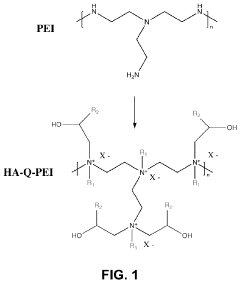
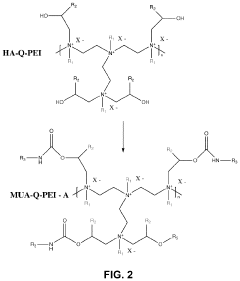
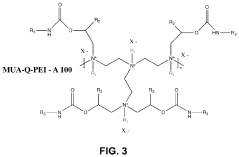
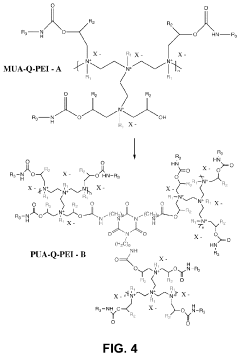
Antimicrobial coatings
PatentWO2020035483A1
Innovation
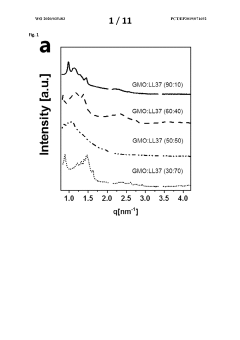
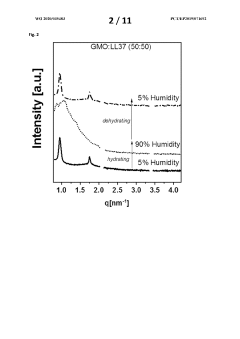
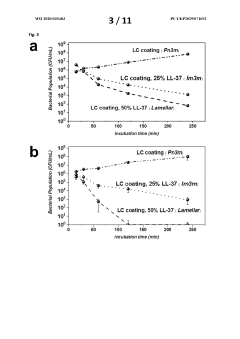
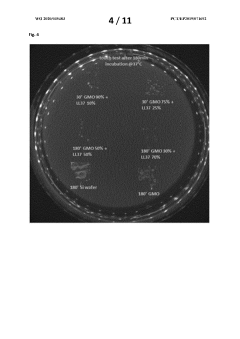
- An antimicrobial liquid crystal composition comprising amphiphilic lipids, antimicrobial agents, and water that forms stable liquid crystals at room temperature, providing sustained and adhesive antimicrobial properties without requiring additional surfactants or polymers, and can be adapted by stimuli like humidity and pH to enhance antimicrobial efficacy.
Environmental Impact and Sustainability of Antibacterial Coatings
The environmental impact of antibacterial coatings has become increasingly significant as their usage expands across healthcare, food processing, and consumer products. Traditional antibacterial coatings often contain heavy metals such as silver, copper, and zinc, which can leach into ecosystems and accumulate in soil and water bodies. Studies have shown that silver nanoparticles, commonly used in antibacterial applications, can be toxic to aquatic organisms at concentrations as low as 1-10 μg/L, disrupting microbial communities essential for ecosystem functioning.
Recent sustainability assessments of antibacterial coatings reveal concerning end-of-life scenarios. Many coatings do not biodegrade effectively, contributing to persistent environmental contamination. The production processes for conventional antibacterial agents typically involve energy-intensive methods and hazardous chemical precursors, resulting in substantial carbon footprints. Life cycle analyses indicate that silver-based antibacterial coatings can generate up to 30% more greenhouse gas emissions compared to non-antimicrobial alternatives.
Regulatory frameworks worldwide are evolving to address these environmental concerns. The European Union's REACH regulation now requires comprehensive environmental risk assessments for antimicrobial substances, while the EPA in the United States has established stricter guidelines for silver-containing products. These regulatory shifts are driving innovation toward more sustainable alternatives.
Emerging sustainable approaches include bio-based antibacterial coatings derived from natural sources such as chitosan, plant extracts, and essential oils. These alternatives demonstrate promising antibacterial efficacy while offering improved biodegradability. For instance, chitosan-based coatings have shown 99% reduction in bacterial populations while degrading completely within 6-12 months in soil environments, compared to decades for some synthetic alternatives.
Design for circularity represents another important sustainability trend, with researchers developing antibacterial coatings that can be recovered and reprocessed at end-of-life. Advanced manufacturing techniques like atomic layer deposition are reducing material waste by enabling precise application of ultrathin antibacterial layers, decreasing raw material requirements by up to 80% compared to conventional methods.
The economic implications of sustainable antibacterial coatings are compelling. While initial production costs may be 15-25% higher than conventional options, reduced environmental remediation costs and potential regulatory advantages offer long-term financial benefits. Market analysis indicates growing consumer preference for environmentally responsible antimicrobial products, with this segment expanding at twice the rate of traditional antibacterial coatings.
Recent sustainability assessments of antibacterial coatings reveal concerning end-of-life scenarios. Many coatings do not biodegrade effectively, contributing to persistent environmental contamination. The production processes for conventional antibacterial agents typically involve energy-intensive methods and hazardous chemical precursors, resulting in substantial carbon footprints. Life cycle analyses indicate that silver-based antibacterial coatings can generate up to 30% more greenhouse gas emissions compared to non-antimicrobial alternatives.
Regulatory frameworks worldwide are evolving to address these environmental concerns. The European Union's REACH regulation now requires comprehensive environmental risk assessments for antimicrobial substances, while the EPA in the United States has established stricter guidelines for silver-containing products. These regulatory shifts are driving innovation toward more sustainable alternatives.
Emerging sustainable approaches include bio-based antibacterial coatings derived from natural sources such as chitosan, plant extracts, and essential oils. These alternatives demonstrate promising antibacterial efficacy while offering improved biodegradability. For instance, chitosan-based coatings have shown 99% reduction in bacterial populations while degrading completely within 6-12 months in soil environments, compared to decades for some synthetic alternatives.
Design for circularity represents another important sustainability trend, with researchers developing antibacterial coatings that can be recovered and reprocessed at end-of-life. Advanced manufacturing techniques like atomic layer deposition are reducing material waste by enabling precise application of ultrathin antibacterial layers, decreasing raw material requirements by up to 80% compared to conventional methods.
The economic implications of sustainable antibacterial coatings are compelling. While initial production costs may be 15-25% higher than conventional options, reduced environmental remediation costs and potential regulatory advantages offer long-term financial benefits. Market analysis indicates growing consumer preference for environmentally responsible antimicrobial products, with this segment expanding at twice the rate of traditional antibacterial coatings.
Regulatory Framework and Safety Standards for Antimicrobial Materials
The regulatory landscape for antimicrobial coatings is complex and continuously evolving, with frameworks varying significantly across different regions and jurisdictions. In the United States, the Environmental Protection Agency (EPA) regulates antimicrobial coatings under the Federal Insecticide, Fungicide, and Rodenticide Act (FIFRA), requiring manufacturers to register products and provide substantial evidence of safety and efficacy. Similarly, the Food and Drug Administration (FDA) oversees antimicrobial materials used in medical devices and food contact surfaces, implementing stringent approval processes.
The European Union employs the Biocidal Products Regulation (BPR) to govern antimicrobial coatings, mandating comprehensive risk assessments and authorization procedures. This regulation specifically addresses active substances and their potential environmental and health impacts, with particular attention to novel nanomaterials used in antibacterial applications.
International standards organizations play a crucial role in establishing testing methodologies and performance criteria. The International Organization for Standardization (ISO) has developed several standards, including ISO 22196 for measuring antibacterial activity on plastic and non-porous surfaces. ASTM International provides complementary standards such as ASTM E2180 for evaluating antimicrobial agents in polymeric materials.
Safety considerations are paramount in regulatory frameworks, with increasing scrutiny on potential toxicity, bioaccumulation, and environmental persistence. Regulations typically require thorough toxicological assessments, including cytotoxicity, sensitization, and genotoxicity testing. For healthcare applications, additional requirements address biocompatibility according to ISO 10993 standards.
Recent regulatory trends show growing concerns about antimicrobial resistance development. Several jurisdictions now require manufacturers to demonstrate that their coatings do not contribute to resistance mechanisms in microbial populations. This has prompted the development of new testing protocols specifically designed to assess resistance development potential over extended periods.
Sustainability considerations are increasingly integrated into regulatory frameworks, with restrictions on certain biocides due to environmental concerns. The EU's REACH regulation (Registration, Evaluation, Authorization and Restriction of Chemicals) imposes additional requirements on potentially hazardous substances used in antimicrobial formulations.
Compliance with these diverse regulatory frameworks presents significant challenges for manufacturers operating globally, necessitating comprehensive regulatory strategies and substantial investment in safety testing. However, harmonization efforts are underway through international cooperation initiatives, aiming to streamline approval processes while maintaining rigorous safety standards.
The European Union employs the Biocidal Products Regulation (BPR) to govern antimicrobial coatings, mandating comprehensive risk assessments and authorization procedures. This regulation specifically addresses active substances and their potential environmental and health impacts, with particular attention to novel nanomaterials used in antibacterial applications.
International standards organizations play a crucial role in establishing testing methodologies and performance criteria. The International Organization for Standardization (ISO) has developed several standards, including ISO 22196 for measuring antibacterial activity on plastic and non-porous surfaces. ASTM International provides complementary standards such as ASTM E2180 for evaluating antimicrobial agents in polymeric materials.
Safety considerations are paramount in regulatory frameworks, with increasing scrutiny on potential toxicity, bioaccumulation, and environmental persistence. Regulations typically require thorough toxicological assessments, including cytotoxicity, sensitization, and genotoxicity testing. For healthcare applications, additional requirements address biocompatibility according to ISO 10993 standards.
Recent regulatory trends show growing concerns about antimicrobial resistance development. Several jurisdictions now require manufacturers to demonstrate that their coatings do not contribute to resistance mechanisms in microbial populations. This has prompted the development of new testing protocols specifically designed to assess resistance development potential over extended periods.
Sustainability considerations are increasingly integrated into regulatory frameworks, with restrictions on certain biocides due to environmental concerns. The EU's REACH regulation (Registration, Evaluation, Authorization and Restriction of Chemicals) imposes additional requirements on potentially hazardous substances used in antimicrobial formulations.
Compliance with these diverse regulatory frameworks presents significant challenges for manufacturers operating globally, necessitating comprehensive regulatory strategies and substantial investment in safety testing. However, harmonization efforts are underway through international cooperation initiatives, aiming to streamline approval processes while maintaining rigorous safety standards.
Unlock deeper insights with Patsnap Eureka Quick Research — get a full tech report to explore trends and direct your research. Try now!
Generate Your Research Report Instantly with AI Agent
Supercharge your innovation with Patsnap Eureka AI Agent Platform!