Optimize Eutectic Composition: Minimize Melting Time, Enhance Fluidity
FEB 3, 20269 MIN READ
Generate Your Research Report Instantly with AI Agent
Patsnap Eureka helps you evaluate technical feasibility & market potential.
Eutectic Alloy Development Background and Objectives
Eutectic alloys represent a critical class of metallic materials characterized by their unique melting behavior, where multiple constituent elements simultaneously transition from solid to liquid phase at a single, well-defined temperature. This phenomenon occurs at specific compositional ratios known as eutectic points, which historically have attracted significant attention in materials science due to their advantageous processing characteristics. The development of eutectic alloys dates back to the early twentieth century when metallurgists first recognized the potential of these compositions for casting and joining applications.
The evolution of eutectic alloy technology has been driven by increasing demands across diverse industrial sectors, including electronics manufacturing, automotive engineering, aerospace applications, and thermal management systems. Traditional eutectic systems such as lead-tin solders dominated early applications, but environmental regulations and performance requirements have necessitated continuous innovation in alloy design. Modern research has expanded beyond binary systems to explore ternary and quaternary compositions, seeking to unlock superior property combinations.
Current technological objectives center on two interconnected performance parameters: minimizing melting time and enhancing fluidity during the liquid phase. Reducing melting time directly impacts energy efficiency in manufacturing processes, decreases thermal exposure to sensitive substrates, and improves production throughput. Enhanced fluidity ensures complete mold filling, reduces defect formation, and enables processing of complex geometries with thin sections. These objectives are particularly critical in advanced manufacturing contexts where precision, reliability, and cost-effectiveness must be simultaneously achieved.
The fundamental challenge lies in understanding and manipulating the complex interplay between compositional variables, thermodynamic properties, and kinetic behaviors. Achieving optimal eutectic compositions requires systematic investigation of phase diagrams, solidification kinetics, surface tension characteristics, and viscosity relationships. Contemporary research employs computational thermodynamics, high-throughput experimentation, and advanced characterization techniques to accelerate alloy development cycles.
The strategic importance of this research extends beyond immediate performance gains, positioning organizations to develop next-generation materials that meet emerging industry standards while maintaining competitive advantages in rapidly evolving technological landscapes. Success in optimizing eutectic compositions will enable breakthrough applications in miniaturized electronics, additive manufacturing, and sustainable production technologies.
The evolution of eutectic alloy technology has been driven by increasing demands across diverse industrial sectors, including electronics manufacturing, automotive engineering, aerospace applications, and thermal management systems. Traditional eutectic systems such as lead-tin solders dominated early applications, but environmental regulations and performance requirements have necessitated continuous innovation in alloy design. Modern research has expanded beyond binary systems to explore ternary and quaternary compositions, seeking to unlock superior property combinations.
Current technological objectives center on two interconnected performance parameters: minimizing melting time and enhancing fluidity during the liquid phase. Reducing melting time directly impacts energy efficiency in manufacturing processes, decreases thermal exposure to sensitive substrates, and improves production throughput. Enhanced fluidity ensures complete mold filling, reduces defect formation, and enables processing of complex geometries with thin sections. These objectives are particularly critical in advanced manufacturing contexts where precision, reliability, and cost-effectiveness must be simultaneously achieved.
The fundamental challenge lies in understanding and manipulating the complex interplay between compositional variables, thermodynamic properties, and kinetic behaviors. Achieving optimal eutectic compositions requires systematic investigation of phase diagrams, solidification kinetics, surface tension characteristics, and viscosity relationships. Contemporary research employs computational thermodynamics, high-throughput experimentation, and advanced characterization techniques to accelerate alloy development cycles.
The strategic importance of this research extends beyond immediate performance gains, positioning organizations to develop next-generation materials that meet emerging industry standards while maintaining competitive advantages in rapidly evolving technological landscapes. Success in optimizing eutectic compositions will enable breakthrough applications in miniaturized electronics, additive manufacturing, and sustainable production technologies.
Market Demand for Fast-Melting Eutectic Materials
The global demand for fast-melting eutectic materials has experienced substantial growth across multiple industrial sectors, driven by the increasing need for enhanced manufacturing efficiency and energy optimization. Industries such as electronics manufacturing, thermal management systems, and advanced metallurgy are actively seeking eutectic compositions that can reduce processing time while maintaining superior flow characteristics during phase transitions.
In the electronics sector, the miniaturization of components and the proliferation of surface-mount technology have created urgent requirements for solder materials that melt rapidly and exhibit excellent wetting properties. The transition toward lead-free soldering has further intensified the search for optimized eutectic alloys that can match or exceed the performance of traditional tin-lead compositions while meeting environmental regulations. Manufacturers are particularly interested in materials that can minimize thermal stress on sensitive components during reflow processes.
The thermal energy storage industry represents another significant market driver, where phase change materials based on eutectic compositions are increasingly deployed in building climate control systems, solar energy applications, and industrial waste heat recovery. These applications demand materials with precisely controlled melting points and rapid phase transition kinetics to maximize energy transfer efficiency. The ability to tailor eutectic compositions for specific temperature ranges while ensuring fast melting and high fluidity has become a critical competitive advantage.
Additive manufacturing and metal casting industries are also contributing to market expansion, as these sectors require materials that can achieve rapid solidification and excellent mold-filling capabilities. The aerospace and automotive industries, in particular, are driving demand for lightweight eutectic alloys that combine reduced melting times with improved mechanical properties. The push toward sustainable manufacturing practices has further emphasized the importance of energy-efficient materials that minimize processing duration and reduce overall carbon footprints.
Market analysis indicates that Asia-Pacific regions, particularly China, Japan, and South Korea, represent the largest consumption areas due to concentrated electronics manufacturing and expanding renewable energy infrastructure. However, North American and European markets are showing accelerated growth in specialized applications, including medical devices and high-performance thermal management solutions, where material performance specifications are increasingly stringent.
In the electronics sector, the miniaturization of components and the proliferation of surface-mount technology have created urgent requirements for solder materials that melt rapidly and exhibit excellent wetting properties. The transition toward lead-free soldering has further intensified the search for optimized eutectic alloys that can match or exceed the performance of traditional tin-lead compositions while meeting environmental regulations. Manufacturers are particularly interested in materials that can minimize thermal stress on sensitive components during reflow processes.
The thermal energy storage industry represents another significant market driver, where phase change materials based on eutectic compositions are increasingly deployed in building climate control systems, solar energy applications, and industrial waste heat recovery. These applications demand materials with precisely controlled melting points and rapid phase transition kinetics to maximize energy transfer efficiency. The ability to tailor eutectic compositions for specific temperature ranges while ensuring fast melting and high fluidity has become a critical competitive advantage.
Additive manufacturing and metal casting industries are also contributing to market expansion, as these sectors require materials that can achieve rapid solidification and excellent mold-filling capabilities. The aerospace and automotive industries, in particular, are driving demand for lightweight eutectic alloys that combine reduced melting times with improved mechanical properties. The push toward sustainable manufacturing practices has further emphasized the importance of energy-efficient materials that minimize processing duration and reduce overall carbon footprints.
Market analysis indicates that Asia-Pacific regions, particularly China, Japan, and South Korea, represent the largest consumption areas due to concentrated electronics manufacturing and expanding renewable energy infrastructure. However, North American and European markets are showing accelerated growth in specialized applications, including medical devices and high-performance thermal management solutions, where material performance specifications are increasingly stringent.
Current Eutectic Composition Challenges and Constraints
Eutectic compositions represent critical material systems where multiple components melt simultaneously at a specific temperature lower than any individual constituent. Despite their widespread application in soldering, brazing, thermal management, and metallurgical processes, several fundamental challenges continue to constrain their optimization for minimized melting time and enhanced fluidity. These limitations stem from both intrinsic material properties and extrinsic processing factors that collectively impact industrial implementation.
The primary constraint lies in the narrow compositional window that defines true eutectic behavior. Even minor deviations from the ideal stoichiometric ratio can introduce off-eutectic phases, creating mushy zones during melting that significantly extend the complete liquefaction time. This compositional sensitivity poses substantial manufacturing challenges, as achieving precise control over multi-component mixtures at industrial scales remains technically demanding and economically costly. The tolerance margins for maintaining optimal eutectic characteristics are often measured in fractions of a percent, requiring sophisticated quality control systems.
Thermal conductivity limitations present another significant obstacle. Many eutectic systems exhibit relatively low thermal diffusivity, resulting in non-uniform temperature distribution during heating. This heterogeneity causes sequential rather than simultaneous melting across the material volume, thereby prolonging overall melting duration. The challenge intensifies in bulk applications where heat transfer from external sources to the core material becomes the rate-limiting step, regardless of the eutectic point depression.
Fluidity constraints emerge from complex interactions between surface tension, viscosity, and wetting behavior at the eutectic temperature. While eutectic compositions inherently possess lower melting points, they do not automatically guarantee superior flow characteristics. Oxide formation on molten surfaces, particularly in metal-based eutectics, creates barriers that impede spreading and penetration into narrow gaps. Additionally, the presence of intermetallic compounds or secondary phases near the eutectic temperature can dramatically increase melt viscosity, counteracting the benefits of reduced melting point.
Interfacial phenomena further complicate optimization efforts. The interaction between molten eutectic compositions and substrate materials often involves complex chemical reactions that alter both composition and flow properties in real-time. These dynamic changes make it difficult to predict and control fluidity behavior under actual operating conditions, as laboratory-scale characterizations may not accurately reflect industrial performance where contamination and atmospheric exposure play significant roles.
The primary constraint lies in the narrow compositional window that defines true eutectic behavior. Even minor deviations from the ideal stoichiometric ratio can introduce off-eutectic phases, creating mushy zones during melting that significantly extend the complete liquefaction time. This compositional sensitivity poses substantial manufacturing challenges, as achieving precise control over multi-component mixtures at industrial scales remains technically demanding and economically costly. The tolerance margins for maintaining optimal eutectic characteristics are often measured in fractions of a percent, requiring sophisticated quality control systems.
Thermal conductivity limitations present another significant obstacle. Many eutectic systems exhibit relatively low thermal diffusivity, resulting in non-uniform temperature distribution during heating. This heterogeneity causes sequential rather than simultaneous melting across the material volume, thereby prolonging overall melting duration. The challenge intensifies in bulk applications where heat transfer from external sources to the core material becomes the rate-limiting step, regardless of the eutectic point depression.
Fluidity constraints emerge from complex interactions between surface tension, viscosity, and wetting behavior at the eutectic temperature. While eutectic compositions inherently possess lower melting points, they do not automatically guarantee superior flow characteristics. Oxide formation on molten surfaces, particularly in metal-based eutectics, creates barriers that impede spreading and penetration into narrow gaps. Additionally, the presence of intermetallic compounds or secondary phases near the eutectic temperature can dramatically increase melt viscosity, counteracting the benefits of reduced melting point.
Interfacial phenomena further complicate optimization efforts. The interaction between molten eutectic compositions and substrate materials often involves complex chemical reactions that alter both composition and flow properties in real-time. These dynamic changes make it difficult to predict and control fluidity behavior under actual operating conditions, as laboratory-scale characterizations may not accurately reflect industrial performance where contamination and atmospheric exposure play significant roles.
Existing Eutectic Composition Optimization Approaches
01 Eutectic composition for improved melting characteristics
Eutectic compositions are designed to achieve optimal melting points lower than individual components. These compositions utilize specific ratios of materials to form eutectic systems that exhibit predictable and controlled melting behavior. The eutectic point represents the lowest melting temperature achievable in a mixture, which is critical for applications requiring precise thermal properties. By carefully selecting component ratios, manufacturers can optimize melting time and create materials with superior processing characteristics.- Eutectic composition for improved melting characteristics: Eutectic compositions are designed to achieve optimal melting points lower than individual components. These compositions utilize specific ratios of materials to form eutectic systems that exhibit sharp melting transitions and predictable melting behavior. The eutectic point represents the lowest melting temperature achievable in a binary or multi-component system, enabling better control over processing conditions and material flow properties.
- Control of melting time through composition optimization: The melting time of materials can be controlled by adjusting the composition ratios and selecting appropriate components that form eutectic or near-eutectic mixtures. Optimization of component proportions allows for precise control over the rate of melting and solidification. This approach is particularly useful in applications requiring specific thermal processing windows and controlled phase transitions during heating and cooling cycles.
- Enhancement of fluidity in molten state: Fluidity of eutectic compositions in the molten state can be enhanced through careful selection of components and their proportions. Improved fluidity facilitates better flow characteristics during processing, casting, or molding operations. The viscosity and flow behavior of the molten mixture are influenced by the eutectic structure, which typically exhibits lower viscosity compared to non-eutectic compositions at similar temperatures.
- Eutectic alloys and metallic compositions: Eutectic metallic compositions are formulated to achieve specific melting points and flow properties for various industrial applications. These alloys exhibit uniform melting behavior and improved castability due to their eutectic nature. The simultaneous solidification of phases in eutectic alloys results in fine microstructures and enhanced mechanical properties, while maintaining excellent fluidity during the molten phase.
- Measurement and characterization of eutectic properties: Various methods and apparatus are employed to measure and characterize eutectic compositions, including determination of melting time and fluidity parameters. Thermal analysis techniques are used to identify eutectic points and measure melting behavior. Flow testing methods assess the fluidity of molten compositions under controlled conditions, providing data for optimizing composition formulations and processing parameters.
02 Fluidity enhancement through eutectic formulations
Eutectic compositions demonstrate enhanced fluidity characteristics due to their unique phase behavior at the eutectic point. The simultaneous melting of all components in a eutectic mixture results in improved flow properties compared to non-eutectic compositions. This enhanced fluidity is particularly valuable in casting, molding, and infiltration processes where material flow is critical. The optimization of eutectic ratios directly impacts the viscosity and flow behavior of the molten material.Expand Specific Solutions03 Rapid melting eutectic alloys and compositions
Certain eutectic compositions are specifically formulated to achieve rapid melting times for industrial applications. These fast-melting eutectics are designed by selecting components with compatible thermal properties and optimal phase diagrams. The reduction in melting time is achieved through precise control of composition ratios and the selection of materials with favorable kinetic properties. Applications include soldering, brazing, and thermal management systems where quick phase transitions are essential.Expand Specific Solutions04 Eutectic systems with controlled solidification behavior
Advanced eutectic compositions are engineered to provide controlled solidification and melting behavior for specialized applications. These systems exhibit predictable phase transformation kinetics that can be tailored through compositional adjustments. The control over solidification time and pattern is crucial for manufacturing processes requiring specific microstructural properties. Such compositions find applications in additive manufacturing, precision casting, and thermal energy storage systems.Expand Specific Solutions05 Multi-component eutectic compositions for optimized thermal properties
Complex multi-component eutectic systems are developed to simultaneously optimize melting time, fluidity, and other thermal properties. These advanced compositions incorporate three or more components to achieve property combinations not possible with binary eutectics. The design of such systems requires sophisticated understanding of multi-component phase diagrams and thermodynamic interactions. Applications include high-performance thermal interface materials, phase change materials, and specialized metallurgical processes.Expand Specific Solutions
Leading Players in Eutectic Alloy Research
The eutectic composition optimization field is experiencing significant growth driven by applications in energy storage, materials processing, and chemical manufacturing. The market demonstrates strong maturity in petrochemical sectors, evidenced by established players like Saudi Arabian Oil Co., ExxonMobil Technology & Engineering Co., and BASF Corp., while emerging opportunities exist in advanced materials and thermal energy solutions through companies like Halotechnics, Inc. Technology maturity varies considerably across segments: conventional chemical applications show high maturity with LG Chem Ltd., Eastman Chemical Co., and Idemitsu Kosan Co., Ltd. leading established processes, whereas next-generation applications in battery technology and thermal storage remain in development phases, particularly through LG Energy Solution Ltd. and specialized materials firms like Solvay Specialty Polymers USA LLC and Ticona LLC. Academic institutions including Kyoto University, Monash University, and Yanshan University contribute fundamental research, while industrial-academic collaboration accelerates commercialization, positioning the field at a transitional stage between mature industrial applications and emerging high-performance material innovations.
Yanshan University
Technical Solution: Yanshan University has conducted extensive academic research on eutectic alloy systems and phase diagram optimization, particularly focusing on metallic eutectics for manufacturing and materials processing applications. Their research group employs CALPHAD (Calculation of Phase Diagrams) methodology combined with experimental differential scanning calorimetry and thermal analysis to precisely determine eutectic compositions. The university's work emphasizes understanding the relationship between composition, microstructure, and fluidity characteristics. They have published significant research on optimizing eutectic compositions in aluminum, magnesium, and zinc-based systems to achieve minimum melting temperatures and maximum castability. Their approach includes investigating the effects of minor alloying elements on eutectic temperature depression and melt flow behavior, utilizing both thermodynamic modeling and kinetic simulations to predict optimal compositions.
Strengths: Strong fundamental research capabilities with advanced characterization techniques; extensive publications demonstrating deep theoretical understanding of eutectic systems. Weaknesses: Academic focus may limit immediate commercial scalability; technology transfer mechanisms may be less developed compared to industrial players.
Nanjing Tech University
Technical Solution: Nanjing Tech University has established research programs focusing on eutectic systems for energy storage materials and advanced manufacturing processes. Their research integrates computational materials design with experimental validation to optimize eutectic compositions for reduced melting points and enhanced transport properties. The university employs molecular dynamics simulations and first-principles calculations to predict eutectic behavior and fluid dynamics at the atomic level. Their work includes developing novel eutectic salt mixtures for thermal energy storage, where composition optimization targets both minimal melting temperature and maximal thermal conductivity. The research team has investigated the influence of ionic radius ratios, charge distributions, and molecular interactions on eutectic formation and melt viscosity. They utilize advanced characterization techniques including rheological measurements and in-situ high-temperature analysis to validate their computational predictions and refine eutectic formulations.
Strengths: Strong computational modeling capabilities combined with experimental validation; focus on practical energy applications with industrial relevance. Weaknesses: Smaller scale research operations compared to major industrial laboratories; potential limitations in pilot-scale testing and commercialization resources.
Key Innovations in Melting Kinetics Control
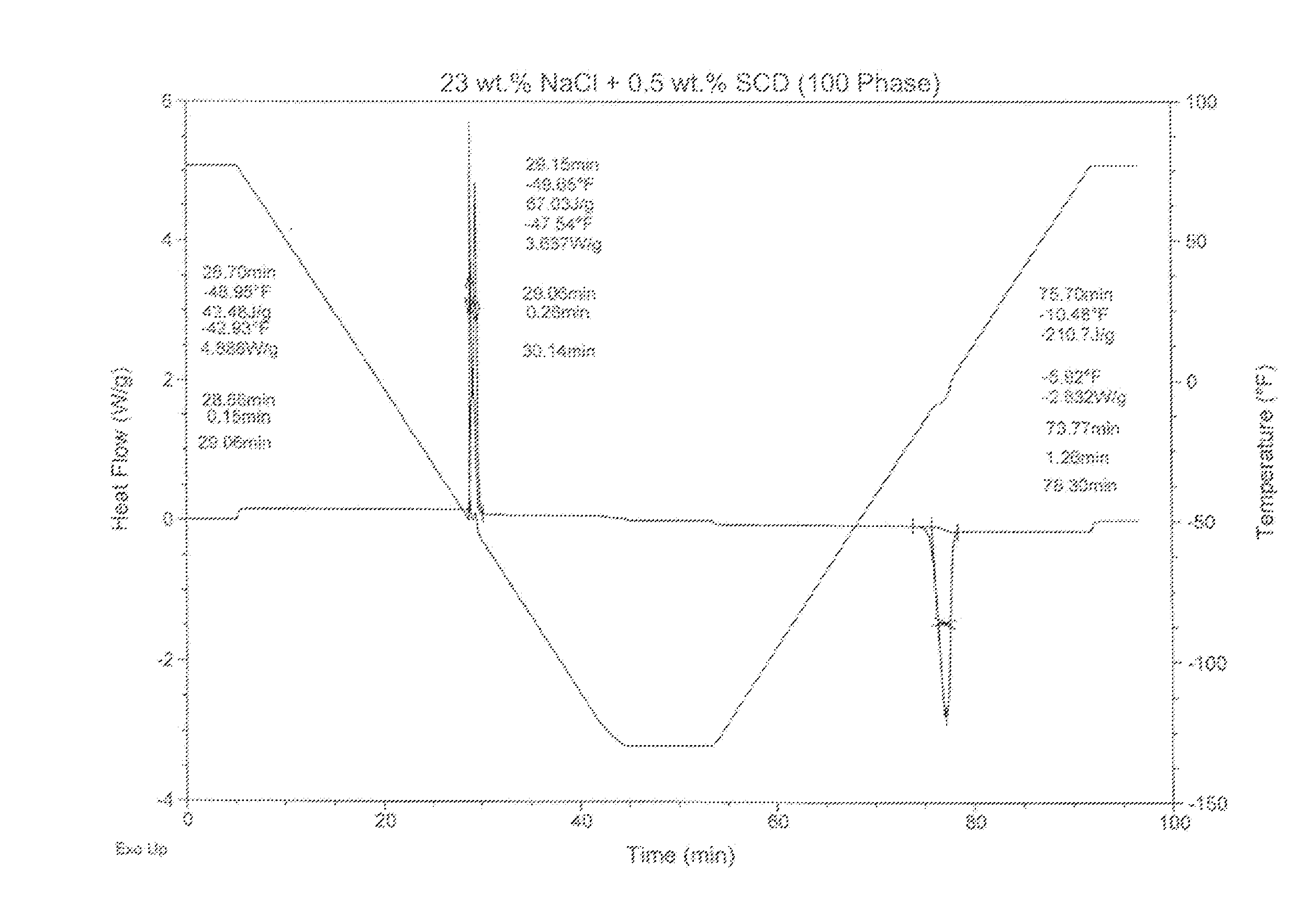
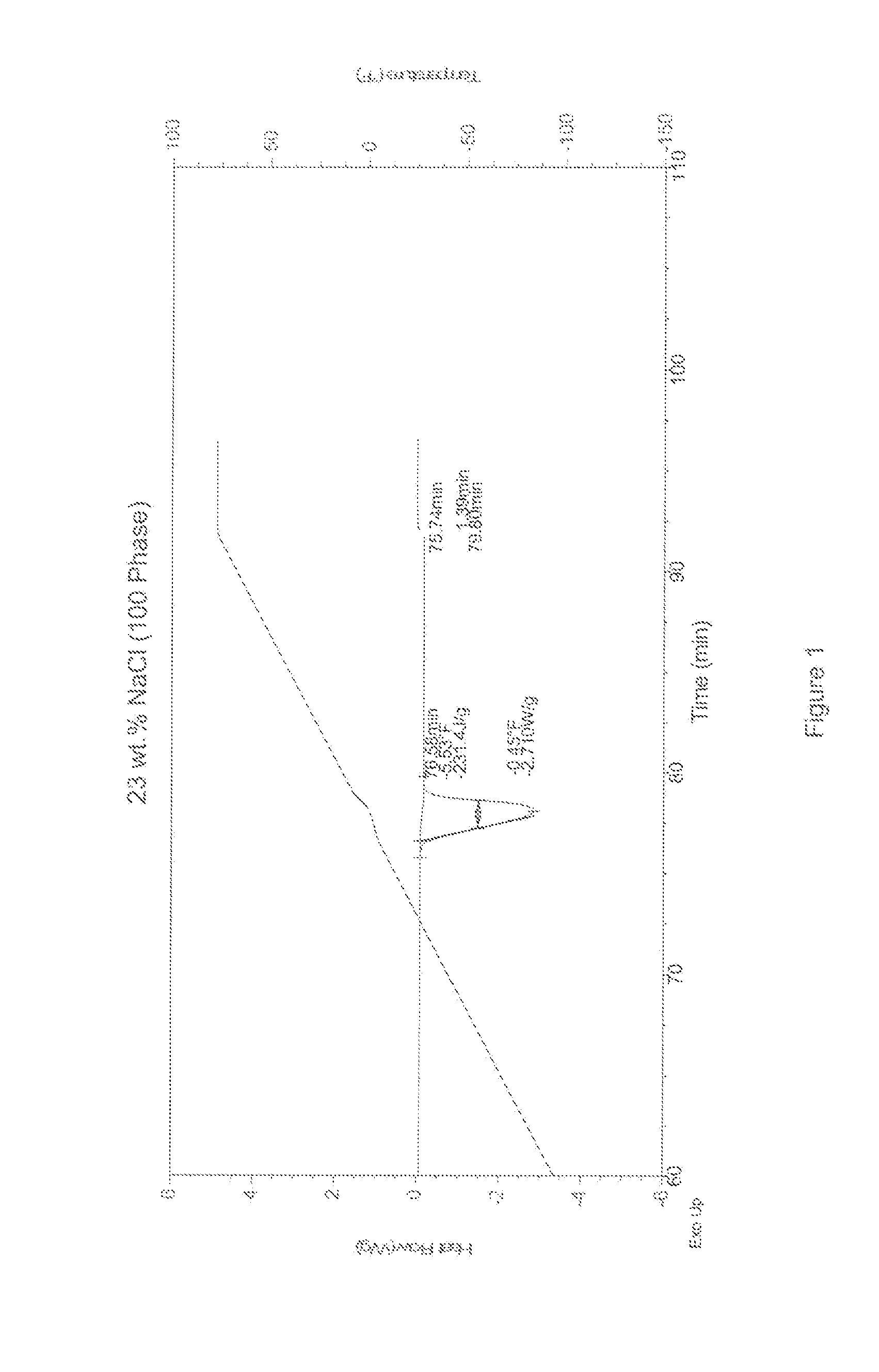
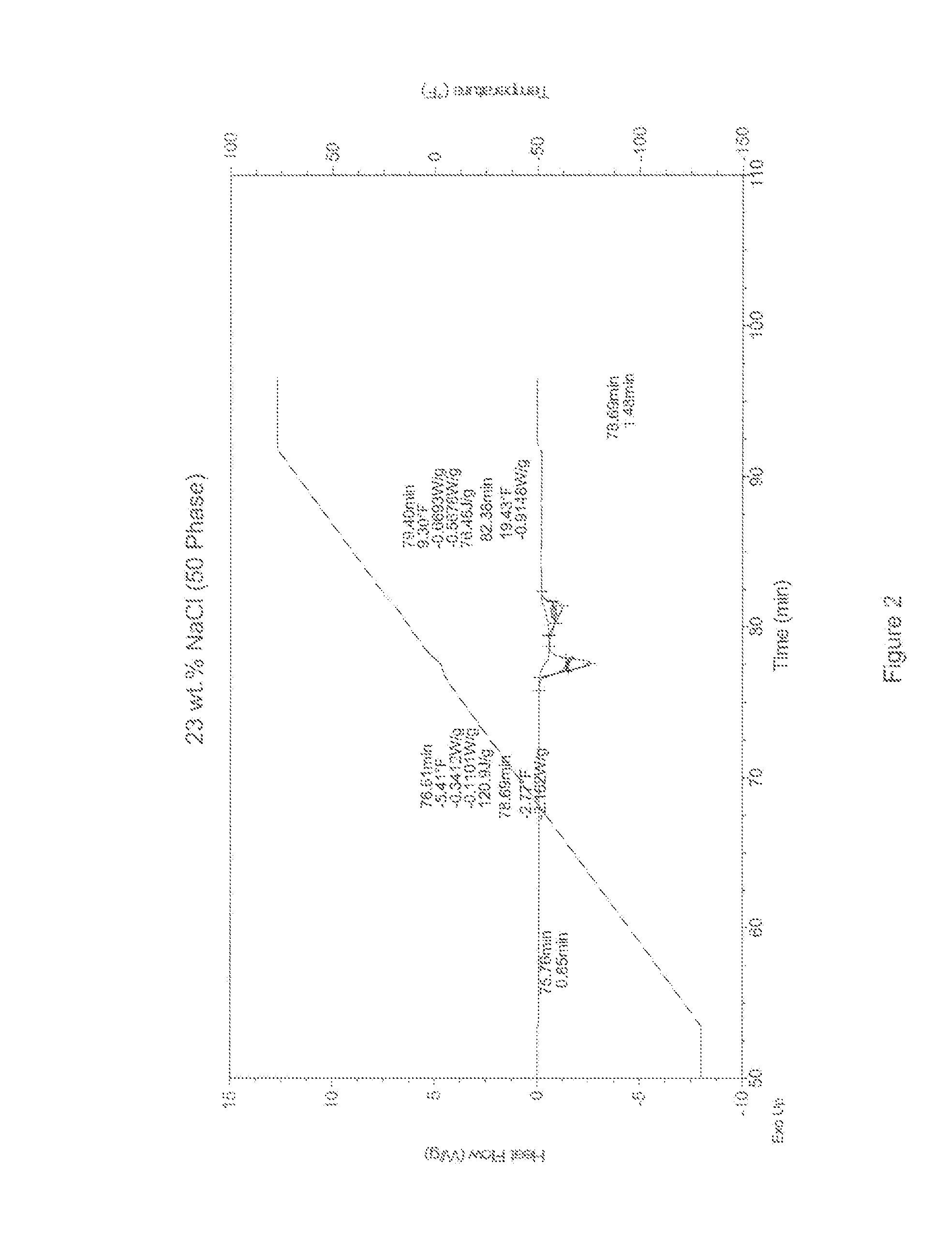
Citrate containing deicing compositions with improved eutectic temperatures
PatentActiveUS20130306904A1
Innovation
- Incorporating citrate compounds into alkali metal and/or alkali earth metal halide salts to lower the eutectic temperature of de-icing compositions, allowing them to effectively melt ice at lower temperatures by forming an aqueous brine solution with citrate and salt concentrations between 1 wt.% to 15 wt.% and 23 wt.% to 28 wt.%, respectively.

Low transition temperature mixtures or deep eutectic solvents and processes for preparation thereof
PatentWO2016073149A1
Innovation
- Development of low transition temperature mixtures (LTTMs) or deep eutectic solvents (DESs) that are liquid, anhydrous eutectic mixtures composed of hydrogen bond acceptors and donors, used as synthetic base stocks or additives in lubricating oils, which improve wear control and reduce friction while maintaining or improving fuel efficiency.


Phase Diagram Prediction and Modeling Tools
Phase diagram prediction and modeling tools have become indispensable instruments for accelerating the optimization of eutectic compositions, particularly in reducing melting time and improving fluidity characteristics. These computational platforms enable researchers to explore vast compositional spaces without extensive experimental trials, significantly reducing development cycles and resource consumption. The integration of thermodynamic databases with advanced calculation engines allows for accurate prediction of phase equilibria, liquidus temperatures, and solidification pathways across multi-component systems.
Contemporary modeling tools leverage CALPHAD methodology as their theoretical foundation, combining experimental data with thermodynamic models to generate reliable phase diagrams. Software packages such as Thermo-Calc, FactSage, Pandat, and MatCalc have established themselves as industry standards, offering comprehensive databases covering metallic, ceramic, and polymeric systems. These platforms provide capabilities for calculating isothermal sections, vertical sections, and liquidus projections, which are essential for identifying eutectic points and understanding phase transformation sequences during melting and solidification processes.
The predictive accuracy of these tools depends heavily on the quality and completeness of thermodynamic databases. Recent developments have focused on incorporating kinetic parameters alongside equilibrium thermodynamics, enabling simulation of non-equilibrium solidification conditions that more closely represent actual processing scenarios. Machine learning algorithms are increasingly being integrated into these platforms to enhance prediction capabilities, particularly for systems with limited experimental data. Neural networks and genetic algorithms can identify optimal compositions by correlating phase diagram features with target properties such as melting temperature and liquid phase viscosity.
Advanced modeling approaches now combine phase diagram calculations with computational fluid dynamics simulations to predict melt flow behavior. This integration allows simultaneous optimization of both thermal and rheological properties, providing comprehensive insights into how compositional modifications affect processing characteristics. Open-source initiatives and cloud-based platforms are democratizing access to these sophisticated tools, enabling broader participation in eutectic alloy development and fostering collaborative research efforts across institutions and industries.
Contemporary modeling tools leverage CALPHAD methodology as their theoretical foundation, combining experimental data with thermodynamic models to generate reliable phase diagrams. Software packages such as Thermo-Calc, FactSage, Pandat, and MatCalc have established themselves as industry standards, offering comprehensive databases covering metallic, ceramic, and polymeric systems. These platforms provide capabilities for calculating isothermal sections, vertical sections, and liquidus projections, which are essential for identifying eutectic points and understanding phase transformation sequences during melting and solidification processes.
The predictive accuracy of these tools depends heavily on the quality and completeness of thermodynamic databases. Recent developments have focused on incorporating kinetic parameters alongside equilibrium thermodynamics, enabling simulation of non-equilibrium solidification conditions that more closely represent actual processing scenarios. Machine learning algorithms are increasingly being integrated into these platforms to enhance prediction capabilities, particularly for systems with limited experimental data. Neural networks and genetic algorithms can identify optimal compositions by correlating phase diagram features with target properties such as melting temperature and liquid phase viscosity.
Advanced modeling approaches now combine phase diagram calculations with computational fluid dynamics simulations to predict melt flow behavior. This integration allows simultaneous optimization of both thermal and rheological properties, providing comprehensive insights into how compositional modifications affect processing characteristics. Open-source initiatives and cloud-based platforms are democratizing access to these sophisticated tools, enabling broader participation in eutectic alloy development and fostering collaborative research efforts across institutions and industries.
Thermal Management Applications and Requirements
Eutectic phase change materials have emerged as critical components in modern thermal management systems, where their unique ability to absorb and release substantial latent heat at constant temperatures makes them particularly valuable. The optimization of eutectic compositions to achieve minimal melting time and enhanced fluidity directly addresses fundamental requirements across diverse thermal management applications, ranging from electronics cooling to energy storage systems.
In electronics thermal management, the continuous miniaturization of devices and increasing power densities have created unprecedented heat dissipation challenges. High-performance computing systems, data centers, and power electronics require thermal solutions capable of rapid heat absorption during peak loads while maintaining component temperatures within operational limits. Eutectic materials with optimized melting characteristics can respond quickly to thermal transients, preventing localized hotspots and ensuring system reliability. The fluidity of molten eutectics becomes particularly crucial in these applications, as it enables efficient heat distribution across irregular geometries and enhances thermal contact with heat-generating surfaces.
Battery thermal management represents another critical application domain where optimized eutectic compositions demonstrate significant value. Lithium-ion batteries in electric vehicles and grid storage systems generate substantial heat during charge-discharge cycles, with temperature uniformity being essential for performance and safety. Eutectics with reduced melting times can rapidly engage during sudden thermal events, while enhanced fluidity ensures uniform temperature distribution across battery modules, preventing thermal runaway scenarios and extending operational lifespan.
Building energy systems increasingly incorporate phase change materials for passive thermal regulation and peak load shifting. Optimized eutectic compositions enable faster thermal response to ambient temperature fluctuations, improving comfort levels while reducing HVAC energy consumption. The enhanced fluidity facilitates integration into building materials and heat exchanger designs, expanding architectural possibilities for sustainable construction.
Aerospace and defense applications impose stringent requirements on thermal management materials, including weight constraints, reliability under extreme conditions, and rapid thermal response capabilities. Optimized eutectics meeting these criteria enable effective thermal control in avionics, satellite systems, and high-power military electronics, where failure is not an option and operational temperature ranges are demanding.
In electronics thermal management, the continuous miniaturization of devices and increasing power densities have created unprecedented heat dissipation challenges. High-performance computing systems, data centers, and power electronics require thermal solutions capable of rapid heat absorption during peak loads while maintaining component temperatures within operational limits. Eutectic materials with optimized melting characteristics can respond quickly to thermal transients, preventing localized hotspots and ensuring system reliability. The fluidity of molten eutectics becomes particularly crucial in these applications, as it enables efficient heat distribution across irregular geometries and enhances thermal contact with heat-generating surfaces.
Battery thermal management represents another critical application domain where optimized eutectic compositions demonstrate significant value. Lithium-ion batteries in electric vehicles and grid storage systems generate substantial heat during charge-discharge cycles, with temperature uniformity being essential for performance and safety. Eutectics with reduced melting times can rapidly engage during sudden thermal events, while enhanced fluidity ensures uniform temperature distribution across battery modules, preventing thermal runaway scenarios and extending operational lifespan.
Building energy systems increasingly incorporate phase change materials for passive thermal regulation and peak load shifting. Optimized eutectic compositions enable faster thermal response to ambient temperature fluctuations, improving comfort levels while reducing HVAC energy consumption. The enhanced fluidity facilitates integration into building materials and heat exchanger designs, expanding architectural possibilities for sustainable construction.
Aerospace and defense applications impose stringent requirements on thermal management materials, including weight constraints, reliability under extreme conditions, and rapid thermal response capabilities. Optimized eutectics meeting these criteria enable effective thermal control in avionics, satellite systems, and high-power military electronics, where failure is not an option and operational temperature ranges are demanding.
Unlock deeper insights with Patsnap Eureka Quick Research — get a full tech report to explore trends and direct your research. Try now!
Generate Your Research Report Instantly with AI Agent
Supercharge your innovation with Patsnap Eureka AI Agent Platform!