

Optimizing Photolithography System Components For Higher Output Verification
FEB 10, 20269 MIN READ
Generate Your Research Report Instantly with AI Agent
PatSnap Eureka helps you evaluate technical feasibility & market potential.
Photolithography System Optimization Background and Objectives
Photolithography stands as the cornerstone technology in semiconductor manufacturing, enabling the precise patterning of integrated circuits at nanometer scales. As the semiconductor industry continues its relentless pursuit of Moore's Law and beyond, the demand for higher throughput, improved resolution, and enhanced process control has intensified dramatically. Modern fabrication facilities require photolithography systems capable of processing hundreds of wafers per hour while maintaining exceptional pattern fidelity and overlay accuracy. However, achieving these performance targets presents significant technical challenges across multiple system components, from illumination optics to wafer stage mechanics.
The evolution of photolithography has progressed through multiple generations, from contact printing to projection lithography, and now to extreme ultraviolet lithography. Each technological leap has demanded fundamental innovations in optical design, light sources, photoresist chemistry, and metrology systems. Current advanced nodes operating at 7nm, 5nm, and below require unprecedented levels of system optimization to meet stringent specifications for critical dimension uniformity, overlay precision within single-digit nanometers, and defect density reduction. The complexity of these requirements has made component-level optimization increasingly critical for overall system performance.
The primary objective of this research focuses on systematically optimizing photolithography system components to achieve higher output verification capabilities. This encompasses enhancing throughput without compromising imaging quality, improving real-time monitoring and verification mechanisms, and reducing system downtime through predictive maintenance strategies. Specific technical goals include optimizing illumination uniformity across the exposure field, minimizing aberrations in projection optics, enhancing wafer stage positioning accuracy and acceleration profiles, and developing advanced metrology integration for in-line process verification. These objectives align with industry demands for cost-effective manufacturing while maintaining the technological edge necessary for next-generation semiconductor devices.
The evolution of photolithography has progressed through multiple generations, from contact printing to projection lithography, and now to extreme ultraviolet lithography. Each technological leap has demanded fundamental innovations in optical design, light sources, photoresist chemistry, and metrology systems. Current advanced nodes operating at 7nm, 5nm, and below require unprecedented levels of system optimization to meet stringent specifications for critical dimension uniformity, overlay precision within single-digit nanometers, and defect density reduction. The complexity of these requirements has made component-level optimization increasingly critical for overall system performance.
The primary objective of this research focuses on systematically optimizing photolithography system components to achieve higher output verification capabilities. This encompasses enhancing throughput without compromising imaging quality, improving real-time monitoring and verification mechanisms, and reducing system downtime through predictive maintenance strategies. Specific technical goals include optimizing illumination uniformity across the exposure field, minimizing aberrations in projection optics, enhancing wafer stage positioning accuracy and acceleration profiles, and developing advanced metrology integration for in-line process verification. These objectives align with industry demands for cost-effective manufacturing while maintaining the technological edge necessary for next-generation semiconductor devices.
Market Demand for High-Throughput Lithography Systems
The semiconductor industry continues to experience unprecedented demand driven by the proliferation of artificial intelligence, high-performance computing, 5G infrastructure, and Internet of Things applications. This surge in demand has created substantial pressure on semiconductor manufacturers to increase production capacity while maintaining stringent quality standards. Photolithography systems, as the most critical and expensive equipment in semiconductor fabrication, have become a primary bottleneck in achieving higher manufacturing throughput. The market is increasingly seeking lithography solutions that can deliver enhanced productivity without compromising pattern fidelity or yield performance.
Advanced node production, particularly for chips below seven nanometers, requires multiple patterning steps that significantly extend cycle times and reduce overall equipment effectiveness. Manufacturers are facing intense pressure to optimize their lithography operations to meet delivery commitments and capitalize on strong market demand. The global shortage of semiconductor devices has further amplified the urgency for throughput improvements across all fabrication stages, with lithography representing a particularly high-value optimization target due to its substantial impact on overall production capacity.
The automotive electronics sector has emerged as a significant demand driver, with electric vehicles requiring substantially more semiconductor content than traditional vehicles. This trend, combined with the ongoing digital transformation across industries, has created sustained demand for both leading-edge and mature-node semiconductor production. Lithography system operators are consequently seeking component-level optimizations that can incrementally increase wafer throughput without requiring complete system replacements, which would involve prohibitive capital expenditure and extended qualification periods.
Market dynamics also reflect growing interest in verification methodologies that can ensure optimized components maintain or improve imaging quality while delivering throughput gains. Fab operators require robust validation frameworks to assess component modifications before production implementation, as any degradation in lithography performance can cascade into significant yield losses. The demand for high-throughput lithography systems is therefore coupled with requirements for comprehensive verification capabilities that can predict and validate performance improvements across diverse process conditions and pattern types.
Advanced node production, particularly for chips below seven nanometers, requires multiple patterning steps that significantly extend cycle times and reduce overall equipment effectiveness. Manufacturers are facing intense pressure to optimize their lithography operations to meet delivery commitments and capitalize on strong market demand. The global shortage of semiconductor devices has further amplified the urgency for throughput improvements across all fabrication stages, with lithography representing a particularly high-value optimization target due to its substantial impact on overall production capacity.
The automotive electronics sector has emerged as a significant demand driver, with electric vehicles requiring substantially more semiconductor content than traditional vehicles. This trend, combined with the ongoing digital transformation across industries, has created sustained demand for both leading-edge and mature-node semiconductor production. Lithography system operators are consequently seeking component-level optimizations that can incrementally increase wafer throughput without requiring complete system replacements, which would involve prohibitive capital expenditure and extended qualification periods.
Market dynamics also reflect growing interest in verification methodologies that can ensure optimized components maintain or improve imaging quality while delivering throughput gains. Fab operators require robust validation frameworks to assess component modifications before production implementation, as any degradation in lithography performance can cascade into significant yield losses. The demand for high-throughput lithography systems is therefore coupled with requirements for comprehensive verification capabilities that can predict and validate performance improvements across diverse process conditions and pattern types.
Current Status and Bottlenecks in Lithography Component Performance
Photolithography systems represent the cornerstone of modern semiconductor manufacturing, yet their component performance faces significant constraints that limit throughput and verification efficiency. Current lithography equipment operates near theoretical limits in several critical subsystems, creating bottlenecks that impede the industry's ability to meet escalating production demands while maintaining stringent quality standards.
The optical projection system remains a primary performance constraint. High-numerical-aperture lenses require extreme precision in manufacturing and alignment, with tolerances measured in nanometers. Aberration control becomes increasingly challenging at advanced nodes, particularly for extreme ultraviolet lithography where mirror surface roughness and multilayer coating uniformity directly impact imaging quality. These optical limitations restrict the achievable resolution and depth of focus, necessitating multiple patterning steps that reduce overall system throughput.
Illumination source stability presents another critical bottleneck. EUV sources currently operate at power levels below optimal requirements, with typical output ranging from 250 to 500 watts compared to the desired 1000-watt threshold. Power fluctuations and plasma debris contamination degrade source lifetime and necessitate frequent maintenance intervals, directly impacting production uptime. Deep ultraviolet sources face similar challenges with laser stability and wavelength consistency affecting exposure uniformity across wafers.
The wafer stage positioning system encounters mechanical and thermal limitations. Achieving sub-nanometer positioning accuracy at high acceleration rates generates vibration and thermal drift that compromise overlay precision. Current stage designs struggle to balance speed requirements with positioning stability, particularly during rapid stepping motions between exposure fields. This trade-off between throughput and accuracy becomes more pronounced as overlay budgets tighten below 2 nanometers for advanced process nodes.
Metrology and verification systems lag behind exposure capabilities. In-line measurement tools cannot match the throughput of modern scanners, creating inspection bottlenecks that delay defect detection and process feedback. Computational limitations in image processing and pattern recognition algorithms further constrain real-time verification capabilities, forcing manufacturers to implement sampling strategies that may miss critical defects.
Thermal management across all subsystems represents a pervasive challenge. Heat dissipation from high-power sources, optical elements, and electronic components creates temperature gradients that affect dimensional stability and optical performance. Existing cooling solutions add complexity and maintenance requirements while struggling to maintain the thermal uniformity necessary for consistent nanometer-scale patterning.
The optical projection system remains a primary performance constraint. High-numerical-aperture lenses require extreme precision in manufacturing and alignment, with tolerances measured in nanometers. Aberration control becomes increasingly challenging at advanced nodes, particularly for extreme ultraviolet lithography where mirror surface roughness and multilayer coating uniformity directly impact imaging quality. These optical limitations restrict the achievable resolution and depth of focus, necessitating multiple patterning steps that reduce overall system throughput.
Illumination source stability presents another critical bottleneck. EUV sources currently operate at power levels below optimal requirements, with typical output ranging from 250 to 500 watts compared to the desired 1000-watt threshold. Power fluctuations and plasma debris contamination degrade source lifetime and necessitate frequent maintenance intervals, directly impacting production uptime. Deep ultraviolet sources face similar challenges with laser stability and wavelength consistency affecting exposure uniformity across wafers.
The wafer stage positioning system encounters mechanical and thermal limitations. Achieving sub-nanometer positioning accuracy at high acceleration rates generates vibration and thermal drift that compromise overlay precision. Current stage designs struggle to balance speed requirements with positioning stability, particularly during rapid stepping motions between exposure fields. This trade-off between throughput and accuracy becomes more pronounced as overlay budgets tighten below 2 nanometers for advanced process nodes.
Metrology and verification systems lag behind exposure capabilities. In-line measurement tools cannot match the throughput of modern scanners, creating inspection bottlenecks that delay defect detection and process feedback. Computational limitations in image processing and pattern recognition algorithms further constrain real-time verification capabilities, forcing manufacturers to implement sampling strategies that may miss critical defects.
Thermal management across all subsystems represents a pervasive challenge. Heat dissipation from high-power sources, optical elements, and electronic components creates temperature gradients that affect dimensional stability and optical performance. Existing cooling solutions add complexity and maintenance requirements while struggling to maintain the thermal uniformity necessary for consistent nanometer-scale patterning.
Existing Component Optimization Solutions
01 Optical component verification and calibration systems
Photolithography systems require precise verification of optical components including lenses, mirrors, and illumination systems. Verification methods involve measuring optical aberrations, alignment accuracy, and light intensity distribution. Calibration procedures ensure that optical elements maintain specified tolerances for wavelength, numerical aperture, and focal plane positioning. Advanced metrology techniques are employed to detect deviations and maintain system performance within acceptable parameters.- Output signal verification and measurement systems: Photolithography systems incorporate dedicated verification mechanisms to measure and validate output signals from various components. These systems employ sensors, detectors, and measurement devices to ensure that the output parameters meet specified tolerances. The verification process includes real-time monitoring of signal integrity, amplitude, timing, and other critical parameters to maintain system performance and reliability.
- Optical component alignment and calibration verification: Verification systems are implemented to confirm proper alignment and calibration of optical components within photolithography equipment. These methods involve checking the positioning, orientation, and optical characteristics of lenses, mirrors, and other optical elements. The verification process ensures that the optical path maintains required specifications and that any deviations are detected and corrected to maintain pattern transfer accuracy.
- Stage positioning and motion control verification: Photolithography systems utilize verification mechanisms to validate the accuracy of stage positioning and motion control systems. These verification methods monitor the precise movement and positioning of wafer stages and reticle stages during exposure processes. The systems employ feedback loops, encoders, and interferometric measurements to ensure that positioning errors remain within acceptable limits and that motion profiles are executed correctly.
- Exposure dose and energy output verification: Verification systems are employed to monitor and validate the exposure dose and energy output from illumination sources in photolithography equipment. These systems measure the intensity, uniformity, and stability of the exposure energy delivered to the substrate. The verification process includes calibration procedures, dose monitoring sensors, and feedback mechanisms to ensure consistent exposure conditions across the entire exposure field and throughout production runs.
- Pattern transfer quality and overlay verification: Verification systems assess the quality of pattern transfer and overlay accuracy in photolithography processes. These methods involve measuring critical dimensions, pattern fidelity, and alignment between successive layers. The verification includes metrology tools, inspection systems, and image processing algorithms that analyze the output patterns to detect defects, dimensional variations, and overlay errors, ensuring that the lithographic output meets manufacturing specifications.
02 Reticle and mask inspection verification
Output verification includes comprehensive inspection of reticles and photomasks used in the lithography process. Inspection systems detect defects, pattern errors, and contamination on mask surfaces. Verification processes employ optical and electron beam inspection methods to ensure pattern fidelity and dimensional accuracy. Automated defect classification and review systems validate that masks meet specifications before production use.Expand Specific Solutions03 Wafer stage positioning and motion control verification
Verification of wafer stage components ensures precise positioning and movement control during exposure. Systems monitor stage acceleration, velocity, and positional accuracy using interferometric measurement techniques. Verification procedures validate synchronization between stage motion and exposure timing. Error correction algorithms compensate for mechanical vibrations and thermal drift to maintain nanometer-level positioning accuracy.Expand Specific Solutions04 Exposure dose and focus verification systems
Critical verification of exposure parameters includes monitoring and validating dose uniformity and focus accuracy across the exposure field. Sensors and measurement systems track energy delivery to ensure consistent exposure across wafer surfaces. Focus verification employs aerial image measurement and through-focus analysis to optimize depth of focus. Real-time monitoring systems detect and correct variations in exposure conditions to maintain process stability.Expand Specific Solutions05 Environmental control and contamination monitoring
Output verification encompasses monitoring of environmental conditions including temperature, humidity, and air quality within the lithography system. Contamination detection systems identify particulate matter and chemical contaminants that could affect pattern transfer quality. Verification protocols ensure that environmental parameters remain within specified ranges throughout operation. Continuous monitoring systems provide feedback for maintaining cleanroom conditions and preventing defects caused by environmental factors.Expand Specific Solutions
Major Players in Lithography Equipment Industry
The photolithography system optimization field represents a mature yet rapidly evolving sector within the semiconductor manufacturing industry, characterized by intense technological competition and substantial market growth driven by advanced chip demand. The competitive landscape is dominated by established equipment manufacturers like ASML Holding NV and ASML Netherlands BV, who lead in extreme ultraviolet lithography technology, alongside Nikon Corp. and Carl Zeiss SMT GmbH in optical systems. Major semiconductor manufacturers including TSMC, Intel, GLOBALFOUNDRIES, and SMIC drive innovation through their fabrication requirements. Technology maturity varies significantly: while companies like Applied Materials, Synopsys, and IBM demonstrate advanced computational lithography and process optimization capabilities, emerging players such as Shanghai Microelectronics Equipment and Beijing Guowang Optical Technology are developing competitive solutions. The ecosystem encompasses both hardware innovators and software developers, with research institutions like Beijing Institute of Technology and Peng Cheng Laboratory contributing to next-generation breakthroughs in nanoscale patterning and verification methodologies.
ASML Netherlands BV
Technical Solution: ASML has developed advanced photolithography system optimization through its High-NA EUV technology platform, achieving 0.33 NA capability for sub-3nm node manufacturing. The company implements sophisticated computational lithography solutions integrating source mask optimization (SMO) and optical proximity correction (OPC) to maximize wafer throughput. Their Twinscan NXE series incorporates real-time metrology feedback systems with advanced thermal control mechanisms to maintain overlay accuracy within 1.5nm across high-volume production. The system architecture features optimized illumination optics, enhanced reticle handling mechanisms, and predictive maintenance algorithms that collectively improve overall equipment effectiveness (OEE) to over 90%, enabling throughput rates exceeding 160 wafers per hour for critical layers while maintaining stringent CD uniformity requirements below 2nm.
Strengths: Industry-leading EUV technology with highest throughput and overlay accuracy; comprehensive ecosystem integration. Weaknesses: Extremely high capital costs exceeding $200M per system; complex maintenance requirements and limited supplier alternatives.
Taiwan Semiconductor Manufacturing Co., Ltd.
Technical Solution: TSMC has developed comprehensive photolithography optimization methodologies focusing on process-equipment co-optimization for advanced nodes. Their approach integrates machine learning algorithms for dose control optimization, achieving 3% improvement in critical dimension uniformity. The company implements advanced reticle enhancement techniques combined with customized illumination pupil designs to extend ArF immersion lithography capabilities to 7nm nodes. TSMC's proprietary metrology infrastructure enables real-time feedback control systems that dynamically adjust exposure parameters based on wafer-level variation patterns. Their holistic optimization framework encompasses lens aberration compensation, stage synchronization improvements, and thermal management systems that collectively enhance manufacturing yield by 8-12% while maintaining throughput targets above 200 wafers per day for volume production lines.
Strengths: Deep process integration expertise with proven high-volume manufacturing optimization; strong collaboration with equipment suppliers for customized solutions. Weaknesses: Optimization strategies heavily dependent on ASML equipment ecosystem; limited applicability to alternative lithography platforms.
Core Technologies in Throughput Enhancement
Method for evaluating lithography system and method for adjusting substrate-processing apparatus
PatentInactiveUS6737207B2
Innovation
- A method involving the use of evaluating patterns to form and measure development patterns on substrates, allowing for the independent evaluation of application, exposure, and development factors, utilizing existing equipment within the lithography system to assess characteristics like line width, thickness, and position, thereby simplifying the evaluation process and reducing costs.


Fast Freeform Source and Mask Co-Optimization Method
PatentActiveUS20110230999A1
Innovation
- A method that enables direct computation of the gradient of a cost function for simultaneous optimization of both source and mask, allowing for free-form optimization without constraints, and incorporates sub-resolution assist feature (SRAF) placement to improve manufacturability, thereby speeding up the convergence and improving the process window.
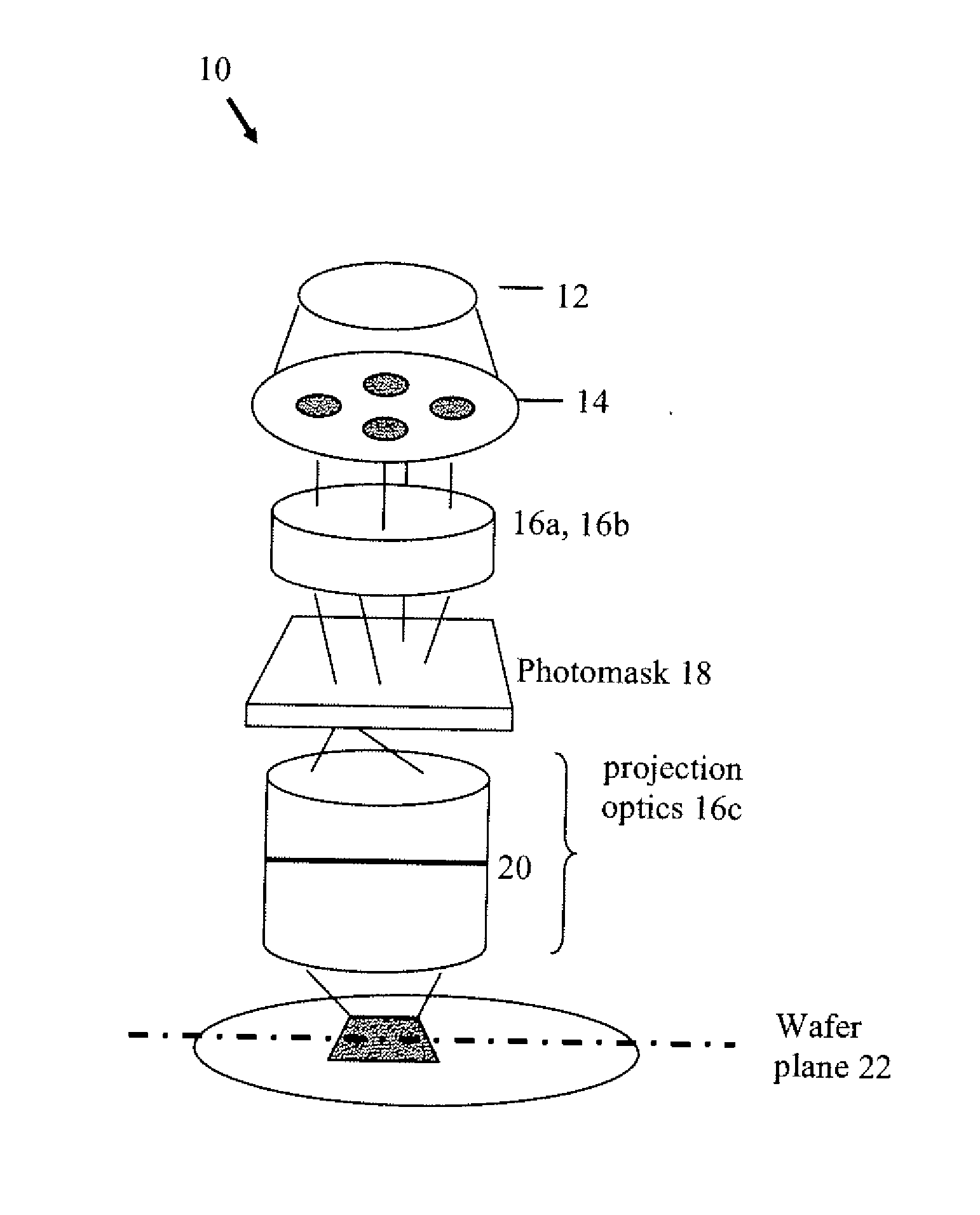
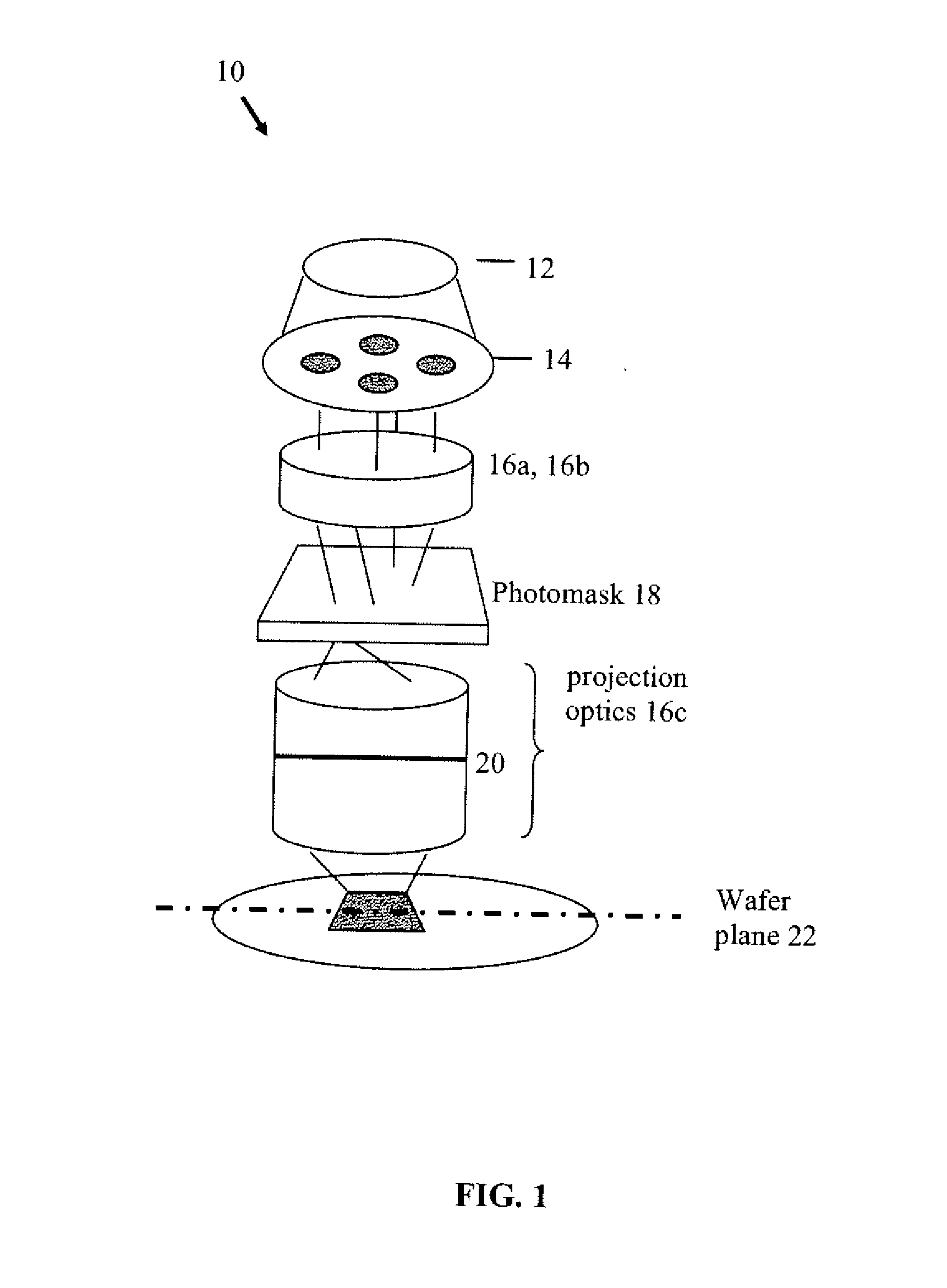
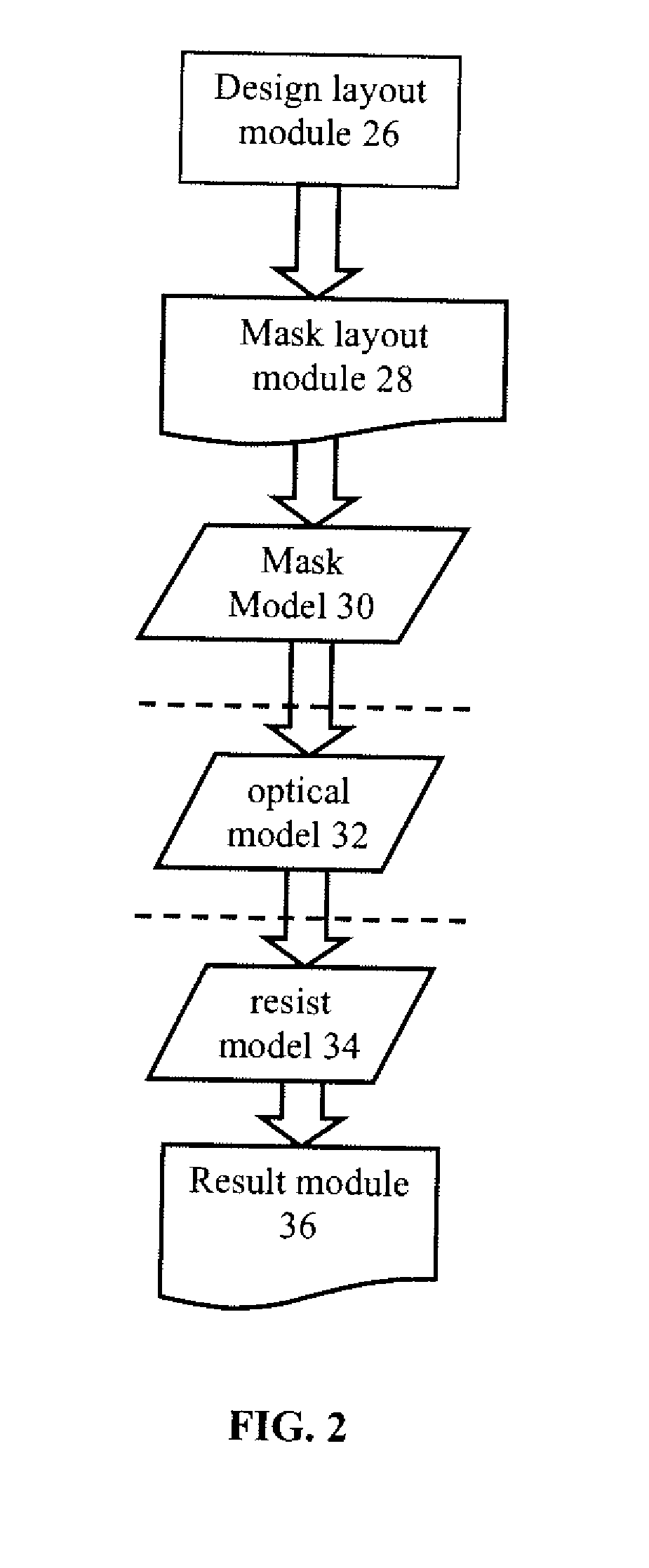

Yield and Quality Verification Methodologies
Yield and quality verification methodologies in photolithography systems represent critical frameworks for ensuring manufacturing excellence and process reliability. These methodologies encompass systematic approaches to validate that optimized system components consistently deliver the intended performance improvements while maintaining stringent quality standards. The verification process must address both immediate output metrics and long-term production stability, requiring comprehensive measurement protocols that span from wafer-level inspection to statistical process control.
Modern verification frameworks integrate multiple measurement techniques to capture diverse quality indicators. Optical metrology systems provide real-time monitoring of critical dimensions, overlay accuracy, and pattern fidelity across exposure fields. These measurements are complemented by defect inspection systems that employ advanced imaging algorithms to detect anomalies at nanometer scales. The combination of inline and offline measurement stations enables rapid feedback loops, allowing immediate correlation between component adjustments and output quality variations.
Statistical methodologies form the backbone of robust verification strategies. Design of Experiments approaches systematically evaluate how component optimizations influence yield parameters under varying process conditions. Process capability indices quantify the stability and predictability of enhanced systems, while control charts track performance drift over extended production runs. Advanced analytics incorporating machine learning algorithms can identify subtle patterns linking component configurations to yield losses, enabling predictive maintenance and proactive optimization.
Qualification protocols establish rigorous acceptance criteria for optimized components before full production deployment. These protocols typically involve multi-phase testing sequences, beginning with component-level characterization, progressing through subsystem integration validation, and culminating in full-system performance verification using production-representative test wafers. Accelerated stress testing evaluates component reliability under extreme operating conditions, ensuring that optimizations do not compromise long-term durability.
Cross-functional verification approaches integrate data from manufacturing execution systems, equipment sensors, and quality databases to provide holistic performance assessments. This systems-level perspective reveals interdependencies between component optimizations and broader process variables, supporting informed decision-making regarding implementation strategies and continuous improvement initiatives.
Modern verification frameworks integrate multiple measurement techniques to capture diverse quality indicators. Optical metrology systems provide real-time monitoring of critical dimensions, overlay accuracy, and pattern fidelity across exposure fields. These measurements are complemented by defect inspection systems that employ advanced imaging algorithms to detect anomalies at nanometer scales. The combination of inline and offline measurement stations enables rapid feedback loops, allowing immediate correlation between component adjustments and output quality variations.
Statistical methodologies form the backbone of robust verification strategies. Design of Experiments approaches systematically evaluate how component optimizations influence yield parameters under varying process conditions. Process capability indices quantify the stability and predictability of enhanced systems, while control charts track performance drift over extended production runs. Advanced analytics incorporating machine learning algorithms can identify subtle patterns linking component configurations to yield losses, enabling predictive maintenance and proactive optimization.
Qualification protocols establish rigorous acceptance criteria for optimized components before full production deployment. These protocols typically involve multi-phase testing sequences, beginning with component-level characterization, progressing through subsystem integration validation, and culminating in full-system performance verification using production-representative test wafers. Accelerated stress testing evaluates component reliability under extreme operating conditions, ensuring that optimizations do not compromise long-term durability.
Cross-functional verification approaches integrate data from manufacturing execution systems, equipment sensors, and quality databases to provide holistic performance assessments. This systems-level perspective reveals interdependencies between component optimizations and broader process variables, supporting informed decision-making regarding implementation strategies and continuous improvement initiatives.
Cost-Performance Trade-offs in System Design
In photolithography system optimization, balancing cost against performance represents a fundamental challenge that directly impacts manufacturing economics and technological competitiveness. The pursuit of higher output verification capabilities necessitates careful evaluation of component-level investments, where incremental performance gains must be weighed against exponentially increasing costs. Advanced optical systems, precision stages, and metrology equipment constitute the primary cost drivers, yet their contribution to overall system performance varies significantly depending on application requirements and process nodes.
Component selection strategies must consider both immediate capital expenditure and long-term operational costs. High-end laser sources and advanced lens systems can enhance resolution and throughput, but their acquisition costs may exceed budget constraints for certain manufacturing scenarios. Alternative approaches, such as optimizing existing components through software algorithms or implementing hybrid solutions combining moderate-cost hardware with sophisticated computational methods, often provide more favorable cost-performance ratios. The depreciation timeline of photolithography equipment, typically spanning five to seven years, further complicates investment decisions, as technological obsolescence risks must be factored into total cost of ownership calculations.
System architecture decisions profoundly influence cost-performance dynamics. Modular designs enable selective upgrades of critical components without complete system replacement, distributing capital investments over extended periods while maintaining competitive performance levels. However, modular approaches may introduce integration complexities and potential performance bottlenecks that compromise output verification accuracy. Conversely, integrated monolithic systems offer optimized performance but require substantial upfront investment and limit future upgrade flexibility.
Manufacturing volume projections critically determine optimal cost-performance positioning. High-volume production environments justify premium component investments through improved throughput and yield, whereas low-to-medium volume applications benefit from cost-optimized configurations that prioritize flexibility over maximum performance. Sensitivity analysis of key performance metrics against component costs reveals inflection points where additional investment yields diminishing returns, guiding rational resource allocation decisions that align technical capabilities with business objectives and market positioning strategies.
Component selection strategies must consider both immediate capital expenditure and long-term operational costs. High-end laser sources and advanced lens systems can enhance resolution and throughput, but their acquisition costs may exceed budget constraints for certain manufacturing scenarios. Alternative approaches, such as optimizing existing components through software algorithms or implementing hybrid solutions combining moderate-cost hardware with sophisticated computational methods, often provide more favorable cost-performance ratios. The depreciation timeline of photolithography equipment, typically spanning five to seven years, further complicates investment decisions, as technological obsolescence risks must be factored into total cost of ownership calculations.
System architecture decisions profoundly influence cost-performance dynamics. Modular designs enable selective upgrades of critical components without complete system replacement, distributing capital investments over extended periods while maintaining competitive performance levels. However, modular approaches may introduce integration complexities and potential performance bottlenecks that compromise output verification accuracy. Conversely, integrated monolithic systems offer optimized performance but require substantial upfront investment and limit future upgrade flexibility.
Manufacturing volume projections critically determine optimal cost-performance positioning. High-volume production environments justify premium component investments through improved throughput and yield, whereas low-to-medium volume applications benefit from cost-optimized configurations that prioritize flexibility over maximum performance. Sensitivity analysis of key performance metrics against component costs reveals inflection points where additional investment yields diminishing returns, guiding rational resource allocation decisions that align technical capabilities with business objectives and market positioning strategies.
Unlock deeper insights with PatSnap Eureka Quick Research — get a full tech report to explore trends and direct your research. Try now!
Generate Your Research Report Instantly with AI Agent
Supercharge your innovation with PatSnap Eureka AI Agent Platform!