
Optimize Pump Chamber Geometry for Lower Slip
OCT 9, 20268 MIN READ
Generate Your Research Report Instantly with AI Agent
Patsnap Eureka helps you evaluate technical feasibility & market potential.
Pump Slip Reduction Background and Objectives
Pump slip represents a critical efficiency challenge in positive displacement pump systems, where fluid leakage occurs between the pump chamber and discharge side due to pressure differentials. This phenomenon directly impacts volumetric efficiency, energy consumption, and overall system performance. As industrial applications demand higher precision and energy efficiency, reducing pump slip through optimized chamber geometry has emerged as a pivotal research focus. The issue becomes particularly pronounced in high-pressure applications, viscous fluid handling, and precision metering systems where even minor slip rates can result in significant operational losses.
The evolution of pump technology has witnessed continuous refinement in chamber design, transitioning from basic geometric configurations to sophisticated computational fluid dynamics-driven optimization. Early pump designs relied primarily on empirical methods and trial-and-error approaches, resulting in suboptimal clearance management and inadequate sealing mechanisms. Modern manufacturing capabilities, including precision machining and advanced materials, now enable the implementation of complex geometries that were previously impractical. This technological progression has opened new avenues for addressing slip reduction through innovative chamber configurations.
The primary objective of this research initiative centers on systematically investigating the relationship between pump chamber geometry and slip characteristics. Specific goals include identifying critical geometric parameters that influence slip rates, establishing quantitative correlations between chamber design features and volumetric efficiency, and developing optimization methodologies applicable across various pump types. The research aims to achieve measurable slip reduction of fifteen to thirty percent compared to conventional designs while maintaining manufacturing feasibility and cost-effectiveness.
Furthermore, this investigation seeks to establish design guidelines that balance multiple performance criteria including slip minimization, structural integrity, wear resistance, and ease of maintenance. The ultimate goal extends beyond theoretical optimization to deliver practical design solutions that can be readily implemented in industrial pump manufacturing, thereby contributing to enhanced energy efficiency and operational reliability across diverse application sectors.
The evolution of pump technology has witnessed continuous refinement in chamber design, transitioning from basic geometric configurations to sophisticated computational fluid dynamics-driven optimization. Early pump designs relied primarily on empirical methods and trial-and-error approaches, resulting in suboptimal clearance management and inadequate sealing mechanisms. Modern manufacturing capabilities, including precision machining and advanced materials, now enable the implementation of complex geometries that were previously impractical. This technological progression has opened new avenues for addressing slip reduction through innovative chamber configurations.
The primary objective of this research initiative centers on systematically investigating the relationship between pump chamber geometry and slip characteristics. Specific goals include identifying critical geometric parameters that influence slip rates, establishing quantitative correlations between chamber design features and volumetric efficiency, and developing optimization methodologies applicable across various pump types. The research aims to achieve measurable slip reduction of fifteen to thirty percent compared to conventional designs while maintaining manufacturing feasibility and cost-effectiveness.
Furthermore, this investigation seeks to establish design guidelines that balance multiple performance criteria including slip minimization, structural integrity, wear resistance, and ease of maintenance. The ultimate goal extends beyond theoretical optimization to deliver practical design solutions that can be readily implemented in industrial pump manufacturing, thereby contributing to enhanced energy efficiency and operational reliability across diverse application sectors.
Market Demand for High-Efficiency Pumps
The global pump industry is experiencing a significant transformation driven by escalating energy costs, stringent environmental regulations, and growing awareness of operational efficiency. High-efficiency pumps have emerged as critical components across multiple sectors, with demand intensifying as industries seek to reduce energy consumption and operational expenses. The push toward sustainability and carbon neutrality has positioned pump efficiency optimization as a strategic priority for manufacturers and end-users alike.
Industrial applications represent the largest demand segment for high-efficiency pumps, particularly in chemical processing, oil and gas, water treatment, and power generation facilities. These sectors face mounting pressure to minimize energy waste, as pumping systems typically account for substantial portions of total facility energy consumption. The water and wastewater treatment industry demonstrates particularly strong demand, driven by aging infrastructure replacement needs and expanding municipal water systems in developing regions.
The HVAC sector constitutes another major demand driver, where building energy efficiency standards continue to tighten globally. Commercial and residential building operators increasingly prioritize pump systems with reduced slip characteristics and improved volumetric efficiency to meet green building certifications and lower operational costs. This trend aligns with broader smart building initiatives that emphasize integrated energy management.
Agricultural irrigation markets show growing interest in high-efficiency pump solutions, especially in water-scarce regions where maximizing water delivery efficiency directly impacts crop yields and resource sustainability. Precision agriculture practices further amplify demand for pumps capable of maintaining consistent flow rates with minimal internal losses.
Emerging markets in Asia-Pacific and Middle East regions exhibit accelerating adoption rates, fueled by rapid industrialization and infrastructure development. These regions face dual pressures of meeting growing production demands while adhering to increasingly stringent energy efficiency mandates. Developed markets in North America and Europe continue to drive innovation through retrofit and replacement cycles, where upgrading to optimized pump chamber geometries offers measurable return on investment through reduced energy bills and extended equipment lifespan.
The market trajectory indicates sustained growth for pump technologies that demonstrably reduce slip losses, improve volumetric efficiency, and deliver reliable performance across variable operating conditions.
Industrial applications represent the largest demand segment for high-efficiency pumps, particularly in chemical processing, oil and gas, water treatment, and power generation facilities. These sectors face mounting pressure to minimize energy waste, as pumping systems typically account for substantial portions of total facility energy consumption. The water and wastewater treatment industry demonstrates particularly strong demand, driven by aging infrastructure replacement needs and expanding municipal water systems in developing regions.
The HVAC sector constitutes another major demand driver, where building energy efficiency standards continue to tighten globally. Commercial and residential building operators increasingly prioritize pump systems with reduced slip characteristics and improved volumetric efficiency to meet green building certifications and lower operational costs. This trend aligns with broader smart building initiatives that emphasize integrated energy management.
Agricultural irrigation markets show growing interest in high-efficiency pump solutions, especially in water-scarce regions where maximizing water delivery efficiency directly impacts crop yields and resource sustainability. Precision agriculture practices further amplify demand for pumps capable of maintaining consistent flow rates with minimal internal losses.
Emerging markets in Asia-Pacific and Middle East regions exhibit accelerating adoption rates, fueled by rapid industrialization and infrastructure development. These regions face dual pressures of meeting growing production demands while adhering to increasingly stringent energy efficiency mandates. Developed markets in North America and Europe continue to drive innovation through retrofit and replacement cycles, where upgrading to optimized pump chamber geometries offers measurable return on investment through reduced energy bills and extended equipment lifespan.
The market trajectory indicates sustained growth for pump technologies that demonstrably reduce slip losses, improve volumetric efficiency, and deliver reliable performance across variable operating conditions.
Current Pump Chamber Design Challenges
Pump chamber geometry plays a critical role in determining volumetric efficiency and overall pump performance, yet current designs face multiple interconnected challenges that limit their effectiveness in minimizing slip losses. Traditional pump chambers often rely on standardized geometric configurations that fail to account for the complex fluid dynamics occurring during operation, particularly under varying pressure differentials and rotational speeds. These conventional designs typically exhibit inadequate sealing between moving components and chamber walls, resulting in significant internal leakage that reduces volumetric efficiency and increases energy consumption.
One of the primary challenges stems from the clearance gaps between rotating elements and the chamber housing. While these gaps are necessary to prevent mechanical contact and wear, they create pathways for fluid backflow from high-pressure discharge regions to low-pressure suction zones. The magnitude of slip through these clearances is highly sensitive to geometric tolerances, surface finish quality, and thermal expansion effects during operation. Manufacturing limitations often prevent achieving optimal clearance dimensions consistently, leading to performance variability across production batches.
The interaction between chamber geometry and fluid viscosity presents another significant obstacle. Many existing designs perform adequately with fluids of specific viscosity ranges but experience dramatic efficiency drops when handling low-viscosity fluids, where slip becomes more pronounced. The chamber profiles and internal flow passages are frequently optimized for nominal operating conditions, lacking the geometric adaptability needed to maintain performance across diverse fluid properties and operating scenarios.
Pressure distribution within the pump chamber represents a further complication. Non-uniform pressure fields can develop due to suboptimal chamber shaping, creating localized high-pressure zones that exacerbate slip through clearance gaps. Current designs often lack sophisticated geometric features that could promote more favorable pressure distributions, such as strategically positioned relief grooves or optimized inlet and outlet port configurations that minimize pressure pulsations and flow separation.
The challenge is compounded by the trade-offs inherent in chamber design. Reducing clearances to minimize slip increases friction losses and wear rates, while enlarging chambers to accommodate better sealing features adds weight and manufacturing complexity. Balancing these competing requirements within existing geometric frameworks remains difficult, particularly when considering cost constraints and production scalability. Advanced computational tools for geometry optimization are underutilized in many current design processes, leaving significant performance potential unrealized.
One of the primary challenges stems from the clearance gaps between rotating elements and the chamber housing. While these gaps are necessary to prevent mechanical contact and wear, they create pathways for fluid backflow from high-pressure discharge regions to low-pressure suction zones. The magnitude of slip through these clearances is highly sensitive to geometric tolerances, surface finish quality, and thermal expansion effects during operation. Manufacturing limitations often prevent achieving optimal clearance dimensions consistently, leading to performance variability across production batches.
The interaction between chamber geometry and fluid viscosity presents another significant obstacle. Many existing designs perform adequately with fluids of specific viscosity ranges but experience dramatic efficiency drops when handling low-viscosity fluids, where slip becomes more pronounced. The chamber profiles and internal flow passages are frequently optimized for nominal operating conditions, lacking the geometric adaptability needed to maintain performance across diverse fluid properties and operating scenarios.
Pressure distribution within the pump chamber represents a further complication. Non-uniform pressure fields can develop due to suboptimal chamber shaping, creating localized high-pressure zones that exacerbate slip through clearance gaps. Current designs often lack sophisticated geometric features that could promote more favorable pressure distributions, such as strategically positioned relief grooves or optimized inlet and outlet port configurations that minimize pressure pulsations and flow separation.
The challenge is compounded by the trade-offs inherent in chamber design. Reducing clearances to minimize slip increases friction losses and wear rates, while enlarging chambers to accommodate better sealing features adds weight and manufacturing complexity. Balancing these competing requirements within existing geometric frameworks remains difficult, particularly when considering cost constraints and production scalability. Advanced computational tools for geometry optimization are underutilized in many current design processes, leaving significant performance potential unrealized.
Existing Pump Chamber Geometries
01 Pump chamber structural design and surface modifications
Modifications to the internal surface and overall geometry of a pump chamber can optimize fluid dynamics, enhance structural integrity, and protect internal components against blockage or operational stresses.- Pump chamber structural design and surface modifications: Modifications to the surface, geometry, or walls of a pump chamber can be utilized to improve performance, prevent damage, or manage volumetric movement. Specific designs include surface modifications within the chamber, collapsible structures to absorb impact or facilitate dunnage, and arrangements to avoid damage from blockages.
- Variable geometry pumps and bearing face configurations: Adjusting the internal geometry of a centrifugal pump chamber or fluidization zone helps control fluid behavior and optimize pumping efficiency under varying operating conditions. Additionally, specialized bearing face geometries in gear pumps help manage internal fluid slip and pressure dynamics.
- Pump slip sensing, algorithms, and load control systems: Systems and control algorithms are implemented to detect, monitor, and compensate for fluid or mechanical slip within pumping systems. These methods manage engine loads, match pump fluid flow to driven motors, and apply anti-slip algorithms in hydraulic systems to maintain operational consistency.
- Vehicle traction control and slip control hydraulic pumps: Hydraulic pumps specifically designed for vehicle slip control and anti-lock braking systems focus on reducing pressure pulsations and flow resistance. These specialized pumps utilize modified check valve structures and storage chambers to deliver rapid and stable pressure changes during slip control events.
- Specialized multi-chamber and intravenous pump assemblies: Intravenous and specialized fluid-dispensing pumps utilize distinct single or multi-chamber assemblies to control fluid delivery and prevent improper flow. These configurations ensure precise fluid movement, air venting from the chamber, and safe operation during medical or low-volume fluid administration.
02 Pumps for vehicle slip control and braking systems
Specialized pump assemblies and control devices are integrated into vehicle slip control and hydraulic braking systems to decrease pulsation pressure and improve valve resistance during slip control operations.Expand Specific Solutions03 Variable geometry and adjustable pump chambers
Utilizing variable geometry configurations or collapsible chamber structures allows pumps to adjust fluid displacement volumes dynamically and protect against operational pressure variations.Expand Specific Solutions04 Pump slip sensing, algorithms, and drive load management
Systems and control algorithms monitor pump slip events to match fluid flow requirements, manage engine loads, and prevent slipping in hydraulic drive mechanisms.Expand Specific Solutions05 Intravenous and fluid dispensing pump chambers
Medical intravenous pump chambers and dispensing assemblies are designed with specific chamber geometries to handle sensitive fluid delivery, air venting, and volume metering.Expand Specific Solutions
Leading Pump Manufacturers and Research Institutions
The pump chamber geometry optimization field is experiencing mature development with significant market potential driven by efficiency demands across automotive, industrial, and aerospace sectors. The competitive landscape features established multinational corporations like Dow Global Technologies LLC, Robert Bosch GmbH, and Rolls-Royce Plc leading advanced research, while specialized manufacturers such as Maag Pump Systems AG and Eagle Industry Co. Ltd. focus on niche applications. Chinese entities including China Railway Engineering Equipment Group and academic institutions like Henan University of Science & Technology demonstrate growing regional capabilities. Technology maturity varies considerably, with companies like Aisin AW Co. Ltd. and Renault SA advancing automotive pump applications, while emerging players like Jiangsu Leili Motor Corp. Ltd. target cost-effective solutions. The market shows consolidation trends alongside innovation in materials and computational fluid dynamics optimization.
Maag Pump Systems AG
Technical Solution: Maag Pump Systems has developed advanced gear pump chamber geometries specifically designed to minimize slip losses in polymer processing applications. Their technology focuses on optimizing the clearance gaps between gear teeth and chamber walls through precision manufacturing tolerances down to micrometers. The company employs computational fluid dynamics (CFD) simulation to analyze flow patterns and pressure distributions within the pump chamber, enabling systematic reduction of backflow channels. Their patented chamber designs incorporate modified tooth profiles and optimized radial clearances that reduce volumetric slip by up to 15-20% compared to conventional geometries. The technology also integrates thermal expansion compensation features to maintain optimal clearances across varying operating temperatures, which is critical for maintaining low slip rates in high-temperature polymer melt applications. Maag's approach combines advanced materials with precision machining to achieve surface finishes that further minimize leakage paths.
Strengths: Industry-leading expertise in polymer pump technology with proven slip reduction performance; precision manufacturing capabilities enabling tight tolerances. Weaknesses: Solutions primarily optimized for high-viscosity polymer applications; high manufacturing costs due to precision requirements.
Eagle Industry Co. Ltd.
Technical Solution: Eagle Industry specializes in mechanical seal and pump component technologies with specific focus on minimizing internal leakage and slip through advanced sealing geometries. Their pump chamber optimization approach centers on the interface between rotating and stationary components, utilizing precision-engineered seal faces and optimized clearance control mechanisms. The company has developed proprietary groove patterns and surface micro-geometries on pump chamber walls that generate hydrodynamic pressure barriers, effectively reducing slip flow paths. Eagle's technology employs advanced materials including carbon composites and ceramics that maintain dimensional stability under varying pressure and temperature conditions, ensuring consistent low-slip performance. Their designs incorporate self-adjusting clearance mechanisms that automatically compensate for thermal expansion and wear, maintaining optimal gap dimensions throughout the pump's service life. The technology has demonstrated slip reduction of 10-18% in rotary pump applications.
Strengths: Deep expertise in sealing technologies and precision surface engineering; proven performance in high-pressure applications. Weaknesses: Solutions may require specialized materials with higher costs; primary focus on sealing components rather than complete chamber redesign.
Core Patents in Slip Reduction Technology
Sliding vane positive displacement pump having a fixed disc configuration to reduce slip paths
PatentActiveUS9476422B2
Innovation
- A bolted or fixed disc configuration where discs are affixed to the rotor, eliminating axial end clearances and utilizing radial clearances between the disc outer diameters and the pump casing to create a dynamic seal, thereby preventing slip and improving machining tolerances and durability.
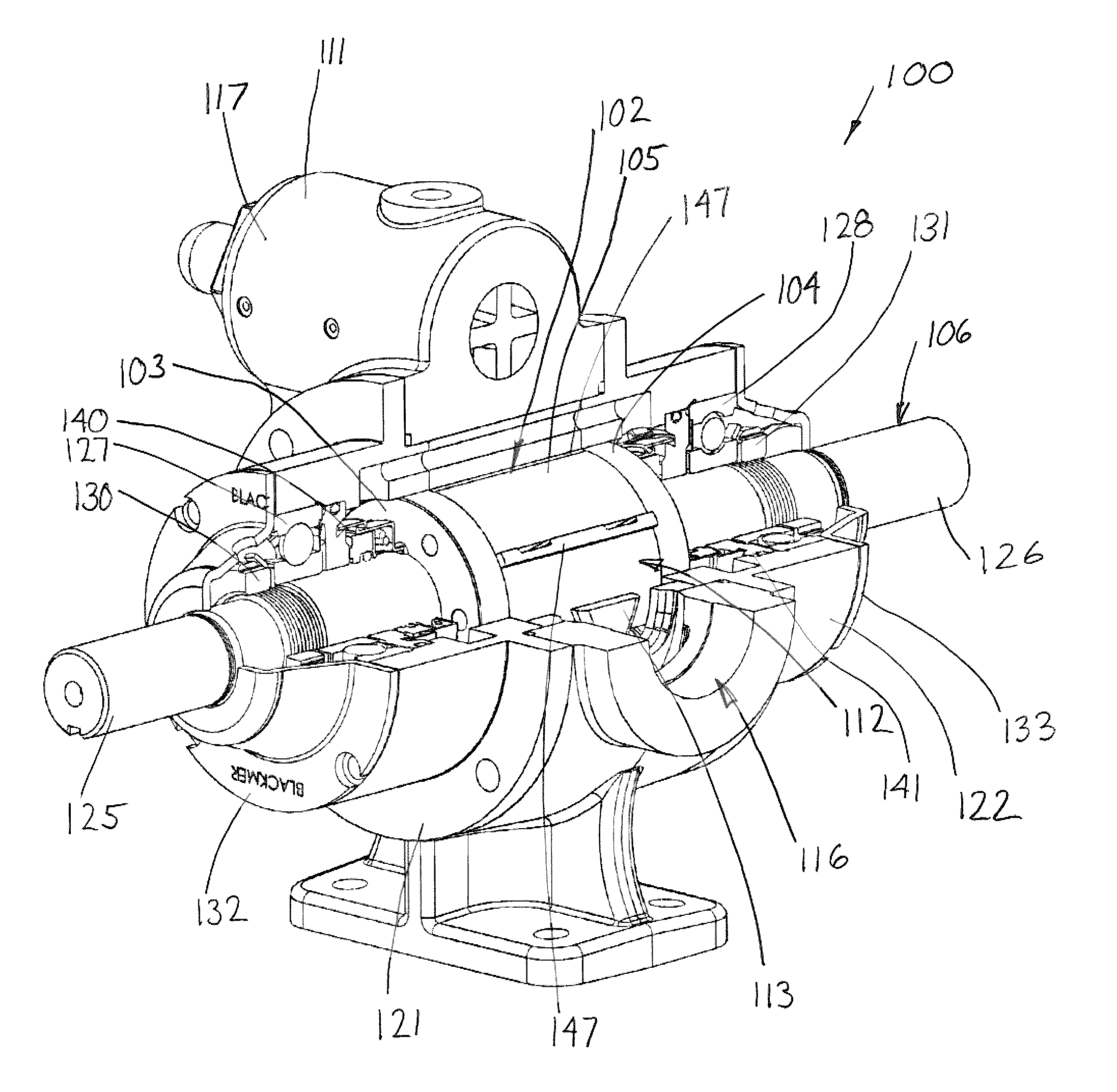
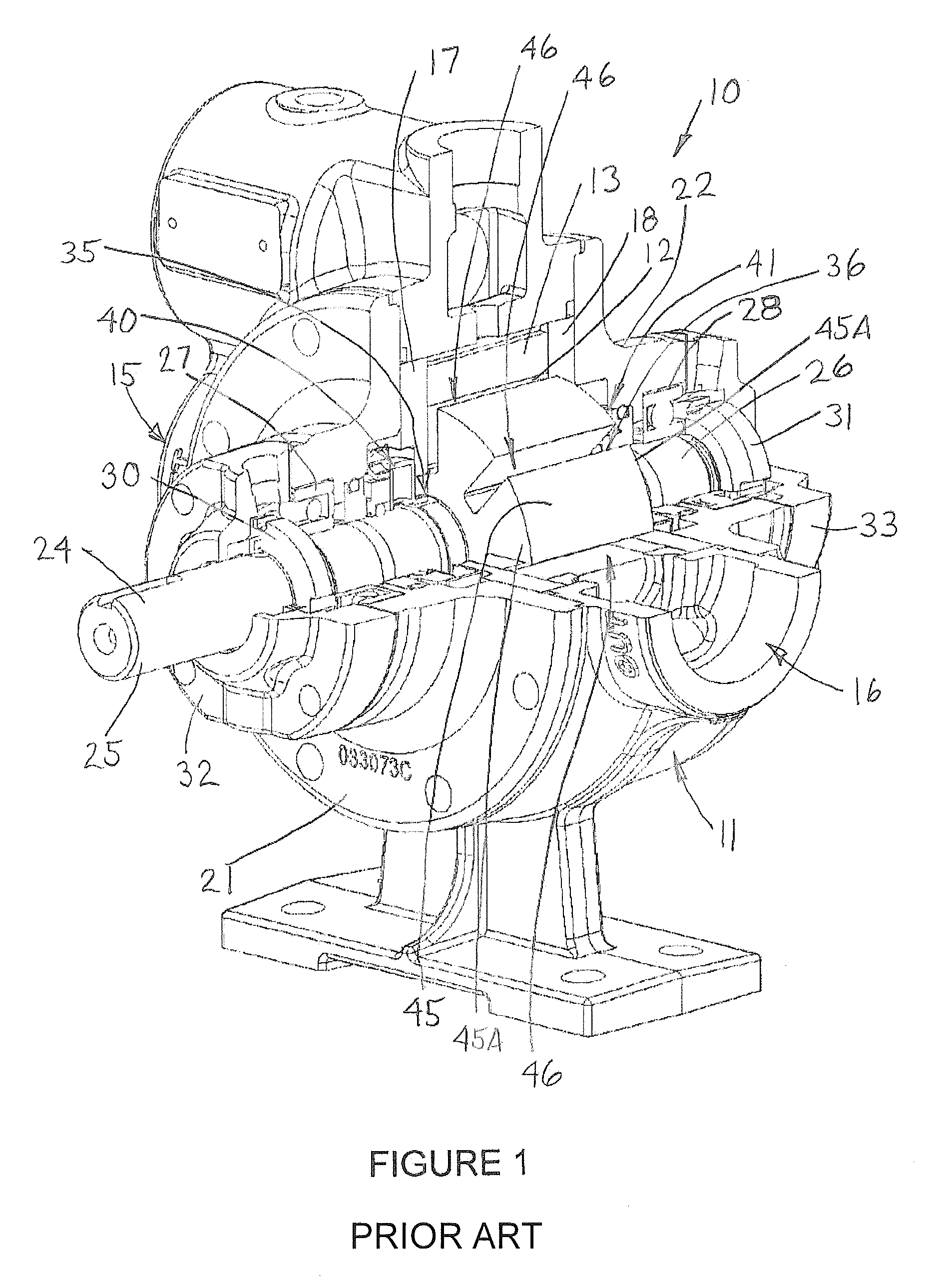
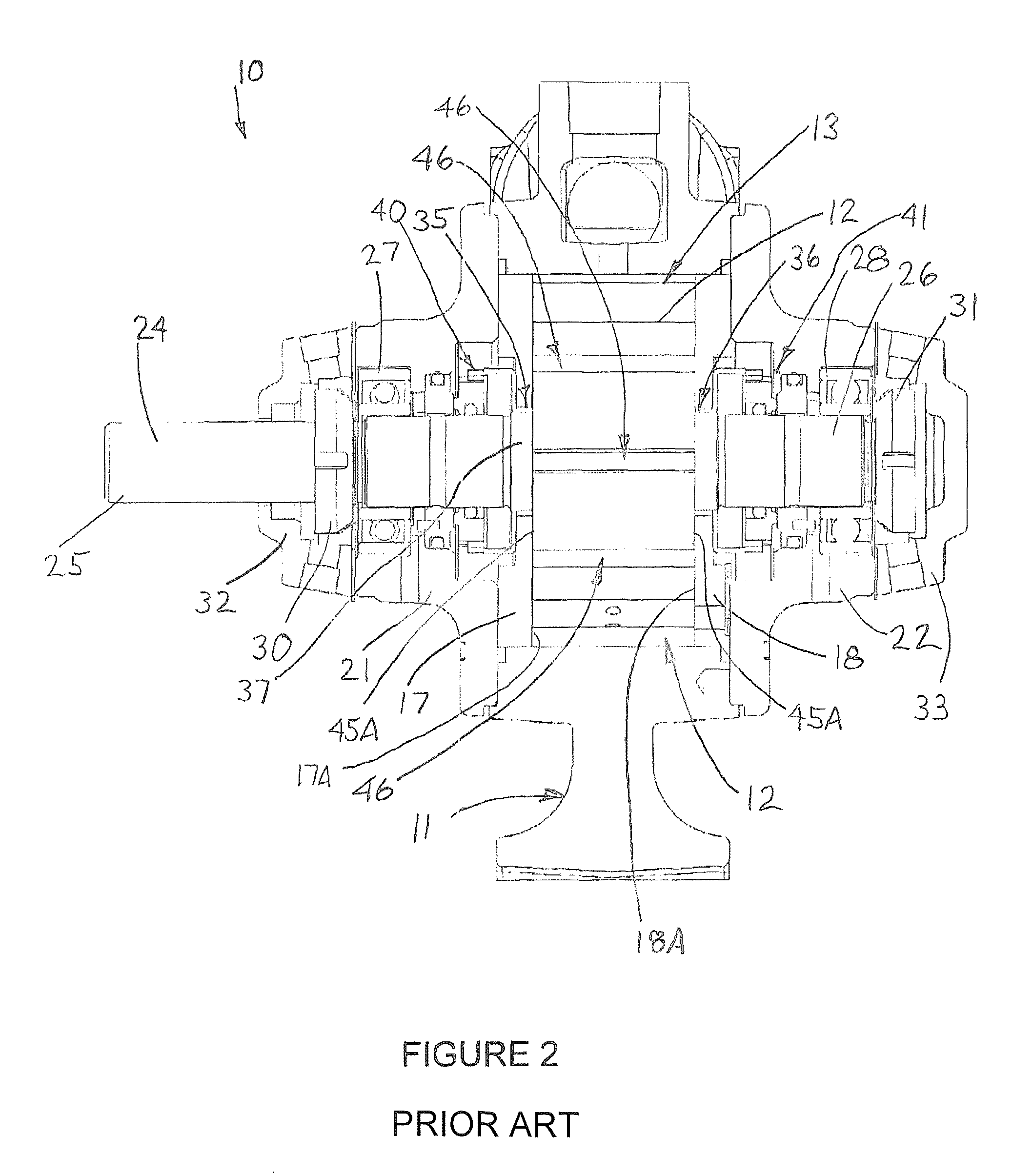

Optimum porting configuration for a slipper seal pump
PatentInactiveUS4080124A
Innovation
- The pump design incorporates a critical spacing of 10° between the end of the constant tangent decompression arc and the inlet port opening, along with a lengthened inlet arc from 25° to 76°, ensuring the slipper vane returns to its driving slot before inlet port closure, reducing turbulence and cam bore wear, and optimizing geometric relationships to control slipper action.


CFD Simulation Methods for Pump Design
Computational Fluid Dynamics (CFD) has emerged as an indispensable tool in modern pump design, particularly for investigating the complex flow phenomena within pump chambers that contribute to slip losses. Advanced CFD simulation methods enable engineers to visualize internal flow patterns, identify recirculation zones, and quantify volumetric efficiency before physical prototyping. The application of CFD in pump chamber optimization involves multiple simulation approaches, each offering distinct advantages for analyzing different aspects of slip reduction.
Reynolds-Averaged Navier-Stokes (RANS) turbulence models represent the most widely adopted approach for pump chamber simulations due to their computational efficiency and reasonable accuracy. The k-epsilon and k-omega SST models are particularly effective for capturing wall-bounded flows and separation phenomena critical to understanding slip mechanisms. These models provide reliable predictions of pressure distributions and velocity fields within clearance gaps, enabling systematic evaluation of geometric modifications on leakage flow paths.
Large Eddy Simulation (LES) and Detached Eddy Simulation (DES) methods offer higher fidelity solutions for capturing transient flow structures and vortex dynamics within pump chambers. While computationally intensive, these approaches reveal time-dependent flow instabilities and turbulent mixing processes that influence slip behavior, particularly in complex geometries with sharp edges or sudden expansions. The enhanced resolution of turbulent structures allows designers to identify localized flow inefficiencies that steady-state RANS simulations might overlook.
Multiphase flow modeling capabilities have become essential for simulating real operating conditions where gas entrainment or cavitation occurs. Volume of Fluid (VOF) and Eulerian-Eulerian methods enable accurate prediction of phase distribution within pump chambers, which significantly affects slip characteristics. These simulations help optimize chamber geometry to minimize gas accumulation in critical regions that exacerbate volumetric losses.
Mesh generation strategies critically impact simulation accuracy, with particular attention required for resolving thin clearance gaps and boundary layers. Structured hexahedral meshes with local refinement near walls and leakage paths provide optimal resolution for slip flow analysis. Adaptive mesh refinement techniques automatically increase grid density in high-gradient regions, ensuring computational resources focus on areas most relevant to slip prediction while maintaining overall efficiency.
Reynolds-Averaged Navier-Stokes (RANS) turbulence models represent the most widely adopted approach for pump chamber simulations due to their computational efficiency and reasonable accuracy. The k-epsilon and k-omega SST models are particularly effective for capturing wall-bounded flows and separation phenomena critical to understanding slip mechanisms. These models provide reliable predictions of pressure distributions and velocity fields within clearance gaps, enabling systematic evaluation of geometric modifications on leakage flow paths.
Large Eddy Simulation (LES) and Detached Eddy Simulation (DES) methods offer higher fidelity solutions for capturing transient flow structures and vortex dynamics within pump chambers. While computationally intensive, these approaches reveal time-dependent flow instabilities and turbulent mixing processes that influence slip behavior, particularly in complex geometries with sharp edges or sudden expansions. The enhanced resolution of turbulent structures allows designers to identify localized flow inefficiencies that steady-state RANS simulations might overlook.
Multiphase flow modeling capabilities have become essential for simulating real operating conditions where gas entrainment or cavitation occurs. Volume of Fluid (VOF) and Eulerian-Eulerian methods enable accurate prediction of phase distribution within pump chambers, which significantly affects slip characteristics. These simulations help optimize chamber geometry to minimize gas accumulation in critical regions that exacerbate volumetric losses.
Mesh generation strategies critically impact simulation accuracy, with particular attention required for resolving thin clearance gaps and boundary layers. Structured hexahedral meshes with local refinement near walls and leakage paths provide optimal resolution for slip flow analysis. Adaptive mesh refinement techniques automatically increase grid density in high-gradient regions, ensuring computational resources focus on areas most relevant to slip prediction while maintaining overall efficiency.
Energy Efficiency Standards and Regulations
The optimization of pump chamber geometry to reduce slip losses operates within an increasingly stringent regulatory landscape that directly impacts design priorities and performance benchmarks. Global energy efficiency standards have evolved significantly over the past two decades, with regulatory bodies establishing minimum efficiency requirements that compel manufacturers to pursue advanced geometric optimization strategies. The European Union's Ecodesign Directive and the United States Department of Energy's efficiency regulations for pumps have set progressive efficiency thresholds that cannot be achieved through conventional design approaches alone, making slip reduction through chamber geometry optimization a critical compliance pathway.
International standards such as ISO 9906 and IEC 60034-30-1 provide standardized testing methodologies and efficiency classification frameworks that enable consistent evaluation of pump performance improvements. These standards define specific operating conditions under which slip losses must be measured and reported, creating transparent benchmarks for geometric optimization efforts. Compliance with these frameworks requires detailed documentation of how chamber geometry modifications contribute to overall efficiency gains, particularly in the context of volumetric efficiency improvements that directly correlate with slip reduction.
Regional variations in regulatory requirements create additional complexity for manufacturers operating in global markets. China's GB standards, India's Bureau of Energy Efficiency regulations, and emerging efficiency mandates in Southeast Asian markets each impose distinct testing protocols and minimum performance levels. This regulatory fragmentation incentivizes the development of adaptable chamber geometries that can meet diverse efficiency thresholds across multiple jurisdictions while maintaining manufacturing feasibility.
The trend toward dynamic efficiency standards presents both challenges and opportunities for pump chamber optimization research. Regulatory bodies are increasingly adopting variable-speed operation requirements and part-load efficiency criteria, which demand chamber geometries that minimize slip across broader operating ranges rather than at single design points. This regulatory evolution aligns closely with the technical objectives of advanced geometric optimization, as reduced slip inherently improves performance stability across varying operational conditions, positioning compliant designs favorably for future regulatory tightening.
International standards such as ISO 9906 and IEC 60034-30-1 provide standardized testing methodologies and efficiency classification frameworks that enable consistent evaluation of pump performance improvements. These standards define specific operating conditions under which slip losses must be measured and reported, creating transparent benchmarks for geometric optimization efforts. Compliance with these frameworks requires detailed documentation of how chamber geometry modifications contribute to overall efficiency gains, particularly in the context of volumetric efficiency improvements that directly correlate with slip reduction.
Regional variations in regulatory requirements create additional complexity for manufacturers operating in global markets. China's GB standards, India's Bureau of Energy Efficiency regulations, and emerging efficiency mandates in Southeast Asian markets each impose distinct testing protocols and minimum performance levels. This regulatory fragmentation incentivizes the development of adaptable chamber geometries that can meet diverse efficiency thresholds across multiple jurisdictions while maintaining manufacturing feasibility.
The trend toward dynamic efficiency standards presents both challenges and opportunities for pump chamber optimization research. Regulatory bodies are increasingly adopting variable-speed operation requirements and part-load efficiency criteria, which demand chamber geometries that minimize slip across broader operating ranges rather than at single design points. This regulatory evolution aligns closely with the technical objectives of advanced geometric optimization, as reduced slip inherently improves performance stability across varying operational conditions, positioning compliant designs favorably for future regulatory tightening.
Unlock deeper insights with Patsnap Eureka Quick Research — get a full tech report to explore trends and direct your research. Try now!
Generate Your Research Report Instantly with AI Agent
Supercharge your innovation with Patsnap Eureka AI Agent Platform!