
Quantify Electric Potential Drift for Sensor Reliability
OCT 9, 20269 MIN READ
Generate Your Research Report Instantly with AI Agent
Patsnap Eureka helps you evaluate technical feasibility & market potential.
Electric Potential Drift Background and Research Objectives
Electric potential drift represents a critical phenomenon affecting the long-term stability and accuracy of electrochemical sensors, microelectronic devices, and measurement systems. This drift manifests as gradual, time-dependent changes in the baseline electrical potential of sensing elements, leading to measurement errors that accumulate over operational lifetimes. The issue has become increasingly prominent as industries demand higher precision and extended calibration intervals for sensors deployed in medical diagnostics, environmental monitoring, industrial process control, and autonomous systems.
The fundamental challenge lies in the complex interplay of multiple physical and chemical mechanisms that contribute to potential drift. These include electrochemical interface degradation, charge accumulation at insulating layers, ionic migration within solid-state materials, temperature-induced changes in work functions, and environmental contamination effects. Traditional approaches have treated drift as an empirical correction factor rather than a quantifiable physical phenomenon with predictable behavior patterns.
Recent technological advances in nanoscale characterization, computational modeling, and real-time monitoring have created new opportunities to transform drift from an unavoidable nuisance into a measurable and controllable parameter. The convergence of materials science, electrochemistry, and data analytics now enables researchers to develop physics-based models that can predict drift behavior under various operating conditions.
The primary objective of this research domain is to establish comprehensive methodologies for quantifying electric potential drift across different sensor architectures and operating environments. This encompasses developing standardized measurement protocols, identifying dominant drift mechanisms for specific sensor types, and creating predictive models that correlate material properties and environmental factors with drift rates. A secondary objective focuses on translating quantitative drift understanding into practical reliability metrics that can guide sensor design, material selection, and maintenance scheduling.
Achieving these objectives requires bridging fundamental research in interfacial electrochemistry with applied engineering in sensor systems. The ultimate goal is to enable manufacturers to specify drift characteristics with the same rigor as sensitivity or response time, while providing end-users with tools to predict and compensate for drift effects throughout sensor operational life. This quantitative approach promises to extend sensor lifetimes, reduce calibration frequency, and enhance measurement confidence across critical applications.
The fundamental challenge lies in the complex interplay of multiple physical and chemical mechanisms that contribute to potential drift. These include electrochemical interface degradation, charge accumulation at insulating layers, ionic migration within solid-state materials, temperature-induced changes in work functions, and environmental contamination effects. Traditional approaches have treated drift as an empirical correction factor rather than a quantifiable physical phenomenon with predictable behavior patterns.
Recent technological advances in nanoscale characterization, computational modeling, and real-time monitoring have created new opportunities to transform drift from an unavoidable nuisance into a measurable and controllable parameter. The convergence of materials science, electrochemistry, and data analytics now enables researchers to develop physics-based models that can predict drift behavior under various operating conditions.
The primary objective of this research domain is to establish comprehensive methodologies for quantifying electric potential drift across different sensor architectures and operating environments. This encompasses developing standardized measurement protocols, identifying dominant drift mechanisms for specific sensor types, and creating predictive models that correlate material properties and environmental factors with drift rates. A secondary objective focuses on translating quantitative drift understanding into practical reliability metrics that can guide sensor design, material selection, and maintenance scheduling.
Achieving these objectives requires bridging fundamental research in interfacial electrochemistry with applied engineering in sensor systems. The ultimate goal is to enable manufacturers to specify drift characteristics with the same rigor as sensitivity or response time, while providing end-users with tools to predict and compensate for drift effects throughout sensor operational life. This quantitative approach promises to extend sensor lifetimes, reduce calibration frequency, and enhance measurement confidence across critical applications.
Market Demand for Reliable Sensor Applications
The demand for reliable sensor applications has experienced substantial growth across multiple industries, driven by the increasing integration of sensors into mission-critical systems where performance degradation or failure can result in significant consequences. In automotive applications, advanced driver assistance systems and autonomous vehicles rely on sensor arrays that must maintain accuracy over extended operational lifetimes, often exceeding ten years under harsh environmental conditions. The automotive sensor market has become particularly sensitive to reliability issues, as electric potential drift can lead to calibration errors that compromise safety systems.
Industrial automation and process control sectors represent another major demand driver for reliable sensor technologies. Manufacturing facilities increasingly depend on sensor networks for real-time monitoring and control, where drift-related measurement errors can cascade into production quality issues, equipment damage, or safety hazards. The push toward Industry 4.0 and smart manufacturing has amplified requirements for sensors that maintain stable performance throughout their service life without frequent recalibration or replacement.
Healthcare and medical device applications constitute a critical market segment where sensor reliability directly impacts patient outcomes. Implantable medical devices, continuous glucose monitors, and diagnostic equipment require sensors with minimal drift characteristics to ensure accurate readings over months or years of operation. Regulatory frameworks in this sector impose stringent reliability standards, creating strong market pull for technologies that can quantify and mitigate electric potential drift.
The aerospace and defense industries demand sensors capable of maintaining precision under extreme conditions, including temperature variations, radiation exposure, and mechanical stress. Electric potential drift in these applications can compromise navigation systems, environmental monitoring, and weapons guidance, making drift quantification and compensation essential capabilities.
Consumer electronics markets, while traditionally less focused on long-term reliability, are evolving toward applications requiring sustained sensor performance. Wearable health monitors, smart home systems, and Internet of Things devices increasingly compete on reliability metrics as product differentiation factors. Market research indicates growing consumer awareness of sensor accuracy and longevity, particularly in health-related applications where users make decisions based on sensor data.
Industrial automation and process control sectors represent another major demand driver for reliable sensor technologies. Manufacturing facilities increasingly depend on sensor networks for real-time monitoring and control, where drift-related measurement errors can cascade into production quality issues, equipment damage, or safety hazards. The push toward Industry 4.0 and smart manufacturing has amplified requirements for sensors that maintain stable performance throughout their service life without frequent recalibration or replacement.
Healthcare and medical device applications constitute a critical market segment where sensor reliability directly impacts patient outcomes. Implantable medical devices, continuous glucose monitors, and diagnostic equipment require sensors with minimal drift characteristics to ensure accurate readings over months or years of operation. Regulatory frameworks in this sector impose stringent reliability standards, creating strong market pull for technologies that can quantify and mitigate electric potential drift.
The aerospace and defense industries demand sensors capable of maintaining precision under extreme conditions, including temperature variations, radiation exposure, and mechanical stress. Electric potential drift in these applications can compromise navigation systems, environmental monitoring, and weapons guidance, making drift quantification and compensation essential capabilities.
Consumer electronics markets, while traditionally less focused on long-term reliability, are evolving toward applications requiring sustained sensor performance. Wearable health monitors, smart home systems, and Internet of Things devices increasingly compete on reliability metrics as product differentiation factors. Market research indicates growing consumer awareness of sensor accuracy and longevity, particularly in health-related applications where users make decisions based on sensor data.
Current Status and Challenges in Potential Drift Quantification
Electric potential drift in sensors represents a critical reliability concern across multiple industries, particularly in automotive, medical devices, and industrial automation. Current quantification methods remain largely empirical and lack standardized frameworks for systematic measurement and prediction. The phenomenon manifests as gradual shifts in sensor output voltage over time, even under constant input conditions, leading to measurement errors that accumulate and compromise system accuracy.
Existing quantification approaches primarily rely on accelerated aging tests and statistical modeling based on historical failure data. However, these methods face significant limitations in capturing the complex interplay of environmental factors, material degradation mechanisms, and operational stress conditions. Temperature cycling, humidity exposure, and mechanical stress contribute to potential drift through multiple pathways including electrode degradation, dielectric property changes, and interface contamination, yet isolating individual contributions remains challenging.
The semiconductor industry has developed some characterization techniques using precision voltage references and long-term stability monitoring, but translating these methods to diverse sensor architectures proves difficult. MEMS sensors, electrochemical sensors, and capacitive sensors each exhibit unique drift characteristics that resist unified quantification frameworks. Current measurement resolution often proves insufficient to detect early-stage drift patterns that could enable predictive maintenance strategies.
A major technical challenge lies in distinguishing between reversible and irreversible drift components. Reversible drift caused by temperature fluctuations or temporary charge accumulation can be compensated through calibration, while irreversible drift from material degradation requires different mitigation strategies. Existing diagnostic tools struggle to separate these mechanisms in real-time operational environments without extensive offline testing protocols.
Geographically, advanced research concentrates in regions with strong semiconductor and sensor manufacturing bases, particularly in North America, Europe, and East Asia. However, standardization efforts remain fragmented across different industry sectors and regulatory frameworks. The absence of universally accepted drift quantification metrics hinders cross-platform comparison and reliability benchmarking. Furthermore, the increasing complexity of multi-sensor fusion systems amplifies the impact of individual sensor drift, creating cascading reliability issues that current quantification methods inadequately address.
Existing quantification approaches primarily rely on accelerated aging tests and statistical modeling based on historical failure data. However, these methods face significant limitations in capturing the complex interplay of environmental factors, material degradation mechanisms, and operational stress conditions. Temperature cycling, humidity exposure, and mechanical stress contribute to potential drift through multiple pathways including electrode degradation, dielectric property changes, and interface contamination, yet isolating individual contributions remains challenging.
The semiconductor industry has developed some characterization techniques using precision voltage references and long-term stability monitoring, but translating these methods to diverse sensor architectures proves difficult. MEMS sensors, electrochemical sensors, and capacitive sensors each exhibit unique drift characteristics that resist unified quantification frameworks. Current measurement resolution often proves insufficient to detect early-stage drift patterns that could enable predictive maintenance strategies.
A major technical challenge lies in distinguishing between reversible and irreversible drift components. Reversible drift caused by temperature fluctuations or temporary charge accumulation can be compensated through calibration, while irreversible drift from material degradation requires different mitigation strategies. Existing diagnostic tools struggle to separate these mechanisms in real-time operational environments without extensive offline testing protocols.
Geographically, advanced research concentrates in regions with strong semiconductor and sensor manufacturing bases, particularly in North America, Europe, and East Asia. However, standardization efforts remain fragmented across different industry sectors and regulatory frameworks. The absence of universally accepted drift quantification metrics hinders cross-platform comparison and reliability benchmarking. Furthermore, the increasing complexity of multi-sensor fusion systems amplifies the impact of individual sensor drift, creating cascading reliability issues that current quantification methods inadequately address.
Existing Methods for Quantifying Electric Potential Drift
01 Reduction and compensation of potential drift in gas sensors
Methods and arrangements for minimizing measurement errors and potential drift in gas sensors, particularly those using metal oxide resistive elements, by controlling the electrical potential relative to shield electrodes.- Reduction and compensation of potential drift in gas and environmental sensors: Techniques for controlling electrical potential and compensating for temperature or environmental drift in gas and field sensors. Voltage regulators and calibration methods are applied to maintain zero stability and reduce measurement errors over time.
- Electric potential sensors and potential measuring apparatus: Sensor structures and circuits designed specifically for measuring electrical potentials, bio-potentials, or surface charges. These apparatuses incorporate potential-sensing circuits to maintain stability and accurately capture field strengths.
- Semiconductor drift detectors and radiation sensing devices: Semiconductor components utilizing drift zones, optimized effective areas, and drift field charge transfer mechanisms. These structural designs enable high-resolution radiation detection and efficient charge collection.
- Electrochemical potential monitoring and cathodic protection drift correction: Systems and methods for monitoring electric potential and current in corrosion protection applications. Synchronization and clock-drift correction technologies are utilized to accurately detect cathodic protection potential.
- General signal drift compensation and Economical measurement correction: Circuit and algorithmic methods for compensating drift in direct-coupled amplifiers, measurement instruments, and high-resolution systems. These techniques offset time and temperature-induced drift components to maintain measurement accuracy.
02 Electric field and temperature drift compensation for sensors
Techniques for mitigating zero time drift, temperature drift, and environmental variations in electric field and potential sensors to maintain accurate measurement and high repeatability.Expand Specific Solutions03 Electric potential measuring devices and sensors
Apparatus, circuits, and passive electrode systems designed for accurate detection, monitoring, and measurement of electric potential fields and bio-potentials.Expand Specific Solutions04 Correction of drift in measurements and signal amplification
Methods and circuits for real-time drift compensation, Economical drift correction in high-resolution measurements, and direct-coupled amplifier drift suppression.Expand Specific Solutions05 Cathodic protection potential measurement and clock drift correction
Technologies applied in synchronous detection of cathodic protection potential while simultaneously correcting clock drift during potential measurement.Expand Specific Solutions
Key Players in Sensor Reliability and Drift Analysis
The electric potential drift quantification field is in an advanced development stage, driven by growing demands for sensor reliability across medical devices, industrial automation, and semiconductor manufacturing. The market demonstrates significant scale with established players like IBM, Roche, and Mitsubishi Electric Corp. leading commercialization efforts, while specialized firms including DexCom, Analog Devices International, and MKS Inc. focus on niche applications. Technology maturity varies considerably: medical sensor applications by ABIOMED and Roche Diagnostics show high commercial readiness, whereas semiconductor-related drift compensation by NXP Semiconductors and IMEC Nederland remains in intensive R&D phases. Academic institutions like Worcester Polytechnic Institute, Purdue Research Foundation, and Central South University contribute fundamental research, bridging theoretical understanding with industrial implementation. The competitive landscape reflects a hybrid ecosystem where multinational corporations collaborate with research institutions to address drift phenomena across diverse sensing platforms.
Stichting IMEC Nederland
Technical Solution: IMEC has conducted extensive research on nanoscale sensor drift mechanisms and developed novel characterization methodologies for quantifying electric potential instabilities in MEMS and nanoelectronic sensors. Their research focuses on understanding fundamental drift sources including charge trapping in dielectric layers, surface state variations, and electrochemical potential shifts at nanoscale interfaces. IMEC's approach utilizes advanced characterization techniques including Kelvin probe force microscopy and scanning tunneling spectroscopy to map potential distributions with nanometer spatial resolution. They have developed accelerated aging test protocols that correlate short-term drift measurements with long-term reliability predictions. Their work includes development of novel passivation strategies and surface functionalization techniques that minimize drift by reducing reactive surface sites and stabilizing interfacial charge distributions in advanced sensor architectures.
Strengths: Cutting-edge research capabilities provide deep fundamental understanding of drift mechanisms at nanoscale; advanced characterization tools enable precise drift quantification. Weaknesses: Research-focused organization with limited direct commercial product offerings; technology transfer required for industrial implementation.
International Business Machines Corp.
Technical Solution: IBM has developed advanced drift compensation algorithms for sensor systems utilizing machine learning-based calibration techniques. Their approach employs real-time monitoring of electric potential variations through integrated CMOS sensor arrays with built-in reference electrodes. The system implements adaptive filtering algorithms that continuously track and compensate for drift patterns caused by temperature fluctuations, electrochemical reactions, and aging effects. IBM's solution incorporates predictive modeling using historical drift data to anticipate potential failures before they occur, enabling proactive maintenance scheduling. The technology features multi-point calibration routines and self-diagnostic capabilities that automatically adjust sensor parameters to maintain measurement accuracy within specified tolerances over extended operational periods.
Strengths: Robust machine learning algorithms provide superior drift prediction accuracy; integrated self-diagnostic capabilities reduce maintenance costs. Weaknesses: High computational requirements may limit deployment in resource-constrained environments; complex implementation requires specialized expertise.
Core Technologies in Drift Characterization and Compensation
Drift calibration method and device for the potentiometric sensor
PatentInactiveUS20070084721A1
Innovation
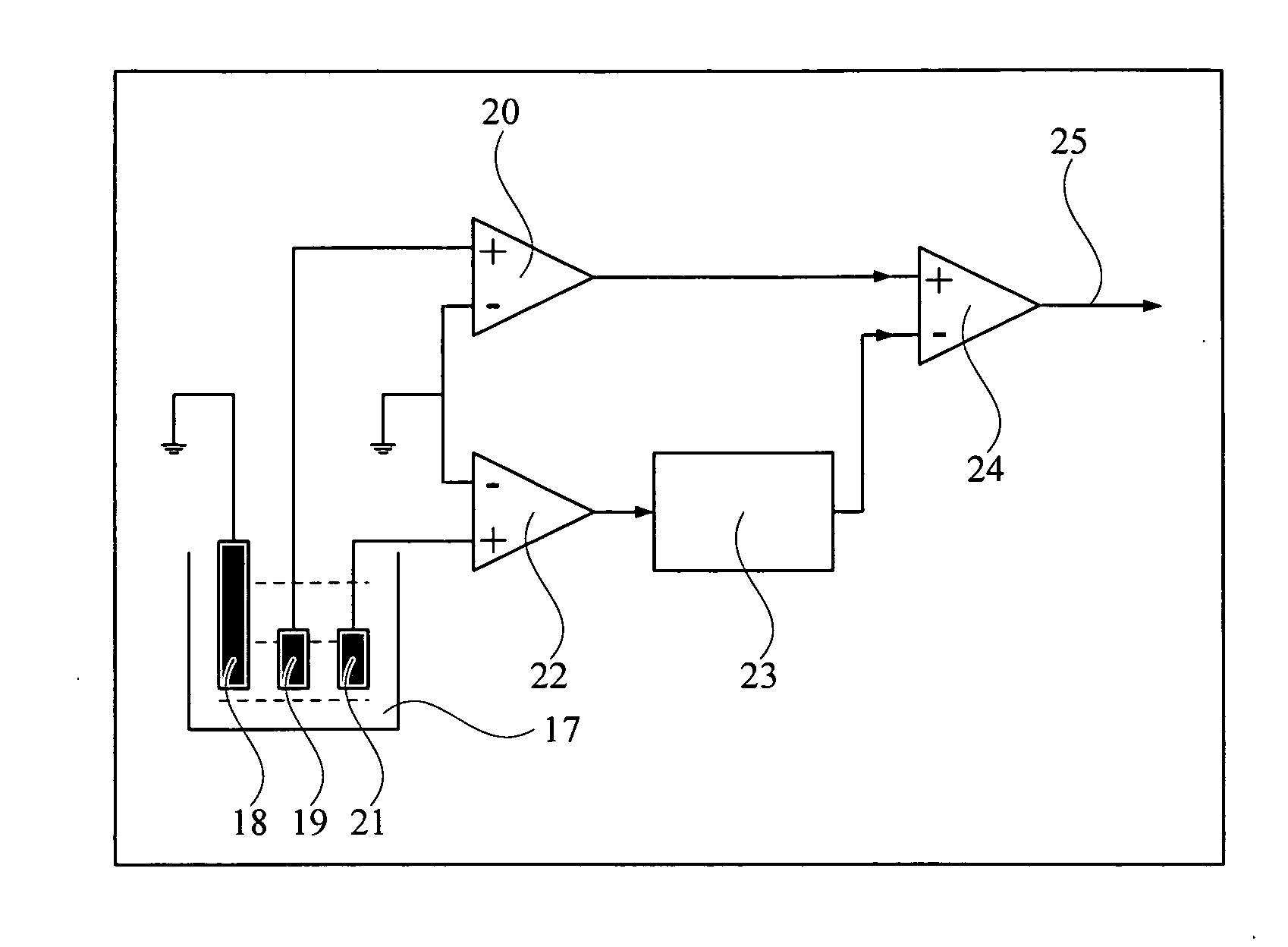
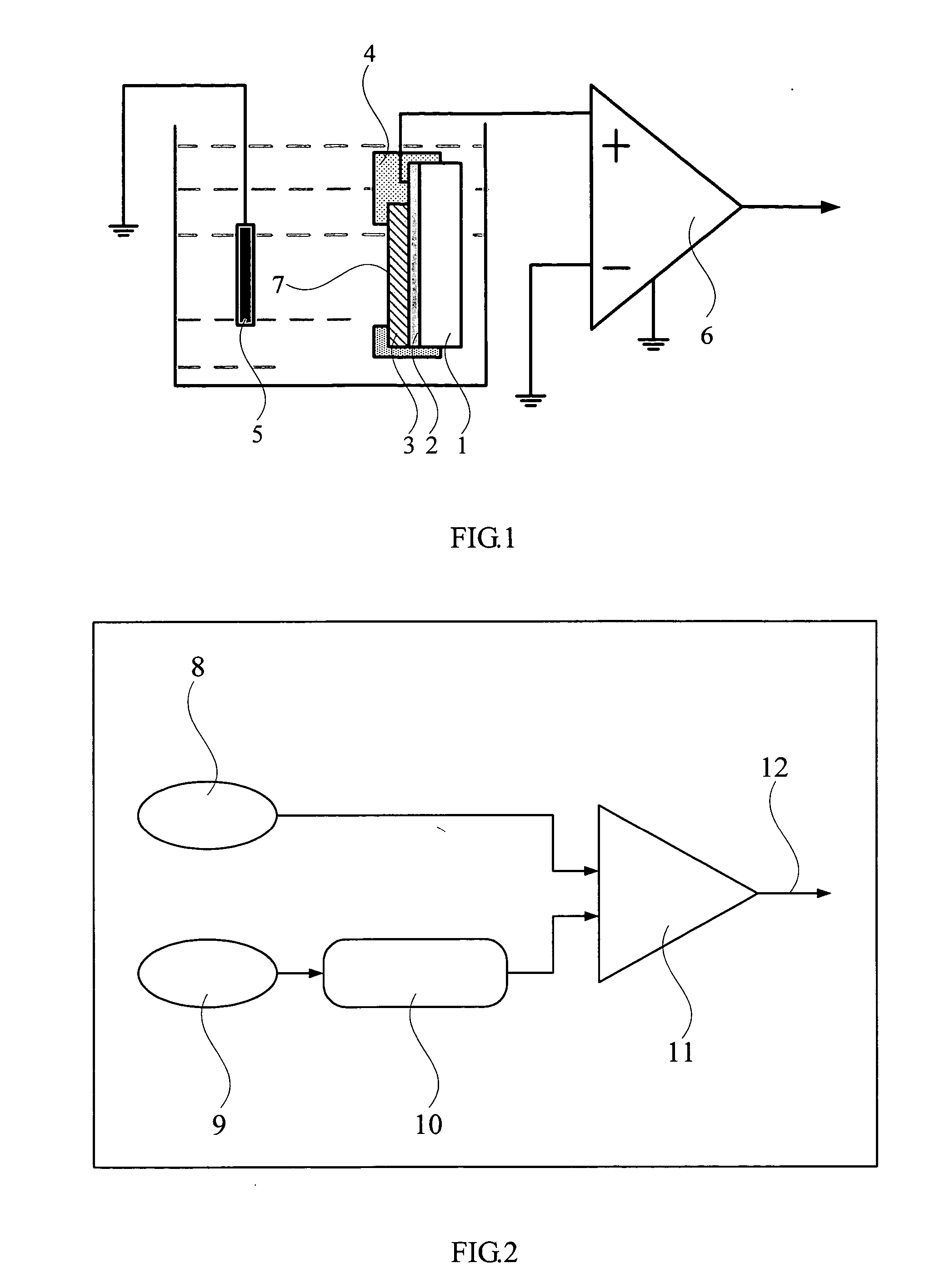
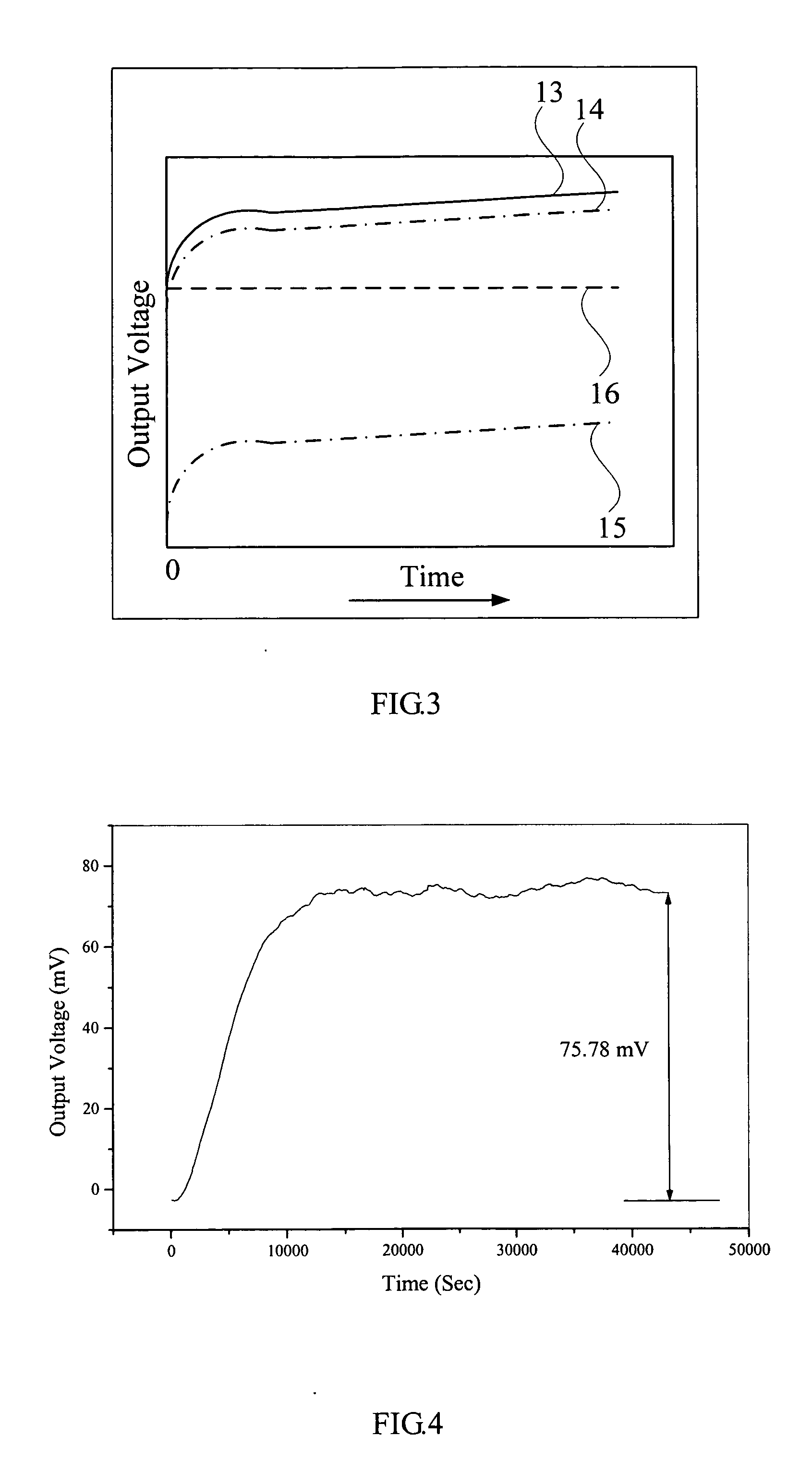
- An apparatus and method for sensor calibration using a system with multiple operation amplifiers and a voltage shifting circuit to correct the drift signal, comprising potentiometric SnO2 pH sensors and ammonium ISE sensors, along with an Ag/AgCl reference electrode, to stabilize the output over time.

Intrinsic drift compensation method and device for electrochemical sensor
PatentPendingCN122361576A
Innovation
- By acquiring electrochemical response signal data, extracting static physical parameters, using an intrinsic drift compensation model trained on a training dataset, and combining a feature extraction layer and an output layer, a convolutional neural network is employed for signal compensation, thus constructing an efficient intrinsic drift compensation method and device.


Calibration Standards and Quality Assurance Protocols
Establishing robust calibration standards and quality assurance protocols is fundamental to accurately quantifying electric potential drift in sensor systems. These frameworks ensure measurement consistency, traceability, and reliability across different operational environments and temporal scales. The development of standardized calibration procedures must address both the intrinsic characteristics of sensing elements and the environmental factors that influence potential stability over extended deployment periods.
Primary calibration standards for electric potential measurements typically reference stable voltage sources with known drift characteristics, such as Zener diode-based references or Josephson junction arrays. For sensor reliability studies, calibration protocols must incorporate multi-point verification across the operational voltage range, with particular emphasis on the sensitivity regions most susceptible to drift phenomena. Temperature-controlled calibration chambers enable the characterization of thermal coefficients and establish baseline drift rates under controlled conditions, providing essential reference data for field deployment comparisons.
Quality assurance protocols should implement hierarchical verification strategies, including initial factory calibration, pre-deployment validation, and periodic in-service recalibration cycles. Statistical process control methods, such as control charts and capability indices, provide quantitative metrics for assessing calibration stability and identifying systematic drift patterns. Documentation requirements must capture environmental exposure history, calibration adjustment records, and drift rate calculations to enable longitudinal analysis of sensor degradation mechanisms.
Traceability to international measurement standards, such as those maintained by national metrology institutes, ensures comparability of drift quantification results across different research groups and industrial applications. Uncertainty budgets should account for reference standard stability, measurement system resolution, environmental variability, and temporal sampling intervals. Inter-laboratory comparison programs strengthen confidence in drift measurement methodologies and identify potential sources of systematic error in quantification procedures.
Automated calibration systems with integrated data logging capabilities facilitate high-frequency drift monitoring while minimizing human intervention errors. These systems should incorporate self-diagnostic routines to detect calibration equipment degradation and trigger corrective actions before measurement integrity is compromised. The integration of machine learning algorithms into quality assurance workflows enables predictive maintenance scheduling based on historical drift patterns and accelerates the identification of anomalous sensor behavior requiring investigation.
Primary calibration standards for electric potential measurements typically reference stable voltage sources with known drift characteristics, such as Zener diode-based references or Josephson junction arrays. For sensor reliability studies, calibration protocols must incorporate multi-point verification across the operational voltage range, with particular emphasis on the sensitivity regions most susceptible to drift phenomena. Temperature-controlled calibration chambers enable the characterization of thermal coefficients and establish baseline drift rates under controlled conditions, providing essential reference data for field deployment comparisons.
Quality assurance protocols should implement hierarchical verification strategies, including initial factory calibration, pre-deployment validation, and periodic in-service recalibration cycles. Statistical process control methods, such as control charts and capability indices, provide quantitative metrics for assessing calibration stability and identifying systematic drift patterns. Documentation requirements must capture environmental exposure history, calibration adjustment records, and drift rate calculations to enable longitudinal analysis of sensor degradation mechanisms.
Traceability to international measurement standards, such as those maintained by national metrology institutes, ensures comparability of drift quantification results across different research groups and industrial applications. Uncertainty budgets should account for reference standard stability, measurement system resolution, environmental variability, and temporal sampling intervals. Inter-laboratory comparison programs strengthen confidence in drift measurement methodologies and identify potential sources of systematic error in quantification procedures.
Automated calibration systems with integrated data logging capabilities facilitate high-frequency drift monitoring while minimizing human intervention errors. These systems should incorporate self-diagnostic routines to detect calibration equipment degradation and trigger corrective actions before measurement integrity is compromised. The integration of machine learning algorithms into quality assurance workflows enables predictive maintenance scheduling based on historical drift patterns and accelerates the identification of anomalous sensor behavior requiring investigation.
Long-term Stability Testing and Validation Methodologies
Long-term stability testing and validation methodologies constitute critical frameworks for assessing electric potential drift in sensors over extended operational periods. These methodologies must encompass accelerated aging protocols that simulate years of field operation within compressed timeframes, typically employing elevated temperature, humidity, and electrical stress conditions. The testing protocols should incorporate continuous monitoring systems capable of detecting minute potential variations, often in the microvolt to millivolt range, while maintaining measurement accuracy throughout the entire test duration.
Validation approaches require establishing baseline performance metrics under controlled environmental conditions, followed by systematic exposure to various stress factors that sensors encounter during real-world deployment. Temperature cycling tests between operational extremes, combined with humidity chamber evaluations, provide insights into drift mechanisms related to material degradation and interface instability. Additionally, long-term bias stress testing under constant voltage conditions reveals charge accumulation effects and electrochemical reactions that contribute to potential drift over time.
Statistical validation methodologies play an essential role in quantifying drift patterns and establishing confidence intervals for reliability predictions. Large sample populations must undergo parallel testing to account for manufacturing variations and identify outlier behaviors. Data analysis techniques including Weibull distribution modeling and failure rate calculations enable accurate lifetime predictions based on observed drift trajectories. These statistical tools help distinguish between systematic drift trends and random fluctuations, providing quantitative metrics for sensor reliability assessment.
Field validation programs complement laboratory testing by deploying instrumented sensor arrays in actual operating environments. These programs capture real-world drift phenomena that may not manifest under controlled laboratory conditions, including effects from electromagnetic interference, mechanical vibration, and chemical exposure. Correlation studies between accelerated laboratory results and field performance data validate the predictive accuracy of testing methodologies and enable refinement of acceleration factors. Continuous data logging systems with remote monitoring capabilities facilitate long-term tracking of sensor performance degradation patterns across diverse deployment scenarios.
Validation approaches require establishing baseline performance metrics under controlled environmental conditions, followed by systematic exposure to various stress factors that sensors encounter during real-world deployment. Temperature cycling tests between operational extremes, combined with humidity chamber evaluations, provide insights into drift mechanisms related to material degradation and interface instability. Additionally, long-term bias stress testing under constant voltage conditions reveals charge accumulation effects and electrochemical reactions that contribute to potential drift over time.
Statistical validation methodologies play an essential role in quantifying drift patterns and establishing confidence intervals for reliability predictions. Large sample populations must undergo parallel testing to account for manufacturing variations and identify outlier behaviors. Data analysis techniques including Weibull distribution modeling and failure rate calculations enable accurate lifetime predictions based on observed drift trajectories. These statistical tools help distinguish between systematic drift trends and random fluctuations, providing quantitative metrics for sensor reliability assessment.
Field validation programs complement laboratory testing by deploying instrumented sensor arrays in actual operating environments. These programs capture real-world drift phenomena that may not manifest under controlled laboratory conditions, including effects from electromagnetic interference, mechanical vibration, and chemical exposure. Correlation studies between accelerated laboratory results and field performance data validate the predictive accuracy of testing methodologies and enable refinement of acceleration factors. Continuous data logging systems with remote monitoring capabilities facilitate long-term tracking of sensor performance degradation patterns across diverse deployment scenarios.
Unlock deeper insights with Patsnap Eureka Quick Research — get a full tech report to explore trends and direct your research. Try now!
Generate Your Research Report Instantly with AI Agent
Supercharge your innovation with Patsnap Eureka AI Agent Platform!