

Rotating Detonation Engine vs Pulse Detonation: Efficiency
MAR 13, 20269 MIN READ
Generate Your Research Report Instantly with AI Agent
PatSnap Eureka helps you evaluate technical feasibility & market potential.
Detonation Engine Technology Background and Efficiency Goals
Detonation engine technology represents a paradigm shift from conventional propulsion systems, leveraging supersonic combustion waves to achieve superior thermodynamic efficiency. Unlike traditional deflagration-based engines where combustion occurs at subsonic speeds, detonation engines harness the rapid pressure rise and energy release characteristics of detonation waves, which propagate at velocities exceeding 2000 meters per second. This fundamental difference enables theoretical thermal efficiencies approaching the ideal Brayton cycle limits.
The evolution of detonation engine concepts began in the 1940s with theoretical foundations laid by Zel'dovich and von Neumann, who established the mathematical framework for detonation wave propagation. Early research focused on understanding the complex physics of detonation initiation, propagation, and control. The technology gained renewed interest in the 1990s as computational capabilities advanced, enabling detailed modeling of the intricate fluid dynamics and chemical kinetics involved in detonation processes.
Two primary architectural approaches have emerged as leading candidates for practical implementation: Pulse Detonation Engines and Rotating Detonation Engines. PDEs operate through intermittent cycles, where fuel-air mixtures are periodically detonated in combustion chambers, creating discrete pressure pulses that generate thrust. This cyclic operation typically achieves frequencies ranging from 10 to 100 Hz, with each cycle requiring fresh mixture injection, ignition, and exhaust evacuation.
RDEs represent a more recent innovation, featuring continuous detonation waves that propagate circumferentially within annular combustion chambers. This configuration eliminates the need for cyclic operation, potentially offering higher frequency operation and more consistent thrust output. The continuous nature of RDE operation theoretically enables better fuel utilization and reduced mechanical stress compared to pulsed systems.
Current efficiency targets for detonation engines focus on achieving specific impulse improvements of 10-15% over conventional rocket engines and 20-30% over gas turbine systems. These goals are driven by the inherent thermodynamic advantages of constant-volume combustion processes, which provide higher pressure ratios and more complete energy extraction compared to constant-pressure combustion in traditional engines.
The primary technical objectives center on optimizing detonation wave stability, minimizing heat losses, and maximizing propellant utilization efficiency while maintaining operational reliability and controllability for practical aerospace and industrial applications.
The evolution of detonation engine concepts began in the 1940s with theoretical foundations laid by Zel'dovich and von Neumann, who established the mathematical framework for detonation wave propagation. Early research focused on understanding the complex physics of detonation initiation, propagation, and control. The technology gained renewed interest in the 1990s as computational capabilities advanced, enabling detailed modeling of the intricate fluid dynamics and chemical kinetics involved in detonation processes.
Two primary architectural approaches have emerged as leading candidates for practical implementation: Pulse Detonation Engines and Rotating Detonation Engines. PDEs operate through intermittent cycles, where fuel-air mixtures are periodically detonated in combustion chambers, creating discrete pressure pulses that generate thrust. This cyclic operation typically achieves frequencies ranging from 10 to 100 Hz, with each cycle requiring fresh mixture injection, ignition, and exhaust evacuation.
RDEs represent a more recent innovation, featuring continuous detonation waves that propagate circumferentially within annular combustion chambers. This configuration eliminates the need for cyclic operation, potentially offering higher frequency operation and more consistent thrust output. The continuous nature of RDE operation theoretically enables better fuel utilization and reduced mechanical stress compared to pulsed systems.
Current efficiency targets for detonation engines focus on achieving specific impulse improvements of 10-15% over conventional rocket engines and 20-30% over gas turbine systems. These goals are driven by the inherent thermodynamic advantages of constant-volume combustion processes, which provide higher pressure ratios and more complete energy extraction compared to constant-pressure combustion in traditional engines.
The primary technical objectives center on optimizing detonation wave stability, minimizing heat losses, and maximizing propellant utilization efficiency while maintaining operational reliability and controllability for practical aerospace and industrial applications.
Market Demand for Advanced Propulsion Systems
The global aerospace and defense industry is experiencing unprecedented demand for advanced propulsion technologies, driven by evolving mission requirements across military, commercial, and space applications. Traditional propulsion systems face increasing pressure to deliver higher performance while meeting stringent efficiency and environmental standards. This market dynamic creates substantial opportunities for revolutionary technologies like rotating detonation engines and pulse detonation engines.
Military aviation represents the primary market driver for advanced propulsion systems, with defense agencies worldwide seeking next-generation engines that offer superior fuel efficiency, reduced thermal signatures, and enhanced operational range. The growing emphasis on hypersonic weapons systems and high-speed reconnaissance platforms has intensified demand for propulsion technologies capable of operating efficiently across wide speed ranges. Detonation-based engines present compelling advantages in these applications due to their theoretical thermodynamic superiority over conventional gas turbines.
Commercial aerospace markets are simultaneously driving demand through sustainability mandates and operational cost pressures. Airlines face mounting regulatory requirements to reduce carbon emissions while maintaining competitive fuel economics. Advanced propulsion systems that demonstrate significant efficiency improvements over current turbofan technology attract substantial industry interest, particularly for long-haul and supersonic commercial applications where fuel consumption directly impacts profitability.
Space launch services constitute another rapidly expanding market segment demanding propulsion innovation. The proliferation of satellite constellations, lunar missions, and Mars exploration programs requires cost-effective launch capabilities with improved payload-to-orbit ratios. Detonation engines offer potential advantages in specific impulse and engine simplicity that could revolutionize space access economics.
Emerging applications in unmanned aerial systems and urban air mobility create additional market opportunities. These platforms require lightweight, efficient propulsion solutions optimized for specific operational profiles. The scalability of detonation engine concepts across different thrust levels makes them attractive candidates for diverse vehicle configurations.
Market demand is further amplified by geopolitical factors driving national competitiveness in aerospace technology. Countries worldwide are investing heavily in indigenous propulsion capabilities to reduce dependence on foreign suppliers and maintain technological sovereignty in critical defense applications.
Military aviation represents the primary market driver for advanced propulsion systems, with defense agencies worldwide seeking next-generation engines that offer superior fuel efficiency, reduced thermal signatures, and enhanced operational range. The growing emphasis on hypersonic weapons systems and high-speed reconnaissance platforms has intensified demand for propulsion technologies capable of operating efficiently across wide speed ranges. Detonation-based engines present compelling advantages in these applications due to their theoretical thermodynamic superiority over conventional gas turbines.
Commercial aerospace markets are simultaneously driving demand through sustainability mandates and operational cost pressures. Airlines face mounting regulatory requirements to reduce carbon emissions while maintaining competitive fuel economics. Advanced propulsion systems that demonstrate significant efficiency improvements over current turbofan technology attract substantial industry interest, particularly for long-haul and supersonic commercial applications where fuel consumption directly impacts profitability.
Space launch services constitute another rapidly expanding market segment demanding propulsion innovation. The proliferation of satellite constellations, lunar missions, and Mars exploration programs requires cost-effective launch capabilities with improved payload-to-orbit ratios. Detonation engines offer potential advantages in specific impulse and engine simplicity that could revolutionize space access economics.
Emerging applications in unmanned aerial systems and urban air mobility create additional market opportunities. These platforms require lightweight, efficient propulsion solutions optimized for specific operational profiles. The scalability of detonation engine concepts across different thrust levels makes them attractive candidates for diverse vehicle configurations.
Market demand is further amplified by geopolitical factors driving national competitiveness in aerospace technology. Countries worldwide are investing heavily in indigenous propulsion capabilities to reduce dependence on foreign suppliers and maintain technological sovereignty in critical defense applications.
Current State and Challenges of Detonation Engine Technologies
Detonation engine technologies represent a paradigm shift in propulsion systems, leveraging supersonic combustion waves to achieve theoretical efficiency gains over conventional deflagration-based engines. Currently, two primary architectures dominate the research landscape: Rotating Detonation Engines (RDEs) and Pulse Detonation Engines (PDEs). Both technologies have demonstrated significant potential in laboratory settings, with RDEs showing continuous operation capabilities and PDEs exhibiting simpler mechanical designs.
The global development of detonation engines is concentrated primarily in the United States, Russia, China, and Japan, with each region pursuing distinct technological approaches. American research focuses heavily on aerospace applications through NASA and military contractors, while Russian efforts emphasize fundamental combustion physics. Chinese programs have accelerated rapidly in recent years, particularly in RDE development, and Japanese research concentrates on hybrid propulsion systems.
Current RDE technology faces substantial challenges in achieving stable detonation wave propagation across varying operating conditions. Wave extinction and re-initiation phenomena remain poorly understood, particularly during transient operations such as startup and throttling. The complex three-dimensional flow structures within the combustion chamber create significant modeling difficulties, limiting predictive capabilities for performance optimization.
PDE systems encounter different but equally challenging obstacles, primarily related to valve technology and cycle frequency limitations. High-frequency operation requires extremely robust and fast-acting valves capable of withstanding repeated detonation loads. Current valve technologies limit operational frequencies to several hundred hertz, significantly below theoretical optimal ranges that could approach several kilohertz.
Both engine types struggle with materials science limitations, as repeated exposure to detonation waves creates extreme thermal and mechanical stresses. Traditional aerospace materials exhibit rapid degradation under these conditions, necessitating development of specialized alloys and cooling strategies. Combustion chamber geometries must balance detonation wave stability with structural integrity, creating complex design trade-offs.
Integration challenges persist across both technologies, particularly regarding fuel injection systems, ignition mechanisms, and exhaust nozzle designs. Fuel mixing must occur within extremely short timeframes while maintaining detonation-supportive conditions. Additionally, the inherently unsteady nature of detonation combustion creates significant noise and vibration issues that complicate vehicle integration and limit operational environments.
The global development of detonation engines is concentrated primarily in the United States, Russia, China, and Japan, with each region pursuing distinct technological approaches. American research focuses heavily on aerospace applications through NASA and military contractors, while Russian efforts emphasize fundamental combustion physics. Chinese programs have accelerated rapidly in recent years, particularly in RDE development, and Japanese research concentrates on hybrid propulsion systems.
Current RDE technology faces substantial challenges in achieving stable detonation wave propagation across varying operating conditions. Wave extinction and re-initiation phenomena remain poorly understood, particularly during transient operations such as startup and throttling. The complex three-dimensional flow structures within the combustion chamber create significant modeling difficulties, limiting predictive capabilities for performance optimization.
PDE systems encounter different but equally challenging obstacles, primarily related to valve technology and cycle frequency limitations. High-frequency operation requires extremely robust and fast-acting valves capable of withstanding repeated detonation loads. Current valve technologies limit operational frequencies to several hundred hertz, significantly below theoretical optimal ranges that could approach several kilohertz.
Both engine types struggle with materials science limitations, as repeated exposure to detonation waves creates extreme thermal and mechanical stresses. Traditional aerospace materials exhibit rapid degradation under these conditions, necessitating development of specialized alloys and cooling strategies. Combustion chamber geometries must balance detonation wave stability with structural integrity, creating complex design trade-offs.
Integration challenges persist across both technologies, particularly regarding fuel injection systems, ignition mechanisms, and exhaust nozzle designs. Fuel mixing must occur within extremely short timeframes while maintaining detonation-supportive conditions. Additionally, the inherently unsteady nature of detonation combustion creates significant noise and vibration issues that complicate vehicle integration and limit operational environments.
Existing RDE vs PDE Efficiency Solutions
01 Rotating detonation engine combustion chamber design and operation
Rotating detonation engines utilize annular or cylindrical combustion chambers where detonation waves propagate circumferentially in a continuous manner. The design focuses on maintaining stable rotating detonation waves through proper fuel-air mixing, injection strategies, and chamber geometry optimization. This configuration enables continuous thrust generation with improved thermodynamic efficiency compared to conventional combustion systems.- Rotating detonation engine combustion chamber design and operation: Rotating detonation engines utilize annular or cylindrical combustion chambers where detonation waves propagate circumferentially in a continuous manner. The design focuses on maintaining stable rotating detonation waves through proper fuel-air mixing, injection strategies, and chamber geometry optimization. This configuration allows for continuous operation with improved thermodynamic efficiency compared to traditional combustion systems.
- Pulse detonation engine cycle optimization and control: Pulse detonation engines operate through repetitive cycles of fuel injection, detonation initiation, and exhaust purging. Efficiency improvements are achieved through optimized valve timing, ignition sequencing, and cycle frequency control. The technology focuses on maximizing the detonation pressure rise while minimizing losses during the fill and purge phases to enhance overall engine performance.
- Detonation wave initiation and propagation enhancement: Methods for improving detonation initiation include pre-detonators, obstacle arrays, and specialized ignition systems that reduce deflagration-to-detonation transition time. Enhanced propagation is achieved through chamber geometry modifications, turbulence generators, and optimized fuel-oxidizer mixing patterns. These techniques reduce energy requirements for initiation and ensure reliable detonation wave formation.
- Fuel injection and mixing systems for detonation engines: Advanced fuel injection systems employ multiple injection points, variable timing, and atomization techniques to achieve optimal fuel-air mixture distribution. The designs address challenges of rapid mixing requirements and the need for precise stoichiometry control in detonation combustion environments. Injection strategies are tailored to support either rotating or pulsed detonation modes while maintaining combustion stability.
- Thermal management and structural durability of detonation engines: Detonation engines face extreme thermal and mechanical loads requiring specialized cooling systems and high-temperature materials. Solutions include regenerative cooling using fuel or air, thermal barrier coatings, and structural designs that accommodate cyclic pressure loads. Material selection and cooling strategies are critical for maintaining engine integrity and achieving practical operational lifetimes while preserving efficiency gains.
02 Pulse detonation engine cycle optimization and control
Pulse detonation engines operate through repetitive detonation cycles involving fuel injection, mixing, ignition, and purging phases. Efficiency improvements are achieved through optimized valve timing, ignition sequencing, and cycle frequency control. Advanced control systems manage the detonation initiation and propagation to maximize specific impulse and minimize fuel consumption while maintaining stable operation across various operating conditions.Expand Specific Solutions03 Detonation wave initiation and propagation enhancement
Methods for improving detonation initiation include pre-detonators, obstacle arrays, and Shchelkin spirals that accelerate deflagration-to-detonation transition. Wave shaping techniques and combustion chamber geometry modifications enhance detonation wave stability and propagation speed. These technologies reduce initiation energy requirements and improve overall engine efficiency by ensuring reliable and rapid detonation establishment.Expand Specific Solutions04 Fuel injection and mixing systems for detonation engines
Advanced fuel injection systems employ multiple injector configurations, variable injection timing, and optimized spray patterns to achieve rapid and uniform fuel-air mixing. Injection strategies are tailored to match detonation wave frequencies and chamber geometries. Proper mixing enhances combustion completeness and detonation wave strength, directly contributing to improved thermal efficiency and specific impulse performance.Expand Specific Solutions05 Thermodynamic efficiency improvements and performance optimization
Efficiency enhancements are achieved through pressure gain combustion, reduced entropy generation, and optimized expansion processes. Integration of cooling systems, thermal management strategies, and exhaust energy recovery mechanisms further improve overall engine performance. Computational modeling and experimental validation guide design modifications that maximize thrust-to-weight ratios and fuel efficiency while maintaining structural integrity under extreme operating conditions.Expand Specific Solutions
Key Players in Detonation Engine Research and Development
The rotating detonation engine versus pulse detonation efficiency comparison represents an emerging propulsion technology sector in early development stages with significant growth potential. The market remains nascent with limited commercial applications, primarily driven by research institutions and aerospace manufacturers seeking next-generation propulsion solutions. Technology maturity varies considerably among key players, with established aerospace giants like General Electric Company, Lockheed Martin Corp., and Mitsubishi Heavy Industries leveraging extensive R&D capabilities alongside specialized research entities such as Northwestern Polytechnical University, Japan Aerospace Exploration Agency, and Naval Research Laboratory. Academic institutions including Tsinghua University, Nanjing University of Aeronautics & Astronautics, and University of Tsukuba contribute fundamental research, while companies like PD Aerospace Ltd. focus on specific applications. The competitive landscape shows a collaborative ecosystem where traditional aerospace manufacturers, government research laboratories, and universities work toward overcoming technical challenges in detonation-based propulsion systems, indicating the technology's pre-commercial status with substantial future market opportunities.
General Electric Company
Technical Solution: GE has developed advanced rotating detonation engine (RDE) technology focusing on continuous combustion cycles that achieve higher thermal efficiency compared to traditional pulse detonation engines. Their RDE systems utilize annular combustion chambers where detonation waves propagate circumferentially, enabling sustained operation at higher frequencies. The company's research demonstrates that RDEs can achieve theoretical thermal efficiencies of 15-20% higher than conventional gas turbines, with reduced mechanical stress due to steady-state operation rather than intermittent pulses. GE's approach integrates advanced materials and cooling systems to handle the extreme temperatures and pressures inherent in detonation-based propulsion.
Advantages: Continuous operation reduces mechanical fatigue, higher thermal efficiency, established aerospace manufacturing capabilities. Disadvantages: Complex cooling requirements, challenging combustion control, high development costs.
United Technologies Corp.
Technical Solution: United Technologies has invested significantly in pulse detonation engine (PDE) technology, developing systems that utilize intermittent detonation cycles for propulsion applications. Their PDE approach focuses on optimized fuel injection timing and combustion chamber geometry to maximize the pressure gain from each detonation cycle. The company's research indicates that PDEs can achieve specific impulse improvements of 10-15% over conventional rocket engines while maintaining simpler operational characteristics compared to RDEs. Their technology emphasizes modular design allowing for scalable applications from small UAVs to large aircraft propulsion systems, with particular attention to fuel flexibility and operational reliability.
Advantages: Simpler operational control, modular scalability, proven aerospace integration experience. Disadvantages: Intermittent operation causes higher mechanical stress, lower overall efficiency compared to RDEs, noise and vibration issues.
Core Patents in Detonation Engine Efficiency Technologies
Rotary pulse detonation engine
PatentInactiveUS20140338348A1
Innovation
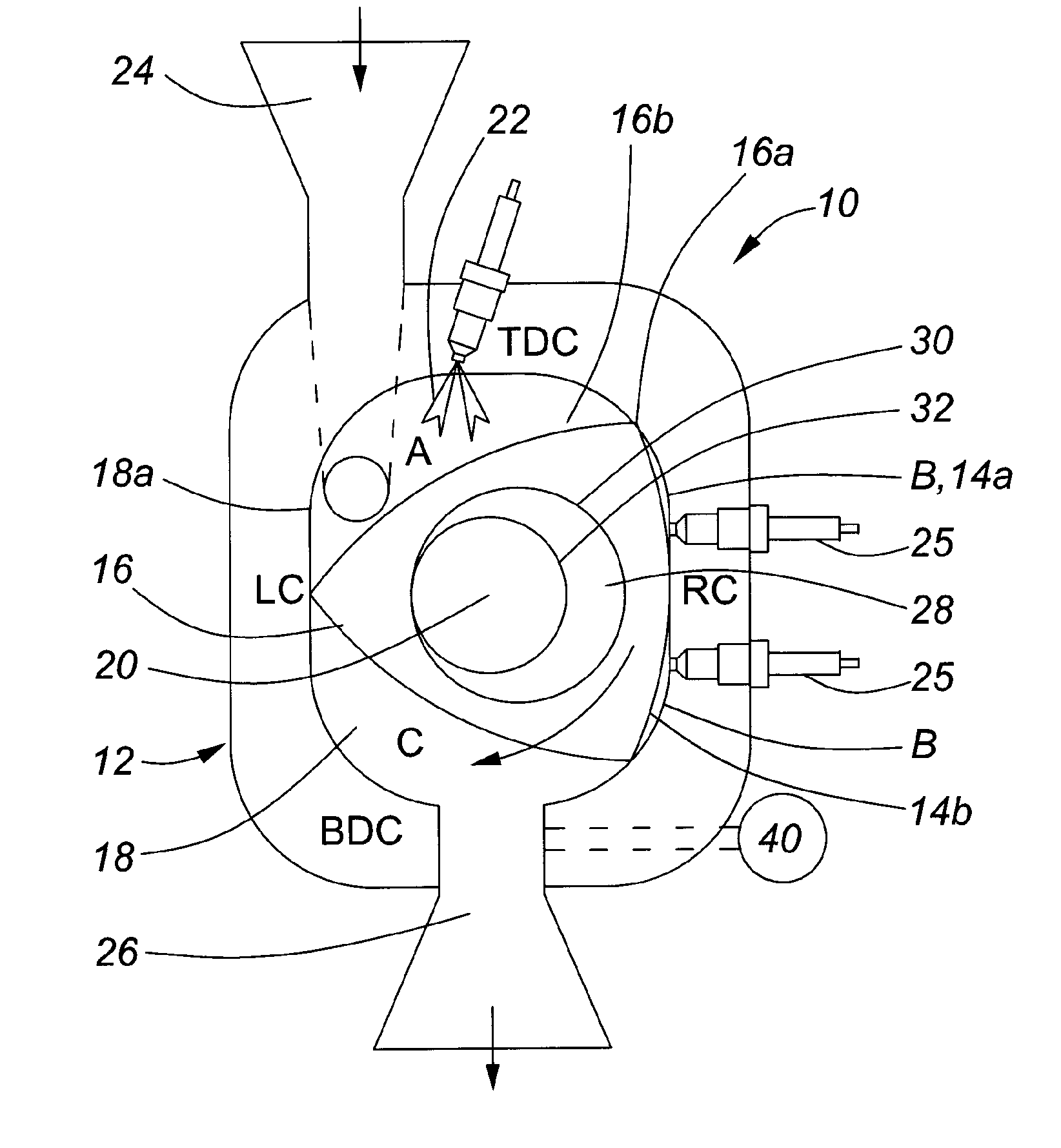
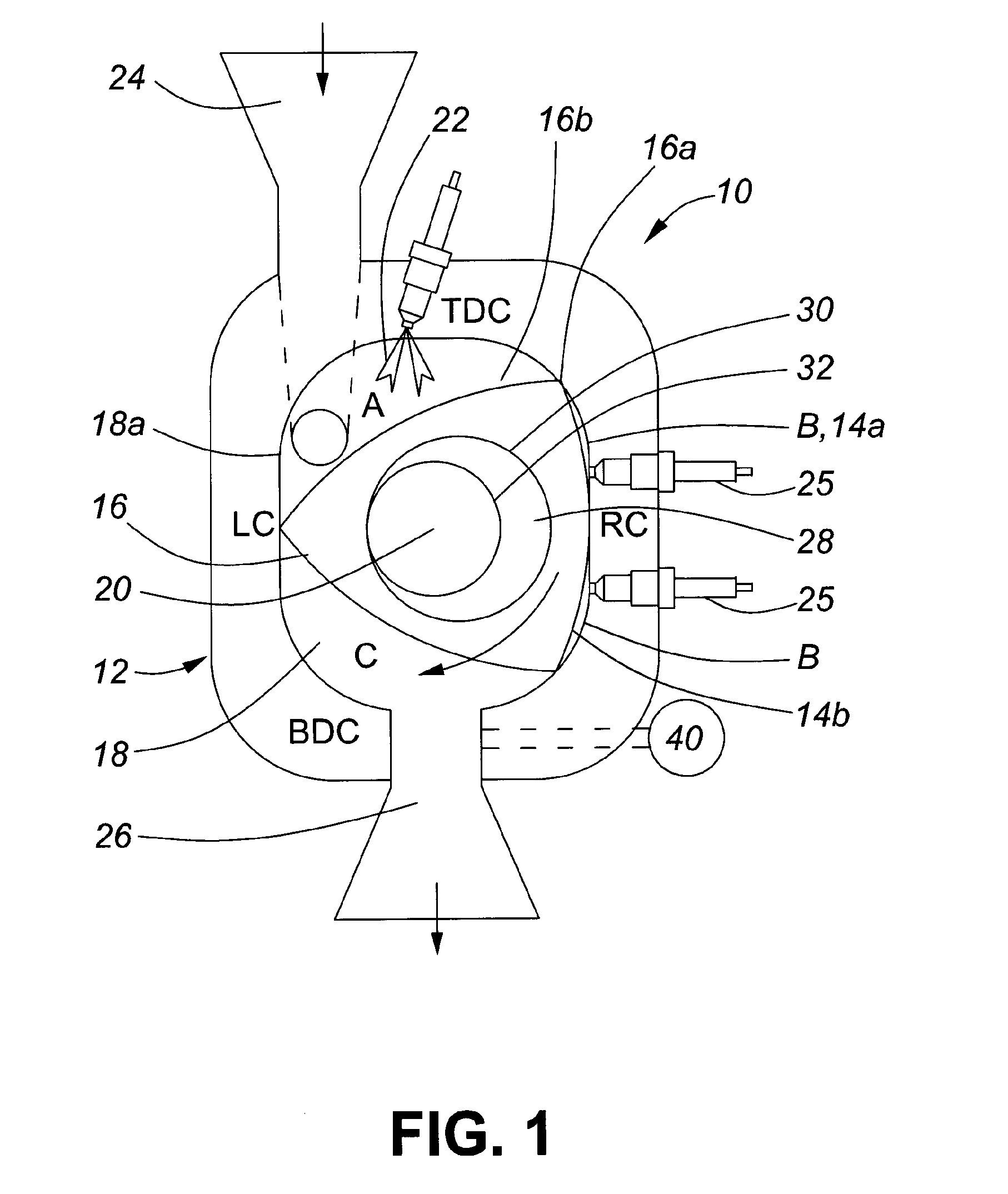
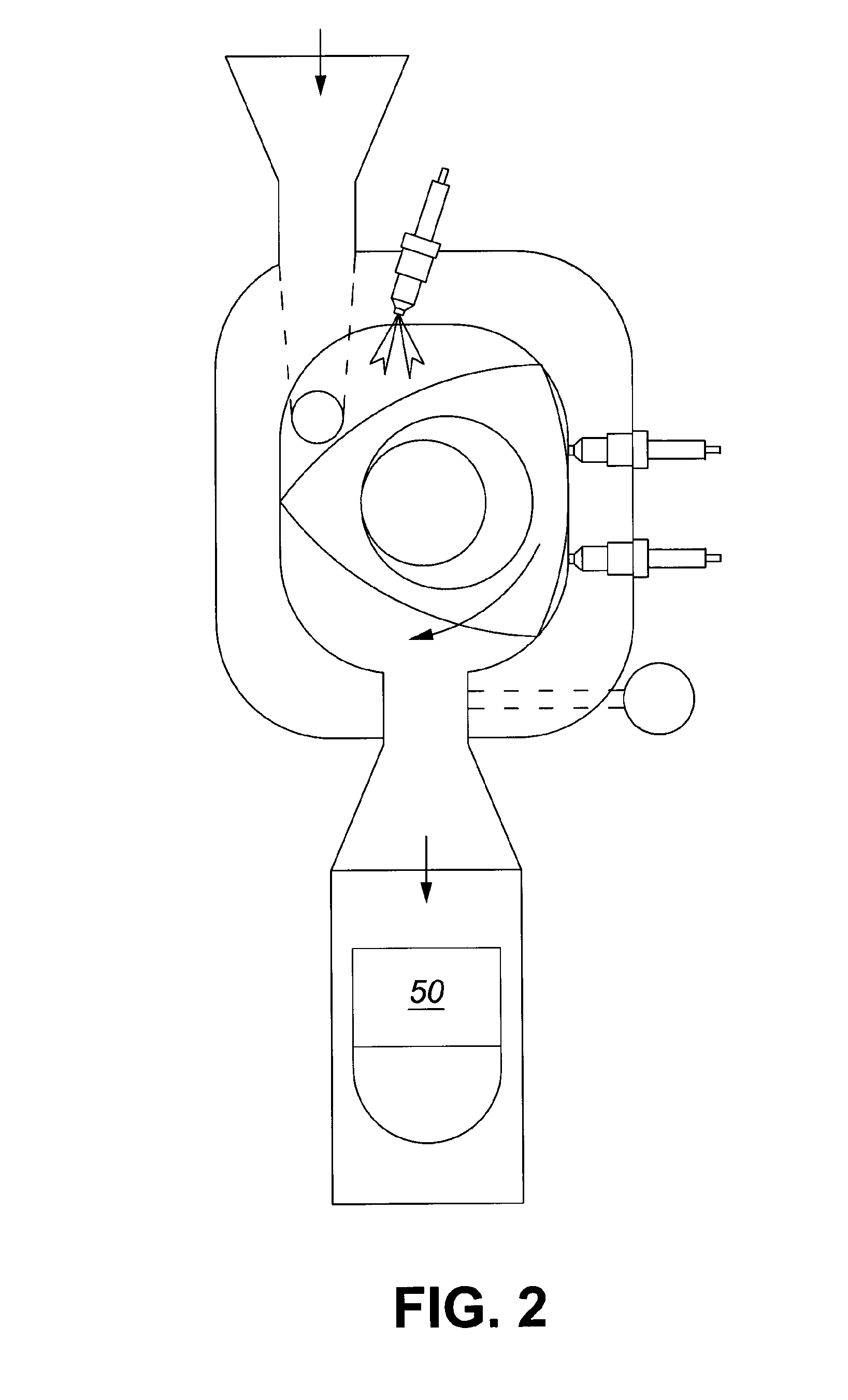
- A rotary pulse detonation engine with a Wankel-type rotary valve system that utilizes a rotor with rotor tips and surfaces within an oval chamber, allowing for sequential intake, compression, and expansion phases without shutters, enabling supersonic combustion and efficient energy conversion, and incorporating a fuel injection, ignition, and exhaust system for controlled detonation.

Combustion mode switching engine
PatentPendingUS20250188893A1
Innovation
- A rotary detonation engine is designed with an outer cylinder, a base featuring fuel and oxidant injection ports, an inner cylinder, and a mechanism to switch the combustion space or flow direction, allowing the engine to operate in both jet combustion and rocket combustion modes.


Aerospace Regulatory Framework for Detonation Engines
The regulatory landscape for detonation engines represents a complex intersection of aviation safety standards, environmental compliance, and emerging technology governance. Current aerospace regulatory frameworks, primarily established by the Federal Aviation Administration (FAA), European Union Aviation Safety Agency (EASA), and International Civil Aviation Organization (ICAO), were developed around conventional propulsion systems and present significant challenges for detonation engine certification.
Existing airworthiness standards under FAR Part 33 and CS-E regulations focus on traditional turbine and reciprocating engines, with certification requirements that may not adequately address the unique operational characteristics of rotating detonation engines (RDEs) and pulse detonation engines (PDEs). The continuous detonation process in RDEs and the intermittent combustion cycles in PDEs introduce novel failure modes, acoustic signatures, and thermal management challenges that fall outside current regulatory frameworks.
Environmental regulations pose additional complexity, particularly regarding noise certification under ICAO Annex 16. Detonation engines generate distinct acoustic profiles compared to conventional engines, with RDEs producing continuous high-frequency emissions and PDEs creating impulsive noise patterns. Current noise measurement methodologies and certification standards require substantial revision to accommodate these unique characteristics while maintaining community noise protection objectives.
Safety certification protocols must evolve to address detonation-specific risks, including uncontrolled detonation propagation, pressure wave management, and thermal shock resistance. The lack of established service history and operational data for detonation engines necessitates enhanced testing protocols and potentially extended certification timelines compared to conventional propulsion systems.
International harmonization efforts are underway through ICAO working groups to develop unified standards for advanced propulsion technologies. These initiatives aim to establish consistent certification pathways across major aviation markets while ensuring safety equivalency with existing propulsion systems. The regulatory framework development timeline significantly impacts the commercial viability and market entry strategies for both RDE and PDE technologies, making regulatory compliance a critical factor in the efficiency comparison between these competing detonation engine architectures.
Existing airworthiness standards under FAR Part 33 and CS-E regulations focus on traditional turbine and reciprocating engines, with certification requirements that may not adequately address the unique operational characteristics of rotating detonation engines (RDEs) and pulse detonation engines (PDEs). The continuous detonation process in RDEs and the intermittent combustion cycles in PDEs introduce novel failure modes, acoustic signatures, and thermal management challenges that fall outside current regulatory frameworks.
Environmental regulations pose additional complexity, particularly regarding noise certification under ICAO Annex 16. Detonation engines generate distinct acoustic profiles compared to conventional engines, with RDEs producing continuous high-frequency emissions and PDEs creating impulsive noise patterns. Current noise measurement methodologies and certification standards require substantial revision to accommodate these unique characteristics while maintaining community noise protection objectives.
Safety certification protocols must evolve to address detonation-specific risks, including uncontrolled detonation propagation, pressure wave management, and thermal shock resistance. The lack of established service history and operational data for detonation engines necessitates enhanced testing protocols and potentially extended certification timelines compared to conventional propulsion systems.
International harmonization efforts are underway through ICAO working groups to develop unified standards for advanced propulsion technologies. These initiatives aim to establish consistent certification pathways across major aviation markets while ensuring safety equivalency with existing propulsion systems. The regulatory framework development timeline significantly impacts the commercial viability and market entry strategies for both RDE and PDE technologies, making regulatory compliance a critical factor in the efficiency comparison between these competing detonation engine architectures.
Environmental Impact Assessment of Detonation Propulsion
Detonation propulsion systems present unique environmental challenges that differ significantly from conventional rocket propulsion technologies. Both Rotating Detonation Engines (RDEs) and Pulse Detonation Engines (PDEs) generate distinct environmental impacts through their operational characteristics, combustion processes, and exhaust emissions.
The acoustic signature represents one of the most immediate environmental concerns for detonation-based propulsion systems. RDEs produce continuous high-frequency pressure oscillations that generate sustained noise levels exceeding 180 decibels, while PDEs create intermittent but extremely intense acoustic pulses reaching up to 200 decibels. These noise levels pose significant challenges for launch site operations and surrounding communities, requiring comprehensive noise mitigation strategies and potentially restricting operational windows.
Atmospheric emissions from detonation engines exhibit different characteristics compared to traditional rocket engines due to their unique combustion processes. The detonation wave propagation in both RDEs and PDEs creates more complete fuel combustion, potentially reducing unburned hydrocarbon emissions. However, the extreme temperatures and pressures involved may increase nitrogen oxide formation when using air-breathing configurations, contributing to atmospheric pollution and ozone depletion concerns.
Ground-level environmental impacts include structural vibrations transmitted through launch infrastructure due to the intense pressure waves generated by detonation cycles. RDEs produce continuous vibrations that may cause cumulative structural fatigue, while PDEs generate periodic shock loads that can damage sensitive equipment and infrastructure. These vibrations can propagate significant distances through solid media, affecting nearby facilities and geological formations.
The thermal signature of detonation engines presents additional environmental considerations. The rapid energy release creates intense heat fluxes that can affect local atmospheric conditions and potentially damage surrounding vegetation or wildlife habitats. Launch pad thermal protection requirements are more stringent for detonation engines, necessitating advanced cooling systems and heat-resistant materials.
Chemical residue deposition represents another environmental factor, as the unique combustion characteristics of detonation engines may produce different exhaust compositions that could accumulate in soil and water systems around launch facilities, requiring specialized environmental monitoring and remediation protocols.
The acoustic signature represents one of the most immediate environmental concerns for detonation-based propulsion systems. RDEs produce continuous high-frequency pressure oscillations that generate sustained noise levels exceeding 180 decibels, while PDEs create intermittent but extremely intense acoustic pulses reaching up to 200 decibels. These noise levels pose significant challenges for launch site operations and surrounding communities, requiring comprehensive noise mitigation strategies and potentially restricting operational windows.
Atmospheric emissions from detonation engines exhibit different characteristics compared to traditional rocket engines due to their unique combustion processes. The detonation wave propagation in both RDEs and PDEs creates more complete fuel combustion, potentially reducing unburned hydrocarbon emissions. However, the extreme temperatures and pressures involved may increase nitrogen oxide formation when using air-breathing configurations, contributing to atmospheric pollution and ozone depletion concerns.
Ground-level environmental impacts include structural vibrations transmitted through launch infrastructure due to the intense pressure waves generated by detonation cycles. RDEs produce continuous vibrations that may cause cumulative structural fatigue, while PDEs generate periodic shock loads that can damage sensitive equipment and infrastructure. These vibrations can propagate significant distances through solid media, affecting nearby facilities and geological formations.
The thermal signature of detonation engines presents additional environmental considerations. The rapid energy release creates intense heat fluxes that can affect local atmospheric conditions and potentially damage surrounding vegetation or wildlife habitats. Launch pad thermal protection requirements are more stringent for detonation engines, necessitating advanced cooling systems and heat-resistant materials.
Chemical residue deposition represents another environmental factor, as the unique combustion characteristics of detonation engines may produce different exhaust compositions that could accumulate in soil and water systems around launch facilities, requiring specialized environmental monitoring and remediation protocols.
Unlock deeper insights with PatSnap Eureka Quick Research — get a full tech report to explore trends and direct your research. Try now!
Generate Your Research Report Instantly with AI Agent
Supercharge your innovation with PatSnap Eureka AI Agent Platform!