

Silicon carbide power device lifetime analysis
FEB 14, 20269 MIN READ
Generate Your Research Report Instantly with AI Agent
Patsnap Eureka helps you evaluate technical feasibility & market potential.
SiC Power Device Background and Lifetime Goals
Silicon carbide (SiC) power devices have emerged as transformative components in modern power electronics, driven by their superior material properties compared to traditional silicon-based semiconductors. The wide bandgap nature of SiC enables operation at higher voltages, temperatures, and switching frequencies while maintaining lower conduction losses. This technological advancement has positioned SiC devices as critical enablers for applications demanding high efficiency and power density, including electric vehicles, renewable energy systems, industrial motor drives, and aerospace power management systems.
The evolution of SiC power device technology began in the late 1980s with fundamental material research, progressing through decades of manufacturing process refinement to achieve commercial viability in the early 2000s. Today, SiC MOSFETs and Schottky barrier diodes dominate the market, with continuous improvements in voltage ratings, current handling capabilities, and cost reduction. However, as these devices penetrate mission-critical applications with expected operational lifetimes spanning 15 to 30 years, understanding and predicting device lifetime has become paramount.
Lifetime analysis of SiC power devices encompasses multiple degradation mechanisms that can compromise device performance and reliability over extended operation periods. These mechanisms include gate oxide degradation under high electric field stress, threshold voltage drift due to charge trapping, bipolar degradation in conductivity-modulated devices, and package-related failures from thermomechanical stress. The complexity increases when considering real-world operating conditions involving temperature cycling, humidity exposure, and electrical overstress events.
The primary goals of SiC power device lifetime analysis are multifaceted. First, establishing accurate predictive models that correlate accelerated aging test results with field operation conditions enables reliable lifetime estimation for various application profiles. Second, identifying dominant failure mechanisms under specific stress conditions guides design optimization and screening test development. Third, developing standardized qualification methodologies ensures consistent reliability assessment across manufacturers and applications. Finally, extending device operational lifetime through materials engineering, process improvements, and intelligent thermal management directly impacts system-level cost-effectiveness and sustainability. Achieving these goals requires integrating physics-of-failure understanding with statistical analysis and field data validation to support the widespread adoption of SiC technology in next-generation power conversion systems.
The evolution of SiC power device technology began in the late 1980s with fundamental material research, progressing through decades of manufacturing process refinement to achieve commercial viability in the early 2000s. Today, SiC MOSFETs and Schottky barrier diodes dominate the market, with continuous improvements in voltage ratings, current handling capabilities, and cost reduction. However, as these devices penetrate mission-critical applications with expected operational lifetimes spanning 15 to 30 years, understanding and predicting device lifetime has become paramount.
Lifetime analysis of SiC power devices encompasses multiple degradation mechanisms that can compromise device performance and reliability over extended operation periods. These mechanisms include gate oxide degradation under high electric field stress, threshold voltage drift due to charge trapping, bipolar degradation in conductivity-modulated devices, and package-related failures from thermomechanical stress. The complexity increases when considering real-world operating conditions involving temperature cycling, humidity exposure, and electrical overstress events.
The primary goals of SiC power device lifetime analysis are multifaceted. First, establishing accurate predictive models that correlate accelerated aging test results with field operation conditions enables reliable lifetime estimation for various application profiles. Second, identifying dominant failure mechanisms under specific stress conditions guides design optimization and screening test development. Third, developing standardized qualification methodologies ensures consistent reliability assessment across manufacturers and applications. Finally, extending device operational lifetime through materials engineering, process improvements, and intelligent thermal management directly impacts system-level cost-effectiveness and sustainability. Achieving these goals requires integrating physics-of-failure understanding with statistical analysis and field data validation to support the widespread adoption of SiC technology in next-generation power conversion systems.
Market Demand for Reliable SiC Power Devices
The global transition toward electrification and renewable energy systems has created unprecedented demand for power electronics capable of operating under extreme conditions with high efficiency and long-term reliability. Silicon carbide power devices have emerged as critical enablers in applications where traditional silicon-based components face fundamental performance limitations. Electric vehicles represent one of the most significant growth sectors, where SiC MOSFETs and Schottky diodes enable faster charging, extended driving range, and reduced system weight through higher switching frequencies and thermal performance. The automotive industry's stringent reliability requirements, often demanding operational lifetimes exceeding fifteen years under harsh thermal cycling and humidity conditions, have intensified focus on lifetime prediction and failure mechanism understanding.
Renewable energy infrastructure, particularly solar inverters and wind power converters, constitutes another major demand driver. These systems require power devices that maintain performance over decades of continuous operation in outdoor environments with wide temperature fluctuations and voltage stress variations. Grid-tied inverters and energy storage systems increasingly specify SiC devices to achieve higher power density and efficiency targets mandated by evolving energy regulations. The economic viability of these installations depends critically on minimizing maintenance costs and maximizing uptime, making device lifetime a primary selection criterion.
Industrial motor drives and traction systems for rail transportation further expand the market scope. These applications benefit from SiC's ability to operate at elevated junction temperatures while maintaining switching performance, enabling more compact thermal management solutions. However, the extended operational profiles in industrial settings expose devices to cumulative stress effects that challenge conventional qualification approaches. Manufacturers and end-users alike seek robust lifetime analysis methodologies to ensure that accelerated testing protocols accurately predict field performance across diverse operating conditions.
The aerospace and defense sectors represent emerging high-value markets where reliability requirements are even more stringent. Satellite power systems, aircraft electrification initiatives, and military power supplies demand devices with proven resilience against radiation effects, extreme temperatures, and mission-critical failure rates measured in parts per billion. These specialized applications drive demand for advanced characterization techniques and physics-based lifetime models that can account for multiple concurrent degradation mechanisms. The convergence of these diverse market needs has established lifetime analysis as a fundamental requirement rather than a supplementary consideration in SiC power device development and deployment strategies.
Renewable energy infrastructure, particularly solar inverters and wind power converters, constitutes another major demand driver. These systems require power devices that maintain performance over decades of continuous operation in outdoor environments with wide temperature fluctuations and voltage stress variations. Grid-tied inverters and energy storage systems increasingly specify SiC devices to achieve higher power density and efficiency targets mandated by evolving energy regulations. The economic viability of these installations depends critically on minimizing maintenance costs and maximizing uptime, making device lifetime a primary selection criterion.
Industrial motor drives and traction systems for rail transportation further expand the market scope. These applications benefit from SiC's ability to operate at elevated junction temperatures while maintaining switching performance, enabling more compact thermal management solutions. However, the extended operational profiles in industrial settings expose devices to cumulative stress effects that challenge conventional qualification approaches. Manufacturers and end-users alike seek robust lifetime analysis methodologies to ensure that accelerated testing protocols accurately predict field performance across diverse operating conditions.
The aerospace and defense sectors represent emerging high-value markets where reliability requirements are even more stringent. Satellite power systems, aircraft electrification initiatives, and military power supplies demand devices with proven resilience against radiation effects, extreme temperatures, and mission-critical failure rates measured in parts per billion. These specialized applications drive demand for advanced characterization techniques and physics-based lifetime models that can account for multiple concurrent degradation mechanisms. The convergence of these diverse market needs has established lifetime analysis as a fundamental requirement rather than a supplementary consideration in SiC power device development and deployment strategies.
Current SiC Device Lifetime Challenges and Failure Mechanisms
Silicon carbide power devices have emerged as critical components in high-power and high-temperature applications, yet their long-term reliability remains constrained by several fundamental challenges. The primary concern centers on the degradation mechanisms that progressively compromise device performance over operational lifetimes, particularly under harsh electrical and thermal stress conditions. These challenges stem from both intrinsic material properties and extrinsic factors introduced during manufacturing and operation.
One of the most significant failure mechanisms involves the degradation of the gate oxide layer, which is substantially more vulnerable in SiC devices compared to traditional silicon counterparts. The high electric field strength at the SiC-oxide interface accelerates charge trapping and interface state generation, leading to threshold voltage instability and increased leakage currents. This phenomenon becomes particularly pronounced under high-temperature bias stress conditions, where the combination of elevated temperatures and electric fields exponentially accelerates degradation rates.
Bipolar degradation represents another critical challenge, manifesting primarily in devices operating under forward conduction conditions. The injection of minority carriers triggers the expansion of basal plane dislocations within the SiC crystal structure, forming Shockley-type stacking faults. These defects progressively increase the on-resistance of the device, reducing efficiency and potentially causing localized heating that further accelerates degradation processes. This mechanism is especially problematic in PiN diodes and bipolar junction transistors.
The packaging and interconnection systems introduce additional failure pathways that significantly impact device lifetime. Thermomechanical stress arising from coefficient of thermal expansion mismatches between SiC chips and packaging materials causes bond wire fatigue, solder joint cracking, and delamination at critical interfaces. These failures compromise both electrical performance and thermal management capabilities, creating positive feedback loops that accelerate device degradation.
Surface-related degradation mechanisms also pose substantial challenges, particularly in high-voltage applications. Electric field crowding at device edges and surface termination regions can trigger localized breakdown events, while moisture ingress and contamination facilitate electrochemical corrosion processes. The passivation layers designed to mitigate these effects often exhibit limited long-term stability under operational stress conditions, necessitating improved material solutions and design strategies to ensure reliable device operation throughout projected service lifetimes.
One of the most significant failure mechanisms involves the degradation of the gate oxide layer, which is substantially more vulnerable in SiC devices compared to traditional silicon counterparts. The high electric field strength at the SiC-oxide interface accelerates charge trapping and interface state generation, leading to threshold voltage instability and increased leakage currents. This phenomenon becomes particularly pronounced under high-temperature bias stress conditions, where the combination of elevated temperatures and electric fields exponentially accelerates degradation rates.
Bipolar degradation represents another critical challenge, manifesting primarily in devices operating under forward conduction conditions. The injection of minority carriers triggers the expansion of basal plane dislocations within the SiC crystal structure, forming Shockley-type stacking faults. These defects progressively increase the on-resistance of the device, reducing efficiency and potentially causing localized heating that further accelerates degradation processes. This mechanism is especially problematic in PiN diodes and bipolar junction transistors.
The packaging and interconnection systems introduce additional failure pathways that significantly impact device lifetime. Thermomechanical stress arising from coefficient of thermal expansion mismatches between SiC chips and packaging materials causes bond wire fatigue, solder joint cracking, and delamination at critical interfaces. These failures compromise both electrical performance and thermal management capabilities, creating positive feedback loops that accelerate device degradation.
Surface-related degradation mechanisms also pose substantial challenges, particularly in high-voltage applications. Electric field crowding at device edges and surface termination regions can trigger localized breakdown events, while moisture ingress and contamination facilitate electrochemical corrosion processes. The passivation layers designed to mitigate these effects often exhibit limited long-term stability under operational stress conditions, necessitating improved material solutions and design strategies to ensure reliable device operation throughout projected service lifetimes.
Existing Lifetime Analysis and Testing Methods
01 Carrier lifetime control through ion implantation
The lifetime of silicon carbide power devices can be controlled by introducing specific ions such as helium, protons, or heavy metals into the semiconductor material. Ion implantation techniques allow precise adjustment of carrier recombination rates, which directly impacts device switching characteristics and overall performance. The implantation depth, dose, and energy levels are carefully controlled to achieve desired lifetime values while maintaining device reliability.- Carrier lifetime control through ion implantation: The lifetime of silicon carbide power devices can be controlled by introducing specific ions such as helium, protons, or heavy metals into the semiconductor material through ion implantation. This technique allows precise adjustment of carrier recombination rates, which directly impacts device switching characteristics and overall performance. The implantation depth and dosage can be optimized to achieve desired lifetime values for different device applications.
- Epitaxial layer design for lifetime optimization: The carrier lifetime in silicon carbide power devices can be enhanced through careful design of epitaxial layer structures, including control of doping concentrations, layer thickness, and crystal quality. Advanced epitaxial growth techniques enable the creation of layers with reduced defect densities, which minimizes non-radiative recombination centers and extends carrier lifetime. This approach is particularly effective for improving device reliability and reducing on-state losses.
- Thermal treatment and annealing processes: Post-fabrication thermal treatments and annealing processes play a crucial role in modifying carrier lifetime in silicon carbide devices. High-temperature annealing can activate dopants, reduce crystal defects, and redistribute impurities, thereby affecting recombination dynamics. Controlled annealing atmospheres and temperature profiles can be tailored to achieve specific lifetime characteristics required for different power device applications.
- Buffer layer and junction termination structures: The implementation of specialized buffer layers and junction termination structures significantly influences the effective carrier lifetime in silicon carbide power devices. These structures help manage electric field distribution and reduce surface recombination velocities, which are critical for maintaining high lifetime values. Optimized buffer layer designs can also improve breakdown voltage characteristics while preserving favorable lifetime properties.
- Defect engineering and passivation techniques: Advanced defect engineering methods and surface passivation techniques are employed to enhance carrier lifetime by minimizing recombination centers in silicon carbide power devices. These approaches include selective defect elimination through oxidation processes, hydrogen passivation of interface states, and the introduction of gettering layers. Such techniques are essential for achieving high-performance devices with extended operational lifetimes and improved efficiency.
02 Epitaxial layer design for lifetime optimization
The structure and doping profile of epitaxial layers significantly influence carrier lifetime in silicon carbide devices. By optimizing the thickness, doping concentration, and quality of epitaxial layers, manufacturers can enhance device lifetime characteristics. Advanced growth techniques and buffer layer designs help reduce defects and improve carrier recombination properties, leading to better device performance and longevity.Expand Specific Solutions03 Thermal management and packaging techniques
Effective thermal management is crucial for extending the operational lifetime of silicon carbide power devices. Advanced packaging solutions, heat dissipation structures, and thermal interface materials help maintain optimal operating temperatures. Proper thermal design prevents degradation mechanisms associated with high-temperature operation and thermal cycling, thereby improving device reliability and extending service life.Expand Specific Solutions04 Defect engineering and crystal quality improvement
The presence of crystalline defects such as dislocations, stacking faults, and micropipes significantly affects carrier lifetime in silicon carbide devices. Manufacturing processes that minimize defect density through improved crystal growth techniques, substrate preparation, and post-processing treatments can substantially enhance device lifetime. Quality control measures and defect characterization methods are employed to ensure high-performance devices with extended operational lifetimes.Expand Specific Solutions05 Surface passivation and interface optimization
Surface and interface quality plays a critical role in determining carrier lifetime and device stability. Passivation techniques using oxide layers, nitride films, or other dielectric materials reduce surface recombination velocity and protect against environmental degradation. Optimized gate oxide formation and interface treatment processes minimize trap states and improve long-term reliability, contributing to enhanced device lifetime performance.Expand Specific Solutions
Key Players in SiC Power Device Manufacturing
The silicon carbide power device lifetime analysis field represents a rapidly maturing technology sector within the broader wide bandgap semiconductor industry, currently transitioning from early commercialization to mainstream adoption. The market demonstrates robust growth driven by electric vehicle proliferation, renewable energy systems, and industrial power applications. Technology maturity varies significantly among key players: established leaders like Wolfspeed, Inc. and STMicroelectronics demonstrate advanced manufacturing capabilities and comprehensive product portfolios, while Chinese manufacturers including Hunan Sanan Semiconductor, Xiamen San'an Integrated Circuit, and Yangzhou Yangjie Electronic Technology are aggressively scaling production capacity. Traditional semiconductor giants such as DENSO Corp., Sumitomo Electric Industries, and NIPPON STEEL CORP. leverage materials expertise, whereas emerging players like Wuxi NCE Power and Hangzhou Xinmai Semiconductor focus on specialized applications. Research institutions including University of South Carolina and University of Electronic Science & Technology of China contribute fundamental reliability research, supporting the industry's evolution toward enhanced device longevity and performance optimization.
Wolfspeed, Inc.
Technical Solution: Wolfspeed has developed comprehensive lifetime analysis methodologies for silicon carbide power devices, focusing on accelerated aging tests under high temperature and high voltage stress conditions. Their approach includes physics-of-failure models that predict device degradation mechanisms such as threshold voltage drift, on-resistance increase, and gate oxide reliability. The company employs advanced characterization techniques including deep-level transient spectroscopy (DLTS) to identify defect evolution during operation. Their lifetime prediction models incorporate statistical analysis of large sample populations tested under various operating conditions, enabling accurate field lifetime projections. Wolfspeed's methodology also addresses package-level reliability concerns including die-attach degradation and wire bond fatigue under thermal cycling[1][4][8].
Strengths: Industry-leading experience in SiC device manufacturing with extensive field data validation; comprehensive multi-physics simulation capabilities. Weaknesses: Proprietary models may limit academic collaboration; high cost of accelerated testing infrastructure.
DENSO Corp.
Technical Solution: DENSO has developed application-specific lifetime analysis methodologies for SiC power devices in automotive powertrain systems, particularly for inverters in electric vehicles. Their approach emphasizes mission profile-based reliability assessment, where actual driving cycle data is used to predict cumulative damage. The company employs rainflow counting algorithms to analyze thermal cycling patterns and correlate them with crack propagation in solder layers and metallization. DENSO's lifetime prediction framework integrates real-time temperature monitoring with physics-based degradation models to estimate remaining useful life during vehicle operation. Their methodology includes extensive validation through field return analysis and failure mode characterization, with specific focus on junction temperature fluctuation effects on device degradation rates[3][6][11].
Strengths: Deep understanding of automotive application requirements; extensive field validation data from deployed vehicles. Weaknesses: Methodology optimized primarily for automotive applications; limited applicability to other power electronics sectors.
Core Technologies in SiC Device Degradation Modeling
Method of manufacturing substrates having improved carrier lifetimes
PatentWO2008011022A1
Innovation
- A method involving the introduction of specific gas mixtures, including chlorosilane or non-chlorinated silicon-containing gases with hydrogen and carbon-containing gases, into a reaction chamber at controlled temperatures and pressures to deposit silicon carbide coatings with extended carrier lifetimes ranging from 0.5 to 1000 microseconds.
High voltage, high temperature capacitor and interconnection structures
PatentInactiveUS6972436B2
Innovation
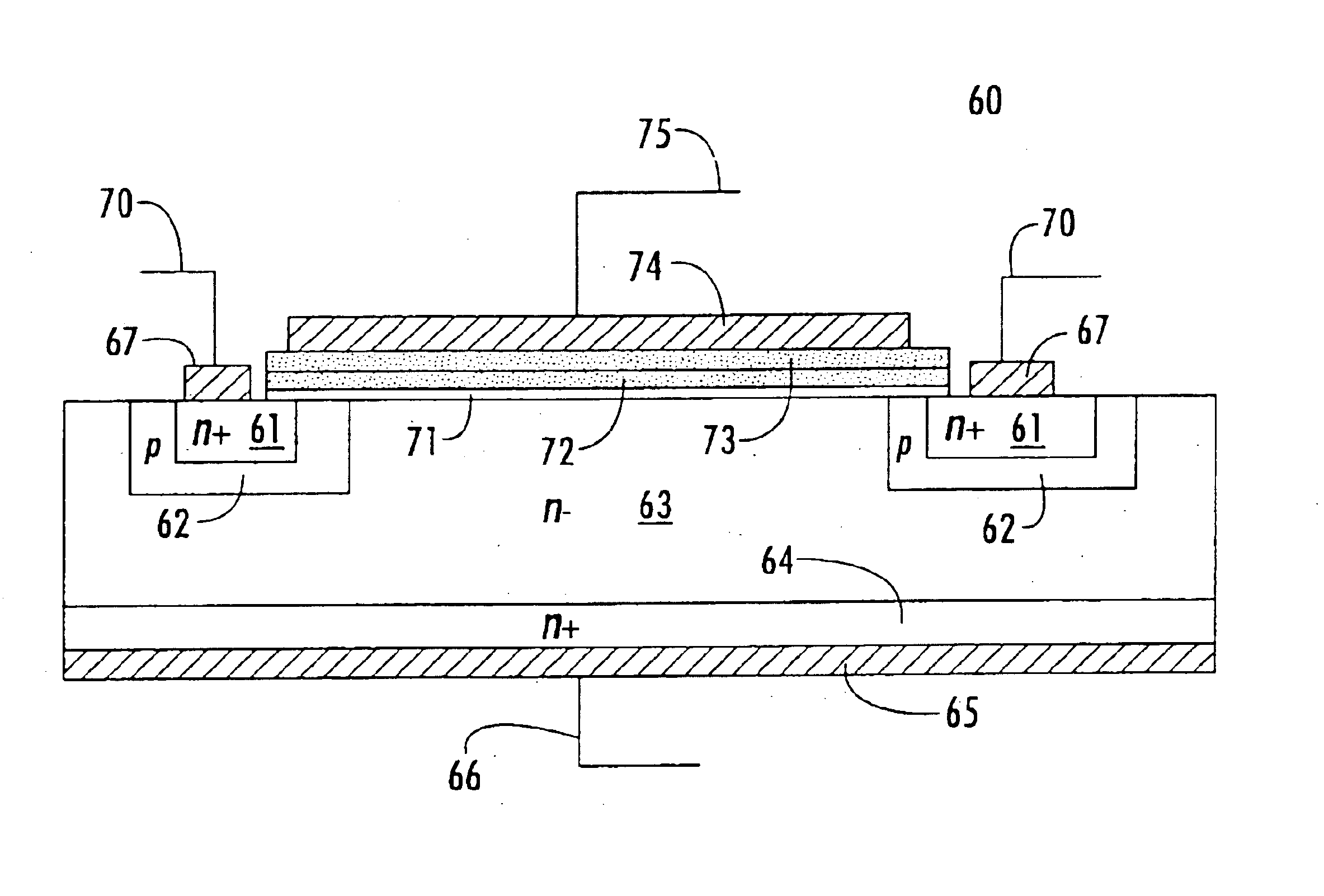
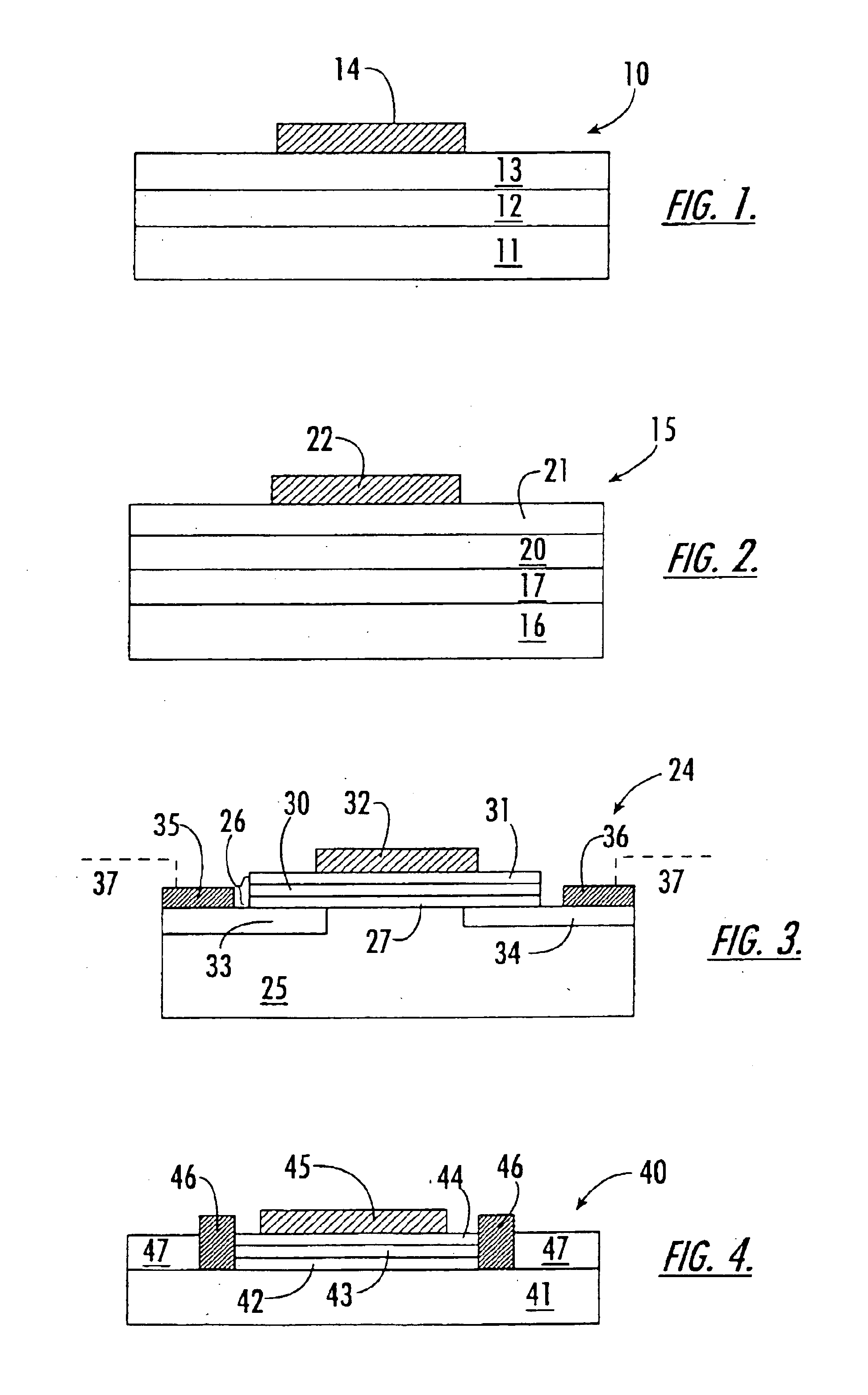
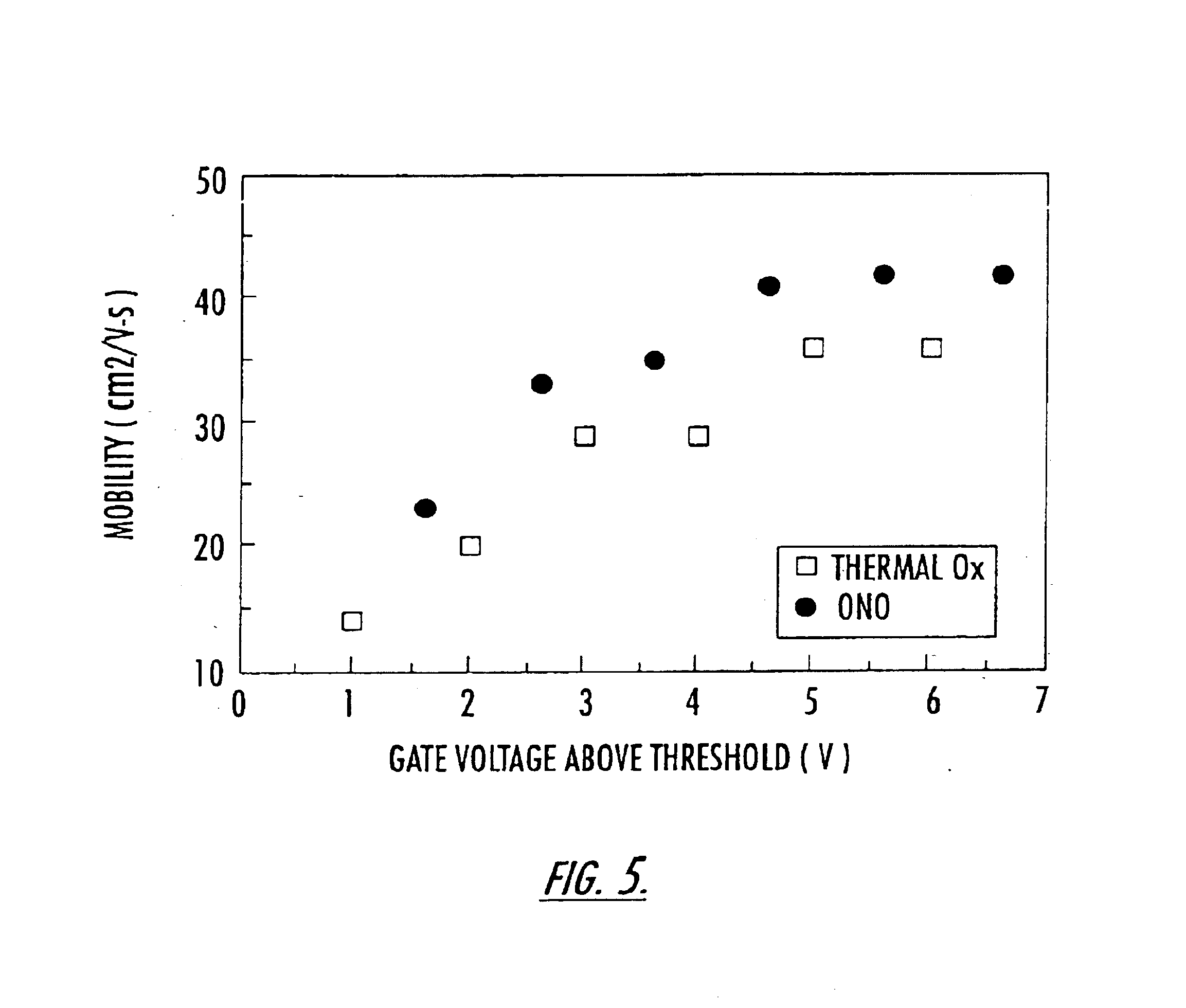
- A capacitor structure with a layered dielectric composition, including a first and second silicon dioxide layer and a silicon nitride layer with a higher dielectric constant, providing improved reliability and minimizing leakage current, and a method of fabricating these structures using plasma-enhanced chemical vapor deposition (PECVD) with specific precursor flow rates and temperatures.

Thermal Management Impact on SiC Device Longevity
Thermal management represents a critical determinant in the operational longevity of silicon carbide power devices, as elevated junction temperatures directly accelerate degradation mechanisms and compromise device reliability. The superior thermal conductivity of SiC, approximately three times higher than silicon, provides inherent advantages in heat dissipation. However, the increasing power densities in modern applications generate substantial thermal loads that challenge even SiC's enhanced thermal properties, necessitating sophisticated thermal management strategies to maximize device lifetime.
The relationship between operating temperature and device degradation follows exponential patterns governed by Arrhenius equations, where every 10°C increase in junction temperature can potentially halve the device lifetime. Critical failure mechanisms including gate oxide degradation, metallization fatigue, and package delamination exhibit strong temperature dependencies. Thermal cycling, characterized by repeated temperature fluctuations during switching operations, induces mechanical stress from coefficient of thermal expansion mismatches between different materials, leading to bond wire lift-off and solder joint cracking over extended operational periods.
Effective thermal management solutions encompass multiple hierarchical levels, from die-level design optimization to system-level cooling architectures. Advanced packaging technologies employing direct bonded copper substrates, sintered silver die attach, and double-sided cooling configurations significantly reduce thermal resistance pathways. Active cooling methods including forced air convection, liquid cooling, and emerging phase-change cooling systems enable sustained operation at higher power levels while maintaining junction temperatures within acceptable ranges.
Real-time thermal monitoring and adaptive control strategies have emerged as essential tools for lifetime extension. Integrated temperature sensors and thermal impedance measurement techniques enable predictive maintenance approaches, allowing preemptive intervention before critical degradation occurs. Dynamic derating strategies that adjust switching frequencies and current limits based on thermal conditions provide effective protection against thermal overstress events. The integration of computational thermal modeling with operational data facilitates optimized thermal management tailored to specific application profiles, ultimately maximizing the return on investment in SiC power device technology.
The relationship between operating temperature and device degradation follows exponential patterns governed by Arrhenius equations, where every 10°C increase in junction temperature can potentially halve the device lifetime. Critical failure mechanisms including gate oxide degradation, metallization fatigue, and package delamination exhibit strong temperature dependencies. Thermal cycling, characterized by repeated temperature fluctuations during switching operations, induces mechanical stress from coefficient of thermal expansion mismatches between different materials, leading to bond wire lift-off and solder joint cracking over extended operational periods.
Effective thermal management solutions encompass multiple hierarchical levels, from die-level design optimization to system-level cooling architectures. Advanced packaging technologies employing direct bonded copper substrates, sintered silver die attach, and double-sided cooling configurations significantly reduce thermal resistance pathways. Active cooling methods including forced air convection, liquid cooling, and emerging phase-change cooling systems enable sustained operation at higher power levels while maintaining junction temperatures within acceptable ranges.
Real-time thermal monitoring and adaptive control strategies have emerged as essential tools for lifetime extension. Integrated temperature sensors and thermal impedance measurement techniques enable predictive maintenance approaches, allowing preemptive intervention before critical degradation occurs. Dynamic derating strategies that adjust switching frequencies and current limits based on thermal conditions provide effective protection against thermal overstress events. The integration of computational thermal modeling with operational data facilitates optimized thermal management tailored to specific application profiles, ultimately maximizing the return on investment in SiC power device technology.
Standardization of SiC Reliability Assessment Methods
The standardization of reliability assessment methods for silicon carbide power devices has emerged as a critical imperative for the industry's maturation and widespread commercial adoption. Currently, the lack of unified testing protocols and evaluation criteria creates significant challenges in comparing device performance across different manufacturers and applications. This fragmentation hinders accurate lifetime prediction and complicates qualification processes for end-users in automotive, renewable energy, and industrial sectors.
International standardization bodies, including JEDEC, IEC, and AEC, have initiated efforts to establish comprehensive reliability testing standards specifically tailored for SiC devices. These initiatives focus on defining accelerated stress test conditions, failure criteria, and statistical analysis methodologies that account for SiC's unique material properties and failure mechanisms. Key areas under standardization include high-temperature gate bias testing, power cycling protocols, humidity and temperature bias conditions, and cosmic ray-induced failure assessment.
The development of standardized test structures and measurement techniques represents another crucial aspect. Consensus is building around specific test vehicle designs that enable consistent characterization of critical parameters such as threshold voltage shift, on-resistance degradation, and gate oxide integrity. These standardized approaches facilitate data sharing and collaborative research across institutions and companies, accelerating the understanding of long-term reliability physics.
Industry consortia and collaborative research programs play vital roles in driving standardization efforts. Organizations such as the PowerAmerica Institute and European SiC initiatives coordinate multi-party validation studies to verify proposed standards against real-world operational data. These collaborative frameworks ensure that standardized methods reflect practical application requirements while maintaining scientific rigor.
The harmonization of reliability metrics and reporting formats enables more transparent communication between device manufacturers and system integrators. Standardized lifetime models, such as modifications to traditional Coffin-Manson or Arrhenius relationships adapted for SiC-specific degradation mechanisms, provide common frameworks for reliability prediction. This standardization ultimately reduces qualification costs, shortens time-to-market, and enhances confidence in SiC technology deployment across mission-critical applications.
International standardization bodies, including JEDEC, IEC, and AEC, have initiated efforts to establish comprehensive reliability testing standards specifically tailored for SiC devices. These initiatives focus on defining accelerated stress test conditions, failure criteria, and statistical analysis methodologies that account for SiC's unique material properties and failure mechanisms. Key areas under standardization include high-temperature gate bias testing, power cycling protocols, humidity and temperature bias conditions, and cosmic ray-induced failure assessment.
The development of standardized test structures and measurement techniques represents another crucial aspect. Consensus is building around specific test vehicle designs that enable consistent characterization of critical parameters such as threshold voltage shift, on-resistance degradation, and gate oxide integrity. These standardized approaches facilitate data sharing and collaborative research across institutions and companies, accelerating the understanding of long-term reliability physics.
Industry consortia and collaborative research programs play vital roles in driving standardization efforts. Organizations such as the PowerAmerica Institute and European SiC initiatives coordinate multi-party validation studies to verify proposed standards against real-world operational data. These collaborative frameworks ensure that standardized methods reflect practical application requirements while maintaining scientific rigor.
The harmonization of reliability metrics and reporting formats enables more transparent communication between device manufacturers and system integrators. Standardized lifetime models, such as modifications to traditional Coffin-Manson or Arrhenius relationships adapted for SiC-specific degradation mechanisms, provide common frameworks for reliability prediction. This standardization ultimately reduces qualification costs, shortens time-to-market, and enhances confidence in SiC technology deployment across mission-critical applications.
Unlock deeper insights with Patsnap Eureka Quick Research — get a full tech report to explore trends and direct your research. Try now!
Generate Your Research Report Instantly with AI Agent
Supercharge your innovation with Patsnap Eureka AI Agent Platform!