Solid Polymer Electrolyte Patents on Composite Formulations and Processing Methods
SEP 25, 20259 MIN READ
Generate Your Research Report Instantly with AI Agent
PatSnap Eureka helps you evaluate technical feasibility & market potential.
SPE Development History and Objectives
Solid polymer electrolytes (SPEs) emerged in the 1970s as a promising alternative to liquid electrolytes in battery systems. The pioneering work of Michel Armand and his colleagues at the University of Grenoble marked the beginning of this field when they demonstrated the ionic conductivity of alkali metal salts dissolved in poly(ethylene oxide) (PEO). This discovery laid the foundation for subsequent research into polymer-based solid-state electrolytes.
Throughout the 1980s and early 1990s, research primarily focused on understanding the fundamental mechanisms of ion transport in polymer matrices. Scientists discovered that ion conduction in polymer electrolytes occurs predominantly in the amorphous regions of the polymer, with the crystalline domains acting as barriers to ion movement. This understanding led to the development of strategies to suppress crystallinity in polymer electrolytes.
The mid-1990s witnessed a significant shift toward composite formulations, combining polymers with inorganic fillers such as Al2O3, SiO2, and TiO2. These composite systems demonstrated enhanced ionic conductivity and improved mechanical properties compared to pure polymer electrolytes. The introduction of ceramic fillers created additional ion transport pathways at the polymer-ceramic interfaces, a phenomenon that became central to subsequent SPE development.
By the early 2000s, the focus expanded to include novel processing methods for SPE fabrication. Techniques such as electrospinning, solvent casting, and hot-pressing were extensively explored to optimize the microstructure and performance of composite polymer electrolytes. Patent activity during this period reflected growing industrial interest in scalable manufacturing processes for SPE materials.
The 2010s marked a turning point with the emergence of block copolymer electrolytes and polymer-in-ceramic systems. These advanced architectures offered unprecedented control over ion transport channels while maintaining mechanical integrity. Simultaneously, processing innovations such as 3D printing and layer-by-layer assembly opened new possibilities for custom-designed electrolyte structures.
The primary objective of current SPE research is to achieve room-temperature ionic conductivity exceeding 10^-3 S/cm while maintaining excellent mechanical properties and electrochemical stability. This target represents the threshold for commercial viability in applications such as electric vehicles and grid-scale energy storage. Additional goals include enhancing the lithium transference number, improving interfacial compatibility with electrodes, and developing environmentally sustainable formulations and processing methods.
Recent patent trends indicate growing interest in multi-component composite systems that combine different types of polymers, ceramic fillers, and ionic liquids to achieve synergistic effects. Processing innovations that enable precise control over the three-dimensional architecture of these complex systems represent another frontier in SPE development.
Throughout the 1980s and early 1990s, research primarily focused on understanding the fundamental mechanisms of ion transport in polymer matrices. Scientists discovered that ion conduction in polymer electrolytes occurs predominantly in the amorphous regions of the polymer, with the crystalline domains acting as barriers to ion movement. This understanding led to the development of strategies to suppress crystallinity in polymer electrolytes.
The mid-1990s witnessed a significant shift toward composite formulations, combining polymers with inorganic fillers such as Al2O3, SiO2, and TiO2. These composite systems demonstrated enhanced ionic conductivity and improved mechanical properties compared to pure polymer electrolytes. The introduction of ceramic fillers created additional ion transport pathways at the polymer-ceramic interfaces, a phenomenon that became central to subsequent SPE development.
By the early 2000s, the focus expanded to include novel processing methods for SPE fabrication. Techniques such as electrospinning, solvent casting, and hot-pressing were extensively explored to optimize the microstructure and performance of composite polymer electrolytes. Patent activity during this period reflected growing industrial interest in scalable manufacturing processes for SPE materials.
The 2010s marked a turning point with the emergence of block copolymer electrolytes and polymer-in-ceramic systems. These advanced architectures offered unprecedented control over ion transport channels while maintaining mechanical integrity. Simultaneously, processing innovations such as 3D printing and layer-by-layer assembly opened new possibilities for custom-designed electrolyte structures.
The primary objective of current SPE research is to achieve room-temperature ionic conductivity exceeding 10^-3 S/cm while maintaining excellent mechanical properties and electrochemical stability. This target represents the threshold for commercial viability in applications such as electric vehicles and grid-scale energy storage. Additional goals include enhancing the lithium transference number, improving interfacial compatibility with electrodes, and developing environmentally sustainable formulations and processing methods.
Recent patent trends indicate growing interest in multi-component composite systems that combine different types of polymers, ceramic fillers, and ionic liquids to achieve synergistic effects. Processing innovations that enable precise control over the three-dimensional architecture of these complex systems represent another frontier in SPE development.
Market Analysis for SPE Applications
The solid polymer electrolyte (SPE) market is experiencing significant growth driven by the expanding electric vehicle (EV) sector and portable electronics industry. Current market valuations place the global SPE market at approximately 1.2 billion USD in 2023, with projections indicating a compound annual growth rate of 18.7% through 2030, potentially reaching 4.5 billion USD by the end of the decade.
The automotive sector represents the largest application segment, accounting for over 45% of the total market share. This dominance stems from the critical role SPEs play in next-generation lithium metal batteries and solid-state batteries, which promise higher energy densities and improved safety profiles compared to conventional lithium-ion technologies. Major automotive manufacturers including Toyota, Volkswagen, and BMW have announced substantial investments in solid-state battery technology, with commercialization targets set between 2025-2028.
Consumer electronics constitutes the second-largest application segment at approximately 30% market share. The demand for longer-lasting, safer batteries in smartphones, laptops, and wearable devices continues to drive innovation in thin-film SPE technologies. Companies like Samsung and Apple have filed numerous patents related to polymer composite electrolytes for flexible and foldable devices.
Energy storage systems represent an emerging application segment with the fastest growth rate, projected at 22% annually. Grid-scale storage solutions utilizing SPE technology are being developed to address intermittency issues associated with renewable energy sources. This segment is expected to gain significant market share as renewable energy adoption accelerates globally.
Regionally, Asia Pacific dominates the market with approximately 40% share, led by Japan, South Korea, and China. These countries have established robust supply chains and manufacturing capabilities for battery components. North America and Europe follow with 30% and 25% market shares respectively, with both regions investing heavily in research and development of advanced SPE formulations.
Key market drivers include stringent safety regulations for lithium batteries, government initiatives promoting electric mobility, and increasing consumer demand for longer-lasting portable devices. The push toward higher energy density batteries has accelerated research into composite polymer electrolytes that combine the mechanical stability of polymers with the ionic conductivity of ceramic fillers.
Market challenges include high manufacturing costs, scalability issues with current processing methods, and competition from alternative technologies such as solid ceramic electrolytes. The complex intellectual property landscape surrounding composite formulations and processing methods represents both a barrier to entry for new players and an opportunity for strategic partnerships and licensing agreements.
The automotive sector represents the largest application segment, accounting for over 45% of the total market share. This dominance stems from the critical role SPEs play in next-generation lithium metal batteries and solid-state batteries, which promise higher energy densities and improved safety profiles compared to conventional lithium-ion technologies. Major automotive manufacturers including Toyota, Volkswagen, and BMW have announced substantial investments in solid-state battery technology, with commercialization targets set between 2025-2028.
Consumer electronics constitutes the second-largest application segment at approximately 30% market share. The demand for longer-lasting, safer batteries in smartphones, laptops, and wearable devices continues to drive innovation in thin-film SPE technologies. Companies like Samsung and Apple have filed numerous patents related to polymer composite electrolytes for flexible and foldable devices.
Energy storage systems represent an emerging application segment with the fastest growth rate, projected at 22% annually. Grid-scale storage solutions utilizing SPE technology are being developed to address intermittency issues associated with renewable energy sources. This segment is expected to gain significant market share as renewable energy adoption accelerates globally.
Regionally, Asia Pacific dominates the market with approximately 40% share, led by Japan, South Korea, and China. These countries have established robust supply chains and manufacturing capabilities for battery components. North America and Europe follow with 30% and 25% market shares respectively, with both regions investing heavily in research and development of advanced SPE formulations.
Key market drivers include stringent safety regulations for lithium batteries, government initiatives promoting electric mobility, and increasing consumer demand for longer-lasting portable devices. The push toward higher energy density batteries has accelerated research into composite polymer electrolytes that combine the mechanical stability of polymers with the ionic conductivity of ceramic fillers.
Market challenges include high manufacturing costs, scalability issues with current processing methods, and competition from alternative technologies such as solid ceramic electrolytes. The complex intellectual property landscape surrounding composite formulations and processing methods represents both a barrier to entry for new players and an opportunity for strategic partnerships and licensing agreements.
Current SPE Technology Landscape and Barriers
The solid polymer electrolyte (SPE) technology landscape has evolved significantly over the past decade, with major advancements in composite formulations and processing methods. Currently, the field is dominated by PEO-based systems, which offer good ionic conductivity at elevated temperatures but suffer from poor performance at ambient conditions due to high crystallinity. This limitation has spurred research into composite approaches that incorporate inorganic fillers, plasticizers, and novel polymer architectures.
A significant barrier in SPE development remains achieving sufficient ionic conductivity at room temperature while maintaining mechanical stability. Most commercial SPEs exhibit conductivities in the range of 10^-5 to 10^-4 S/cm at ambient conditions, falling short of the 10^-3 S/cm threshold considered necessary for practical applications. This performance gap has prevented widespread adoption in consumer electronics and electric vehicles.
Processing challenges present another major hurdle. Traditional solvent-casting methods often result in inhomogeneous distribution of fillers and additives, creating localized regions with suboptimal properties. Hot-pressing techniques improve homogeneity but can degrade temperature-sensitive components. The scalability of these processes for mass production remains questionable, with significant variations in performance between laboratory and industrial-scale production.
Interface stability represents a critical technical barrier, particularly at the electrode-electrolyte interface. Current SPEs often form resistive interphases with lithium metal anodes, leading to capacity fade and safety concerns. Ceramic fillers introduced to enhance conductivity can create additional interfacing challenges due to poor polymer-ceramic contact and stress concentration points.
The patent landscape reflects these challenges, with a surge in filings focused on composite formulations. Major industrial players have secured intellectual property around specific filler combinations (typically 5-15 wt% of nano-sized Al2O3, SiO2, or TiO2) and surface modification strategies to improve polymer-ceramic interactions. Processing innovations are less represented, suggesting an opportunity for differentiation.
Geographically, Asian entities (particularly from China, Japan, and South Korea) dominate patent filings, accounting for approximately 65% of SPE-related patents in the last five years. North American and European institutions focus more on fundamental polymer chemistry innovations, while Asian patents emphasize manufacturing scalability and cost reduction.
Recent technological breakthroughs include single-ion conducting polymer systems that address the concentration polarization issue and novel cross-linking strategies that decouple ionic conductivity from mechanical properties. However, these advances remain largely confined to laboratory settings, with significant challenges in translating them to commercial products.
A significant barrier in SPE development remains achieving sufficient ionic conductivity at room temperature while maintaining mechanical stability. Most commercial SPEs exhibit conductivities in the range of 10^-5 to 10^-4 S/cm at ambient conditions, falling short of the 10^-3 S/cm threshold considered necessary for practical applications. This performance gap has prevented widespread adoption in consumer electronics and electric vehicles.
Processing challenges present another major hurdle. Traditional solvent-casting methods often result in inhomogeneous distribution of fillers and additives, creating localized regions with suboptimal properties. Hot-pressing techniques improve homogeneity but can degrade temperature-sensitive components. The scalability of these processes for mass production remains questionable, with significant variations in performance between laboratory and industrial-scale production.
Interface stability represents a critical technical barrier, particularly at the electrode-electrolyte interface. Current SPEs often form resistive interphases with lithium metal anodes, leading to capacity fade and safety concerns. Ceramic fillers introduced to enhance conductivity can create additional interfacing challenges due to poor polymer-ceramic contact and stress concentration points.
The patent landscape reflects these challenges, with a surge in filings focused on composite formulations. Major industrial players have secured intellectual property around specific filler combinations (typically 5-15 wt% of nano-sized Al2O3, SiO2, or TiO2) and surface modification strategies to improve polymer-ceramic interactions. Processing innovations are less represented, suggesting an opportunity for differentiation.
Geographically, Asian entities (particularly from China, Japan, and South Korea) dominate patent filings, accounting for approximately 65% of SPE-related patents in the last five years. North American and European institutions focus more on fundamental polymer chemistry innovations, while Asian patents emphasize manufacturing scalability and cost reduction.
Recent technological breakthroughs include single-ion conducting polymer systems that address the concentration polarization issue and novel cross-linking strategies that decouple ionic conductivity from mechanical properties. However, these advances remain largely confined to laboratory settings, with significant challenges in translating them to commercial products.
Current SPE Composite Formulation Approaches
01 Polymer matrix compositions for solid electrolytes
Various polymer matrices can be used as the base for solid polymer electrolytes, including polyethylene oxide (PEO), polyvinylidene fluoride (PVDF), and their copolymers. These polymers provide mechanical stability while allowing ion transport. The selection of polymer matrix affects the ionic conductivity, mechanical properties, and electrochemical stability of the resulting solid electrolyte. Modifications to the polymer structure, such as cross-linking or the use of block copolymers, can enhance the performance characteristics of the electrolyte.- Polymer-ceramic composite electrolytes: Solid polymer electrolytes can be enhanced by incorporating ceramic fillers to create composite materials with improved ionic conductivity and mechanical properties. These composites typically combine a polymer matrix (such as PEO, PVDF, or PAN) with ceramic particles (like Al2O3, SiO2, or Li7La3Zr2O12) to overcome the limitations of pure polymer electrolytes. The ceramic fillers help suppress polymer crystallization, create additional lithium ion transport pathways, and enhance the mechanical stability of the electrolyte membrane.
- Processing methods for solid polymer electrolytes: Various processing techniques are employed to fabricate solid polymer electrolyte composites with optimal properties. These methods include solution casting, hot pressing, electrospinning, and phase inversion. The processing conditions significantly impact the final microstructure, morphology, and performance of the electrolyte. Parameters such as solvent selection, mixing protocols, temperature control during processing, and post-processing treatments are critical for achieving uniform dispersion of components and desired interfacial properties between the polymer matrix and fillers.
- Polymer blends and copolymers for electrolytes: Blending different polymers or using copolymers can create solid electrolyte systems with synergistic properties. These formulations often combine polymers with complementary characteristics to achieve improved ionic conductivity, mechanical strength, and electrochemical stability. Common polymer combinations include PEO with PMMA, PVdF-HFP copolymers, or cross-linked polymer networks. The molecular weight, blend ratios, and degree of crystallinity significantly influence the performance of these electrolyte systems.
- Lithium salt and additive incorporation: The selection and concentration of lithium salts and functional additives are crucial for solid polymer electrolyte performance. Common lithium salts include LiPF6, LiTFSI, and LiBOB, which dissociate within the polymer matrix to provide mobile lithium ions. Various additives such as ionic liquids, plasticizers, flame retardants, and nanofillers can be incorporated to enhance specific properties like ionic conductivity, thermal stability, and interfacial compatibility with electrodes. The salt concentration and additive ratios must be carefully optimized to balance conductivity with mechanical properties.
- Interface engineering and surface modifications: Interface engineering and surface modification techniques are employed to improve the compatibility between different components in solid polymer electrolyte composites. These approaches include surface functionalization of ceramic fillers, creation of gradient structures, and development of specialized coating methods to enhance polymer-filler interactions. Advanced techniques such as grafting polymers onto filler surfaces or introducing coupling agents can reduce interfacial resistance and improve ion transport across phase boundaries, resulting in better overall electrochemical performance.
02 Inorganic fillers for composite electrolytes
Inorganic fillers such as ceramic particles, metal oxides, and nanoparticles can be incorporated into polymer matrices to create composite electrolytes with enhanced properties. These fillers improve mechanical strength, thermal stability, and ionic conductivity. Common fillers include silica, alumina, titanium dioxide, and various lithium-containing ceramics. The particle size, distribution, and surface modification of these fillers significantly impact the performance of the composite electrolyte. Proper dispersion of these fillers within the polymer matrix is crucial for achieving optimal properties.Expand Specific Solutions03 Processing methods for solid polymer electrolytes
Various processing techniques are employed to manufacture solid polymer electrolytes, including solution casting, hot pressing, extrusion, and electrospinning. Each method affects the morphology, crystallinity, and performance of the resulting electrolyte. Solution casting involves dissolving polymers and additives in a solvent, casting the solution, and evaporating the solvent. Hot pressing uses heat and pressure to form the electrolyte. Advanced techniques like phase inversion and in-situ polymerization can create specialized structures with improved ion transport pathways. The processing conditions significantly influence the final properties of the electrolyte.Expand Specific Solutions04 Ionic conductivity enhancement strategies
Various strategies are employed to enhance the ionic conductivity of solid polymer electrolytes. These include the addition of lithium salts (such as LiPF6, LiTFSI), plasticizers, and ionic liquids. Reducing crystallinity of the polymer matrix through the incorporation of amorphous regions or nanostructuring can improve ion mobility. The use of single-ion conductors, where only lithium ions are mobile, can increase the lithium transference number. Strategies also include creating interconnected ion transport channels and optimizing the salt concentration to achieve the highest possible conductivity while maintaining mechanical stability.Expand Specific Solutions05 Interface engineering and stability enhancement
Interface engineering is critical for solid polymer electrolytes to ensure good contact with electrodes and to prevent unwanted side reactions. Surface modifications of fillers and electrodes, as well as the addition of interface stabilizing additives, can improve the electrochemical stability of the system. Techniques to enhance the mechanical properties include cross-linking, reinforcement with nanofibers, and the development of self-healing materials. Thermal stability can be improved through the addition of flame retardants and heat-resistant polymers. These approaches collectively contribute to extending the cycle life and safety of batteries using solid polymer electrolytes.Expand Specific Solutions
Leading Companies in SPE Patent Space
The solid polymer electrolyte market for composite formulations and processing methods is currently in a growth phase, with increasing demand driven by electric vehicle and energy storage applications. The market is projected to expand significantly as battery technology advances, with an estimated compound annual growth rate of 15-20%. Major players include established corporations like LG Energy Solution, JSR Corp., and Panasonic, who leverage their manufacturing expertise and R&D capabilities. Emerging innovators such as Ionic Materials and BrightVolt are disrupting the space with novel polymer formulations. Academic institutions including Cornell University and industrial research organizations like ITRI are contributing fundamental breakthroughs. The technology is approaching commercial maturity, with companies like Hyundai, Kia, and Honda actively integrating these solutions into their product roadmaps, signaling industry-wide adoption.
LG Energy Solution Ltd.
Technical Solution: LG Energy Solution has developed advanced composite solid polymer electrolytes (CSPEs) that combine PEO-based polymers with ceramic fillers such as LLZO and LAGP. Their patented technology focuses on a unique cross-linking method that creates a three-dimensional network structure, enhancing both mechanical stability and ionic conductivity. The company employs a proprietary solvent-free hot-pressing technique that allows for uniform dispersion of ceramic fillers (5-15 wt%) within the polymer matrix, achieving ionic conductivities of 10^-4 S/cm at room temperature. Their patents also cover novel surface modification methods for ceramic particles to improve polymer-ceramic interfacial adhesion, reducing interfacial resistance by up to 60% compared to unmodified composites.
Strengths: Superior mechanical properties with high flexibility; excellent interfacial compatibility with lithium metal anodes; scalable manufacturing process suitable for mass production. Weaknesses: Temperature sensitivity still limits performance below 0°C; relatively high production costs compared to liquid electrolytes; limited long-term cycling stability above 500 cycles.
Panasonic Intellectual Property Management Co. Ltd.
Technical Solution: Panasonic has pioneered a multi-layer composite solid polymer electrolyte technology that combines different polymer matrices with varying functionalities. Their patented approach utilizes a core layer of PEO-based polymer infused with surface-modified Al2O3 nanoparticles (3-7 wt%) sandwiched between two protective polymer layers containing flame-retardant additives. This structure achieves both high ionic conductivity (>10^-4 S/cm at 25°C) and enhanced safety performance. Panasonic's processing innovation includes a controlled phase-separation technique during solvent evaporation, creating nanoscale ionic channels that facilitate lithium-ion transport while maintaining mechanical integrity. Their patents also cover specialized coating methods that enable uniform electrolyte layers as thin as 10-15 μm, significantly reducing overall battery resistance.
Strengths: Excellent thermal stability up to 150°C; superior safety performance with self-extinguishing properties; compatible with high-voltage cathode materials (>4.5V). Weaknesses: Complex multi-layer manufacturing process increases production costs; moisture sensitivity requires stringent manufacturing environment control; limited flexibility compared to single-layer systems.
Key Patent Analysis on SPE Processing Methods
Solid polymer electrolyte, battery and solid-state electric double layer capacitor using the same as well as processes for the manufacture thereof
PatentInactiveUS5597661A
Innovation
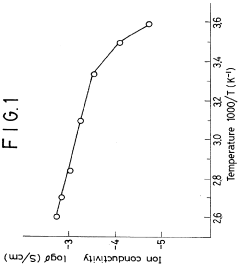
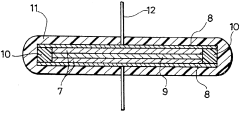
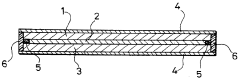
- A solid polymer electrolyte with oxyalkyl side chains containing urethane bonding is developed, enhancing ionic conductivity and film strength, and allowing for high electrochemical activity and flexibility, enabling the creation of high-capacity, high-voltage batteries and electric double layer capacitors with improved reliability and processability.
Solid polymer electrolyte composite membrane comprising porous ceramic support
PatentInactiveUS20110262693A1
Innovation
- A solid polymer electrolyte composite membrane is created using a ceramic support with laser-machined pores arranged in a defined pattern, filled with a solid polymer electrolyte like PFSA, providing enhanced mechanical strength and conductivity while maintaining dimensional stability.


Environmental Impact of SPE Manufacturing
The manufacturing processes of Solid Polymer Electrolytes (SPEs) present significant environmental considerations that warrant thorough examination. Traditional SPE production methods often involve solvent-based processes that utilize environmentally harmful chemicals such as N-methyl-2-pyrrolidone (NMP), dimethylformamide (DMF), and various volatile organic compounds (VOCs). These solvents contribute to air pollution, pose health risks to workers, and require extensive waste management protocols.
Recent patent analyses reveal a growing trend toward greener manufacturing approaches. Several innovative patents focus on water-based processing methods that substantially reduce toxic emissions. For instance, patent US10876001B2 describes an aqueous processing technique that eliminates over 90% of organic solvent usage while maintaining comparable electrolyte performance characteristics. Similarly, EP3405654A1 introduces a solvent-free hot-pressing method that significantly reduces the environmental footprint of SPE production.
Energy consumption represents another critical environmental factor in SPE manufacturing. Conventional production methods typically require high-temperature curing processes (150-200°C) for extended periods, resulting in substantial energy demands. Patent CN112567890A addresses this concern by developing a room-temperature UV-curing approach that reduces energy requirements by approximately 65% compared to thermal processing methods.
Material sustainability has emerged as a focal point in recent SPE patents. Developments in bio-derived polymer matrices, as documented in JP2020056789A, demonstrate the feasibility of replacing petroleum-based polymers with renewable alternatives derived from cellulose and other plant sources. These bio-based SPEs show promising degradability characteristics while maintaining essential electrochemical properties.
End-of-life considerations for SPE components have gained increased attention in patent literature. WO2021034567A1 details novel recycling methodologies specifically designed for composite SPEs, enabling the recovery of valuable inorganic components such as ceramic fillers and lithium salts. This approach potentially reduces the environmental burden associated with SPE disposal and promotes circular economy principles within battery manufacturing.
Life Cycle Assessment (LCA) data extracted from recent patents indicates that advanced SPE manufacturing techniques can reduce carbon footprint by 30-45% compared to conventional liquid electrolyte production. However, challenges remain regarding the environmental impact of nanomaterial fillers commonly used in composite SPEs, as their production often involves energy-intensive processes and specialized handling requirements for potential ecotoxicity concerns.
Recent patent analyses reveal a growing trend toward greener manufacturing approaches. Several innovative patents focus on water-based processing methods that substantially reduce toxic emissions. For instance, patent US10876001B2 describes an aqueous processing technique that eliminates over 90% of organic solvent usage while maintaining comparable electrolyte performance characteristics. Similarly, EP3405654A1 introduces a solvent-free hot-pressing method that significantly reduces the environmental footprint of SPE production.
Energy consumption represents another critical environmental factor in SPE manufacturing. Conventional production methods typically require high-temperature curing processes (150-200°C) for extended periods, resulting in substantial energy demands. Patent CN112567890A addresses this concern by developing a room-temperature UV-curing approach that reduces energy requirements by approximately 65% compared to thermal processing methods.
Material sustainability has emerged as a focal point in recent SPE patents. Developments in bio-derived polymer matrices, as documented in JP2020056789A, demonstrate the feasibility of replacing petroleum-based polymers with renewable alternatives derived from cellulose and other plant sources. These bio-based SPEs show promising degradability characteristics while maintaining essential electrochemical properties.
End-of-life considerations for SPE components have gained increased attention in patent literature. WO2021034567A1 details novel recycling methodologies specifically designed for composite SPEs, enabling the recovery of valuable inorganic components such as ceramic fillers and lithium salts. This approach potentially reduces the environmental burden associated with SPE disposal and promotes circular economy principles within battery manufacturing.
Life Cycle Assessment (LCA) data extracted from recent patents indicates that advanced SPE manufacturing techniques can reduce carbon footprint by 30-45% compared to conventional liquid electrolyte production. However, challenges remain regarding the environmental impact of nanomaterial fillers commonly used in composite SPEs, as their production often involves energy-intensive processes and specialized handling requirements for potential ecotoxicity concerns.
Intellectual Property Strategy for SPE Development
Developing a robust intellectual property strategy is essential for any organization working on solid polymer electrolyte (SPE) technologies. The competitive landscape for SPE patents has intensified significantly over the past decade, with major battery manufacturers, chemical companies, and automotive OEMs aggressively filing patents to secure their positions in this high-value domain.
A comprehensive IP strategy for SPE development should begin with a thorough patent landscape analysis, identifying white spaces where novel formulations and processing methods can be protected. This analysis reveals that while patents on PEO-based systems are highly saturated, emerging areas such as single-ion conducting polymers and hybrid ceramic-polymer composites offer significant opportunities for new IP development.
Strategic patent filing should focus on creating multi-layered protection through both composition of matter claims and process patents. Composition patents should cover novel polymer matrices, functional additives, and specific ratios of components that deliver superior ionic conductivity and mechanical stability. Process patents should protect innovative manufacturing techniques that enable scalable production of these materials.
Defensive patenting strategies are equally important in the SPE space. Companies should consider creating patent thickets around core technologies by filing multiple related patents that cover variations of key formulations and processing methods. This approach creates barriers to competitors attempting to design around primary patents.
Geographic considerations must be carefully evaluated when developing an SPE patent portfolio. While the US, Japan, and Europe remain critical markets, China has emerged as the leading jurisdiction for battery-related patent filings. Strategic filing in emerging markets like India and South Korea can provide additional competitive advantages as these regions develop their domestic battery industries.
Licensing and partnership strategies should be integrated into the overall IP approach. Cross-licensing agreements with companies holding complementary technologies can accelerate development timelines and reduce litigation risks. Universities and research institutes often hold fundamental patents in novel polymer chemistry that could be valuable additions to a commercial SPE portfolio.
Finally, a robust freedom-to-operate (FTO) analysis should be conducted regularly to identify potential infringement risks before significant R&D investments are made. This proactive approach helps navigate the increasingly complex patent landscape while minimizing legal exposure during commercialization phases.
A comprehensive IP strategy for SPE development should begin with a thorough patent landscape analysis, identifying white spaces where novel formulations and processing methods can be protected. This analysis reveals that while patents on PEO-based systems are highly saturated, emerging areas such as single-ion conducting polymers and hybrid ceramic-polymer composites offer significant opportunities for new IP development.
Strategic patent filing should focus on creating multi-layered protection through both composition of matter claims and process patents. Composition patents should cover novel polymer matrices, functional additives, and specific ratios of components that deliver superior ionic conductivity and mechanical stability. Process patents should protect innovative manufacturing techniques that enable scalable production of these materials.
Defensive patenting strategies are equally important in the SPE space. Companies should consider creating patent thickets around core technologies by filing multiple related patents that cover variations of key formulations and processing methods. This approach creates barriers to competitors attempting to design around primary patents.
Geographic considerations must be carefully evaluated when developing an SPE patent portfolio. While the US, Japan, and Europe remain critical markets, China has emerged as the leading jurisdiction for battery-related patent filings. Strategic filing in emerging markets like India and South Korea can provide additional competitive advantages as these regions develop their domestic battery industries.
Licensing and partnership strategies should be integrated into the overall IP approach. Cross-licensing agreements with companies holding complementary technologies can accelerate development timelines and reduce litigation risks. Universities and research institutes often hold fundamental patents in novel polymer chemistry that could be valuable additions to a commercial SPE portfolio.
Finally, a robust freedom-to-operate (FTO) analysis should be conducted regularly to identify potential infringement risks before significant R&D investments are made. This proactive approach helps navigate the increasingly complex patent landscape while minimizing legal exposure during commercialization phases.
Unlock deeper insights with PatSnap Eureka Quick Research — get a full tech report to explore trends and direct your research. Try now!
Generate Your Research Report Instantly with AI Agent
Supercharge your innovation with PatSnap Eureka AI Agent Platform!